A Sacred Town Along the Bhagirathi River
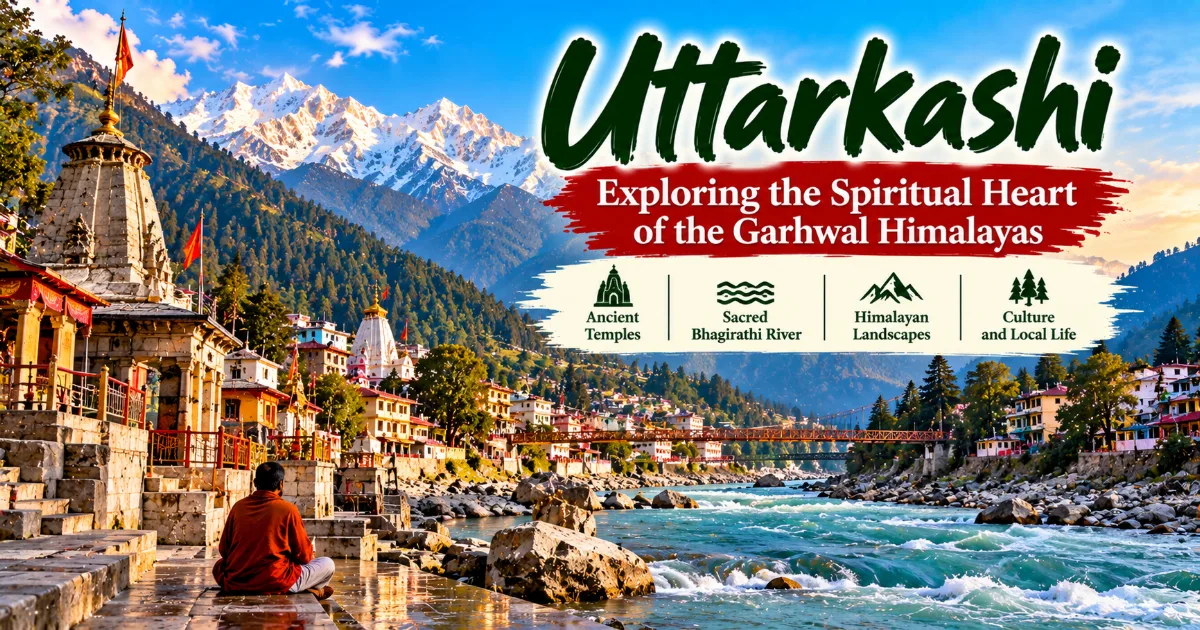
Uttarkashi is one of the most culturally significant destinations in Uttarakhand, where ancient temples, sacred riverbanks, traditional mountain communities, and Himalayan landscapes come together. Situated at approximately 1,150 metres above sea level, the town is known for its spiritual heritage and its position along the Bhagirathi River. Its name means the Kashi of the North, reflecting its association with Varanasi and its longstanding importance as a centre of Hindu worship.
The town offers a different experience from the high-altitude trekking destinations that surround it. Visitors can explore historic temples, observe daily rituals along the river, discover local markets, learn about Garhwali traditions, and understand the relationship between spirituality and life in the mountains. Uttarkashi is also an important gateway to destinations such as Gangotri, Harsil Valley, and several trekking routes in the Garhwal Himalayas.
For travellers seeking a destination that combines culture, history, nature, and spirituality, Uttarkashi offers an opportunity to experience the deeper character of the Himalayan region. It is a place where the sacred landscape is not limited to famous shrines. The river, the surrounding hills, the neighbourhood temples, and the everyday lives of local residents all contribute to its identity.
Continue Reading
Where Is Uttarkashi Located?
Uttarkashi is situated in the Garhwal region of Uttarakhand, in northern India. It serves as the administrative headquarters of Uttarkashi district, an extensive mountainous area containing river valleys, forests, alpine meadows, glaciers, villages, and several important pilgrimage destinations.
The town lies along the Bhagirathi River, which is one of the principal headstreams of the Ganga. The river flows through the mountainous landscape before joining the Alaknanda at Devprayag, where the combined river is known as the Ganga. This geographical relationship gives Uttarkashi particular significance for travellers interested in the cultural and spiritual traditions associated with the sacred river.
The town is also associated with two smaller streams, Varuna and Asi, which flow into the Bhagirathi from either side of the settlement. Their names contribute to the comparison between Uttarkashi and Varanasi, where the Varuna and Assi rivers are traditionally associated with the sacred geography of the city.
The surrounding mountains create a distinctive setting. Unlike the open plains of northern India, the terrain around Uttarkashi rises and falls through steep slopes, forested hills, and narrow valleys. Roads follow the contours of the landscape, while settlements occupy the areas most suitable for construction and cultivation.
Uttarkashi's location makes it an important stopping point for people travelling towards Gangotri and other destinations in the upper Himalayas. Pilgrims, trekkers, mountaineers, researchers, and general travellers may all pass through the town, giving it a varied atmosphere that combines religious activity with practical mountain life.
Why Is Uttarkashi Called the Kashi of the North?
The name Uttarkashi is commonly understood as a combination of the words uttara, meaning north, and Kashi, the traditional name associated with Varanasi. The name reflects the town's religious identity and its resemblance, in sacred geography, to one of Hinduism's most important pilgrimage centres.
Both Uttarkashi and Varanasi are closely associated with the worship of Lord Shiva. Both have temples dedicated to Vishwanath, a name meaning Lord of the Universe and one of the revered forms of Shiva. Both also have riverfront locations that contribute to their spiritual character.
For devotees, Uttarkashi represents a place where the Himalayan environment creates a setting for prayer, reflection, pilgrimage, and religious learning. The surrounding mountains and the Bhagirathi River reinforce the sense that the natural landscape is connected to the sacred.
The comparison with Varanasi should not suggest that the two towns are identical. Each has its own history, scale, architecture, rituals, and cultural atmosphere. Varanasi is a major urban pilgrimage centre on the Ganga, while Uttarkashi is a smaller Himalayan town shaped by mountain geography and its position along the Bhagirathi.
The shared name highlights a religious relationship rather than a claim that one destination replaces the other in every respect. Uttarkashi's significance emerges from its own traditions, temples, and history.
For visitors, understanding this name provides a useful introduction to the town. It explains why religious sites are central to the local landscape and why pilgrims may regard a visit as more than an ordinary sightseeing trip.
The Historical Background of Uttarkashi
The history of Uttarkashi is closely connected to the wider history of the Garhwal Himalayas. The region has long been inhabited by communities that adapted their lives to mountainous terrain, seasonal weather, limited agricultural land, and the challenges of movement between valleys.
The district's official history records that Uttarkashi district was established on 24 February 1960 from areas that had previously formed part of Tehri Garhwal district. This administrative development created a separate district structure for the extensive northern region surrounding the town.
However, the history of human settlement in the area reaches much further back than the creation of the modern district. The wider region appears in traditional religious and historical accounts, including references associated with ancient Indian literature. Local religious traditions connect the landscape with sages, spiritual practice, and sacred rivers.
The region was also part of the historical Garhwal kingdom. Its political history was shaped by changing regional powers, relationships between mountain communities, and the influence of neighbouring territories.
In the early nineteenth century, the Garhwal region experienced conflict involving the Gorkhas of Nepal and British forces. These events contributed to changes in political administration across the area. The history of Garhwal during this period was complex, with different parts of the region coming under different forms of control.
The creation of Uttarkashi district in 1960 represents a later chapter in this longer story. Modern Uttarkashi has developed as an administrative, religious, educational, and transport centre while retaining its identity as a sacred Himalayan town.
Visitors interested in history should recognise that traditional religious accounts and documented administrative events represent different kinds of historical evidence. Both contribute to understanding the region, but they should not automatically be treated as identical forms of historical record.
Kashi Vishwanath Temple: The Spiritual Centre of the Town
The Kashi Vishwanath Temple is one of Uttarkashi's most important religious landmarks. Dedicated to Lord Shiva, the temple attracts devotees throughout the year and holds a central place in the town's spiritual identity.
The temple is associated with the name Vishwanath, which refers to Shiva as the Lord of the Universe. Worship at the shrine reflects the broader Shaivite traditions found throughout the Himalayan region, where Shiva is revered in temples, pilgrimage narratives, and local religious practices.
The temple's location near the Bhagirathi River strengthens its connection to the sacred geography of Uttarkashi. The river and surrounding mountains create an atmosphere that encourages prayer and contemplation.
Visitors may encounter the sounds of bells, devotional chanting, and the movement of worshippers arriving for darshan. These everyday religious activities form an important part of the temple experience. The atmosphere can change according to the time of day, the religious calendar, and the number of pilgrims visiting the town.
The temple is not simply an architectural attraction. For devotees, it is a place of worship where religious obligations, family traditions, personal prayers, and spiritual aspirations come together.
Travellers should dress respectfully and follow the instructions provided by temple authorities. Photography may be restricted in certain areas, and visitors should ask before photographing worshippers or religious ceremonies.
Those who want to understand Uttarkashi's cultural character should allow time to experience the temple without rushing. Observing the rhythms of worship can reveal how religious traditions continue to shape everyday life in the town.
Shakti Temple and the Sacred Trident
Located near the Kashi Vishwanath Temple is the Shakti Temple, an important shrine dedicated to the divine feminine power. It is particularly known for its large trident, which has become one of Uttarkashi's distinctive religious landmarks.
In Hindu traditions, Shakti represents divine energy and power. The concept is expressed through the worship of the Goddess in many forms, including Durga, Parvati, and other manifestations associated with protection, strength, and the sustaining force of the universe.
The trident is an important symbol in Hindu religious imagery and is closely associated with Lord Shiva. It also appears in the iconography of several forms of the Goddess. Its presence at the Shakti Temple gives the shrine a distinctive visual identity.
The temple complex reflects the interconnected nature of worship in Uttarkashi. Devotees visiting the area may offer prayers at more than one shrine, recognising different forms of the divine within a shared sacred landscape.
For visitors, the Shakti Temple provides an opportunity to learn about the symbolic traditions that accompany Himalayan pilgrimage. The experience becomes more meaningful when the symbols are understood in their religious context rather than treated solely as photographic subjects.
As at other sacred places, respectful conduct is important. Visitors should avoid disrupting worship, follow local instructions, and dress appropriately.
Manikarnika Ghat: Life Along the Sacred River
The riverfront is an essential part of Uttarkashi's identity. Among its notable sacred locations is Manikarnika Ghat, which shares its name with a famous ghat in Varanasi.
Ghats are steps or platforms associated with access to a river. Depending on the location, they may be used for bathing, prayer, religious ceremonies, and other activities connected to the river's spiritual significance.
In Uttarkashi, the Bhagirathi River forms the natural setting for such practices. Its movement through the mountain valley creates a powerful contrast between the steady flow of water and the surrounding rocky terrain.
A visit to the riverfront allows travellers to observe how the river participates in daily religious life. People may come to offer prayers, sit quietly, or spend time near the water. The exact activities and atmosphere vary according to the time of day and the religious calendar.
The river should be approached with respect and caution. Mountain rivers can flow quickly, and water levels may change after rainfall or upstream precipitation. Visitors should avoid entering the water in unsafe locations or approaching unstable riverbanks.
Manikarnika Ghat also provides a way to understand the relationship between Uttarkashi and Varanasi. The shared name reflects a broader tradition in which riverfront spaces become part of the sacred identity of a settlement.
For travellers, the ghat is best appreciated as a living religious place rather than an attraction separated from the people who use it.
The Bhagirathi River: Geography, Faith and Everyday Life
The Bhagirathi River is one of the defining features of Uttarkashi. Its presence influences the town's landscape, cultural traditions, travel routes, and sense of place.
The river originates in the high Himalayas, with the Gangotri Glacier and the area around Gomukh associated with its source. From the upper valleys, the Bhagirathi flows through mountain terrain towards lower parts of Uttarakhand.
Its waters are central to the religious identity of the region. In Hindu tradition, the Ganga is revered as a sacred river associated with purification, devotion, and the well-being of communities. The Bhagirathi is therefore not viewed only as a physical watercourse. It also carries religious and cultural significance.
The river's geographical role is equally important. Mountain settlements often develop near water sources, and river valleys provide routes through otherwise difficult terrain. At the same time, rivers can create hazards, particularly during heavy rainfall, sudden changes in water flow, and extreme weather events.
The Bhagirathi has influenced the settlement pattern around Uttarkashi, helping shape the town's relationship with the surrounding mountains. Roads, buildings, and public spaces must adapt to the narrow valley environment.
Travellers can appreciate the river from suitable viewpoints and designated public areas. However, they should avoid littering, washing harmful substances into the water, or treating the riverbank as a disposable picnic area.
Protecting the river is essential to preserving both its ecological value and its cultural importance. Responsible visitors recognise that a sacred river also requires practical environmental care.
The Temples and Religious Traditions of Uttarkashi
Although Kashi Vishwanath Temple and Shakti Temple are among the town's best-known religious landmarks, Uttarkashi has a broader network of shrines associated with different deities and local traditions.
Temples dedicated to Hanuman, Bhairav, Annapurna, Parshuram, and other forms of the divine contribute to the town's religious landscape. These shrines reflect the diversity of Hindu worship and the ways in which religious traditions are expressed through local places.
Some temples are closely connected to specific legends, while others form part of the everyday devotional routines of local residents. A shrine that appears modest to a visitor may hold deep significance for a family or neighbourhood.
The religious calendar influences the atmosphere of the town. Festivals, special observances, and pilgrimage periods can bring additional activity to temples and surrounding streets. The timing and scale of celebrations vary, so visitors should seek local information if they want to experience a particular event.
Religious tourism can provide an opportunity to learn about cultural continuity. Rituals, offerings, chants, and temple architecture often preserve traditions passed down through generations.
However, these practices should not be interpreted through assumptions based solely on appearance. Travellers can learn more by reading local explanations, speaking respectfully with knowledgeable people when appropriate, and observing the rules of each shrine.
Uttarkashi's temples are most meaningful when understood as active places of worship that remain connected to community life.
Uttarkashi and the Char Dham Pilgrimage
Uttarkashi holds an important position within the wider pilgrimage geography of Uttarakhand. The district includes Gangotri and Yamunotri, two of the four destinations traditionally associated with the Char Dham pilgrimage in the state.
Gangotri is dedicated to Goddess Ganga and is located along the Bhagirathi River in the upper Himalayas. Yamunotri is associated with Goddess Yamuna and the source region of the Yamuna River.
The presence of these major pilgrimage destinations gives Uttarkashi district considerable religious importance. Travellers passing through the town may be pilgrims on their way to the shrines, visitors exploring the region's cultural history, or tourists interested in the landscape.
Uttarkashi can serve as a practical stopping point during journeys into the upper valleys. Travellers may use the town to arrange transport, obtain supplies, rest, and learn about current road conditions.
The Char Dham pilgrimage is influenced by seasonal weather and official arrangements. Mountain roads can be disrupted, and access to the shrines is not necessarily available throughout the year. Visitors should confirm opening dates, registration requirements, transport conditions, and other relevant arrangements before departure.
The pilgrimage experience also involves more than reaching a temple. For many devotees, the journey represents faith, perseverance, family tradition, and a desire to connect with sacred landscapes.
Uttarkashi provides a useful place to appreciate these motivations while observing the practical realities of travel in the Himalayas.
Nehru Institute of Mountaineering: A Centre for Himalayan Adventure
Uttarkashi is known not only for its religious heritage but also for its connection to mountaineering. The Nehru Institute of Mountaineering is a prominent institution associated with training and education in mountain skills.
Established in 1965, the institute has played an important role in mountaineering education in India. Its work is connected to the skills required for moving safely through mountain environments, including physical preparation, technical knowledge, equipment use, and an understanding of high-altitude conditions.
Mountaineering is a demanding activity that requires much more than physical strength. Climbers must understand weather, terrain, route planning, rope techniques, emergency procedures, and the effects of altitude on the human body.
The presence of the institute reflects Uttarkashi's geographical importance. The surrounding region contains numerous trekking routes, high mountain landscapes, and access points for expeditions. These conditions make the town a natural location for mountain training and related activities.
Visitors interested in mountaineering should distinguish between observing the institute's role and participating in a training programme. Access to facilities, courses, and visitor areas depends on the institute's current arrangements.
The institute also provides a broader perspective on responsible adventure tourism. Mountain activities can be rewarding, but they require preparation, appropriate guidance, and respect for environmental conditions.
Uttarkashi's combination of spiritual destinations and mountaineering education makes it unusual among Himalayan towns. It serves people seeking religious experiences as well as those interested in technical outdoor skills.
The Traditional Culture of the Garhwal Himalayas
Uttarkashi's culture reflects the traditions of Garhwal, a region where mountain geography has shaped food, architecture, agriculture, festivals, and community relationships.
Life in the hills requires adaptation to steep slopes, limited flat land, seasonal rainfall, and significant differences in temperature between lower valleys and higher elevations. These conditions influence how communities build homes, grow crops, maintain livestock, and organise daily work.
Traditional agriculture often relies on terraced fields created along hillsides. Terracing makes cultivation possible where broad, level fields are scarce. The crops grown in a particular village depend on local conditions, available water, elevation, and seasonal patterns.
Livestock also plays an important role in many rural households. Animals may provide milk, manure, and other resources while contributing to agricultural livelihoods.
Community relationships are another important part of mountain life. Family networks, shared work, local festivals, and religious observances can help residents manage the demands of living in a challenging environment.
Visitors may encounter Garhwali language and cultural expressions in local markets, homes, religious settings, and community events. The precise customs vary between settlements, and it is important not to assume that every village follows identical practices.
Travellers can show respect by learning a few local expressions, asking permission before taking photographs, supporting local businesses, and remaining considerate in residential areas.
The cultural experience of Uttarkashi is not limited to a performance arranged for tourists. It is visible in the everyday activities through which communities maintain their relationship with the land.
Local Food: Discovering Garhwali Flavours
Food provides another way to understand Uttarkashi and the surrounding Garhwal region. Traditional meals reflect the agricultural resources available in the mountains, local tastes, seasonal ingredients, and practical ways of preparing food for family life.
Visitors may find meals featuring lentils, rice, seasonal vegetables, flatbreads, and regional preparations using locally available grains and pulses. The exact menu varies between households, restaurants, and villages.
Garhwali cuisine includes distinctive dishes that are associated with particular ingredients and cooking methods. Preparations such as chainsoo, phaanu, and kafuli are known in the wider regional food tradition, although availability in any particular restaurant should not be assumed.
Chainsoo is commonly prepared using roasted black gram or another suitable pulse, while phaanu is a lentil-based preparation. Kafuli is associated with leafy greens cooked into a thick dish. These foods reflect the resourcefulness of mountain cooking and the use of ingredients that can provide nourishment in colder environments.
Food traditions also vary according to household preference, religious practice, season, and access to ingredients. A visitor interested in regional cuisine should be open to trying local preparations while communicating any dietary restrictions clearly.
Small eateries and family-run establishments can offer opportunities to experience everyday meals. Travellers should not expect every establishment to provide the same facilities or menu as a large city restaurant.
Approaching local food with curiosity allows visitors to discover an important part of Garhwali identity beyond temples and scenery.
Markets and Everyday Life in Uttarkashi
The markets of Uttarkashi provide a glimpse into the practical side of life in a Himalayan town. Unlike destinations where tourism dominates every street, Uttarkashi serves residents as well as visitors travelling through the district.
Local shops supply food, clothing, household goods, travel essentials, and other products required by people living in the surrounding valleys. Small businesses also support pilgrims, trekkers, drivers, students, and government employees who come to the town for different reasons.
Walking through the market can reveal how the town functions as a regional centre. Goods arrive by road, local residents travel from nearby settlements to purchase supplies, and travellers prepare for journeys towards the upper Himalayas.
The market atmosphere changes throughout the day and across the pilgrimage season. During busy travel periods, transport services and shops may experience greater demand. At quieter times, the town may feel more closely connected to the routine activities of its residents.
Visitors can purchase locally made products or useful supplies, but they should avoid assuming that every item advertised as traditional has been produced locally. Asking vendors about the origin of products can help travellers make informed choices.
Respectful behaviour is particularly important in crowded streets. Visitors should avoid blocking shop entrances for photographs, leave room for local traffic, and dispose of waste responsibly.
The markets offer a simple but valuable reminder that Uttarkashi is a living town, not merely a base for reaching other attractions.
Exploring the Natural Beauty Around Uttarkashi
The surroundings of Uttarkashi offer a variety of landscapes, including river valleys, forests, mountain slopes, and routes leading towards high-altitude meadows and lakes.
One of the advantages of using the town as a base is the opportunity to explore different environments without treating every destination as part of the same experience. Some locations are accessible by road, while others require trekking, local arrangements, or additional time.
The Bhagirathi valley offers views of the river and the surrounding mountains. Away from the busiest roads, smaller settlements provide opportunities to observe rural life and traditional agricultural landscapes.
Higher elevations introduce different vegetation patterns and colder conditions. Forests of oak, deodar, and rhododendron occur in parts of the wider region, while alpine meadows appear at higher elevations where the terrain and climate support grassland ecosystems.
The changing seasons can transform the scenery. Summer may bring greener slopes and more accessible trekking conditions, while autumn can offer clear views during favourable weather. Winter brings colder temperatures and may introduce snow at higher elevations.
Travellers should select activities according to their physical ability and the conditions expected on the route. A scenic location that appears close on a map may require considerable time to reach because of mountain roads and elevation changes.
Exploring the natural surroundings responsibly means staying on appropriate paths, following local rules, carrying waste back, and avoiding disturbance to wildlife.
Dayara Bugyal: A High-Altitude Meadow Near Uttarkashi
Dayara Bugyal is one of the best-known alpine meadow destinations in Uttarkashi district. It is recognised for its broad grasslands, forest approaches, and views of the surrounding Himalayan mountains.
The meadow changes character throughout the year. During warmer months, green grasslands and seasonal vegetation create an inviting landscape. In winter, snow may cover the slopes and transform the area into a different kind of mountain environment.
Dayara Bugyal is commonly approached through villages such as Raithal and Barsu. The trek involves walking uphill through forested terrain before reaching the open meadow. The route, duration, and difficulty depend on the starting point, weather, and the visitor's fitness.
The destination appeals to trekkers and photographers because it combines accessible mountain scenery with the experience of travelling on foot through a changing landscape. It also provides a useful example of the ecological and cultural importance of bugyals, which are high-altitude grasslands traditionally used for seasonal grazing in parts of the Himalayas.
Visitors should prepare for changing temperatures and weather. Suitable footwear, warm clothing, drinking water, and appropriate guidance are important, particularly for those with limited trekking experience.
Dayara Bugyal can be explored as a separate trip from Uttarkashi, but travellers should allow sufficient time and confirm current road and trail conditions before departure.
Maneri Dam and the Bhagirathi Valley
Maneri Dam is another notable destination in the wider Uttarkashi region. Located on the Bhagirathi River, it forms part of the area's hydropower landscape and illustrates the relationship between mountain rivers, infrastructure, and regional development.
The dam is situated on the route towards Gangotri and is a recognised landmark for travellers moving through the valley. Its presence contrasts with the ancient temples and traditional settlements found elsewhere in Uttarkashi.
Hydropower projects use the energy of flowing water to generate electricity. In mountainous regions, steep gradients and river flows can create conditions suitable for such infrastructure, although the design and operation of each project depend on local geography and engineering requirements.
These projects also raise important questions about river ecology, construction impacts, sediment movement, and the relationship between energy development and local communities. Understanding a dam as part of a wider river system provides a more complete perspective than viewing it only as a scenic structure.
Visitors should observe the rules governing access to the area and avoid entering restricted infrastructure zones. The presence of water and engineered structures can create hazards that are not always obvious from public viewpoints.
Maneri Dam offers a useful addition to a journey through Uttarkashi for travellers interested in the modern infrastructure that exists alongside the region's religious and natural heritage.
Dodital Lake: A Journey into the Forests
Dodital is a freshwater lake in Uttarkashi district, surrounded by forests and mountain terrain. It is known for its natural beauty and its association with trekking routes that pass through forested landscapes and small settlements.
The lake is linked to the Assi Ganga river system, which eventually joins the Bhagirathi. Its setting offers a different atmosphere from the busy temple areas of Uttarkashi, with the focus shifting towards water, forest, and the experience of reaching a remote natural destination.
Dodital is associated with a local religious tradition connecting the lake with Lord Ganesha. This belief adds a cultural dimension to its natural appeal, showing how stories and spiritual interpretations become connected to particular landscapes.
The trek generally begins from the Sangam Chatti area, with the route passing through forest terrain and settlements where travellers may arrange overnight stops. The distance and walking time depend on the itinerary and the chosen starting point.
Visitors should prepare for a genuine trekking experience rather than assuming that the lake is accessible like a roadside viewpoint. Appropriate footwear, warm clothing, food, water, and reliable route information are important.
The natural environment around the lake also requires protection. Travellers should avoid leaving litter, disturbing wildlife, or damaging vegetation. Camping and overnight arrangements should follow current local rules.
Dodital demonstrates the variety of experiences available within Uttarkashi district, where sacred places, forest lakes, and mountain trails coexist within a broad Himalayan landscape.
Harsil Valley: A Scenic Escape from the Town
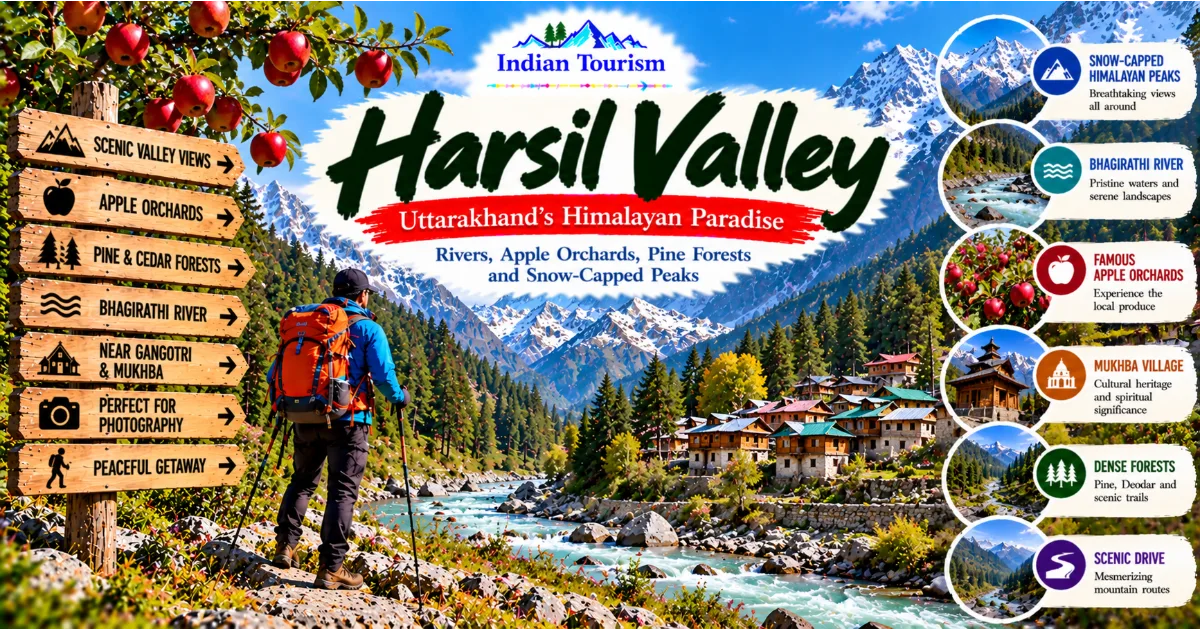
Harsil Valley is another prominent destination in Uttarkashi district, known for its mountain scenery, forests, river landscapes, and traditional settlements.
Located farther along the route towards Gangotri, Harsil offers a different experience from the administrative and commercial atmosphere of Uttarkashi town. The landscape includes forested slopes, open valley views, and villages where traditional life remains closely connected to the surrounding environment.
The valley's appearance changes with the seasons. Warmer months can bring green vegetation and flowing streams, while colder periods may create a stark landscape with snow at suitable elevations. Weather and road conditions affect the ease of travel throughout the year.
Harsil is often appreciated by travellers who want to spend time in a quieter Himalayan setting without necessarily undertaking a demanding high-altitude trek. However, visitors should still prepare for mountain travel, limited services in some areas, and potentially changing road conditions.
The surrounding villages offer opportunities to learn about local architecture, food, agriculture, and community traditions. Travellers should seek permission before photographing residents and should avoid treating private homes or agricultural land as public attractions.
Harsil can be included in a broader Uttarkashi itinerary, but visitors should plan transport and overnight stays according to the time available and current conditions.
Best Time to Visit Uttarkashi
The best time to visit Uttarkashi depends on the type of experience a traveller wants. The town can be visited for its temples and local culture during much of the year, but weather conditions influence road travel and access to nearby mountain destinations.
Spring and summer can be attractive for exploring the town, visiting temples, and travelling towards surrounding valleys. Conditions at higher elevations may remain colder than those in the town, so visitors should carry clothing suitable for different temperatures.
Autumn can provide clear views of the mountains during favourable weather. It may be an appealing period for photography and for travellers who prefer cooler conditions without the full intensity of winter.
The monsoon brings rain to the region and can create lush scenery. However, rainfall may also cause landslides, road disruptions, and changes in river levels. Travellers should check weather forecasts and local road information before departure.
Winter can bring cold conditions and snow to higher parts of the district. Some routes and destinations may become difficult to access, and seasonal restrictions may apply to certain pilgrimage sites.
For visits to Gangotri or Yamunotri, travellers should check the official opening and closing schedules rather than relying on general seasonal descriptions. The availability of individual routes may differ according to local conditions.
A flexible itinerary is especially useful in the Himalayas. Allowing additional time for travel delays and checking current conditions can make a visit safer and more enjoyable.
How to Reach Uttarkashi
Uttarkashi is connected by road to major towns in Uttarakhand, although the journey involves mountainous terrain and may take longer than expected.
By Road
Road travel is the principal way to reach Uttarkashi. Travellers commonly approach from Rishikesh or Dehradun and continue through the mountain valleys towards the town.
The journey offers changing views of river valleys, forested hills, settlements, and mountain roads. However, road conditions can be affected by weather, traffic, roadworks, and landslides.
Travellers should allow sufficient time for the journey and check local conditions before departure. During periods of heavy rainfall or other disruptions, delays may occur.
By Rail
Rishikesh is a commonly used rail access point for visitors heading towards Uttarkashi. Travellers can continue from the railway station by road using available transport arrangements.
Depending on train schedules and arrival times, an overnight stay in the area may make the onward journey easier. Visitors should verify current rail services and road transport availability when preparing their itinerary.
By Air
Jolly Grant Airport near Dehradun is the principal airport commonly used by travellers approaching Uttarkashi. From the airport, the remaining journey must be completed by road.
Because Uttarkashi lies in the mountains, reaching the airport does not mean the destination is immediately accessible. Travellers should account for several hours of onward travel and possible changes in road conditions.
Local Transport
Once in Uttarkashi, visitors may use locally available taxis and other transport services to reach nearby destinations. Availability varies according to the location, time of day, season, and demand.
For remote trekking routes, travellers should arrange transport and local guidance in advance. It is particularly important to confirm the return journey rather than assuming that transport will always be available at the trailhead.
Where to Stay in Uttarkashi
Uttarkashi offers accommodation options suited to different travel budgets and preferences. Depending on availability, visitors may find hotels, guesthouses, lodges, religious accommodation, and other basic or mid-range facilities.
Travellers visiting primarily for temple worship may prefer accommodation within convenient reach of the central town and its religious landmarks. Those planning to continue towards Gangotri or nearby trekking routes may choose accommodation based on their onward travel arrangements.
Visitors should confirm facilities before booking. Important details include room heating, hot water, meal availability, parking, transport assistance, and the distance from the places they intend to visit.
Accommodation standards can vary, particularly in smaller establishments and remote areas. Travellers who require particular facilities should communicate their needs in advance rather than assuming every property offers the same services.
During busy pilgrimage periods, accommodation demand may rise. Booking ahead can help reduce uncertainty, particularly for groups and families.
A comfortable stay also depends on realistic expectations. Uttarkashi is a mountain town with its own daily routines and practical limitations, not a large metropolitan destination with every service available at all times.
Local Etiquette and Responsible Tourism
Responsible behaviour is important when visiting Uttarkashi because its temples, riverfronts, and surrounding villages are places where people live and worship.
Visitors should dress respectfully when entering religious sites and follow any instructions concerning footwear, photography, offerings, and access to specific areas. Some parts of a temple may be restricted to particular visitors or activities.
The riverbanks should be kept clean. Plastic packaging, food waste, and other rubbish should be carried back and disposed of responsibly. Visitors should never assume that discarded materials will disappear naturally in a mountain environment.
Photography requires sensitivity. Travellers should ask permission before photographing individuals, especially during religious ceremonies or in residential settings. A camera should not become a reason to interrupt prayer or interfere with everyday activities.
Local businesses and services can benefit when travellers choose responsible operators and purchase appropriate local products. Supporting community enterprises can help distribute tourism income beyond larger commercial establishments.
Visitors should also remain aware of the natural environment. Wildlife should not be disturbed, vegetation should not be damaged, and mountain paths should be used according to local guidance.
Respect for local traditions and the environment allows tourism to contribute positively to Uttarkashi while preserving the qualities that make the destination distinctive.
Suggested Three-Day Uttarkashi Itinerary
A three-day itinerary can provide a useful introduction to Uttarkashi and its nearby attractions, although the exact plan should depend on current conditions and transport availability.
On the first day, travellers can arrive in Uttarkashi, settle into their accommodation, and explore the central town. A visit to Kashi Vishwanath Temple and the nearby Shakti Temple offers an introduction to the religious heritage. Depending on the time available, visitors can also explore suitable sections of the riverfront and observe the town's daily activities.
The second day can be devoted to a nearby destination such as Maneri Dam or a selected cultural and scenic area around the town. Travellers interested in hiking may prefer to arrange a suitable guided walk, depending on their fitness and the weather. Those planning a more demanding trek should not attempt to fit it into the same schedule without confirming the necessary time and arrangements.
The third day can be used for a carefully planned excursion or as the beginning of an onward journey towards Harsil and Gangotri. Travellers should verify the opening status of pilgrimage sites and allow enough time for mountain road travel.
This itinerary is only a planning framework. Distances and travel times can vary, and the best schedule depends on the season, road conditions, and the interests of the group.
Visitors who want to explore Dodital or Dayara Bugyal should allocate additional time rather than rushing through the experience.
Travel Budget and Practical Planning
The cost of visiting Uttarkashi depends on the starting city, travel season, accommodation type, transport arrangements, group size, and number of excursions.
Travellers using public transport and basic accommodation may spend less than those booking private vehicles, premium rooms, or organised trekking packages. Visits to remote destinations may require additional transport, guides, permits where applicable, and specialised equipment.
Rather than relying on a single fixed budget, travellers should estimate transport, accommodation, food, local travel, and any activity-specific costs separately. This approach makes it easier to compare options and account for unexpected expenses.
Pilgrimage travel may involve additional requirements. Visitors heading to Gangotri or Yamunotri should verify registration procedures and other official arrangements before departure.
A small emergency reserve is useful because mountain journeys can be affected by road closures, weather changes, and transport delays. Travellers should avoid arranging onward connections so tightly that a minor disruption creates unnecessary pressure.
The most suitable budget is one that balances affordability with safety, comfort, and realistic travel time.
Why Uttarkashi Deserves a Place on Your Travel List
Uttarkashi offers a combination of experiences that is difficult to capture through a single attraction. Its ancient temples reveal the town's religious significance, while the Bhagirathi River provides the geographical and spiritual foundation of the surrounding landscape.
The town also reflects the practical side of Himalayan life. Markets serve residents and travellers, mountain roads connect communities, and local institutions support activities ranging from education to mountaineering.
Its location creates opportunities to explore a wide variety of destinations within the district. Visitors can travel towards Harsil Valley, discover alpine meadows such as Dayara Bugyal, or arrange trekking experiences in forested mountain landscapes.
Yet Uttarkashi's greatest value may be the way these experiences connect. Religious practice, environmental conditions, local livelihoods, and the movement of pilgrims all contribute to the town's identity.
A visit becomes more rewarding when travellers allow time to observe the everyday details rather than treating Uttarkashi only as a stop on the way to Gangotri. The temple courtyards, riverfront spaces, local food, and surrounding settlements provide a fuller understanding of the region.
For travellers who want to explore Uttarakhand beyond its most famous destinations, Uttarkashi offers a meaningful introduction to the spiritual and cultural character of the Garhwal Himalayas.
Conclusion: Discovering the Soul of the Garhwal Himalayas
Uttarkashi is a destination where spirituality, history, mountain geography, and everyday life remain closely connected. Its association with Kashi Vishwanath Temple, the Shakti Temple, and the Bhagirathi River gives it a distinctive place within Uttarakhand's religious landscape.
Beyond its temples, the town serves as a gateway to alpine meadows, forest lakes, traditional villages, and the upper Himalayan valleys. The Nehru Institute of Mountaineering adds another dimension to its identity, reflecting the region's importance for mountain education and adventure.
The best way to experience Uttarkashi is to approach it with curiosity and respect. Visitors can explore its religious landmarks, learn about Garhwali traditions, sample regional food, and appreciate the landscape while recognising the practical challenges of mountain travel.
By supporting local businesses, respecting places of worship, protecting the river, and following current travel guidance, visitors can help preserve the town's cultural and environmental character.
Uttarkashi is more than a gateway to other destinations. It is a meaningful Himalayan destination in its own right, offering travellers an opportunity to understand the spiritual traditions, resilient communities, and natural landscapes that shape Uttarakhand.
#Uttarkashi #UttarakhandTourism #GarhwalHimalayas #IndianTourism #HimalayanHeritage