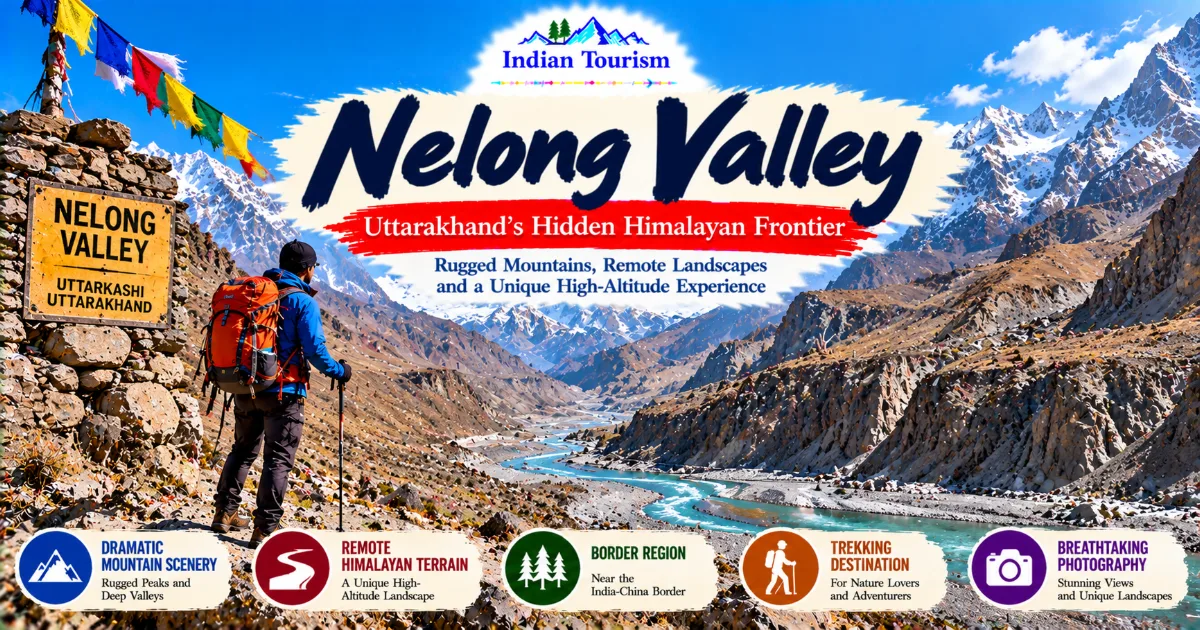
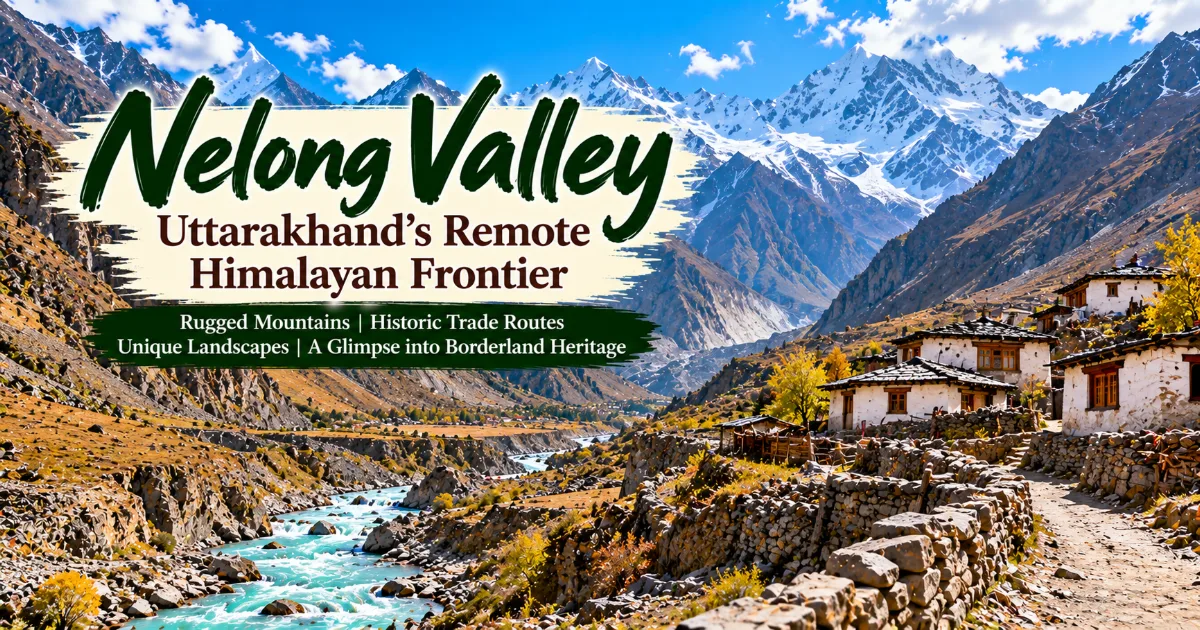
Nelong Valley is one of Uttarakhand’s most striking high-altitude landscapes, located in Uttarkashi district near the Indo-Tibetan border. Known for its rugged mountains, dramatic gorges, sparse vegetation, and historical connections with Himalayan trade routes, the valley offers a very different experience from the green hill stations and forested destinations commonly associated with Uttarakhand. Its remote environment and sensitive border location make it a fascinating subject for travellers interested in geography, history, and the cultural heritage of the Himalayas.
Discovering Nelong Valley
Uttarakhand is famous for its mountains, sacred rivers, pilgrimage destinations, and traditional villages. Yet the state also contains landscapes where the scenery becomes increasingly rugged and the signs of human settlement become less frequent. Nelong Valley belongs to this dramatic high-altitude world.
Located in the upper reaches of Uttarkashi district, Nelong Valley lies close to the Indo-Tibetan border. Its environment is shaped by steep rocky slopes, deep valleys, cold conditions, and limited vegetation. Unlike the lush forests and terraced fields found in many lower Himalayan regions, parts of Nelong have a stark appearance that reveals the influence of elevation, wind, and a relatively dry mountain climate.
The valley is important not only for its scenery but also for its history. The wider region was associated with traditional routes that connected communities across the Himalayas. These routes supported the movement of goods, people, and cultural influences through difficult mountain terrain.
Continue Reading
Nelong Valley also provides an opportunity to understand the relationship between geography and human life. Mountain communities developed routes and practices suited to their environment, while modern roads, administrative boundaries, and security requirements have changed how the region can be accessed.
For travellers, the valley represents a distinctive part of Uttarakhand's heritage. However, it is not an unrestricted tourist destination. Access is controlled, and visitors must confirm current permissions, entry requirements, and authorised travel arrangements before planning a visit.
Where Is Nelong Valley Located?
Nelong Valley is situated in Uttarkashi district in the Garhwal Himalayas of Uttarakhand. It lies in a remote mountain region near the Indo-Tibetan border, where rugged terrain and limited road access contribute to its distinctive character.
The surrounding landscape includes steep mountains, exposed rock formations, narrow valleys, and areas where vegetation is sparse. At higher elevations, the terrain can appear almost desert-like, with rocky slopes and muted colours replacing the greener scenery found at lower altitudes.
The wider district is shaped by Himalayan rivers and mountain watersheds. The geography has influenced settlement patterns, travel routes, and the development of local livelihoods over generations.
Because the valley is located in a sensitive border region, its accessibility differs from that of ordinary tourist destinations. Entry conditions may involve permits, identification requirements, designated routes, and other administrative instructions.
Travellers should check current information through the appropriate authorities before making arrangements. Information published in previous years may not reflect the rules currently in force.
The Unique Landscape of Nelong Valley
Rugged Mountain Terrain
One of Nelong Valley's most striking characteristics is its rugged mountain environment. Steep slopes rise above narrow valleys, and exposed rock dominates large sections of the landscape.
The terrain reflects the geological forces that have shaped the Himalayas over millions of years. Tectonic movement, erosion, river action, freezing temperatures, and weathering have contributed to the formation of cliffs, ridges, and deep valleys.
Unlike destinations where thick vegetation covers much of the landscape, Nelong offers broad views of the underlying rock. These features make it particularly interesting for travellers who enjoy observing mountain geology and the relationship between landforms and climate.
The rugged terrain also explains why travel in the region requires careful planning. Roads and paths must navigate steep gradients, exposed slopes, and areas where rockfall or landslides may occur.
Visitors should follow authorised routes and avoid walking onto unstable ground. The dramatic appearance of the landscape should never encourage unsafe exploration.
A High-Altitude Environment
High altitude influences nearly every aspect of the Nelong Valley experience. Temperatures can vary considerably between daytime and nighttime, and weather may change rapidly.
The air is thinner at higher elevations, meaning that physical activity can feel more demanding than it would at sea level. Some visitors may experience headache, dizziness, unusual fatigue, or breathlessness when ascending too quickly.
Travellers should avoid rushing, remain alert to symptoms of altitude illness, and follow medical guidance where necessary. Anyone experiencing severe symptoms should seek immediate assistance and descend when advised.
Warm clothing, sun protection, suitable footwear, and sufficient drinking water are important for mountain travel. Visitors should also recognise that services may be limited in remote areas.
Sparse Vegetation and Mountain Ecology
Nelong Valley's vegetation reflects the environmental conditions of the high Himalayas. Cold temperatures, wind exposure, rocky ground, and limited growing seasons restrict the types of plants that can thrive in many areas.
This does not mean that the landscape lacks ecological value. High-altitude environments support specialised plant and animal communities adapted to difficult conditions.
The relative openness of the terrain can make wildlife signs and geological features easier to notice, but visitors should not assume that animals will be easy to see. Wildlife encounters depend on season, weather, habitat, and many other factors.
Travellers should observe animals from a safe distance, avoid feeding them, and never attempt to approach or corner wildlife for photographs.
Protecting these fragile environments requires careful behaviour. Littering, disturbing animals, or damaging vegetation can have consequences that are difficult to reverse in places where ecological recovery is slow.
The Historical Importance of Nelong Valley
Traditional Himalayan Trade Routes
The wider Nelong region has historical connections with routes that linked communities across the Himalayas. Before modern transport networks transformed mountain travel, traders and travellers relied on established paths through valleys and high mountain passes.
These routes were important for exchanging goods between settlements with different climates and resources. Movement through the mountains required detailed knowledge of the terrain, weather, river crossings, and seasonal conditions.
Trade networks also created opportunities for cultural interaction. People travelling between regions carried languages, traditions, knowledge, and stories alongside the goods they exchanged.
Nelong Valley's geographical position helps explain why routes through the surrounding mountains held historical importance. Although the terrain was difficult, established paths created connections that would otherwise have been challenging to maintain.
The region's history should be understood within this wider context of Himalayan movement and exchange. Individual routes changed over time, and the precise history of specific trading practices may vary by period and community.
Communities and Cross-Border Connections
Mountain communities historically maintained relationships that were shaped by geography rather than by modern transport systems alone. Seasonal movement, trade, family connections, and cultural exchange helped create links across valleys and mountain boundaries.
The upper Himalayan border region was not always experienced as a remote frontier in the same way it is understood today. For people who depended on mountain routes, the landscape formed part of a wider network of travel and livelihood.
Modern national boundaries and security arrangements have transformed these patterns. Some traditional routes became restricted, and the movement of people and goods changed significantly.
Nelong Valley therefore offers an opportunity to reflect on how political geography can reshape local life. A route that once supported regular exchange may later become subject to restrictions because of changing borders and security priorities.
Visitors should approach this history with care, recognising both the importance of traditional connections and the realities of modern border administration.
Gartang Gali and the Region's Heritage
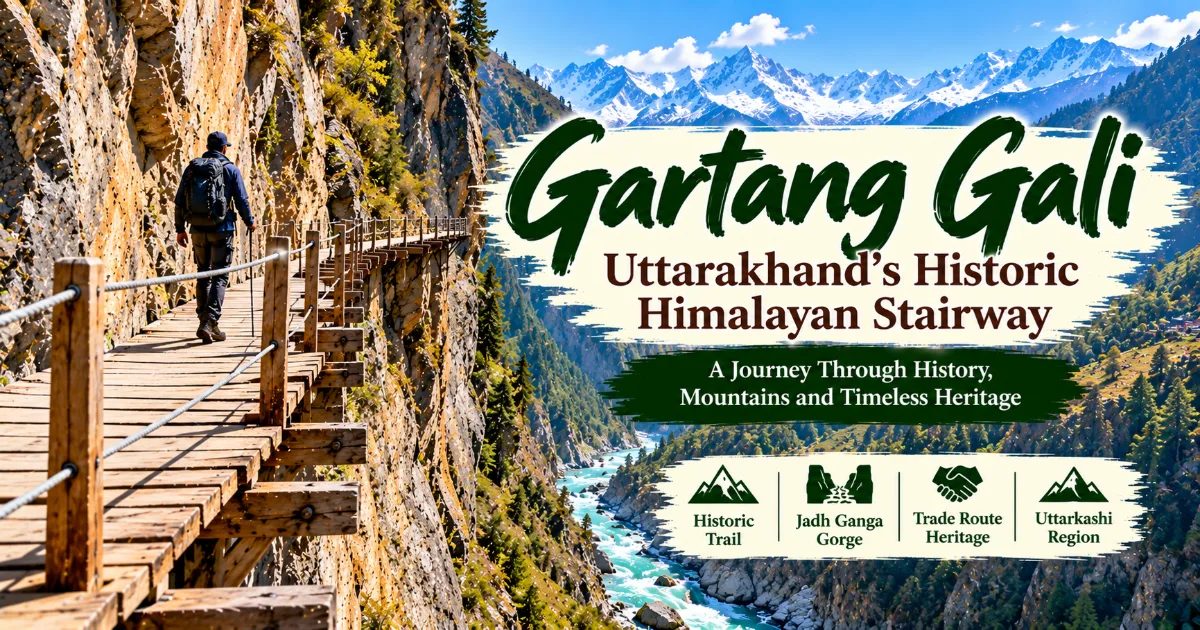
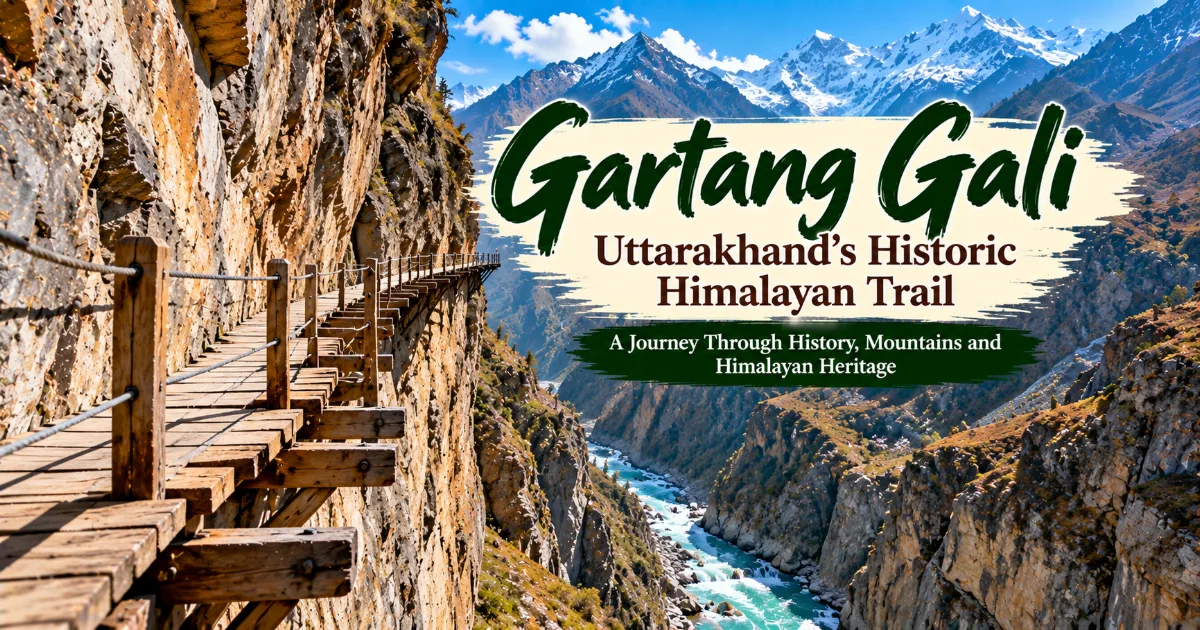
Gartang Gali is a historic cliffside walkway associated with the wider upper Uttarkashi region. Its unusual construction illustrates how people adapted infrastructure to difficult mountain terrain.
The walkway is often discussed in connection with historic trade and movement across the Himalayan border region. Its position along a steep rock face provides a visible example of the engineering challenges faced by people who travelled through these mountains.
Gartang Gali and Nelong Valley are related through their broader geographical and historical setting, but they should not be treated as interchangeable destinations. Each has its own physical features, access arrangements, and visitor requirements.
Anyone planning to visit either location should confirm the current regulations for that specific site. Permission to access one area does not necessarily authorise entry to another.
Why Nelong Valley Looks Different from Other Parts of Uttarakhand
Uttarakhand contains a remarkable range of landscapes, from humid foothills and dense forests to alpine meadows, glacial valleys, and high mountain deserts.
Nelong Valley stands out because parts of its environment have a dry, rocky appearance. The landscape lacks the continuous green cover that many travellers associate with the state's popular hill stations.
Several environmental factors influence this appearance. Elevation affects temperature and the growing season, while mountain orientation and local precipitation patterns influence vegetation. Exposed slopes and rocky terrain also limit the areas where plants can establish themselves.
The resulting scenery can feel stark and expansive. Long views across mountain slopes, deep valleys, and exposed rock create a different visual experience from destinations dominated by forests and cultivated land.
This contrast makes Nelong Valley an interesting destination for people who want to understand the environmental diversity of Uttarakhand.
However, the landscape's beauty should not obscure its challenges. High-altitude conditions and remote access require preparation, and visitors should not attempt independent exploration beyond authorised areas.
Best Time to Visit Nelong Valley
Summer
The warmer months are generally the most practical period to investigate travel to high-altitude destinations in Uttarkashi district. Snow conditions may become less restrictive, and road access can improve compared with winter.
However, Nelong Valley's operating period is determined by official access arrangements, not simply by weather. Visitors must confirm whether entry is permitted on their intended dates.
Summer temperatures may feel comfortable during sunny afternoons, but mornings and evenings can remain cold. Carry warm layers, sun protection, and appropriate footwear.
The combination of high altitude and long road journeys makes a flexible itinerary important. Allow enough time for checkpoints, travel procedures, and possible delays.
Early Autumn
Early autumn may provide clear views of the mountain landscape, depending on the weather and local conditions.
The season can be appealing to photographers and travellers interested in observing the valley's geology and rugged terrain. However, access rules remain the primary consideration.
Visitors should confirm the permitted dates, transport arrangements, and road conditions before departure. A clear forecast does not guarantee that every route will be open.
Monsoon
The monsoon can bring heavy rainfall to parts of Uttarakhand. Although the upper valley may have different local conditions from lower regions, the approach roads can still be affected by rain, landslides, and falling rocks.
Travellers should pay particular attention to official road updates and weather warnings. Remote mountain routes may have limited alternative access if a section becomes blocked.
Do not attempt to cross closed roads or bypass official barriers. If conditions are unsafe, postponing the visit is the responsible choice.
Winter
Winter can bring severe cold and snow to the higher reaches of Uttarkashi district. Roads may become difficult or impossible to use, and access to sensitive areas may be restricted.
Visitors should not assume that Nelong Valley can be explored independently during winter. Any proposed trip should be based on current official guidance.
The availability of accommodation, transport, and other services may also be limited. Travellers should avoid making non-refundable arrangements before confirming that access is permitted.
How to Reach Nelong Valley
By Air
Jolly Grant Airport near Dehradun is a common air gateway for travellers visiting Uttarkashi district.
From the airport, visitors continue by road towards Uttarkashi and the upper mountain region. The journey can be long, and actual travel time depends on traffic, weather, road conditions, and administrative requirements.
Travellers should not plan to reach the valley immediately after landing without allowing time for the mountain drive and any required procedures.
An overnight stop along the route can make the journey more comfortable and provide an opportunity to confirm the latest travel information.
By Train
Haridwar and Rishikesh are commonly used railway gateways for journeys into the Garhwal Himalayas.
From these locations, visitors travel by road towards Uttarkashi before continuing towards the designated access area for Nelong Valley.
Train schedules should be coordinated with the expected road journey. A late arrival may make it impractical to continue safely into the mountains on the same day.
Travellers should also consider the needs of their group, including rest breaks, food, medicines, and suitable clothing.
By Road
The wider Nelong Valley region is approached through Uttarkashi district, but access to the valley is subject to official rules and designated routes.
Visitors may need to arrange authorised transport, carry specified identification, obtain permits, or complete registration procedures. The exact requirements should be confirmed before departure.
Do not assume that private vehicles can travel directly to every location within the valley. Follow current directions from the relevant authorities and respect all checkpoints and restricted areas.
Because mobile connectivity may be unreliable, travellers should keep essential information available offline and share their itinerary with a trusted person.
Permits and Border Restrictions
Nelong Valley's location near the Indo-Tibetan border makes entry requirements a central part of travel planning.
Sensitive border areas may have restrictions on movement, photography, transport, and access to particular locations. Requirements can change in response to administrative or security considerations.
Before travelling, contact the relevant district authorities or official tourism information channels to establish the current rules. Ask whether permits are required, which identification documents must be carried, and which routes visitors are authorised to use.
Do not rely solely on older articles, travel videos, or social media posts. A route that was accessible during a previous season may be closed or subject to different procedures today.
Visitors should follow all instructions provided at checkpoints. Do not photograph restricted infrastructure or sensitive locations where photography is prohibited.
Respecting these rules is essential for personal safety, local security, and responsible tourism.
What Can Travellers Learn from Nelong Valley?
Geography and Climate
Nelong Valley provides an opportunity to observe the influence of elevation, geology, and climate on a Himalayan landscape.
The rocky slopes and limited vegetation show how environmental conditions vary across the mountains. Visitors can compare the valley with greener parts of Uttarakhand and consider how rainfall, temperature, soil, and topography influence plant growth.
The region also illustrates the challenges of building and maintaining transport routes in steep terrain. Roads and paths must accommodate the shape of the mountains while responding to weather and geological hazards.
History and Cultural Exchange
The valley's association with traditional Himalayan routes helps explain how mountain communities maintained connections across difficult terrain.
Trade and travel supported more than economic exchange. They contributed to cultural relationships, shared knowledge, and the movement of traditions between regions.
Understanding this history provides a broader perspective on the Himalayas. The mountains were not simply barriers separating communities. In many places, established routes enabled interaction and exchange.
Conservation and Responsible Travel
Remote high-altitude environments can be sensitive to disturbance. Waste, careless vehicle use, and unauthorised movement may create problems for both the landscape and local administration.
Visitors should follow designated routes, carry out their waste, and avoid disturbing wildlife or vegetation.
Responsible travel also means respecting the restrictions imposed on sensitive border areas. Conservation, security, and community interests should take priority over a desire to reach every viewpoint.
Photography in Nelong Valley
The rugged terrain of Nelong Valley can provide dramatic photographic opportunities. Exposed rock, mountain ridges, deep valleys, and open skies create strong natural contrasts.
Photographers may find the landscape particularly interesting because it differs from the lush forests and alpine meadows often associated with Uttarakhand.
Wide views can communicate the scale of the valley, while closer images can reveal geological details and the textures of the surrounding terrain.
However, photography must comply with local restrictions. Some locations may prohibit photography because of their sensitive border setting.
Visitors should ask for clarification whenever rules are uncertain. Never photograph restricted infrastructure or cross a barrier to obtain a better view.
Weather can also affect photography and visibility. Carry suitable protection for equipment and avoid remaining exposed during dangerous weather.
Responsible Tourism in a Sensitive Himalayan Region
Responsible tourism in Nelong Valley involves more than keeping the landscape clean. It requires respect for the area's environmental conditions, local communities, and security arrangements.
Visitors should remain on authorised routes and avoid approaching restricted zones. They should follow instructions from officials and refrain from actions that could create difficulties for local residents or security personnel.
Waste should be carried back to appropriate disposal facilities. Plastic bottles, food wrappers, and other rubbish should never be left along roads or in valleys.
Wildlife should be observed from a distance, and vegetation should not be damaged for photographs or souvenirs.
Travellers should also recognise that local facilities may be limited. They should plan food, drinking water, medication, and transport arrangements carefully rather than expecting the services available in a large tourist town.
Supporting responsible travel helps preserve the region's natural and historical value while respecting the circumstances of a sensitive border landscape.
Health and Safety in the High Himalayas
High-altitude travel requires preparation. The thinner air can affect people differently, and some visitors may develop symptoms of altitude illness.
Travellers should allow time to adjust to elevation where required and avoid unnecessary physical exertion. Headache, nausea, dizziness, and unusual fatigue should not be ignored.
Severe symptoms require urgent medical attention and may require descent. Anyone with a relevant medical condition should seek professional advice before planning high-altitude travel.
Cold weather, strong sunlight, and sudden changes in conditions are additional considerations. Carry warm clothing, sun protection, suitable footwear, and sufficient drinking water.
The remote setting also means that assistance may not be immediately available. Confirm transport arrangements and follow official guidance about the duration and permitted scope of the visit.
The safest journey is one that respects both personal limits and the restrictions imposed by local authorities.
Who Should Consider Visiting Nelong Valley?
Nelong Valley may appeal to travellers interested in Himalayan geography, borderland history, remote landscapes, and traditional trade routes.
Nature enthusiasts may appreciate its rugged terrain and distinctive environmental character. History enthusiasts may be interested in the valley's wider connections with Himalayan movement and exchange.
Students of geography and environmental studies can use the region as a starting point for learning about high-altitude ecosystems, mountain geology, and the challenges of transport infrastructure.
However, the destination may not suit travellers seeking a conventional holiday with unrestricted access and extensive tourist facilities. Entry requirements and limited services make advance planning essential.
Visitors should also consider their tolerance for long road journeys and high-altitude conditions. A carefully organised visit is more appropriate than an improvised trip.
A Practical Travel Plan
A visit to Nelong Valley should begin with confirming whether entry is permitted on the intended dates.
Travellers can then organise transport through the appropriate channels and establish which documents, permits, and procedures are required. Accommodation and overnight stops should be planned according to the route and available services.
Allow sufficient time for road travel and administrative checks. Avoid planning several distant attractions around a fixed schedule, as conditions can change quickly in the mountains.
Carry essential supplies, warm clothing, medication, and drinking water. Keep your itinerary flexible and follow the directions of local authorities throughout the journey.
If access is restricted or weather conditions become unsafe, change the plan rather than attempting to continue.
Conclusion
Nelong Valley is a distinctive part of Uttarakhand's high Himalayan landscape, combining rugged mountain scenery with a history connected to traditional routes and cross-border cultural exchange. Its exposed rock formations, deep valleys, and remote setting offer a perspective very different from the greener destinations commonly associated with the state.
The valley also illustrates how geography influences human movement. For generations, mountain routes helped communities maintain economic and cultural connections. Modern borders and security arrangements have changed how these regions can be accessed, making responsible planning essential.
Anyone considering a visit should confirm current permissions, follow authorised routes, prepare for high-altitude conditions, and respect the area's environmental and security requirements.
For travellers interested in understanding the deeper geographical and historical character of Uttarakhand, Nelong Valley offers a compelling subject of exploration. Its significance lies not only in its scenery but also in the story of people who adapted to one of the most challenging environments in the Himalayas.