Discovering Jammu and Kashmir Through Its Markets
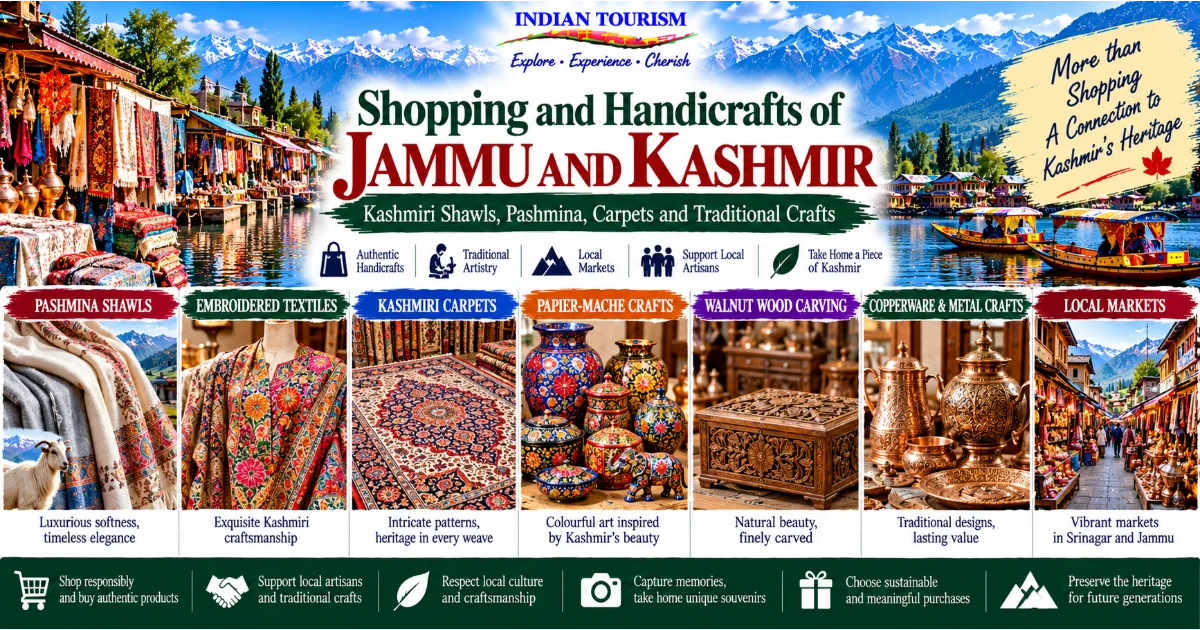
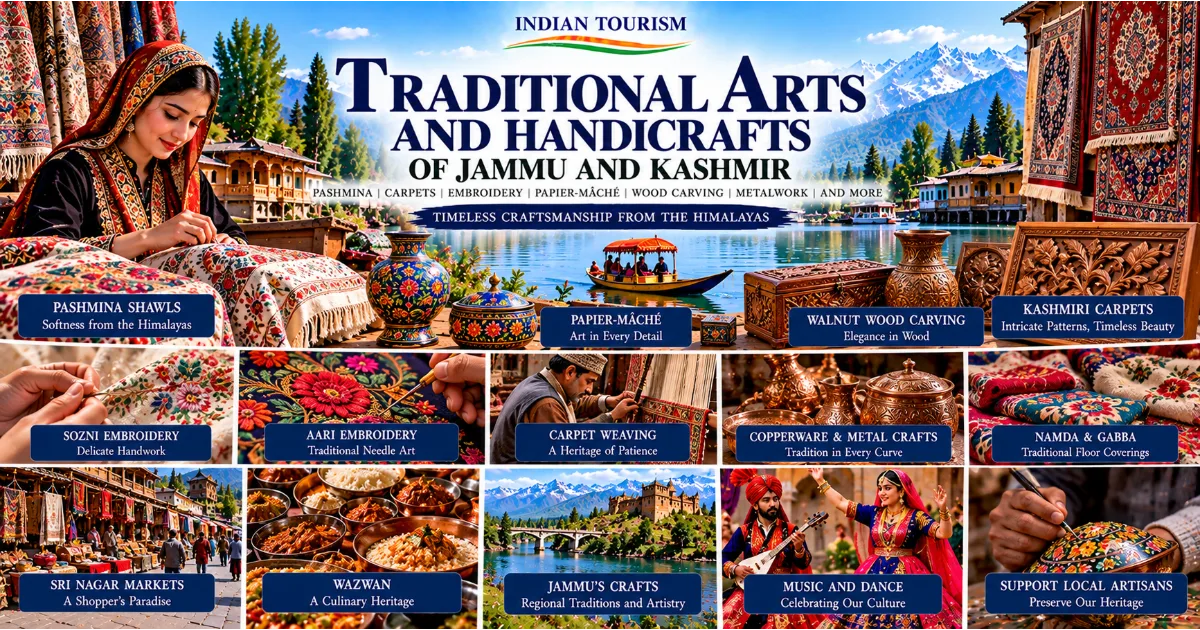
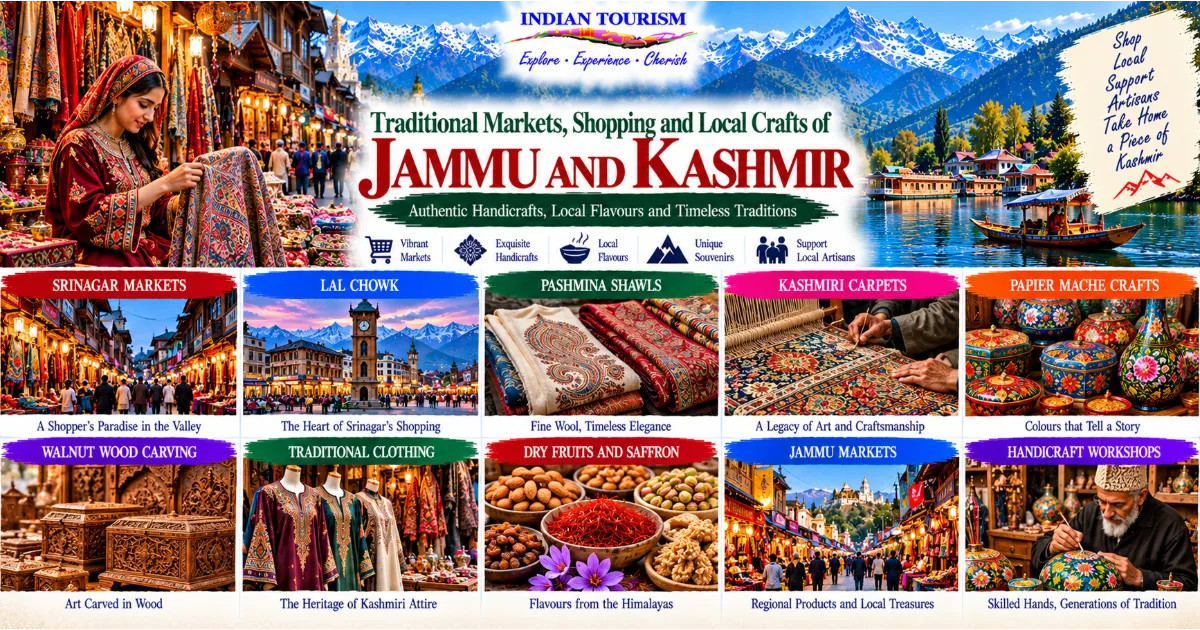
The markets of Jammu and Kashmir offer travellers a way to understand the region through its craftsmanship, food, textiles and everyday commercial life. Beyond the familiar attractions of snow-covered mountains, lakes and historic gardens, local bazaars preserve traditions of weaving, embroidery, wood carving, metalwork and decorative painting. Their shops and workshops connect visitors with artisans whose skills have developed through generations of practice.
Shopping in Jammu and Kashmir is not simply about purchasing souvenirs. It can reveal how local materials are transformed into useful and decorative objects, how traditional designs are adapted for contemporary customers, and how small businesses support household incomes. A beautifully embroidered shawl, a hand-knotted carpet, a carved wooden object or a box decorated with papier-mache designs may represent hours of skilled labour.
Srinagar is particularly well known for its handicrafts and textile traditions. Its markets offer shawls, carpets, embroidered fabrics, papier-mache products, walnut wood carvings, traditional clothing and regional food products. The old city contains shops and workshops connected with long-established craft traditions, while commercial areas around the lake and major tourist routes cater to visitors seeking souvenirs and gifts.
Jammu has a different shopping character, with busy city markets, traditional food shops, religious merchandise, textiles, household goods and products from the wider Jammu region. Travellers can also find locally made items and regional specialities in smaller towns, depending on the location and season.
Continue Reading
The most rewarding shopping experience comes from understanding what makes an item distinctive. Learning about materials, production methods, regional designs and the time involved in making a product helps visitors make informed choices. It also encourages fair purchasing decisions that recognise the value of skilled work.
This guide explores the shopping districts, craft traditions, regional products and practical considerations that can help travellers discover the markets of Jammu and Kashmir. It also explains how to shop responsibly, identify useful product information and support authentic local craftsmanship.
Srinagar's Traditional Markets: A Living Commercial Heritage
Srinagar's markets reflect the city's long history as a centre of trade, craftsmanship and urban life. The old city, with its historic neighbourhoods, traditional buildings and busy streets, provides a particularly interesting setting for exploring local commerce.
Markets in Srinagar sell a wide variety of goods, from everyday household products and clothing to traditional handicrafts and regional food. Some businesses specialise in a particular craft, while others offer a mixture of textiles, decorative objects and souvenirs. The atmosphere changes throughout the day as residents shop for daily needs, traders receive goods and visitors explore the streets.
The old city is especially valuable for travellers interested in the relationship between architecture and commerce. Shops and workshops are often integrated into older streetscapes, creating an environment where trade forms part of the neighbourhood's identity. Visitors can observe the movement of goods and people while learning how local businesses operate.
Shopping areas around Dal Lake and established tourist routes may offer convenient access to handicrafts and souvenirs. These locations can be useful for visitors with limited time, although prices, product selection and the availability of artisan-made goods vary between businesses.
Travellers should not assume that every item labelled as traditional is handmade locally. Products may differ in material, production method and origin. Asking questions about the item and requesting clear information about its construction can help buyers understand what they are purchasing.
Markets are also places where local residents carry out ordinary activities. Visitors should avoid blocking narrow passages, ask permission before photographing shopkeepers or workshops, and remain considerate when browsing crowded stalls.
A market visit becomes more meaningful when travellers take time to speak with sellers, learn about the products and compare craftsmanship rather than focusing only on bargaining. Srinagar's markets are not merely shopping destinations. They are part of the city's continuing cultural and economic life.
Lal Chowk: Shopping in the Heart of Srinagar
Lal Chowk is one of Srinagar's best-known commercial areas. It is an important centre for shopping, business and urban activity, with shops selling clothing, textiles, accessories, electronics, food products and a variety of everyday goods.
Unlike a specialised handicraft market, Lal Chowk offers a broad picture of contemporary commercial life in Srinagar. Traditional products may be available alongside modern retail goods, reflecting the changing preferences of local residents and visitors.
The area's busy streets provide an opportunity to observe how shopping contributes to the rhythm of the city. Businesses serve local customers as well as tourists, and the range of goods can make Lal Chowk useful for practical purchases during a trip.
Visitors looking for shawls, embroidered clothing or other regional products may find relevant shops in and around the commercial district. However, buyers should compare materials, workmanship and prices rather than assuming that location alone guarantees authenticity.
Shopping in a busy urban area requires basic precautions. Keep valuables secure, be aware of traffic and pedestrian movement, and agree on prices before purchasing products when prices are not displayed. Travellers should also confirm the opening hours of individual shops because these can vary.
Lal Chowk can be combined with other Srinagar attractions, depending on available time and transport arrangements. It is particularly suitable for travellers who want to experience a lively city market rather than a dedicated craft demonstration.
The commercial district illustrates how Srinagar combines traditional trade with modern retail. It offers visitors a useful introduction to the city's everyday economy and provides access to products that range from practical necessities to regional souvenirs.
The Old City Bazaars: Discovering Traditional Shops and Workshops
The old city of Srinagar contains a network of historic streets and neighbourhoods where commerce remains closely connected with residential life. These areas can offer a more intimate view of local shopping than large commercial centres, although the experience depends on the particular street and business.
Traditional shops may sell textiles, household goods, food, religious items and handicrafts. Some workshops are associated with specialised production, while other businesses focus mainly on retail. Visitors interested in craftsmanship should ask whether a shop makes its own products or purchases them from other producers.
The old city's built environment adds to the experience. Wooden balconies, traditional buildings, narrow streets and historic religious landmarks create a distinctive setting for browsing local businesses. These features are part of a living urban landscape, not simply a decorative backdrop.
A guided walking visit can help travellers understand the history of particular neighbourhoods and the crafts associated with them. A knowledgeable guide may explain how products are made, where materials come from and how traditional businesses have adapted to changing markets.
Visitors should remain aware that many streets are busy with residents and deliveries. Narrow passages should be kept clear, and photography should be undertaken with permission, especially near homes and workshops.
Not every shop will welcome lengthy demonstrations or detailed questions when it is busy. Travellers should be considerate of the seller's time and avoid assuming that artisans can interrupt their work whenever a visitor arrives.
The old city is particularly rewarding for people who enjoy cultural exploration. Its markets reveal the connections between local architecture, family businesses, traditional skills and daily life in Srinagar.
Kashmiri Pashmina: Understanding Fine Wool and Craftsmanship
Pashmina is one of the most recognised textile traditions associated with Kashmir. Fine pashmina fibre is valued for its softness, warmth and lightness, and the production of high-quality shawls can involve several stages of specialised work.
The process may include fibre preparation, spinning, weaving, washing, finishing and, in some cases, embroidery. Different artisans may contribute to different stages, creating a chain of skills that supports the wider textile industry.
The term Pashmina is widely used in retail marketing, so buyers should ask clear questions about fibre content, construction and product origin. A label or verbal claim alone may not provide enough information to establish what a particular shawl contains. Where available, credible product documentation or recognised certification can offer additional reassurance.
Handwoven shawls may vary in texture, weight, pattern and finish. Some are relatively plain, allowing the quality of the fibre and weaving to remain central, while others feature embroidery or decorative borders. The price depends on several factors, including materials, workmanship, design and the time required for production.
Visitors should handle shawls carefully and ask how they should be cleaned and stored. Fine textiles may require gentle care, and following the seller's instructions can help preserve the product.
It is also useful to distinguish between purchasing a finished product and visiting a production workshop. A retail shop can offer a broad selection, while a workshop demonstration may provide insight into the labour involved in spinning, weaving or finishing.
Pashmina is not merely a luxury souvenir. It represents a network of traditional skills and commercial relationships. Buyers who take time to understand the product can make more informed decisions and better appreciate the work behind it.
Kashmiri Shawls and Embroidery: Designs Rooted in Regional Craft
Kashmiri shawls are known for their variety of materials, patterns and decorative techniques. Some are valued for their fine fibre and simple finish, while others feature detailed embroidery that transforms the fabric into a richly decorated textile.
Embroidery traditions include techniques such as sozni work, which is associated with fine needlework and detailed patterns. Depending on the design, artisans may create floral motifs, borders and intricate arrangements influenced by regional artistic traditions.
The time required to complete a shawl depends on the complexity of the pattern, the number of stitches and the size of the decorated area. Highly detailed work may require substantial skill and patience, making the quality of workmanship an important consideration when comparing products.
Travellers should ask about the material, the embroidery method and whether the decoration is handmade or machine-produced. These differences can influence the appearance, durability and price of a shawl.
Colour and pattern preferences vary widely. Some buyers prefer traditional floral designs, while others look for simpler pieces that can be worn with contemporary clothing. A useful purchase is one that suits the buyer's needs as well as their interest in the craft.
When shopping, inspect the fabric, edges, stitching and overall finish. Look for consistency in the work and ask how the item should be washed or stored. A careful inspection can help buyers understand quality without relying entirely on the seller's description.
Shawl shopping can be an opportunity to learn about Kashmir's textile heritage. Asking thoughtful questions and recognising the labour involved can make the purchase more rewarding than choosing a product based only on its appearance.
Kashmiri Carpets: The Art of Pattern and Precision
Kashmiri carpets are among the region's best-known craft products. Handmade carpets can involve complex patterns, carefully selected materials and skilled knotting or weaving techniques. Their designs may include floral forms, repeating geometric arrangements and compositions influenced by regional artistic traditions.
The production process can be labour-intensive. Depending on the technique, artisans may follow a detailed pattern while tying knots, managing the tension of the yarn and maintaining consistency across the carpet. Washing, trimming and finishing are also important to the final appearance.
Carpets vary in fibre, construction, knot density, design complexity and size. Woollen carpets, silk carpets and products using mixed materials may have very different prices and care requirements. Buyers should ask for clear information about the materials and manufacturing method.
The design is only one part of quality. Evenness, finishing, durability and the suitability of the material for its intended use should also be considered. A carpet intended for everyday use may require different characteristics from one purchased primarily for display.
Travellers purchasing a large carpet should clarify delivery arrangements, shipping charges, insurance, return policies and any documentation provided by the seller. Written details can be especially useful for expensive purchases.
A workshop visit, when genuinely available, may help visitors understand the labour involved in making a carpet. However, not every retailer operates a production workshop, and demonstrations should be arranged respectfully rather than assumed.
Kashmiri carpets connect decorative design with skilled production. By learning about the materials and techniques, travellers can appreciate why handmade carpets are valued and make better-informed choices when buying one.
Papier-Mache Crafts: Decorative Art in Everyday Objects
Papier-mache is an important decorative craft associated with Kashmir. Artisans use shaped paper material to create objects that can be painted and ornamented with detailed designs. Products may include boxes, bowls, decorative panels and other objects intended for display or practical use.
The process generally involves preparing a form, applying layers of paper material, allowing the object to dry and then decorating its surface. The finishing stage can require careful painting and fine brushwork, especially when the design includes intricate floral patterns or elaborate borders.
The appearance of papier-mache products varies according to the form, quality of the base, paintwork and finish. Some objects are brightly decorated, while others use more restrained colours. The level of detail can influence the amount of labour involved.
Visitors should ask whether an item is handmade, how it has been finished and whether it is suitable for regular handling. Some decorative pieces are more delicate than they appear, and products may require protection from moisture or rough treatment.
Papier-mache is particularly suitable for travellers looking for compact souvenirs that are easier to carry than large carpets or heavy wooden objects. Small boxes and decorative pieces can also make thoughtful gifts, provided they are packed carefully.
When buying, inspect the surface for consistent decoration, the quality of the finish and any visible damage. Compare products from different sellers and ask about packaging if the item will be transported over a long distance.
This craft demonstrates how ordinary materials can be transformed into decorative objects through specialised knowledge and artistic skill. Purchasing from responsible sellers can help sustain the tradition while giving visitors a tangible connection to Kashmiri craftsmanship.
Walnut Wood Carving: The Beauty of Detailed Handwork
Walnut wood carving is a distinctive craft associated with Kashmir. Artisans create decorative panels, furniture, boxes and other objects from walnut wood, using carving techniques that can produce detailed floral, geometric and other ornamental designs.
The work may range from relatively simple decoration to elaborate carving across large surfaces. Fine carving requires control of tools, careful planning and an understanding of how the grain and characteristics of the wood affect the finished object.
Walnut wood products can vary significantly in price because of differences in size, material, design complexity and labour. A small carved box requires a different amount of work from a large piece of furniture, while the level of detail can also influence cost.
Visitors should inspect the quality of the carving and ask about the type of wood used. For larger purchases, it is sensible to clarify dimensions, weight, packaging and delivery arrangements before paying.
A genuine workshop visit can provide insight into the tools and techniques used by artisans. Travellers should ask permission before taking photographs and avoid touching unfinished pieces or tools without guidance.
Wooden objects may need care to protect them from moisture, extreme temperatures and rough handling. Buyers should ask for appropriate maintenance advice, especially for furniture and larger decorative items.
Walnut carving is more than a decorative product category. It represents specialised craftsmanship and a long relationship between material, design and skilled labour. Understanding the work behind each object helps visitors recognise quality and make more thoughtful purchases.
Traditional Kashmiri Clothing and the Pheran
The pheran is a well-known garment associated with Kashmir. Traditionally designed to provide warmth, it is a loose outer garment worn by people across different age groups and social settings, although styles and personal preferences vary.
Pherans may be made from different fabrics depending on the season, intended use and buyer's preference. Some are simple and practical, while others feature embroidery, decorative borders or more elaborate designs. Modern versions may combine traditional silhouettes with contemporary colours and tailoring.
Visitors looking to purchase a pheran should consider the intended use, fabric weight, fit and ease of care. A garment designed for cold weather may be less comfortable in warmer conditions, while a lighter version may serve a different purpose.
Embroidery and decorative details can influence the price. Buyers should ask whether the work is handmade or machine-produced if this distinction matters to them. As with other textiles, clear product information is more useful than relying on broad claims of authenticity.
Traditional clothing can provide a meaningful souvenir because it connects the buyer with the region's climate and cultural identity. However, travellers should remember that local clothing practices are diverse and continue to change. The pheran is an important garment, but it does not represent every aspect of Kashmiri dress.
When trying on clothing in a shop, ask about sizing and alteration options. For purchases intended as gifts, confirm the return or exchange policy before paying.
Shopping for a pheran offers an opportunity to learn how clothing traditions respond to cold weather, daily routines and changing fashion. It can also help visitors appreciate the practical knowledge embedded in traditional garments.
Jammu Markets: Regional Products, Textiles and Everyday Shopping
Jammu's markets provide a different shopping experience from Srinagar's specialist handicraft districts. The city's commercial areas serve residents as well as visitors, offering clothing, textiles, footwear, household goods, food products, religious items and other everyday necessities.
Busy markets can be useful for travellers who need practical supplies or want to explore local retail culture. Depending on the shop and location, visitors may also find regional foods, traditional products and goods associated with the wider Jammu region.
Jammu's shopping character reflects its position as an important urban centre and a gateway for pilgrims travelling to destinations such as the Shri Mata Vaishno Devi Shrine. Some businesses cater to pilgrimage needs, while others serve the city's wider population.
Visitors should compare prices and product quality, particularly when buying items that are widely available from different sellers. Where prices are not displayed, ask clearly before making a purchase. Receipts are useful for expensive items or purchases that may need to be exchanged.
Food shopping can be an enjoyable part of the experience. Regional sweets, packaged foods and locally produced items may be available, although travellers should check ingredients, packaging and expiry information before purchasing products to take home.
Market conditions can vary with the day, season and local events. Some areas may become especially busy during pilgrimage periods or festivals, so visitors should allow additional time for transport and shopping.
Jammu's markets show that regional shopping is not limited to traditional handicrafts. They reveal the everyday commercial life of a city and provide opportunities to discover local products while supporting small businesses.
Dry Fruits, Saffron and Regional Food Products
Dry fruits and saffron are among the regional products many travellers consider when shopping in Jammu and Kashmir. Almonds, walnuts and other nuts may be sold in markets and specialist food shops, while saffron is associated with cultivation in parts of the Kashmir Valley.
Quality varies between products and sellers, so buyers should pay attention to packaging, freshness, origin information and storage conditions. A product's appearance alone does not establish its quality or authenticity.
Saffron is valued for its colour, aroma and flavour, and small quantities can be expensive because production is labour-intensive. Travellers should ask about the product's origin and look for credible information from the seller. Avoid assuming that every product sold under a regional label comes from the same place or has the same quality.
Dry fruits should be checked for freshness, cleanliness and suitable packaging. Products intended to be carried over long distances should be sealed properly, and travellers should be aware of customs or import restrictions that may apply at their destination.
Local food markets can also offer dried vegetables, spices, sweets and other regional products. Availability depends on the season and the individual shop. Asking how a product is traditionally used can provide useful cultural context as well as practical cooking advice.
For gifts, consider the recipient's preferences, dietary requirements and ability to store the product. Food items can be meaningful souvenirs, but they should be selected with care rather than purchased solely because they are associated with a destination.
Shopping for regional foods helps connect visitors with the agricultural and culinary traditions of Jammu and Kashmir. Responsible buying supports local commerce while encouraging travellers to learn about the origin and production of what they take home.
Traditional Jewellery, Metalwork and Decorative Souvenirs
Traditional and decorative objects can be found in markets across Jammu and Kashmir, although the availability and style of products vary by location. Some shops sell jewellery, metal objects, decorative household items and souvenirs inspired by regional motifs.
Metalwork and decorative crafts can involve several techniques, including shaping, engraving, polishing and surface decoration. The materials used may differ considerably, so buyers should ask whether an item is made from solid metal, an alloy, a plated material or another substance.
Jewellery purchases require particular care because appearance alone may not reveal material composition or value. Buyers should request clear descriptions, written receipts and any relevant certification when purchasing precious metals or gemstones. For expensive items, a reputable seller and transparent documentation are especially important.
Decorative objects can be attractive gifts, but their quality depends on material, finish and workmanship. Inspect the item for sharp edges, loose components and visible damage. If it is fragile, ask how it should be packed for transport.
Travellers should also consider the practicalities of carrying souvenirs. Heavy or delicate objects may require additional packaging, while certain materials may be subject to airline or customs rules. Confirm any relevant requirements before making a purchase.
Traditional decorative crafts are valuable when they reflect genuine skill and fair working conditions. Visitors can support responsible businesses by asking informed questions and avoiding products whose origins or materials are misrepresented.
A thoughtful souvenir is one that the buyer understands and will use or appreciate long after the trip. Learning about the object before purchasing it makes the shopping experience more rewarding.
How to Identify Quality and Shop With Confidence
Shopping for traditional crafts can be enjoyable, but it helps to approach purchases with a clear idea of what matters. Product quality depends on material, construction, finish, intended use and the accuracy of the seller's description.
For textiles, inspect the fabric, stitching, edges and decorative work. Ask about fibre content, weaving or embroidery methods and care instructions. If a product is described as handmade, ask what part of the production process is done by hand.
For carpets, request details about material, construction, size and cleaning requirements. Large purchases should include clear information about delivery, shipping costs, insurance and return arrangements.
For papier-mache and painted objects, look closely at the surface finish and decorative details. Ask whether the product is intended for display or regular use and how it should be protected from moisture or impact.
For carved wooden objects, examine the carving, joints and finish. Ask about the type of wood and any maintenance requirements. Larger pieces may need professional packing to prevent damage during transport.
For food products, check packaging, freshness, ingredients and expiry information. When buying saffron or other high-value regional products, ask for credible origin information and avoid relying solely on broad marketing claims.
Comparing several shops can help establish a reasonable understanding of quality and price. Bargaining may be part of some retail settings, but it should remain polite and should recognise the time and skill involved in producing handmade goods.
The most reliable purchase is one where the product's characteristics, price and terms are clearly explained. Informed shopping protects buyers and supports sellers who operate transparently.
Responsible Shopping and Supporting Local Artisans
Responsible shopping means considering how a product is made, who benefits from its sale and whether its production respects people and the environment. In Jammu and Kashmir, traditional crafts can support artisans, family businesses and networks of suppliers, but the benefits depend on how the trade is organised.
Buying directly from artisans or from businesses that clearly explain their sourcing can help customers understand the production process. However, a retail shop may still play a legitimate role in bringing products to market, and visitors should avoid assuming that every intermediary is exploitative.
Fair payment matters. Handmade textiles, carpets and carved objects can require substantial labour, and extremely low prices may not reflect the time or skill involved. Negotiation should remain respectful and should not dismiss the value of craftsmanship.
Visitors should ask about materials and production methods without pressuring artisans to disclose private business information. Photography in workshops should only occur with permission, and travellers should avoid interrupting work for demonstrations that have not been arranged.
Environmental considerations also matter. Durable products that can be repaired or used for many years may be preferable to disposable souvenirs. For wooden objects, buyers can ask about the material and its sourcing. For textiles, understanding care requirements can help extend the product's useful life.
Travellers should avoid purchasing wildlife products or items whose legality or origin is uncertain. If an object appears to contain protected animal material, rare wildlife parts or restricted substances, do not buy it without reliable confirmation that the trade is lawful.
Responsible shopping can make tourism more beneficial to local communities. It encourages transparency, recognises skill and helps preserve the traditions that give regional products their distinctive character.
Practical Shopping Tips for Travellers
Before shopping, decide which products are most important to you and consider how much space you have in your luggage. Large carpets, fragile decorative objects and heavy wooden items may require special shipping arrangements.
Set a budget before entering specialist shops, particularly for expensive textiles and carpets. Take time to compare products and ask questions about materials, workmanship and care. Avoid feeling pressured to make a purchase immediately.
Where prices are not displayed, ask for the price clearly before committing. For expensive items, request a detailed receipt that describes the product and records the amount paid. Written information can be useful if a problem arises later.
Confirm the seller's policy on returns, exchanges and delivery. If a product is being shipped, clarify the delivery timeline, packaging, insurance and responsibility for damage. Keep any documentation provided by the seller.
For food products, check packaging and expiry information. If you are travelling internationally, confirm customs rules and restrictions on carrying food, plant material or other goods.
Protect valuables and remain aware of your surroundings in crowded markets. Keep your purchases secure and avoid carrying more cash than you need. For larger transactions, use a payment method that provides an appropriate record.
Finally, leave enough time to enjoy the shopping experience. Traditional markets are more rewarding when travellers can browse carefully, learn about products and speak with sellers without rushing to reach the next attraction.
Conclusion: Taking Home a Meaningful Part of Jammu and Kashmir
The markets of Jammu and Kashmir offer far more than souvenirs. They reveal a living heritage of textile production, embroidery, carpet weaving, papier-mache, walnut wood carving, traditional clothing and regional food. Srinagar's markets connect visitors with long-established craft traditions, while Jammu's commercial districts provide a broader picture of everyday retail and regional products.
Pashmina shawls and embroidered textiles demonstrate the skill involved in fine fabric production. Carpets reveal the precision required for complex patterns, while papier-mache and walnut carving show how materials can be transformed into decorative objects through specialised techniques. Regional foods and traditional garments provide further connections to the climate, agriculture and cultural identity of the region.
A thoughtful shopping experience depends on asking questions, comparing quality and understanding what a product represents. Buyers should seek clear information about materials, construction, origin and care, particularly when purchasing expensive items. Receipts and written terms are useful for larger transactions.
Responsible shopping also recognises the people behind the products. Paying fairly, respecting artisans' time and supporting transparent businesses can help sustain traditional skills and local livelihoods. Visitors should avoid products with uncertain or potentially unlawful origins and should consider durability rather than buying disposable souvenirs.
The best souvenir is not necessarily the most expensive item. It is something chosen with care, understood by the buyer and connected to a genuine appreciation of the place where it was purchased.
By exploring the traditional markets of Jammu and Kashmir with curiosity and respect, travellers can take home meaningful reminders of the region while supporting the craftsmanship and cultural traditions that make it distinctive.
#IndianTourism #JammuAndKashmir #KashmirShopping #TraditionalMarkets #KashmiriHandicrafts #Pashmina #KashmiriShawls #KashmiriCarpets #PapierMache #WalnutWoodCarving #KashmiriEmbroidery #SrinagarMarkets #LalChowk #JammuShopping #KashmiriSaffron #DryFruits #LocalArtisans #ResponsibleShopping #CulturalHeritage #ExploreIndia