
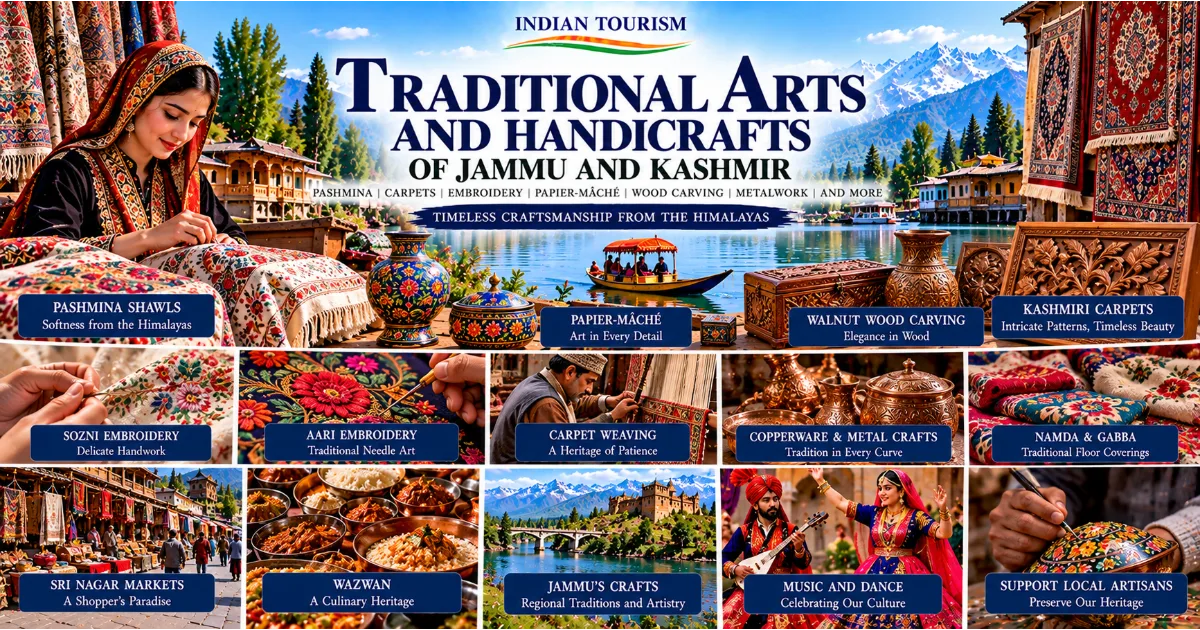
Where Every Craft Tells a Story
Jammu and Kashmir is celebrated for its mountains, lakes, gardens and historic landmarks, but its cultural richness can also be discovered through the remarkable craftsmanship of its people. For generations, artisans across the region have transformed wool, wood, paper, metal, clay and other materials into objects that combine beauty, practical use and cultural meaning. From delicately embroidered shawls to intricately painted papier-mâché boxes, traditional carpets and finely carved walnut wood furniture, these crafts represent an important part of the region's living heritage.
Handicrafts are more than souvenirs for visitors. They preserve knowledge, techniques and artistic traditions passed from one generation to another. A carpet may require months of skilled work, while a shawl can involve several stages of fibre preparation, weaving, finishing and embroidery. A small decorative object may carry detailed patterns inspired by flowers, leaves, gardens and the natural world of the Himalayas.
Kashmir is particularly famous for its Pashmina shawls, handwoven carpets, papier-mâché art, walnut wood carving, embroidered textiles and traditional metalwork. Jammu and its surrounding districts also have distinctive craft traditions, including regional embroidery, decorative objects, metal crafts and handmade products that reflect local materials and cultural influences. The styles differ between communities and districts, making the wider region more diverse than a single shopping guide might suggest.
Shopping for handicrafts can be an enjoyable part of travelling through Jammu and Kashmir. Srinagar offers established markets, craft shops and workshops, while Jammu provides access to regional products and handmade goods. Visitors may also discover craft traditions in smaller towns and villages, although availability varies by location.
However, buying traditional crafts requires a little knowledge. Products described as handmade may differ significantly in material, workmanship and origin. A shawl marketed as Pashmina may contain other fibres, and a carpet described as handwoven may have been produced using a different process. Understanding the basic characteristics of a craft helps buyers make informed decisions and appreciate the work behind the finished object.
This guide explores the major traditional arts and handicrafts of Jammu and Kashmir, explains how they are made, identifies useful shopping considerations and highlights the importance of supporting artisans. It also offers practical advice on choosing souvenirs, understanding prices and travelling responsibly.
Whether you are a visitor looking for a meaningful keepsake, a collector interested in traditional design or a traveller curious about the cultural life of the Himalayas, the handicrafts of Jammu and Kashmir offer an opportunity to discover the region through the creativity of its people.
1. Kashmiri Pashmina: The Art of Fine Wool
Pashmina is among the most famous textile traditions associated with Kashmir. Fine, soft and lightweight, authentic Pashmina products are valued for their warmth, delicate texture and the craftsmanship involved in turning fine fibre into a finished shawl or garment.
The fibre traditionally associated with Pashmina comes from the undercoat of particular goats adapted to cold, high-altitude environments. The animals develop this fine insulating layer to cope with harsh conditions. The fibre is collected and processed before it can be spun into yarn and woven into cloth.
The journey from raw fibre to a finished shawl involves several stages. Fine fibres must be separated from coarser hair, cleaned and prepared. The spinning process requires skill because the yarn can be delicate. Weaving then transforms the yarn into fabric, after which the shawl may be finished, dyed or decorated with embroidery.
Traditional hand spinning and weaving demand patience and experience. The quality of the final product depends on the fibre, the yarn, the weaving technique and the care taken during finishing. Two shawls may look similar at first glance but differ considerably in material and craftsmanship.
Pashmina products range from simple, unembroidered shawls to elaborate pieces decorated with intricate patterns. Some designs are understated, allowing the quality of the fabric to remain the main attraction. Others feature detailed embroidery or woven motifs that add colour and visual complexity.
A genuine Pashmina shawl is often valued for its combination of warmth and lightness. However, softness alone does not prove authenticity. Modern textiles can imitate the appearance and feel of fine cashmere, and some products use blended fibres. Buyers should therefore ask about fibre composition and seek credible information about the product's origin.
Price can provide a useful clue, but it is not a definitive test. Handmade work, fine materials and elaborate embroidery may increase the cost substantially. A very low price for a product advertised as premium handmade Pashmina deserves careful scrutiny, while a high price does not automatically guarantee authenticity.
When shopping, ask whether the product is pure Pashmina, a blend or another type of cashmere textile. Request written details where possible, especially for expensive purchases. Reputable sellers should be willing to explain the material and construction without relying on exaggerated claims.
Pashmina is not simply a luxury fabric. It represents the connection between high-altitude pastoral environments, textile knowledge, skilled labour and the history of Kashmir's craft economy. Buying a well-made product from a trustworthy source can help support the people who preserve this tradition.
2. Kashmiri Shawls: Weaving, Embroidery and Timeless Design
Kashmiri shawls are internationally recognised for their intricate patterns and fine workmanship. They are available in a wide variety of materials, designs and price ranges, from everyday woollen wraps to elaborate embroidered pieces intended for special occasions or collectors.
The shawl tradition includes several different techniques. Some shawls are decorated during the weaving process, with patterns incorporated into the fabric itself. Others are embellished after weaving through embroidery. These approaches create different visual effects and require different skills.
Kani weaving is one of the best-known traditional techniques associated with Kashmir. It uses small wooden or similar weaving implements to build intricate patterns into the fabric. Complex designs can require considerable planning and time because the pattern is created through the controlled arrangement of coloured yarns.
Sozni embroidery is another important technique. It is known for fine needlework that can produce delicate floral and decorative motifs. Depending on the design and complexity, embroidery may be concentrated along the borders or extend across much of the shawl.
Aari embroidery uses a hooked needle to create characteristic chain-like stitches. It can be used for a range of decorative patterns and may produce a different visual texture from finer needlework.
These techniques illustrate why two shawls with similar colours may differ greatly in value. The time required, the skill involved, the material used and the complexity of the design all influence the final price.
Traditional Kashmiri patterns often draw inspiration from nature. Flowers, leaves, vines and stylised plant forms are common, reflecting the region's gardens, forests and landscapes. Other designs incorporate geometric or decorative arrangements that have developed through historical artistic influences.
When choosing a shawl, consider how it will be used. A lightweight piece may be suitable for layering, while a heavier woollen shawl may provide more warmth in winter. Embroidered shawls can be attractive gifts, but the quality of the stitching should be examined carefully.
Look closely at the reverse side of embroidered fabric. Neat finishing, consistent stitching and secure threads can indicate careful workmanship, although different techniques naturally produce different appearances. Ask the seller about the technique rather than assuming that every intricate design has been created by hand.
Shawls are among the most meaningful purchases a traveller can make in Kashmir because they combine practical use with cultural significance. A carefully selected piece can remain useful for many years and provide a lasting reminder of the region's textile heritage.
3. Kashmiri Carpets: Intricate Patterns and Patient Craftsmanship
Kashmiri carpets are among the region's most recognised traditional products. Known for intricate designs and detailed workmanship, they can serve as decorative centrepieces in homes, offices and cultural spaces. Their value depends on a combination of materials, construction, design and labour.
Traditional carpet making involves several stages. A design is developed, the foundation is prepared and knots or weaving techniques are used to build the pattern. Depending on the method and complexity, a single carpet can require substantial time and coordination.
Hand-knotted carpets are particularly associated with detailed patterns and skilled labour. The knotting process allows the artisan to create complex arrangements of colour and motif. The density of knots can affect the sharpness of the pattern, but knot count alone does not determine the overall quality of a carpet.
Materials also matter. Carpets may use wool, silk or combinations of fibres, depending on the product and its intended market. Silk carpets can display fine detail and a distinctive sheen, while wool carpets may be valued for their warmth, durability and texture.
Traditional designs can include floral arrangements, gardens, medallions and repeating geometric patterns. Some reflect influences from Persian artistic traditions, while others incorporate styles developed through regional craftsmanship.
Buyers should consider where the carpet will be used. A decorative wall piece has different requirements from a carpet intended for a busy living room. Durability, ease of maintenance, fibre type and size should all influence the decision.
Before purchasing an expensive carpet, ask whether it is hand-knotted, handwoven, machine-made or produced using another method. These terms describe different processes and should not be treated as interchangeable.
Inspect the front and reverse of the carpet where possible. The back can reveal aspects of the construction and pattern, although interpreting it requires some knowledge. A reputable seller should explain the production method and provide clear information about the material.
Ask about cleaning, storage and maintenance. Fine carpets may need specialised care, and inappropriate washing can damage fibres or colours. Written purchase details can be useful when buying a valuable item.
Carpets also represent the livelihoods of weavers, designers, dyers and traders. Supporting reputable businesses that explain the origin of their products can help maintain traditional skills and encourage transparency in the craft market.
For travellers, a carpet can be a substantial purchase, so there is no need to make a hurried decision. Compare options, confirm shipping arrangements if needed and ensure that the product suits your budget and practical needs.
4. Papier-Mâché: Turning Paper into Decorative Art
Kashmiri papier-mâché is one of the region's most distinctive decorative crafts. Artisans transform paper-based material into shaped objects and decorate them with detailed painted designs. The finished products may include boxes, bowls, ornaments, trays, decorative panels and other household or display items.
The craft is associated with a combination of material preparation, shaping, surface finishing and painting. Paper is processed into a workable material and formed around a mould or into a desired shape. After drying and preparation, the surface can be smoothed and coated before the decorative work begins.
Painting is a particularly important stage. Artisans use fine brushes to create patterns featuring flowers, leaves, vines, birds and other motifs. Some pieces contain very detailed compositions that require a steady hand and considerable patience.
The colours and designs can be striking, but the appearance varies by workshop and artisan. Traditional motifs may be combined with contemporary designs, allowing the craft to adapt to changing tastes and uses.
Papier-mâché objects are available at different price points. Smaller items can make practical souvenirs, while larger pieces with extensive hand painting may require considerably more work and cost more. The price depends on the size, complexity, materials and labour involved.
When shopping, inspect the finish, paintwork and edges. Look for a product that feels well constructed and has a consistent surface. Ask whether it is intended for display or everyday use, because many decorative pieces are not suitable for exposure to moisture or rough handling.
Papier-mâché products should generally be protected from excessive water and damp conditions. Follow the seller's care instructions and avoid cleaning a delicate painted surface with harsh chemicals.
This craft is particularly appealing to travellers who want a relatively compact souvenir. A small decorated box or ornament can be easier to transport than a carpet or large wooden object while still representing a significant artistic tradition.
Buying from a reputable artisan or specialist craft shop can provide an opportunity to learn how the object was made. Understanding the work behind a product often makes it more meaningful than purchasing it simply because it looks attractive.
Papier-mâché demonstrates how ordinary materials can be transformed through technical knowledge and artistic imagination. Its continued survival depends on skilled makers, interested buyers and opportunities for younger artisans to learn the craft.
5. Walnut Wood Carving: Art in Every Detail
Walnut wood carving is another important craft associated with Kashmir. Skilled artisans use the natural qualities of walnut wood to create furniture, decorative panels, boxes, trays and other objects. The craft combines knowledge of the material with detailed carving techniques.
Walnut wood is valued for its grain, colour and suitability for carving. Different pieces of wood can have distinctive patterns, and experienced craftspeople consider these characteristics when planning a design.
The process begins with selecting and preparing the wood. It must be suitable for the intended object and prepared to reduce problems associated with moisture and movement. The artisan then shapes the piece and carves the decorative details using specialised tools.
Carving patterns can include flowers, leaves, vines and geometric arrangements. Some objects feature relatively simple decoration, while others have elaborate surfaces that require considerable time and precision.
Furniture is among the more substantial forms of walnut craftsmanship. Tables, cabinets, chairs and decorative pieces may combine practical construction with detailed ornamentation. Smaller products such as boxes and trays offer a more accessible way for travellers to purchase the craft.
The quality of a carved object depends on more than the complexity of the pattern. The wood itself, structural stability, finishing and the quality of the joinery all matter. A heavily decorated item may still be poorly constructed if the underlying materials or assembly are weak.
When buying walnut products, ask about the type of wood and whether the object is made from solid wood, veneer or a combination of materials. These differences affect durability, appearance and price.
Inspect the carving under good light. The lines should appear intentional and reasonably consistent with the design, while the surface should be finished appropriately for the intended use. Check for loose joints, cracks or signs of damage.
Larger wooden items require careful transport. Confirm packaging, shipping charges and delivery arrangements before making a purchase, especially if the object is intended for international travel.
Walnut wood carving connects the natural resources of the region with the skill of its craftspeople. Supporting responsibly sourced materials and reputable artisans can help preserve the tradition while encouraging sustainable production.
6. Embroidery: Sozni, Aari and Other Decorative Traditions
Embroidery is an important part of Kashmir's textile heritage. It allows artisans to transform plain fabric into detailed decorative work through the use of needles, threads and carefully planned patterns.
Sozni embroidery is especially known for fine needlework. The stitches can be used to create delicate floral patterns and other motifs on shawls and garments. Depending on the design, the work may be concentrated along a border or spread across a larger area of fabric.
Aari embroidery uses a hooked needle to produce a distinctive chain-like stitch. It is suitable for a variety of decorative patterns and may be used on shawls, clothing, household textiles and other products.
Other forms of embroidery are found across Jammu and Kashmir, with different communities maintaining their own styles and techniques. Designs and materials vary according to the product, the intended use and the traditions of the maker.
Embroidery is labour-intensive. A complex design may require many hours of careful work, and the time involved can be difficult to appreciate when viewing a finished piece in a shop.
The motifs often draw inspiration from the natural world. Flowers, leaves, branches and stylised plant forms appear in many designs, creating a visual connection with gardens and landscapes associated with the region.
When shopping, look closely at the stitching. Check whether the thread is secure, whether the pattern is consistent and whether the fabric suits the intended use. Different techniques naturally have different textures, so ask the seller to explain the style rather than judging everything by one standard.
Embroidery may be used on shawls, dresses, cushion covers, bags and decorative wall pieces. A small embroidered item can be a practical souvenir, while a larger piece may be better suited to home decoration.
Care instructions depend on the material and the type of embroidery. Delicate work may require gentle cleaning or specialist care, so confirm the recommended method before purchasing.
Embroidery preserves the relationship between design, patience and skilled handwork. Supporting genuine embroidered products helps maintain the livelihoods of artisans and keeps traditional techniques visible in a changing market.
7. Namda and Gabba: Traditional Floor Coverings
Namda and gabba are traditional floor coverings associated with Kashmir, offering a different perspective on the region's textile heritage.
Namda is generally a felted wool covering. Rather than relying on the same construction process as a woven carpet, it is made by working wool fibres together to create a dense textile. Decorative embroidery or other embellishment may be added, depending on the product.
The finished covering can provide warmth and a soft surface, making it suitable for particular household uses. Its appearance varies according to the wool, colours and decorative treatment.
Gabba products are commonly associated with repurposed woollen textiles that are joined, layered or decorated to create floor coverings and other items. Construction methods and designs can vary, reflecting different workshop practices and materials.
These crafts illustrate the practical side of traditional textile production. Materials are transformed into objects intended for daily use, and some techniques make productive use of existing fabrics rather than requiring entirely new raw material.
When buying namda or gabba, consider the intended setting. A floor covering used in a busy area may need different characteristics from a decorative piece placed in a bedroom or sitting room.
Inspect the edges, surface and overall construction. Ask about the materials used, how the item should be cleaned and whether it is suitable for the amount of use you expect.
Because these products may differ considerably in thickness and weight, think about transport before buying a large piece. Ask the seller to explain packaging and shipping options if you cannot carry it comfortably.
Namda and gabba are useful reminders that handicraft traditions include practical household products as well as luxury items. They preserve techniques connected with warmth, resourcefulness and everyday life in a cold climate.
8. Traditional Metalwork and Copperware
Metalwork is another part of Kashmir's craft heritage. Copper and other metals have been used to create vessels, trays, decorative objects and household items. Some products are valued for their practical use, while others are primarily decorative.
Traditional copperware may feature engraved or hammered patterns. The maker must understand the behaviour of the metal and use suitable tools to shape and decorate the object. Detailed ornamentation can require considerable skill.
Metal vessels have also played a role in food service and hospitality. Traditional household objects may be used during meals, gatherings or special occasions, although the popularity of particular items varies between households.
Decorative trays, bowls and other metal objects are common choices for visitors interested in functional souvenirs. Their appearance can range from simple, polished surfaces to elaborate engraved designs.
When purchasing metalware, ask about the metal composition and intended use. A decorative object may not be suitable for direct food contact, and products with coatings or mixed materials require appropriate care.
Inspect the finish, edges and joins. The quality of an object depends on its construction as well as the decorative pattern, so a well-made simple item may be a better purchase than a heavily ornamented but poorly finished product.
Copper and other metals can change colour over time. Some buyers appreciate this natural ageing, while others prefer a polished appearance. Ask the seller how the item should be cleaned and whether special products are required.
Metalware can be heavier than it appears, particularly when buying large trays or vessels. Consider weight, packaging and baggage restrictions before purchasing.
The tradition of metalwork shows how artistic expression can be combined with everyday utility. These products can serve as long-lasting reminders of the craftsmanship and hospitality associated with the region.
9. Traditional Embroidery and Crafts of the Jammu Region
Although Kashmir's handicrafts receive considerable international attention, the Jammu region also has a varied craft heritage. Its products reflect local materials, community traditions, regional clothing and the history of trade and cultural exchange.
Embroidery is one of the important textile traditions associated with the wider region. Styles and techniques vary by district and community, and handmade decorative work may appear on garments, household textiles and accessories.
The Jammu region also has traditions of woodwork, metalwork and other crafts. Local products may include decorative objects, household items and handmade goods associated with particular towns or rural communities.
The availability of crafts varies from place to place. Jammu city offers a convenient starting point for visitors interested in regional products, while smaller towns may provide opportunities to discover crafts connected with local traditions.
When exploring these markets, ask sellers where a product was made and what materials were used. This is especially important when buying an item advertised as a traditional craft from a specific district.
Not every handmade product carries a famous label, and a craft does not need international recognition to have cultural value. Local household objects, textiles and decorative items may reveal a great deal about everyday life and regional identity.
Visitors should also avoid assuming that every product sold in a tourist market was produced locally. Some goods may be imported or mass-produced. Honest information about origin helps buyers make informed decisions.
Supporting artisans in Jammu can help ensure that the region's diverse traditions receive attention alongside better-known Kashmiri crafts. It can also encourage younger generations to learn skills that might otherwise receive limited commercial support.
Exploring the handicrafts of Jammu and Kashmir as a whole provides a more complete picture of the region. Its cultural identity is shaped by many communities, and each contributes different techniques, designs and stories.
10. Where to Shop for Handicrafts in Srinagar
Srinagar is a natural starting point for travellers interested in Kashmiri handicrafts. The city has established markets, specialist shops and craft businesses selling textiles, carpets, decorative objects and other traditional products.
Lal Chowk is one of the city's best-known commercial areas. Visitors can explore a variety of shops and compare products, although the selection and origin of goods vary between sellers.
Markets and commercial streets around the historic city also offer opportunities to discover local products. Some shops specialise in textiles, while others sell household goods, souvenirs or decorative crafts.
The areas around Dal Lake and other popular tourist locations may have shops catering to visitors. These can be convenient for travellers with limited time, but prices and product ranges vary. It is worth comparing options before making an expensive purchase.
Specialist carpet and shawl shops may provide more detailed information about materials and craftsmanship. Ask whether the seller can explain the production process, provide a receipt and document the product's material composition.
Craft workshops can offer a different experience from ordinary retail shopping. Where visits are permitted, seeing the work in progress may help visitors understand the skill and time involved. Always ask before entering a workshop or photographing artisans.
When comparing shops, look beyond the display. Ask practical questions about fibre content, construction, care, origin and return arrangements. A seller who provides clear information is often more useful than one who relies only on dramatic claims about rarity or luxury.
Avoid making a rushed purchase because a seller says a product is available for only a short time. Take time to compare quality and price, particularly for expensive shawls and carpets.
Srinagar's handicraft markets can be rewarding even for travellers who do not intend to buy. Browsing provides insight into regional design, materials and the continuing importance of traditional crafts.
11. Shopping in Jammu City
Jammu city offers visitors opportunities to explore regional handicrafts, traditional products, textiles and souvenirs. Its commercial areas contain a variety of shops, and the range of products can reflect both local traditions and goods sourced from other parts of India.
The historic centre and established shopping areas are useful places to begin. Visitors may find clothing, decorative objects, religious items, handmade products and regional food specialties, depending on the shop.
Those interested in Dogra culture should ask about products associated with the Jammu region rather than assuming that every item sold as a regional souvenir has a local origin. The distinction can be important when the purpose of a purchase is to support local artisans.
For larger purchases, compare the material, construction and price across several sellers. Ask for a receipt and make sure the product description is clear. If a product is advertised as handmade, inquire about the method of production and the place where it was made.
Visitors who are purchasing gifts may prefer compact items that are easy to pack. Decorative pieces, textiles and small craft objects can be practical choices, provided their materials and care requirements are understood.
Food products can also make popular souvenirs, but buyers should check packaging, expiry information and transport restrictions where applicable.
Shopping should be balanced with other experiences. Jammu's temples, palaces, forts and cultural landmarks provide context for the region's history, while local food offers another way to understand everyday traditions.
A visit to Jammu's markets can therefore become part of a wider cultural journey rather than a separate activity focused only on buying goods.
12. How to Identify Quality Handicrafts
Buying traditional handicrafts can be more satisfying when you understand a few basic principles of quality assessment. The right questions depend on the product, but the goal is always to understand what you are paying for.
Check the Materials
Ask whether the product is made from wool, Pashmina, silk, cotton, wood, metal or a blend. The seller should be able to explain the material clearly. For expensive products, written specifications are useful.
Understand the Production Method
Find out whether the item is handmade, handwoven, hand-knotted, embroidered by hand or machine-produced. These methods involve different levels and types of labour. A machine-made product is not automatically poor quality, but it should not be misrepresented as handmade.
Inspect the Workmanship
Look at stitching, finishing, edges, joins and surface quality. For a carpet, consider the construction and consistency of the pattern. For wood carving, check the finish and structural stability. For papier-mâché, inspect the painted surface and edges.
Ask About Origin
If the product is advertised as a craft from Jammu and Kashmir, ask where it was made. A shop may sell both local and non-local goods, so origin should not be assumed from the place of purchase.
Compare Similar Products
Compare items of similar size, material and construction. Prices can differ because of the amount of labour, the quality of the materials and the complexity of the design.
Request a Receipt
A detailed receipt should identify the product and price. For expensive purchases, it can be useful to include the stated material and any authenticity or origin information supplied by the seller.
Avoid Pressure
Do not feel obliged to buy immediately. Take time to compare options, discuss the product with your travel companions and decide whether it fits your budget.
These steps cannot guarantee authenticity in every case, but they can help buyers make better-informed decisions and reduce the risk of paying a premium for a product that does not match its description.
13. Understanding Prices and Bargaining
Prices for handicrafts in Jammu and Kashmir vary widely. A small decorative object may cost relatively little, while an elaborate shawl, fine carpet or large carved wooden piece can represent a substantial investment.
The material is one factor, but labour can be equally important. Intricate embroidery, detailed carving and complex weaving may require many hours of skilled work. A higher price can reflect that effort, although price alone does not prove that a product is authentic or well made.
Different shops may offer different prices for products that look similar. The differences may reflect quality, material, construction, overhead costs or the seller's business model. Comparing equivalent items is more useful than comparing products solely by appearance.
Bargaining practices vary between shops. Some sellers may expect negotiation, while others have fixed prices. Ask politely whether a price is negotiable and avoid turning the conversation into an argument.
It is also important to recognise the value of labour. An extremely low price may be attractive to a buyer but may not reflect the time and skill required to produce a genuine handmade item. At the same time, buyers should not assume that every expensive product offers exceptional quality.
For significant purchases, ask about payment methods, delivery, insurance and return policies. Confirm the total cost before completing the transaction.
If you are buying a large item, clarify whether packaging and shipping are included. International shipments may involve additional charges, documentation and customs requirements.
Set a budget before shopping. A meaningful souvenir does not need to be expensive, and small handmade items can offer an excellent introduction to the region's craft traditions.
The best purchase is one that matches your needs, is fairly described and offers a quality you can appreciate for years to come.
14. Buying Authentic Pashmina and Other Fine Textiles
Fine textiles require particular care because products made from different fibres can look similar. Pashmina, other cashmere products, wool blends and synthetic fabrics may all be sold as shawls, making it important to understand the material before paying a premium.
Ask the seller for the fibre composition. If a shawl is advertised as pure Pashmina, request a clear description of what that claim means and whether documentation is available. Be cautious of vague descriptions that rely only on words such as premium, royal or original.
Do not rely on a single home test to determine authenticity. Burning a fibre, judging softness or checking whether a fabric passes through a ring are not reliable substitutes for professional assessment. Some tests can damage the product and still produce misleading results.
For expensive textiles, consider purchasing from an established seller who provides written details and a clear return policy. If certification or independent testing is claimed, ask what organisation issued it and what exactly was verified.
Examine the fabric for consistency and finishing. Feel can be useful when comparing products, but it cannot conclusively identify the fibre. A high-quality wool or cashmere blend may still be a good purchase if it is described honestly and priced appropriately.
Embroidery adds another layer of value. Ask whether the design is hand-embroidered, machine-embroidered or woven into the fabric. Each technique has different characteristics and labour requirements.
Care instructions should be discussed before purchase. Fine textiles may need gentle handling, appropriate storage and specialist cleaning. Strong detergents, high temperatures and rough treatment can damage delicate fibres or embroidery.
The aim is not to make every shopping decision complicated. It is to ensure that the product you buy matches its description, price and intended use.
An informed textile purchase can support skilled artisans while providing a useful and lasting reminder of Jammu and Kashmir's craft heritage.
15. Responsible Shopping and Supporting Artisans
Traditional crafts survive when skilled makers have opportunities to earn a living and pass their knowledge to younger generations. Responsible shopping can help support that process, particularly when buyers choose reputable sellers and seek accurate information about the products they purchase.
One useful approach is to ask about the person or workshop that made the item. Not every retailer will have a direct relationship with an individual artisan, but transparent information about sourcing can still be valuable.
Buying from craft cooperatives, recognised artisan businesses or established workshops may provide greater insight into the production process. However, buyers should still evaluate the quality and description of the product rather than assuming that every organisation offers the same standards.
Avoid purchasing items made from protected wildlife or materials whose origin cannot be explained. Responsible craft buying should not contribute to illegal trade or environmental harm.
Packaging matters as well. Large amounts of plastic or unnecessary wrapping can create waste, especially when items are transported long distances. Ask whether durable, reusable or reduced packaging is possible.
Visitors should respect artisans' working conditions. If visiting a workshop, do not interrupt the work without permission, handle tools without approval or photograph people who have not agreed to be photographed.
Fair payment is important. Bargaining should not become a way to pressure a craftsperson into accepting a price that ignores the labour involved. Buyers can compare prices while still recognising the value of skilled work.
Traditional crafts are living practices rather than museum objects. Artisans may adapt patterns, materials and product types to suit contemporary needs. Such innovation can help maintain the economic viability of the craft while preserving important techniques.
By choosing carefully and treating makers with respect, travellers can help ensure that handicrafts remain a meaningful part of Jammu and Kashmir's cultural and economic life.
16. Handicrafts as Gifts and Souvenirs
Handicrafts can make thoughtful gifts because they combine practical use with a connection to the place where they were purchased. The best choice depends on the recipient, the available budget and how easily the item can be transported.
A small papier-mâché box can be a useful decorative gift. It is compact, visually distinctive and available in a variety of designs. However, it should be packed carefully to protect the painted surface.
An embroidered shawl can be a personal and practical present. Choose the material and design according to the recipient's preferences, and confirm the fibre composition rather than relying solely on the product label.
Textile accessories, cushion covers and smaller decorative fabrics can be easier to carry than large carpets. They also allow buyers to appreciate embroidery and design without making a major purchase.
Wooden objects such as trays or small boxes can be durable gifts when they are well made. Check the weight and packaging requirements, especially if you are travelling by air.
Metal trays and vessels may be attractive but can be heavier than expected. Consider whether the recipient will use the item or prefer a smaller decorative object.
For collectors, a more substantial carpet or fine textile may be appropriate, but such purchases require additional research. Material, construction, authenticity, maintenance and shipping should all be considered.
Food products and locally made items can also provide a connection with the region. Check the packaging, ingredients and storage requirements before transporting edible gifts.
A souvenir does not need to be expensive to be meaningful. A small, carefully selected handmade object can carry more personal value than a costly purchase made without understanding its origin.
Choose items that can be used, displayed or cared for properly. The best gift is one that reflects both the craft tradition and the interests of the person receiving it.
17. A Suggested Handicraft Shopping Itinerary
Travellers with limited time can explore the handicrafts of Jammu and Kashmir through a simple itinerary that combines shopping with cultural learning.
Day One: Textile Traditions in Srinagar
Begin with a visit to established textile shops and markets in Srinagar. Explore shawls, embroidered fabrics and other traditional products, comparing materials and techniques.
Ask sellers to explain the difference between woven patterns and embroidery. If you are interested in Pashmina, focus on material information and credible documentation rather than making a quick decision based on softness.
Day Two: Papier-Mâché and Wood Carving
Spend time looking at decorative objects and carved wooden products. Compare small items with more elaborate pieces and learn about the work involved in shaping, finishing and painting them.
Where workshop visits are available and permitted, observing the production process can make the shopping experience more informative.
Day Three: Carpets and Larger Purchases
If you are interested in buying a carpet, allow a dedicated period for comparison. Consider material, construction, size, design, maintenance and shipping.
Do not feel obliged to purchase on the first day you visit a shop. A major purchase should be made only when you understand the product and its cost.
Day Four: Explore Regional Products in Jammu
If your journey includes Jammu, explore local markets for regional crafts and souvenirs. Ask which products are made in the area and which are sourced from elsewhere.
This provides an opportunity to understand the diversity of craft traditions across the wider region.
Keep Time for Cultural Experiences
Balance shopping with visits to historic sites, museums, gardens and local food establishments. These experiences provide context for the patterns, materials and traditions found in the craft markets.
Before travelling, check current opening hours and transport arrangements. Shops and workshops may have different schedules, and availability can change.
The purpose of the itinerary is not to buy as much as possible. It is to learn about the crafts, compare products thoughtfully and select items that genuinely interest you.
18. Preserving Traditional Crafts for Future Generations
Traditional handicrafts face a range of challenges. Changes in consumer demand, competition from machine-made products, the cost of raw materials and the time required for skilled work can all affect the livelihoods of artisans.
Younger people may find it difficult to commit to long apprenticeships if the income from a traditional craft is uncertain. When fewer people learn a technique, the knowledge required to maintain it can gradually disappear.
Market transparency is another concern. Products may be described inaccurately, making it difficult for buyers to distinguish handmade work from mass-produced alternatives. This can undermine trust and place genuine artisans at a disadvantage.
Preservation requires more than celebrating crafts as symbols of cultural identity. Artisans need fair opportunities to sell their work, access to suitable materials and ways to adapt their products to changing markets.
Training programmes, craft cooperatives, museums, educational institutions and responsible businesses can all contribute. Documentation of techniques may also help preserve knowledge, although written records cannot fully replace the experience of learning directly from skilled makers.
Innovation can be valuable when it supports rather than misrepresents the tradition. Artisans may develop new colour combinations, product types or designs while retaining important elements of their technique.
Tourists can contribute by buying thoughtfully, asking about the origin of products and avoiding misleading claims. Sharing accurate information about a craft can also help increase appreciation for the people who make it.
Government bodies, cultural organisations and private businesses have roles to play in promoting responsible markets and supporting artisan livelihoods. Long-term success depends on treating crafts as both cultural heritage and skilled economic activity.
The future of traditional handicrafts will be strongest when artisans can earn a fair living, younger generations have reasons to learn and buyers understand the value of the work involved.
Conclusion: Take Home a Piece of Jammu and Kashmir's Living Heritage
The traditional arts and handicrafts of Jammu and Kashmir offer a remarkable way to understand the region's cultural identity. Pashmina shawls reveal the value of fine fibres and textile knowledge, while Kashmiri carpets demonstrate the patience required for intricate weaving and knotting. Papier-mâché transforms paper into decorative art, walnut wood carving brings natural materials to life and embroidery preserves detailed techniques passed between generations.
Namda, gabba, metalware and the diverse crafts of Jammu add further depth to the region's artistic heritage. Together, these traditions show that craftsmanship is not confined to a single product or community. It is part of everyday life, cultural memory and the economic activities of many artisans.
For visitors, shopping can become an opportunity to learn. Ask about materials, production methods and the origin of a product. Compare similar items, request clear receipts for significant purchases and avoid relying on simple home tests to determine authenticity.
Most importantly, recognise the human effort behind each piece. A handmade shawl, carved object or painted box may represent hours of skilled work and years of accumulated knowledge. Paying attention to that effort makes the shopping experience more meaningful.
Responsible purchases can support artisans and help maintain traditional techniques, but cultural preservation also depends on education, fair markets and opportunities for younger generations to learn their craft.
Whether you choose a small papier-mâché souvenir, a beautifully embroidered textile or a carefully made wooden object, let your purchase reflect an appreciation of the people and traditions behind it.
Discover the handicrafts of Jammu and Kashmir, meet the artistry behind every design and take home a meaningful reminder of the region's living cultural heritage.
#IndianTourism #JammuAndKashmir #KashmirHandicrafts #Pashmina #KashmiriShawls #KashmiriCarpets #PapierMache #WalnutWoodCarving #SozniEmbroidery #AariEmbroidery #KaniShawls #Namda #Gabba #KashmiriCrafts #DograCulture #HandmadeInKashmir #TraditionalArts #ArtisanHeritage #ResponsibleShopping #CulturalTourism #SrinagarShopping #JammuShopping #ExploreKashmir #ExploreIndia

