A Shopping Journey Through Himalayan Artistry
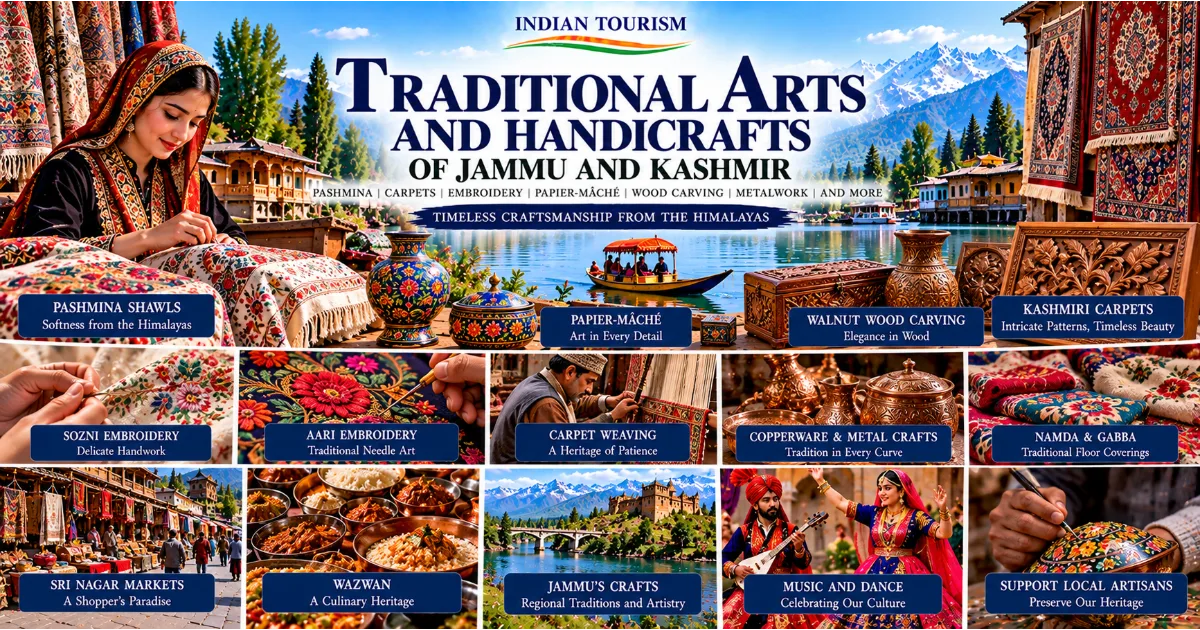
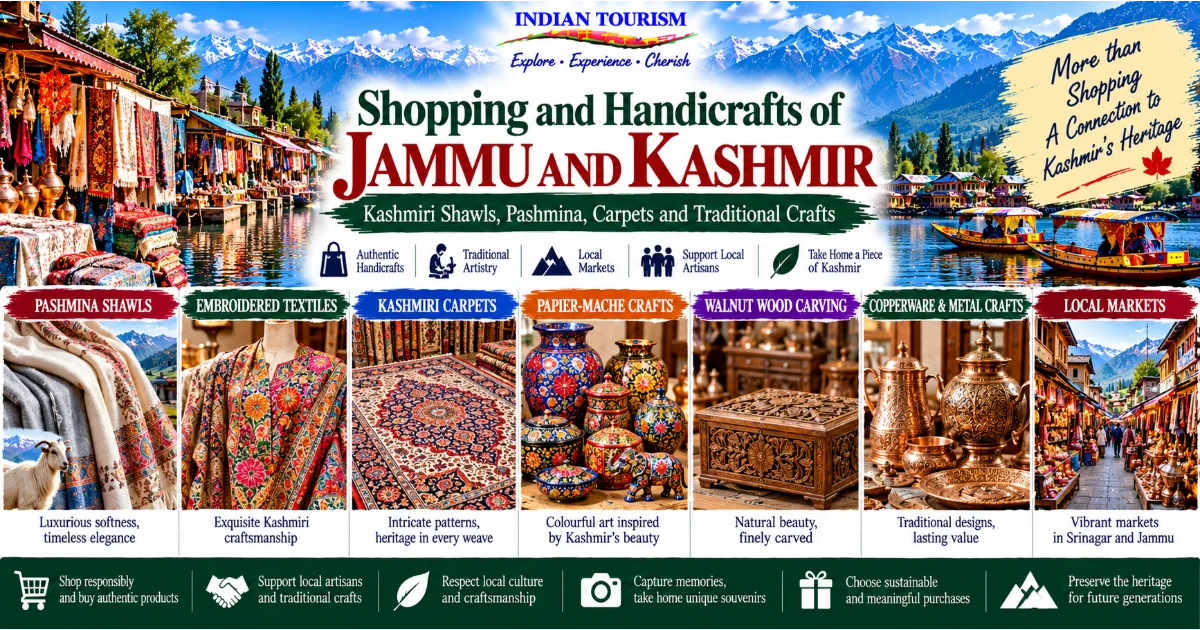
Jammu and Kashmir is famous for its magnificent mountains, peaceful lakes, beautiful gardens and historic monuments, but its cultural heritage is equally visible in the objects created by its artisans. Across the region, skilled craftspeople continue to practise traditional techniques that have been passed down through generations. Fine Pashmina shawls, embroidered textiles, handwoven carpets, papier-mache products, carved walnut wood, traditional copperware and regional handicrafts reflect the creativity, patience and cultural knowledge of the people who make them.
Shopping in Jammu and Kashmir can be much more than purchasing souvenirs. It can become an opportunity to understand local craftsmanship, discover regional identities and support livelihoods connected with traditional skills. A beautifully embroidered shawl may represent weeks or months of work, while a hand-knotted carpet can involve intricate planning and the coordinated efforts of skilled weavers. Even a small papier-mache ornament may require several stages of preparation, painting and finishing.
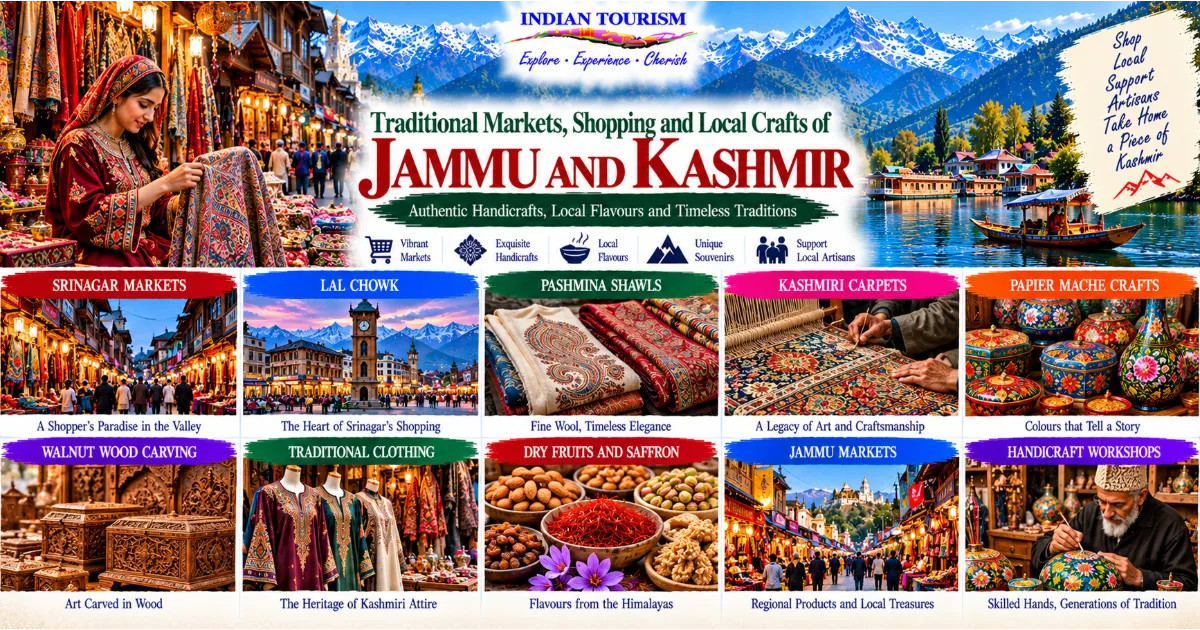
The shopping experience differs between Jammu, Srinagar and the smaller towns of the region. Srinagar is particularly well known for Kashmiri shawls, carpets, embroidered textiles, walnut wood products and papier-mache crafts. Jammu offers a different selection of regional goods, religious souvenirs, traditional foods, textiles and handicrafts. Local markets in both areas provide opportunities to interact with traders, explore regional products and observe how traditional commerce continues alongside modern retail.
However, travellers should understand that not every product sold as a traditional handicraft is handmade, and not every item labelled Pashmina is made from genuine Pashmina fibre. Prices, quality, materials and workmanship can vary considerably. Learning a few basic ways to evaluate products can help visitors make informed purchases and avoid misleading claims.
Continue Reading
This guide explores the most distinctive handicrafts and shopping destinations of Jammu and Kashmir, explains their cultural significance and provides practical advice for purchasing authentic products responsibly.
Pashmina Shawls: The Craft That Represents Kashmir
Pashmina is among the most recognised luxury textile traditions associated with Kashmir. Fine Pashmina products are valued for their softness, warmth, light weight and delicate texture. They are particularly attractive to travellers seeking a meaningful souvenir that combines practical use with traditional craftsmanship.
The fine fibre traditionally used for Pashmina comes from the soft undercoat of the Changthangi goat, which is adapted to the cold conditions of the high-altitude Changthang region of Ladakh. The fibre is associated with a wider Himalayan textile tradition, while Kashmir became particularly renowned for the specialised processing, weaving and finishing of fine shawls.
The production of a Pashmina shawl involves several stages. Fibre preparation, spinning, weaving, finishing and, in some cases, embroidery require specialised knowledge. Depending on the design and technique, different artisans may contribute to the final product. The result is a textile in which material quality and workmanship both influence its value.
Plain Pashmina shawls appeal to people who prefer understated elegance. They may feature natural colours, subtle patterns or simple borders. Embroidered versions can include floral motifs and intricate decorative work that reflect the broader visual traditions of Kashmir. Some shawls are designed for everyday use, while others are created as luxury pieces intended for special occasions.
When shopping for Pashmina, travellers should ask for clear information about the fibre, construction and origin. A label alone does not guarantee authenticity. Genuine fine Pashmina can be expensive because the raw material is limited and the production process requires skill. Extremely low prices combined with claims of exceptional quality should be treated cautiously.
Visitors should also understand that softness alone is not a reliable test of authenticity. Modern textiles can imitate the feel and appearance of fine natural fibres. Rather than relying on informal burn tests or other potentially damaging methods, buyers should seek reputable sellers, transparent product descriptions and recognised certification where available.
A Pashmina shawl can be a meaningful purchase when chosen carefully. Travellers should select a product according to their intended use, preferred design and budget rather than buying solely because a seller describes it as rare or exclusive.
Kashmiri Woollen Shawls and Embroidered Textiles
Kashmir's textile heritage extends beyond Pashmina. Woollen shawls, embroidered fabrics, scarves, wraps and other textiles provide a wide range of options for visitors who want traditional designs at different price levels.
Kashmiri embroidery is particularly admired for its detailed patterns. Floral arrangements, leaves, vines and other decorative motifs often draw inspiration from the region's gardens, plants and artistic traditions. The density of the embroidery, the thread used, the base fabric and the complexity of the design all influence the appearance and price of a finished piece.
Some textiles feature embroidery concentrated along the borders, creating a restrained and elegant design. Others contain more elaborate patterns across the entire surface. The time required to complete the work varies according to the technique and the amount of detail involved.
Woollen shawls are useful for travellers because they provide warmth in cool weather and can be worn in everyday settings. Their weight, texture and design vary considerably. Buyers should examine the fabric carefully, paying attention to stitching, finishing, colour consistency and the overall quality of the garment.
Embroidered textiles are also available as scarves, stoles, dress materials and decorative pieces. These products can be suitable gifts because they are relatively easy to transport and represent an important part of the region's craft traditions.
Travellers should ask whether the embroidery is handmade or machine-produced. Both types may have a market, but the distinction matters when evaluating the price and understanding the amount of labour involved. Handmade work can contain small variations that reflect the individual artisan's technique.
Shopping for textiles becomes more rewarding when visitors take time to compare different designs. Instead of focusing only on elaborate patterns, consider how the piece will be used, how it feels against the skin and whether its colours and dimensions suit the intended purpose.
Kashmiri Carpets: Intricate Patterns and Patient Craftsmanship
Kashmiri carpets are among the region's most celebrated traditional products. Their detailed patterns, rich colours and complex weaving or knotting techniques make them important examples of textile craftsmanship.
Traditional Kashmiri carpets often feature floral motifs, vines, medallions and geometric arrangements. Some designs reflect influences from Persian artistic traditions, while others have developed through local interpretation and the preferences of different markets. The resulting carpets can be highly detailed, with patterns that reveal the skill of the people who created them.
Hand-knotted carpets require considerable patience. The artisan ties individual knots according to a design plan, gradually building the pattern across the carpet. Knot density, fibre quality, design complexity and the skill required to produce the finished piece can all affect its value.
Carpets made from wool, silk or combinations of fibres differ in appearance, texture, durability and price. Silk carpets may display fine details and a distinctive sheen, while woollen carpets can be suitable for regular use depending on their construction. Buyers should ask about the actual material composition rather than relying solely on a product's name or appearance.
A carpet should be evaluated from both sides when possible. Examining the reverse can reveal aspects of the knotting, pattern definition and construction. The edges and finishing should also be checked for loose threads, uneven work or other visible defects.
Travellers purchasing expensive carpets should ask for written documentation describing the material, dimensions, production method, price and any certification offered. They should also clarify return policies, shipping arrangements and any additional charges before completing the purchase.
Carpets are substantial purchases, and buyers should avoid feeling pressured by claims that a particular piece is available only for a few minutes. Taking time to compare products and obtaining an independent opinion can help prevent costly mistakes.
For travellers with sufficient luggage space and a genuine interest in traditional textiles, a Kashmiri carpet can become a long-lasting reminder of the region. For others, a smaller textile product may provide a more practical way to appreciate the same artistic traditions.
Papier-Mache Crafts: Colourful Objects Inspired by Kashmir
Papier-mache is another distinctive craft associated with Kashmir. Artisans transform prepared paper-based material into decorative objects that can be painted with elaborate patterns and finished with protective coatings.
The craft is valued for its combination of material preparation, shaping, painting and decoration. Depending on the product, several stages may be required before the object is ready for sale. Fine painted details often include flowers, leaves, birds and ornamental patterns inspired by regional artistic traditions.
Papier-mache products are available in many forms. Decorative boxes, bowls, trays, small containers, ornaments and other household objects are common examples. Some pieces are designed for practical use, while others are intended mainly for display.
The designs range from bright and elaborate compositions to more restrained patterns. Gold-coloured detailing, floral arrangements and contrasting backgrounds are frequently associated with traditional styles, although individual artisans and workshops may develop their own variations.
When buying papier-mache, examine the object carefully. Look for consistent finishing, clean edges, well-applied decoration and a surface appropriate to the product's intended use. Ask whether the item is handmade, how it has been finished and whether it is suitable for contact with food or liquids. Decorative products should not automatically be assumed to be food-safe.
Small papier-mache objects can make practical souvenirs because they are usually easier to transport than carpets or larger wooden products. However, they may be vulnerable to crushing, so fragile items should be packed carefully.
Purchasing directly from reputable workshops or established craft sellers can provide a better understanding of the work involved. Some workshops may offer demonstrations or explanations of the production process, depending on their arrangements.
Papier-mache demonstrates how simple materials can become objects of artistic value through specialised knowledge and careful labour. It is an excellent choice for travellers who want a colourful and relatively compact reminder of Kashmir's craft traditions.
Walnut Wood Carving: The Beauty of Natural Grain
Walnut wood carving is a highly regarded craft associated with Kashmir. Skilled artisans transform walnut timber into furniture, decorative panels, boxes, trays and other objects through carving techniques that require control, precision and an understanding of the wood's natural characteristics.
The appeal of walnut wood lies partly in its grain and colour. Depending on the timber and finish, it can display rich brown tones and subtle patterns. Carving adds another layer of detail, allowing artisans to create floral motifs, leaves, vines and intricate ornamental designs.
Furniture pieces may feature elaborate carved panels, while smaller products provide more accessible options for travellers. Boxes, photo frames, trays and decorative objects can carry elements of traditional design without requiring the transport arrangements associated with large furniture.
The amount of carving influences the labour involved. Some pieces have simple borders or restrained details, while others contain dense patterns covering much of the surface. The depth, consistency and precision of the carving are important indicators of workmanship.
Buyers should examine the finish, joints and structural quality of wooden products. Decorative carving should be clear and well executed, but the quality of the underlying wood and construction matters just as much. A beautifully carved object may still be unsuitable if it has cracks, loose joints or an unstable structure.
Travellers should ask about the wood used, the finishing treatment and the product's care requirements. They should also confirm whether the item can be legally transported across relevant borders and whether any documentation is required for larger or regulated products.
Small walnut wood products are often more practical souvenirs than furniture. A carefully chosen box or tray can demonstrate the skill of the craft while fitting comfortably into luggage.
Walnut carving represents the relationship between natural materials and human craftsmanship. Each finished object reflects decisions about the grain, the design and the balance between decoration and practical use.
Copperware and Traditional Metalwork
Copperware has a long association with household and culinary traditions in Kashmir. Traditional metal objects can include samovars, trays, bowls, decorative plates and other vessels. Some are intended for practical use, while others are designed as decorative pieces.
The samovar is particularly associated with the preparation and serving of tea in parts of Kashmir. Traditional forms have a central chamber and an arrangement designed to support the heating and serving process. Decorative examples may feature engraved patterns and polished surfaces that reflect the skill of metalworkers.
Copperware can be an attractive purchase for travellers interested in household traditions and regional design. However, buyers should distinguish between decorative products and items intended for cooking or serving food. Not every decorative vessel is suitable for direct food contact, and the presence of coatings or other metals can affect its use.
Before purchasing a copper item for practical use, ask the seller about its composition, interior lining, care requirements and intended purpose. For cooking or food service, it is particularly important to understand whether the product is safe for the relevant use.
Examine the surface for consistent workmanship, secure handles and suitable finishing. Engraved patterns may vary in complexity, and buyers should compare similar items before deciding what represents good value.
Copperware can be heavier than textile souvenirs, so travellers should consider luggage weight and packing requirements. Smaller trays and decorative objects may be easier to transport than large vessels.
Traditional metalwork offers a different perspective on Kashmir's craftsmanship. It demonstrates how functional household objects can become expressions of regional identity through form, decoration and specialised production techniques.
Kashmiri Embroidery and the Craft of Sozni Work
Sozni is a fine embroidery tradition associated with Kashmir. It is known for delicate needlework and intricate patterns, often applied to shawls and other textiles. The craft requires patience and precision because the decorative work may involve very small stitches and complex designs.
Sozni embroidery can appear understated from a distance, with its finer details becoming visible when the fabric is examined closely. This subtlety is part of its appeal. Rather than relying entirely on bold colours, the craft often demonstrates artistry through careful line work and balanced patterns.
The work may be applied to Pashmina, woollen fabric or other suitable textiles. The base material, complexity of the design and amount of embroidery all influence the price. A finely embroidered shawl can require considerable time, particularly when the pattern covers a large area.
Travellers should examine the reverse of an embroidered piece where possible. The stitching may provide useful clues about the technique, although buyers without specialised knowledge should not treat a single visual feature as definitive proof of authenticity.
Ask whether the work is handmade, how long the piece took to produce and what care it requires. Fine embroidery may need gentle cleaning and careful storage to preserve the stitches and fabric.
Sozni products can be meaningful purchases for people who value detailed textile work. Their significance lies not only in their appearance but also in the time, skill and knowledge required to create them.
Kani Shawls: A Distinctive Weaving Tradition
Kani shawls are associated with a specialised weaving tradition in Kashmir. They are known for intricate patterns created through the use of small wooden bobbins or sticks called kanis. The technique allows complex designs to be built into the fabric during weaving rather than simply added as surface embroidery.
Producing a Kani shawl requires careful coordination between the design and the weaving process. Complex patterns can demand considerable time and expertise, especially when numerous colours and detailed motifs are involved.
The finished shawls may feature elaborate floral arrangements, paisley-inspired forms and other traditional designs. The visual effect can be rich and detailed, with patterns integrated into the fabric itself.
Kani shawls can be expensive, particularly when made with fine materials and intricate designs. Buyers should ask for information about the weaving method, fibre composition and production process. A printed or machine-produced imitation may resemble the appearance of a traditional piece without involving the same technique.
The reverse side, the structure of the pattern and the consistency of the weave can offer useful clues, but a non-specialist should not rely on appearance alone. Reputable sellers and clear documentation are important when making a high-value purchase.
For travellers interested in textile heritage, learning about Kani weaving can make shopping more meaningful. The craft demonstrates how a pattern can emerge from the planning and coordination of the weaving process itself.
Traditional Markets in Srinagar
Srinagar offers a wide range of shopping experiences, from established commercial streets to smaller shops specialising in traditional crafts. Visitors can explore textile stores, handicraft outlets, food markets and shops selling household products.
Lal Chowk is one of the city's best-known commercial areas. Its shops offer a variety of goods, including clothing, textiles, everyday items and products associated with regional shopping. The area can be useful for travellers who want to compare prices and explore a busy urban marketplace.
The old city contains additional shopping opportunities, including businesses selling traditional goods and items associated with local culture. Exploring these areas can provide a sense of the relationship between commerce, architecture and neighbourhood life.
Travellers should allow time to compare products across more than one shop. The first item encountered may not offer the best combination of quality and price. Asking clear questions about materials, production methods and care can help buyers understand what they are purchasing.
Shopping areas can be crowded, particularly during holidays and peak tourist periods. Visitors should keep their belongings secure, agree on transport arrangements and avoid rushing through purchases.
Not every shop specialises in authentic handicrafts, and product quality varies. Travellers making expensive purchases should favour sellers who provide clear descriptions, written receipts and reasonable explanations of their products.
Srinagar's markets are best explored with patience. The experience becomes more rewarding when visitors combine shopping with conversations about local traditions and an appreciation of the people whose work supports the craft economy.
Shopping in Jammu: Regional Products and Local Markets
Jammu provides a different shopping environment from Srinagar. Its commercial areas serve residents, pilgrims and travellers, offering clothing, household goods, regional foods, religious items and a selection of handicrafts.
The city's markets can be useful for purchasing everyday souvenirs and exploring products associated with the Jammu region. Travellers visiting religious destinations may also encounter shops selling devotional objects, traditional offerings and items connected with pilgrimage.
Local food products can be another part of the shopping experience. Depending on availability and the season, visitors may find regional sweets, dry foods and packaged specialities. Buyers should check ingredients, packaging, expiry dates and storage requirements before purchasing edible souvenirs.
Jammu's commercial areas vary in atmosphere and product selection. Some streets are particularly busy, while others offer smaller shops and specialised businesses. Visitors should ask local residents or accommodation staff for current guidance when searching for a particular product.
As in Srinagar, comparison is important. Travellers should check the quality of textiles, the construction of wooden objects and the materials used in decorative products. A receipt is useful for documenting purchases, especially when goods are expensive or need to be transported over long distances.
Shopping in Jammu can be combined with visits to historical monuments and religious sites. Planning the day around nearby attractions reduces unnecessary travel and allows visitors to explore the city's cultural character at a comfortable pace.
Buying Authentic Handicrafts: What Travellers Should Know
One of the main challenges of shopping for traditional handicrafts is distinguishing handmade products from machine-produced goods or imitations. A product may look traditional without being made using the technique associated with its label.
The first step is to ask specific questions. Buyers can enquire about the material, production method, place of manufacture and whether the product was handmade or machine-produced. A reliable seller should be able to explain these details clearly.
For textiles, examine the fibre, stitching, weave and finishing. For wood products, inspect the grain, joints and carving. For papier-mache, check the surface, decoration and protective finish. For metalware, ask about composition and intended use.
Price should be considered alongside quality. Handmade goods can cost more because they require skilled labour and time, but a high price alone does not prove authenticity. Comparing similar products and seeking independent information can help travellers assess value.
For expensive purchases, ask whether a recognised certification, product description or written guarantee is available. Keep the receipt and any documentation supplied by the seller. If shipping is required, confirm the packing method, delivery estimate, insurance and responsibility for any damage.
Travellers should avoid feeling pressured by claims that a product is the last available item or that a special price is valid only for a few minutes. A genuine purchase should allow enough time for careful consideration.
Learning about a craft before shopping can also help. Understanding the difference between hand-knotted and machine-made carpets, for example, makes it easier to ask useful questions and appreciate the labour involved.
Best Time for Shopping in Jammu and Kashmir
Shopping is possible throughout the year, but the experience may differ according to the season, destination and number of visitors.
Spring attracts travellers interested in flowering gardens and the Tulip Festival. Markets may be busy during popular travel periods, and visitors can combine shopping with sightseeing around Srinagar.
Summer is a major tourism season. Shops serving visitors may experience higher demand, especially in popular areas. Travellers should compare prices carefully and allow extra time for traffic and crowded commercial streets.
Autumn offers opportunities to combine shopping with the changing colours of the Kashmir Valley and seasonal agricultural experiences. Visitors may find this period attractive for a balanced itinerary that includes heritage, food and handicrafts.
Winter can provide a quieter shopping experience in some areas, although weather and road conditions may affect travel. Warm clothing is useful, and travellers should confirm shop opening arrangements before making a special journey.
The best time to purchase a particular product depends on availability rather than the season alone. High-value handicrafts can generally be sought throughout the year, but seasonal crowds may affect the time available for comparing products.
Packing and Transporting Handicrafts Safely
After purchasing handicrafts, travellers should consider how the items will be transported. Textiles are usually easier to pack than fragile objects, but fine shawls and embroidered fabrics still require protection from moisture, sharp objects and excessive pressure.
Papier-mache products should be wrapped carefully to prevent crushing. Small boxes and decorative items can be protected with suitable padding, while fragile painted surfaces should be kept away from rough materials that might scratch them.
Wooden products should be packed to protect corners and carved details. Larger pieces may require specialised packaging, and travellers should confirm airline or transport restrictions before arranging delivery.
Carpets and large textiles may be shipped by the seller. Before agreeing to shipping, ask for a written description of the service, the total cost, the expected delivery time and any insurance arrangements. Keep copies of receipts and shipping documents.
Travellers crossing international borders should check the customs rules that apply to their destination. Certain materials, including products derived from protected wildlife, may be restricted or prohibited. Buyers should avoid purchasing questionable products simply because they are presented as traditional souvenirs.
Careful packing helps preserve the value of a purchase and reduces the risk of damage during a long journey.
Responsible Shopping and Supporting Local Artisans
Traditional crafts survive when artisans have opportunities to earn a fair income from their skills. Responsible shopping can contribute to the continuation of these traditions and help ensure that younger generations see value in learning specialised techniques.
Buying from reputable craft sellers, cooperatives or workshops can improve transparency about the origin of products. Where possible, visitors should learn who made the item and how it was produced. Such conversations can create a stronger connection between the traveller and the craft.
Fair bargaining is part of shopping in many markets, but buyers should remember that handmade work requires time, materials and expertise. Negotiating aggressively over a small amount may reduce the value of labour that took many hours to complete.
Travellers should also be careful about products made from protected wildlife, restricted natural materials or items of uncertain origin. Supporting traditional craftsmanship should never come at the expense of environmental protection or legal requirements.
Respect for artisans includes asking permission before photographing them or their workshops. People at work deserve privacy and should not be treated as part of a display without consent.
Responsible shopping can help preserve cultural knowledge while providing visitors with meaningful souvenirs. The most valuable purchase is not necessarily the most expensive one, but the item whose quality, origin and craftsmanship the buyer understands and appreciates.
Conclusion: Take Home a Piece of Kashmir's Craft Heritage
Shopping in Jammu and Kashmir offers an opportunity to discover the region through the skills of its artisans and the traditions of its markets. Pashmina shawls, woollen textiles, Sozni embroidery, Kani weaving, carpets, papier-mache objects, walnut wood carving and copperware represent different forms of craftsmanship that have developed through generations of knowledge and practice.
Srinagar provides an especially rich environment for exploring Kashmiri handicrafts, while Jammu offers its own shopping traditions, regional products and commercial markets. In both destinations, visitors can make shopping more meaningful by comparing products, asking questions and learning about the people and techniques behind them.
Authenticity deserves careful attention. Buyers should ask about materials and production methods, examine workmanship, request documentation for expensive goods and avoid decisions made under pressure. A traditional appearance does not automatically prove that an item is handmade or made from the material claimed by the seller.
Responsible shopping also means respecting artisans, paying fair prices and avoiding products made from restricted materials. By supporting reputable sellers and genuine craft traditions, travellers can help maintain the skills that make the region's cultural heritage distinctive.
A carefully chosen shawl, a finely painted papier-mache box or a small carved wooden object can become a lasting reminder of a journey through Jammu and Kashmir. More importantly, understanding the craftsmanship behind the purchase allows visitors to take home more than a souvenir. They take home a connection with the people, creativity and traditions of the Himalayan region.
#IndianTourism #JammuAndKashmir #KashmirShopping #KashmiriHandicrafts #Pashmina #KashmirShawls #KashmiriCarpets #PapierMache #WalnutWoodCarving #SozniEmbroidery #KaniShawls #SrinagarMarkets #JammuShopping #IndianHandicrafts #CulturalTourism #ResponsibleShopping #ExploreIndia