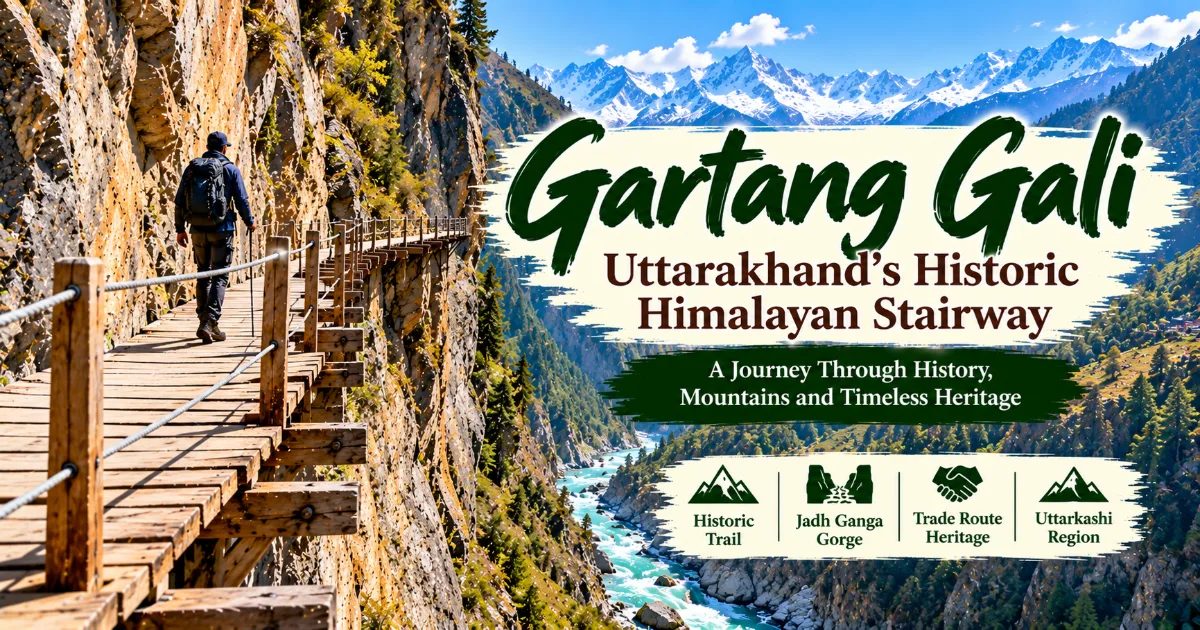
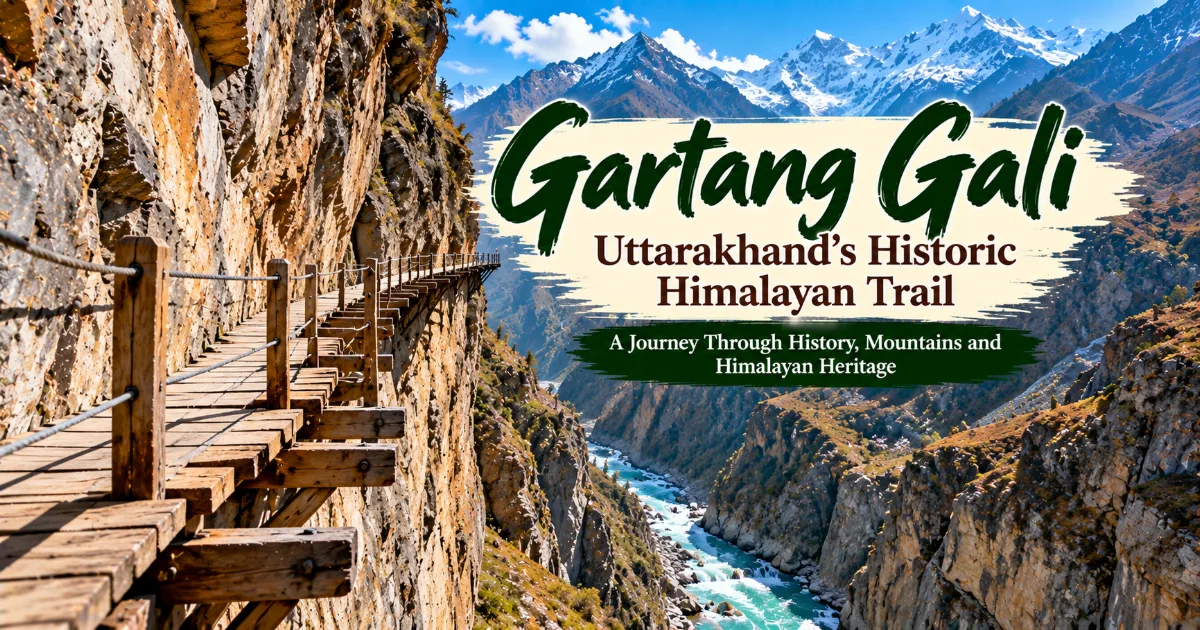
Gartang Gali is a remarkable historic trail in Uttarakhand’s Uttarkashi district, known for its dramatic wooden walkway carved into a steep Himalayan cliff. Located in the Nelong Valley region near the Indo-Tibetan border, this historic route reflects the trading connections that once linked communities across the high Himalayas. Surrounded by rugged mountains and deep gorges, Gartang Gali offers travellers a fascinating combination of history, engineering, and natural beauty.
Discovering Gartang Gali
Uttarakhand is home to many destinations where natural landscapes and human history come together. Some places are famous for temples and pilgrimage traditions, while others attract visitors through trekking routes, remote valleys, and mountain villages. Gartang Gali belongs to a special category because its appeal lies in both its extraordinary setting and its historical importance.
The trail is located in the upper reaches of Uttarkashi district, in the wider Nelong Valley region. It is known for a narrow wooden passage built along a steep rock face above a deep gorge. The structure demonstrates how people developed practical routes through difficult mountain terrain long before modern roads reached many Himalayan areas.
For generations, mountain paths were essential for trade, communication, and movement between settlements. In remote border regions, a carefully constructed trail could connect communities separated by steep cliffs, rivers, and high mountain passes. Gartang Gali is associated with this history of movement and exchange between the Garhwal region and areas across the Himalayan border.
Continue Reading
Today, the trail has become a destination for travellers interested in heritage, mountain landscapes, and lesser-known places in Uttarakhand. Its dramatic appearance makes it visually striking, but its real significance extends beyond photography. Gartang Gali tells a story about the resourcefulness of people who built routes through challenging terrain and depended on them for livelihoods and connections with neighbouring regions.
Visitors should remember that this is a sensitive border-region destination. Access is subject to official permissions, operating schedules, and safety instructions. Before travelling, it is essential to verify the current access status and any restrictions imposed by local authorities.
Where Is Gartang Gali Located?
Gartang Gali is situated in Uttarkashi district in the Garhwal Himalayas of Uttarakhand. It lies in the wider Nelong Valley area, which is known for its rugged terrain, high-altitude landscapes, and proximity to the Indo-Tibetan border.
The surrounding region contains steep mountain slopes, rocky cliffs, narrow gorges, and relatively sparse vegetation at higher elevations. Unlike the greener valleys found at lower altitudes, parts of this landscape have a stark and dramatic appearance shaped by cold temperatures, wind, and limited growing conditions.
The wider route towards Gartang Gali passes through the upper reaches of Uttarkashi district. Travellers generally plan their journey around the accessible roads and designated entry points available under current administrative arrangements.
The exact travel time depends on the starting point, road conditions, weather, and the access rules in force. Mountain journeys can take considerably longer than expected because of winding roads, roadwork, landslides, and restrictions in sensitive areas.
Because Gartang Gali is associated with a border region, visitors should not rely solely on older travel accounts or online photographs when planning a trip. Official information about permits, opening periods, identification requirements, and permitted routes should always be checked in advance.
The Historic Importance of Gartang Gali
A Route Connecting Mountain Communities
For centuries, Himalayan communities relied on trails that crossed difficult terrain. These routes connected settlements, supported trade, and allowed people to travel between valleys and highland regions.
In areas where steep cliffs blocked easier passage, trails sometimes followed narrow ledges or required specialised construction. Gartang Gali is an example of the ingenuity associated with such routes.
The historic walkway is commonly linked with trade between the Garhwal region and areas across the Himalayan border. Traders and travellers moved goods along mountain routes, creating connections between communities with different climates, products, and cultural traditions.
Trade across the Himalayas involved more than the exchange of merchandise. It also enabled the movement of knowledge, customs, languages, and social relationships. Routes such as these helped connect otherwise isolated communities and contributed to the economic life of mountain settlements.
The trail's importance should therefore be understood within the wider history of Himalayan movement and exchange. Its narrow construction reflects the challenges of the landscape and the need to create a usable passage where geography offered few easy alternatives.
The Engineering Behind the Walkway
One of the most striking features of Gartang Gali is the way the walkway follows the steep rock face. Its construction demonstrates how builders adapted available materials and practical knowledge to the demands of the mountain environment.
The route includes a narrow wooden structure attached to the cliff, with the rocky landscape dropping away below. The construction appears simple when compared with a modern bridge or road, but creating a stable passage in such terrain requires an understanding of the rock face, support points, materials, and the forces acting on the structure.
The walkway's historical construction methods are part of its attraction. It provides a visible reminder of how people solved transportation problems before modern engineering equipment and road networks became widely available in remote mountain regions.
However, visitors should not assume that the trail is safe to use merely because it has been restored or opened for tourism. Wooden structures exposed to weather require ongoing inspection and maintenance. Access should always depend on the official safety assessment and instructions provided at the site.
Trade and Cultural Exchange
The wider Himalayan border region historically supported exchange between communities on either side of the mountains. Local products, animals, food supplies, and other goods could move along established routes, depending on the season and prevailing political conditions.
Mountain trade depended on detailed knowledge of terrain and weather. Travellers needed to understand river crossings, mountain passes, changing temperatures, and the availability of resting places along the route.
These exchanges also brought people into contact with different cultural traditions. Border communities often developed relationships that extended beyond the immediate geographical boundaries of their settlements.
Modern national borders and security arrangements have changed the way people move through these areas. Nevertheless, historic trails such as Gartang Gali help preserve the memory of earlier connections and the role of mountain routes in regional history.
What Makes Gartang Gali Unique?
A Walk Along a Steep Cliff
The main attraction of Gartang Gali is its extraordinary position along a steep cliff. The narrow walkway offers a striking view of the surrounding gorge and rugged mountain landscape.
The experience differs from walking along a broad mountain trail. The structure follows the contours of the rock, and the visible drop below highlights the challenging environment in which the route was constructed.
Visitors should follow the designated direction of movement and comply with any restrictions on group size, stopping, or photography. If access is limited to a particular section, travellers must not attempt to continue beyond it.
The walkway should never be treated as an adventure challenge in which visitors test their courage or take unnecessary risks. Its historical value and natural setting can be appreciated without ignoring safety instructions.
A Landscape of Rock and Sky
The landscape around Gartang Gali is defined by rocky cliffs, deep valleys, distant mountain slopes, and expansive Himalayan skies. Depending on the weather, the scenery may appear sharply defined under clear sunlight or more atmospheric when clouds move across the surrounding peaks.
Unlike heavily forested destinations, parts of the upper valley have a relatively sparse appearance. Exposed rock and rugged terrain dominate the view, revealing the powerful influence of elevation and climate.
This environment is particularly appealing to photographers interested in geological features, mountain architecture, and dramatic natural settings. The contrast between the constructed walkway and the rock face also provides a visual record of human adaptation to the mountains.
Visitors should use only permitted viewpoints and avoid leaning over railings or stepping onto unstable ground to obtain a photograph.
A Lesser-Known Heritage Destination
Gartang Gali offers a different kind of tourism experience from Uttarakhand's major pilgrimage towns and popular hill stations. Its importance is rooted in the history of movement, trade, and engineering rather than in large commercial facilities.
The destination appeals to travellers who enjoy discovering places with a strong historical story. It can also be interesting for students of architecture, heritage conservation, geography, and Himalayan history.
Because the site is located in a sensitive region, visitor numbers and access may be controlled. Such restrictions are important for protecting both the structure and the wider security environment.
Responsible tourism means accepting these conditions and recognising that preserving a heritage site is more important than providing unrestricted access.
The Relationship Between Gartang Gali and Nelong Valley
Gartang Gali is closely associated with Nelong Valley, one of the distinctive high-altitude regions of Uttarakhand.
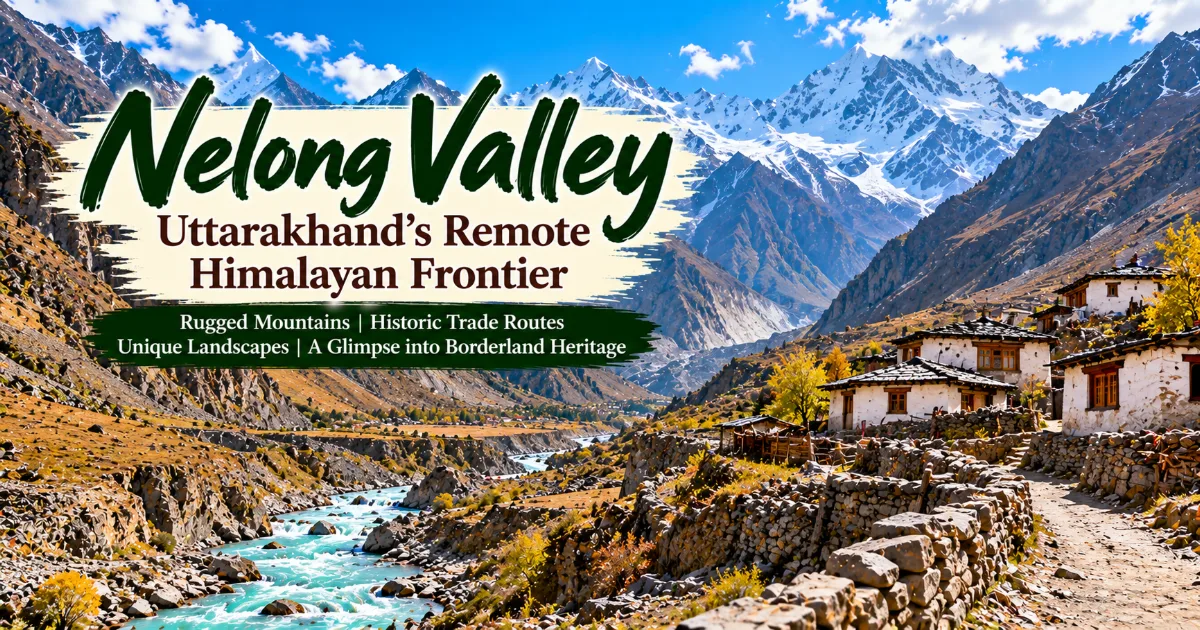
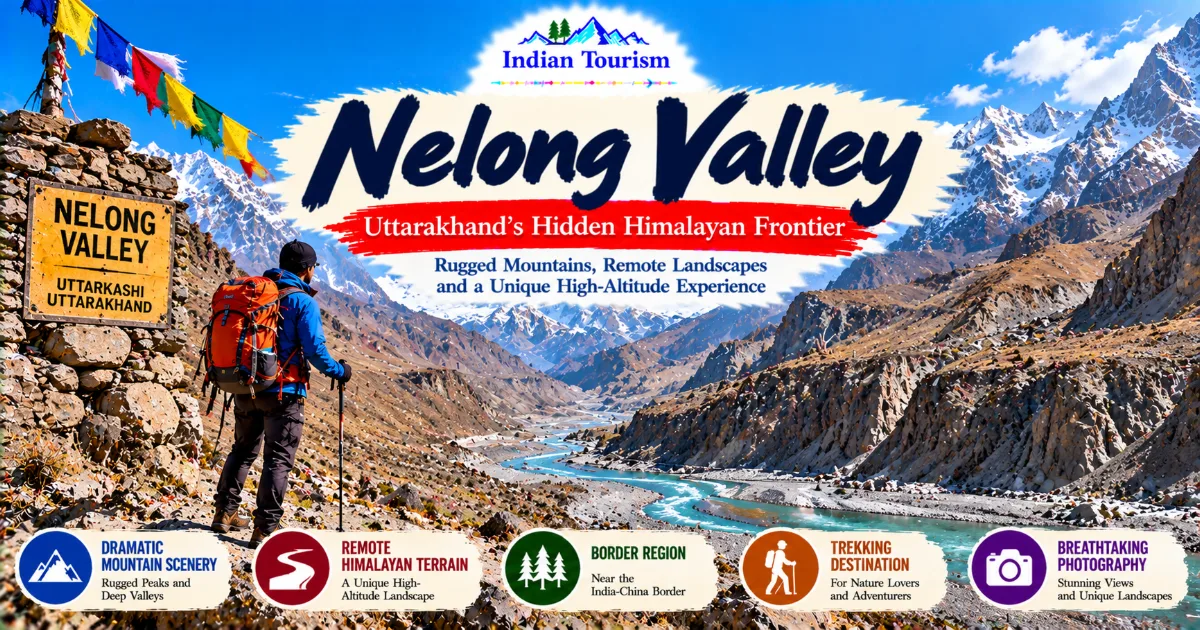
Nelong Valley lies in the upper reaches of Uttarkashi district, near the Indo-Tibetan border. Its landscape is marked by rugged mountains, rocky terrain, limited vegetation, and a strong sense of remoteness.
The valley's geography has influenced both human movement and the development of settlements. Routes through this region required considerable knowledge of the landscape, and the harsh environment placed limits on travel and everyday activity.
Nelong Valley is also historically associated with trade and cultural links across the Himalayas. Gartang Gali helps illustrate the practical infrastructure that made some of these connections possible.
However, Gartang Gali and the wider valley should not be treated as places that can always be explored freely. Access arrangements can differ by location and may change because of administrative decisions, weather, or security requirements.
Travellers should confirm which areas are open, what permits are required, and whether independent movement is permitted. A visit to Gartang Gali does not automatically authorise access to every part of Nelong Valley.
Best Time to Visit Gartang Gali
Summer
Summer is generally the most practical season to investigate a visit to high-altitude destinations in Uttarkashi district, subject to official access arrangements.
As temperatures become more favourable, roads and designated routes may become easier to use than during winter. Visitors can also benefit from longer daylight hours when planning mountain journeys.
However, the operating period for Gartang Gali depends on the permissions and arrangements announced by the authorities. Travellers should confirm the current opening status before making bookings.
Even during summer, temperatures can fall quickly in the mountains. Carry layered clothing, suitable footwear, and protection from the sun.
Early Autumn
Early autumn can offer clear mountain views and cooler conditions. For photographers, the combination of rock formations, the wooden walkway, and the surrounding gorge can be particularly appealing when visibility is good.
Nevertheless, access remains subject to official schedules. Visitors should not assume that the trail will remain open until a particular date simply because weather conditions appear favourable.
Mountain weather can change quickly, and road travel may be affected by rain or falling rocks. Check current forecasts and local instructions before departure.
Monsoon
The monsoon season presents additional challenges in Uttarakhand. Heavy rainfall can trigger landslides, damage roads, and make exposed surfaces slippery.
These conditions are especially important in a destination involving a narrow walkway and steep cliffs. Even if the area appears accessible, visitors should not attempt to enter during closures or when authorities advise against travel.
Travellers planning a monsoon journey should confirm road conditions and site access immediately before departure. If there is uncertainty about safety, postpone the trip.
Winter
Winter brings colder conditions and the possibility of snow and ice in the higher reaches of Uttarkashi district. Access to remote destinations may be restricted, and the availability of transport and other services can be limited.
Gartang Gali should not be approached as a year-round attraction. Visitors must verify the authorised operating period and should never attempt to reach the trail by bypassing a closed route.
The safest approach is to plan around official access arrangements rather than choosing a travel date based only on personal preference.
How to Reach Gartang Gali
By Air
Jolly Grant Airport near Dehradun is a commonly used air gateway for travellers visiting Uttarkashi district.
From the airport, visitors continue by road towards Uttarkashi and the upper valleys of the district. The journey involves mountain roads and can require a substantial amount of time.
Travellers arriving by air should avoid arranging an itinerary that leaves no room for road delays. Weather, traffic, roadwork, and administrative restrictions can affect the journey.
By Train
Haridwar and Rishikesh are commonly used railway gateways for travel into the Garhwal Himalayas. From these locations, visitors continue by road towards Uttarkashi.
It is important to coordinate train schedules with road travel arrangements. A late arrival may make it impractical to continue safely into the mountains on the same day.
An overnight stay along the route can provide a more comfortable start for the journey towards the upper reaches of the district.
By Road
Road travel is the principal way to reach the wider area around Gartang Gali. The journey generally involves travelling towards Uttarkashi and continuing along the designated route for the Nelong Valley region, subject to current restrictions.
The final access arrangements must be confirmed locally. Depending on the rules in force, visitors may need to register, obtain permission, travel through designated checkpoints, or use authorised transport.
Do not assume that a private vehicle can reach the site directly. Follow the current directions provided by the relevant authorities.
Because the region is remote, travellers should carry essential supplies, keep their phones charged, and avoid relying entirely on mobile connectivity.
Permits and Border-Region Regulations
One of the most important considerations when planning a visit to Gartang Gali is the area's location near the Indo-Tibetan border.
Border-region destinations may be subject to special entry conditions, identity checks, restricted zones, or temporary closures. These arrangements can change according to security requirements and administrative decisions.
Before travelling, visitors should verify the current requirements with the appropriate district authorities or official tourism information channels. Ask specifically whether permits are required, which identification documents must be carried, and whether access is permitted on the intended date.
Do not rely solely on information from older travel blogs, videos, or social media posts. A person who visited in a previous season may have travelled under different rules.
Visitors must also follow instructions about photography and movement. Some areas may have restrictions on photographing infrastructure, checkpoints, or other sensitive locations.
Following these requirements protects travellers and respects the special circumstances of a border region.
Responsible Tourism and Heritage Conservation
Gartang Gali is valuable not only because it attracts visitors but also because it represents an important part of Himalayan history.
Historic structures can be damaged by excessive use, careless behaviour, and a lack of maintenance. Visitors therefore have a responsibility to protect the site.
Stay on the authorised walkway and never attempt to climb onto the surrounding rock face. Do not carve names into wooden structures, remove pieces of timber, or interfere with barriers and support features.
Follow instructions from staff and respect any limits on the number of visitors allowed on the trail. These restrictions may be necessary to reduce pressure on the structure and maintain safe conditions.
Carry waste back to designated disposal points. Avoid leaving plastic bottles, food wrappers, or other rubbish along the route.
Photography should be undertaken responsibly. Do not push past other visitors, lean over barriers, or stop in a way that creates unsafe congestion.
Supporting responsible tourism also means respecting local communities and the region's cultural history. Visitors should recognise that heritage conservation requires time, funding, skilled maintenance, and cooperation between authorities and the public.
Photography at Gartang Gali
Gartang Gali is particularly attractive to photographers because of its unusual architecture and dramatic location.
The wooden walkway provides a strong visual contrast with the natural rock face. Wide-angle photographs can communicate the scale of the landscape, while closer images may reveal details of the timber construction and the way the structure follows the cliff.
The surrounding mountains and gorge provide additional subjects. On clear days, the contrast between the rocky terrain and the open sky can create striking compositions.
Photography should always remain secondary to safety. Use only authorised areas and follow the instructions of staff. Never cross barriers or move onto exposed surfaces for a better angle.
Visitors should also respect restrictions on photography in sensitive border areas. If an official instruction prohibits photography in a particular location, comply without argument.
A responsible photograph should document the site without damaging it or creating unnecessary risk.
What to Carry for the Visit
Preparation is important when travelling to remote mountain destinations. The conditions at Gartang Gali can differ considerably from those in lower towns.
Carry warm layers even during the summer season. A wind-resistant outer layer can be useful when temperatures drop or weather changes suddenly.
Wear sturdy footwear with good grip. Mountain roads, rocky paths, and exposed surfaces may become slippery, particularly after rain.
Bring drinking water, personal medication, sun protection, and a small amount of food if the journey is long. Do not assume that shops or restaurants will be available at every point along the route.
Keep the identification documents required under the current entry rules readily accessible. If a permit or registration is necessary, confirm the procedure before leaving the main town.
A charged mobile phone is useful, but connectivity may be unreliable. Share your itinerary with someone you trust and follow the advice of local authorities regarding the expected duration of the journey.
Common Mistakes to Avoid
A frequent mistake is travelling to Gartang Gali without checking whether the trail is open. Access arrangements can change, and an old photograph or travel article does not guarantee that visitors will be admitted on a particular day.
Another mistake is assuming that the site can be visited independently without any special requirements. Because it is located in a sensitive border region, visitors should verify permits, identity requirements, and designated routes.
Some travellers underestimate the physical and psychological demands of walking along an exposed cliffside structure. People who are uncomfortable with heights should consider this before planning the visit.
It is also unwise to ignore instructions in pursuit of photographs. Barriers and movement restrictions are intended to protect visitors and preserve the site.
Finally, do not treat Gartang Gali as an isolated attraction that can be reached without careful planning. The wider journey involves mountain roads, changing weather, and potentially limited services. A realistic schedule and a flexible attitude make the trip safer and more enjoyable.
Who Should Visit Gartang Gali?
Gartang Gali is well suited to travellers interested in Himalayan history, traditional engineering, remote landscapes, and heritage conservation.
Photography enthusiasts may appreciate its dramatic setting, while students of geography and architecture may find the walkway interesting as an example of adapting infrastructure to difficult terrain.
History enthusiasts can use the visit as an opportunity to explore the broader story of trade and movement across Himalayan communities.
However, the destination may not be suitable for everyone. People with a strong fear of heights should consider the nature of the walkway before visiting. Families travelling with young children should follow all age-related rules and local safety instructions.
Visitors seeking extensive shopping, nightlife, or luxury tourism facilities may find the experience limited. Gartang Gali is best approached as a carefully planned heritage excursion rather than a conventional hill-station holiday.
A Suggested Travel Plan
A visit to Gartang Gali can be included within a wider itinerary exploring Uttarkashi district and its mountain heritage.
Travellers can first reach Uttarkashi and use it as a base for organising transport and confirming access arrangements. Before continuing towards the upper valley, they should verify road conditions, permit requirements, and the authorised visiting schedule.
Once access is confirmed, allow sufficient time for the journey, any registration procedures, and the walk itself. Do not plan additional distant attractions around a strict timetable, because mountain travel can be unpredictable.
Visitors may combine the trip with other authorised destinations in the wider region, provided access rules and travel times make this practical.
An overnight stay may be preferable to a rushed return journey, especially when weather or road conditions are uncertain.
The most important part of the plan is flexibility. If the trail is closed or officials advise against travel, change the itinerary rather than attempting an unauthorised approach.
Conclusion
Gartang Gali is one of Uttarakhand's most distinctive historic attractions, combining a remarkable cliffside walkway with the wider story of trade, movement, and cultural exchange across the Himalayas. Its dramatic setting in the Nelong Valley region makes it a compelling destination for travellers interested in the relationship between people and difficult mountain terrain.
The trail also demonstrates the importance of preserving historic infrastructure. Its value lies not simply in its appearance but in the knowledge and effort represented by its construction and use.
A successful visit requires preparation, respect for border-region regulations, and careful attention to safety. Travellers should confirm access permissions, follow official instructions, protect the structure, and avoid unnecessary risks.
For anyone exploring Uttarakhand, Gartang Gali offers a different perspective on the Himalayas. It reveals how mountain communities created connections across challenging landscapes and how these historic routes continue to shape the region's cultural identity.
Hashtags
#GartangGali #UttarakhandTourism #NelongValley #Uttarkashi #IndianTourism