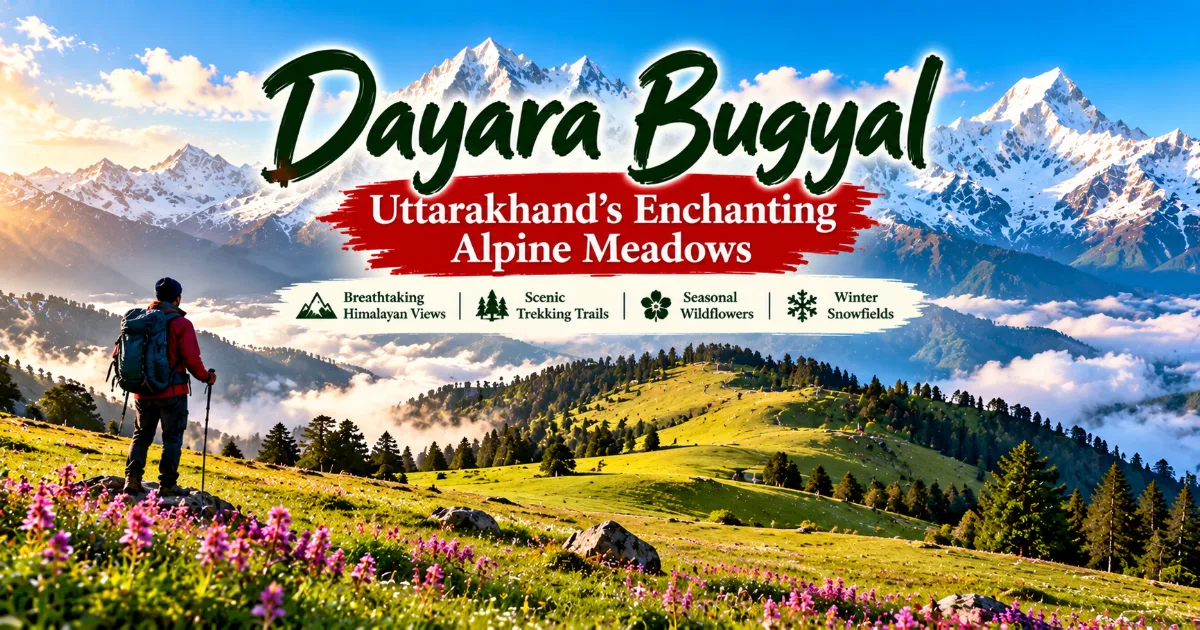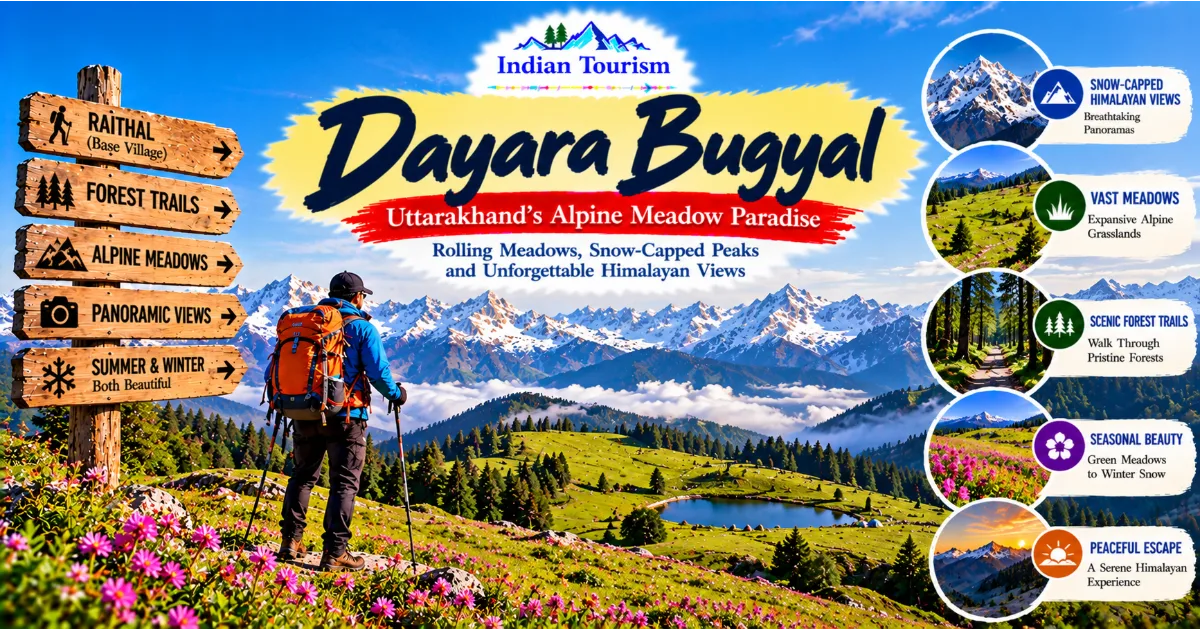
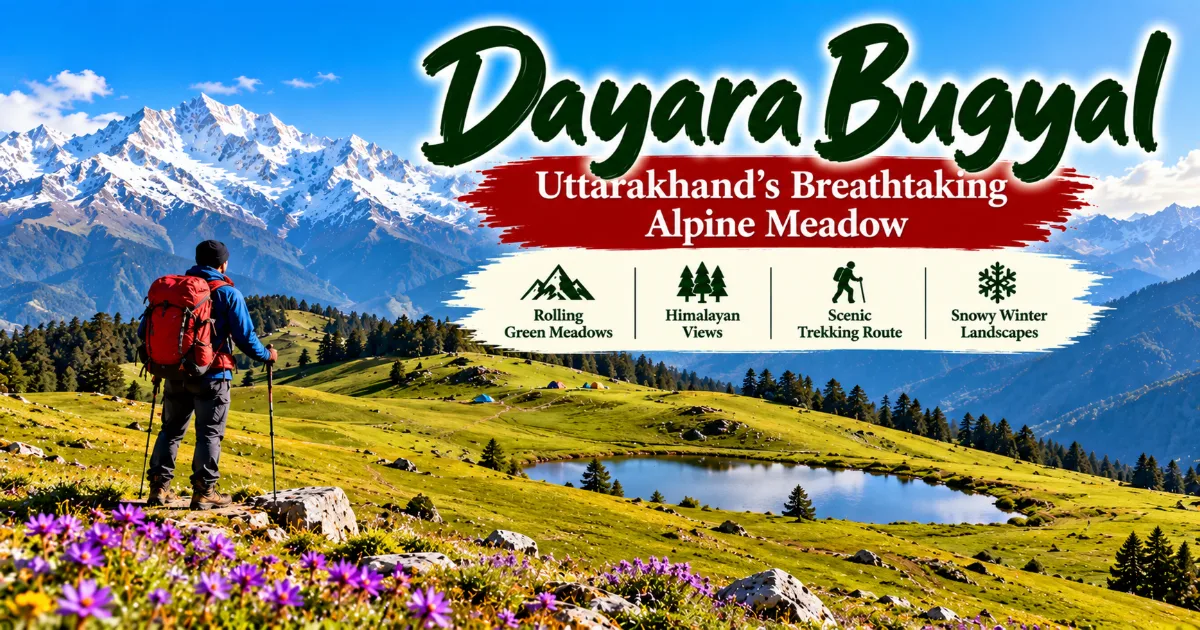
Dayara Bugyal is one of Uttarakhand’s most beautiful high-altitude meadows, offering sweeping grasslands, Himalayan mountain views, seasonal wildflowers and snow-covered landscapes during winter.
Located in the Uttarkashi district at an elevation of approximately 3,000 to 3,400 metres, this destination is popular among trekkers seeking a rewarding Himalayan experience without the technical demands of major glacier crossings. From the green pastures of summer to the snow-covered slopes of winter, Dayara Bugyal reveals a different side of the Garhwal Himalayas in every season.
Discovering Dayara Bugyal
The word bugyal refers to a high-altitude meadow in the Himalayan region. These natural grasslands occur above many forested mountain slopes and support a distinctive ecosystem shaped by elevation, snowfall, seasonal rainfall and grazing patterns. Dayara Bugyal is among the best-known examples in Uttarakhand, attracting visitors who want to experience open mountain landscapes, fresh air and panoramic views.
Situated in the Garhwal Himalayas, Dayara Bugyal lies within the wider Uttarkashi region. Its meadows extend across rolling terrain, creating a landscape that feels remarkably different from the steep valleys and dense forests encountered along many Himalayan roads. Instead of narrow paths enclosed by trees, visitors reach open slopes where the horizon expands towards distant mountain ranges.
The destination is especially appealing because its beauty changes throughout the year. During the warmer months, grasses and seasonal plants transform the slopes into broad green pastures. In autumn, the colours become more muted, while winter can cover the landscape with snow. Each season creates a different atmosphere, attracting photographers, nature enthusiasts, families and trekkers with varying interests.
Continue Reading
Dayara Bugyal is not simply a scenic viewpoint. It is also an ecological landscape that supports plant life, insects, birds and grazing animals. Its open appearance can make it seem resilient, but alpine meadows are sensitive environments. Trampling, unmanaged camping, litter and excessive pressure can damage vegetation and disturb the ecological balance.
A responsible visit combines enjoyment of the scenery with an understanding of the environment. Travellers who walk carefully, follow established routes and avoid leaving waste behind help preserve the meadow for future visitors and local communities.
The Geography and Landscape of Dayara Bugyal
Dayara Bugyal lies in a mountainous landscape where forested slopes gradually open into extensive high-altitude grasslands. The surrounding terrain is shaped by the geological processes that created the Himalayas, together with the effects of snow, rain, streams and erosion.
The meadow sits at an elevation commonly described as approximately 3,000 to 3,400 metres, although the precise elevation varies across different parts of the area. At this height, temperatures are generally lower than in the plains, and weather conditions can change quickly. Even when the lower valleys feel warm, the meadow may experience strong winds, chilly evenings or unexpected rainfall.
The terrain consists of rolling grassy slopes, small ridges, forest margins and open areas that provide long views across the surrounding mountains. The gradual changes in elevation create several natural viewpoints, allowing trekkers to see the meadow from different angles as they move through the landscape.
During clear weather, the wider Himalayan panorama can include prominent snow-covered peaks of the Garhwal region. The exact mountains visible depend on the viewpoint, visibility and weather conditions. Cloud cover can hide distant peaks within minutes, which is part of the changing character of the high Himalayas.
The forested approaches create a contrast with the open meadow. Trees provide shelter for birds and other wildlife, while the transition zone between forest and grassland supports different types of vegetation. This ecological variety makes the journey interesting even before trekkers reach the main open slopes.
Dayara Bugyal demonstrates how mountain landscapes are organised vertically. Forests, meadows, streams and rocky ridges occupy different ecological zones, each shaped by temperature, moisture, sunlight and soil conditions. Travelling through these zones offers a practical introduction to the environmental diversity of Uttarakhand.
Why Dayara Bugyal Is Famous
Dayara Bugyal is famous for its extensive alpine meadows, accessible Himalayan trekking experience and beautiful seasonal scenery. It offers the feeling of being surrounded by mountains without requiring every visitor to undertake a technically demanding expedition.
Expansive Green Meadows
During suitable summer conditions, the grasslands become green and inviting. The open terrain allows visitors to appreciate the scale of the landscape, with gently rolling slopes stretching towards the surrounding mountain ridges.
Unlike narrow forest trails, the meadow provides space to pause, observe the scenery and enjoy the changing light. The combination of grassland, distant peaks and open sky makes it particularly attractive to landscape photographers.
The greenery depends on seasonal rainfall and temperature. The meadow should not be expected to look equally lush throughout the year, and the timing of seasonal changes can vary.
Snow-Covered Winter Landscapes
Winter transforms Dayara Bugyal into a snow-covered destination when suitable snowfall occurs. The grassy slopes become white expanses, and the surrounding trees may carry layers of snow. This seasonal transformation attracts travellers interested in snow trekking and winter mountain scenery.
However, winter conditions require additional preparation. Snow can hide the trail, reduce visibility and make movement more difficult. Cold temperatures increase the risk of hypothermia, while icy sections may create slipping hazards.
Visitors should choose experienced local guides when needed, carry appropriate winter clothing and check current weather and route conditions before departure.
Himalayan Mountain Views
The meadow offers wide views across the Garhwal Himalayan landscape. Its open terrain provides opportunities to observe mountain ridges, forested valleys and distant peaks without the visual obstruction that can occur along enclosed forest trails.
Clear mornings can provide particularly rewarding views, although no particular panorama is guaranteed. Clouds and changing weather are normal features of mountain environments.
A Trek for Nature Lovers
Dayara Bugyal appeals to people who enjoy walking through forests, observing seasonal vegetation and spending time in quiet mountain surroundings. It is also suitable for travellers who want to experience an alpine meadow without undertaking a high-altitude glacier crossing.
The route still requires physical effort, and visitors should not underestimate the effects of elevation. A moderate trek at altitude can feel considerably more demanding than a similar walk at lower elevations.
The Trek to Dayara Bugyal
The trek is one of the main reasons visitors travel to Dayara Bugyal. The journey typically begins from a village in the surrounding Uttarkashi region, with Raithal and Barsu among the best-known starting points used by trekkers.
The choice of starting point affects the route, distance, elevation gain and overall itinerary. Travellers should confirm the trail conditions and current arrangements with local guides or reliable trekking operators before departure.
Starting from Raithal
Raithal is a village in the Uttarkashi region that is commonly associated with the Dayara Bugyal trek. It offers a village setting from which visitors can begin their journey into the surrounding forest and meadow landscape.
The approach from Raithal gradually moves away from the settled valley and into the mountain environment. Depending on the route and conditions, trekkers pass through forested sections before reaching more open terrain.
The village also offers an opportunity to understand rural life in the Garhwal Himalayas. Travellers may encounter traditional homes, cultivated land and local businesses that support visitors arriving for the trek.
Visitors should remember that Raithal is a living village rather than a tourist set. Respect for local customs, privacy and the daily routines of residents is an important part of responsible travel.
Starting from Barsu
Barsu is another recognised access point for the Dayara Bugyal area. It is associated with trekking routes that climb through forested slopes towards the meadow.
The experience depends on the selected trail and the conditions at the time of travel. Trekkers should obtain current information about the route rather than relying entirely on older descriptions.
Barsu provides another way to approach the landscape and may be suitable for visitors whose transport or itinerary makes this starting point more convenient. A local guide can help travellers choose an appropriate route based on fitness, time and weather.
Walking Through the Forest
The forest section is an important part of the journey. Depending on the route and season, the trail may pass through stands of oak, rhododendron and other Himalayan vegetation.
The forest creates a different atmosphere from the open meadow. Trees provide shade, birds can be heard among the branches and the trail may wind through uneven ground. In damp conditions, exposed roots and stones can become slippery.
Trekkers should walk at a steady pace and take breaks when needed. Rushing through the forest can lead to unnecessary fatigue before reaching the more open sections of the route.
The transition from forest to meadow is one of the most memorable moments of the trek. After walking beneath trees, visitors emerge into a broad landscape where the sky and distant mountains become more prominent.
Reaching the Open Meadow
The meadow offers a sense of space that contrasts with the enclosed forest trail. As the route reaches open grassland, the views expand and the rolling terrain becomes more visible.
Visitors can pause at appropriate viewpoints, photograph the landscape and observe the surrounding vegetation. It is important to remain on established paths and avoid walking repeatedly across fragile sections of grassland.
The amount of time needed to reach the meadow varies according to the starting point, the route, weather, group fitness and walking pace. Families and beginners should choose an itinerary that allows enough time for rest and a comfortable return.
Returning Safely
The return journey deserves the same attention as the ascent. Fatigue, changing weather and slippery ground can make the descent difficult, especially during winter or after rainfall.
Trekkers should carry enough water, food and warm clothing for the entire journey. They should also avoid starting late in the day if the planned route requires several hours of walking.
A responsible trek is not measured only by reaching the meadow. Returning safely, leaving no waste and protecting the landscape are equally important parts of the experience.
The Seasonal Beauty of Dayara Bugyal
One of the most appealing aspects of Dayara Bugyal is its changing appearance throughout the year. The landscape responds to temperature, rainfall, snowfall and the natural growing cycle of alpine vegetation.
Spring: The Landscape Awakens
Spring brings gradual changes to the mountain environment as temperatures begin to rise. Vegetation starts responding to the new growing season, and forested sections may show fresh leaves and seasonal flowers.
Conditions can still be cold, particularly in the morning and evening. Snow may remain in higher or shaded areas, depending on the winter and the timing of the visit.
Spring is suitable for travellers who enjoy the transition between winter and summer, but the exact appearance of the meadow varies from year to year. Visitors should check local conditions before choosing their travel dates.
Summer: Green Grasslands and Clear Views
Summer is often associated with the greenest appearance of Dayara Bugyal. Grasslands can become lush, and the contrast between green slopes and distant mountain peaks creates a classic Himalayan landscape.
The weather at lower elevations may be relatively comfortable, but the meadow can remain cool, especially when clouds and wind arrive. Rainfall can make sections of the trail muddy or slippery.
Summer is attractive to trekkers and photographers who want to experience the open meadow at a time when vegetation is active. Visitors should still prepare for changing conditions rather than assuming that the weather will remain sunny.
Monsoon: Clouds and Rain
The monsoon brings moisture to the region, but it can also create difficult trekking conditions. Rain may make paths slippery, reduce visibility and increase the risk of landslides on connecting mountain roads.
Clouds can obscure the surrounding peaks, and wet vegetation may make the trail less comfortable. Leeches may be present in some damp forest environments, depending on the location and conditions.
Travellers should consider postponing a trek when heavy rain or official advisories make the route unsafe. The meadow's beauty is not worth taking unnecessary risks during severe weather.
Autumn: Clearer Skies and Golden Grasslands
Autumn can offer rewarding mountain views as the monsoon retreats and visibility improves. The meadow may gradually lose its bright summer green, developing more muted shades of gold and brown.
The atmosphere can feel crisp, especially in the morning. As the season advances, temperatures fall and the possibility of snowfall increases at higher elevations.
Autumn is often appealing to photographers because the changing colours and clear mountain outlines create a different visual character from the summer landscape.
Winter: Snow and Cold
Winter is the season most closely associated with snow trekking at Dayara Bugyal. When snowfall is sufficient, the meadow can become a broad white landscape surrounded by snow-dusted trees and mountain ridges.
The actual amount of snow varies considerably from year to year. Travellers should not assume that a particular date guarantees deep snow.
Winter trekking requires insulated clothing, waterproof footwear and careful route planning. Snow-covered paths may be difficult to follow, and icy sections can increase the risk of falls. Visitors unfamiliar with winter mountain travel should seek qualified local guidance.
Wildlife Around Dayara Bugyal
The forests and meadows surrounding Dayara Bugyal form part of a wider Himalayan ecosystem. Although visitors may not encounter large animals during a short trek, the region supports a variety of birds, insects and other wildlife.
Himalayan Birds
The forested approaches and open slopes can support several kinds of Himalayan birds. Depending on the habitat and season, trekkers may hear calls from birds moving through the trees or observe species feeding near forest edges.
Birdwatching is best approached patiently. Binoculars can help visitors observe birds without approaching them too closely. Early mornings may provide good opportunities, although sightings depend on weather and local conditions.
Birds contribute to the functioning of the ecosystem through activities such as insect control, seed dispersal and pollination. Their presence is one part of the wider ecological value of the meadow and surrounding forests.
Small Mammals and Forest Wildlife
The forested landscape may support small mammals and other animals adapted to Himalayan conditions. Most remain difficult to observe because they avoid people or are active when visitors are not present.
Trekkers should not attempt to attract wildlife with food or follow animals away from established trails. Human food can change animal behaviour and create risks for both wildlife and people.
Insects and Pollinators
During warmer months, alpine meadows may support butterflies, bees and other insects associated with flowering plants. These organisms play important roles in pollination and other ecological processes.
A meadow's ecological value is not limited to its visual appearance. The small organisms living among grasses and flowers help sustain the wider food web.
Visitors should avoid spraying unnecessary chemicals, collecting insects or trampling flowering areas. Observing the ecosystem carefully can make a trek more interesting while reducing its impact.
Alpine Meadows and Their Ecological Importance
Alpine meadows are specialised environments shaped by cold temperatures, seasonal snowfall and a relatively short growing period. Plants must adapt to conditions that can change rapidly between day and night and across the seasons.
Dayara Bugyal's grasslands provide vegetation that supports grazing animals and smaller organisms. The meadow also forms part of a larger landscape in which forests, soil, water and wildlife interact.
The vegetation helps protect the soil surface, although its ability to resist erosion depends on local conditions. When grass cover is damaged by repeated trampling or unmanaged vehicle access, exposed soil can become more vulnerable to erosion.
Alpine plants often grow slowly, making recovery from disturbance difficult. A patch of grassland that appears to recover quickly at the surface may take longer to regain its original plant composition.
The meadow also reflects the relationship between climate and mountain ecosystems. Changes in temperature, snowfall and rainfall can affect the timing of plant growth, the availability of water and the distribution of vegetation.
Protecting alpine meadows requires more than keeping the landscape visually attractive. It means preserving ecological processes, managing visitor activity and recognising that these environments have value even when they are not being used for tourism.
Local Villages and Garhwali Culture
Dayara Bugyal is connected to the communities of the wider Uttarkashi region. Villages such as Raithal and Barsu provide access to the trekking landscape and form part of the cultural setting in which mountain tourism takes place.
Life in Himalayan villages is influenced by geography, seasonal weather, agriculture, livestock and access to services. Mountain communities have developed ways of adapting to steep terrain and changing conditions, while maintaining traditions that reflect the wider Garhwali cultural region.
Visitors may notice traditional houses, terraced fields, local food and patterns of daily life shaped by the mountain environment. The experience varies between villages and households, so travellers should avoid assuming that every settlement follows exactly the same customs.
Tourism can provide income through accommodation, guiding, transport, food services and other local businesses. When visitors use local services responsibly, some of the economic benefits can remain within the area.
However, tourism also brings pressures. Increased demand for water, waste disposal and accommodation can affect small settlements if growth is not managed carefully. Respectful travel should therefore consider the needs of residents as well as the interests of visitors.
Ask permission before photographing people or entering private property. Follow local guidance about paths and grazing areas, and treat village spaces as places where people live and work rather than as attractions created solely for tourists.
Local Food to Try During Your Visit
Food is an important part of travelling through Uttarakhand. In the wider Garhwal region, traditional meals often reflect locally available grains, pulses, vegetables and seasonal ingredients.
Visitors may encounter dishes such as mandua roti made from finger millet, local lentil preparations, seasonal vegetables and simple home-style meals served by guesthouses or village accommodation providers. The dishes available depend on the establishment, season and local supply.
Aloo ke gutke is a familiar Uttarakhand preparation featuring potatoes cooked with spices. It is often served with other dishes, although recipes and accompaniments vary across the state.
Local lentil dishes can provide a satisfying meal after a day of walking. Rice, roti and vegetable preparations are also common options in many parts of the region.
Travellers should ask about ingredients if they have allergies or dietary restrictions. Food availability may be more limited in small villages than in larger towns, so visitors with specialised dietary needs should plan accordingly.
It is also useful to eat a balanced meal before a trek and carry suitable snacks. High-altitude walking requires energy, and long gaps between meals can make a demanding route feel even harder.
Photography at Dayara Bugyal
Dayara Bugyal is especially attractive to landscape photographers because its open terrain provides clear views of rolling grasslands and distant mountains.
During summer, wide-angle photographs can capture the green meadow and surrounding ridges. Autumn offers a different palette, with golden grasslands and clearer mountain outlines. In winter, snow can create high-contrast compositions when weather and visibility are suitable.
Morning and late afternoon can provide interesting light, but the best conditions depend on clouds, wind and the direction of the sun. Photographers should allow time for the landscape to change rather than trying to capture everything during a brief stop.
The forest trail also offers photographic opportunities. Tree trunks, filtered sunlight, seasonal leaves and small plants create more intimate compositions than the wide views of the meadow.
A camera is not necessary to enjoy the destination. Visitors can also appreciate the changing scenery by pausing, observing the mountain outlines and listening to the sounds of the forest.
Photography should never take priority over safety. Avoid walking backwards near slopes, standing on unstable ground for a better angle or leaving established trails to reach an isolated viewpoint.
Responsible Tourism at Dayara Bugyal
Dayara Bugyal's appeal depends on the quality of its natural environment. The meadow can be damaged by careless tourism, especially when visitor numbers increase without suitable waste management and route planning.
Carry Back All Waste
Visitors should carry back food wrappers, plastic bottles, tissues and other waste. Waste should be disposed of through appropriate facilities rather than left at viewpoints or campsites.
Even small items can accumulate when many people follow the same trail. A landscape that appears clean during one visit may become polluted over time if every visitor leaves something behind.
Stay on Established Trails
Walking across fragile grassland can damage plants and compact the soil. Trekkers should use established routes and avoid creating shortcuts across slopes.
In winter, snow may make the trail difficult to recognise. Visitors should follow local guidance rather than choosing a route based only on what appears convenient.
Respect Local Wildlife
Wild animals should never be fed or approached for photographs. Keep a reasonable distance and allow them to move away without interference.
Noise should also be kept to a reasonable level. Loud music and shouting can disturb wildlife and reduce the peaceful atmosphere that many visitors come to experience.
Camp Only Where Permitted
If an itinerary includes an overnight stay in or near the meadow, confirm the authorised camping arrangements. Campfires can damage vegetation and create fire risks, particularly when dry plant material is present.
Use designated facilities where available and follow the instructions of local guides and authorities. Leave the campsite clean and avoid contaminating streams or other water sources.
Support Local Communities
Using local guides, accommodation providers and transport services can help distribute tourism income. Visitors should value the knowledge and work of local people, including those responsible for guiding, cooking, carrying equipment and maintaining visitor facilities.
Responsible tourism is not simply about spending money locally. It also involves treating workers fairly, respecting residents' privacy and following community guidance.
How to Reach Dayara Bugyal
Dayara Bugyal is generally approached through the Uttarkashi region of Uttarakhand. Travellers commonly reach a suitable road-accessible village, such as Raithal or Barsu, before beginning the trek.
The best approach depends on the selected route, current road conditions, accommodation arrangements and the visitor's schedule.
By Air
Jolly Grant Airport near Dehradun is a commonly used air gateway for travellers heading towards Uttarkashi. From the airport, the journey continues by road through the mountain region.
The road journey can take several hours, depending on the destination, traffic and conditions. Travellers should avoid planning a demanding trek immediately after a long journey if they are tired or have not had time to rest.
By Rail
Dehradun and Rishikesh are commonly used railway access points for journeys into this part of Uttarakhand. From either location, visitors continue by road towards Uttarkashi and the relevant trekking village.
Train schedules and onward transport should be checked before departure. Travellers arriving late may prefer to stay overnight before continuing into the mountains.
By Road
Uttarkashi is an important regional access point for journeys towards Raithal, Barsu and other villages in the surrounding area. Public transport may be available on some sections, while taxis and private vehicles can offer greater flexibility.
Mountain roads may be affected by rainfall, landslides, roadworks and traffic. Travellers should allow extra time and check current conditions before setting out.
Reaching the Meadow on Foot
From the selected starting village, the final approach is generally made by trekking. The distance, elevation gain and walking time vary according to the route and conditions.
A local guide can help visitors choose a suitable itinerary, particularly during winter or when trail conditions are uncertain. Travellers should confirm the route before beginning and avoid starting so late that the return journey becomes rushed.
Accommodation and Facilities
Accommodation options in the surrounding villages and the wider Uttarkashi region may include guesthouses, homestays, lodges and other small establishments. Facilities vary according to location, season and the type of property.
Staying in a village can provide an opportunity to experience local hospitality and begin the trek without rushing from a distant town on the same morning. It can also help visitors understand the local environment before heading into the meadow.
During popular trekking periods, accommodation may become busy, so advance arrangements are advisable. Winter conditions can affect availability, road access and the services offered by individual properties.
Facilities become more limited once visitors leave the settlements and move along the trail. Trekkers should not assume that shops, toilets, electricity or mobile connectivity will be available throughout the route.
Those planning an overnight trek should confirm where camping is permitted and what arrangements are required. Visitors should also ask about meals, drinking water and waste management before finalising their itinerary.
What to Pack for Dayara Bugyal
The packing list depends on the season, the length of the trek and whether an overnight stay is planned.
Comfortable trekking footwear with good grip is important because the route may include uneven ground, stones, roots and muddy sections. During winter, waterproof footwear and suitable traction equipment may be needed depending on the snow and ice conditions.
Layered clothing allows visitors to adjust to changes in temperature. A warm jacket, thermal layers, rain protection, gloves and a hat can be useful even when the weather is pleasant at the starting point.
Carry drinking water, suitable snacks, sun protection, personal medicines and a small first-aid kit. Sunglasses can be useful in bright conditions, especially when snow reflects sunlight.
A headlamp is valuable if the return journey takes longer than expected. Visitors should also carry a fully charged phone, although they must not rely on mobile connectivity for emergency assistance.
For winter trekking, additional insulation and cold-weather equipment are necessary. The exact requirements should be discussed with a qualified local guide or trekking operator.
Pack only what is needed, but do not remove essential safety equipment simply to reduce the weight of the bag. A properly prepared trek is more comfortable and safer than one undertaken with inadequate clothing or supplies.
Safety Tips for Visitors
Although Dayara Bugyal is often described as a moderate trekking destination, conditions can become difficult. Altitude, changing weather, uneven terrain and winter snow all require attention.
Walk at a pace that allows conversation without excessive breathlessness. Take breaks when needed and avoid trying to match the speed of more experienced trekkers.
Drink water regularly and carry sufficient food for the planned journey. Do not depend on finding shops along the trail.
Check the weather forecast and local advice before departure. If heavy rain, snowfall or other hazardous conditions are expected, consider postponing the trek.
Trekkers should avoid wandering away from the established route, particularly when visibility is poor. In snow, apparently open ground may conceal uneven terrain or make navigation difficult.
Anyone experiencing severe dizziness, confusion, unusual breathlessness or other concerning symptoms should stop and seek appropriate assistance. Do not assume that every problem will resolve by continuing to walk.
Families travelling with children should choose a route suited to the children's age, fitness and experience. Keep children within sight, especially around slopes, streams and snow-covered areas.
Finally, plan the return journey before starting. Carry sufficient daylight time, check local guidance and avoid turning a scenic excursion into a race against darkness.
A Suggested Two-Day Itinerary
A two-day visit can provide a relaxed introduction to Dayara Bugyal for travellers who want to experience the meadow without rushing.
On the first day, travel from Dehradun, Rishikesh or another suitable arrival point towards the Uttarkashi region and continue to the selected starting village. The journey may take much of the day, so use the remaining time to settle into the accommodation, speak with a local guide and check the conditions for the following morning.
On the second day, begin the trek at a suitable time and follow the route recommended by the guide. Walk at a steady pace, take breaks and spend time appreciating the open landscape once you reach the meadow. Keep the schedule flexible enough to allow a safe return.
Travellers planning an overnight trek will need a longer itinerary. The exact duration should depend on the chosen route, camping rules, weather and the group's fitness.
This framework is not a substitute for current local advice. Road travel and trekking times can vary considerably, and winter conditions may require additional preparation or changes to the plan.
Is Dayara Bugyal Suitable for Families and Beginners?
Dayara Bugyal can be a good introduction to Himalayan trekking for people who are reasonably fit and choose an appropriate route. Its meadow landscape offers a rewarding experience without requiring every visitor to undertake technical mountaineering.
However, the difficulty should not be underestimated. The trail involves elevation gain, uneven terrain and exposure to changing mountain weather. Beginners should start slowly and choose an itinerary suited to their fitness.
Families should consider the ages and abilities of children, the season, the distance and the availability of suitable accommodation. A shorter walk with sufficient rest may be more enjoyable than an ambitious itinerary.
Older travellers should consider their comfort with uphill walking and seek medical advice if they have concerns about exercising at altitude. The fact that a trek is popular does not mean that it is appropriate for every individual.
Winter visits require particular caution. Snow can make even familiar trails more demanding, and travellers without experience of snow trekking should seek local guidance.
The goal should be to enjoy the mountain environment without unnecessary pressure. Visitors can appreciate the meadow's scenery even if they do not walk to every viewpoint.
Dayara Bugyal Compared with Other Himalayan Meadows
Uttarakhand contains several high-altitude meadow landscapes, each with its own geography, access routes and seasonal character. Dayara Bugyal is particularly attractive to travellers looking for broad grasslands and Himalayan views within the wider Uttarkashi region.
Other destinations may involve longer approaches, different elevations or more demanding terrain. The choice should depend on the traveller's interests and abilities rather than on a simple ranking of which meadow is most beautiful.
Dayara Bugyal's appeal lies in the combination of forest trails, open slopes and seasonal transformation. It offers opportunities for a short nature-focused visit as well as a more structured trekking experience.
The meadow also provides a useful reminder that alpine landscapes are not interchangeable. Differences in rainfall, soil, elevation, grazing and vegetation create distinctive environments across the Himalayas.
For travellers exploring Uttarakhand state by state and region by region, Dayara Bugyal deserves its own place in the wider story of the Garhwal Himalayas.
Conclusion
Dayara Bugyal is a remarkable example of Uttarakhand's high-altitude natural beauty. Its expansive grasslands, surrounding forests, seasonal wildflowers and panoramic Himalayan views make it a rewarding destination for trekkers, photographers and nature enthusiasts.
The experience changes with the seasons. Summer can reveal green slopes and active vegetation, autumn may offer clearer mountain views, and winter can transform the meadow into a snow-covered landscape. These changes make the destination worth understanding as a living ecosystem rather than simply a scenic stop.
Visitors should prepare carefully, choose routes suited to their abilities and respect local guidance. Responsible behaviour, including carrying back waste and staying on established trails, helps protect the meadow's fragile vegetation and the wider mountain environment.
For anyone exploring Uttarakhand, Dayara Bugyal offers an opportunity to experience the openness and tranquillity of the Garhwal Himalayas. Its greatest attraction is not only the view from the meadow, but also the journey through forests, villages and mountain landscapes that make reaching it meaningful.
#DayaraBugyal #UttarakhandTourism #GarhwalHimalayas #HimalayanTrekking #IndianTourism