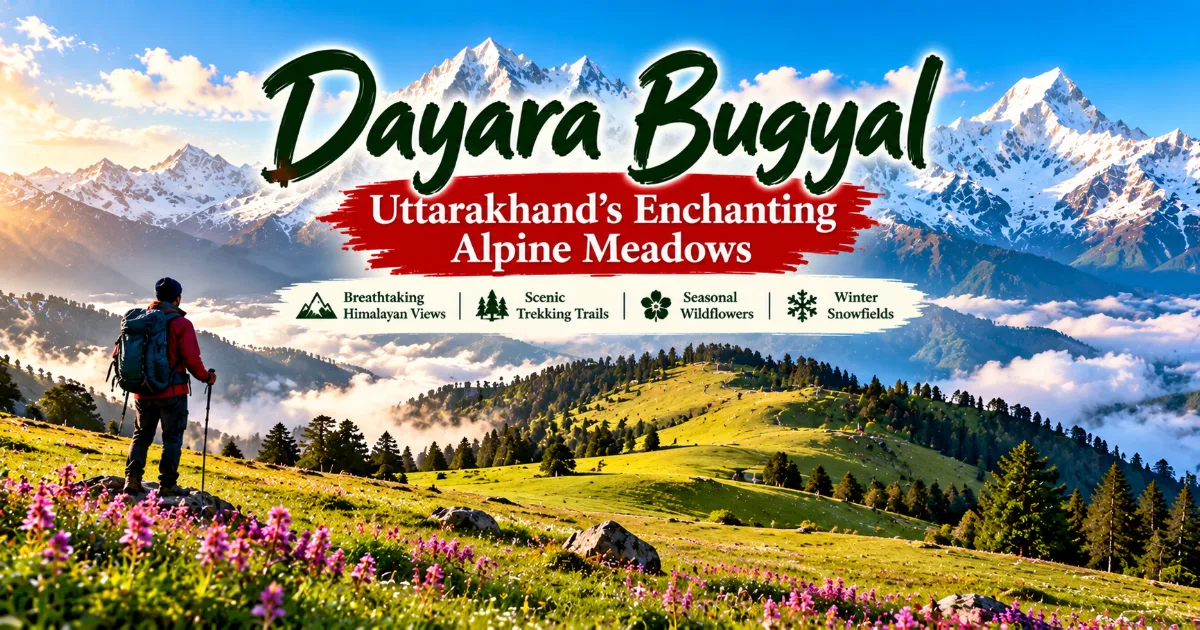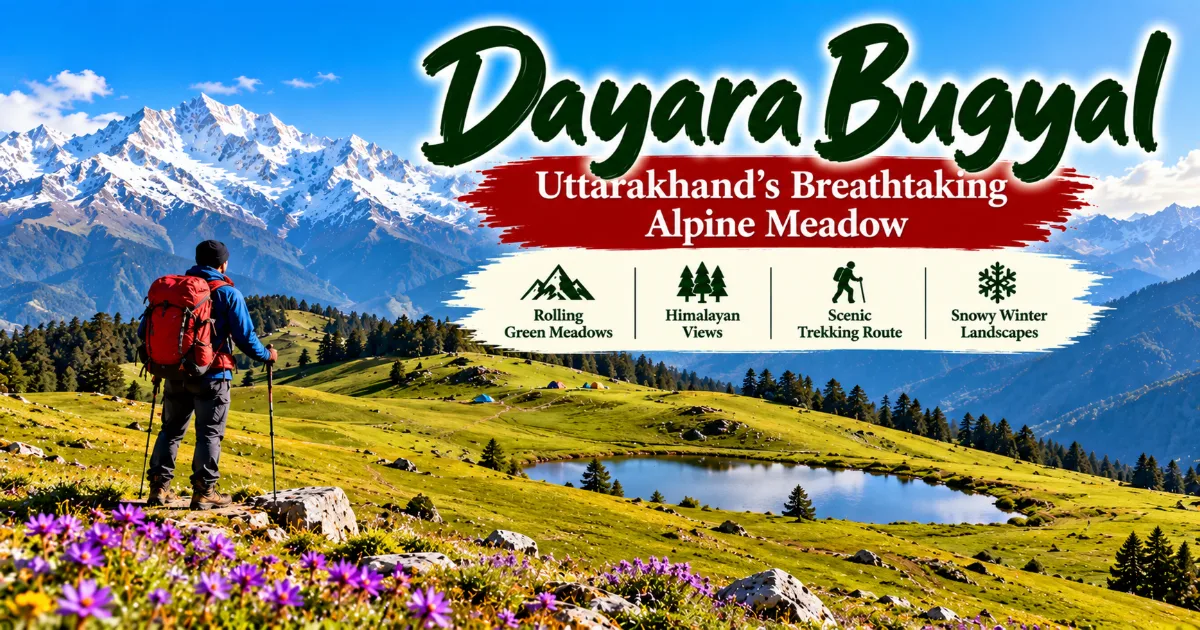
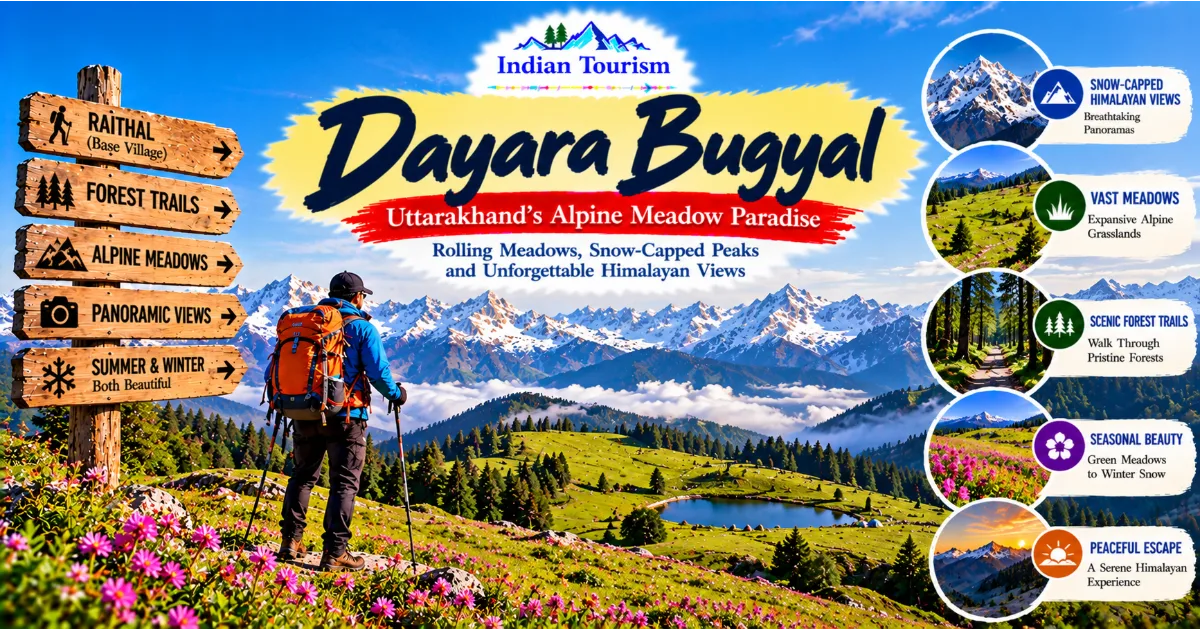
Dayara Bugyal is one of Uttarakhand’s most beautiful high-altitude meadows, offering sweeping Himalayan views, open grasslands, seasonal wildflowers, and snow-covered landscapes in winter.
Located in the Uttarkashi district, this destination is ideal for trekkers seeking a quieter alternative to some of the region’s more crowded mountain trails.
From lush green summer pastures to white winter slopes, Dayara Bugyal reveals a different side of the Himalayas in every season.
Discovering Dayara Bugyal
The Himalayas are often associated with towering snow-covered peaks, deep valleys, ancient temples, and challenging mountain expeditions. Yet some of the most memorable Himalayan landscapes are found in places where the mountains open into vast stretches of grassland. Dayara Bugyal is one such destination. The word bugyal refers to a high-altitude meadow, a landscape that becomes especially enchanting when green slopes extend towards distant mountain ranges.
Situated in Uttarakhand’s Garhwal Himalayas, Dayara Bugyal is known for its broad meadows, peaceful surroundings, and panoramic views of snow-covered peaks. Unlike destinations where the main attraction is a single viewpoint or building, the beauty of Dayara Bugyal unfolds gradually as visitors walk across the open landscape. Every turn can reveal a new combination of rolling hills, forest edges, mountain ridges, and distant summits.
The destination is particularly appealing to travellers who want to experience the natural environment of the Himalayas without committing to an extremely technical mountaineering expedition. Although the trek still requires physical preparation and respect for mountain conditions, its rewarding scenery makes it attractive to beginners with reasonable fitness as well as experienced hikers looking for a beautiful mountain escape.
Continue Reading
Dayara Bugyal is not simply a place to take photographs. It is a landscape to experience slowly. The silence of the meadows, the movement of clouds across the peaks, the changing colours of the grass, and the cool mountain air create an atmosphere that feels different from everyday life. Visitors who allow themselves time to appreciate these details often discover that the journey itself becomes as meaningful as reaching the meadow.
Where Is Dayara Bugyal Located?
Dayara Bugyal is located in Uttarkashi district in the northern Indian state of Uttarakhand. The region forms part of the Garhwal Himalayas, an area known for its mountain scenery, traditional villages, forested slopes, pilgrimage routes, and alpine landscapes.
The meadow lies at an elevation of approximately 3,400 metres above sea level, although the exact elevation varies according to the particular section of the meadow being visited. At this altitude, the landscape differs significantly from the lower valleys. Temperatures can drop quickly, weather conditions may change within a short period, and visitors can experience cold winds even when the sun feels warm.
The surrounding region includes settlements such as Raithal, which is commonly used as a starting point for the trek. The village provides an opportunity to experience the rural character of Uttarakhand before beginning the walk towards the high-altitude landscape.
The journey to Dayara Bugyal usually combines road travel through mountain terrain with a trek through forests and open slopes. This combination is part of the attraction. Visitors gradually leave behind busy roads and settled areas, entering a quieter environment where the natural landscape becomes the central focus.
Travellers should remember that mountain distances can be misleading. A route that appears short on a map may require considerable time because of steep sections, uneven ground, weather conditions, and the need to walk carefully at higher elevations. Planning should therefore be based on realistic travel times rather than distance alone.
Why Dayara Bugyal Is Special
Vast Open Meadows
The most distinctive feature of Dayara Bugyal is its extensive open grassland. High-altitude meadows are valuable ecological landscapes, providing seasonal grazing grounds and supporting plant communities adapted to mountain conditions. Their appearance changes throughout the year, creating different experiences for visitors depending on the season.
During warmer months, sections of the meadow become green and vibrant. Grasses and seasonal plants spread across the slopes, while the surrounding mountains form a dramatic backdrop. The open terrain creates a feeling of space that is uncommon in densely forested mountain areas.
The scale of the meadow also makes it an excellent destination for travellers who enjoy walking without constantly moving through enclosed forest trails. Long stretches of open landscape allow visitors to observe the surrounding mountains and appreciate the relationship between the meadow, forests, and distant valleys.
Himalayan Mountain Views
Dayara Bugyal is known for its broad views of the surrounding Himalayan ranges. On clear days, the landscape can include impressive snow-covered summits rising above the lower ridges. The contrast between open grassland and distant white peaks gives the meadow much of its visual appeal.
Mountain visibility depends heavily on weather conditions. Clouds may cover the peaks during one part of the day and reveal them later. Early mornings can sometimes provide clearer views, although this is not guaranteed. Visitors should avoid treating a particular photograph or travel video as a promise of what they will see during their own visit.
Instead, travellers can appreciate the changing atmosphere. Mist drifting across the meadow, sunlight touching a distant ridge, or clouds moving through a mountain valley can create memorable scenes even when the highest summits remain hidden.
Forest Trails
The route towards Dayara Bugyal passes through forested sections that provide a different experience from the open meadow. Trees offer shade, the ground may be covered with fallen leaves, and the trail gradually reveals glimpses of the surrounding mountains.
The transition from forest to open grassland is one of the memorable parts of the trek. After walking beneath the trees, travellers emerge into a wider landscape where the sky appears larger and the mountains become more visible.
These forest sections are also important from an ecological perspective. Forests help protect mountain soils, support wildlife, influence water movement, and contribute to the health of the wider landscape. Visitors should stay on established trails and avoid damaging vegetation while looking for photographs.
Seasonal Beauty
Dayara Bugyal does not look the same throughout the year. Summer brings greenery and relatively comfortable trekking conditions, while the monsoon can produce misty scenery and wet trails. Autumn often offers clear mountain views, and winter can transform the meadow into a snow-covered landscape.
This seasonal variety makes Dayara Bugyal suitable for different kinds of mountain experiences. Some travellers prefer the colours of summer, while others want the atmosphere of winter snow. Choosing the right season depends on personal preference, trekking experience, equipment, and tolerance for cold weather.
The Trek to Dayara Bugyal
The trek is a major part of the destination’s appeal. Rather than reaching the meadow directly by road, visitors travel through a changing mountain environment that gradually introduces them to the landscape.
Raithal is a popular starting point. The village provides access to the trekking route and is a useful place to arrange accommodation, local guidance, meals, and other practical requirements. Depending on the route selected, the journey may involve forest paths, gradual climbs, steeper sections, and open stretches as the landscape rises towards the meadow.
The difficulty of the trek depends on the season, route conditions, the traveller’s fitness, and the amount of snow or rain present. In favourable conditions, reasonably fit beginners may find the route manageable with preparation. However, it should not be treated as a casual walk that requires no planning.
Before setting out, travellers should confirm the current trail condition with local guides or accommodation providers. Snow can obscure the route in winter, while rain may make sections slippery during wetter periods. Weather changes can also affect visibility and walking speed.
A sensible pace is more important than trying to finish quickly. Taking regular breaks, drinking water, eating suitable snacks, and wearing appropriate footwear can make the experience more comfortable. Travellers should also leave enough time to return safely rather than continuing towards the meadow when weather or daylight conditions are becoming unfavourable.
Choosing the Best Season to Visit
Summer: Green Meadows and Comfortable Days
Summer is an appealing season for visitors who want to see the meadow in its greener form. As snow recedes from many sections of the route, the landscape begins to reveal grass, seasonal plants, and forest scenery.
Daytime conditions can be comfortable for trekking, although mornings and evenings may remain cold. Travellers should carry warm layers even when the forecast suggests pleasant weather. Conditions at higher elevations can differ significantly from those in lower towns.
Summer is also suitable for people interested in landscape photography, nature observation, and walking through open meadows. The combination of greenery and distant mountain peaks can create a striking contrast.
Visitors should still check local weather conditions before travelling. Early summer weather can vary, and lingering snow may remain in some areas depending on the winter and spring conditions.
Monsoon: Misty Scenery and Wet Trails
The monsoon season brings rain to Uttarakhand’s mountains. Forests can appear especially lush, and mist may move across the slopes, creating a dramatic atmosphere. However, these conditions also introduce practical difficulties.
Trails can become muddy and slippery, visibility may decrease, and road travel can be affected by heavy rainfall or landslides. Trekking plans may need to change at short notice.
For travellers who are unfamiliar with Himalayan weather, the monsoon requires extra caution. It is better to confirm local conditions before departure than to assume the route will remain accessible because it was open during a previous visit.
Anyone planning a monsoon trip should use suitable rain protection, waterproof footwear where appropriate, and reliable local guidance. If authorities or local guides advise against travelling, visitors should postpone the trek rather than take unnecessary risks.
Autumn: Clear Views and Golden Landscapes
Autumn can be one of the most rewarding periods for mountain scenery. Following the monsoon, the air may become clearer, allowing better visibility of distant peaks on favourable days. The landscape can also develop softer shades of gold and brown as seasonal vegetation changes.
This period is attractive to photographers and travellers who want expansive views. Clear skies are never guaranteed, but stable weather windows can create excellent opportunities for enjoying the meadow.
Temperatures begin to fall as the season progresses. Warm clothing becomes increasingly important, especially for early starts, late returns, and overnight stays in mountain villages.
Travellers should confirm the expected conditions for their dates because the transition from autumn to winter can bring significant changes in temperature and trail accessibility.
Winter: Snow-Covered Mountain Scenery
Winter gives Dayara Bugyal a different character. Snow can cover large sections of the meadow, transforming the open grassland into a white landscape surrounded by Himalayan ridges. For many visitors, this is the season associated with the destination’s most dramatic winter scenery.
However, winter trekking requires more preparation than walking during milder months. Snow may hide the trail, temperatures can fall below freezing, and weather conditions can change quickly. Suitable clothing, waterproof footwear, gloves, head protection, and other cold-weather equipment become essential.
Visitors without winter trekking experience should consider hiring a qualified local guide and arranging the trip through an experienced operator. They should also check whether the route is suitable for their abilities and whether any local restrictions apply.
Snowfall should never be treated as a guarantee of safe or enjoyable conditions. Heavy snow, poor visibility, strong winds, or icy sections may require postponing the trek.
What to See and Do at Dayara Bugyal
Walk Across the Meadow
Walking across the meadow is the central experience of visiting Dayara Bugyal. Rather than focusing exclusively on reaching one point, travellers can explore the open landscape at a comfortable pace while observing changes in the terrain.
The meadow offers opportunities to appreciate the details of the environment. Small variations in slope, the texture of the grass, patches of snow, and the changing appearance of distant mountains all contribute to the experience.
Visitors should avoid walking through fragile vegetation unnecessarily. Keeping to established paths where available helps reduce damage to the meadow and protects the landscape for future travellers.
Enjoy Mountain Photography
Dayara Bugyal is attractive to photographers because the landscape contains several visual elements within a relatively open setting. The meadow provides a foreground, the forested slopes add texture, and the Himalayan peaks form a distant backdrop.
Early morning and late afternoon can provide softer light, although the best conditions depend on cloud cover and the season. Travellers should protect cameras and phones from moisture, cold, and accidental damage during the trek.
Photography should not interfere with safety. Avoid moving close to exposed edges or unstable ground to capture a particular angle. It is also important to respect other visitors and avoid disturbing wildlife for a photograph.
Observe Seasonal Plants
The meadow’s plant life changes with the seasons. During warmer months, travellers may notice grasses, small flowers, and other vegetation adapted to the local conditions. These plants contribute to the ecological character of the meadow and provide seasonal grazing resources.
Visitors should resist the temptation to collect flowers or remove plants as souvenirs. Even small actions can affect fragile mountain ecosystems when repeated by many travellers.
A better way to remember the landscape is through photography, sketches, or written observations. These approaches allow visitors to appreciate the environment without damaging it.
Experience Village Life
Raithal and nearby settlements offer an opportunity to understand the human landscape surrounding Dayara Bugyal. Mountain villages are shaped by local geography, agricultural practices, seasonal weather, and access to markets and services.
Travellers staying in village accommodation may experience local meals and learn about the practical realities of living in a Himalayan region. These interactions can provide a richer understanding of Uttarakhand than a short visit focused only on mountain views.
Visitors should approach local communities with respect. Ask permission before photographing residents, follow household rules, and avoid treating everyday village life as a staged attraction. Supporting locally operated accommodation and guides can also help ensure that tourism benefits people living in the region.
How to Reach Dayara Bugyal
By Air
Jolly Grant Airport near Dehradun is a commonly used airport for travellers visiting Uttarakhand. From the airport, the journey continues by road towards Uttarkashi district and the village used as the trekking starting point.
The total travel time depends on road conditions, traffic, the chosen route, and the exact starting location. Mountain road journeys can take longer than expected, so travellers should avoid planning a tight connection between an arriving flight and the start of a trek.
Visitors arriving late in the day should consider staying overnight at a suitable town or village rather than attempting a long mountain drive and beginning the trek immediately.
By Train
Travellers can reach railway stations in the Dehradun or Rishikesh region and continue by road. The best option depends on train schedules, availability, and the rest of the itinerary.
Because the final journey involves mountain roads, it is sensible to allow enough time for road travel. During periods of heavy rain, road delays may affect plans.
By Road
Road travel is the usual way to reach the villages serving Dayara Bugyal. Travellers may arrange a private vehicle, use available public transport for part of the journey, or coordinate transport through local accommodation providers and trekking operators.
Raithal is a commonly used access point for the trek. Before travelling, confirm the current road condition and the exact starting point with a reliable local contact. Transport arrangements can differ according to the season and the condition of the roads.
On Foot
The final approach to the meadow is completed on foot. The route involves climbing from the lower village landscape through forest and mountain terrain.
The trek should be planned according to fitness, weather, daylight, and trail conditions. Travellers should not assume that the same route will take the same amount of time in summer and winter.
Where to Stay
Accommodation is generally arranged in villages serving the trekking route, including Raithal. Options may include homestays, guesthouses, and other locally operated stays, depending on availability and the season.
Staying in a village before the trek allows visitors to begin the walk without rushing through a long road journey on the same day. It also provides time to check equipment, speak with local guides, and understand the latest weather conditions.
Facilities may be simpler than those in larger tourist towns. Travellers should confirm whether meals are included, whether hot water is available, what heating arrangements exist, and whether advance payment or booking is required.
During popular trekking periods, accommodation can fill up quickly. Booking ahead is advisable, particularly for weekends, holiday periods, and winter visits when demand may increase.
Visitors should also carry realistic expectations about mountain accommodation. Water availability, electricity, mobile connectivity, and heating may vary. A flexible attitude makes the experience more enjoyable and reduces unnecessary frustration.
What to Pack for Dayara Bugyal
Packing should reflect the season, the length of the trek, and the current weather forecast. The following items provide a useful starting point for a typical visit.
1. Trekking footwear: Wear comfortable shoes with suitable grip and enough support for uneven terrain. Winter conditions may require more specialised footwear.
2. Layered clothing: Carry clothing that can be added or removed as temperatures change. A warm jacket is important even during warmer months.
3. Rain protection: A waterproof jacket and protective cover for your bag can be useful when weather conditions are uncertain.
4. Drinking water: Carry sufficient water for the route and follow local advice on safe refilling options.
5. Food and snacks: Pack suitable snacks that provide energy during the walk. Carry all wrappers and food packaging back with you.
6. Sun protection: Sunglasses, sunscreen, and a hat can help protect against strong sunlight at higher elevations.
7. Personal medication: Bring any necessary medication and a basic personal first-aid supply. Inform your guide about important medical needs before the trek.
8. Navigation and communication: Keep your phone charged and carry an appropriate power bank. Do not depend entirely on mobile connectivity in remote areas.
9. Identification and emergency details: Carry valid identification and share your itinerary with a trusted person.
10. Waste bag: Keep a reusable bag for carrying rubbish back to an appropriate disposal point.
Winter visitors may need additional equipment depending on snow conditions. Confirm the required gear with a qualified local guide instead of relying on a general packing list.
Fitness and Altitude Considerations
Dayara Bugyal reaches approximately 3,400 metres above sea level, which is high enough for some visitors to experience altitude-related symptoms. The level of risk varies between individuals and depends on the rate of ascent, physical condition, previous altitude experience, and other factors.
Being physically fit does not completely eliminate the possibility of altitude illness. Travellers should allow time to adjust to the conditions, walk at a manageable pace, stay hydrated, and pay attention to how they feel.
Possible warning signs can include headache, nausea, unusual fatigue, dizziness, or a loss of appetite. Symptoms that worsen or occur alongside breathlessness at rest, confusion, or difficulty walking require urgent medical attention and descent where appropriate. A trek should never be continued simply to reach a viewpoint when someone is becoming unwell.
Anyone with a medical condition or concerns about exercising at altitude should seek professional medical advice before travelling. People who are not accustomed to mountain trekking should choose a realistic itinerary and avoid attempting to cover the route too quickly.
Local Culture and Responsible Tourism
Dayara Bugyal is part of a living mountain region, not an isolated landscape disconnected from the people around it. Villages in Uttarkashi district have their own social traditions, agricultural practices, food customs, and ways of adapting to the Himalayan environment.
Tourism can create opportunities for local guides, drivers, homestay owners, cooks, and small businesses. Travellers can contribute positively by choosing local services when practical, paying agreed prices, and treating people respectfully.
Responsible tourism also means understanding that the meadow and surrounding forests are ecologically sensitive. Visitors should avoid littering, lighting unauthorised fires, disturbing animals, or damaging vegetation. Loud music and careless behaviour can affect both wildlife and other people seeking a peaceful mountain experience.
Photography requires consideration as well. Ask permission before photographing residents or private property. Avoid entering cultivated land without permission, and follow local instructions about restricted areas or seasonal grazing grounds.
The goal should be to leave the landscape as close as possible to the condition in which it was found. If each visitor carries back their waste, follows established trails, and respects local rules, the cumulative impact of tourism can be reduced.
Wildlife and the Natural Environment
The forests and meadows surrounding Dayara Bugyal form part of the wider Himalayan ecological landscape. This region supports a variety of plant and animal life adapted to different elevations and habitats.
Wildlife sightings are never guaranteed. Animals may avoid people, remain hidden by vegetation, or move through areas that visitors do not reach. Travellers should appreciate the habitat itself rather than measuring the success of a trip by the number of animals photographed.
The meadow also reflects the seasonal rhythms of mountain ecosystems. Vegetation grows during favourable conditions, grazing patterns change through the year, and winter weather places additional pressure on plants and animals.
Visitors can help protect this environment by keeping their distance from wildlife, never feeding animals, and avoiding attempts to attract them for photographs. Food waste should not be left behind because it can alter animal behaviour and create problems for the ecosystem.
Respect for the natural environment makes the destination more valuable for future generations and supports the long-term appeal of nature-based tourism in Uttarakhand.
Dayara Bugyal for Families and First-Time Trekkers
Dayara Bugyal may appeal to families and people who are relatively new to trekking, but suitability depends on the route, season, age of the participants, and individual fitness.
Families travelling with children should plan conservatively. Younger visitors may need more frequent breaks, and the walking time may be longer than expected. Cold weather, altitude, and changing trail conditions should all be considered before choosing a date.
First-time trekkers should practise walking on uneven terrain, build basic endurance, and use comfortable footwear before the trip. It is also wise to avoid carrying an unnecessarily heavy backpack.
A local guide can help visitors understand the trail, manage timing, and respond to changing conditions. In winter or during periods of poor visibility, professional guidance becomes particularly important.
Travellers should remember that reaching the meadow is not the only measure of a successful trip. Turning back because of bad weather, fatigue, or a safety concern can be the right decision. A well-planned experience prioritises health and safety over completing a route at any cost.
Photography Tips for the Best Experience
Dayara Bugyal offers opportunities for wide landscape photographs, detailed nature images, and travel portraits. The open meadow allows photographers to include the surrounding mountains without needing to find a narrow viewpoint.
Wide-angle photographs can capture the scale of the grassland, while a longer focal length can help bring distant peaks into the composition. Including a person at a safe location may provide a sense of scale, but photographs should never encourage risky behaviour.
Light changes quickly in the mountains. When clouds move across the sun, the meadow can shift from bright green to muted shades within minutes. Rather than waiting for one perfect condition, photographers can observe how the landscape changes throughout the visit.
Protect camera batteries from extreme cold, and keep electronic equipment dry. If the weather becomes poor, secure your equipment and focus on returning safely rather than continuing to photograph.
Most importantly, remember to experience the place without looking through a screen the entire time. Some of the most memorable aspects of a mountain journey are the quiet moments that do not need to be recorded.
Common Mistakes to Avoid
One common mistake is assuming that Dayara Bugyal is an easy walk in every season. The difficulty can change substantially when snow, rain, ice, or poor visibility affects the trail. Travellers should plan according to actual conditions rather than general descriptions.
Another mistake is beginning the trek too late in the day. A delayed start can leave visitors walking during poor light or under pressure to return quickly. Starting at an appropriate time and maintaining a realistic schedule provides a better margin for unexpected delays.
Packing too little warm clothing is another avoidable problem. Even if the lower village feels comfortable, the temperature at higher elevations may be much colder. Weather forecasts and local advice should guide clothing choices.
Visitors should also avoid relying on a single online photograph to decide when to travel. Images often show a particular season and a specific moment. The actual landscape may look different during the visit.
Finally, travellers should not leave rubbish behind or assume that someone else will collect it. Carrying waste back is a basic responsibility and an important part of preserving the meadow.
A Practical Travel Plan
A relaxed visit can begin with arrival in the Raithal area and an overnight stay before the trek. This allows travellers to recover from road travel, organise equipment, and confirm local weather conditions.
The following morning, visitors can begin the trek at a suitable time with a guide if needed. The walk should be paced according to the slowest member of the group, with breaks for water, food, and observation. Time at the meadow can be used for photography, quiet exploration, and enjoying the mountain views.
The return should begin early enough to avoid being caught on the trail after dark. Depending on the itinerary and local conditions, some travellers may choose to stay another night in the village rather than rushing directly into a long road journey.
This approach is more comfortable than trying to fit the entire experience into a tightly packed schedule. It also provides flexibility if the weather changes or the trail takes longer than expected.
Before travelling, confirm transport, accommodation, guide availability, and any local requirements. Conditions in mountain destinations can change, so current local information should take priority over an itinerary prepared months earlier.
Who Should Visit Dayara Bugyal?
Dayara Bugyal is a strong choice for travellers who enjoy mountain scenery, open landscapes, moderate adventure, and time away from crowded urban environments. Nature photographers may appreciate its changing light and expansive views, while trekking enthusiasts can enjoy the combination of forest paths and alpine meadow.
It may also suit families and first-time trekkers who are prepared to choose a suitable season and approach the route responsibly. Those interested in local culture can extend the experience by staying in nearby villages and learning about everyday life in the Garhwal Himalayas.
However, the destination may not be appropriate for people who cannot manage uneven terrain or who are unwilling to prepare for cold weather and changing conditions. Winter visitors in particular should assess the demands of the route carefully.
Travellers looking for luxury facilities throughout the journey should also check accommodation expectations in advance. The appeal of Dayara Bugyal lies primarily in its natural setting, and the experience is often simpler than a conventional resort holiday.
Conclusion
Dayara Bugyal reveals a beautiful side of Uttarakhand’s Garhwal Himalayas through its broad meadows, forest trails, seasonal vegetation, and views of distant snow-covered peaks. At approximately 3,400 metres above sea level, the meadow offers a mountain experience that changes with every season, from summer greenery to winter snow.
The destination rewards travellers who prepare carefully, walk at a comfortable pace, respect local communities, and treat the environment responsibly. A visit does not need to be rushed. Time spent observing the landscape, exploring the meadow, and experiencing village life can make the journey more meaningful than simply reaching a viewpoint.
For anyone planning to explore Uttarakhand beyond its famous pilgrimage centres and crowded tourist towns, Dayara Bugyal offers an opportunity to discover the quiet beauty of the high Himalayas. With sensible planning and respect for mountain conditions, it can become one of the most memorable experiences of a journey through the region.
Hashtags
#DayaraBugyal #UttarakhandTourism #GarhwalHimalayas #HimalayanTrekking #IndianTourism