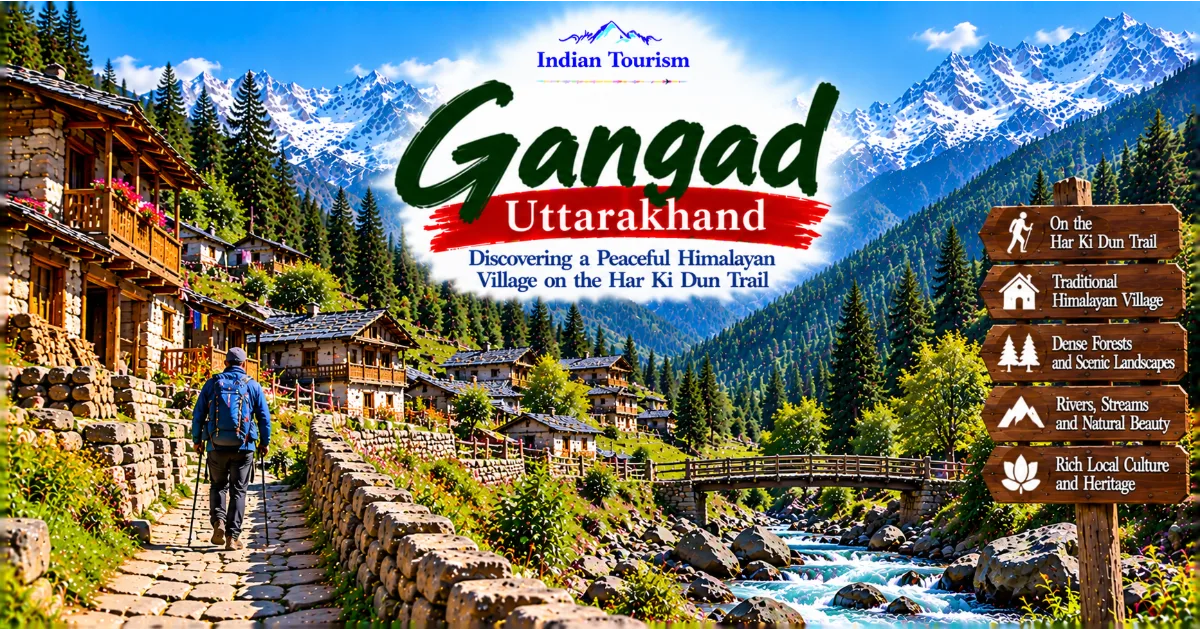
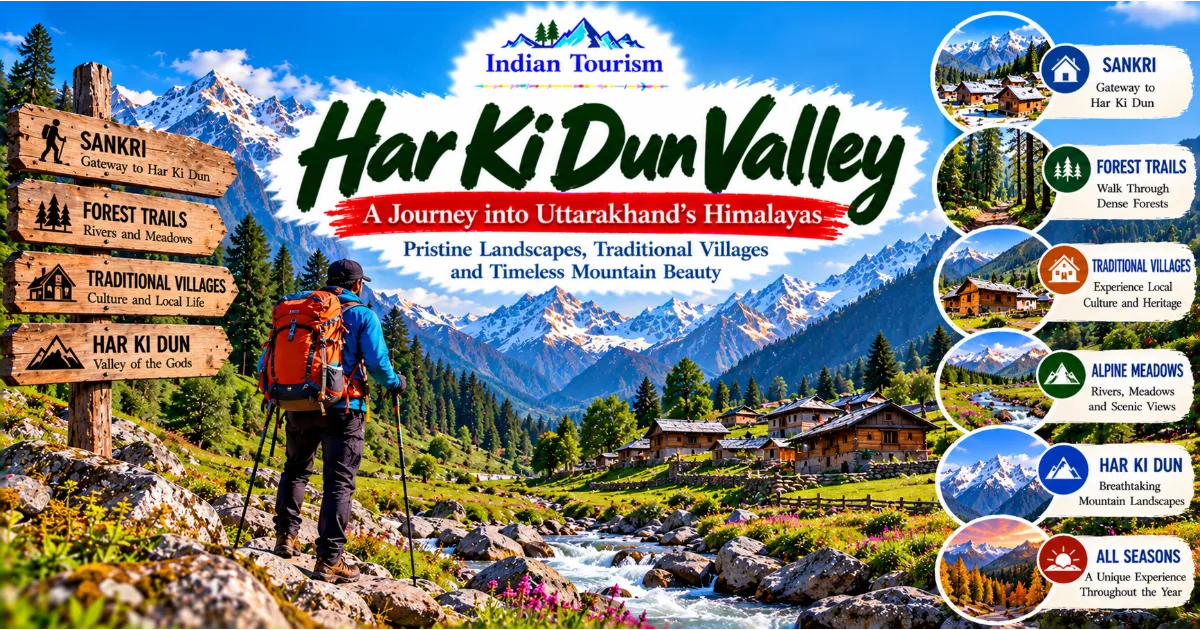
Discovering the Valley of the Gods
Hidden within the Garhwal Himalayas of Uttarakhand, Har Ki Dun Valley is one of the most captivating destinations for travellers who want to experience the mountains beyond crowded hill stations and commercial tourist centres.
Surrounded by towering Himalayan peaks, ancient villages, dense forests, alpine meadows and streams flowing through rugged landscapes, this remote valley offers a remarkable combination of natural beauty, traditional mountain life and trekking adventure. Its peaceful atmosphere and dramatic scenery make it an unforgettable destination for those who appreciate slow travel, wilderness and cultural discovery.
Har Ki Dun is often associated with the idea of a valley connected to the gods. Its name is commonly interpreted in different ways, reflecting the region's religious traditions and the stories passed down through generations. Local legends connect the wider Himalayan landscape with the Pandavas of the Mahabharata, while the mountains and forests around the valley remain important to the cultural identity of the communities who live here. Visitors encounter not only spectacular views but also a landscape shaped by centuries of human settlement, seasonal movement, farming and local traditions.
Located in the Govind Pashu Vihar National Park and Wildlife Sanctuary region of Uttarkashi district, Har Ki Dun is generally reached through the Sankri area and a series of mountain villages. The journey involves travelling by road to the trekking region and then continuing on foot through forests, settlements and river valleys. Unlike destinations accessible directly by vehicle, Har Ki Dun rewards travellers who are willing to slow down and experience the gradual transition from cultivated mountain slopes to remote Himalayan wilderness.
The valley is particularly attractive to trekkers, nature photographers, cultural travellers and people seeking a meaningful outdoor experience. Depending on the season, the landscape may be filled with fresh spring greenery, colourful wildflowers, lush summer vegetation or snow-covered slopes. Every period brings its own atmosphere, and the changing conditions make the valley feel different throughout the year.
Continue Reading
Where Is Har Ki Dun Valley Located?
Har Ki Dun Valley lies in the Garhwal Himalayas of Uttarakhand, within the upper Tons River region. It is associated with the Govind Pashu Vihar National Park and Wildlife Sanctuary, a protected landscape known for its forests, mountain ecosystems and rich biodiversity. The wider region includes deep river valleys, high ridges, traditional villages and trekking routes that lead into the interior of the Himalayas.
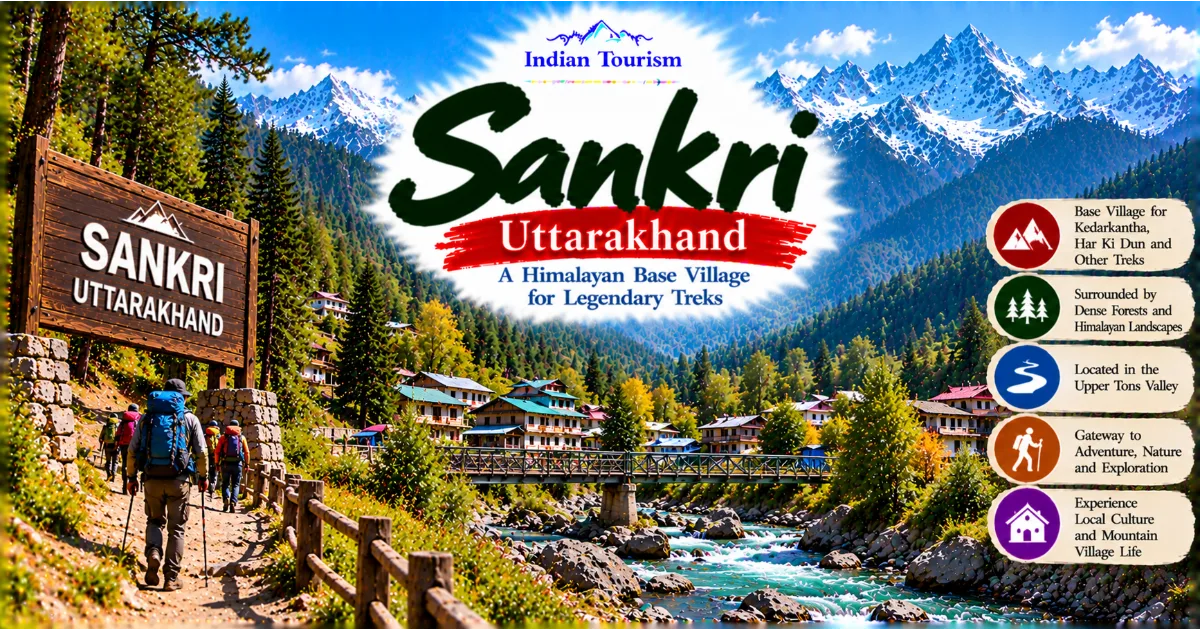
The valley is reached from the Sankri region, a well-known base for several treks in Uttarkashi district. From Sankri, trekkers travel through mountain settlements and follow trails alongside rivers and forested slopes. The exact route and daily stages depend on the itinerary, weather, trail conditions and the arrangements made with local guides or trekking operators.
Har Ki Dun is not a destination where visitors should expect the convenience of a large tourist town. Accommodation and services are limited compared with major hill stations, and the trekking route requires preparation. This relative remoteness is part of its appeal, but it also means that travellers need to plan carefully, respect local guidance and remain flexible when mountain conditions change.
The valley's geographical setting creates a striking contrast between human settlements and the surrounding wilderness. Small fields and villages occupy suitable sections of the mountain terrain, while forests, streams and steep slopes dominate the landscape beyond them. As trekkers move deeper into the region, the scale of the mountains becomes increasingly impressive.
The Journey Through Sankri
Sankri is the principal starting point for many journeys to Har Ki Dun. Reaching this mountain village is an experience in itself, as the road travels through the changing landscapes of Uttarakhand. Depending on the starting location, the journey may pass through towns, river valleys, forested stretches and winding mountain roads before arriving in the upper Tons region.
Sankri serves as an important gateway for trekkers and travellers exploring this part of the Himalayas. Visitors can make final preparations here, check their equipment, arrange local transport where necessary and learn about the conditions expected on the route. The village also provides an opportunity to understand the character of mountain life before beginning the trek.
Travellers should avoid treating Sankri merely as a place to sleep before the journey. Spending time in the village can provide a valuable introduction to the region's culture and geography. The surrounding mountains, traditional buildings and everyday activities reveal how communities adapt to life in a landscape where weather, terrain and distance influence daily routines.
The journey onward to Har Ki Dun gradually separates travellers from the conveniences of urban life. Mobile connectivity may become unreliable, services become less frequent and the landscape increasingly depends on natural features rather than roads or built infrastructure. This transition encourages visitors to become more attentive to their surroundings and more respectful of the environment.
The Trekking Experience
The trek to Har Ki Dun is a journey through several layers of Himalayan scenery. Instead of arriving at a viewpoint within minutes, travellers experience the landscape gradually. The trail may pass through villages, cultivated areas, forest sections, wooden bridges, streams and open stretches with views of the surrounding mountains.
The distance and difficulty depend on the route, the chosen itinerary and the conditions encountered along the way. Although Har Ki Dun is often considered a suitable introduction to multi-day Himalayan trekking for reasonably fit beginners, it should not be treated as an effortless walk. Travellers need to be comfortable walking for several hours, climbing and descending uneven terrain, carrying a daypack and adapting to changes in temperature and weather.
A well-planned itinerary allows sufficient time for walking, resting, eating and enjoying the landscape. Rushing through the route can reduce the experience to a physical challenge instead of allowing visitors to appreciate the forests, villages and mountain views. Trekkers should follow the advice of experienced local guides and avoid extending their walking day simply to reach a particular campsite or viewpoint.
The trail may become slippery after rain, and snow or ice can affect sections during colder periods. River crossings, exposed stretches and narrow paths require particular care. Trekking conditions can change quickly in the mountains, so route decisions should be based on current information rather than photographs or travel accounts from a different season.
For travellers who enjoy walking through changing terrain, the route offers a rewarding sense of progression. Each section reveals a different relationship between the mountains, vegetation and settlements. The gradual movement into the upper valley is one of the most memorable aspects of visiting Har Ki Dun.
Forests, Rivers and Mountain Landscapes
One of the defining features of the Har Ki Dun route is its variety of natural environments. Forests cover many of the lower slopes, while streams and rivers cut through the valleys. Higher sections open into broader landscapes where mountain ridges, meadows and distant peaks become more prominent.
The forests provide a sense of enclosure that contrasts with the open views found later in the journey. Tall trees filter sunlight, and the sound of flowing water often accompanies trekkers along sections of the trail. Depending on the season and location, the forest floor may be covered with fallen leaves, moss, wild plants or patches of snow.
The watercourses are central to the character of the region. Streams descend from higher elevations, cross rocky channels and join larger rivers. Their sound creates a continuous natural background during much of the journey. Visitors should remember that mountain streams can rise rapidly after rainfall or snowmelt. Crossing water without reliable local guidance can be dangerous, even when the stream appears manageable.
As the trail enters more open terrain, the scale of the surrounding mountains becomes easier to appreciate. Slopes rise sharply above the valley floor, and the distant ridgelines create layers of depth across the landscape. Clouds can drift through the upper mountains, changing the appearance of the valley within minutes.
These changing views make Har Ki Dun attractive to photographers, but they also remind visitors that the mountains are dynamic environments. A clear morning may turn cloudy by afternoon, and visibility can change without warning. Travellers should enjoy the scenery without assuming that a particular peak or viewpoint will always be visible.
Traditional Villages and Mountain Life
The villages along the Har Ki Dun route provide a valuable cultural dimension to the journey. These settlements reflect generations of adaptation to a demanding mountain environment. Their location, architecture, farming practices and seasonal routines are shaped by the availability of land, water, forest resources and access to neighbouring communities.
Traditional homes in the wider region may feature stone, timber and other locally available materials. Their design often reflects practical responses to cold weather, steep terrain and the needs of agricultural households. Some villages preserve older architectural styles, while others combine traditional construction with newer materials and facilities.
Agriculture remains important to the identity of many mountain communities. Families may cultivate crops suited to local conditions, maintain livestock and manage small plots of land. The agricultural calendar is influenced by the seasons, and the amount of work required changes throughout the year. The landscapes seen by trekkers are therefore not simply natural scenery. Some sections are also working environments that support local livelihoods.
Visitors should approach villages with respect and curiosity. A settlement is not an open-air museum created for tourism. People are carrying out their daily responsibilities, and travellers should ask permission before photographing individuals, homes or private activities. Quiet behaviour, appropriate clothing and polite conversation help create positive interactions.
Purchasing locally made goods or using legitimate local services can contribute to the regional economy. However, visitors should not assume that every resident wants to interact with tourists or explain local customs. Respectful travel recognises the right of communities to maintain privacy and choose how they engage with visitors.
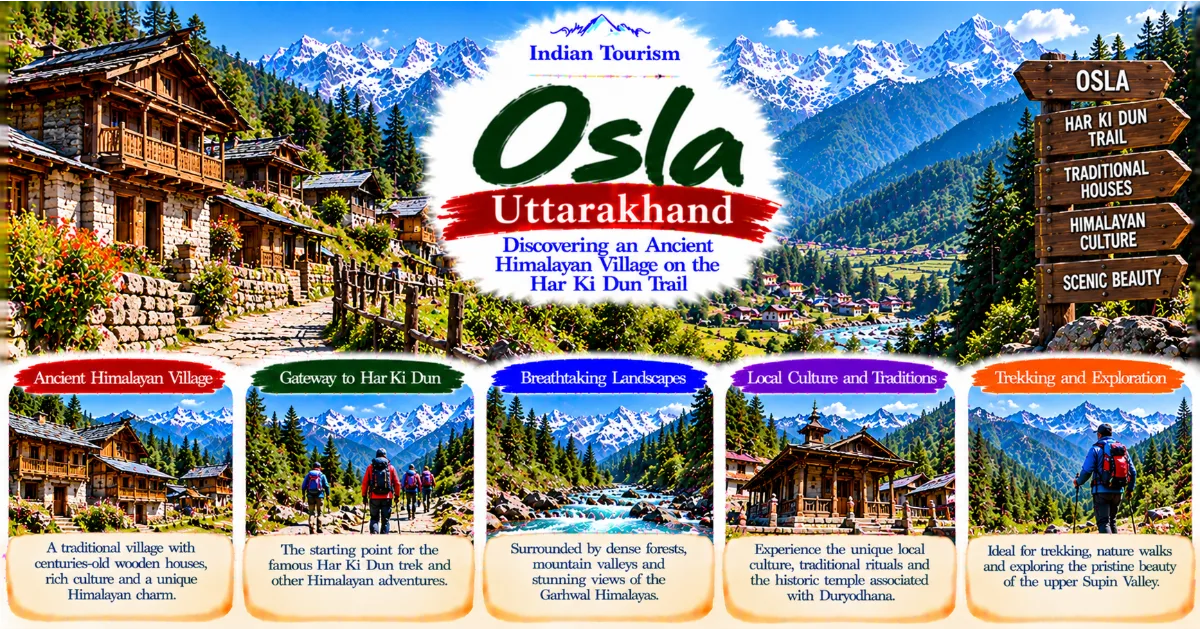
Osla and the Cultural Landscape
Osla is among the settlements associated with the wider Har Ki Dun trekking region. Its location and traditional character make it an important part of the cultural landscape encountered by travellers exploring the upper Tons valley. The village provides insight into how communities have maintained their presence in remote mountain terrain.
The settlement is often discussed in connection with traditional architecture, local customs and stories passed down through generations. Accounts of the region may also refer to the worship of Duryodhana in parts of the wider area, reflecting distinctive local interpretations of figures from the Mahabharata. Such traditions offer an opportunity to understand how epic narratives are interpreted differently across India's regions.
Visitors should approach these stories as living cultural traditions rather than reducing them to unusual tourist attractions. Religious practices and local beliefs can hold deep significance for the people who maintain them. Learning about them requires patience, sensitivity and an awareness that different communities may explain the same tradition in different ways.
When passing through Osla or other villages, travellers should follow local instructions about temples, shrines and community spaces. Some places may have restrictions on photography or entry. Asking respectfully before entering a religious site is a simple way to demonstrate consideration.
The presence of these settlements also challenges the idea that a remote valley is entirely separate from human history. The landscape has long been connected to movement, trade, farming, religious practices and relationships between neighbouring communities. Trekking through the region becomes more meaningful when visitors recognise these connections.
Har Ki Dun and Himalayan Legends
The Himalayas occupy a significant place in Indian religious imagination, literature and folklore. Many mountains, rivers and valleys are connected with stories involving gods, sages, heroes and spiritual journeys. Har Ki Dun is part of this broader cultural landscape, and its name and surroundings have inspired interpretations linking the valley with divine presence and epic traditions.
Some popular accounts associate the wider region with the Pandavas from the Mahabharata. Such narratives contribute to the sense that the mountains are places of spiritual significance as well as physical beauty. However, travellers should distinguish between religious tradition, local storytelling and independently established historical evidence. A legend can be culturally meaningful without being a verified account of a specific historical event.
Listening to local stories can enrich a visit because it reveals how communities understand their surroundings. A mountain may be remembered not only for its height but also for a story associated with it. A river may be regarded as a source of life, a sacred presence or a reminder of ancestral experience.
These interpretations form part of the cultural identity of the Himalayas. Visitors who take time to learn about them often gain a deeper appreciation of the region than they would through photography alone.
Har Ki Dun's appeal therefore extends beyond its scenery. The valley invites travellers to consider how natural environments shape belief, memory and storytelling. Its remote setting can encourage quiet reflection, although the meaning each person finds in the landscape will naturally differ.
Flora and the Changing Seasons
The vegetation around Har Ki Dun changes with altitude, temperature, rainfall and the time of year. Lower sections include forested areas, while higher terrain may feature meadows, shrubs and alpine vegetation. The transition between these environments is part of what makes the trek visually varied.
Spring brings renewed growth to many parts of the region. Fresh leaves emerge, the forest begins to regain its colour and flowering plants may appear in suitable areas. The amount and timing of flowering depend on weather patterns and elevation, so travellers should avoid expecting the same display every year.
Summer can bring greener slopes and a more developed appearance to meadows and cultivated land. This season may offer comfortable conditions for walking during suitable weather, although rain and cloud can affect visibility and trail quality.
Autumn often brings clearer air and changing colours in parts of the forest. The landscape can appear especially dramatic when sunlight illuminates the ridges and distant peaks. Cooler temperatures, however, mean that trekkers must prepare for cold mornings and evenings.
Winter transforms the route where snow accumulates. Trees, paths and open areas may take on a different character, but snow can also make navigation and movement more difficult. Winter travel should be undertaken only when the route is considered safe and appropriate for the visitor's experience and equipment.
Travellers should not pick wildflowers or remove plants from the forest. Even common-looking vegetation forms part of a wider ecosystem, and some species may be sensitive to disturbance. Observing plants without damaging them helps preserve the natural environment for future visitors.
Wildlife and Biodiversity
The forests and mountain ecosystems around Har Ki Dun support a variety of wildlife. The wider protected landscape of Govind Pashu Vihar is known for its ecological importance, and its habitats support animals and birds adapted to Himalayan conditions.
Wildlife sightings are never guaranteed. Animals may avoid busy trails, remain hidden by vegetation or be active at times when few trekkers are present. Visitors should therefore avoid judging the value of a journey by the number of animals they see.
Birdwatchers may find the changing forest environments particularly interesting. Different elevations and vegetation types create habitats for different species. Observing birds quietly, carrying binoculars where useful and learning to identify calls can add another dimension to the trek.
The best way to experience wildlife is to maintain distance and minimise disturbance. Feeding animals, attempting to approach them for photographs or leaving food scraps can alter natural behaviour and create risks for both wildlife and people.
Visitors should also understand the role of protected areas. National parks and wildlife sanctuaries are not simply scenic backdrops. They exist to conserve habitats and species, and their rules help manage the effects of human activity. Travellers should follow current access requirements, avoid restricted areas and respect any guidance issued by forest authorities.
Responsible wildlife observation begins with patience. A quiet moment listening to birds or noticing tracks along a trail can be rewarding even when no large animal appears. The aim should be to appreciate the ecosystem rather than demand a particular encounter.
Best Time to Visit Har Ki Dun Valley
The most suitable time to visit Har Ki Dun depends on the experience a traveller wants and the conditions available on the route. Spring, summer and autumn can offer different combinations of greenery, flowers, visibility and trekking conditions. Winter may appeal to experienced travellers seeking snow, but it can also introduce additional risks and logistical challenges.
Spring is attractive to people who enjoy fresh vegetation and the gradual return of colour to the landscape. Temperatures can still be cold, especially in the mornings and at higher elevations. Snow may remain on parts of the route depending on the winter's severity.
Summer can provide lush scenery and longer daylight hours, although rainfall may affect the trail. During periods of heavy rain, paths can become slippery, streams may rise and cloud can reduce visibility. Travellers should check current forecasts and seek local advice before setting out.
Autumn is often valued for its clearer mountain views and crisp air. Conditions can be pleasant during the day, while nights become increasingly cold as the season advances. This period can be particularly rewarding for travellers who prefer open views and less humid conditions.
Winter requires careful planning. Snow and ice may make the route more demanding, and accommodation or support arrangements may differ from those available in busier seasons. Visitors should not attempt a winter trek simply because photographs show an attractive snow-covered landscape. Appropriate equipment, experience, local guidance and current route information are essential.
No season is guaranteed to provide ideal conditions. The weather in the Himalayas can change quickly, and the safest decision may be to delay or modify a journey. Flexible planning is more valuable than following a fixed itinerary at any cost.
How to Reach Har Ki Dun Valley
The journey usually begins with reaching the Sankri region in Uttarkashi district. Travellers coming from outside Uttarakhand commonly travel first to a major transport hub such as Dehradun and then continue by road towards Sankri. The exact travel time depends on the starting point, road conditions, traffic, weather and the chosen transport arrangements.
Road travel through the mountains can be slower than the distance on a map suggests. Winding roads, narrow sections, construction work and seasonal disruptions may affect the journey. Travellers should avoid planning a tight connection immediately before the trek and should consider allowing extra time for delays.
From Sankri, the route to Har Ki Dun continues on foot through the trekking landscape. The itinerary may include overnight stops in villages, guesthouses, campsites or other accommodation, depending on local availability and the arrangements made in advance.
Visitors should confirm the current trekking route, entry requirements, guide arrangements and accommodation before departure. Regulations and local conditions can change, so information from an old travel account may no longer be accurate.
Carrying a reliable offline map and keeping essential information accessible without mobile data can be helpful. Mobile networks may be inconsistent along the route. Travellers should tell a trusted person about their itinerary and expected return, particularly when travelling independently.
Fitness and Preparation for the Trek
Har Ki Dun requires more preparation than a casual walk around a hill station. Even travellers who exercise regularly may find several consecutive days of walking demanding, particularly when carrying a backpack and moving across uneven ground.
A preparation routine can include regular walking, stair climbing, gentle uphill exercise and activities that improve leg strength and cardiovascular endurance. Training should be gradual rather than beginning with intense sessions immediately before departure. People who are new to trekking may benefit from practising with the footwear and backpack they intend to use.
Comfortable trekking shoes with suitable grip are important. They should be broken in before the journey to reduce the risk of blisters. Socks that manage moisture, appropriate layers and protection from rain can improve comfort during long walking days.
A backpack should contain essential items without becoming unnecessarily heavy. Travellers can reduce weight by avoiding duplicate clothing, excessive toiletries and nonessential equipment. At the same time, they should not leave behind critical items such as warm layers, rain protection, water, food for the journey, personal medication and emergency essentials.
People with existing health concerns should seek appropriate medical advice before attempting a multi-day trek at altitude. Travellers should be aware of symptoms such as unusual breathlessness, severe headache, confusion, persistent vomiting or a significant decline in coordination. Serious symptoms require stopping the ascent and seeking prompt assistance. Continuing simply to complete the itinerary can turn a manageable problem into an emergency.
Fitness is only one part of preparation. Weather awareness, responsible decision-making, suitable equipment and willingness to turn back are equally important.
What to Pack for Har Ki Dun
Packing for Har Ki Dun requires balancing comfort, safety and weight. Mountain weather can change within a short period, so clothing should be suitable for both movement and periods of inactivity in cold conditions.
Layering is generally more practical than relying on one very thick garment. A moisture-managing base layer, an insulating middle layer and an outer layer that protects against wind or rain can be combined as conditions change. Warm clothing is particularly important for mornings, evenings and overnight stays.
A waterproof jacket and suitable rain protection can help during wet weather. A warm hat, gloves and sun protection may also be useful depending on the season. Sunglasses can reduce glare in bright conditions, particularly where snow is present.
Carry a refillable water bottle or hydration system, and follow local guidance about safe drinking water. Water from a clear mountain stream should not automatically be assumed safe to drink. Use an appropriate treatment method when the source has not been confirmed as safe.
Personal medication, basic first-aid supplies, blister care, a headlamp, spare batteries and a power bank may be useful. A small rubbish bag allows travellers to carry their waste back to an appropriate disposal point.
The final packing list should reflect the season, itinerary and support arrangements. A guided trek with organised accommodation may require different equipment from an independent journey. Check with reliable local operators before departure rather than relying on a generic list alone.
Accommodation and Food Along the Route
Accommodation options around the Har Ki Dun trekking route are generally simpler than those found in major tourist towns. Depending on the itinerary and local availability, travellers may stay in village guesthouses, basic lodgings, camps or other trekking accommodation.
Facilities vary, and visitors should not assume that every stop will provide private rooms, continuous electricity, hot showers or reliable mobile connectivity. Confirm the available arrangements before departure, especially when travelling during a busy period or in challenging weather.
Food on the route is often based on practical meals that provide energy for walking. Depending on the accommodation and arrangements, travellers may have access to simple regional dishes, rice, lentils, vegetables, bread and hot drinks. The precise menu can vary with supplies and location.
Eating regularly helps maintain energy throughout the trek. Travellers should carry suitable snacks and avoid depending entirely on purchasing food at every point along the route. Anyone with dietary restrictions should communicate these requirements before the trek and carry appropriate alternatives when necessary.
Local accommodation providers and guides can offer useful insight into the region. Using reputable services supports the people who help make trekking possible. Visitors should also recognise that supply chains in remote mountain areas can be difficult, and reasonable flexibility is important.
Photography and the Art of Slow Travel
Har Ki Dun offers many opportunities for photography, from forest trails and mountain streams to traditional homes and open valley views. Yet the most rewarding photographs often emerge when travellers take time to observe rather than rushing from one viewpoint to another.
Early morning can provide soft light across the mountains, while changing clouds may create dramatic patterns above the ridges. Forest sections offer opportunities to photograph textures, leaves, tree trunks and the movement of water. Village scenes can reveal the relationship between architecture and the surrounding terrain.
Photographers should remain aware of their surroundings while taking pictures. Stopping in the middle of a narrow trail or standing near an unstable edge to capture a better angle can create unnecessary risks. Weather can also change quickly, so camera equipment should be protected from rain, dust and cold.
People and cultural sites deserve particular sensitivity. Ask permission before photographing residents, private homes or religious activities. Avoid treating local people as props for a travel story, and respect anyone who declines to be photographed.
Slow travel is especially suitable for Har Ki Dun because the experience is built around gradual discovery. Sitting beside a stream, listening to the forest or observing the changing light can be as memorable as reaching a celebrated viewpoint. The journey becomes richer when travellers allow time for experiences that are not measured by distance or photographs.
Responsible Tourism and Environmental Protection
The beauty of Har Ki Dun depends on the health of its forests, rivers, meadows and villages. As trekking becomes more popular, responsible travel is essential to prevent waste, habitat disturbance and pressure on local resources.
Visitors should carry their rubbish back to suitable disposal facilities. Plastic wrappers, bottles, batteries and other waste should never be abandoned along the trail or hidden beneath rocks. Even small pieces of litter can accumulate when many travellers follow the same route.
Avoid playing loud music in forests or villages. Noise can disturb wildlife and reduce the peaceful atmosphere that makes the region special. Travellers should stay on established paths where possible and avoid trampling vegetation to create shortcuts or obtain photographs.
Campers must follow local rules regarding fires, fuel use and camping locations. Open fires can damage vegetation, create wildfire risks and place pressure on limited natural resources. Use permitted facilities and follow guidance from local authorities or experienced guides.
Water should be used thoughtfully. In remote areas, supplies and facilities may be limited, and excessive use can create difficulties for local households. Visitors should also avoid washing with soaps or detergents directly in streams.
Responsible tourism includes supporting local livelihoods through legitimate accommodation, guiding, transport and food services. It also means respecting local customs, paying agreed charges fairly and understanding that mountain communities have needs beyond tourism.
The goal is not to leave the landscape untouched in an absolute sense, because every visit has some impact. The goal is to reduce unnecessary harm and ensure that tourism contributes positively to the people and ecosystems that sustain the valley.
Who Should Visit Har Ki Dun?
Har Ki Dun is well suited to travellers who enjoy outdoor experiences, walking through natural landscapes and learning about mountain cultures. It can appeal to people who have some trekking experience as well as reasonably fit beginners who prepare carefully and choose an appropriate itinerary.
Nature lovers can appreciate the forest environments, changing vegetation and dramatic mountain setting. Photographers may enjoy the variety of landscapes and the way light transforms the valley throughout the day. Cultural travellers can learn about traditional settlements, regional beliefs and the relationship between communities and their environment.
The destination may be less suitable for people seeking luxury accommodation, immediate road access to every viewpoint or a holiday that requires little physical effort. The route involves walking and may include basic facilities, unpredictable weather and limited connectivity.
Families considering the trek should assess the age, fitness, experience and needs of every participant. The decision should be based on the actual itinerary and current conditions rather than a general claim that the trek is suitable for everyone. Children and older travellers may require additional planning, support and a more conservative schedule.
Solo travellers should consider their experience, navigation skills, emergency arrangements and access to reliable local guidance. In remote terrain, travelling with an experienced guide or organised group may improve safety and provide valuable knowledge of the route.
Har Ki Dun is most rewarding for people who are prepared to adapt. The mountains do not always follow a planned schedule, and a successful journey depends on sound decisions as much as enthusiasm.
Common Mistakes to Avoid
One common mistake is underestimating the physical demands of a multi-day trek. A route that appears manageable in photographs may feel difficult after several hours of walking, particularly when the trail is wet or the backpack is heavy. Gradual preparation and a realistic itinerary can prevent avoidable exhaustion.
Another mistake is choosing travel dates without checking seasonal conditions. Snow, rainfall, road disruptions and local restrictions can affect access. Travellers should obtain current information before departure and remain willing to change their plans.
Packing too little warm clothing can make evenings uncomfortable, while carrying excessive equipment can increase fatigue. The best approach is to prepare a seasonal packing list and remove items that do not serve a clear purpose.
Some visitors assume that remote locations automatically provide clean drinking water, abundant food or dependable mobile connectivity. These assumptions can create problems. Carry suitable supplies, confirm arrangements and plan for periods without a network signal.
Ignoring local guidance is another serious error. Experienced guides and residents may know about trail conditions, river levels, weather changes and local restrictions that are not reflected in general travel information. Their advice should be taken seriously.
Finally, travellers should avoid treating the valley as a destination to be conquered. Turning back because of dangerous weather or physical difficulty is a responsible decision, not a failure. The mountains will remain, and a future journey is better than taking unnecessary risks.
Planning a Meaningful Visit
A meaningful visit to Har Ki Dun begins with choosing a suitable season and confirming the route. Travellers should arrange transport to the Sankri region, identify appropriate accommodation, understand any required permits or registrations and verify whether a local guide is recommended or required under current rules.
The itinerary should allow time for the journey to the trailhead and for the trek itself. Avoid placing every stage under pressure to meet an inflexible return schedule. Extra time can be valuable when road travel is delayed or weather affects walking conditions.
Before leaving, share the itinerary with someone who is not travelling with you. Keep emergency contacts available and understand the communication options along the route. Travellers should know how to respond if a member of the group becomes unwell or if conditions deteriorate.
Budgeting should include transport, accommodation, meals, guide or porter services where applicable, suitable equipment and a reserve for unexpected expenses. Costs vary with the season, service level, group size and itinerary, so travellers should obtain current quotations rather than relying on old estimates.
Most importantly, approach the trip with realistic expectations. Har Ki Dun is a remote Himalayan destination, not a resort with guaranteed comfort and predictable weather. Its greatest rewards come from the landscape, the walking experience and the opportunity to encounter a part of Uttarakhand where nature and traditional mountain life remain closely connected.
Conclusion: A Valley Worth Experiencing Slowly
Har Ki Dun Valley brings together many of the qualities that make the Garhwal Himalayas special. Its forested trails, flowing streams, open mountain landscapes and traditional settlements create a journey that is both physically engaging and culturally enriching. The experience is not limited to reaching a particular point. It unfolds through the changing scenery, the rhythm of walking and the opportunity to observe a mountain environment at a slower pace.
For trekkers, the valley offers a memorable introduction to the remote landscapes of Uttarakhand. For nature lovers, it provides a chance to appreciate the relationship between forests, rivers, vegetation and wildlife. For cultural travellers, its villages and regional traditions reveal how people have built lives in challenging terrain over generations.
The best way to visit Har Ki Dun is with preparation, patience and respect. Travellers should understand the physical demands, check current conditions, follow local guidance and minimise their impact on the environment. They should also allow themselves time to appreciate the journey rather than measuring success only by distance or photographs.
Har Ki Dun reminds visitors that some of India's most remarkable destinations are not defined by grand hotels or busy streets. Their beauty lies in the details: a forest path after rain, a river moving through the valley, a village framed by mountain slopes and the changing light across distant peaks. These experiences make the journey memorable long after the trek has ended.
For anyone seeking a deeper connection with Uttarakhand's Himalayan landscapes, Har Ki Dun is a destination worth discovering thoughtfully and responsibly.
#HarKiDun #UttarakhandTourism #IndianTourism #GarhwalHimalayas #HimalayanTrekking