Discovering a Remote Himalayan Lake
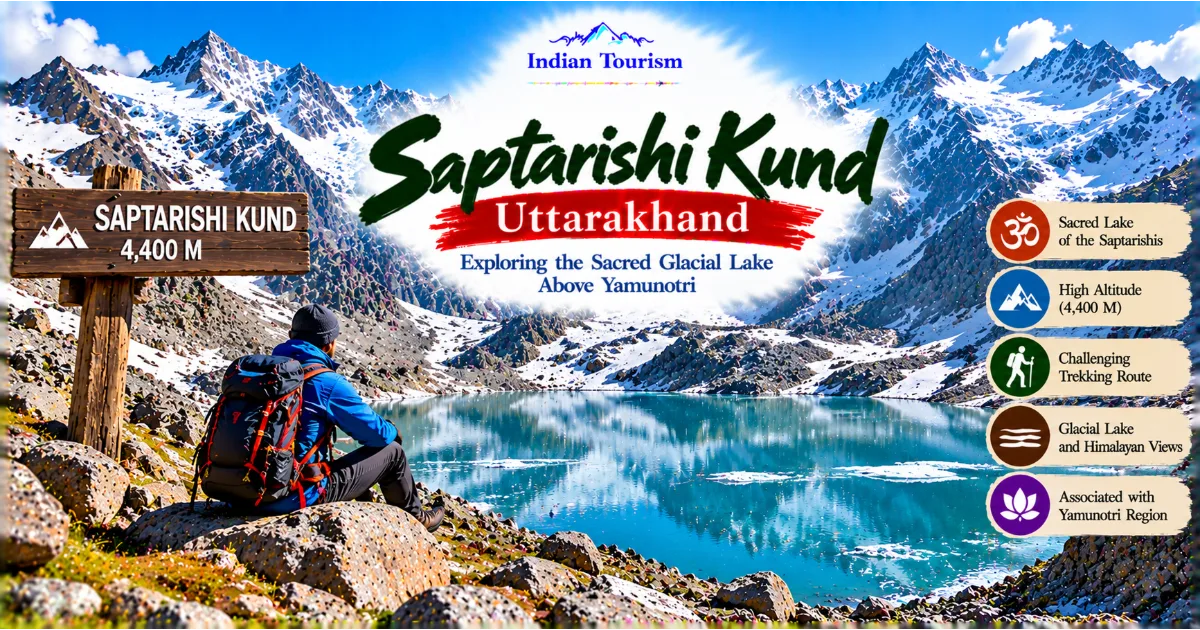
High in the Garhwal Himalayas of Uttarakhand, beyond the established pilgrimage route to Yamunotri, lies Saptarishi Kund, a remote glacial lake associated with the sacred origins of the Yamuna River. Surrounded by rugged mountain slopes, rocky terrain, and high-altitude landscapes, the lake represents one of the more demanding and less accessible destinations in the wider Yamunotri region.
Unlike popular lakes that can be reached through relatively straightforward walking routes, Saptarishi Kund requires careful planning, considerable physical preparation, and an understanding of the risks associated with high-altitude travel. The journey leads into an environment where weather can change rapidly, paths may be difficult to identify, and the landscape is shaped by snow, ice, rock, and the slow movement of glacial water.
For travellers interested in the natural and spiritual geography of Uttarakhand, Saptarishi Kund has a special significance. The Yamuna River is one of northern India's most important rivers, and its Himalayan source region occupies an important place in Hindu religious traditions. The lake is traditionally associated with the upper reaches of the Yamuna's origin area and is connected with stories of sages and spiritual contemplation.
Yet Saptarishi Kund is not simply a religious destination. It also offers an opportunity to understand the geological processes that shape the Himalayas, the ecological conditions of high-altitude environments, and the challenges of exploring remote mountain landscapes responsibly.
Continue Reading
This destination is best suited to experienced trekkers undertaking a properly planned expedition with qualified local guidance. It should not be approached as an easy extension of a visit to Yamunotri. Altitude, steep terrain, changing weather, and limited facilities make preparation essential.
For those who appreciate the relationship between natural landscapes, cultural traditions, and the power of the Himalayan environment, Saptarishi Kund offers a remarkable subject of exploration.
Where Is Saptarishi Kund Located?
Saptarishi Kund is situated in the upper Yamunotri region of Uttarakhand, within Uttarkashi district. It lies in a high-altitude environment associated with the mountainous landscape from which the Yamuna River emerges.
The lake is commonly described as lying at approximately 4,400 metres above sea level, although reported elevations can vary. Its surroundings include rocky slopes, glacially influenced terrain, and mountain ridges that create a dramatic setting far removed from the more developed areas of Uttarakhand.
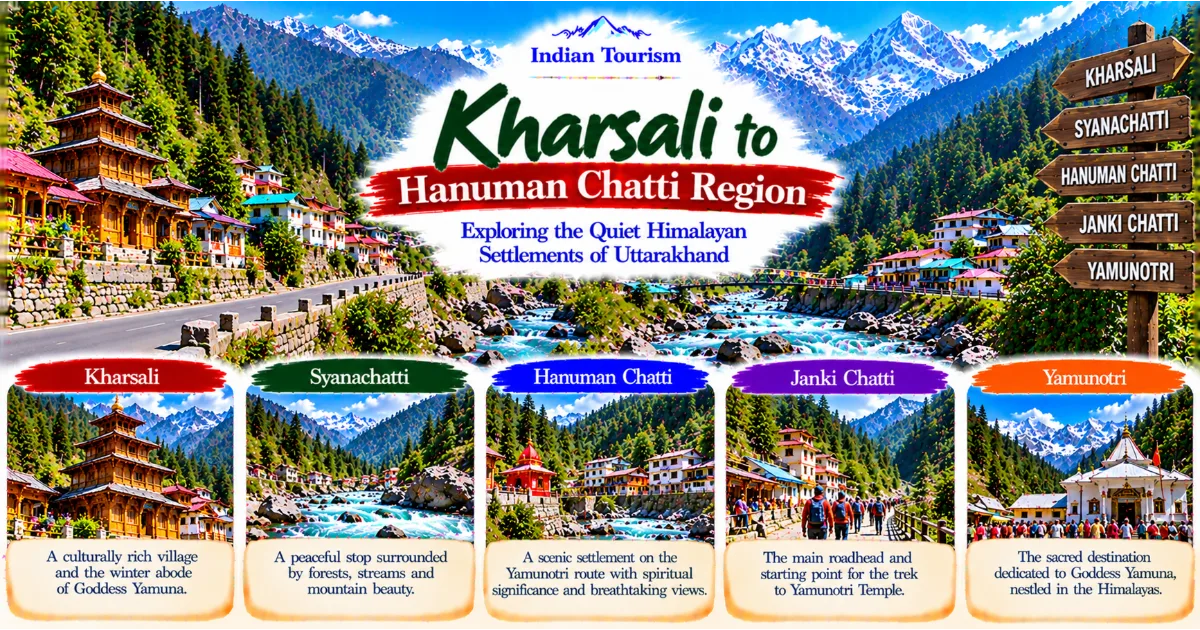
The journey generally begins from the Yamunotri area, which can be reached through the established pilgrimage route from Janki Chatti. However, reaching the temple does not mean that the lake is immediately accessible. The onward approach to Saptarishi Kund is substantially more demanding and should be treated as a separate high-altitude undertaking.
The route may involve steep ground, difficult navigation, exposed sections, and terrain affected by snow or ice. Its condition varies according to the season and recent weather. A path that appears manageable in favourable conditions may become dangerous after snowfall, heavy rain, or changes in visibility.
Because the lake lies in a remote mountain environment, travellers should confirm the current route, local restrictions, guide requirements, and weather conditions before making plans.
Why Saptarishi Kund Is Special
A Sacred Landscape Associated with the Yamuna
The Yamuna River holds a prominent place in the cultural and religious traditions of India. Its journey begins in the Himalayan region of Uttarakhand before continuing through northern India and eventually joining the Ganga at Prayagraj.
The river is revered as a goddess in Hindu traditions, and its source region is associated with pilgrimage, devotion, and stories passed down through generations.
Saptarishi Kund forms part of the sacred geography connected with the Yamuna's origins. Its name is traditionally linked with the Saptarishis, or seven great sages, who occupy an important place in Hindu religious literature and mythology.
The lake's spiritual associations add a cultural dimension to its remote setting. It represents a landscape in which mountains, water, and religious belief are closely connected.
Visitors should understand that these associations belong to living religious traditions. They deserve respectful treatment, whether or not a traveller personally follows the beliefs connected with the site.
A High-Altitude Glacial Environment
Saptarishi Kund is notable for its high-altitude setting and glacially influenced landscape. The lake occupies a rugged environment in which snowmelt, ice, rock, and mountain runoff shape the surrounding terrain.
Glacial lakes develop through different geological processes. Some form in depressions created by glaciers, while others occupy basins shaped by erosion or blocked by deposits left behind by moving ice. The precise formation history of an individual lake requires geological evidence rather than assumptions based solely on its appearance.
In the wider Himalayas, glacial and snow-fed water systems play an important role in sustaining rivers and downstream ecosystems.
The landscape around Saptarishi Kund reflects the power of these natural processes. Rocky surfaces, steep slopes, and seasonal snow cover reveal how water and ice continue to influence the mountain environment.
A Destination Far from Ordinary Tourist Routes
One of the most distinctive aspects of Saptarishi Kund is its remoteness.
Many visitors to Uttarakhand travel along established roads and pilgrimage routes, where accommodation, food, and transport services are available at regular intervals. The environment around Saptarishi Kund is very different.
Facilities become limited as trekkers move farther into the high mountains. Weather conditions may complicate navigation, and emergency assistance can take time to reach remote locations.
This remoteness creates a sense of solitude, but it also requires responsible preparation. Visitors should not interpret the absence of crowds as evidence that a route is safe or easy.
A successful expedition depends on understanding the terrain, travelling with suitable support, carrying appropriate equipment, and being willing to turn back when conditions become unsafe.
Understanding the Yamunotri Region
The Himalayan Setting of Yamunotri
Yamunotri is one of the four traditional Char Dham pilgrimage destinations in Uttarakhand. The temple is dedicated to Goddess Yamuna and is located in a mountainous landscape associated with the river's sacred origins.
The surrounding region combines religious heritage with striking natural scenery. Forested slopes, mountain streams, steep valleys, and high ridges create an environment that changes significantly with elevation.
For pilgrims, Yamunotri represents a place of devotion and spiritual connection. For travellers interested in geography, the region also illustrates how Himalayan rivers originate in complex mountain systems shaped by snow, rainfall, ice, and rock.
Saptarishi Kund lies beyond the more familiar pilgrimage landscape, making it relevant to those interested in exploring the upper mountain environment.
However, the distinction between the established pilgrimage route and the remote approach to the lake is important. The facilities and support available along the pilgrimage route should not be assumed to continue farther into the mountains.
The Source Region of the Yamuna
The Yamuna's source region is often discussed through both religious tradition and geographical interpretation. The river is associated with the Yamunotri area, where high mountain conditions influence the flow of water into the valleys below.
Snowmelt and precipitation contribute to the region's water systems, while steep gradients carry water through mountain channels and downstream river networks.
Water emerging from high-altitude landscapes supports ecosystems and human communities far beyond the immediate source region. As the river travels towards the plains, it becomes connected with agriculture, settlements, industry, and the broader history of northern India.
Understanding this connection gives Saptarishi Kund a significance that extends beyond its physical appearance. The lake belongs to a mountain water system whose influence reaches far beyond the surrounding ridges.
The Meaning of the Name Saptarishi Kund
The name Saptarishi Kund is associated with the Saptarishis, the seven revered sages of Hindu tradition. The word kund is commonly used in India for a pool, reservoir, or sacred body of water.
In religious traditions, water is often associated with purification, spiritual discipline, and the relationship between human life and the natural world.
The name therefore reflects a cultural understanding of the landscape rather than merely describing a geographical feature.
Visitors should recognise that traditional names often preserve layers of cultural meaning. A lake may be important not only because of its elevation or geological formation but also because of the stories, beliefs, and practices associated with it.
The Journey Towards Saptarishi Kund
Reaching the Yamunotri Area
The first stage of a journey to Saptarishi Kund generally involves travelling to the Yamunotri region.
Travellers commonly approach the area by road through the western Garhwal Himalayas, continuing towards Janki Chatti. The journey passes through mountain settlements and winding roads, with travel times influenced by traffic, road conditions, and seasonal weather.
From Janki Chatti, pilgrims follow the established route towards Yamunotri. This section involves walking at altitude and should be approached with appropriate footwear, water, weather protection, and a realistic assessment of individual fitness.
Visitors should confirm the current pilgrimage arrangements and any restrictions before travelling. The temple's seasonal opening and closing dates are determined according to established religious customs and may vary from year to year.
Beyond the Established Pilgrimage Trail
The approach to Saptarishi Kund is considerably more demanding than the regular pilgrimage route.
The terrain becomes more rugged, and trekkers may encounter steep slopes, rocky sections, loose ground, snow, or ice depending on the season. Navigation can become difficult when visibility deteriorates.
The route should only be attempted by people with appropriate trekking experience and support from qualified professionals familiar with current conditions.
An experienced local guide can help assess the route, identify hazards, determine whether conditions are suitable, and make decisions about turning back when necessary.
The journey should not be planned solely from online descriptions or photographs. Mountain conditions change, and the information available from an earlier expedition may no longer reflect the current situation.
The Importance of Acclimatisation
Altitude is one of the most important considerations when travelling towards Saptarishi Kund.
At approximately 4,400 metres, oxygen availability is significantly lower than at sea level. The body needs time to adapt, and rapid ascent can increase the risk of acute mountain sickness.
Acclimatisation involves allowing the body to adjust gradually to reduced oxygen availability. The appropriate schedule depends on the itinerary, previous altitude exposure, health, and individual response.
Trekkers should discuss acclimatisation with a qualified expedition leader and avoid itineraries that demand excessive elevation gain in a short period.
Physical fitness does not guarantee protection from altitude-related illness. Experienced athletes can also become unwell at high elevations.
Headache, nausea, dizziness, unusual fatigue, and loss of appetite may indicate altitude sickness. More serious symptoms, including breathlessness at rest, confusion, difficulty walking straight, or worsening drowsiness, require urgent attention.
Continuing to climb despite worsening symptoms can be dangerous. The appropriate response may include stopping the ascent, descending, and seeking medical assistance.
Best Time to Visit Saptarishi Kund
Late Spring and Early Summer
Late spring and early summer may offer opportunities to explore the upper Yamunotri region, although the lake's approach can remain affected by snow and difficult terrain.
Conditions vary from year to year. Snow accumulation, ice, temperature, and recent weather all influence whether the route is suitable for travel.
The presence of snow can create striking scenery, but it also increases the difficulty of navigating steep ground. Trekkers should not assume that a route is safe simply because a calendar identifies the season as suitable for trekking.
Before travelling, consult reliable local guides and confirm whether the intended route is currently considered safe for the group's experience level.
Late Summer and Early Autumn
Late summer and early autumn may provide more favourable conditions in parts of the wider region, depending on the monsoon and the onset of colder weather.
Clearer skies can improve visibility, while changing sunlight highlights the texture of mountain ridges and rocky slopes.
However, the upper mountain environment remains unpredictable. Snow, cold temperatures, wind, and poor visibility can occur even when lower elevations experience pleasant weather.
The decision to attempt the journey should therefore depend on current conditions rather than general seasonal expectations.
Monsoon Season
The monsoon presents substantial challenges in Uttarakhand. Heavy rainfall can trigger landslides, damage roads, increase water levels, and make mountain trails unstable.
Cloud and mist may reduce visibility, making navigation difficult in remote terrain.
The approach to Saptarishi Kund is not appropriate for casual travel during unstable weather. Anyone considering a visit during the monsoon must pay close attention to local advice and official warnings.
If conditions are unsafe, postponing the journey is the responsible choice.
Winter
Winter brings severe conditions to the high Himalayas. Snowfall, ice, extreme cold, and strong winds can make the lake inaccessible or dangerous to approach.
The established pilgrimage route to Yamunotri also operates seasonally, and access arrangements change during winter.
For most travellers, winter is not a suitable time to attempt Saptarishi Kund. Any specialised winter expedition would require advanced skills, appropriate equipment, experienced leadership, and careful assessment of weather and terrain.
Difficulty Level: Who Should Attempt This Journey?
Saptarishi Kund should be considered a challenging high-altitude destination rather than a standard sightseeing attraction.
The main difficulties include altitude, steep and uneven terrain, uncertain trail conditions, exposure to changing weather, and limited access to emergency support.
Trekkers may need to walk over rocky surfaces and navigate areas where snow or ice affects footing. The physical demands can increase considerably when carrying equipment or moving in cold and windy conditions.
The destination is best suited to experienced trekkers who have previously completed demanding mountain routes and understand the importance of acclimatisation.
People who have never trekked in the Himalayas should build experience on easier routes before considering this journey. A gradual progression allows them to develop endurance, navigation skills, and confidence on uneven terrain.
Fitness alone is not enough. Safe decision-making, suitable equipment, reliable guidance, and an ability to recognise changing conditions are equally important.
The willingness to turn back should be regarded as an essential part of mountain experience. Reaching the lake is never more important than returning safely.
Physical Preparation Before the Expedition
Preparation should begin well before the intended travel date.
Regular walking is one of the most useful ways to build endurance. Gradually increase walking duration and include hills or stairs when practical. This helps develop the stamina needed for sustained movement over uneven ground.
Cardiovascular exercise, such as cycling, brisk walking, swimming, or running, can improve aerobic fitness when undertaken at a suitable level.
Strength training should focus on the legs, hips, calves, and core. These muscle groups help support the body during ascents, descents, and movement over rocky terrain.
Balance exercises can also be useful because high-altitude trails may involve loose stones, narrow paths, and uneven surfaces.
Training should progress gradually. Increasing distance, intensity, and backpack weight too quickly can lead to injury before the expedition begins.
Trekkers should also practise using their footwear, backpack, and trekking poles before travelling. Equipment that feels comfortable on a short walk may cause problems over several days.
Anyone with medical concerns should seek advice from a qualified healthcare professional before undertaking strenuous high-altitude activity.
Essential Equipment for Saptarishi Kund
A remote high-altitude journey requires equipment suited to cold temperatures, changing weather, and uneven terrain.
Layered clothing is essential. Base layers help manage moisture, insulating layers retain warmth, and an outer shell protects against wind and precipitation. Gloves, a warm hat, suitable socks, and a well-insulated jacket are important in cold conditions.
Footwear should provide a secure fit and suitable grip for the expected terrain. It should be tested before departure rather than worn for the first time on the expedition.
A properly fitted backpack should accommodate personal essentials, water, snacks, spare clothing, and other equipment required by the itinerary.
Trekking poles may provide additional stability, but they do not eliminate the risks associated with steep or slippery ground.
A headlamp, spare batteries, sunglasses, high-protection sunscreen, a reusable water container, and suitable water-treatment equipment may also be necessary.
Personal medicines and first-aid supplies should be prepared according to individual needs and the advice of the expedition organiser.
Specialist equipment may be required if the route includes snow or ice. The precise requirements should be determined by qualified professionals familiar with current conditions. Travellers should not attempt technical terrain without the necessary training and equipment.
The Natural Environment Around Saptarishi Kund
The upper Yamunotri region contains a range of high-altitude habitats shaped by cold temperatures, snow cover, limited growing seasons, and steep terrain.
At lower elevations, forests and shrubs may dominate the landscape. As elevation increases, vegetation becomes more limited, and rocky slopes, alpine plants, and seasonal snowfields become more prominent.
Plants growing at high altitude are adapted to harsh conditions. Many have short growing seasons and grow slowly, making the surrounding environment sensitive to disturbance.
The region also belongs to a wider Himalayan ecosystem that supports wildlife adapted to mountain forests and alpine terrain. Sightings are never guaranteed, and animals may avoid areas with frequent human activity.
Visitors should observe wildlife from a distance and never attempt to feed or approach animals.
Waste management is especially important in remote areas where collection facilities are limited. All non-biodegradable rubbish should be carried back to suitable disposal points.
Avoid damaging vegetation, disturbing natural features, or contaminating streams and lakes. Responsible behaviour helps protect the ecological value of the landscape.
The Cultural Significance of Himalayan Water
Water has an important place in the religious and cultural traditions of the Himalayas.
Rivers, springs, lakes, and streams are often associated with stories of deities, sages, and sacred journeys. These associations reflect the importance of water to both spiritual life and physical survival.
In mountain regions, water also shapes the practical organisation of communities. It supports agriculture, influences settlement patterns, and connects high-altitude landscapes with distant valleys and plains.
The Yamuna is an important example of this relationship. Its Himalayan source region is connected with religious pilgrimage, while the river's downstream course supports communities across northern India.
Saptarishi Kund belongs to this wider cultural and geographical story. Its significance comes from the combination of natural setting and traditional association.
Visitors can appreciate this relationship by learning about the region's cultural traditions while also recognising the importance of protecting high-altitude water systems.
Photography Opportunities
Saptarishi Kund offers opportunities for landscape photography, but reaching the area safely must remain the primary concern.
The journey may reveal rocky slopes, high ridges, snowfields, glacially influenced terrain, and changing views across the upper Yamunotri region.
Wide-angle photography can capture the scale of the surrounding mountains, while closer compositions may highlight textures in rock, ice, and water.
Lighting changes quickly in the Himalayas. Clear mornings may provide expansive views, while afternoon cloud can obscure distant features.
Photographers should protect their equipment from moisture and cold. Batteries can lose charge more quickly in low temperatures, so carrying suitable spares may be useful.
Do not stop in exposed or unstable locations merely to take a photograph. Strong winds, slippery ground, and sudden changes in visibility can make apparently simple actions dangerous.
The landscape is best photographed with patience and care, allowing conditions to determine when it is safe to stop.
Responsible Tourism and Environmental Protection
Remote mountain destinations require particular care because environmental damage can be difficult to reverse.
Trekkers should follow established routes where appropriate, avoid trampling fragile vegetation, and carry out all non-biodegradable waste.
Water sources should be protected from contamination. Do not dispose of food waste, soap, or rubbish in streams or lakes.
Choose qualified local guides and responsible trekking operators who understand the terrain and follow appropriate environmental practices. Ask about emergency arrangements, group size, waste management, and the experience required for the route.
Local communities should be treated with respect, and visitors should follow any applicable restrictions or access rules.
A responsible expedition recognises that the landscape is not simply an adventure setting. It is part of a living ecosystem and a culturally significant region.
Planning Your Visit
Planning a journey to Saptarishi Kund requires more care than organising a conventional sightseeing trip.
Start by assessing your trekking experience, physical preparation, and ability to cope with high-altitude conditions. Choose an itinerary that allows adequate acclimatisation and avoids unrealistic walking schedules.
Confirm the route and its current condition with qualified local professionals. Ask about the expected duration, terrain, seasonal hazards, permits or registrations, equipment requirements, and emergency arrangements.
Travel plans should include flexibility for delays. Mountain roads and trails can be affected by weather, landslides, and other unexpected events.
Insurance deserves particular attention. Confirm whether the policy covers high-altitude trekking and any evacuation services that might be required.
Do not rely solely on older photographs or descriptions when assessing whether the lake is accessible. Conditions can change considerably between seasons and even between individual days.
The safest plan is one that gives priority to acclimatisation, current information, and responsible decision-making.
Is Saptarishi Kund Worth Visiting?
For experienced trekkers who are properly prepared, Saptarishi Kund can be a meaningful destination within the upper Yamunotri region.
Its appeal comes from the combination of a remote high-altitude landscape and its traditional association with the Yamuna River's sacred origins. The journey offers an opportunity to observe the rugged environment beyond the more familiar pilgrimage route.
The destination also illustrates the relationship between mountain geography, water systems, religious traditions, and human exploration.
However, Saptarishi Kund is not suitable for every traveller. The altitude, difficult terrain, unpredictable weather, and limited facilities create challenges that should not be underestimated.
Visitors who are new to Himalayan trekking should consider more accessible destinations before attempting this route. Building experience gradually is a sensible way to prepare for demanding mountain journeys.
For those who do undertake the expedition, success should not be measured only by reaching the lake. Careful preparation, respect for local guidance, protection of the environment, and a safe return are equally important.
Conclusion: A Remote Himalayan Landscape of Nature and Tradition
Saptarishi Kund represents the quieter and more demanding side of Uttarakhand's Himalayan landscape. Situated in the upper Yamunotri region, it combines high-altitude scenery with cultural associations connected to the sacred geography of the Yamuna River.
The surrounding terrain reveals the influence of snow, ice, rock, and water on the formation of mountain environments. Its traditional significance also reminds visitors that Himalayan landscapes are understood through both geographical processes and generations of cultural belief.
Reaching Saptarishi Kund requires experience, planning, suitable equipment, acclimatisation, and reliable local guidance. Weather and trail conditions must determine whether a journey is appropriate, and turning back should always remain an option.
For travellers who appreciate remote mountain environments, the lake offers an opportunity to learn about the upper reaches of the Garhwal Himalayas while recognising the responsibilities that come with exploring fragile places.
The most rewarding Himalayan journeys are not those that ignore difficulty, but those that combine curiosity with preparation and respect. Saptarishi Kund embodies that principle, offering a glimpse into a landscape where nature, tradition, and the power of the mountains remain closely connected.
#IndianTourism #UttarakhandTourism #SaptarishiKund #Yamunotri #GarhwalHimalayas #HimalayanTrekking #GlacialLake #MountainTravel #SacredLandscapes #ResponsibleTourism #ExploreUttarakhand #IncredibleIndia