
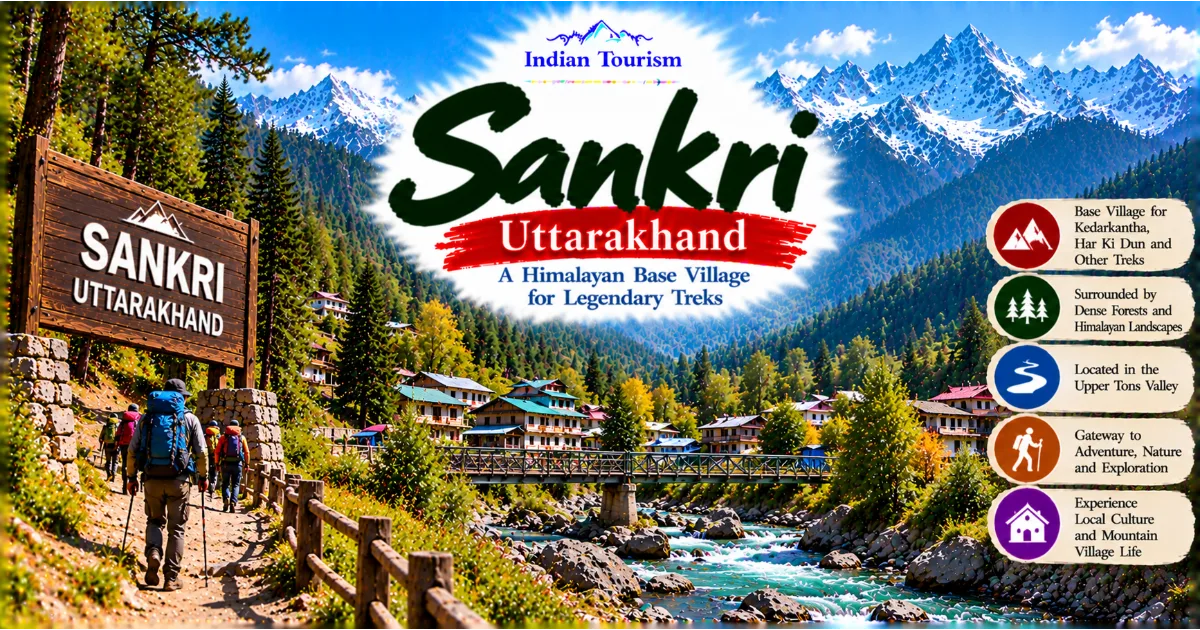
Where Himalayan Adventures Begin
Deep in the mountains of Uttarakhand, far from the busy streets of major cities, lies Sankri, a small Himalayan village that has become an important starting point for some of the region's most celebrated trekking journeys. Surrounded by forested slopes, mountain streams, traditional settlements, and dramatic Himalayan scenery, Sankri offers travellers an opportunity to experience the quieter side of mountain life while preparing for adventures into the higher elevations.
Located in Uttarkashi district, Sankri is closely associated with the Govind Pashu Vihar National Park and Wildlife Sanctuary landscape and the trekking routes that lead into the upper reaches of the western Garhwal Himalayas. Trekkers often use the village as a base for journeys toward destinations such as Kedarkantha, Har Ki Dun, and other mountain trails in the region. These routes attract visitors with their forests, meadows, mountain views, and opportunities to experience the changing environments of the Himalayas.
Yet Sankri is more than a convenient starting point for trekking. It is a mountain settlement where daily life is shaped by geography, seasonal weather, local livelihoods, and the movement of visitors. Traditional homes, small accommodation establishments, local shops, and surrounding villages create an environment in which tourism and everyday community life intersect.
For travellers who do not intend to undertake a demanding trek, Sankri can still be an appealing destination. The village offers a chance to slow down, observe the mountain landscape, learn about regional culture, and appreciate the relationship between people and the forests surrounding them. Its quieter atmosphere can be particularly attractive to visitors who prefer nature-oriented travel over crowded tourist centres.
The experience changes throughout the year. During trekking seasons, the village becomes a gathering point for trekkers, guides, porters, and other people involved in mountain travel. During quieter periods, visitors may experience a more subdued atmosphere, although facilities and access can vary.
Sankri also reminds travellers that Himalayan adventures depend on more than beautiful scenery. Responsible trekking requires preparation, appropriate equipment, awareness of weather, respect for local communities, and careful treatment of fragile environments. The village's role in supporting mountain journeys makes these responsibilities especially important.
Whether visiting as a trekker, photographer, nature enthusiast, or traveller interested in rural Uttarakhand, Sankri offers a meaningful introduction to the mountains of the upper Tons region.
Where Is Sankri Located?
Sankri is situated in Uttarkashi district in the western part of Uttarakhand. It lies within the upper Tons valley region, an area characterized by steep mountain slopes, forested hills, river systems, and settlements connected by winding mountain roads.
The village is commonly associated with the route toward the Govind Pashu Vihar National Park and Wildlife Sanctuary landscape. Its location makes it an important access point for several trekking journeys into the surrounding mountains.
Sankri's position also connects it with the wider network of settlements in the region. Local roads support the movement of residents, agricultural products, essential supplies, and travellers. Because the terrain is mountainous, transport routes frequently follow valleys and contour around steep slopes rather than taking direct paths.
The journey to Sankri can be an experience in itself. Travellers passing through Uttarkashi district encounter changing landscapes, from lower valleys and settled areas to increasingly forested mountain terrain. The scenery depends on the season, weather, and route conditions.
However, the remoteness that contributes to Sankri's appeal also requires careful planning. Travellers should not assume that every service available in a larger town will be present in the village. Accommodation, food, transport, mobile connectivity, and medical facilities can be more limited.
Before travelling, confirm the condition of the road, the availability of accommodation, and the arrangements required for any planned trek. If visiting during a busy trekking period, booking ahead can help avoid last-minute difficulties.
Sankri's geographical importance lies in its connection between inhabited mountain valleys and the higher landscapes that attract trekkers. It is both a destination in its own right and a practical starting point for exploring the surrounding Himalayan region.
Sankri and the World of Himalayan Trekking
Sankri is widely known among trekking enthusiasts because several routes into the western Garhwal Himalayas begin in or around the village. These journeys lead through forests, mountain villages, open meadows, and high-altitude landscapes that reveal the diversity of the region.
The village provides a place where trekkers can make final preparations before entering areas with fewer facilities. Depending on the trek, visitors may arrange guides, porters, transport, equipment, food supplies, and other logistical requirements.
Trekking routes in the region differ significantly in difficulty, duration, elevation, and seasonal suitability. Some are popular introductory Himalayan treks, while others require greater experience, careful planning, and stronger physical preparation.
A route that appears manageable in photographs may involve long walking days, steep climbs, cold temperatures, or changing weather. Visitors should select a trek according to their fitness, experience, available time, and the advice of qualified local professionals.
Weather is one of the most important factors in Himalayan trekking. Conditions can change rapidly, and rainfall, snowfall, fog, or strong winds may affect visibility and trail safety. Trekkers should carry appropriate clothing, follow local guidance, and be prepared to modify or cancel plans when conditions become unsafe.
High-altitude travel also requires an understanding of altitude-related illness. Travellers should learn the warning signs, ascend according to a suitable itinerary, and follow professional guidance. Severe symptoms require prompt medical attention and may necessitate descending to a lower elevation.
The village's trekking identity depends on the combined efforts of many people. Local guides share knowledge of routes and weather, porters help transport supplies, accommodation providers prepare visitors for their journeys, and transport operators connect settlements. Their work contributes to the trekking experience and supports the regional economy.
Visitors can help maintain a responsible trekking culture by choosing reputable operators, respecting local instructions, carrying waste back from the trail, and treating guides and support staff fairly.
Sankri is therefore not simply a place to begin walking. It is part of a wider network of people, services, and mountain environments that make Himalayan trekking possible.
Kedarkantha: One of the Region's Best-Known Treks
Kedarkantha is among the best-known trekking destinations associated with Sankri. The route attracts visitors because of its forest trails, mountain campsites, snowy winter conditions in suitable periods, and summit views when the weather permits.
The trek generally passes through forested landscapes and open camping areas before climbing toward higher ground. The changing vegetation and views create a sense of progression as trekkers move away from the village and into the mountains.
During winter, snow can transform the route into a striking landscape. However, winter trekking also introduces additional challenges, including cold temperatures, slippery surfaces, shorter daylight hours, and the possibility of difficult weather. Snow conditions vary from year to year, so visitors should not assume that a particular trail will always be covered in snow.
Kedarkantha is sometimes marketed as suitable for beginners, but that description should not be interpreted as meaning that preparation is unnecessary. The trek still involves physical exertion, elevation gain, and exposure to mountain weather. Appropriate footwear, warm clothing, hydration, and guidance from experienced professionals remain important.
Visitors should confirm the current route conditions, permitted camping arrangements, and any required registrations or local rules before departure. They should also avoid trekking independently if they lack the necessary experience, equipment, or knowledge of the area.
The route can offer rewarding experiences for people who want to discover Himalayan forests and mountain scenery without undertaking a very long expedition. However, the actual difficulty depends on weather, trail conditions, the itinerary, and the fitness of the individual.
Sankri plays an important role in preparing trekkers for this journey. Time spent in the village can be used to rest, organize supplies, meet local professionals, and confirm the plan for the trek.
Har Ki Dun: A Journey Through a Legendary Himalayan Valley
Har Ki Dun is another celebrated destination associated with the Sankri region. The valley is known for its mountain scenery, forested approaches, traditional settlements, and landscapes that reveal the close relationship between people and the Himalayas.
The journey toward Har Ki Dun generally involves walking through a series of changing environments. Trekkers encounter forest trails, river crossings or bridges where provided, cultivated areas, and villages before reaching the broader valley landscape.
The experience differs from the summit-focused nature of some Himalayan treks. Rather than concentrating exclusively on reaching a high point, the journey provides opportunities to observe the valley's geography, vegetation, and settlement patterns.
Har Ki Dun is also culturally significant within the wider region because of its relationship with traditional villages and long-established mountain routes. Visitors should approach these places with respect and recognize that the communities along the route are living settlements rather than scenery created for tourists.
The trek requires careful planning. Distance, elevation, weather, accommodation arrangements, and the availability of support services all influence the experience. Visitors should confirm current route conditions and select an itinerary appropriate to their fitness and experience.
The best season depends on the kind of landscape a traveller wishes to experience and the current conditions. Different months can bring different vegetation, temperatures, and visibility. Snow and rainfall can also affect access.
Trekkers should avoid leaving waste along the trail and should follow the guidance of local authorities and experienced guides. Water sources should be protected from contamination, and camping should take place only where permitted.
For travellers interested in the broader landscape of the western Garhwal Himalayas, Har Ki Dun provides an opportunity to experience a valley where natural scenery and traditional mountain life remain closely connected.
The Forests Around Sankri
Forests are an important part of the landscape surrounding Sankri. They contribute to the region's natural beauty, support biodiversity, protect soil, and influence the movement of water through the mountain environment.
The vegetation changes with elevation, rainfall, slope direction, and local conditions. Lower sections may contain different plant communities from higher slopes, while the transition between forest and open terrain creates varied habitats for wildlife.
Forest trails form part of the experience on several trekking routes associated with Sankri. Walking beneath trees can provide shade and shelter from direct sunlight, although trails may become slippery during rain or when covered with snow.
Forests also have ecological importance beyond their appearance. Tree roots help hold soil in place, vegetation reduces the force of rainfall on exposed ground, and forested slopes contribute to the health of mountain watersheds. Damage to these environments can increase erosion and affect the stability of vulnerable areas.
Wildlife may inhabit the surrounding forests, but sightings are never guaranteed. Animals may avoid areas with heavy human activity or remain hidden by vegetation. Visitors should not approach or feed wildlife, and they should never disturb nests or other habitats.
Noise can affect both wildlife and other trekkers. Keeping voices at a reasonable level helps preserve the atmosphere of the forest and reduces disturbance.
Visitors should also avoid collecting plants, damaging trees, or lighting unauthorized fires. Fires can spread rapidly under dry conditions and create serious risks in forested areas.
The forests around Sankri are part of a living ecosystem that requires protection. Responsible visitors can contribute by staying on established trails, following local rules, and carrying all rubbish back to suitable disposal points.
The Cultural Landscape of the Upper Tons Region
The upper Tons region has a distinctive cultural character shaped by geography, local history, agriculture, religious traditions, and relationships between mountain communities.
The wider area includes villages where local languages and dialects, traditional architecture, festivals, food practices, and community customs contribute to a strong sense of regional identity. These traditions vary across settlements and should not be treated as identical throughout Uttarakhand.
Sankri's location makes it a useful place from which to learn about this cultural landscape. The village brings together local residents and visitors travelling toward surrounding mountains, creating opportunities for cultural exchange when approached respectfully.
Traditional architecture can reveal how communities have adapted to mountain weather and terrain. In parts of Uttarakhand, older buildings use locally available stone and timber, while newer construction reflects changing materials and household needs.
Religious practices and local festivals may be important parts of community life. Their meaning often extends beyond the visible event to include inherited stories, family relationships, and collective memory. Visitors should seek reliable local information before attending a cultural gathering.
Food provides another way to understand the region. Traditional dishes across Uttarakhand use a variety of grains, pulses, vegetables, and other ingredients suited to local conditions. The specific dishes available in Sankri depend on the establishment, season, and supply arrangements.
Visitors should not assume that every local tradition is available for public observation. Some activities are private or religious in nature, and permission may be necessary before photographing people or participating.
Cultural tourism is most valuable when it respects the people whose traditions make a place distinctive. Supporting local businesses, asking questions politely, and following local instructions can help create positive interactions.
The cultural landscape surrounding Sankri reminds travellers that the Himalayas are not only a natural environment. They are also home to communities whose histories and traditions are closely connected with the mountains.
Traditional Homes and the Character of Sankri Village
Sankri's built environment reflects the practical realities of living in a mountain settlement. Homes, shops, accommodation establishments, and other structures occupy the available space along roads and slopes.
Traditional mountain architecture in Uttarakhand often reflects the need to manage cold temperatures, rainfall, and limited building space. Materials and techniques vary according to local conditions, the age of a building, and the resources available to the household.
In Sankri, visitors may notice a mixture of older buildings and more recent structures associated with changing household needs and tourism. The village's role as a trekking base has encouraged the development of accommodation and services for travellers.
This development can provide income and employment opportunities, but it also creates responsibilities. New construction and increased visitor numbers should be managed in ways that respect local needs, road access, water availability, and the surrounding environment.
Visitors should remember that the village is a residential area. Private homes should not be entered without permission, and photographs should be taken respectfully.
Accommodation establishments can offer insight into the practical needs of mountain travel. Guests may use them to rest before a trek, arrange an early departure, organize equipment, or obtain information about local conditions.
Travellers should confirm facilities in advance rather than assume that every property offers the same services. Heating, hot water, connectivity, meals, and transport arrangements may vary.
The character of Sankri comes from its relationship with the surrounding landscape and the people who live and work there. Observing the village respectfully can help visitors understand how a small Himalayan settlement adapts to the growing interest in mountain tourism.
Wildlife and Biodiversity Around Sankri
The wider landscape around Sankri is associated with forests and mountain habitats that support a range of plant and animal life. The Govind Pashu Vihar National Park and Wildlife Sanctuary is an important part of the region's protected landscape.
The protected area includes varied terrain and habitats shaped by elevation, climate, and vegetation. These environments support biodiversity that contributes to the ecological significance of the western Himalayas.
Wildlife is not always visible to visitors. Many animals avoid people, and the chances of observing particular species depend on habitat, season, time of day, and human activity. Travellers should not expect guaranteed sightings.
Birdwatching can be a rewarding activity for people who appreciate patient observation. However, visitors should avoid disturbing birds, approaching nests, or using loud sounds to attract wildlife.
Those interested in wildlife should consult knowledgeable local guides and follow the rules of the relevant forest authorities. Access restrictions may apply to particular areas, and visitors should never assume that all forest routes are open to the public.
The ecological health of the region depends on protecting habitats and limiting disturbance. Littering, careless camping, noise, and unauthorized fires can all damage the environment.
Visitors should carry reusable water containers where practical, pack out their rubbish, and use designated camping or accommodation facilities. Food waste should not be left behind because it can attract animals and alter their behaviour.
Responsible tourism can help build appreciation for biodiversity while reducing pressure on sensitive habitats. The aim should be to observe wildlife without changing its natural behaviour.
Sankri's proximity to important forest landscapes gives it an additional dimension beyond trekking. It offers an opportunity to understand the environmental significance of the western Garhwal Himalayas and the importance of protecting their natural heritage.
Photography and Scenic Experiences in Sankri
Sankri offers opportunities for photography focused on village life, mountain scenery, forest trails, changing weather, and the transition from inhabited areas to higher landscapes.
The village itself can provide images of houses, small shops, accommodation establishments, and roads set against the surrounding hills. Photographs that include both buildings and the natural landscape can communicate how the settlement fits into its environment.
The surrounding mountains provide a changing backdrop throughout the year. Clear conditions may reveal distant ridges, while clouds can create a softer atmosphere. Seasonal vegetation changes the appearance of the forests and open areas.
Trekkers may also be interested in documenting the preparations that take place before a mountain journey. Equipment, trail arrangements, and the work of local guides can reveal the practical side of Himalayan tourism.
However, photography should not interfere with the work of local residents or support staff. Ask permission before taking close-up photographs of people, and respect any refusal.
When photographing forests or mountain trails, stay on established paths and avoid approaching exposed edges. Do not stop in places where you may obstruct traffic or create a hazard for other travellers.
Weather conditions should guide photographic plans. Rain, fog, snow, and low visibility can make walking difficult. Protect equipment and avoid taking unnecessary risks for a particular composition.
For many visitors, the most memorable images are not necessarily the most dramatic. Details such as the arrangement of homes, the texture of forest trails, the movement of clouds, and the daily activities of a mountain village can communicate the character of Sankri more effectively than a single panoramic view.
Best Time to Visit Sankri
The best time to visit Sankri depends on the activities planned and the conditions prevailing in the upper Tons region. The village is associated with trekking, but the suitability of a particular season varies by route and weather.
Spring
Spring can bring changes in vegetation and pleasant conditions for exploring the village and surrounding lower trails. The landscape may become greener as seasonal growth develops.
Temperatures can remain cool in the mornings and evenings. Travellers should carry layered clothing and check the forecast before departing.
Summer
Summer can be suitable for trekking and mountain travel when routes are accessible and weather conditions are stable. The village may see increased activity from visitors preparing for treks.
Trekking conditions vary by destination and elevation. Confirm route access, campsite arrangements, and the services available before leaving Sankri.
Monsoon
The monsoon requires particular caution. Heavy rainfall can trigger landslides, damage roads, increase river levels, and make trails slippery.
Trekkers should not assume that a route remains safe simply because it is popular. Follow current guidance from qualified local professionals and postpone journeys when conditions are unsafe.
Autumn
Autumn can provide clear periods suitable for mountain scenery and trekking, depending on the route and weather. Visibility may improve during stable conditions, making it an attractive season for photography.
Accommodation and trekking services may be in demand at certain times, so advance planning can be useful.
Winter
Winter can transform the surrounding landscape, especially at higher elevations. Snow may be present on some trekking routes, but the amount and distribution vary from year to year.
Cold temperatures, snow-covered trails, and shorter daylight hours increase the need for appropriate equipment and experience. Visitors should confirm current conditions and avoid attempting routes beyond their ability.
Seasonal descriptions should be treated as general guidance rather than a guarantee. Before travelling, check current weather forecasts, road conditions, and any restrictions that apply to the intended route.
How to Reach Sankri
Sankri is primarily reached by road through Uttarakhand's mountain transport network. The route depends on the starting point and current road conditions.
By Road
Travellers commonly approach through the road network connecting Dehradun, Uttarkashi district, and the upper Tons valley. The exact route and journey time depend on road conditions, traffic, and the starting location.
Mountain roads can be narrow and winding, with steep sections and areas vulnerable to landslides. Drivers should maintain a safe speed, avoid risky overtaking, and allow time for rest stops.
Before departure, check for road closures or restrictions. During the monsoon, conditions can change quickly, and delays may be substantial.
By Train
Sankri does not have its own railway station. Visitors arriving by train must continue by road from a suitable railway station serving the wider region.
Choose a rail connection based on the overall journey rather than only the arrival time. Allow sufficient time for the mountain drive and avoid relying on tight connections.
By Air
Travellers arriving by air can use an airport serving the wider Dehradun region and continue by road toward Sankri. The onward journey can take considerable time.
Allow time for luggage collection, arranging transport, meals, and rest breaks. It is unwise to assume that a flight arrival guarantees an easy same-day connection to the village.
Local Transport
Taxis and other transport services may be available, depending on the season and demand. Travellers should confirm availability, pricing, and departure arrangements in advance.
If you are trekking, coordinate transport with the guide or operator responsible for the route. Confirm where the journey begins and whether any local registration or access requirements apply.
Suggested Two-Day Visit to Sankri
A two-day visit can provide a useful introduction to Sankri and the surrounding landscape, particularly for travellers who want to experience the village before deciding whether to undertake a longer trek.
On the first day, travel to Sankri and settle into your accommodation. Allow time to rest after the mountain journey. Use the afternoon to explore accessible parts of the village, observe the surrounding landscape, and confirm the arrangements required for the following day.
If you intend to trek, meet your guide or operator and check your equipment. Confirm the departure time, route, expected conditions, and the supplies you will need.
On the second day, choose an activity appropriate to your interests and physical ability. This might involve observing the village and nearby scenery, taking a short walk on an appropriate route, or beginning a planned trek if the itinerary and conditions permit.
Do not begin a demanding trek without adequate preparation. A short visit is not enough to replace route knowledge, fitness, or appropriate equipment.
If the weather deteriorates, choose a safer alternative or postpone the activity. The mountains will remain worth exploring when conditions improve.
Before departure, confirm your transport arrangements and allow enough time for the road journey. Carry all rubbish away from the natural environment and respect the privacy of local residents.
Responsible Trekking and Tourism in Sankri
Sankri's growing popularity as a trekking base creates opportunities for local employment, but it also increases the importance of responsible tourism.
Trekkers should choose experienced and reputable guides or operators, especially when entering unfamiliar or remote areas. Before departure, clarify the itinerary, equipment requirements, accommodation arrangements, and any applicable access rules.
Waste management is one of the most important responsibilities. Plastic packaging, bottles, tissues, and food waste should not be left along trails or at campsites. Carry waste back to appropriate disposal facilities.
Water sources should be protected from contamination. Follow guidance on safe water treatment and avoid washing with soaps or chemicals directly in streams.
Camping should take place only in permitted locations. Unauthorized fires can damage vegetation and create a serious risk of wildfire. Visitors should follow local rules concerning fuel, cooking, and campsite use.
Respect local communities and the people who support trekking. Pay agreed fees, treat guides and porters fairly, and follow instructions about routes and weather. Do not assume that local workers can safely continue when conditions become dangerous.
Trekkers should also be honest about their fitness and experience. Attempting a route beyond one's ability can put both the visitor and support staff at risk.
The environment around Sankri is part of a wider mountain ecosystem. Responsible behaviour helps protect forests, water sources, wildlife, and the cultural character of the region.
Who Should Visit Sankri?
Sankri is particularly suitable for travellers interested in Himalayan trekking, mountain landscapes, and quieter rural destinations.
Trekking enthusiasts may use the village as a base for routes such as Kedarkantha and Har Ki Dun, subject to current access and conditions. They should select journeys according to their experience, fitness, and the advice of qualified local professionals.
Nature lovers can appreciate the surrounding forests, mountain scenery, and changing seasonal landscapes. Visitors do not need to undertake a demanding trek to enjoy the region's natural setting.
Cultural travellers may be interested in the traditional settlements and regional heritage of the upper Tons valley. Respectful observation and local guidance can help provide a deeper understanding of the area's culture.
Photographers may find opportunities to document village life, forest trails, and the relationship between settlements and the mountains. Safety and respect for privacy should remain priorities.
Families can consider visiting if the journey, accommodation, and planned activities suit their needs. Trekking routes should be chosen carefully, and children must be supervised near roads, rivers, and uneven terrain.
Sankri may be less suitable for travellers expecting extensive nightlife, luxury resort facilities, or a highly developed shopping environment. Its appeal is connected with nature, local culture, and access to mountain adventures.
Final Thoughts: Sankri, a Gateway to the Himalayan Experience
Sankri is one of Uttarakhand's important mountain villages for travellers interested in exploring the western Garhwal Himalayas. Its location in Uttarkashi district and its association with trekking routes such as Kedarkantha and Har Ki Dun make it a useful starting point for discovering the region's forests, valleys, and higher landscapes.
Yet Sankri deserves attention beyond its role as a trekking base. The village reflects the relationship between local communities, mountain geography, traditional culture, and the growing importance of tourism. Its accommodation providers, shops, guides, and transport services form part of the network that supports both residents and visitors.
The surrounding natural environment is equally significant. Forests protect slopes and support biodiversity, while rivers and mountain streams contribute to the ecological systems on which communities depend. Preserving these landscapes is essential for the future of both tourism and local livelihoods.
Visitors should plan carefully, check current weather and road conditions, and choose trekking routes suited to their abilities. Appropriate equipment, reliable guidance, and respect for local rules are essential, especially when travelling into higher or more remote terrain.
Responsible behaviour can make a meaningful difference. Carry waste away from trails, protect water sources, respect local customs, and treat the people who support mountain travel fairly.
Sankri offers an invitation to experience Uttarakhand at a slower pace. Whether you arrive to begin a trek or simply to appreciate the village and its surroundings, the experience can deepen your understanding of the Himalayas as both a natural wonder and a living cultural landscape.
#IndianTourism #UttarakhandTourism #Sankri #Uttarkashi #KedarkanthaTrek #HarKiDun #TonsValley #GarhwalHimalayas #HimalayanTrekking #ExploreUttarakhand #MountainVillages #NatureTravel #ResponsibleTourism #TravelIndia
