A Small Himalayan Village Where the Journey Begins
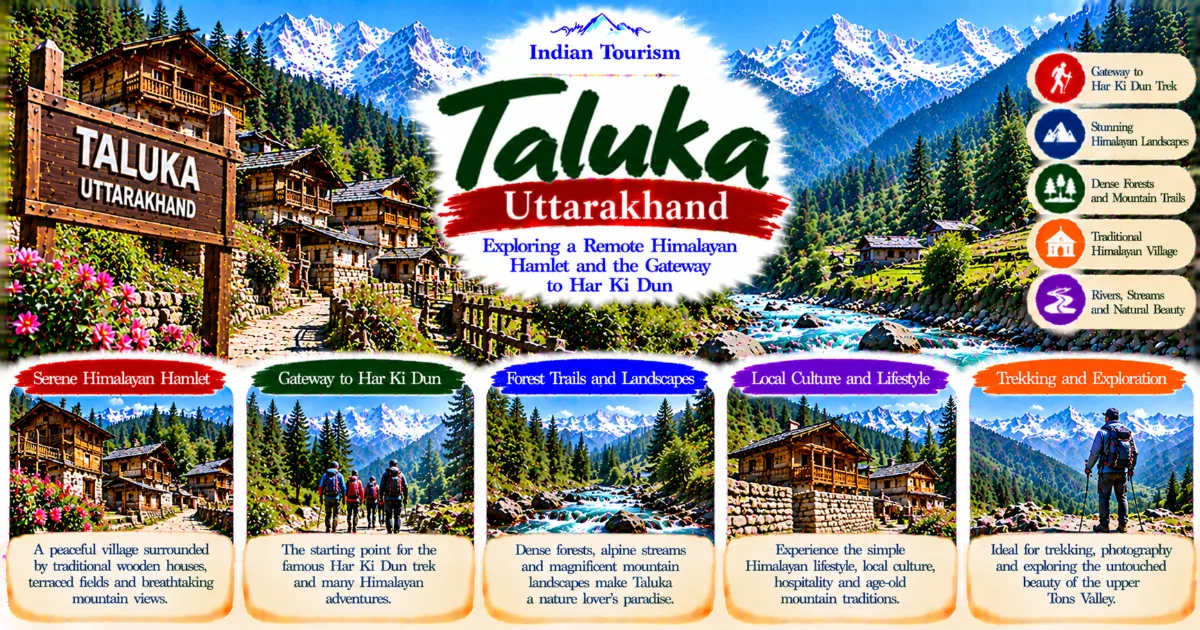
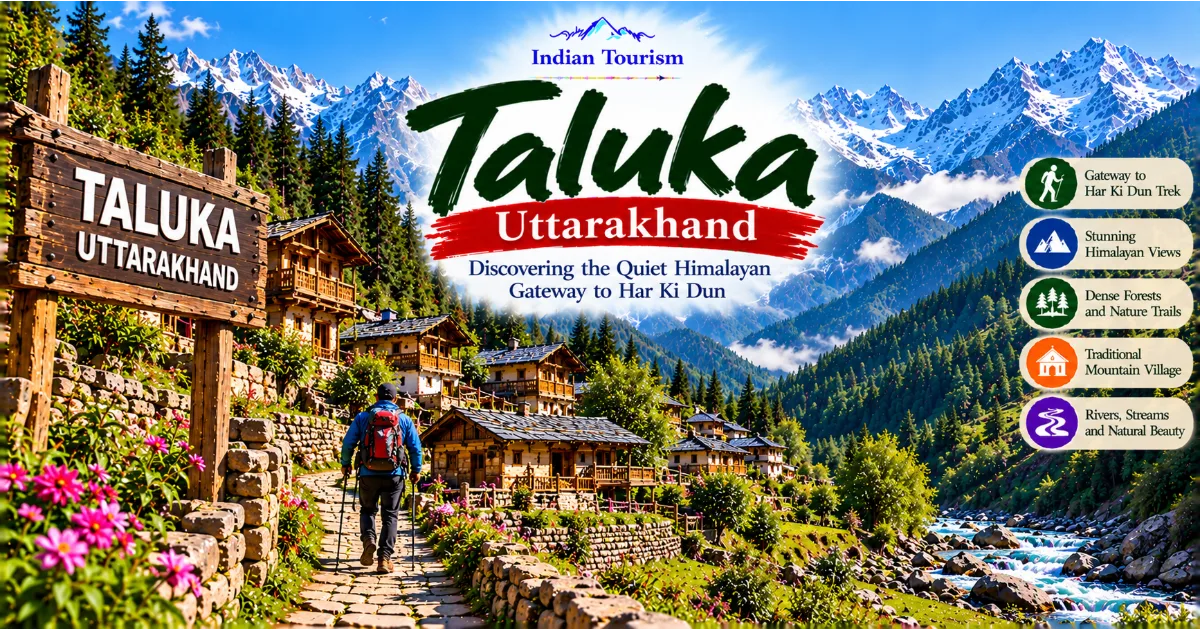
Hidden in the Garhwal Himalayas of Uttarakhand, Taluka is a small mountain settlement that introduces travellers to one of the most beautiful trekking landscapes in the Indian Himalayas. Located in the Uttarkashi district, Taluka is widely known as the road-accessible starting point for the celebrated trek to Har Ki Dun Valley. Yet its importance extends beyond its role as a trekking base. Surrounded by forested slopes, mountain streams, traditional homes, and the dramatic scenery of the Tons River region, Taluka offers a glimpse into the quieter rhythms of Himalayan life.
For travellers who enjoy discovering places away from crowded tourist centres, Taluka presents a different kind of mountain experience. There are no large shopping streets, fashionable cafes, or rows of commercial hotels competing for attention. Instead, visitors encounter a landscape shaped by forests, rivers, steep hillsides, and small settlements connected by narrow mountain roads and walking trails. The atmosphere is defined by the sounds of flowing water, birds calling from the trees, and the movement of people whose daily lives remain closely connected to the surrounding environment.
Taluka occupies an important place in the wider trekking landscape of Uttarakhand. Many visitors pass through it on their way towards the villages and meadows of the Har Ki Dun route. Some arrive early in the morning, arrange their supplies, meet their guides, and begin walking towards the mountains. Others stay briefly to experience the settlement before continuing their journey. Although many travellers regard Taluka as a starting point rather than a destination in its own right, spending time here can add depth to a Himalayan trip.
The village is particularly appealing to people who want to understand how adventure tourism and traditional mountain life meet in the same landscape. Trekkers come in search of forests, alpine meadows, and distant peaks, while local residents continue to maintain their homes, farms, livestock, and everyday responsibilities. This combination makes Taluka more than a point on a trekking map. It is a living Himalayan settlement and a useful introduction to the geography and culture of the upper Tons region.
Continue Reading
Understanding Taluka's Location and Geography
Taluka lies in the mountainous terrain of Uttarkashi district in northern Uttarakhand. The region forms part of the western Garhwal Himalayas, where deep valleys, forested ridges, fast-flowing rivers, and high mountain slopes create a landscape of remarkable variety. The geography changes considerably as travellers move away from the lower valleys towards the higher trekking routes.
The surrounding mountains influence almost every aspect of life in Taluka. Sloping ground limits the space available for construction and cultivation, while the changing elevation affects temperatures, vegetation, and seasonal weather. Roads follow the contours of the hills wherever possible, crossing streams and winding around ridges. Travelling through this terrain can take longer than expected because distances that appear short on a map may involve steep gradients, narrow roads, and difficult conditions.
Forests cover substantial portions of the surrounding landscape. Depending on elevation and local conditions, the vegetation includes mixed Himalayan woodland, conifers, broad-leaved trees, shrubs, and seasonal flowering plants. Higher slopes lead towards more open landscapes where forests gradually give way to meadows and alpine vegetation. This transition is one of the defining characteristics of the Har Ki Dun trekking region.
The area also belongs to a river system shaped by Himalayan rainfall, snowmelt, and mountain springs. Streams descend through narrow channels, collecting water from the surrounding slopes before joining larger rivers. Their flow changes with the seasons. During warmer months, snowmelt can contribute to stronger currents, while monsoon rainfall may rapidly increase water levels and make crossings more difficult.
For photographers and nature lovers, the geography around Taluka offers constantly changing perspectives. A short walk may reveal a steep wooded hillside, a river valley, a cluster of traditional houses, or a distant ridge emerging through the clouds. The scenery is not limited to a single viewpoint. It unfolds gradually as travellers move through the landscape.
Taluka and the Har Ki Dun Trekking Route
Taluka is best known for its connection with the Har Ki Dun trekking route. Har Ki Dun is a high Himalayan valley associated with forest trails, traditional settlements, open meadows, and dramatic mountain scenery. The trek attracts people who want to experience the Himalayas through walking rather than through road-based sightseeing alone.
Taluka commonly serves as the road-accessible starting point for the walking journey. From here, trekkers continue along established trails towards the settlements and campsites of the upper valley. The route involves gradual changes in elevation, forested sections, river crossings, and long stretches of mountain walking. The exact itinerary depends on the trekking operator, weather, trail conditions, and the physical abilities of the group.
The first stages of the journey introduce travellers to the landscape of the Tons valley. The trail passes through forested areas and follows the contours of the mountain terrain. The sound of water often accompanies the walk, while views open occasionally between the trees. The route can feel peaceful during quieter periods, although the number of trekkers varies according to the season.
For first-time Himalayan trekkers, Taluka offers an opportunity to prepare before entering the more remote sections of the route. Visitors can check their equipment, organise their luggage, confirm arrangements with local guides, and understand the walking plan for the coming days. These preparations are important because facilities become more limited farther along the trail.
However, travellers should not assume that beginning at Taluka makes the trek easy. The journey requires stamina, suitable footwear, weather-appropriate clothing, and the ability to walk for several hours across uneven terrain. Rain, mud, cold conditions, and changes in altitude can make the route more demanding than expected. People unfamiliar with mountain trekking should assess their fitness honestly and consider travelling with an experienced guide.
The reward is an opportunity to experience the Himalayas at walking pace. Unlike a road journey, trekking reveals small details that might otherwise go unnoticed: moss growing on rocks, wildflowers along the path, the texture of old wooden structures, the sound of a stream beneath a bridge, and the changing character of the forest as elevation increases.
The Forests Around Taluka
The forests surrounding Taluka are among the most appealing features of the region. They create a natural transition between the inhabited valley and the more remote mountain landscapes beyond it. For trekkers, walking through these forests is not simply a way to reach a destination. It is an essential part of the experience.
The woodland changes according to altitude, slope, moisture, and exposure to sunlight. Some areas are dominated by tall trees that create shaded corridors along the trail. Other sections have more open vegetation, allowing sunlight to reach the forest floor. Ferns, grasses, mosses, shrubs, and seasonal flowers add variety to the landscape.
During the warmer months, the forest may appear especially vibrant. Leaves create a dense canopy in suitable locations, and the contrast between green vegetation and the darker mountain slopes gives the landscape a layered appearance. In autumn, some trees and shrubs change colour, while cooler air gives the walking experience a different character. Winter can bring cold conditions and occasional snow at higher elevations, depending on the weather.
Forest trails also provide opportunities to observe Himalayan birdlife. Travellers may hear calls from within the canopy before they see the birds themselves. Patient observers can look for movement among branches, listen for changes in sound, and notice birds feeding or moving between trees. The likelihood of sightings depends on the season, weather, and the time spent quietly observing.
The forest environment deserves respect. Visitors should remain on established paths, avoid disturbing wildlife, and never remove plants or other natural materials. Feeding wild animals can change their behaviour and create risks for both people and wildlife. Loud music and unnecessary noise also reduce the quality of the experience for other visitors.
A forest walk around Taluka is most rewarding when travellers slow down. The purpose is not only to cover distance but also to notice the relationships between vegetation, water, terrain, and climate. These details help explain why the Himalayan landscape changes so dramatically over relatively short distances.
The Tons River and the Importance of Mountain Waterways
Water is one of the defining elements of the landscape around Taluka. The wider region is associated with the Tons River system, which shapes valleys, supports settlements, and contributes to the character of the surrounding environment. Mountain streams and smaller channels add movement and sound to the scenery.
The Tons River is an important tributary of the Yamuna. Its catchment includes steep Himalayan terrain where rainfall, snowmelt, and springs contribute to the flow of water. Rivers in this region are not merely scenic features. They influence agriculture, local livelihoods, transportation routes, and the distribution of settlements.
For visitors, water creates some of the most memorable moments of a mountain journey. The sound of a stream moving over rocks can accompany a trail for long stretches. Small cascades appear where water descends through uneven terrain, while broader channels may reveal stones shaped by years of flowing water. The colour and force of the water change with rainfall, light, and season.
Despite their beauty, mountain rivers require caution. Water levels can rise rapidly after rainfall, and currents may be much stronger than they appear from the bank. Wet rocks can be slippery, and river crossings can become dangerous when conditions deteriorate. Visitors should never enter fast-flowing water simply to obtain a photograph.
The river environment also illustrates the close connection between healthy forests and water systems. Vegetation helps stabilise slopes, reduce soil erosion, and influence how rainfall moves across the land. When forests are damaged or slopes are disturbed, the consequences can extend far beyond the immediate location.
Responsible travellers can help protect these waterways by carrying waste back to appropriate disposal points, avoiding the use of soaps and detergents in streams, and respecting local rules concerning water sources. Clean mountain water should never be treated as an unlimited resource. Communities and ecosystems depend on it throughout the year.
Traditional Mountain Life in Taluka
Taluka's appeal is closely connected to its character as a mountain settlement. Visitors who arrive expecting a fully developed tourist town may find the village modest, but that simplicity is part of what makes it interesting. Its buildings, paths, and surrounding land reflect the practical demands of living in a remote Himalayan environment.
Traditional homes in the wider region often use locally available materials and construction methods suited to the climate and terrain. Stone, timber, and sloping roofs are common features in many Himalayan settlements, although building styles vary between villages and have changed over time. Newer structures may incorporate modern materials while retaining aspects of traditional design.
The layout of a mountain settlement is shaped by the available land. Houses may stand close together where the terrain permits, while agricultural plots and livestock areas occupy suitable ground nearby. Paths connect homes with fields, water sources, and the routes used to reach neighbouring settlements. Steep slopes can make even short daily journeys physically demanding.
Agriculture and livestock have historically played important roles in the livelihoods of many Himalayan communities. Depending on local conditions, households may cultivate seasonal crops, maintain kitchen gardens, raise animals, or combine farming with wage work and tourism-related activities. The availability of suitable farmland is often limited, so families must make careful use of the land they have.
The trekking industry has created additional opportunities in the wider Har Ki Dun region. Guides, porters, cooks, homestay operators, transport providers, and suppliers may all contribute to the visitor economy. These activities can provide income while allowing local residents to share their knowledge of the mountains.
Tourism, however, also creates challenges. Seasonal demand can be unpredictable, and villages may experience pressure on water, waste management, and local infrastructure during busy periods. A responsible visitor should recognise that the landscape is someone's home, not simply a recreational setting.
A polite greeting, respect for privacy, and a willingness to follow local customs can make a meaningful difference. Ask before photographing people or entering private spaces. Purchase local services where appropriate, and avoid treating residents as attractions. The best cultural experiences often emerge through ordinary, respectful interactions rather than staged encounters.
What Makes Taluka Different from Other Himalayan Destinations?
Uttarakhand contains many popular mountain destinations, from busy hill stations to pilgrimage centres and established trekking bases. Taluka differs from these places because its identity is closely tied to the transition between road travel and walking into a more remote Himalayan landscape.
In a major hill station, visitors may spend much of their time travelling between viewpoints, shops, restaurants, and accommodation. Taluka offers fewer conventional tourist activities. Its significance lies in its setting, its connection to the trekking route, and the opportunity to observe a mountain settlement before entering the forests and valleys beyond it.
The village also offers a different pace of travel. Visitors who arrive with a tightly packed sightseeing schedule may not immediately appreciate it. Those who value slow travel, natural surroundings, and the experience of being at the edge of a trekking landscape are more likely to find it rewarding.
Taluka is also a useful reminder that memorable destinations do not always require elaborate attractions. A quiet morning, the view of forested slopes, the movement of clouds over distant ridges, and the anticipation of a long walk can create a powerful sense of place.
For people interested in landscape photography, Taluka provides opportunities to capture the relationship between human settlement and mountain terrain. Photographs can include houses against wooded hillsides, paths leading towards the forest, streams moving through the valley, and the changing light that defines the mountains throughout the day.
For trekkers, the village offers practical value. It marks the beginning of a journey in which the experience becomes progressively more dependent on walking, weather, physical effort, and careful planning. That transition gives Taluka a distinct place within Uttarakhand's adventure tourism landscape.
Best Time to Visit Taluka
The best time to visit Taluka depends on whether the main purpose is to explore the village, begin the Har Ki Dun trek, photograph the surrounding landscape, or experience a particular season in the Himalayas. Weather and trail conditions can vary significantly, so travellers should confirm local conditions before departure.
Spring: March to April
Spring can bring fresh vegetation and gradually warmer conditions to parts of the lower and middle Himalayan landscape. Forests begin to show seasonal changes, and the contrast between new growth and the surrounding mountain terrain can be attractive for photographers.
However, conditions at higher elevations may remain cold, and snow can continue to affect sections of the trekking route. Visitors planning to continue beyond Taluka should check whether the intended itinerary is suitable for the season.
Late Spring and Early Summer: May to June
Late spring and early summer are popular periods for Himalayan trekking in many parts of Uttarakhand. Days may be relatively pleasant at lower elevations, while nights remain cool. Forest trails and mountain views can be especially appealing when the weather is clear.
This period can also bring greater demand for trekking services. Travellers should arrange guides, accommodation, transport, and any required permits in advance where possible. They should also prepare for rapidly changing weather, particularly when moving towards higher ground.
Monsoon: July to September
The monsoon season presents additional challenges. Heavy rainfall can make mountain roads unstable, increase the risk of landslides, swell rivers, and leave trails muddy or slippery. Cloud cover may also reduce visibility and limit mountain views.
Although the landscape can appear intensely green during the rainy season, this visual appeal does not eliminate the risks associated with travel. Visitors should not begin a trek simply because the forecast appears favourable for a few hours. Conditions in the mountains can change quickly, and local guidance is essential.
Travellers should be prepared to postpone or cancel plans when authorities, guides, or local residents advise against travel. Safety should take priority over a fixed itinerary.
Autumn: September to November
Autumn is often an attractive season for mountain travel because periods of clearer weather may provide expansive views of the surrounding peaks. The air can feel crisp, and the landscape may offer excellent opportunities for photography.
The precise conditions depend on the year. Rainfall can continue into September, and temperatures drop as the season advances. Nights can become particularly cold, especially for people staying in basic accommodation or camping along the trekking route.
Winter: December to February
Winter brings cold conditions to the region, with the possibility of snow and difficult access at higher elevations. Taluka and its surroundings may look dramatically different from their summer appearance, but winter travel requires additional preparation.
The suitability of a winter visit depends on road conditions, snowfall, local services, and the experience of the travelling group. The Har Ki Dun route should not be assumed to remain accessible in the same way throughout the year. Travellers should obtain current local information before making arrangements.
How to Reach Taluka
Reaching Taluka requires planning because the final approach involves mountain roads. The route generally begins with travel towards the Uttarkashi district and the wider Tons valley region before continuing towards the settlement.
By Road
Road travel is the principal way to reach Taluka. Travellers usually arrange transport through regional towns and settlements that serve the Har Ki Dun trekking area. The final road journey can involve narrow sections, steep gradients, bends, and changing surface conditions.
Travel times vary according to the starting point, traffic, weather, road maintenance, and the condition of the vehicle. A journey that appears short on a map may take considerably longer in mountain terrain. It is sensible to leave sufficient time rather than scheduling a tight connection.
Private vehicles, local taxis, or transport arranged through a trekking operator may be options, depending on availability. Before departure, confirm the current road situation and the exact point where the vehicle can safely reach. Road access can be affected by landslides, construction, or seasonal weather.
By Train
There is no railway station in Taluka itself. Visitors travelling from distant parts of India may use a railway connection to reach a suitable gateway city in Uttarakhand or northern India and continue by road. The best railway option depends on the origin of the journey and the current transport schedule.
A train journey should be planned with enough flexibility to accommodate the remaining road travel. Mountain transport may take longer than expected, particularly during busy periods or adverse weather.
By Air
Taluka does not have its own airport. Travellers arriving by air must continue by road from an airport serving the broader region. The most suitable option depends on flight availability, the starting city, road conditions, and the time available for the trip.
Because the final approach involves mountain roads, it is advisable to avoid arranging a very tight same-day connection between an arriving flight and a long road journey. An overnight stop along the way can make the trip more comfortable and reduce the pressure to travel in poor conditions.
Local Transport and Trekking Arrangements
Many visitors reach Taluka as part of an organised Har Ki Dun trekking itinerary. This can simplify transport arrangements and help coordinate accommodation, guides, meals, and equipment. Independent travellers should be particularly careful to confirm road access, available services, and the plan for continuing beyond the village.
Transport should be arranged with attention to the weather and the driver's familiarity with mountain roads. Travellers should avoid pressuring drivers to continue when conditions are unsafe.
Where to Stay in and Around Taluka
Accommodation options in the Taluka area are generally more limited than in established tourist towns. Depending on current availability, visitors may find simple guest accommodation, homestays, or arrangements connected with trekking operators. Facilities can vary, and travellers should confirm expectations before arrival.
A homestay or locally operated guesthouse can provide a more direct connection with the area than a standard hotel. Such accommodation may offer an opportunity to learn about local food, daily routines, and the practical realities of mountain life. However, visitors should not assume that every property provides the same level of comfort or services.
Electricity, mobile connectivity, hot water, and heating may be less reliable than in urban destinations. Travellers should ask about sleeping arrangements, bathroom facilities, meals, and payment methods before confirming a stay. Carrying some cash is sensible where digital payment systems may be unreliable.
For trekkers continuing towards Har Ki Dun, accommodation may be arranged along the route according to the itinerary. Campsites, basic lodges, or other forms of trekking accommodation may be used depending on the season and the operator's arrangements. Facilities become more limited as the journey moves into remote areas.
Visitors should pack with realistic expectations. A remote mountain stay is not always defined by hotel-style amenities. Warm bedding, dry clothing, a reliable light source, and appropriate personal supplies can be more important than luxury features.
It is also worth remembering that mountain communities may have limited resources. Use water carefully, avoid unnecessary electricity consumption, and follow the property's instructions for waste disposal. Responsible accommodation choices can help ensure that tourism contributes positively to local livelihoods.
Local Food and the Flavours of the Garhwal Region
Food is an important part of understanding a destination, and Taluka offers a setting in which visitors can appreciate the practical relationship between mountain cuisine and the local environment. The food available to travellers depends on the household, guesthouse, trekking arrangements, and the supplies that can be transported into the region.
Traditional Garhwali food includes a variety of lentils, grains, vegetables, and preparations developed around local agricultural conditions. Dishes vary from one part of the region to another, and the meals served to visitors may be adapted to suit the needs of trekkers.
Simple meals can be particularly welcome before or after a long walk. Rice, lentils, seasonal vegetables, flatbreads, and warm drinks provide familiar sources of energy. During a trek, food arrangements are often designed around the physical demands of walking and the practical limits of carrying supplies.
Travellers should inform accommodation providers or trekking organisers about dietary requirements in advance. People who need specialised food should carry suitable backup supplies rather than assuming that every item will be available in a remote settlement.
Visitors can also use mealtimes as an opportunity to learn about local ingredients and cooking practices. Asking respectfully about a dish can lead to conversations about farming, seasonal availability, and household traditions. Such interactions offer a deeper understanding of the region than simply treating food as a service.
Food safety remains important. Drink water from reliable sources and follow local advice about treatment or purification. Keep snacks in secure packaging, carry waste back when bins are unavailable, and avoid leaving food scraps along the trail.
Photography Opportunities Around Taluka
Taluka offers a variety of photographic subjects, particularly for travellers who enjoy landscapes and documentary-style travel photography. Its appeal lies in the relationship between the settlement, the forests, the river environment, and the mountains beyond.
Early morning can be a rewarding time to photograph the village and surrounding slopes. The light may be softer, and clouds or mist can create depth in the landscape. Weather conditions determine whether distant peaks are visible, so patience is useful.
The walking routes around the settlement provide opportunities to capture changing perspectives. A trail entering a forest can create a natural leading line, while a stream crossing may offer reflections, moving water, and contrasting textures. Wooden houses, stone paths, and cultivated plots can also help tell the story of mountain life.
Photographers should pay attention to composition rather than relying only on dramatic scenery. Including a path, a house, or a person walking through the landscape can communicate scale and show how the environment is used. However, people should be photographed only with appropriate permission.
Equipment should be chosen according to the journey. A lightweight camera or mobile phone is often more practical than a large collection of lenses on a long trek. A protective cover can help guard against rain and dust, while a power bank may be useful where charging facilities are limited.
The most important photographic principle is to avoid taking unnecessary risks for a picture. Do not stand on unstable riverbanks, approach dangerous edges, block narrow trails, or ignore weather warnings to obtain a particular view. The landscape will remain worth experiencing even when conditions do not allow the perfect photograph.
Wildlife and Biodiversity in the Region
The forests and mountain habitats around Taluka form part of a broader Himalayan ecological landscape. Variations in elevation, moisture, temperature, and vegetation create habitats for many forms of wildlife, although the animals visible to a visitor depend on the location, season, and amount of disturbance.
Birds are among the most accessible forms of wildlife for casual observation. Their calls may be heard in the forest even when the birds themselves remain hidden among branches. Early mornings can be productive for birdwatching, provided visitors move quietly and avoid disturbing nesting areas.
Small mammals and other wildlife may also inhabit the forests, but sightings should never be guaranteed. Animals often avoid people, and the absence of visible wildlife does not mean that a forest lacks ecological value. Tracks, calls, feeding signs, and changes in vegetation can reveal the presence of animals without a direct encounter.
The wider Himalayan ecosystem is sensitive to changes in land use, pollution, and climate. Forest degradation can affect slope stability, water quality, and wildlife habitat. Poorly managed tourism can add pressure through litter, noise, and disturbance.
Visitors can reduce their impact by carrying reusable water bottles, using durable food containers, staying on established paths, and avoiding disposable items where practical. Wildlife should never be chased, fed, or approached for photographs.
Respect for biodiversity also means recognising that people live and work within the landscape. Conservation should be understood alongside local livelihoods and community needs. Sustainable tourism is most effective when it supports the well-being of residents while protecting the natural systems on which the region depends.
Responsible Tourism in Taluka
Taluka's natural setting and role as a trekking gateway make responsible tourism especially important. Visitors arrive to enjoy the forests and mountains, but their presence can also affect local resources and the quality of the environment.
Waste management is one of the most visible challenges. Plastic packaging, bottles, and food wrappers can remain in the environment for long periods. Waste may be difficult to transport from remote areas, so travellers should plan to carry their rubbish back to suitable disposal points. Burning waste or leaving it beside a trail is not a responsible solution.
Water use also deserves attention. Mountain settlements may depend on local springs and streams, and supplies can be limited. Guests should avoid wasting water and should never assume that a nearby stream can safely receive detergents, toiletries, or food waste.
Respecting local customs is equally important. Taluka is not simply a scenic backdrop. It is a place where people maintain homes, work, raise families, and manage daily responsibilities. Visitors should ask permission before photographing residents, avoid entering private property without invitation, and dress appropriately for the setting.
Supporting local services can help distribute tourism income within the region. Where suitable, travellers can hire qualified local guides, use locally operated accommodation, and purchase goods or meals from local providers. They should still make informed decisions about safety, service quality, and fair pricing.
Responsible tourism also requires flexibility. If weather or road conditions make a journey unsafe, postponing plans is preferable to placing local residents, drivers, guides, or fellow travellers at risk. The mountains do not follow fixed schedules, and a successful trip is one in which safety and respect remain more important than completing every planned activity.
Practical Travel Tips for First-Time Visitors
Travellers planning a visit to Taluka should prepare for a remote mountain environment rather than expecting the convenience of a major tourist centre. The right preparation can make the experience more comfortable and help avoid preventable difficulties.
Clothing should be suitable for changing temperatures. Layering is generally more practical than carrying one very heavy garment because conditions can shift between sunny afternoons and cold evenings. A waterproof outer layer, warm clothing, comfortable walking trousers, and appropriate footwear are useful for anyone continuing along the trekking route.
Good footwear is particularly important. Trails can include stones, mud, uneven surfaces, and steep sections. Shoes should fit properly and provide reliable grip. New footwear that has not been tested before the journey may cause blisters during long walks.
Travellers should carry personal medication, basic first-aid supplies, sun protection, insect protection where appropriate, and any necessary personal hygiene items. People with medical conditions that could be affected by strenuous activity or altitude should seek professional advice before undertaking a demanding trek.
Mobile connectivity and charging opportunities may be inconsistent. Download essential travel information in advance, keep important contact details available offline, and inform someone trustworthy about the itinerary. Do not rely entirely on a mobile phone for navigation or emergency communication in remote terrain.
Cash may be useful for small purchases and local services, particularly where digital payments are not dependable. However, travellers should avoid carrying more money than necessary and should keep essential documents secure.
Before leaving for Taluka, check road conditions, weather forecasts, accommodation arrangements, and the status of the trekking route. Confirm the expected walking distance, elevation changes, and available support. A reliable local guide can provide practical information that general travel descriptions cannot replace.
Finally, allow enough time. Mountain travel becomes stressful when every part of the journey is tied to a rigid schedule. An additional buffer can help accommodate delays, weather changes, and the simple pleasure of spending more time in a place that deserves careful attention.
Who Should Visit Taluka?
Taluka is particularly suitable for travellers interested in trekking, nature, photography, and quieter Himalayan settlements. It appeals to people who enjoy landscapes that are experienced gradually rather than through a series of crowded viewpoints.
Experienced trekkers may value the village as the beginning of a longer journey into the Har Ki Dun region. For them, Taluka provides an important transition from road travel to walking through remote terrain.
Beginners can also appreciate the area, but they should understand the distinction between visiting the settlement and undertaking a multi-day trek. A short stay near Taluka does not require the same level of preparation as a demanding mountain expedition. Anyone planning to continue towards Har Ki Dun should evaluate the difficulty, weather, and availability of appropriate support.
Photographers and birdwatchers may enjoy the surrounding forests and the opportunities to observe changing mountain light. Travellers interested in rural life can learn about the challenges and opportunities faced by communities in remote areas.
Taluka may be less suitable for visitors who require extensive shopping, nightlife, luxury accommodation, or a wide range of organised entertainment. Its value lies in its natural setting and its connection to the trekking landscape.
Families considering a visit should plan according to the ages, fitness levels, and needs of everyone travelling. A road journey to a remote mountain settlement can be tiring, while a multi-day trek requires a more careful assessment of physical ability and safety.
Exploring the Wider Har Ki Dun Region
Taluka becomes more meaningful when understood as part of the wider network of villages, forests, rivers, and meadows associated with the Har Ki Dun route. Each stage of the journey offers a different perspective on the landscape.
Beyond Taluka, trekkers commonly move towards settlements such as Gangad and the upper valley villages, depending on the chosen itinerary. These communities are part of the lived landscape through which the trekking route passes. Their presence illustrates how human settlement and mountain travel have developed together over generations.
Osla and Seema are among the settlements associated with the Har Ki Dun trail. They offer insight into the traditional villages of the region and provide a setting in which visitors can observe the relationship between homes, agricultural land, forested slopes, and trekking routes.
Har Ki Dun itself presents a different landscape from the village of Taluka. As the route progresses, the surroundings may open into broader valley views and meadows framed by high mountain slopes. The experience depends on the season, weather, trail conditions, and the route selected by the trekking group.
Travellers should resist the temptation to treat every village as a quick photo stop. Spending time respectfully in these settlements can deepen an understanding of the region. Local architecture, cultivation practices, paths, and daily activities all provide clues to the ways people adapt to mountain conditions.
A well-planned journey can combine the practical role of Taluka with the cultural and natural experiences found farther along the route. This approach allows the trip to become more than a race to reach a famous valley. It becomes an exploration of the interconnected landscape of the western Garhwal Himalayas.
Conclusion: Taluka, Where the Road Gives Way to the Mountains
Taluka may be a small settlement, but it occupies an important position in Uttarakhand's trekking landscape. Its connection with the Har Ki Dun route brings travellers into a region of forested slopes, flowing streams, traditional mountain settlements, and high Himalayan scenery.
The village offers an opportunity to appreciate a quieter side of mountain travel. Rather than relying on large attractions or elaborate tourist facilities, Taluka draws its character from its location and its relationship with the surrounding environment. It is a place where visitors can prepare for a trek, observe the rhythms of a Himalayan settlement, and begin to understand the geography that defines the upper Tons region.
For trekkers, Taluka marks the beginning of a journey into a landscape that rewards patience and preparation. For nature lovers, it offers access to forests, rivers, and changing mountain scenery. For culturally curious travellers, it provides a reminder that the Himalayas are not only a destination for adventure but also a home for communities whose lives are shaped by the mountains.
The most rewarding way to visit Taluka is to arrive with realistic expectations, respect local residents, prepare carefully for the weather, and travel at a pace that allows the landscape to reveal itself. A clean trail, a thoughtful conversation, a quiet morning beside the forest, or the first steps towards the higher valley can become the most memorable parts of the journey.
Taluka is not simply a place to pass through on the way to Har Ki Dun. It is the threshold between the connected world of mountain roads and the more remote world of Himalayan trails. For those willing to slow down and appreciate that transition, the village offers a meaningful beginning to an unforgettable journey through Uttarakhand.
#IndianTourism #UttarakhandTourism #Taluka #HarKiDun #GarhwalHimalayas #HimalayanTrekking #Uttarkashi #MountainVillages #NatureTravel #ResponsibleTourism #ExploreUttarakhand #HimalayanForests #AdventureTravel #HiddenPlacesOfIndia