
Beyond the Famous Destinations of Uttarakhand
Uttarakhand is widely celebrated for its sacred temples, snow-covered mountains, alpine meadows, forest trails, and peaceful hill towns. Yet the character of the state cannot be understood through its most famous destinations alone. Much of its cultural and geographical richness is found along the roads connecting those destinations, where small settlements, traditional villages, riverside communities, and mountain hamlets form an essential part of everyday life. The Yamunotri region in Uttarkashi district offers a particularly interesting example of this relationship between travel, landscape, and local culture.
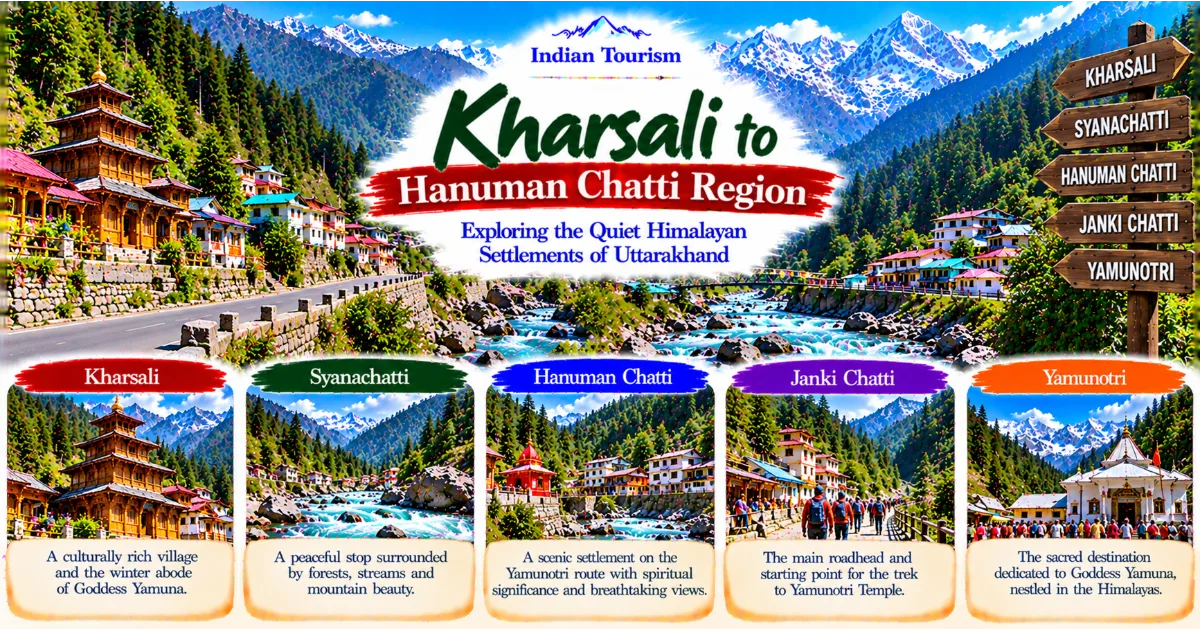
The journey through this region brings visitors into a landscape shaped by the upper Yamuna valley, forested slopes, winding mountain roads, and settlements that support residents, pilgrims, and travellers. Places such as Kharsali, Hanuman Chatti, Janki Chatti, and Syanachatti have their own identities and should not be treated as interchangeable stops. Each belongs to the wider geography of the Yamunotri route, but their location, cultural significance, facilities, and role in a journey may differ.
This article explores the broader travel experience of the Yamunotri corridor, focusing on how visitors can understand the region through its settlements, mountain environment, pilgrimage traditions, and practical travel considerations. Rather than presenting the area as a single resort destination, it considers the connected landscape that makes a journey through this part of Uttarakhand meaningful.
The region is especially relevant for travellers who enjoy scenic road journeys, cultural exploration, religious tourism, and the quieter experiences of mountain travel. Visitors may encounter river valleys, traditional homes, roadside markets, changing vegetation, and views that shift with the weather and elevation. The appeal lies not only in reaching the Yamunotri Temple but also in understanding the landscape and communities encountered along the way.
Travellers should plan carefully because Himalayan access can change with the seasons. Road conditions, transport services, accommodation availability, weather, and pilgrimage arrangements may vary. Confirming current details before departure is essential, especially for anyone travelling with children, older family members, or a fixed schedule.
Understanding the Geography of the Yamunotri Region
The Yamunotri region lies in the Garhwal Himalayas of Uttarakhand. Its terrain is characterised by steep slopes, river valleys, forested hills, and settlements connected by roads that follow the natural contours of the mountains. Unlike a flat landscape, where transport routes can often be planned in straight lines, Himalayan travel must account for changes in elevation, narrow bends, unstable slopes, streams, and weather-related disruptions.
The upper Yamuna valley provides the geographical framework for much of the journey. Water flowing from higher elevations has shaped the valley over long periods, while the surrounding mountains influence where settlements can develop and how roads are built. Villages and roadside communities tend to occupy locations where the terrain allows buildings, transport access, and daily activities to coexist.
This relationship between geography and settlement is visible throughout the route. Buildings may be arranged along narrow roads, terraced land may occupy available slopes, and bridges connect areas separated by streams or the river. The landscape determines not only what travellers see but also how local people organise their daily lives.
The region's elevation and weather patterns also influence the travel experience. Conditions can change significantly between lower valleys and higher sections of the route. A sunny morning may be followed by cloud cover, while rainfall can affect visibility and road access. During colder months, temperatures may fall sharply, particularly at night and in higher areas.
Visitors should therefore treat the Yamunotri corridor as a mountain environment rather than a conventional sightseeing circuit. Distances, travel times, and access arrangements need to be assessed realistically. Allowing flexibility makes the journey more comfortable and reduces the pressure to continue when conditions are unfavourable.
The Importance of Small Settlements Along Mountain Routes
Small settlements are a fundamental part of Himalayan travel. They provide places where residents live and work, where travellers may obtain food or basic supplies, and where roads connect communities that would otherwise be difficult to reach. Their importance becomes particularly clear during pilgrimage seasons, when large numbers of people move through mountain corridors towards sacred destinations.
The Yamunotri route contains several settlements with different roles in the wider journey. Some are associated with local religious traditions, while others are more closely connected with transport, accommodation, or access to higher areas. Their character depends on geography, history, available facilities, and the pattern of movement through the region.
Travellers should resist the temptation to view these places merely as stops for photographs. A settlement may look quiet to a passing visitor while supporting a complex network of daily activities. Residents may be managing shops, farming, transport services, construction, household responsibilities, or seasonal tourism work. The local economy often depends on several activities rather than tourism alone.
A thoughtful visitor can learn a great deal simply by observing how buildings are arranged, how people use public spaces, and how the road influences local activity. A short stop for tea or a meal may provide an opportunity to appreciate local hospitality and gain useful information about the journey ahead.
It is important to respect the privacy of residents. Ask permission before photographing people or entering private spaces, avoid obstructing narrow roads, and follow local instructions. Responsible behaviour helps ensure that tourism remains a positive experience for both visitors and the communities they encounter.
Kharsali: Cultural Heritage in the Yamunotri Region
Kharsali is one of the settlements associated with the Yamunotri pilgrimage landscape. It is particularly connected with the religious traditions surrounding Goddess Yamuna and the seasonal movement of the deity's palanquin when the main temple is closed during winter conditions. The village's religious importance gives it a distinct place within the broader cultural geography of the region.
For visitors interested in the relationship between faith and mountain life, Kharsali offers an opportunity to explore how pilgrimage traditions extend beyond the main temple itself. Sacred places are often connected through routes, seasonal ceremonies, local customs, and the communities responsible for preserving religious practices. Understanding these connections can provide a deeper appreciation of Uttarakhand's spiritual heritage.
The surrounding mountain environment also shapes the experience of visiting Kharsali. The settlement belongs to a landscape where roads, slopes, vegetation, and weather influence movement and daily life. Travellers may appreciate the village not only for its religious associations but also for its position within the upper Yamuna region.
Visitors should approach religious sites respectfully. Follow local guidance, observe any restrictions on photography, and avoid treating ceremonies as performances created for tourists. Religious traditions are part of the living culture of the community and deserve sensitivity.
Before planning a visit, confirm current road access, local arrangements, and any seasonal changes affecting the village or its religious sites. Weather and pilgrimage schedules can influence what visitors are able to experience.
Hanuman Chatti: A Settlement on the Mountain Journey
Hanuman Chatti is associated with the Yamunotri route and forms part of the network of mountain settlements encountered by travellers moving through the region. Its identity is closely connected with the road journey, the surrounding Himalayan environment, and the broader pilgrimage landscape.
For road travellers, places such as Hanuman Chatti illustrate how a mountain route depends on a sequence of settlements rather than a single destination. Each stop contributes to the practical structure of the journey, whether through transport connections, basic services, or opportunities to pause and observe the landscape.
The wider area offers the characteristic features of a Himalayan valley, including steep slopes, changing vegetation, streams, and views shaped by the weather. The scenery can vary considerably from one section of the road to another. Travellers who allow time for safe stops may notice details that would be missed when concentrating only on arrival times.
Hanuman Chatti should not automatically be treated as the starting point for every excursion in the region. Routes, access arrangements, and transport requirements may change. Visitors planning to continue towards Yamunotri should verify the current road situation and understand the established access arrangements for the final approach.
As with other small mountain settlements, visitors should confirm accommodation and facilities before relying on them. The availability of food, parking, medical services, and transport can differ according to the season and the exact location.
Janki Chatti and the Final Approach to Yamunotri
Janki Chatti is widely recognised as the principal road-access point for the final approach to the Yamunotri Temple. The journey from this area involves a mountain walk, and the experience requires preparation, suitable footwear, and an awareness of weather and physical conditions.
For many pilgrims, the walk is a central part of the religious journey. It combines physical effort with the anticipation of reaching a sacred destination. The route passes through a Himalayan environment where the terrain, changing weather, and movement of other pilgrims influence the experience.
Visitors should plan the walk according to their fitness and current official guidance. The distance, expected time, available services, and any alternative transport arrangements should be verified before departure. Conditions may vary during the pilgrimage season, and local authorities may introduce restrictions for safety or crowd management.
Travellers who are not undertaking the pilgrimage can still appreciate the broader region, but they should not assume that every part of the route is suitable for casual walking. Some sections may be steep, crowded, or exposed to weather. Staying on designated paths and following local instructions is essential.
Janki Chatti also illustrates the importance of planning accommodation and transport carefully. During busy periods, services may be in high demand. Advance arrangements can reduce uncertainty and make the journey more comfortable, especially for families and older visitors.
Syanachatti and the Wider Yamunotri Corridor
Syanachatti belongs to the wider network of settlements associated with travel through the Yamunotri region. Its relevance is best understood in the context of the road journey and the surrounding mountain environment rather than through expectations of a large collection of independent attractions.
The wider corridor contains a variety of landscapes, including forested slopes, river valleys, roadside buildings, and changing views of the surrounding hills. For visitors, the journey itself can be an important part of the experience. Moving through the valley reveals how settlements occupy available land and how roads connect places that would otherwise be separated by steep terrain.
Syanachatti may be relevant to travellers planning a road journey through the region, but current location details, transport access, and available facilities should be verified. Travellers should confirm the exact place they intend to visit rather than relying only on a name appearing in an itinerary or online listing.
The settlement also provides a useful reminder that small places do not always have extensive tourism infrastructure. Visitors should plan food, accommodation, transport, and emergency arrangements according to confirmed information. Where facilities are limited, flexibility and self-preparation become especially important.
By viewing Syanachatti as part of a connected mountain corridor, visitors can better appreciate the relationships between settlements, roads, rivers, and pilgrimage routes.
The Yamuna River and the Character of the Valley
The Yamuna River holds an important place in Indian culture, religious traditions, and geography. Its upper reaches in Uttarakhand are closely associated with the Himalayan environment and the pilgrimage traditions surrounding Yamunotri.
As the river moves through the mountain landscape, its water and tributaries influence the shape of the valley and the location of roads and settlements. Flowing water creates a changing visual element throughout the journey. The appearance of a river can differ according to rainfall, snowmelt, sunlight, and the composition of the riverbed.
Travellers may find the river particularly appealing for landscape photography. The contrast between moving water, rocky banks, green slopes, and mountain ridges can provide a strong sense of place. However, the river should never be approached carelessly. Water levels and currents can change rapidly, especially during and after rainfall.
Visitors should avoid entering unfamiliar water or standing on unstable rocks. Riverbanks may be slippery, and sections that appear shallow can still have strong currents. Safe viewpoints and established stopping places are preferable to informal locations close to the water.
The river is also part of the environment on which local communities depend. Keeping rubbish away from the water, avoiding pollution, and respecting riverbank vegetation are essential aspects of responsible tourism.
Forests and Mountain Ecology
The Garhwal Himalayas support a varied natural environment shaped by altitude, rainfall, soil, sunlight, and temperature. Depending on the elevation and local conditions, the landscape may include forests, shrubs, grasses, cultivated areas, and exposed rocky slopes.
Forests are important to mountain ecosystems because they help protect soil, influence water movement, provide habitat for wildlife, and contribute to the stability of slopes. They also shape the visual character of the region, creating a contrast between green hillsides and rocky ridgelines.
Visitors do not need to undertake a demanding trek to appreciate this environment. A short walk on a safe, established path can reveal differences in vegetation, bird calls, and the way sunlight moves across the slopes. The experience is often most rewarding when travellers slow down and observe the details of the landscape.
Nature observation should always be carried out responsibly. Avoid disturbing wildlife, collecting plants, damaging vegetation, or leaving established paths without understanding the terrain. In mountain areas, informal shortcuts can contribute to erosion and expose visitors to unnecessary hazards.
Seasonal conditions influence the appearance and accessibility of the environment. Spring may bring fresh growth, summer can offer longer daylight hours, and autumn may provide clear views in favourable weather. Monsoon rainfall can make the landscape lush but also increase the risk of landslides and road disruption. Winter may bring cold conditions and restricted access to higher areas.
Local Culture and Traditional Mountain Life
The cultural character of the Yamunotri region is closely linked to the history, geography, and religious traditions of Garhwal. Communities in mountain areas have developed ways of living that respond to the demands of steep terrain, changing seasons, and the availability of natural resources.
Traditional architecture often reflects practical requirements. Buildings may be adapted to slopes, local materials, and seasonal weather. Agricultural land, where available, is frequently shaped into terraces that make cultivation possible on uneven ground. The layout of a settlement can reveal how residents have adapted to the physical limitations of the mountains.
Religious traditions are another important part of local life. Temples, seasonal ceremonies, and pilgrimage routes connect communities with a wider spiritual landscape. These traditions may influence local activity throughout the year, particularly during the periods when pilgrims travel towards Yamunotri.
Visitors should remember that local culture is not limited to festivals or religious sites. It is also expressed through everyday work, food, language, family life, and hospitality. Respectful conversation can provide insight into the region, but residents should never feel pressured to share personal stories or participate in photographs.
Supporting local businesses where appropriate can help distribute the benefits of tourism. Buying food from local establishments, using locally operated accommodation, and treating service providers fairly are simple ways to contribute to the regional economy.
Cultural travel is most rewarding when visitors approach a place with curiosity rather than assumptions. The Yamunotri region is not simply a scenic setting but a living cultural landscape.
Photography and Scenic Stops
Photography can help travellers remember the changing landscapes and cultural details encountered along the Yamunotri route. Rather than concentrating only on distant mountain views, visitors can look for compositions that reflect the relationship between nature and everyday life.
The river, bridges, roadside settlements, forested hills, and mountain roads can all provide photographic opportunities. Early morning and late afternoon may offer softer light, although cloud cover and local weather conditions will influence the result.
Travellers should never stop in unsafe places to take photographs. Himalayan roads may be narrow, with blind bends and limited room for passing vehicles. Use designated stopping points and follow local traffic instructions.
When photographing people, ask permission where appropriate. Be especially considerate around religious ceremonies, homes, and private spaces. Some sites may have specific rules regarding photography, and these should be followed.
Drone use may be subject to aviation regulations, security requirements, local restrictions, and permissions. Confirm the applicable rules before operating a drone in the region.
A balanced photographic record can include both broad landscapes and smaller details. Images of a village street, a roadside shop, a bridge over flowing water, or terraced land can communicate the character of the region more effectively than a collection of mountain panoramas alone.
Best Time to Explore the Yamunotri Region
The best time to travel depends on the purpose of the visit, the condition of the roads, the pilgrimage schedule, and the prevailing weather. The Himalayan climate is variable, so visitors should check current forecasts and official travel information before making final arrangements.
Spring
Spring can be an appealing period for exploring the lower and middle parts of the Yamunotri corridor. Temperatures may become more comfortable, vegetation begins to develop, and the landscape can appear fresh after winter.
Visitors should confirm the official opening arrangements for the Yamunotri Temple and the availability of facilities along the route. Pleasant weather in a lower valley does not guarantee that higher sections are accessible.
Summer
Summer is a major travel period for Uttarakhand, including the Yamunotri pilgrimage route. Longer daylight hours can make road travel easier to schedule, and the mountain environment may offer a cooler setting than the plains.
The season can also bring heavy visitor movement. Accommodation, transport, and parking may be in high demand during holidays and popular pilgrimage dates. Advance planning is particularly useful for families and travellers with fixed schedules.
Monsoon
The monsoon brings rainfall that can make forests and slopes appear vibrant. However, it is also one of the most challenging periods for Himalayan road travel. Landslides, falling rocks, road damage, and sudden closures can disrupt journeys.
Travellers should check weather warnings and road conditions before setting out. If authorities advise against travel or a route becomes unsafe, postponing the journey is the sensible decision.
Autumn
Autumn can offer clear skies and appealing mountain views in favourable conditions. The landscape may appear especially dramatic after the monsoon, although weather and road conditions remain variable.
Visitors should confirm whether accommodation, transport, and pilgrimage facilities are operating according to their planned schedule. The end of a busy travel period can bring changes in service availability.
Winter
Winter may bring freezing temperatures, snowfall in higher areas, and difficult road conditions. Some services may operate on reduced schedules or close temporarily.
Anyone planning a winter journey should confirm current access arrangements, carry appropriate clothing, and allow flexibility. Do not assume that roads and facilities will remain available simply because they were operating during the previous season.
How to Reach the Yamunotri Corridor
The practical route depends on the traveller's starting point and intended destination. Dehradun, Rishikesh, and Haridwar are commonly used as gateways for road journeys into Uttarakhand, although the most suitable connection varies according to transport availability and the wider itinerary.
From these transport hubs, travellers continue by road into the Garhwal Himalayas. The route includes winding mountain roads, changes in elevation, and sections where progress may be affected by traffic, weather, maintenance, or local restrictions.
By Road
Road transport is the main way to reach settlements along the Yamunotri corridor. Travellers may use private vehicles, hired taxis, or available public transport services.
Private vehicles offer flexibility, but drivers should be comfortable with mountain roads and should avoid rushing. Public transport can be economical, although schedules and onward connections should be confirmed locally.
Travellers intending to visit several settlements should verify the sequence and exact locations before departure. Place names can be presented differently in maps and travel listings, and the availability of services may vary.
By Train
Visitors arriving by train may use railway connections serving Haridwar, Rishikesh, or Dehradun before continuing by road. The most convenient station depends on the origin city and current train schedules.
Allow sufficient time for the road journey after arrival. A late train arrival followed by a long mountain drive may be tiring, particularly for visitors unfamiliar with the region.
By Air
Travellers arriving by air may consider the airport serving Dehradun, depending on current flight schedules and their starting point. A road journey is still required to reach the Yamunotri region.
Confirm onward transport before travelling and avoid planning an itinerary that depends on unrealistic transfer times. Delays can occur at airports, on highways, and on mountain roads.
Accommodation and Food Planning
Accommodation options in the Yamunotri region vary by settlement and season. Some places along the route have guesthouses, lodges, and basic accommodation, while others may offer limited facilities. Visitors should not assume that a specific settlement has a particular hotel or restaurant without confirming current availability.
Before booking a property, ask about its exact location, road access, room availability, heating, hot water, meals, parking, mobile connectivity, and cancellation arrangements. These details can be especially important during colder periods and busy pilgrimage dates.
Food options may include simple local meals, tea, snacks, and familiar North Indian dishes. Availability can vary, and visitors with dietary restrictions should communicate their needs in advance where possible.
Carry essential medicines, drinking water, and snacks for longer road journeys. Do not depend entirely on finding a particular food item or medical supply at a small roadside settlement.
Responsible waste management is equally important. Use available waste collection facilities and carry rubbish until it can be disposed of properly. Avoid leaving plastic packaging, bottles, or food waste beside roads and rivers.
A Suggested Three-Day Travel Plan
A three-day itinerary can provide a general framework for exploring the Yamunotri corridor, but the exact plan should be adapted to the starting point, road conditions, and purpose of travel.
Day One: Travel into the Mountains
Begin the road journey from the chosen transport gateway and allow enough time for rest stops and possible delays. Focus on reaching confirmed accommodation safely rather than attempting to visit every settlement along the way.
If daylight and conditions permit, enjoy a short walk in an accessible area. Observe the changing landscape, river valley, and mountain settlements without rushing.
Day Two: Explore the Settlements and Pilgrimage Landscape
Use the second day to explore accessible parts of the route. Depending on the verified itinerary, this may include cultural and scenic stops associated with Kharsali, Hanuman Chatti, Syanachatti, or Janki Chatti.
Do not assume that all these places can be visited efficiently in a single day. Confirm their locations and the time required to travel between them. If pilgrimage is the main purpose, prioritise the temple journey and allow adequate time for the walking route.
Day Three: Continue the Journey or Return
Depending on the plan, use the final day for the pilgrimage, additional sightseeing, or the return journey. Keep enough time for the drive back to the chosen transport hub.
Avoid scheduling important onward travel too tightly. Mountain road delays can affect train and flight connections, so a buffer is useful for a comfortable trip.
This itinerary is a general planning guide, not a guarantee of current access or operating arrangements. Verify local information before departure.
Responsible Tourism and Environmental Protection
Tourism can provide income for mountain communities, but it can also increase pressure on roads, water supplies, waste collection, and fragile natural environments. Responsible behaviour helps reduce these effects.
Visitors should carry reusable water bottles where practical, avoid unnecessary single-use plastic, and never throw rubbish into rivers or forests. Small items can accumulate rapidly along busy routes, particularly where waste collection facilities are limited.
Stay on established paths and avoid damaging vegetation. Mountain slopes can be vulnerable to erosion, and informal shortcuts may worsen the problem. Do not disturb wildlife or remove plants, stones, or other natural materials.
Respect local residents and religious traditions. Ask before photographing people, follow instructions at sacred sites, and avoid blocking roads or access points. Small settlements are working places, not open-air attractions created solely for visitors.
Where suitable services are available, consider supporting locally operated shops, accommodation, and food businesses. Fair spending can help ensure that tourism benefits the communities that maintain and support the route.
The most important principle is to place safety above the itinerary. Weather, landslides, road closures, and river conditions can change rapidly. Travellers should be willing to postpone or alter plans when conditions demand it.
Who Should Explore This Region?
The Yamunotri corridor can appeal to several kinds of travellers. Pilgrims may value its religious significance, while road-trip enthusiasts may enjoy the changing mountain scenery and the experience of travelling through smaller settlements.
Nature lovers can appreciate the river valley, forested slopes, and seasonal changes in vegetation. Photographers may find opportunities to capture the relationship between mountain landscapes and local life. Travellers interested in culture can learn about the religious traditions and everyday routines that shape the region.
Families may include the area in a wider Uttarakhand trip if the route, facilities, and walking requirements suit their needs. They should verify accommodation and transport arrangements carefully, particularly when travelling with young children or older relatives.
Visitors seeking nightlife, extensive shopping, or large resort facilities may find that smaller mountain settlements offer a different kind of experience. Their value lies in their natural setting, cultural context, and role within the wider journey.
The region is best suited to travellers who appreciate patience, flexibility, and the quieter details of mountain travel. It rewards those who look beyond a checklist of attractions and take time to understand the places they encounter.
Conclusion: Discovering Uttarakhand Through Its Connected Landscapes
The Yamunotri region demonstrates why Uttarakhand should be explored as a connected cultural and geographical landscape rather than as a collection of famous destinations. Kharsali, Hanuman Chatti, Janki Chatti, and Syanachatti have different roles within the wider area, but each helps illustrate the relationship between mountain settlements, pilgrimage traditions, roads, rivers, and everyday life.
For travellers, the experience can extend beyond reaching the Yamunotri Temple. The journey offers opportunities to observe changing landscapes, learn about local communities, appreciate the river valley, and understand the challenges of travelling through the Himalayas.
Good planning remains essential. Confirm the exact location of each stop, verify road and weather conditions, and arrange accommodation and transport according to current information. Allow extra time and avoid depending on assumptions about facilities in smaller settlements.
Above all, travel with respect for the people and environment that make the region distinctive. By reducing waste, following local guidance, supporting responsible tourism, and placing safety first, visitors can help preserve the character of the Yamunotri corridor.
The quieter settlements of Uttarakhand remind us that a memorable journey is not defined only by the final destination. It is also shaped by the landscape along the way, the communities that welcome travellers, and the moments of discovery that occur between one place and the next.
#IndianTourism #UttarakhandTourism #Yamunotri #Kharsali #HanumanChatti #JankiChatti #Syanachatti #Uttarkashi #GarhwalHimalayas #HimalayanTravel #MountainVillages #PilgrimageTourism #ResponsibleTourism #ExploreUttarakhand #IncredibleIndia
