A Quiet Corner of the Yamuna Valley
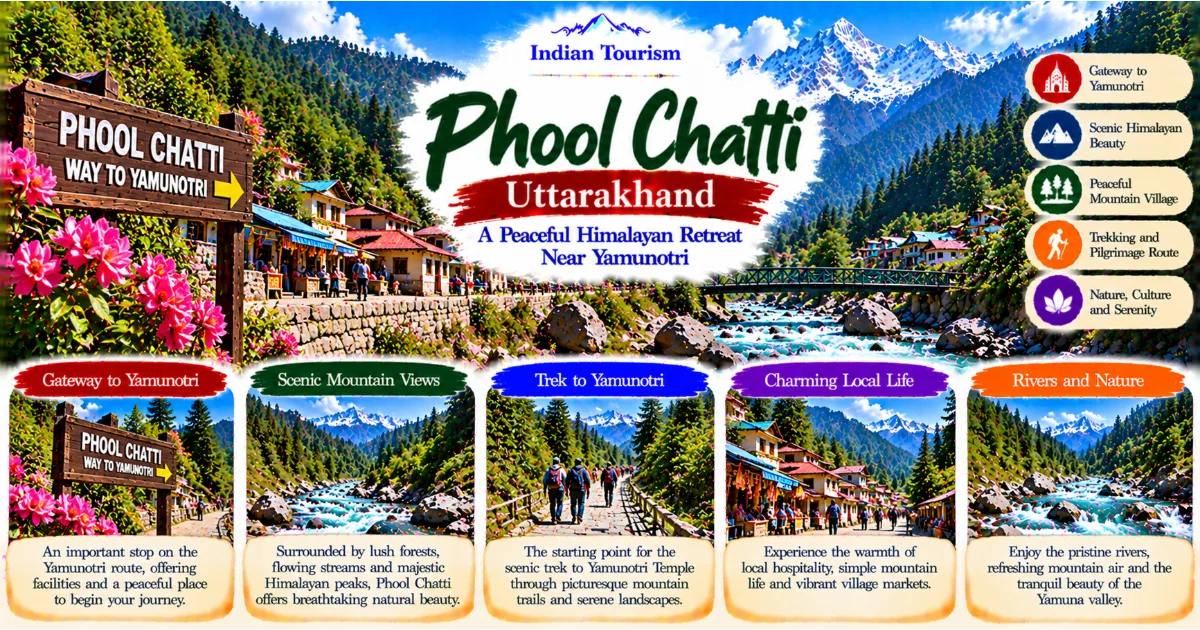
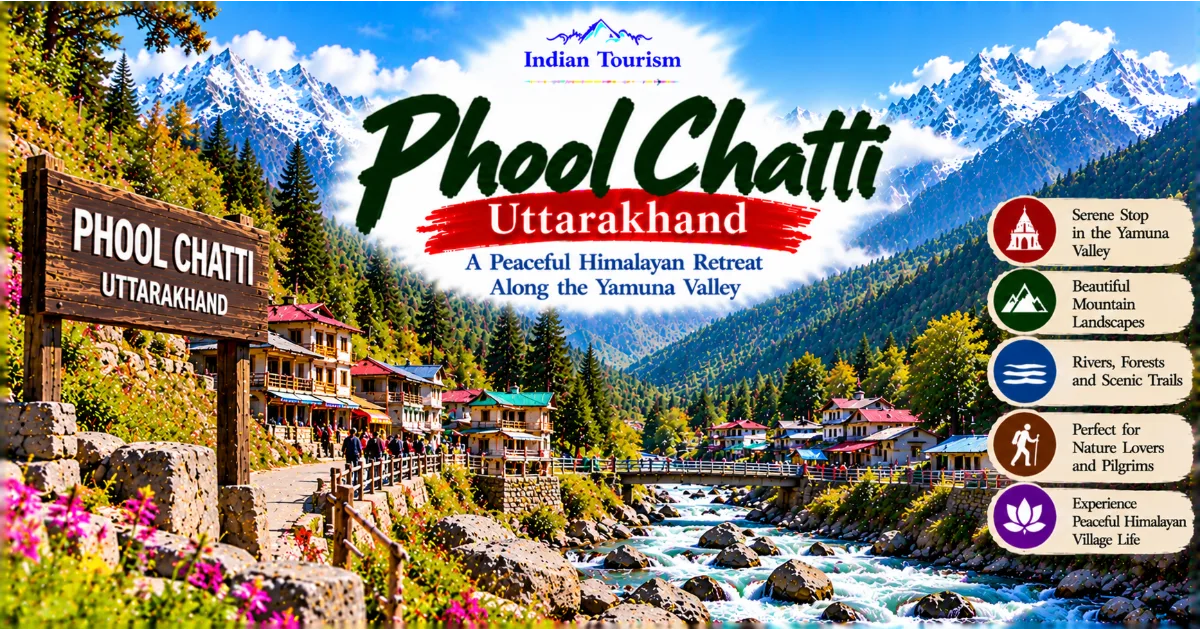
Uttarakhand is widely known for its sacred temples, snow-covered mountains, forested valleys, and rivers that have shaped the spiritual and cultural life of the Himalayas for centuries. While famous destinations such as Mussoorie, Nainital, Kedarnath, and Badrinath attract large numbers of visitors, the state also contains smaller settlements and quiet mountain locations that offer a different kind of travel experience. Phool Chatti, situated in the wider Yamuna valley region, is one such destination worth understanding as part of a journey through the Himalayan landscapes of Uttarakhand.
The name Phool Chatti is associated with the mountain settlement and the surrounding pilgrimage landscape. In the broader Uttarakhand region, the word chatti has historically been used for stopping places along routes travelled by pilgrims, traders, and local communities. Such places developed around the practical needs of people moving through the mountains. They offered opportunities to rest, find food or shelter, and prepare for the next stage of a journey. This historical pattern helps explain why small settlements and stopping points are important parts of Himalayan travel culture.
Phool Chatti is best approached as part of the wider exploration of the Yamuna valley rather than as an isolated major tourist attraction. The surrounding region is shaped by mountain roads, steep slopes, streams, forested sections, and settlements that depend on the challenging geography of the Himalayas. Visitors interested in local life, traditional travel routes, and quieter mountain scenery may find the wider area rewarding, especially when they travel with realistic expectations and respect for the landscape.
The Yamuna valley has a strong association with pilgrimage because the river is connected with the sacred destination of Yamunotri. The pilgrimage route brings travellers through a landscape where religious practices, local livelihoods, and mountain environments are closely connected. Small settlements along the route form part of this larger experience, even when they are not the primary destination of a pilgrimage.
Continue Reading
Phool Chatti provides an opportunity to consider the human side of Himalayan travel. Behind every mountain road and pilgrimage route are communities that maintain homes, provide services, manage daily responsibilities, and adapt to seasonal changes. Their lives are shaped by the same weather, terrain, and transport conditions that visitors experience during their journeys.
For travellers exploring Uttarakhand, the value of a place like Phool Chatti lies in taking time to understand the region beyond its best-known landmarks. Rather than treating the Himalayas only as a backdrop for photographs, visitors can learn about the settlements, routes, and traditions that give the landscape its character.
Understanding the Meaning of Chatti in Himalayan Travel
The term chatti has an important place in the historical geography of the Himalayan region. In many parts of Uttarakhand, chattis developed as resting points along routes used by pilgrims and other travellers. These stopping places helped people divide long journeys into manageable stages, particularly when travel involved walking through difficult terrain.
Before modern roads and motor vehicles transformed mountain transportation, journeys between settlements could take considerable time. Pilgrims often travelled on foot, carrying their belongings and relying on local knowledge to navigate mountain paths. A route through the hills required planning around daylight, weather, access to water, and the availability of shelter. Stopping places therefore played an important role in making journeys possible.
The development of chattis reflected the practical needs of travellers. Some grew around small groups of houses, places to obtain food, or facilities that provided temporary shelter. Others became associated with religious routes and the movement of pilgrims toward temples and sacred rivers. Their importance depended on the route they served and the needs of the people who used them.
As transportation changed, some historic stopping places developed into larger settlements, while others remained relatively small. Roads altered the way people travelled, allowing journeys that once required extended walking to be completed more quickly. Yet the names and local identities of many places continued to preserve traces of their earlier role.
This historical background helps visitors understand the wider cultural landscape around Phool Chatti. A small mountain settlement is not simply a collection of buildings beside a road. It may represent a point in a much older network of movement through the Himalayas, connecting villages, pilgrimage destinations, markets, and river valleys.
Visitors should distinguish between general historical patterns and the specific history of an individual settlement. The use of the word chatti across Uttarakhand does not mean that every place developed in exactly the same way. Local histories can differ, and detailed claims about the origin of Phool Chatti should be supported by reliable regional records or local historical accounts.
Nevertheless, understanding the broader tradition of mountain stopping places provides a useful starting point for appreciating how communities and travel routes developed together in Uttarakhand.
The Geographic Setting of the Yamuna Valley
The Yamuna valley forms part of the dramatic Himalayan landscape of Uttarakhand. The region contains steep mountain slopes, narrow valleys, forested hillsides, river channels, and settlements positioned according to the available terrain. These features influence how people travel, where they build homes, and how they organize everyday life.
Mountain geography differs significantly from the plains. Roads must follow the contours of the hills, often winding around slopes and crossing streams. Available land for construction and agriculture can be limited, and settlements may occupy narrow terraces or relatively level sections beside a river or road.
The Yamuna and its tributaries form an important part of this landscape. Water supports local communities, contributes to the wider river system, and influences the development of settlements. The sound of flowing water, the presence of rocky riverbanks, and the changing appearance of the valley contribute to the experience of travelling through the region.
Vegetation varies with elevation, exposure, rainfall, and human activity. Forested sections may contain a mixture of trees, shrubs, and smaller plants, while cultivated areas appear where the terrain and soil permit farming. Higher slopes and exposed areas can have a different appearance from the lower valley.
The landscape also changes throughout the year. During wetter periods, vegetation may appear greener and streams may carry more water. Clearer weather can reveal distant ridges, while clouds may settle over the mountains and reduce visibility. Cold conditions can affect higher areas even when lower settlements remain comparatively comfortable.
These changes are important for visitors planning a trip. A destination that appears straightforward on a map may require more time to reach because of winding roads, narrow sections, and variable weather. Journey times in mountain regions should therefore be treated as estimates rather than guarantees.
Phool Chatti can be understood within this geographic setting as part of a wider network of settlements and routes in the Yamuna valley. Exploring the area offers a chance to appreciate how the Himalayas influence movement, settlement, and the relationship between people and their environment.
The Cultural Connection Between Settlements and Pilgrimage
Pilgrimage has played a major role in shaping the cultural landscape of Uttarakhand. Sacred rivers, mountain temples, traditional routes, and seasonal religious observances have encouraged generations of people to travel through the region. Along these routes, settlements have supported the practical needs of pilgrims and other travellers.
The Yamunotri pilgrimage is particularly important to the Yamuna valley. Yamunotri is one of the four destinations associated with the Char Dham pilgrimage in Uttarakhand, alongside Gangotri, Kedarnath, and Badrinath. Its religious significance attracts visitors from across India, especially during the period when the temple is open for the pilgrimage season.
Pilgrimage routes create movement through places that might otherwise receive fewer visitors. Travellers need transport, accommodation, food, supplies, and information about local conditions. Small settlements along the route can therefore become important service points, even if they are not major destinations in their own right.
The influence of pilgrimage extends beyond commercial activity. Routes can connect communities through shared traditions, seasonal employment, religious stories, and the movement of visitors from different parts of the country. Local residents may have generations of experience supporting travellers and understanding the challenges of the mountain environment.
However, it is important not to assume that every settlement near a pilgrimage route has the same religious history or role. The specific relationship between Phool Chatti and local pilgrimage practices should be understood through reliable local information. The wider regional context provides useful background, but individual historical claims require appropriate evidence.
For visitors, the cultural value of exploring smaller settlements lies in observing the relationship between travel and everyday life. Shops, homes, road crossings, and local services are part of the living environment. Travellers should approach these places respectfully and remember that they are visiting communities where people live and work, not simply passing through an outdoor attraction.
A thoughtful journey through the Yamuna valley can reveal how pilgrimage traditions depend on a wider network of people and places. The main temple may be the focus of a religious journey, but the settlements along the way help make that journey possible.
Everyday Life in a Himalayan Settlement
Life in a Himalayan settlement is shaped by the opportunities and limitations of the surrounding geography. Residents must adapt to steep terrain, seasonal weather, transport conditions, and the availability of land and services. The details vary from one village or settlement to another, but the mountain environment influences many aspects of daily life across the region.
Road access can determine how easily people obtain supplies, travel for education, reach healthcare facilities, and connect with nearby towns. When roads are disrupted by landslides or heavy rainfall, journeys may take longer or become temporarily impossible. These challenges affect residents as well as tourists.
The local economy may combine several activities, including agriculture, small shops, transport services, construction, hospitality, and other forms of employment. In areas influenced by pilgrimage, seasonal visitors can create additional demand for accommodation, meals, transport, and essential supplies.
Tourism can provide useful income, but seasonal dependence can also create uncertainty. Businesses may experience a busy period when the pilgrimage route is active and a quieter period during the off-season. Weather disruptions can affect visitor numbers, making it important for communities to balance tourism with other sources of livelihood.
Traditional knowledge remains valuable in this environment. Residents often have practical experience of local roads, changing weather, seasonal patterns, and the location of essential services. Visitors can benefit from local guidance, especially when planning travel through unfamiliar mountain terrain.
At the same time, travellers should avoid making assumptions about local lifestyles based only on brief observations. A roadside settlement may appear quiet during the day but have important economic or social connections beyond the immediate area. Understanding local life requires patience and respect.
Visitors who stop in or pass through Phool Chatti should behave considerately. They should avoid blocking access to homes or businesses, ask permission before photographing people, and purchase goods or services only through legitimate arrangements.
Appreciating a mountain destination means recognizing the people who sustain it. The landscape may attract visitors, but the communities living within it are essential to its identity and continued development.
The Natural Environment and Its Importance
The Yamuna valley contains a range of natural environments shaped by elevation, rainfall, river systems, vegetation, and human settlement. Protecting these environments is important for local livelihoods, biodiversity, water quality, and the long-term sustainability of tourism.
Mountain rivers are particularly sensitive to changes in water flow and the condition of their surrounding catchments. Rainfall, snowmelt, and the shape of the terrain influence how quickly water moves through the valley. During intense rainfall, streams can rise rapidly and carry sediment, branches, and loose material downstream.
The slopes around settlements may contain forested areas, grass-covered sections, exposed rock, and land modified for agriculture or construction. Vegetation helps stabilize some soils and provides habitat for wildlife. Removing vegetation or disturbing unstable slopes can increase environmental risks, although the effect depends on local geology and conditions.
Tourism can create pressure through waste, traffic, construction, and demand for water. Even a small amount of litter becomes a problem when it accumulates along roads, trails, and waterways. Plastic waste is especially difficult to manage in remote mountain areas where collection and transport systems may be limited.
Visitors can reduce their impact by carrying reusable water bottles where safe drinking water is available, avoiding unnecessary packaging, and disposing of waste through authorized facilities. They should never throw rubbish into streams or leave it beside roads.
It is also important to remain on established paths and avoid entering fragile or restricted areas. A viewpoint may look more attractive from a particular rock or slope, but moving off the path can create safety risks and damage vegetation.
Respect for wildlife is another part of responsible travel. Animals should not be approached, fed, or disturbed for photographs. Food waste should be secured and disposed of properly rather than left in the environment.
The natural environment of the Yamuna valley is not merely scenery. It supports communities, shapes travel routes, and forms part of the region's cultural identity. Responsible tourism helps protect these connections for residents and future visitors.
Scenic Experiences in the Phool Chatti Region
Travellers exploring the wider Phool Chatti area can appreciate the changing scenery of the Yamuna valley. The experience is less about visiting a single famous viewpoint and more about observing the landscape as it unfolds along the mountain route.
One of the most distinctive features of Himalayan travel is the changing relationship between the road and the terrain. At one point, the route may follow a river; farther along, it may curve around a steep slope or pass through a section of forest. Each change offers a different perspective on the valley.
The river provides a natural focus for observation. Its appearance varies according to water levels, light, and the material carried downstream. In some places, the water may move rapidly through rocky channels, while wider sections create a more open view of the surrounding landscape.
Vegetation adds another layer of interest. Trees and shrubs create patterns along slopes, while cultivated land appears where communities have been able to adapt the terrain for farming. Buildings and roads reveal how people have established routes through a challenging environment.
Clouds and changing light can alter the atmosphere of the valley within minutes. A clear morning may offer distant views, while later cloud cover can soften the outlines of the hills. Rain can make the landscape appear vivid, but it also requires greater caution when walking or travelling by road.
Visitors should choose safe places to pause and enjoy the scenery. Stopping on narrow road sections can create hazards for drivers and pedestrians. Use designated stopping areas wherever possible and follow local instructions.
Photography can record the changing landscape, but travellers should also take time to experience the setting without a camera. Listening to the river, observing the mountains, and noticing the rhythm of local movement can provide a more complete understanding of the region.
Local Food and Mountain Hospitality
Food is an important part of travel in Uttarakhand. The state's culinary traditions reflect regional ingredients, climate, agriculture, and the practical demands of mountain life. Visitors travelling through the Yamuna valley may encounter simple meals, tea stalls, local eateries, and food prepared for pilgrims and road travellers.
The availability of specific dishes varies by settlement and season. Visitors should not assume that every local speciality is available in every place. Asking residents or accommodation providers about nearby food options is often the most practical approach.
Traditional foods across Uttarakhand include preparations made with lentils, grains, seasonal vegetables, and locally available ingredients. Some well-known regional dishes include mandua roti, preparations made from local pulses, and simple vegetable dishes served with rice or bread. The exact menu in the Phool Chatti area will depend on the establishments operating at the time of travel.
Food along mountain routes often serves a practical purpose. Travellers need meals that are accessible and convenient before or after long journeys. Tea and light refreshments can provide a welcome break, especially in cool weather.
Visitors should choose establishments that maintain appropriate food hygiene and provide clear information about ingredients. Those with allergies or dietary restrictions should ask questions before ordering.
Supporting local food businesses can contribute to the regional economy. Buying meals and refreshments from legitimate local establishments helps create income for residents and may provide travellers with opportunities to learn about local tastes.
Hospitality in mountain regions often includes practical guidance as well as food and accommodation. Residents may provide useful information about road conditions, weather, and nearby services. Travellers should treat this assistance respectfully and avoid expecting unpaid support beyond what someone is comfortable offering.
Enjoying local food is one way to connect with a destination, but it should be approached with curiosity rather than assumptions. The food available in a small settlement may be shaped as much by its location and daily needs as by regional culinary traditions.
Best Time to Explore the Yamuna Valley
The most suitable time to explore the wider Phool Chatti region depends on the weather, road conditions, the purpose of the visit, and the current arrangements for travel toward Yamunotri.
Spring
Spring generally brings changing temperatures and renewed vegetation across many parts of Uttarakhand. The landscape can become more colourful as plants grow and the weather gradually becomes more suitable for outdoor travel.
Visitors should still prepare for cool conditions, especially in the morning and evening. Higher elevations can remain cold, and sudden weather changes are possible.
Early Summer
Early summer is often a popular period for travel through the Yamuna valley because of the pilgrimage season and the increasing accessibility of the wider region. Visitors may encounter more traffic and greater demand for accommodation and transport.
Planning ahead is useful during busy periods. Confirm road conditions and allow enough time for delays.
Monsoon
The monsoon season requires particular caution. Heavy rainfall can trigger landslides, rockfalls, and road disruptions. Rivers and streams may rise quickly, and paths can become slippery.
Travellers should monitor official weather information and local road advisories. Avoid unnecessary journeys during severe weather and never cross flooded roads or streams.
Autumn
Autumn can provide cooler temperatures and periods of clear visibility. Many travellers appreciate the mountain scenery during stable weather, although conditions can vary from year to year.
Confirm that the destinations you intend to visit are accessible and that accommodation is available. If you plan to continue toward Yamunotri, check the official pilgrimage schedule rather than assuming that the temple remains open throughout autumn.
Winter
Winter conditions vary according to elevation. Higher sections of the Himalayan region can experience severe cold, snow, and restricted access, while lower settlements may remain accessible.
Visitors should not assume that every route or facility will operate normally during winter. Seek current local information and avoid travelling into areas where conditions are unsafe.
For a visit that includes the Yamunotri pilgrimage, the official opening schedule is more important than a general seasonal recommendation. Check the dates and current travel arrangements before finalizing plans.
How to Reach the Phool Chatti Area
Travel arrangements depend on the exact location intended by the visitor, the current condition of the road network, and whether the journey is part of a broader Yamunotri pilgrimage.
By Road
Road travel is the main way to reach the wider Yamuna valley. Travellers typically approach through the mountain road network connecting towns and settlements in Uttarkashi district.
The route can involve sharp bends, narrow sections, steep slopes, and changing traffic conditions. Journey times depend on the starting point, weather, roadwork, and the number of vehicles travelling through the area.
Drivers should avoid rushing and should stop only where it is safe to do so. Before leaving, confirm the condition of the intended route and identify suitable places to rest.
By Train
There is no railway station within the small mountain settlements of the upper Yamuna valley. Travellers arriving by train must continue by road from a suitable station serving the wider region.
The most practical connection depends on the starting city and the available transport. Allow sufficient time for the mountain journey and avoid scheduling a demanding walk immediately after a long train and road trip.
By Air
Travellers arriving by air can use an airport serving the wider Dehradun region and continue by road. The road journey through the mountains can be lengthy, so it is important to plan around daylight, weather, and the time needed for rest.
Flight arrival times should not be treated as a guarantee that the mountain journey can be completed within a fixed period. Delays and road conditions may affect the schedule.
Continuing Toward Yamunotri
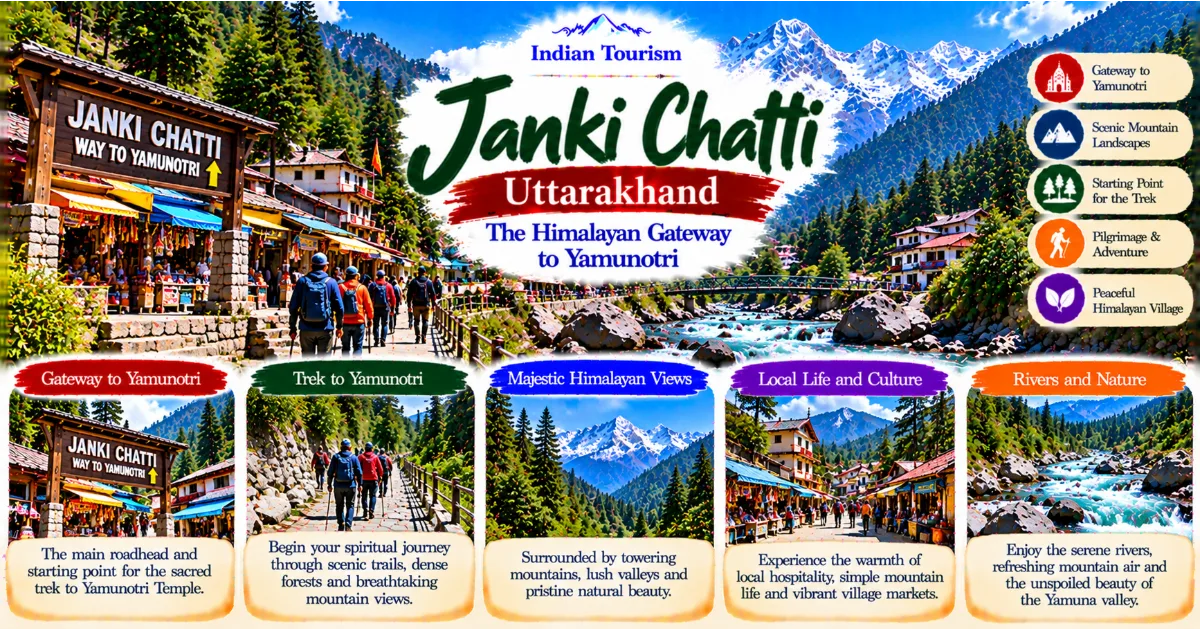
Travellers who intend to continue toward Yamunotri should confirm the current authorized route and the arrangements for reaching Janki Chatti. The uphill journey from Janki Chatti requires time and physical effort.
Do not rely on an assumed distance or travel time without checking current local information. The condition of the route and available transport options may change.
Because Phool Chatti is a relatively small place name and similar names can occur in the Himalayan region, visitors should confirm the exact location with a reliable local source before booking accommodation or arranging transport. This avoids confusion between places with similar names.
Suggested One-Day Travel Plan
A one-day visit can be suitable for travellers already staying in the wider Yamuna valley, provided that road conditions and the intended destinations allow enough time.
Begin by checking the weather forecast and road advisories. Confirm the location you intend to visit and ask a reliable local source about access, transport, and any restrictions.
Travel through the valley at a comfortable pace. If you stop in a settlement, use safe stopping areas and avoid blocking access to homes or businesses. Take time to observe the landscape and learn about the local setting.
If you intend to continue toward Yamunotri, ensure that the pilgrimage route is open and that you have enough time for the uphill journey. Do not combine a long road trip with a demanding walk if the schedule leaves insufficient time for rest or a safe return.
Allow time for meals and breaks. Mountain travel can take longer than expected, particularly when traffic is heavy or weather changes.
Return before conditions become difficult and avoid driving while exhausted. If the route is disrupted or weather deteriorates, adjust the plan rather than attempting to complete every stop.
A good one-day itinerary should prioritize safety and understanding over the number of locations visited. The value of the journey lies in experiencing the region responsibly rather than rushing from one place to another.
Suggested Two-Day Travel Plan
A two-day journey provides more flexibility and may be more comfortable for visitors travelling from outside the immediate region.
On the first day, travel to a suitable base in the Yamuna valley. Depending on the route and available accommodation, this could be a larger settlement that offers transport connections, food, and places to rest.
Use the first day to learn about local conditions. Confirm the location of Phool Chatti, check the weather, and ask about road access. If your journey includes Yamunotri, confirm the official opening schedule and the current arrangements for reaching the pilgrimage route.
On the second day, explore the intended area without rushing. Spend time observing the landscape, learning about local settlement patterns, and visiting accessible places that fit your schedule.
If the pilgrimage route is open and the physical demands are appropriate, you may continue toward Yamunotri according to the available arrangements. However, a visit to the temple should not be treated as a short detour if the journey requires a substantial uphill walk.
Keep the schedule flexible. If rainfall, road conditions, or transport delays affect the journey, postpone optional stops rather than travelling under unsafe conditions.
Before departure, check that you have not left waste behind and that any local services you used have been paid for appropriately. Responsible travel includes consideration for residents as well as the environment.
Responsible Tourism and Respect for Local Communities
Responsible tourism is essential in the Himalayan region because roads, settlements, water systems, and natural habitats can be vulnerable to pressure from large numbers of visitors.
The first responsibility is to respect the people who live in the area. Do not photograph residents at close range without permission, enter private property without consent, or obstruct access to homes and businesses.
Visitors should also respect local religious customs. If a settlement contains a shrine or a place used for worship, observe any rules concerning footwear, photography, clothing, and offerings.
Waste management is another important consideration. Carry rubbish with you until it can be disposed of through an appropriate facility. Avoid leaving plastic packaging, bottles, food waste, or other materials beside roads and streams.
Waterways should remain free from pollution. Do not throw rubbish into the river or wash objects in places where doing so could affect water quality.
Support local businesses when practical. Using local accommodation, purchasing meals, and arranging transport through legitimate providers can help keep some tourism income within the region.
Visitors should also be realistic about local infrastructure. Small settlements may not offer the same range of services available in larger towns. Travellers should plan accordingly and avoid placing unreasonable demands on residents.
Safety must remain a priority. Mountain roads can be hazardous, and weather may change rapidly. Follow official instructions, remain on established paths, and avoid approaching unstable slopes or fast-flowing water.
Responsible travel is not simply about minimizing harm. It also involves learning about the destination, listening to local knowledge, and recognizing that the region is a living environment rather than a temporary recreational space.
Who Should Explore Phool Chatti?
Phool Chatti and the wider Yamuna valley may interest travellers who appreciate quieter mountain settings and want to understand the geography and culture surrounding Uttarakhand's pilgrimage routes.
Cultural travellers may enjoy learning about the historical role of stopping places and the relationship between settlements and mountain transportation. Such visitors should be prepared to seek local information because the history of a small settlement may not be extensively documented in general travel guides.
Nature lovers may appreciate the river valley, mountain slopes, changing weather, and vegetation. The experience is best suited to people who enjoy observing landscapes rather than expecting extensive tourist facilities.
Pilgrims travelling toward Yamunotri may pass through or explore parts of the wider valley as part of their journey. They should confirm the exact route and current local arrangements before planning a stop.
Photographers can find opportunities to document the relationship between roads, settlements, rivers, and mountain scenery. They should always prioritize safe stopping points and respect the privacy of residents.
Families can explore the region if the travel arrangements are suitable for everyone. Roads may be winding, facilities may be limited in smaller settlements, and journey times can be longer than expected.
Travellers seeking luxury shopping, large entertainment complexes, or extensive nightlife may find the area less suitable. Its appeal is more closely associated with mountain scenery, local life, and the experience of travelling through the Himalayan landscape.
Above all, visitors should approach the destination with curiosity and flexibility. Smaller settlements often reward travellers who take time to observe rather than expecting every location to offer a major attraction.
Final Thoughts: Discovering the Human Side of Uttarakhand
Phool Chatti offers an opportunity to think about the quieter places that form part of Uttarakhand's wider Himalayan landscape. While major temples and famous hill stations attract much of the attention, smaller settlements help explain how people move through the mountains, maintain local livelihoods, and support the journeys of pilgrims and other travellers.
The historical tradition of chattis provides a useful way to understand the relationship between settlement and travel in the Himalayas. Resting places developed to meet practical needs, and many became part of the cultural geography of pilgrimage routes. Their importance reflects the fact that long journeys through the mountains have always depended on more than the final destination.
The Yamuna valley adds another dimension to this story. Its rivers, slopes, roads, and communities are closely connected, and the landscape changes with the seasons. Travelling through the region reveals how geography shapes everyday life and why local knowledge remains valuable.
A visit to Phool Chatti should be planned with care because the precise location, access arrangements, and available services should be confirmed before travel. Visitors continuing toward Yamunotri must also check the official pilgrimage schedule and current route conditions.
The most rewarding approach is to travel respectfully, support local services where possible, protect the environment, and take time to understand the region beyond its photographs. Small settlements can offer valuable insight into the human networks that sustain mountain travel.
Uttarakhand's beauty lies not only in its highest peaks and most famous shrines but also in the roads, rivers, and communities that connect them. Exploring the wider Phool Chatti area can become part of a meaningful journey through the Yamuna valley, provided that visitors approach the landscape with preparation, humility, and respect.
#IndianTourism #UttarakhandTourism #PhoolChatti #YamunaValley #Yamunotri #GarhwalHimalayas #ExploreUttarakhand #HimalayanTravel #MountainVillages #IndianCulture #PilgrimageTourism #NatureTravel #ResponsibleTourism #TravelIndia