
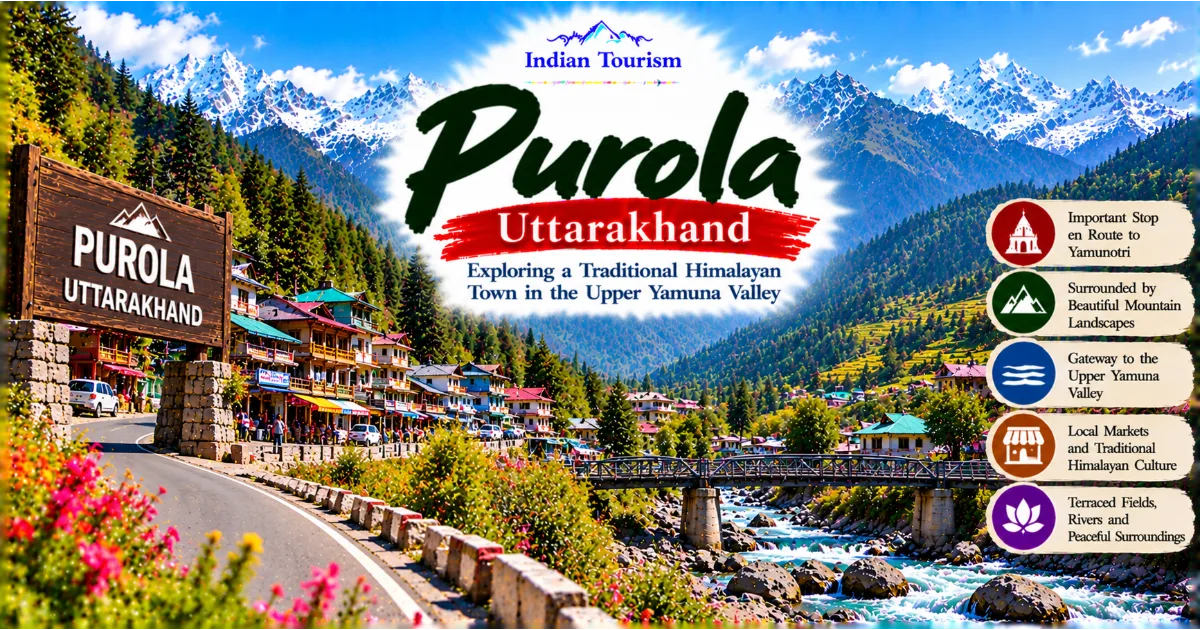
Discovering Purola, a Gateway to the Upper Yamuna Valley
Uttarakhand is a land of remarkable geographical contrasts, where high Himalayan peaks rise above forested slopes, rivers cut through deep valleys, and traditional settlements connect remote mountain communities with larger towns. While the state's famous destinations often receive the most attention, its smaller towns reveal another side of Himalayan life. Purola, located in Uttarkashi district, is one such destination. Surrounded by mountain landscapes and agricultural areas, it offers travellers an opportunity to understand the cultural, geographical, and economic character of the upper Yamuna valley.
Unlike a conventional hill station developed primarily for leisure tourism, Purola functions as an important settlement for the surrounding region. Its significance comes from its relationship with nearby villages, local markets, transport routes, agricultural activity, and the movement of people through the western Garhwal Himalayas. Travellers passing through Uttarkashi district may encounter Purola as part of a wider journey toward mountain villages, forested landscapes, and pilgrimage destinations.
The town's location makes it a useful starting point for exploring the broader upper Yamuna region. Mountain roads connect settlements that would otherwise be separated by steep slopes, ridges, and river valleys. These routes support everyday travel, the movement of agricultural products, access to essential services, and journeys undertaken by visitors. Purola is therefore more than a place to pass through. It represents the network of towns and villages that sustains life in this part of Uttarakhand.
For travellers interested in local culture, Purola offers a different experience from the state's larger tourist centres. The town's markets, surrounding countryside, and regional connections provide opportunities to observe everyday life rather than focus only on famous viewpoints. Its value lies in understanding how a mountain town supports the communities around it and how geography influences the way people live and work.
The wider area is also connected with the natural beauty of the Garhwal Himalayas. The landscape includes agricultural terraces, forested hills, winding roads, and valleys shaped by rivers and streams. Depending on the season and weather, visitors may experience fresh greenery, clear mountain views, or cloud-covered slopes that give the region a distinctive atmosphere.
Purola is particularly suitable for travellers who want to explore Uttarakhand gradually, discovering smaller towns and the places that connect major destinations. With careful planning, respect for local communities, and an appreciation of the mountain environment, a visit can provide a deeper understanding of the upper Yamuna valley.
Where Is Purola Located?
Purola is situated in Uttarkashi district in the western part of Uttarakhand. It lies within the broader upper Yamuna valley region of the Garhwal Himalayas, where mountain roads, agricultural settlements, forests, and river systems shape the geography of daily life.
The town occupies an important position within the network of settlements serving the surrounding area. Local residents depend on towns such as Purola for various services, supplies, transport connections, and access to larger administrative or commercial centres. The surrounding villages contribute to the region's agricultural and cultural identity, while the road network connects them with wider markets and destinations.
Mountain geography makes these connections especially important. In the plains, neighbouring settlements may be linked by relatively direct roads across level land. In Uttarakhand, routes must often follow valleys, climb slopes, and pass through narrow sections where terrain limits the available space. The distance between two places can therefore be less important than the condition and shape of the road connecting them.
Purola's regional role is also influenced by the movement of travellers through Uttarkashi district. People visiting the upper Yamuna valley may use towns in the area to arrange transport, obtain supplies, or take a break before continuing into more remote mountain locations. The exact usefulness of Purola as a travel base depends on the destinations included in an itinerary and the services available at the time.
Visitors should confirm their route before departure. Mountain travel times can change because of roadwork, rainfall, landslides, traffic, and seasonal restrictions. Accommodation and transport arrangements should be checked in advance, particularly when travel continues beyond the main towns into smaller settlements.
Understanding Purola's location helps explain why it is worth considering as part of a broader regional journey. It connects the everyday life of a mountain town with the wider landscape of villages, agricultural areas, forests, and pilgrimage routes that characterize this part of Uttarakhand.
The Geography of the Upper Yamuna Valley
The upper Yamuna valley is shaped by the distinctive physical conditions of the Himalayas. Its landscape includes steep hillsides, river valleys, ridges, forests, cultivated land, and settlements established where the terrain allows people to build homes and maintain agricultural activity.
Watercourses are important features of this geography. Rivers and streams shape the land over time, carry water through the valleys, and influence where roads and settlements develop. River corridors also provide natural routes through mountainous terrain, making them important for transportation and communication.
The surrounding slopes vary according to elevation, rainfall, sunlight, and vegetation. Some areas are covered by trees and shrubs, while others contain terraced fields, open ground, or rocky surfaces. These patterns reflect both natural conditions and human use of the land.
Agriculture in the region often requires careful adaptation to the terrain. Flat land can be limited, so cultivated areas may occupy terraces or relatively level sections of hillsides. Roads and buildings must also fit within the available space, producing settlements that follow the contours of the landscape.
The appearance of the valley changes with the seasons. During wetter periods, vegetation may become greener, streams can carry more water, and clouds may settle over the hills. In clearer weather, distant ridges and mountain slopes can become more visible. Seasonal changes influence both the scenery and the practical conditions for travel.
The geography also creates environmental challenges. Heavy rainfall can loosen material on slopes, damage roads, and increase the risk of landslides. Streams can rise quickly, and exposed road sections may become difficult to navigate. Travellers should therefore treat weather and road conditions as essential parts of trip planning.
For visitors, the landscape around Purola provides an opportunity to understand the close relationship between physical geography and settlement. The town's position within the upper Yamuna region illustrates how communities organize transport, agriculture, and services within a mountain environment.
Purola as a Regional Market Town
Small towns play a crucial role in the economic life of Uttarakhand. They connect villages with wider markets and provide services that may not be available in smaller settlements. Purola's importance within its surrounding region can be understood through this broader role of mountain market towns.
Residents of nearby villages may travel to a town to purchase groceries, obtain household goods, access services, arrange transport, or conduct other practical tasks. Local shops and businesses help meet these needs, while roads allow goods and people to move between settlements.
A market town is not necessarily defined by major shopping complexes or large commercial streets. Its value may come from the variety of everyday services available within a relatively accessible area. Small businesses can provide essential goods, food, repairs, transport arrangements, and other services that support the surrounding population.
These towns can also create opportunities for employment. Shops, transport providers, service businesses, construction activity, and other forms of work contribute to the local economy. The exact mix of occupations varies according to the needs of the region and the opportunities available.
For travellers, the market environment can reveal a practical side of Himalayan life. Visitors may observe residents shopping for daily necessities, people arranging journeys, and businesses responding to the changing needs of the community. This is a different experience from visiting a destination designed mainly around tourist attractions.
Visitors should remember that the market is primarily a place of work and everyday activity for local residents. They should avoid blocking narrow roads or entrances, ask permission before photographing individuals, and treat shopkeepers respectfully.
Purchasing meals or necessary supplies from legitimate local businesses can support the regional economy. However, travellers should not assume that every item sold in the town has been produced locally. Some goods may arrive from other parts of Uttarakhand or from larger markets elsewhere in India.
Purola's role as a regional town makes it a useful point of connection for people exploring the upper Yamuna valley. It demonstrates how local economies depend on the relationship between villages, roads, markets, and the wider movement of people through the mountains.
Agriculture and the Countryside Around Purola
Agriculture contributes to the identity of many settlements in Uttarakhand. The mountain environment presents specific challenges, including steep terrain, limited flat land, changing rainfall, and differences in temperature across elevations. Farmers have adapted their practices to these conditions over generations.
Terraced cultivation is one of the most recognizable features of the Himalayan countryside. By creating relatively level surfaces on slopes, farmers can use land that would otherwise be difficult to cultivate. Terraces can produce distinctive patterns across hillsides, especially when fields are green or crops are ready for harvesting.
The crops grown in a particular area depend on local conditions. Soil quality, elevation, water availability, temperature, and farming traditions all influence agricultural choices. Across Uttarakhand, agriculture includes a variety of grains, pulses, vegetables, and other crops suited to different environments. The exact crops grown around Purola should be understood through local information rather than assumed from general descriptions of the state.
Agriculture involves more than planting and harvesting. Farmers must manage soil, water, seasonal weather, equipment, and the movement of produce. On steep terrain, even routine activities can require considerable physical effort. Maintaining terraces and paths can also be important for protecting cultivated land and supporting access.
The agricultural landscape changes through the year. Fields may appear freshly prepared at one stage, green during periods of growth, and golden or bare after harvesting. These changes offer travellers a way to observe the relationship between seasons and local livelihoods.
Visitors should respect farmland as working property. Walking through fields without permission can damage crops or disturb agricultural work. Photographs should be taken from public paths or locations where access is permitted.
Local food can also provide a connection to the agricultural landscape. Some food businesses may use regional ingredients, although availability depends on the establishment and season. Asking about local dishes can be a useful way to learn about the food culture of the region.
Agriculture helps explain why smaller mountain towns matter. Purola and similar settlements connect rural producers with services and markets, helping sustain livelihoods across the wider upper Yamuna valley.
The Cultural Character of Garhwal
The Garhwal region of Uttarakhand has a rich cultural heritage shaped by mountain geography, religious traditions, agricultural life, and relationships between communities. Its culture includes local languages and dialects, folk music, festivals, food traditions, oral histories, and religious practices that vary from place to place.
Purola forms part of this wider cultural landscape. Its everyday life is connected with the communities of Uttarkashi district and the traditions that have developed throughout the region. The town's markets, roads, and public spaces bring together residents whose lives may be connected with villages, farms, local businesses, and services.
Cultural traditions are often closely linked with the seasons. Agricultural work follows local weather patterns, while festivals and religious observances bring families and communities together at particular times of the year. The timing and character of these events vary across settlements, so visitors should seek local information when planning to attend a festival.
Folk music and oral traditions are important elements of the cultural identity of Uttarakhand. Songs can reflect everyday life, relationships, seasonal work, religious beliefs, and the natural environment. The precise traditions encountered in Purola will depend on local practices and events taking place during a visit.
Food also reflects the region's relationship with the mountains. Traditional meals across Uttarakhand often use grains, pulses, vegetables, and other ingredients that suit local conditions. Recipes vary between households and areas, and the food available in a town may include both regional dishes and meals common throughout northern India.
Visitors should approach local culture with respect and curiosity. A festival or religious event is not simply a performance for tourists, and residents should not be expected to explain every aspect of their traditions. Asking questions politely, following local instructions, and observing customs are appropriate ways to learn.
It is also important to avoid treating Garhwali culture as uniform. Traditions differ across valleys, communities, and generations. The wider regional identity provides useful context, but individual practices should be understood locally.
Exploring Purola can therefore offer a starting point for appreciating the cultural diversity of Uttarakhand. It encourages visitors to look beyond famous monuments and recognize the living traditions that continue in ordinary towns and villages.
The Yamuna River and the Landscape of the Region
The Yamuna River has a major place in India's cultural and geographical history. It is associated with Goddess Yamuna in Hindu traditions and forms part of a river system that supports communities and ecosystems across northern India.
The upper Yamuna region is especially important in the context of Uttarakhand's pilgrimage landscape. Yamunotri, one of the four destinations associated with the Char Dham pilgrimage in the state, is dedicated to Goddess Yamuna. The pilgrimage connects religious beliefs with the mountainous environment in which the river originates.
River valleys also influence settlement patterns and transport routes. In mountainous areas, roads often follow river corridors because they provide routes through steep terrain. Settlements develop where the land and access conditions permit, creating a close relationship between rivers, roads, and human activity.
Water is essential to local communities and agriculture, while streams and tributaries contribute to the natural environment. Changes in rainfall and seasonal conditions affect water levels, the appearance of river channels, and the safety of areas close to the water.
Mountain rivers should always be treated with caution. Heavy rainfall can cause water levels to rise rapidly, and currents may be stronger than they appear. Riverbanks can also contain loose stones or unstable ground. Visitors should observe waterways from safe locations and avoid entering the water without appropriate knowledge and conditions.
Pollution is another concern. Waste discarded near roads or rivers can enter water systems and affect the surrounding environment. Travellers should carry their rubbish until they can dispose of it properly and should never throw plastic or other waste into streams.
The Yamuna's cultural significance and environmental role are closely connected. Religious traditions encourage reverence for the river, while practical environmental protection is necessary to preserve water quality and the surrounding landscape.
For travellers exploring Purola and the wider region, understanding this relationship adds depth to the journey. The river is not simply a scenic feature but part of the cultural and environmental system that shapes life in Uttarakhand.
Exploring the Wider Upper Yamuna Region
Purola can be included in a broader exploration of the upper Yamuna valley, where mountain settlements, agricultural landscapes, forested areas, and pilgrimage routes form an interconnected travel region.
The character of the journey depends on the traveller's interests. Some visitors may be interested in understanding the geography and everyday life of the mountain towns. Others may prefer scenic road travel, photography, local food, or a journey connected with religious destinations.
The surrounding region includes routes leading toward other settlements and mountain areas within Uttarkashi district. Travellers should choose destinations according to their available time, current road conditions, and the suitability of the route for their vehicle and level of experience.
It is important not to assume that every place in the upper Yamuna region is close to Purola in practical travel terms. Mountain roads can be winding, and a relatively short distance on a map may require a lengthy journey. Some routes may also be affected by seasonal conditions or restrictions.
A regional itinerary should therefore be built around a few realistic stops rather than a long list of destinations. Travellers can use Purola as a place to rest, obtain supplies, or connect with onward transport where appropriate, while allowing enough time to appreciate the surrounding landscape.
Local advice is especially useful when travelling beyond the main road network. Residents, accommodation providers, and authorized transport operators may be able to provide information about current access and suitable routes. Their advice should be considered alongside official road and weather updates.
A slower approach often produces a more rewarding experience. Travellers who take time to observe the landscape and understand local life may gain more from the journey than those who attempt to cover too many places in a limited period.
Scenic Experiences and Photography Around Purola
The landscapes around Purola offer opportunities to appreciate the relationship between mountain terrain and human settlement. The visual character of the area comes from the combination of hills, fields, roads, buildings, vegetation, and changing weather.
Wide landscape photographs can show how settlements fit into the terrain. Images that include terraced fields and houses can communicate more about the region than photographs of distant mountains alone. Roads winding across hillsides also reveal the challenges of transportation in the Himalayas.
The changing light can alter the appearance of the landscape throughout the day. Clear periods may reveal distant ridges, while clouds can soften the outlines of the hills and create a different atmosphere. After rainfall, vegetation may appear greener, although wet surfaces can make walking and driving more hazardous.
Travellers can also photograph everyday scenes, such as local markets and agricultural areas, provided that they respect privacy and access rules. Ask permission before taking close-up photographs of residents, shopkeepers, children, or workers.
Safety should always take priority over photography. Avoid stopping in narrow sections of road, standing near unstable edges, or approaching fast-flowing water. Use designated stopping points wherever possible and follow local instructions.
Agricultural land should not be treated as an unrestricted photography location. Do not enter fields, damage crops, or cross private property without permission. A photograph is not worth disturbing local livelihoods.
Visitors should also consider how their images represent the region. Photographs of homes, shops, and working landscapes can help communicate that the upper Yamuna valley is a living place rather than an untouched wilderness. Respectful photography can preserve memories while acknowledging the people who maintain the landscape.
Local Food and Hospitality
Food is an important part of travel in Uttarakhand, where regional ingredients and cooking practices reflect the mountain environment. In and around Purola, visitors may find everyday meals, tea stalls, small eateries, and shops serving residents and people travelling through the area.
The availability of particular dishes varies by establishment and season. Travellers should not assume that every traditional Uttarakhand dish will be available in every town. Asking local residents or accommodation providers for recommendations can help identify suitable places to eat.
Traditional food across the state includes preparations based on grains, pulses, vegetables, and locally available ingredients. Well-known regional dishes include mandua roti and various preparations made with lentils and local pulses. The specific menu available in Purola will depend on the businesses operating during the visit.
Food along mountain routes often serves practical needs. Travellers may need a simple meal before continuing along a winding road or a hot drink during cool weather. Small food businesses can provide useful stopping points, particularly when the journey is long.
Visitors should choose establishments that maintain appropriate hygiene and ask about ingredients if they have allergies or dietary restrictions. It is also sensible to carry essential snacks and water for longer journeys, especially when travelling through areas where services may be limited.
Supporting local businesses can contribute to the regional economy. Buying meals, refreshments, and necessary supplies from legitimate establishments helps sustain services used by residents as well as visitors.
Hospitality in mountain towns may also involve practical advice about transport, weather, and nearby services. Travellers should appreciate such assistance and avoid assuming that residents are always available to provide unpaid guidance.
A meal in a small town can be a simple but meaningful part of a journey. It offers a chance to pause, observe local life, and appreciate the relationship between food, livelihoods, and the environment.
Best Time to Visit Purola
The best time to visit Purola depends on the purpose of the trip, the wider itinerary, and current weather and road conditions. The Himalayan environment changes throughout the year, so travellers should plan according to the season rather than relying on a single general recommendation.
Spring
Spring brings gradual changes in temperature and renewed vegetation across many parts of Uttarakhand. The countryside can become greener, and the weather may be suitable for exploring the wider valley when roads are accessible.
Mornings and evenings can remain cool. Travellers should carry layered clothing and check the forecast before departure.
Early Summer
Early summer is a popular period for travel through the Yamuna valley, particularly for visitors heading toward pilgrimage destinations. Traffic and demand for accommodation or transport can increase during the pilgrimage season.
Planning ahead is useful, especially when travel involves multiple stops. Allow extra time for mountain roads and avoid relying on tight schedules.
Monsoon
The monsoon season requires additional caution. Heavy rainfall can cause landslides, rockfalls, road closures, and rising water levels. Mountain routes may become difficult or unsafe during severe weather.
Travellers should monitor official weather information and road advisories. Avoid unnecessary travel during intense rainfall and never attempt to cross flooded roads or streams.
Autumn
Autumn can bring cooler temperatures and periods of clear visibility. It may be suitable for visitors interested in mountain scenery and regional travel.
Conditions vary from year to year, so road access and accommodation availability should still be checked. Travellers planning to continue toward Yamunotri must confirm the official pilgrimage schedule.
Winter
Winter conditions depend on elevation and local weather. Purola and other lower settlements may remain accessible, while higher routes can experience snow, severe cold, or restrictions.
Visitors should not assume that all services or roads operate normally during winter. Check current conditions and avoid travelling into exposed areas when weather is unsafe.
For a trip that includes pilgrimage destinations, the official opening schedule and current route information should guide the itinerary. Seasonal descriptions are useful for planning, but they do not replace updated local advice.
How to Reach Purola
Purola can be reached through the road network serving Uttarkashi district. The most suitable route depends on the traveller's starting point and the current condition of the mountain roads.
By Road
Road travel is the main way to reach Purola. Travellers can approach through the regional road network connecting towns and settlements across Uttarakhand.
Mountain roads may contain sharp bends, narrow sections, steep slopes, and areas affected by landslides or roadwork. Journey times depend on traffic, weather, the route selected, and any temporary disruptions.
Drivers should travel at a safe speed, avoid unnecessary overtaking, and stop only where there is adequate space. Before leaving, check current road conditions and allow time for rest breaks.
By Train
Purola does not have its own railway station. Travellers arriving by train must continue by road from a suitable railway station serving the wider region.
The best rail connection depends on the starting city and the onward transport options available. Allow sufficient time for the mountain journey and avoid arranging a tight connection that leaves no room for delays.
By Air
Travellers arriving by air can use an airport serving the wider Dehradun region and continue by road toward Uttarkashi district. The onward journey can take considerable time, depending on the route and current conditions.
Flight arrival times should not be treated as a guarantee that the road journey can be completed within a fixed period. Allow time for collecting luggage, arranging transport, and stopping when necessary.
Local Transport
Taxis and other local transport services may be available depending on the route and season. Their availability and pricing should be confirmed before departure.
If Purola is being used as part of a journey toward Yamunotri or other mountain destinations, confirm the onward route and current arrangements. Avoid assuming that transport will be available at every time of day.
Suggested One-Day Itinerary
A one-day visit is most practical for travellers already staying within a reasonable distance of Purola. Those arriving from distant cities may find that the road journey leaves insufficient time for exploration.
Begin by checking the weather and road conditions. Confirm your intended route and identify any essential services you may need during the day.
Spend time exploring accessible parts of the town. Observe the local market, everyday businesses, and the relationship between the settlement and the surrounding landscape. Visit operating shops or food establishments respectfully, and avoid blocking roads or entrances.
Allow time for a meal or refreshments. If you are interested in local food, ask about available regional dishes, while recognizing that menus vary.
If you wish to explore the countryside, choose accessible locations and ask about current road or walking conditions. Do not assume that every visible track is a maintained public trail.
Begin the return journey with enough time to account for traffic and changing weather. Avoid driving while tired and do not attempt to fit in additional stops if doing so would make the journey unsafe.
A successful day should provide time to understand the town and its surroundings rather than rush through a long list of locations.
Suggested Two-Day Itinerary
A two-day visit offers greater flexibility and is more suitable for travellers exploring the wider upper Yamuna valley.
On the first day, travel to Purola or another suitable base in the region. Choose accommodation according to the route and facilities available, and allow time to rest after the mountain journey.
After arriving, obtain current information about road conditions and the destinations you intend to explore. If your itinerary includes pilgrimage travel, confirm the official schedule and the arrangements required for onward journeys.
On the second day, explore Purola and the surrounding accessible countryside. Spend time observing the town's daily life, agricultural landscapes, and connections with nearby settlements. If you have a particular destination in mind, confirm its accessibility before leaving.
Keep the itinerary flexible. Mountain roads can be affected by rainfall, landslides, and traffic, and journey times may change unexpectedly. If conditions deteriorate, postpone optional travel rather than attempting to maintain the original schedule.
Before departing, make sure that rubbish has been disposed of appropriately and that any services used have been paid for. Respectful behaviour helps ensure that visitors remain welcome in the communities they explore.
Responsible Tourism in Purola
Responsible tourism is important in the Himalayan region because the environment and infrastructure can be sensitive to heavy rainfall, increased traffic, and growing visitor numbers.
Visitors should respect the privacy of residents and avoid entering private property without permission. Ask before photographing people, especially children, workers, and shopkeepers.
Waste should be carried until it can be disposed of through an appropriate facility. Do not leave plastic bottles, wrappers, or food waste beside roads, in fields, or near waterways.
Water systems should remain free from pollution. Never throw rubbish into streams or rivers, and avoid activities that could contaminate water used by local communities.
Supporting local businesses can help keep tourism spending within the region. Buying meals, purchasing necessary supplies, and using legitimate transport providers are practical ways to contribute to the local economy.
Travellers should also respect agricultural land. Stay on established paths, avoid damaging crops, and seek permission before entering fields or private areas.
Safety is essential. Mountain roads can be hazardous, and weather conditions may change quickly. Follow official instructions and avoid travel through unsafe sections.
Responsible tourism also means having realistic expectations. Smaller towns may not provide every service available in a large city. Planning ahead reduces pressure on local residents and helps visitors respond appropriately when facilities are limited.
By travelling thoughtfully, visitors can enjoy the region while respecting the people and environment that make it distinctive.
Who Should Visit Purola?
Purola may appeal to travellers interested in the everyday life and geography of Uttarakhand. It is especially relevant for people exploring Uttarkashi district and the upper Yamuna valley.
Cultural travellers may appreciate learning about the role of mountain market towns, the relationship between villages and regional services, and the traditions of the wider Garhwal region.
Nature lovers may enjoy the surrounding hills, agricultural terraces, and changing mountain scenery. The experience is more suited to travellers who appreciate observation and regional exploration than those looking for a highly developed tourist attraction.
Pilgrims travelling through the Yamuna valley may include Purola in a wider itinerary if the route and timing are appropriate. The exact arrangements should be checked before travel.
Photographers may find opportunities to document the interaction between settlements and the natural landscape. They should prioritize safety and respect the privacy of residents.
Families can consider visiting if the road journey, accommodation, and planned activities are suitable for everyone. Mountain travel can be tiring, and access to services may vary.
Travellers seeking extensive nightlife, large shopping complexes, or resort-style entertainment may find Purola less suitable. Its appeal is connected with local life, regional travel, and the wider mountain landscape.
Final Thoughts: Discovering the Everyday Life of Uttarakhand
Purola provides an opportunity to explore a part of Uttarakhand that is often overlooked when travel plans focus exclusively on famous temples and hill stations. Located in Uttarkashi district within the wider upper Yamuna valley, the town reflects the relationship between mountain geography, local markets, agriculture, transportation, and community life.
Its importance lies not only in its surroundings but also in the role it plays within a network of settlements. Small towns connect villages with services and markets, support the movement of goods and people, and provide practical stopping points for journeys through difficult terrain.
The upper Yamuna valley adds geographical and cultural depth to the experience. Rivers and streams shape the landscape, agricultural terraces demonstrate how communities adapt to steep slopes, and roads connect settlements that would otherwise be separated by the mountains. These elements together create the distinctive environment of the western Garhwal Himalayas.
Visitors should plan carefully, confirm current road conditions, and check the availability of accommodation and transport before travelling. The monsoon requires particular caution, while winter travel should be based on updated local information. Anyone continuing toward Yamunotri should also confirm the official pilgrimage schedule and current route arrangements.
The best way to experience Purola is to travel with curiosity and respect. Take time to observe everyday life, support local businesses where practical, protect the environment, and recognize that the town is first and foremost a place where people live and work.
Uttarakhand's identity is formed not only by its famous destinations but also by the smaller towns and villages that sustain its communities. Exploring Purola can help travellers understand this wider picture and develop a deeper appreciation for the people, landscapes, and traditions of the upper Yamuna valley.
#IndianTourism #UttarakhandTourism #Purola #Uttarkashi #YamunaValley #GarhwalHimalayas #ExploreUttarakhand #HimalayanTravel #MountainTowns #UttarakhandCulture #Yamunotri #NatureTravel #ResponsibleTourism #TravelIndia
