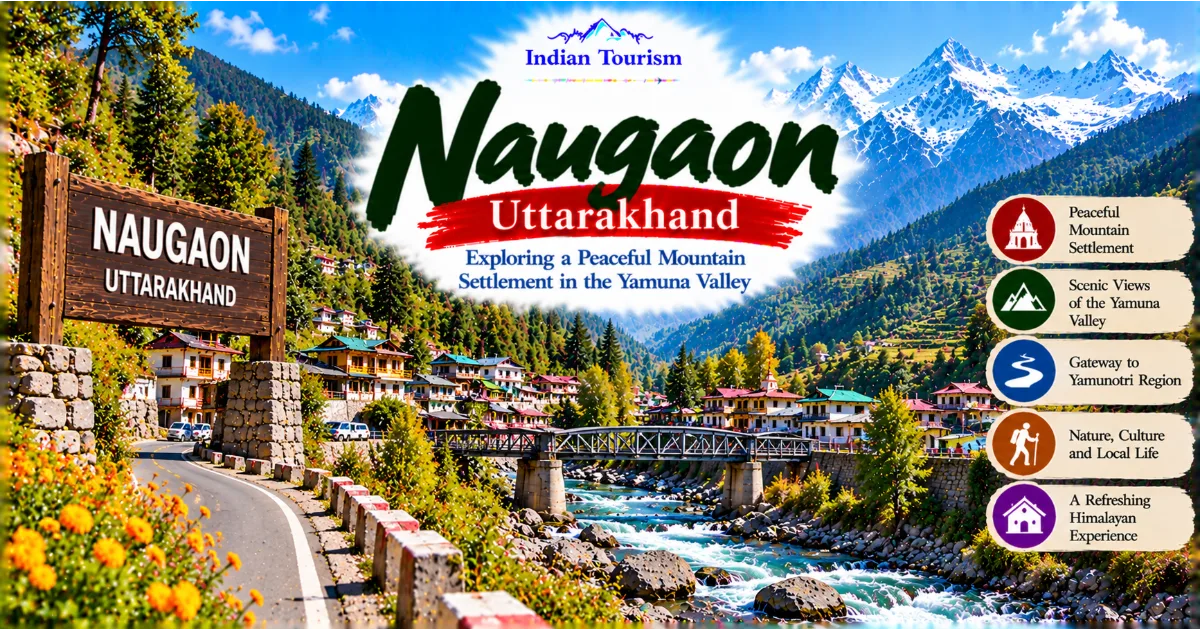
Discovering Naugaon in the Garhwal Himalayas
Uttarakhand is a state where mountain landscapes, traditional settlements, sacred rivers, and centuries-old cultural practices come together to create a distinctive travel experience. While destinations such as Mussoorie, Nainital, Kedarnath, and Badrinath receive considerable attention, the state also has smaller towns and settlements that reveal the everyday character of Himalayan life. Naugaon, situated in the Yamuna valley region of Uttarkashi district, offers an opportunity to explore this quieter side of Uttarakhand.
Unlike a major hill station designed primarily around tourism, Naugaon is best understood as part of a living mountain landscape. Its surroundings reflect the relationship between settlements, agriculture, road networks, forests, and the river valleys that shape life in the Garhwal Himalayas. Travellers passing through the region may encounter terraced fields, mountain roads, roadside markets, houses built along sloping terrain, and views of the surrounding hills.
Naugaon also occupies a useful position within the wider travel network connecting different parts of Uttarkashi district. The Yamuna valley is associated with the pilgrimage route to Yamunotri, one of the four destinations of Uttarakhand's Char Dham pilgrimage. The movement of pilgrims and other travellers contributes to the importance of roads, markets, transport services, and settlements throughout the region.
However, Naugaon should not be viewed only as a stopping point on the way to a famous shrine. Its wider surroundings offer opportunities to understand how communities live in the mountains, how agriculture adapts to uneven terrain, and how road connectivity influences local economies. These subjects are especially interesting for travellers who want to explore the cultural geography of Uttarakhand rather than focus exclusively on famous tourist attractions.
Continue Reading
The experience of visiting a smaller Himalayan settlement is often different from visiting a commercial hill station. Visitors may find fewer purpose-built attractions, but they can gain a better appreciation of local routines, regional food, agricultural landscapes, and the practical realities of mountain life. The reward comes from observing the environment carefully and allowing enough time to understand the place.
Naugaon is therefore a useful destination to consider within a broader journey through the Yamuna valley. It provides a starting point for exploring the surrounding region, learning about the communities of Uttarkashi district, and understanding the relationship between geography, livelihood, and travel in Uttarakhand.
Where Is Naugaon Located?
Naugaon is located in Uttarkashi district of Uttarakhand, within the wider Yamuna valley region of the Garhwal Himalayas. The district contains a varied landscape of mountain ranges, river valleys, forests, agricultural settlements, and important pilgrimage destinations.
The geography of Uttarkashi district strongly influences how its settlements are connected. Roads often follow river valleys and wind through hillsides, while villages occupy areas where the terrain provides sufficient space for homes, fields, and access routes. Distances that appear modest on a map may require considerable travel time because of winding mountain roads and changing road conditions.
Naugaon forms part of this wider network of settlements and travel routes. Its surroundings connect everyday local life with the movement of visitors travelling through the Yamuna valley. Depending on their route, travellers may encounter markets, transport services, agricultural areas, and smaller settlements that serve the needs of residents and people passing through the region.
The wider area is influenced by the seasonal nature of Himalayan travel. During the pilgrimage season, movement through the Yamuna valley can increase as visitors travel toward Yamunotri. Other periods may be quieter, although local economic and social activity continues throughout the year.
Visitors planning a trip should confirm the precise location of their intended destination, particularly because similar place names can occur in different parts of the Himalayan region. Current road conditions, available accommodation, and the services operating in Naugaon should also be checked before finalizing travel arrangements.
Understanding the location is important because Naugaon's value lies partly in its connection with the wider region. It can form part of a journey through Uttarkashi district, but the most suitable itinerary will depend on the traveller's starting point, available time, and interest in mountain scenery, cultural exploration, or pilgrimage travel.
The Geography of the Yamuna Valley
The Yamuna valley is one of the important geographical landscapes of Uttarakhand. Its terrain is shaped by rivers, tributary streams, steep slopes, ridges, forests, and settlements that have adapted to the conditions of mountain life.
Unlike the broad agricultural plains of northern India, the Himalayas offer limited areas of level ground. Communities have developed different ways of using the available land, including terraced cultivation, settlements on suitable slopes, and roads that follow the natural contours of the hills.
The river system influences both the appearance of the landscape and the practical organization of settlements. Water supports agriculture and household needs, while river valleys provide natural corridors through which roads and paths can pass. These corridors have historically been important for travel and communication between mountain communities.
The terrain around Naugaon reflects the wider patterns found throughout the Yamuna valley. Travellers may notice hills rising above cultivated areas, houses positioned along roads or slopes, and vegetation changing according to elevation and exposure. These features create a landscape that differs considerably from the plains and from the more developed tourist centres of Uttarakhand.
Mountain environments are also highly seasonal. Rainfall can alter river levels, make roads slippery, and increase the risk of landslides. During clearer periods, distant ridges may become visible, while clouds can cover the hills and reduce visibility within a short time.
These conditions influence travel planning. A journey through the Yamuna valley should not be organized around distance alone. Road quality, traffic, weather, and the availability of transport can be just as important as the number of kilometres between two locations.
For visitors interested in geography, Naugaon offers a practical opportunity to observe how people establish settlements within a mountainous environment. The landscape demonstrates that roads, fields, homes, and markets are not separate elements. They form a connected system shaped by the physical conditions of the Himalayas.
Naugaon and the Culture of Mountain Settlements
The cultural character of Uttarakhand is closely connected with its geography. Mountain communities have developed traditions, building practices, food habits, agricultural methods, and social relationships that reflect the opportunities and limitations of their environment.
Naugaon belongs to a region where everyday life continues alongside the movement of pilgrims and other travellers. The local environment is not simply a scenic destination. It is a place where residents work, raise families, maintain homes, manage agricultural land, and travel to nearby towns for essential services.
In many Himalayan settlements, community relationships are important because the terrain and distance between places can make everyday activities more complicated than in urban areas. Local knowledge helps people understand weather patterns, road conditions, seasonal agricultural work, and the practical requirements of travel.
The cultural experience of visiting a smaller settlement differs from attending a major festival or visiting a large temple. Much of what travellers learn comes through observing daily routines, local markets, traditional food, and the ways homes and fields are arranged within the landscape.
Visitors should remember that communities are not tourist exhibits. Residents may be busy with work and family responsibilities, and not every interaction needs to become a travel experience. Respectful observation and polite conversation, when welcomed, are more appropriate than intrusive photography or assumptions about local customs.
The wider Garhwal region has a rich cultural history that includes religious traditions, folk music, local festivals, oral histories, and distinctive food practices. However, individual customs can differ between settlements, and travellers should avoid assuming that every tradition is followed in the same way throughout the region.
Learning about Naugaon can therefore be an introduction to the broader cultural landscape of Uttarkashi district. It encourages visitors to recognize the diversity within Uttarakhand and appreciate the communities that sustain life in the mountains.
Agriculture and the Terraced Landscapes of Uttarakhand
Agriculture remains an important part of life in many Himalayan settlements. The steep terrain of Uttarakhand means that farming often requires careful use of the available land, with fields arranged across slopes and supported by terraces.
Terraced agriculture is a practical response to mountain geography. By creating relatively level areas on hillsides, farmers can cultivate land that would otherwise be difficult to use. The arrangement of terraces also influences the appearance of the landscape, producing patterns that change with the seasons and the crops being grown.
The crops cultivated in a particular area depend on elevation, rainfall, soil conditions, access to water, and local agricultural practices. Across Uttarakhand, farming may include grains, pulses, vegetables, and other crops suited to the regional environment. The precise agricultural profile of Naugaon should be understood through local information rather than assumptions based on the wider state.
Agriculture also connects communities with seasonal weather. Planting, maintenance, and harvesting must be organized around local conditions. Heavy rainfall can create challenges, while dry periods may increase the importance of water management.
For travellers, the agricultural landscape provides insight into the work required to maintain a settlement in the mountains. A field that appears simple from the roadside may represent considerable labour involving soil preparation, irrigation, planting, and the movement of materials across uneven ground.
Visitors should respect agricultural land as private or working property. Walking through fields, damaging crops, or entering fenced areas without permission can interfere with local livelihoods. Photography should be undertaken from public paths or other places where access is permitted.
Supporting local businesses and purchasing locally produced goods when available can contribute to the regional economy. However, travellers should not assume that every product sold in a settlement was grown or produced locally.
The terraced landscapes of Uttarakhand reveal an important connection between people and geography. They show how communities adapt to the mountains and how agriculture continues to shape the cultural identity of the region.
The Yamuna River and Its Importance to the Region
The Yamuna River is one of the most culturally significant rivers in India. Its religious importance, environmental role, and influence on settlement patterns make it an essential part of understanding the wider region around Naugaon.
The river is associated with Goddess Yamuna in Hindu traditions. Its sacred identity connects the Himalayan landscape with pilgrimage destinations, religious practices, and communities throughout northern India. The upper Yamuna valley has a particularly important place in this tradition because of its association with Yamunotri.
The river also performs essential environmental and practical functions. Water systems support human settlements, agriculture, and natural habitats. Tributaries and streams contribute to the wider river network, while the surrounding slopes influence how rainfall moves through the landscape.
The relationship between rivers and settlements is especially visible in mountain regions. River valleys provide routes through otherwise difficult terrain, and many roads follow the available corridors beside rivers and streams. This creates a close connection between transportation, settlement, and water systems.
However, mountain rivers can change rapidly during heavy rainfall. Water levels may rise, currents can become dangerous, and riverbanks may be unstable. Travellers should observe waterways from safe locations and avoid approaching the edge for photographs.
Environmental protection is particularly important in river valleys. Plastic waste, untreated waste, and careless disposal of materials can affect water quality and the surrounding ecosystem. Visitors should never throw rubbish into streams or leave waste beside riverbanks.
The Yamuna also provides a useful way to understand how religious and environmental values intersect. A river may be revered through spiritual traditions while simultaneously requiring practical protection through responsible water management and pollution prevention.
For travellers exploring the Yamuna valley, understanding the river's cultural and geographical importance can add depth to the journey. It connects the landscape around Naugaon with the broader story of Uttarakhand and northern India's relationship with sacred rivers.
The Connection with Yamunotri Pilgrimage
Yamunotri is one of the four destinations associated with the Char Dham pilgrimage in Uttarakhand. Alongside Gangotri, Kedarnath, and Badrinath, it forms part of a major pilgrimage tradition that attracts devotees from across India.
Dedicated to Goddess Yamuna, Yamunotri is located in the higher reaches of the Garhwal Himalayas. Reaching the temple involves travelling through the mountain road network and continuing on an uphill route from Janki Chatti. The journey requires preparation because weather, elevation, and terrain can affect the experience.
Settlements throughout the wider Yamuna valley form part of the travel network used by pilgrims. Roads, markets, accommodation, and transport services support the movement of visitors, particularly during the pilgrimage season. Naugaon can be considered within this broader regional context, although travellers should verify the most suitable route and its relevance to their specific itinerary.
The pilgrimage influences more than transport. It can create seasonal demand for food, accommodation, vehicle services, and supplies. Local businesses may benefit from visitors, while increased traffic can place pressure on roads and public facilities.
The cultural significance of the pilgrimage also extends to the stories and beliefs associated with Goddess Yamuna. For many devotees, the journey represents an expression of faith, a family tradition, or a personal spiritual commitment. The effort required to travel through the mountains can itself become part of the pilgrimage experience.
Visitors who are not undertaking the pilgrimage can still learn about its importance by understanding the geography and communities connected with the route. However, religious practices should be approached respectfully, and travellers should follow local instructions around sacred sites.
If Naugaon is included in a pilgrimage itinerary, it is sensible to treat it as one part of a larger journey rather than assuming that every major pilgrimage destination is close enough for a quick visit. Mountain travel can take longer than expected, and the final route toward Yamunotri requires additional time and physical effort.
Local Markets and Everyday Services
Small towns and settlements play an important role in the economic life of Uttarakhand. Even when they are not major tourist attractions, they may provide services that connect nearby villages with larger towns and travel routes.
Local markets can supply groceries, household goods, food, transport-related services, and other everyday necessities. Their scale and opening hours vary according to the size of the settlement and the needs of residents.
In areas influenced by pilgrimage travel, markets may also serve visitors who require snacks, water, basic supplies, rain protection, or other items for the journey. The availability of these products depends on the season and the businesses operating locally.
For travellers, visiting a market can provide a glimpse into the practical side of mountain life. Instead of being organized around sightseeing, a market reflects the needs of the community. People may be buying supplies, arranging transport, meeting acquaintances, or preparing for work.
Visitors should approach local markets with consideration. Avoid blocking narrow entrances or roads, and ask before photographing shopkeepers or customers. When purchasing goods, communicate politely and clarify prices where necessary.
Local services may be more limited than those in larger towns. Travellers should not assume that every settlement will have a pharmacy, fuel station, medical facility, or accommodation available at all times. Important supplies and bookings should be arranged in advance where appropriate.
Supporting local businesses can help keep tourism spending within the region. Purchasing a meal, using an authorized transport provider, or buying necessary supplies from a local shop can contribute to the local economy.
The value of a market visit lies in recognizing how settlements function as part of a wider network. Naugaon and similar places are important not only because travellers pass through them, but because they support the everyday needs of the people who live in the surrounding mountains.
Scenic Experiences Around Naugaon
The wider Yamuna valley offers a range of mountain views and changing landscapes. Travellers moving through the area may encounter forested slopes, cultivated terraces, river channels, narrow roads, and villages positioned along the terrain.
One of the most interesting aspects of mountain travel is the way scenery changes with movement. A road may follow a river for one section and then curve around a slope, revealing a different view of the valley. Buildings may appear in clusters where the land permits construction, while fields occupy terraces or more level sections.
The river system contributes movement and sound to the landscape. Water flows through channels shaped by rocks and the gradient of the terrain. The appearance of streams changes according to rainfall, season, and the amount of water moving through the valley.
Vegetation also changes with elevation and local conditions. Trees may cover parts of the slopes, while cultivated areas and open ground create different patterns. The resulting landscape reflects both natural processes and human activity.
Weather has a strong influence on visibility. Clear periods may reveal distant ridges, while cloud cover can soften the outlines of the hills. Rain can make the landscape appear vivid, but it also creates slippery surfaces and potential road hazards.
Visitors should enjoy the scenery from safe places. Mountain roads can be narrow, and stopping without adequate space can endanger drivers and pedestrians. Use designated stopping areas whenever possible and avoid stepping into traffic for photographs.
Walking should be undertaken only where routes are suitable and access is permitted. Travellers should not assume that every path visible from the road is a maintained walking trail. Ask locally about safe routes before setting out.
A scenic journey through the Yamuna valley is most rewarding when travellers allow enough time to observe the landscape rather than attempting to stop at every viewpoint. The relationship between the river, roads, settlements, and hills provides a more complete understanding of the region than any single photograph can convey.
Photography Opportunities in the Yamuna Valley
Photography can help travellers document the landscapes and everyday life of Uttarakhand. Around Naugaon and the wider Yamuna valley, suitable subjects may include terraced fields, mountain roads, river views, traditional buildings, roadside markets, and distant ridges.
Wide landscape photographs can show the relationship between settlements and their surroundings. Images that include roads, houses, and cultivated land may communicate how people have adapted to the terrain more effectively than photographs of mountains alone.
Early morning and late afternoon can provide softer light, although the best conditions depend on weather and the direction of the landscape. Clouds may create dramatic compositions, while clear skies can reveal more distant details.
Travellers should prioritize safety when taking photographs. Avoid stopping in the middle of a road, standing close to unstable edges, or approaching a fast-flowing river. If a location does not provide a safe place to stop, continue travelling rather than risking an accident.
Photographing people requires additional consideration. Ask permission before taking close-up images of residents, shopkeepers, children, or workers. A person going about their daily responsibilities should not be treated as a subject without regard for their privacy.
Agricultural land should also be respected. Do not enter fields or damage crops to obtain a particular angle. Use public paths and seek permission when access is uncertain.
The best travel photographs communicate something about the place beyond its visual appeal. Images of the landscape in relation to local homes, roads, and daily activity can help tell the story of how communities live within the Himalayan environment.
Best Time to Visit Naugaon
The most suitable time to visit Naugaon depends on the traveller's interests, current road conditions, and the destinations included in the wider itinerary. Because the area is part of the Himalayan region, seasonal weather should be considered carefully.
Spring
Spring can bring fresh vegetation and gradually warming temperatures across many parts of Uttarakhand. The landscape may become greener, and conditions can be suitable for exploring the wider valley when roads are accessible.
Mornings and evenings can still be cool. Travellers should carry layers of clothing and check the forecast before setting out.
Early Summer
Early summer is a popular time for travel through the Yamuna valley, partly because of the pilgrimage season. Roads and services may experience greater demand as visitors travel toward Yamunotri.
Accommodation and transport should be arranged in advance during busy periods. Allow extra time for road journeys and avoid schedules that depend on perfect traffic conditions.
Monsoon
The monsoon requires particular caution in mountain regions. Heavy rainfall can cause landslides, rockfalls, road disruptions, and rising water levels.
Travellers should monitor official weather information and road advisories. Avoid unnecessary journeys during severe weather and never attempt to cross flooded roads or streams.
Autumn
Autumn can provide cooler temperatures and periods of clear mountain visibility. It may be a suitable time for travellers who want to observe the landscape and explore the wider region.
Conditions vary from year to year, so visitors should still confirm road access and accommodation availability. Those planning to continue toward Yamunotri must check the official temple schedule.
Winter
Winter conditions vary by elevation. Some lower settlements remain accessible, while higher areas can experience severe cold, snow, or travel restrictions.
Visitors should not assume that all roads, businesses, or services operate normally during winter. Seek current local information before travelling and avoid exposed routes when conditions are unsafe.
For a visit connected with Yamunotri, the official pilgrimage schedule and current route conditions should guide the itinerary. General seasonal advice should never replace updated local information.
How to Reach Naugaon
The most appropriate route to Naugaon depends on the traveller's starting point and the exact destination within the wider Yamuna valley. Visitors should confirm the location before booking transport, especially if their itinerary includes similarly named settlements.
By Road
Road travel is the main way to reach the settlements of the Yamuna valley. Travellers generally use the road network connecting towns and villages across Uttarkashi district.
Mountain roads can be winding and narrow, with travel times affected by traffic, weather, roadwork, and landslides. Drivers should avoid rushing and allow enough time for rest stops.
Before departure, confirm the current road conditions and the availability of transport. If travelling in a private vehicle, ensure that the driver is experienced with mountain roads and that the vehicle is suitable for the intended route.
By Train
There is no railway station in Naugaon itself. Travellers arriving by train must continue by road from a suitable railway station serving the wider region.
The best connection depends on the starting city and available transport. Allow sufficient time for the road journey, and avoid making tight connections that leave no room for delays.
By Air
Travellers arriving by air can use an airport serving the wider Dehradun region and continue by road toward Uttarkashi district. The mountain journey may take considerable time, depending on the route and prevailing conditions.
Flight arrival times should not be treated as a guarantee that the road journey can be completed within a fixed schedule. Allow time for collecting luggage, arranging transport, and stopping when necessary.
Local Transport
Local taxis and other transport options may be available depending on the route and season. Their availability should be confirmed before travel rather than assumed.
If the journey continues toward Yamunotri, check the authorized route and the current arrangements for reaching Janki Chatti. The uphill journey from Janki Chatti requires additional time and physical preparation.
Suggested One-Day Itinerary
A one-day visit is most practical for travellers already staying within the wider Yamuna valley. Those arriving from distant cities may find that the road journey takes too much time for a meaningful exploration.
Begin the day by checking the weather and current road conditions. Confirm the exact location you intend to visit and ask a reliable local source about access and available services.
Travel through the valley at a comfortable pace. If you stop in Naugaon, take time to observe the settlement and its surroundings without obstructing local movement. You may explore accessible public areas, visit operating shops, or enjoy the landscape from safe stopping points.
Allow time for a meal or refreshments at an appropriate local establishment. Ask about regional food and services where useful, but remember that the availability of particular dishes and facilities can vary.
If you intend to continue toward Yamunotri, confirm that the pilgrimage route is open and that sufficient time remains for the uphill journey. Do not treat the temple as a quick stop if the route and walking conditions require a substantial part of the day.
Begin the return journey with enough time to account for changing weather and traffic. Avoid driving while tired and do not attempt to complete optional stops when doing so would make the journey unsafe.
The purpose of a one-day visit should be to understand the region rather than cover the maximum possible distance. A flexible schedule will generally produce a more comfortable experience.
Suggested Two-Day Itinerary
A two-day itinerary allows travellers to explore the wider Yamuna valley at a more relaxed pace.
On the first day, travel to a suitable base in Uttarkashi district. The choice of accommodation should depend on the route, the available facilities, and the places you intend to visit.
After arriving, rest and check local information about road access, weather, and the exact location of Naugaon. If the itinerary includes Yamunotri, confirm the temple's official opening schedule and the current arrangements for reaching the pilgrimage route.
On the second day, explore Naugaon and nearby accessible parts of the valley. Observe the landscape, learn about local settlement patterns, and visit legitimate local businesses where appropriate.
If time and conditions permit, continue toward another destination within the same regional itinerary. However, do not assume that every place in Uttarkashi district is close enough for a short detour. Mountain roads can make travel between destinations lengthy.
Keep the schedule flexible in case of road disruptions or changing weather. If the conditions are unsafe, postpone optional travel rather than attempting to maintain the original plan.
Before departure, make sure that waste has been disposed of appropriately and that any local services used have been paid for. Respect for the community and the environment should remain part of the journey.
Responsible Tourism in Naugaon
Responsible tourism matters throughout Uttarakhand, especially in mountain settlements where environmental conditions and infrastructure can be sensitive to additional pressure.
Visitors should respect the privacy of residents and avoid treating homes, shops, and fields as tourist attractions. Ask permission before photographing people or entering private property.
Waste should be carried until it can be disposed of through an appropriate facility. Do not leave plastic bottles, wrappers, food waste, or other materials beside roads, in fields, or near streams.
Waterways should remain free from pollution. Never throw rubbish into the river or wash items in locations where doing so may affect water quality.
Support local businesses when practical. Buying meals, purchasing necessary supplies, or using authorized transport providers can help keep tourism spending within the region.
Visitors should also be realistic about local infrastructure. Small settlements may not provide the same range of medical, transport, or accommodation services available in larger towns. Travellers should prepare for their needs and avoid relying on facilities that have not been confirmed.
Respect agricultural land and natural vegetation. Stay on established paths, avoid damaging crops, and do not remove plants or other natural materials.
Mountain safety requires constant attention. Roads may be affected by landslides, rainfall, or traffic, and weather can change rapidly. Follow official instructions and do not attempt to cross unsafe sections.
Responsible tourism is not simply about avoiding litter. It involves understanding that the destination is a living community with its own needs, routines, and priorities. Travelling with consideration helps preserve the region for residents and future visitors.
Who Should Visit Naugaon?
Naugaon may appeal to travellers interested in the everyday geography and culture of Uttarakhand. It is particularly relevant for those exploring the Yamuna valley and seeking to understand the settlements that support life and travel in the mountains.
Cultural travellers may appreciate observing the relationship between local communities, agricultural land, roads, and seasonal tourism. They should approach the area with curiosity and avoid expecting a highly developed sightseeing infrastructure.
Nature lovers may enjoy the wider landscape of mountain slopes, rivers, and cultivated valleys. The experience is best suited to people who appreciate scenery and local environments rather than those seeking a long list of commercial attractions.
Pilgrims travelling toward Yamunotri may consider the wider region as part of their journey, provided the route and schedule make sense. The exact travel plan should be checked locally.
Photographers may find opportunities to document mountain roads, settlement patterns, terraced fields, and the changing appearance of the valley. They should prioritize safety and respect the privacy of residents.
Families can visit if transport, accommodation, and the planned activities suit everyone's needs. Mountain travel can be tiring, and journey times may be longer than expected.
Travellers seeking large shopping centres, nightlife, or extensive resort facilities may find the destination less suitable. Naugaon's value lies more in its regional setting and its connection with the wider Himalayan landscape.
Final Thoughts: Discovering the Everyday Himalayas
Naugaon offers a way to explore Uttarakhand beyond its best-known temples and hill stations. Situated within the wider Yamuna valley region of Uttarkashi district, it belongs to a landscape where mountain geography, agriculture, roads, settlements, and pilgrimage travel are closely connected.
The experience of visiting a smaller settlement is different from visiting a major tourist attraction. Rather than relying on a list of formal activities, travellers can learn by observing how homes and fields fit into the terrain, how local services support residents, and how mountain roads connect communities.
The Yamuna valley adds cultural and environmental depth to the journey. The river has religious significance in Hindu traditions and also plays an important role in the wider landscape. Its valleys provide routes for transportation and influence settlement patterns, while the surrounding slopes shape agriculture and everyday life.
Travellers should confirm the precise location of Naugaon, current road access, and the availability of services before finalizing their plans. Those travelling during the monsoon should pay particular attention to weather and road advisories. Visitors intending to continue toward Yamunotri must also confirm the official pilgrimage schedule and the current route arrangements.
The most rewarding way to explore the area is to travel with patience, respect local communities, and avoid treating the mountains as scenery alone. The roads, fields, markets, and settlements are all part of the living Himalayan environment.
Uttarakhand's cultural richness is not limited to its famous destinations. It is also found in the everyday lives of people who maintain communities across the mountains. By exploring the wider Naugaon area thoughtfully, visitors can develop a deeper appreciation for the human and natural landscapes that make the Yamuna valley distinctive.
#IndianTourism #UttarakhandTourism #Naugaon #YamunaValley #Uttarkashi #GarhwalHimalayas #ExploreUttarakhand #HimalayanTravel #MountainSettlements #Yamunotri #IndianCulture #NatureTravel #ResponsibleTourism #TravelIndia