
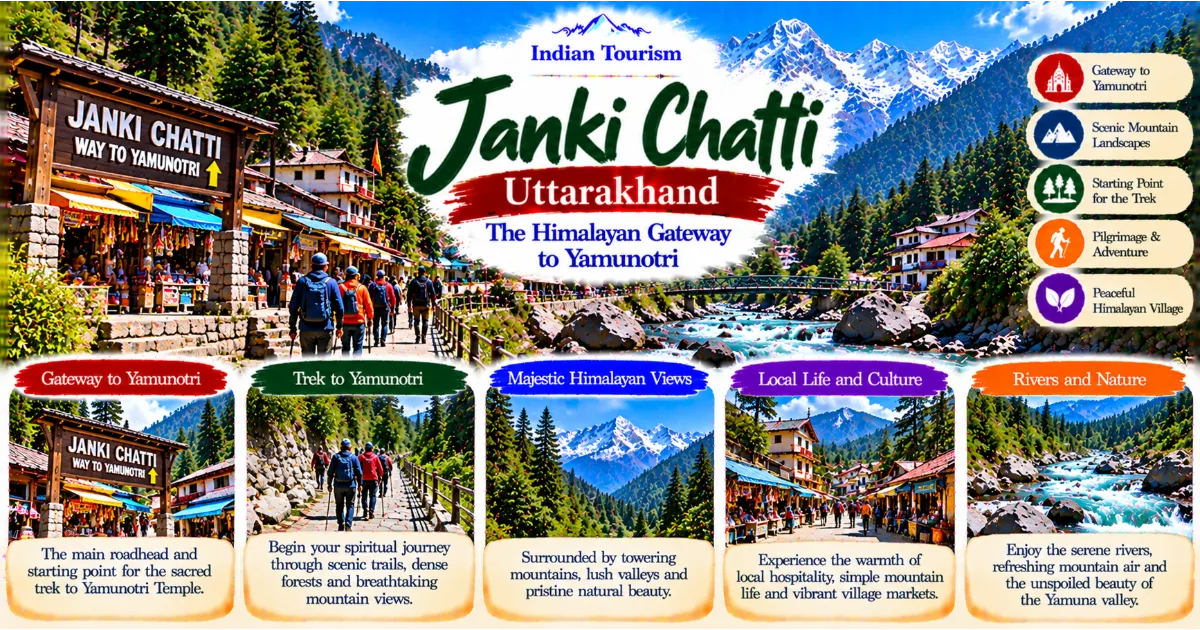
Discovering Janki Chatti, a Gateway to the Sacred Himalayas
Surrounded by the dramatic mountains of Uttarakhand, Janki Chatti is one of the most important stopping points for travellers visiting the sacred Yamunotri Temple. Located in Uttarkashi district, this small Himalayan settlement serves as the principal roadhead for the final approach to Yamunotri under the usual pilgrimage arrangements. Its significance comes from its location, its role in the Char Dham pilgrimage, and its position within a landscape of mountain slopes, forests, streams, and traditional settlements.
For many pilgrims, Janki Chatti represents the point where a road journey becomes a walking journey. After travelling through the winding mountain roads of the Yamuna valley, visitors prepare for the uphill trek towards Yamunotri. The transition creates a distinctive atmosphere in which devotion, physical effort, local commerce, and the natural environment become closely connected.
Yet Janki Chatti is more than a place to begin a pilgrimage. It provides a useful introduction to the geography and culture of the upper Yamuna valley. Travellers can observe how mountain settlements adapt to seasonal tourism, how local services support pilgrims, and how the surrounding environment shapes everyday life.
The settlement is especially interesting because it brings together several dimensions of Himalayan travel. It is a practical transport point, a place to prepare for a challenging walk, a centre for local services, and a destination surrounded by impressive mountain scenery. Visitors who take time to understand these different roles can appreciate Janki Chatti beyond its function as a stop on the way to Yamunotri.
For those planning an Uttarakhand journey, Janki Chatti can be combined with nearby destinations such as Kharsali, Hanuman Chatti, and Barkot. Together, these places reveal the relationship between pilgrimage routes, mountain communities, traditional religious practices, and the natural landscape of Garhwal.
Where Is Janki Chatti Located?
Janki Chatti is situated in Uttarkashi district of Uttarakhand, within the upper Yamuna valley. It lies along the mountain route used by pilgrims travelling towards Yamunotri, one of the four principal Char Dham pilgrimage destinations in the state.
The settlement is surrounded by steep Himalayan terrain. Roads follow the natural contours of the mountains, while nearby slopes support patches of vegetation and forest. The landscape is shaped by elevation, rainfall, flowing water, and the changing temperatures associated with different seasons.
Janki Chatti occupies an important position in the pilgrimage transport network because it is commonly used as the roadhead for the final trek to Yamunotri. From here, pilgrims continue on foot along the established route towards the temple. The journey involves an uphill walk, and the time required depends on fitness, weather, crowd levels, and the pace of the individual traveller.
The village's location also places it within a wider network of settlements that support travel through the Yamunotri region. Barkot is an important town for planning the journey, while Hanuman Chatti and Kharsali provide additional cultural and geographical context. Each location has its own identity and role in the broader landscape.
Because Janki Chatti is located in a mountainous area, road access can be affected by landslides, heavy rain, snowfall, and maintenance work. Visitors should check current conditions before departure rather than assuming that the route will always remain open.
Understanding the geography is essential when planning a trip. Janki Chatti may appear close to Yamunotri on a map, but the final journey involves walking through mountain terrain. Visitors should prepare accordingly and allow enough time for both the ascent and the return.
Why Janki Chatti Is Important for the Yamunotri Pilgrimage
Janki Chatti has become one of the most recognisable locations associated with the Yamunotri pilgrimage because of its role as the principal roadhead for the final approach to the temple.
Yamunotri is dedicated to Goddess Yamuna and forms part of the Char Dham pilgrimage circuit in Uttarakhand. The other principal destinations are Gangotri, Kedarnath, and Badrinath. These sacred sites attract devotees from different parts of India, particularly during the main pilgrimage season.
For many pilgrims, reaching Yamunotri is a journey that combines religious devotion with physical effort. The final trek requires preparation, suitable footwear, appropriate clothing, and an understanding of the conditions along the route. Janki Chatti provides the place where travellers organise these practical arrangements before beginning the walk.
During the pilgrimage season, the settlement becomes a busy point of movement. Visitors arrive by road, make arrangements for their onward journey, purchase refreshments, and prepare for the climb. Local service providers may assist pilgrims with transport-related needs and other facilities, depending on the season and current regulations.
The atmosphere can be especially active during periods of high pilgrimage demand. Families, groups of friends, older devotees, and individual travellers may all be preparing to undertake the same route. Their journeys create a distinctive environment in which the religious significance of Yamunotri is visible in the everyday activity of the settlement.
However, visitors should not assume that every pilgrim will find the walk equally easy. Fitness, age, medical conditions, weather, and altitude can influence the experience. It is important to assess personal capabilities and avoid treating the trek as a race.
Janki Chatti's importance lies in helping pilgrims make the transition from road travel to the final mountain journey. It is a practical gateway, but it is also part of the larger cultural experience of travelling towards a sacred Himalayan destination.
Understanding the Trek from Janki Chatti to Yamunotri
The trek from Janki Chatti to Yamunotri is the central experience for many visitors to the settlement. The route climbs through the mountain landscape towards the temple, passing sections where the surrounding terrain, vegetation, and views change with elevation.
The walk is commonly described as a substantial uphill trek. The exact distance and time estimates can vary depending on the route conditions, official arrangements, and the point from which the journey is measured. Travellers should consult current local information before setting out.
For people accustomed to walking on level ground, the ascent may be more demanding than expected. Continuous climbing can place pressure on the legs and cardiovascular system, while altitude and weather may influence energy levels. A comfortable pace, regular breaks, and adequate hydration can make the experience more manageable.
The trail can become crowded during the busiest pilgrimage periods. Walking carefully, allowing space for other travellers, and following the designated route are important for everyone's safety. Visitors should avoid stopping in narrow sections where their presence could obstruct movement.
Weather is another important consideration. Rain can make surfaces slippery, while cold conditions may affect comfort and visibility. Travellers should carry suitable clothing and check local advisories before starting the walk.
Some pilgrims choose to complete the trek independently, while others may use locally available assistance or transport options where permitted. The availability and operating rules of such services can change, so visitors should verify arrangements locally rather than relying on assumptions from previous years.
The return journey also requires planning. Descending may feel easier than climbing, but tired legs, slippery surfaces, and long periods of walking can still create difficulties. Travellers should preserve enough time and energy for the entire journey rather than focusing only on reaching the temple.
The most rewarding approach is to treat the trek as a journey requiring patience and preparation. The religious destination may be the main objective, but the experience of moving through the Himalayan landscape is also an important part of the pilgrimage.
The Natural Beauty of Janki Chatti
Janki Chatti is surrounded by a landscape that reflects the dramatic character of the Garhwal Himalayas. Mountain slopes rise around the settlement, streams descend through the valleys, and vegetation changes according to altitude, exposure, and seasonal conditions.
The scenery provides an attractive setting for travellers who appreciate mountain environments. Forested areas, exposed rocky slopes, scattered buildings, and winding roads combine to create a landscape that changes constantly with the weather.
During clear conditions, the surrounding hills can appear sharply defined against the sky. Clouds may gather over the higher slopes and move through the valley, altering the light and atmosphere within a short period. These changes are part of the character of Himalayan travel and can make the same viewpoint look different at different times of day.
Water is another defining feature of the wider region. Mountain streams and rivers shape the terrain and support settlements along their courses. Their sound adds to the atmosphere, particularly in quieter areas away from the busiest roads.
The vegetation varies across the landscape. Sheltered slopes may support denser growth, while exposed areas have less plant cover. Seasonal rainfall influences the colour of the surroundings, with the monsoon generally bringing greater greenery and the colder months producing a more subdued appearance.
Visitors should appreciate the natural landscape without assuming that every attractive area is safe to explore. Steep slopes, unstable rocks, slippery paths, and fast-flowing water can create hazards. Travellers should remain on established routes and avoid approaching riverbanks unnecessarily.
Janki Chatti's scenery is best enjoyed at a comfortable pace. Even travellers who are primarily interested in pilgrimage can benefit from taking a moment to observe the mountains and understand the environment through which the route passes.
The Spiritual Atmosphere of the Yamunotri Route
The journey through Janki Chatti is closely connected to the religious traditions surrounding Goddess Yamuna. For devotees, the pilgrimage is not simply a journey from one geographical point to another. It is an opportunity to express faith, participate in established traditions, and experience a sacred landscape.
Goddess Yamuna is revered in Hindu traditions as the divine personification of the Yamuna River. The river has a major place in religious stories and cultural practices across northern India. Its upper Himalayan region holds particular significance because of its association with Yamunotri and the sacred geography of the mountains.
The route towards the temple brings pilgrims into contact with the physical environment that forms part of this religious understanding. Mountain slopes, flowing water, changing weather, and the effort of walking all contribute to the experience.
At Janki Chatti, this spiritual atmosphere is visible in the preparations made by pilgrims. Visitors may see families arranging their belongings, checking footwear, purchasing refreshments, or discussing the next stage of the journey. These everyday activities form part of the wider pilgrimage experience.
For travellers who are not visiting for religious reasons, observing these traditions can provide insight into the cultural importance of the route. Respectful curiosity is valuable, but visitors should avoid treating worshippers as subjects for photography without permission.
Religious practices also vary according to local customs and the instructions of temple authorities. Visitors should follow guidance concerning dress, behaviour, photography, and access to sacred areas.
Janki Chatti demonstrates how faith and geography interact in the Himalayas. The settlement's role is practical, but it is also part of a larger journey that many devotees consider deeply meaningful.
Best Things to Experience in Janki Chatti
Prepare for the Yamunotri Trek
One of the most important activities in Janki Chatti is preparing for the final journey to Yamunotri. Travellers should check their footwear, carry sufficient drinking water, dress according to the weather, and make sure they have essential medicines and personal items.
Preparation is particularly important for families, older travellers, and people who are not accustomed to long uphill walks. Taking time to assess the conditions before starting can reduce discomfort and help prevent avoidable problems.
Observe the Pilgrimage Atmosphere
During the main season, Janki Chatti offers an opportunity to observe the movement of pilgrims from different parts of India. The settlement becomes a meeting point for people preparing to undertake the same sacred journey.
Visitors can observe the activity respectfully, learn about the practical arrangements required for the trek, and appreciate the role of local services in supporting pilgrimage travel.
Enjoy the Mountain Views
The surrounding landscape provides opportunities to enjoy the Himalayan environment without necessarily undertaking a long walk. Safe viewpoints and accessible areas around the settlement may offer attractive views of the valley and nearby slopes.
Early morning and late afternoon can provide pleasant natural light for photography, although weather conditions should always guide plans.
Experience Local Food and Services
Local shops and eateries may provide refreshments and simple meals during the operating season. Taking a break before or after the trek can be useful, particularly after a long road journey.
Travellers should carry snacks when necessary and confirm the availability of food services during quieter periods.
Learn About Mountain Travel
Janki Chatti is a useful place to understand the practical realities of travel in the Himalayas. Road access, walking routes, seasonal weather, local transport, and pilgrimage management all influence the visitor experience.
Rather than viewing these arrangements as inconveniences, travellers can use them to gain a better understanding of how tourism functions in a mountain environment.
Best Time to Visit Janki Chatti
The best time to visit Janki Chatti depends on whether the primary objective is the Yamunotri pilgrimage, mountain scenery, or a quieter exploration of the region.
Spring: March to April
Spring marks the transition from winter towards warmer conditions. Temperatures begin to rise, although mornings and evenings can remain cold. Snow and winter weather may continue to influence higher parts of the route.
Travellers planning a spring visit should verify the current pilgrimage schedule and road conditions. The opening dates of the Yamunotri Temple are determined according to the religious calendar and announced by the relevant authorities.
Spring can be suitable for people who want to experience the region before the busiest period, provided the necessary routes and services are operating.
Early Summer: May to June
May and June are important months for travel in the Yamunotri region. The pilgrimage season generally brings increased visitor numbers, and local services become more active.
The weather may be more suitable for walking than during colder months, but mountain conditions remain variable. Crowds, road traffic, and accommodation demand can affect the experience.
Visitors should plan ahead, begin journeys early when appropriate, and allow additional time for delays.
Monsoon: July to September
The monsoon brings rainfall to Uttarakhand, increasing the risk of landslides, falling rocks, road closures, and slippery walking surfaces.
The landscape may become lush and green, but the risks can be significant. Travellers should monitor weather forecasts and local advisories closely. If authorities recommend postponing travel, safety should take priority over the itinerary.
Visitors unfamiliar with mountain monsoon conditions should consider travelling during a more stable period.
Autumn: October to November
Autumn can offer clear mountain views and cooler temperatures. However, the pilgrimage calendar becomes particularly important because the Yamunotri Temple closes for winter according to established religious traditions.
Travellers should verify whether the temple and associated services will be operating during their planned dates. Even when road access remains possible, the pilgrimage experience may differ significantly from the main season.
Winter: December to February
Winter brings colder conditions to the upper Himalayan region. Snow, ice, and limited services can affect travel, while parts of the route may become difficult or inaccessible.
Janki Chatti may still be relevant to travellers exploring the broader region, but it should not be assumed that the normal pilgrimage arrangements will be available. Visitors should check current access conditions and avoid travelling without reliable local information.
For a conventional visit focused on the Yamunotri pilgrimage, the main pilgrimage season is generally the most practical period, subject to current conditions and official arrangements.
How to Reach Janki Chatti
Janki Chatti is primarily accessed by road through the Yamunotri region of Uttarakhand. Travellers should select their route according to their starting point and confirm current road conditions before departure.
By Road
Road travel is the main way to reach Janki Chatti. Visitors commonly approach through Dehradun or other accessible towns in Uttarakhand before continuing towards Barkot and the upper Yamuna valley.
Barkot is an important town for planning travel through the region. From there, visitors continue along the mountain route towards the Yamunotri area, including Janki Chatti.
The drive involves winding roads, changes in elevation, and sections where traffic can move slowly. During the pilgrimage season, vehicle numbers may increase considerably. Heavy rainfall and landslides can also affect the journey.
Travellers should allow generous time for the drive and avoid planning a schedule that depends on reaching the destination at an exact minute.
By Train
Janki Chatti does not have its own railway station. Travellers arriving by train can use an accessible railway hub, such as Dehradun, depending on their starting city and the available services.
The remainder of the journey must be completed by road. Visitors should account for the length of the mountain drive when arranging onward transport and accommodation.
By Air
Jolly Grant Airport near Dehradun is a commonly used air gateway for travellers visiting the Yamunotri region. From the airport, the journey continues by road through the mountain routes towards Barkot and Janki Chatti.
Because the road journey can take considerable time, travellers arriving by air should avoid scheduling the trek immediately after a long drive. An overnight stop may be a more comfortable option.
Local Transport and Trek Arrangements
Taxis and other local transport options may be available depending on the season. Before hiring a vehicle, confirm the fare, route, luggage arrangements, and expected duration.
Visitors should also verify the current arrangements for the final trek to Yamunotri. Services and access rules can change, particularly during busy pilgrimage periods, so current local information is essential.
Accommodation and Food in Janki Chatti
Janki Chatti has developed services to support pilgrims and other travellers, but the availability of accommodation and food can vary significantly by season.
During the main pilgrimage period, visitors may find guesthouses, lodges, and simple accommodation options in the wider area. Demand can be high, so booking ahead is advisable, especially for families and larger groups.
Travellers should check the facilities provided before making a reservation. Important considerations include hot water, heating, bathroom arrangements, electricity, room capacity, and access for older visitors or people with mobility limitations.
Outside the main season, some services may operate on reduced schedules or close temporarily. Visitors should confirm that accommodation will be open on their intended dates rather than assuming that availability remains constant throughout the year.
Food options may include simple Indian meals, snacks, tea, and refreshments. The range of choices depends on the establishment and the season. Travellers with specific dietary needs should carry suitable supplies and confirm meal arrangements in advance.
It is useful to carry drinking water and basic snacks for the trek. Visitors should avoid relying on a single shop or food stop, particularly when travelling during quieter periods.
Supporting local businesses can help sustain the services that make pilgrimage travel possible. At the same time, travellers should maintain realistic expectations about the facilities available in a small mountain settlement.
A One-Day Itinerary for Janki Chatti and Yamunotri
A one-day visit can be possible for some travellers who are already staying nearby, but it requires careful planning. The suitability of the itinerary depends on fitness, weather, crowd levels, and the time needed for the uphill trek and return journey.
Begin the day early from your overnight accommodation. Have breakfast, check the weather, and confirm the latest route information before travelling to Janki Chatti.
After reaching the settlement, prepare for the walk. Make sure you have suitable footwear, drinking water, warm or waterproof clothing as required, and any essential medicines.
Begin the trek at a comfortable pace. Avoid rushing, especially if you are not accustomed to uphill walking. Take breaks when necessary and follow the designated route.
At Yamunotri, allow sufficient time for the temple visit and any required waiting. Follow the instructions of temple authorities and respect local religious practices.
The return journey should be planned with equal care. Descending can be tiring, particularly after a long day of walking. Preserve enough time to reach Janki Chatti safely and continue to your accommodation without unnecessary pressure.
Visitors with older adults, young children, or people who have medical conditions should consider a more flexible schedule. If the journey feels too demanding, changing the plan is preferable to continuing when exhausted.
Travellers who are not visiting Yamunotri can spend the day exploring Janki Chatti and the surrounding accessible areas, learning about the pilgrimage route and enjoying the mountain setting.
A Two-Day Itinerary for the Yamunotri Region
A two-day itinerary allows visitors to approach the journey at a more comfortable pace.
On the first day, travel towards Barkot or another suitable overnight base along the route. Depending on the starting point, the drive may occupy much of the day. After arriving, settle into your accommodation, confirm the road conditions, and prepare for the following morning.
On the second day, travel to Janki Chatti and begin the trek towards Yamunotri if conditions are suitable. Starting early provides more flexibility for walking breaks, temple visits, and the return journey.
If you prefer a cultural itinerary, you can allocate additional time to Kharsali and other nearby destinations, depending on access and the time available. This option is particularly suitable for visitors interested in traditional architecture, religious heritage, and mountain village life.
Do not attempt to include every destination in the region simply because they appear close together on a map. Mountain roads, traffic, weather, and walking distances can make travel slower than expected.
The best itinerary is one that allows enough time to enjoy the destination without compromising safety or comfort.
Practical Travel Tips for Janki Chatti
Preparation is essential for a comfortable visit to Janki Chatti and the Yamunotri route.
Wear comfortable footwear with good grip. The final trek includes uphill walking, and suitable shoes can improve comfort and stability. Avoid wearing new footwear for the first time on a long mountain walk.
Carry layers of clothing. Temperatures may change during the day, and rain or cold winds can make conditions uncomfortable. A waterproof jacket and a warm layer are useful even when the morning begins with sunshine.
Keep drinking water available and take regular breaks. Avoid pushing yourself to walk faster than your fitness allows. If you feel unwell, dizzy, unusually breathless, or exhausted, stop and seek appropriate assistance.
Carry essential medicines and personal documents. Travellers with medical conditions should consider whether the trek is appropriate for them and seek medical advice when necessary.
Check local weather forecasts and road advisories before travelling. Conditions can change rapidly in the mountains, particularly during the monsoon and winter.
Keep some cash available because digital payment services may not work consistently in every location. Mobile connectivity may also vary, so save important details offline.
Respect local customs, temple rules, and the needs of other pilgrims. Avoid littering, do not block narrow sections of the trail, and follow the instructions of officials and local personnel.
Finally, allow enough time for the return journey. The aim should be to complete the trip safely rather than reach the destination as quickly as possible.
Responsible Tourism Along the Yamunotri Route
The natural environment around Janki Chatti is an important part of the pilgrimage experience. Responsible travel can help protect the landscape and support the communities that depend on tourism.
Do not leave plastic bottles, food wrappers, or other waste along the road or trekking route. Carry rubbish until it can be disposed of properly, and use designated waste facilities where available.
Avoid throwing waste into streams and rivers. Watercourses support communities and ecosystems downstream, and careless disposal can create long-lasting environmental problems.
Respect wildlife and vegetation. Do not disturb animals, damage plants, or leave established paths unnecessarily. Steep slopes and fragile ground can be dangerous as well as environmentally sensitive.
Support local businesses when practical. Using local accommodation, purchasing refreshments, and hiring authorised local services can help tourism income remain within the region.
Follow official route instructions and avoid shortcuts that could endanger you or other travellers. During busy periods, patience and cooperation are essential for maintaining safe movement along the trail.
Responsible tourism also means understanding the limits of the environment. If weather conditions become dangerous or authorities restrict access, postpone the journey rather than taking unnecessary risks.
The long-term value of Janki Chatti depends on preserving both its natural setting and its ability to support pilgrims safely. Every visitor has a role in protecting these qualities.
Who Should Visit Janki Chatti?
Janki Chatti is particularly suitable for pilgrims travelling towards Yamunotri and for travellers interested in understanding how mountain pilgrimage routes operate.
Nature lovers may appreciate the surrounding landscape, while photographers can capture the contrast between the settlement, mountain slopes, forested areas, and the movement of pilgrims.
Families can include Janki Chatti in a wider Uttarakhand itinerary, but they should consider the physical demands of the final trek. Travelling with older adults or young children may require additional time and support.
Solo travellers may also find the destination interesting, provided they prepare carefully and follow current local guidance. Those planning to trek alone should assess their fitness, check conditions, and avoid unfamiliar routes.
Visitors seeking a cultural experience can use Janki Chatti as a starting point for exploring the broader Yamunotri region, including Kharsali and Hanuman Chatti. These settlements offer different perspectives on religious traditions, mountain architecture, and everyday life.
The destination may be less suitable for people who want a luxury holiday with extensive entertainment facilities or a large range of organised recreational activities. Its appeal lies in its practical role in pilgrimage, its natural surroundings, and its place within the cultural landscape of Garhwal.
Travellers who understand these characteristics are more likely to appreciate what Janki Chatti offers.
Final Thoughts: Janki Chatti, Where the Road Meets the Sacred Trail
Janki Chatti is an essential part of the Yamunotri travel experience. Its role as the principal roadhead for the final trek makes it a practical gateway to one of Uttarakhand's most important pilgrimage destinations. Yet the settlement also provides insight into the relationship between mountain geography, religious traditions, local livelihoods, and seasonal travel.
For pilgrims, Janki Chatti marks the transition from road travel to the physical effort of walking towards Yamunotri. For nature lovers, it offers a setting surrounded by the dramatic landscape of the Garhwal Himalayas. For cultural travellers, it reveals how communities organise services and preserve traditions within a challenging environment.
A successful visit depends on preparation, realistic expectations, and respect for local conditions. The trek should be approached at a comfortable pace, with appropriate clothing, sufficient water, and enough time for the return journey.
Visitors should also look beyond the practical arrangements and appreciate the wider significance of the place. Janki Chatti is part of a living pilgrimage route where people, landscape, and religious traditions come together. Its importance is not limited to the distance between the road and the temple. It is also found in the everyday activity of the settlement, the services provided by local residents, and the shared experience of travellers moving through the mountains.
For anyone exploring Uttarakhand, Janki Chatti offers a meaningful opportunity to experience the journey towards Yamunotri with greater understanding. It reminds us that a pilgrimage destination is shaped not only by the sacred place at the end of the route but also by the communities, landscapes, and experiences that make the journey possible.
#JankiChatti #UttarakhandTourism #IndianTourism #Yamunotri #CharDhamYatra #GarhwalHimalayas #Uttarkashi #HimalayanTravel #PilgrimageTourism #MountainDestinations #ExploreUttarakhand #NatureTravel #ResponsibleTourism #TravelIndia #YamunaValley
