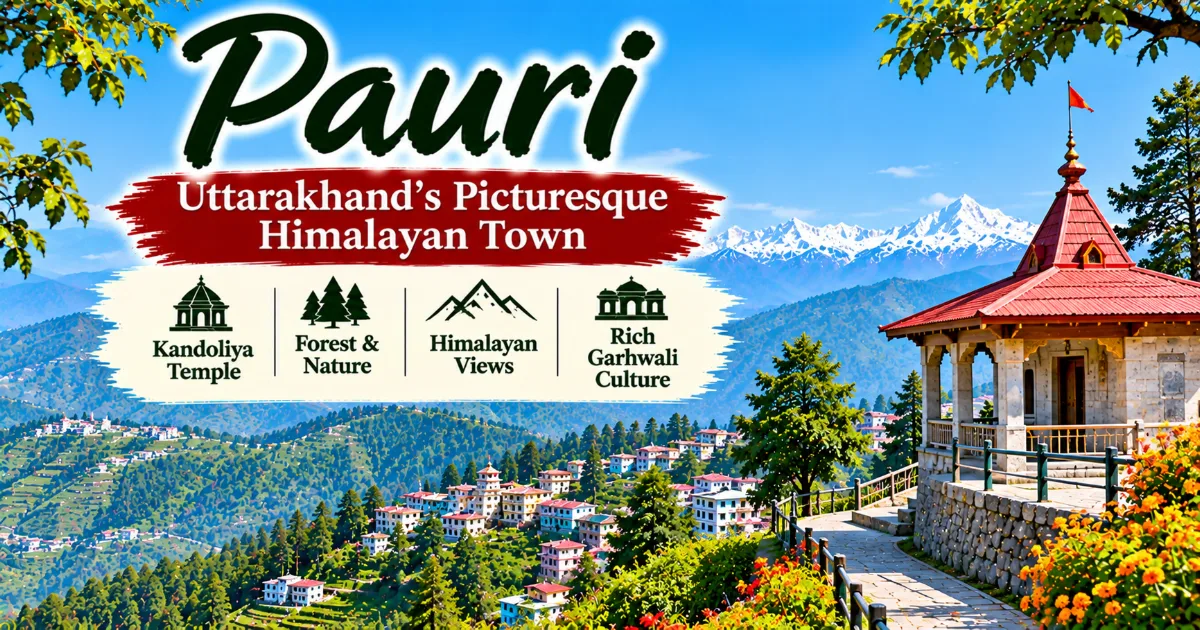
Pauri is a hill town in Uttarakhand's Garhwal region, where panoramic Himalayan views, quiet mountain surroundings, traditional culture and spiritual heritage come together. Set on the slopes of Kandoliya Hill, it suits travellers who want the quieter side of the Himalayas. Scenic viewpoints and old temples, forest walks, local markets and traditional Garhwali food make it a place for slow, unhurried travel.
Discover the Peaceful Beauty of Pauri
Uttarakhand is known for its Himalayan landscapes, sacred pilgrimage destinations, hill stations and mountain settlements. Mussoorie, Nainital and Auli draw most of the tourist attention, yet several smaller towns offer equally memorable trips through their natural beauty and traditional character. Pauri is one of them.
Located in the Pauri Garhwal district, the town is surrounded by forested slopes and mountain landscapes, and its elevated position gives views of the Himalayan ranges on clear days. With its calm atmosphere, it appeals to travellers who want time away from crowded tourist centres.
As the administrative headquarters of Pauri Garhwal district, the town also serves as an educational, cultural and administrative centre for the surrounding region, beyond its role in tourism. Spend a day here and you see the everyday life of the Garhwal Himalayas, where mountain traditions, local markets, religious practices and modern institutions exist alongside one another.
Continue Reading
Each season changes the landscape. Spring brings fresh greenery, and summer is comfortable compared with the plains. In the monsoon the hills turn lush, autumn often gives clearer mountain views, and winter brings cold weather with occasional snowfall in the wider region.
Visitors can explore Kandoliya Temple, take in the scenery from accessible viewpoints, get to know the local culture and use Pauri as a starting point for nearby destinations. Nature lovers, photographers, families, couples and travellers interested in regional culture will get the most from it.
A trip here means slowing down instead of rushing between famous attractions: taking in the atmosphere of a Himalayan town, its mountain setting and the cultural identity of Garhwal.
Where Is Pauri Located?
Pauri lies in the Garhwal region of Uttarakhand and is the district headquarters of Pauri Garhwal district. At an elevation of approximately 1,800 metres above sea level, it has a pleasant mountain climate for much of the year.
The town sits on the northern slopes of Kandoliya Hill, surrounded by the landscapes of the central Himalayas. When the weather is favourable, you get wide views of valleys and distant mountain ranges.
Roads link it with several important settlements in the region, including Kotdwar, Srinagar, Lansdowne and other parts of Garhwal, so it fits well into a longer journey through Uttarakhand.
For people in nearby villages, the town is an important centre. Its local markets, educational institutions, government offices and healthcare facilities serve the surrounding mountain communities.
Compared with large commercial hill stations, tourism here is modest. What you get instead is a more everyday version of mountain life, with the scenery all around.
The Historical Background of Pauri
Much of the town's history is tied to the wider history of Garhwal.
Over several centuries, different kingdoms, local rulers, religious traditions and administrative developments shaped the Garhwal region. Its mountain geography influenced where settlements formed, where political boundaries fell and how cultural practices developed.
Historically the region was associated with the Garhwal Kingdom, which grew into an important political power in the western Himalayan region, with Srinagar Garhwal as a significant centre during the period of the Garhwal rulers.
Gorkha expansion in the early nineteenth century and the British administration that followed also left their mark, influencing the development of towns, roads and administrative systems across Garhwal.
Over time Pauri developed into an important administrative centre, helped by its elevated location and access to surrounding areas.
Today the town reflects several layers of Garhwali history. You can see them in its temples, traditional celebrations, local food, language and the everyday practices of mountain communities.
Anyone interested in history should see Pauri as part of a wider cultural landscape that has evolved through centuries of regional change, rather than as a scenic hill town alone.
Kandoliya Temple: A Spiritual Landmark of Pauri
Kandoliya Temple is one of the best-known attractions in Pauri. Dedicated to Lord Shiva in local religious tradition, it stands in the Kandoliya area amid peaceful mountain surroundings.
Local residents and visitors alike treat it as an important spiritual destination, and its setting suits travellers who want to combine religious exploration with scenic sightseeing. Around the temple you can enjoy the forest landscape and mountain atmosphere. Many people include it in a relaxed sightseeing itinerary because it is quieter than large pilgrimage centres.
Religious places in Garhwal are closely connected with local identity. Besides being places of worship, temples are where communities gather during festivals and special occasions.
Follow the customs of the temple, dress respectfully and behave appropriately. Take photographs only where permitted.
A visit to Kandoliya Temple is a good introduction to the religious traditions of Pauri and the wider Garhwal region.
Kandoliya Park: A Pleasant Outdoor Space
Kandoliya Park is a popular recreational area in Pauri, and it lets you enjoy the natural surroundings without travelling far from the town.
Associated with the Kandoliya area, the park suits families, children and visitors who want to spend time outdoors. Its open spaces and greenery are good for a relaxed walk or a short break during sightseeing. Families can enjoy time together here, while photographers may find chances to capture the mountain environment and changing light.
It is at its best in pleasant weather, when you can stay outdoors longer.
Check local access arrangements and available facilities before visiting. As with any public recreational space, avoid littering and respect the surrounding environment.
Panoramic Himalayan Views from Pauri
Views of the Himalayan mountain ranges are one of the most memorable parts of a visit to Pauri. From the town's elevated position, you can see distant mountain peaks and valleys when the sky is clear.
What you see changes through the day. Early mornings may offer clear views before clouds develop, while late afternoons can bring beautiful light across the mountain landscape. During the monsoon, clouds often move across the hills and the scenery turns dramatic. In winter, clear weather may reveal distant snow-covered peaks.
How good the view is depends on weather conditions, visibility and the specific viewpoint selected.
If landscape photography interests you, allow time for more than one attempt. Mountain visibility can change quickly, and a spot that is cloudy in the morning may clear later.
Travellers who like looking at mountains without demanding trekking will find Pauri particularly rewarding.
Laxman Jhula Viewpoint and the Surrounding Landscape
Around Pauri, the wider region contains several viewpoints and scenic locations for taking in the surrounding Himalayan terrain.
Confirm the exact location and current accessibility of individual viewpoints before planning your route, as local names and informal viewing spots may vary.
What draws people to these spots is the chance to see how mountain slopes, valleys, forests and distant peaks fit together, all from accessible public areas and without a difficult mountain expedition.
At viewpoints, remain behind safety barriers and avoid standing on unstable edges for photographs. Weather conditions can affect both visibility and the safety of exposed locations.
The Cultural Identity of Garhwal
To understand the cultural identity of Garhwal, Pauri is an excellent place to start.
Mountain geography, agricultural traditions, religious practices and community life have shaped the distinctive cultural heritage of the Garhwali people. The region is known for its folk music, traditional dance forms, festivals, local architecture and food.
Garhwali language and regional dialects remain important expressions of identity. Although Hindi is widely used, you may hear local languages in markets, villages and everyday conversations.
Traditional folk music often reflects the relationship between people and their natural surroundings. Songs may describe seasonal changes, agricultural activities, family life, local legends and the experiences of people living in the mountains.
Dance is also an important part of cultural celebrations, and community performances during festivals are a chance to experience the region's living heritage.
Approach cultural activities with respect. These are practices tied to the identity of the communities that preserve them, rather than shows put on for tourists.
Traditional Garhwali Architecture
Architecture in the Garhwal region reflects practical knowledge built up by mountain communities over generations.
Traditional houses were often built from locally available stone, timber and other materials, with designs that responded to the local climate, slope conditions and availability of resources. Older buildings in rural areas may still show stone walls, wooden balconies, sloping roofs and carefully arranged openings.
How a traditional house looks varies with location, elevation and available materials. Some settlements preserve older architectural forms, while others have gradually adopted modern construction methods.
In Pauri you can observe the transition between traditional mountain architecture and contemporary urban development. If architecture interests you, also explore nearby villages where older buildings may remain part of everyday life.
Respect private property and seek permission before photographing homes or entering residential spaces.
Local Markets and Everyday Life in Pauri
Walking through Pauri's markets gives a glimpse into the everyday life of a regional Himalayan town.
Unlike heavily commercialised tourist centres, they mainly serve residents and people travelling from nearby villages. You will find grocery shops, clothing stores, small restaurants, tea stalls, pharmacies and businesses offering everyday services.
This mix reflects the practical needs of mountain communities. People come to town for shopping, education, administration and healthcare, which makes it an important centre for surrounding settlements.
Take a leisurely walk through the market, sample local snacks and watch the rhythm of daily life. Small shops may also sell regional products and household items that reflect the area's cultural identity.
Shopping here is generally simple rather than a major tourist activity. Its value lies in seeing how a mountain town functions beyond its visitor attractions.
The Natural Environment Around Pauri
Forests, hills and valleys surround Pauri and form part of the wider Himalayan ecosystem.
Vegetation changes according to elevation, soil conditions and seasonal rainfall. Oak, pine and other regional tree species make up much of the landscape. These forests support birds, insects and other wildlife, and anyone who enjoys nature observation may find opportunities for birdwatching and photography.
The mountain ecosystem also matters for water conservation, soil protection and maintaining local climatic conditions. Forests help regulate water movement through the landscape and provide habitats for different species, so their preservation is essential for the long-term environmental health of the region.
Tourism can put pressure on these ecosystems if waste management and visitor behaviour are not handled responsibly. Avoid littering, damaging vegetation, disturbing wildlife or entering restricted forest areas.
Birdwatching Around Pauri
Birdwatching enthusiasts may find the forests and surrounding landscapes of Pauri interesting.
The Himalayan foothills and adjoining mountain habitats support a variety of bird species, although which birds you see at any particular location depends on the season, weather and habitat conditions. Quiet roads, forest edges and suitable walking routes are good places to look.
Early morning is often the most rewarding time, because many species are more active during the cooler hours. A pair of binoculars and a basic bird identification guide make the experience more enjoyable.
Avoid playing recorded bird calls at high volume or disturbing nests and feeding areas. The aim is to observe wildlife without interfering with its natural behaviour.
Best Time to Visit Pauri
You can visit Pauri throughout much of the year, but the ideal season depends on the type of experience you prefer.
Spring: March to April
Spring is one of the pleasant seasons for exploring Pauri. Temperatures are generally comfortable, and the surrounding hills begin to show fresh greenery.
This is a good time for sightseeing, temple visits, photography and relaxed outdoor walks. Expect clear mornings and pleasant afternoons, although weather conditions can change. Families and travellers who prefer comfortable temperatures will find it a good choice.
Summer: May to June
Summer is a popular time to visit because the town is cooler than many cities in the plains, and the mountain setting suits outdoor sightseeing and relaxation.
Many families plan holidays during this period, so the town may see more visitors during school vacations. Book accommodation in advance during busy holiday periods.
Light clothing works for daytime, but carry a jacket for cooler evenings.
Monsoon: July to September
Rainfall and fresh greenery arrive with the monsoon. The surrounding hills become lush, and clouds moving across the valleys create beautiful scenery.
Heavy rainfall can also create travel difficulties. Mountain roads may become slippery, and landslides can affect access to different locations.
Check weather forecasts and road conditions before travelling. Avoid unnecessary driving during heavy rain and stay away from unstable slopes and swollen streams.
Autumn: October to November
Autumn is an excellent season for visiting Pauri. Once the monsoon withdraws, the weather often becomes better for outdoor exploration.
Clearer skies may improve visibility of the Himalayan ranges, which makes this season attractive for photography, and the comfortable weather makes it easier to explore temples, markets and nearby destinations.
Winter: December to February
Winter brings cold temperatures to Pauri, particularly during early mornings and evenings. Expect chilly conditions in town, while snowfall is more likely in higher areas of the wider region.
Carry warm clothing and check weather forecasts before travelling. Travellers who enjoy quiet mountain environments and clear days may find it an attractive season.
How to Reach Pauri
Access to Pauri is primarily by road. The nearest major railway station commonly used by visitors is Kotdwar, while Jolly Grant Airport near Dehradun is an important air gateway.
By Road
Road travel is the most convenient way to reach Pauri, which is connected with several destinations in Uttarakhand through regional highways and mountain roads.
From Delhi, travel towards Kotdwar and continue uphill to Pauri. Visitors coming from Dehradun can also plan a road journey through the Garhwal region.
Private vehicles and hired taxis give flexibility for exploring the surrounding area. Public transport services connect Pauri with important towns in the region, although schedules may vary.
Expect sharp bends and changes in elevation on mountain roads, so drive at safe speeds and avoid travelling during severe weather.
By Train
Kotdwar Railway Station is one of the nearest major rail gateways commonly used by travellers visiting Pauri. From Kotdwar, continue towards Pauri by taxi or bus, depending on availability.
Confirm rail schedules and onward transport arrangements before departure.
By Air
Jolly Grant Airport near Dehradun is the nearest major airport commonly used for reaching the region. Onward road transport towards Pauri can be arranged from the airport.
Because the journey involves mountain roads, allow sufficient time and avoid planning an overly tight connection.
Suggested Two-Day Pauri Itinerary
Two days is enough time to explore the town and enjoy its surrounding landscape.
Day 1: Explore the Town and Its Heritage
Arrive in Pauri and check into your accommodation. Begin with a visit to Kandoliya Temple and spend time exploring the surrounding area, then continue to Kandoliya Park and enjoy the natural environment.
Later, walk through the local market to get a feel for the everyday atmosphere of the town. In the evening, head to a suitable viewpoint, depending on weather and visibility.
Day 2: Mountain Views and Cultural Exploration
Start the morning with the Himalayan scenery from an accessible viewpoint. Then spend time exploring the town's surroundings and learning about local Garhwali traditions.
If time permits, plan a short excursion to a nearby destination such as Srinagar Garhwal or another accessible location. Return to Pauri and begin your onward journey according to your travel schedule.
Suggested Three-Day Pauri Itinerary
For a slower trip, spend three days exploring Pauri and nearby locations.
Day 1: Arrival and Local Sightseeing
Arrive in Pauri and settle into your accommodation. Visit Kandoliya Temple, Kandoliya Park and the local market, and spend the evening enjoying the mountain atmosphere.
Day 2: Nature and Cultural Experiences
Explore the forested surroundings and accessible viewpoints. If visibility is good, spend time observing the landscape and photographing the Himalayan ranges. Food, markets and conversations with residents are the easiest way to learn about the local culture.
Day 3: Nearby Regional Exploration
Plan a road excursion to Srinagar Garhwal or another suitable nearby destination, explore the local surroundings and return to Pauri according to your schedule.
This itinerary gives a relaxed introduction to the natural and cultural character of the region.
Pauri for Couples and Honeymoon Travellers
Couples who prefer peaceful surroundings and scenic mountain views may find Pauri appealing.
The pace is relaxed, with morning walks, quiet viewpoints and time away from crowded commercial centres. You can explore Kandoliya Park, visit the temple, browse the local market and watch the changing mountain landscape.
It suits a calm holiday better than a highly activity-oriented honeymoon.
Accommodation choices vary, so check the location, privacy, facilities and views offered by individual properties before booking. A longer journey can also combine Pauri with other destinations in Garhwal for a more varied honeymoon itinerary.
Pauri for Families
For families who want to explore a traditional Himalayan town, Pauri is a comfortable setting.
Accessible sightseeing locations, cultural attractions and peaceful surroundings make it suitable for a relaxed family holiday. Children can learn about the region's temples, local traditions and mountain environment, and the trip is a chance to introduce them to responsible tourism and the importance of protecting forests and wildlife.
Plan activities according to the age and interests of children. Pack comfortable footwear, warm clothing and basic medicines.
During the monsoon, be especially careful about road conditions and outdoor activities.
Pauri for Nature Lovers and Photographers
Travellers interested in landscape photography and nature observation have plenty to work with in Pauri.
The surrounding mountain ranges, forested slopes and valleys create attractive compositions. Early morning light can reveal distant mountain peaks, while late afternoon may produce softer colours across the landscape.
During the monsoon, clouds and mist give a dramatic atmosphere. Autumn often offers clearer conditions for mountain photography.
Nature lovers can enjoy quiet walks, observe regional vegetation and spend time outdoors.
Photographers should avoid entering private property or restricted areas. Drone use may be subject to local regulations and should never be assumed to be permitted.
Local Garhwali Cuisine in Pauri
Food is an important part of experiencing the cultural identity of Garhwal. The region's cuisine draws on mountain agriculture, locally available grains, seasonal vegetables and traditional cooking methods.
Mandua roti is one of the well-known preparations, made using finger millet flour and often eaten with vegetables, chutneys or other accompaniments.
Chainsoo is a traditional dish prepared using roasted black gram, and its rich flavour makes it a distinctive part of Garhwali cuisine. Phaanu, another traditional preparation, is made using lentils and known for its thick consistency.
Kafuli is commonly associated with green leafy vegetables and valued for its flavour and use of seasonal ingredients. Aloo ke gutke is a popular potato preparation seasoned with regional spices and often served with other local foods.
You may also find traditional lentil dishes, rice preparations and seasonal vegetable recipes in local establishments.
Food availability varies between restaurants and accommodation providers. If regional cuisine interests you, ask about local dishes rather than expecting every traditional preparation to be available.
Accommodation Options in Pauri
Accommodation in Pauri covers different travel budgets, with hotels, guesthouses, lodges and other types of stay in and around the town.
Some properties are located closer to the market and administrative areas, while others may offer a quieter setting with views of the surrounding hills.
Before booking, check the exact location, road access, parking facilities, food availability, heating arrangements and internet connectivity. During summer holidays and popular travel periods, reserve in advance.
On a longer Garhwal itinerary, you could also stay in nearby towns and treat Pauri as one stop during the journey.
Shopping and Local Products
Shopping in Pauri is a simple way to explore local products and everyday regional items.
Small markets and shops may offer clothing, household goods, packaged foods, local snacks and other products used by residents. For regional handicrafts and traditional products, ask local sellers about items made in nearby areas. Handwoven products, woollen goods and locally produced food items may be available depending on the season and the individual shop.
Buying from small businesses helps the local economy.
Purchase responsibly and avoid items made from protected wildlife materials or other environmentally harmful sources.
Nearby Destinations to Explore from Pauri
Several nearby destinations can be combined with Pauri in a broader Garhwal itinerary.
Srinagar Garhwal
Srinagar Garhwal is an important town located along the Alaknanda River. With historical, educational and religious significance, it serves as a major centre in the Garhwal region.
You can explore the town's surroundings, its river landscape and its history. Srinagar is also an important transit point for travellers heading towards other parts of Uttarakhand.
Khirsu
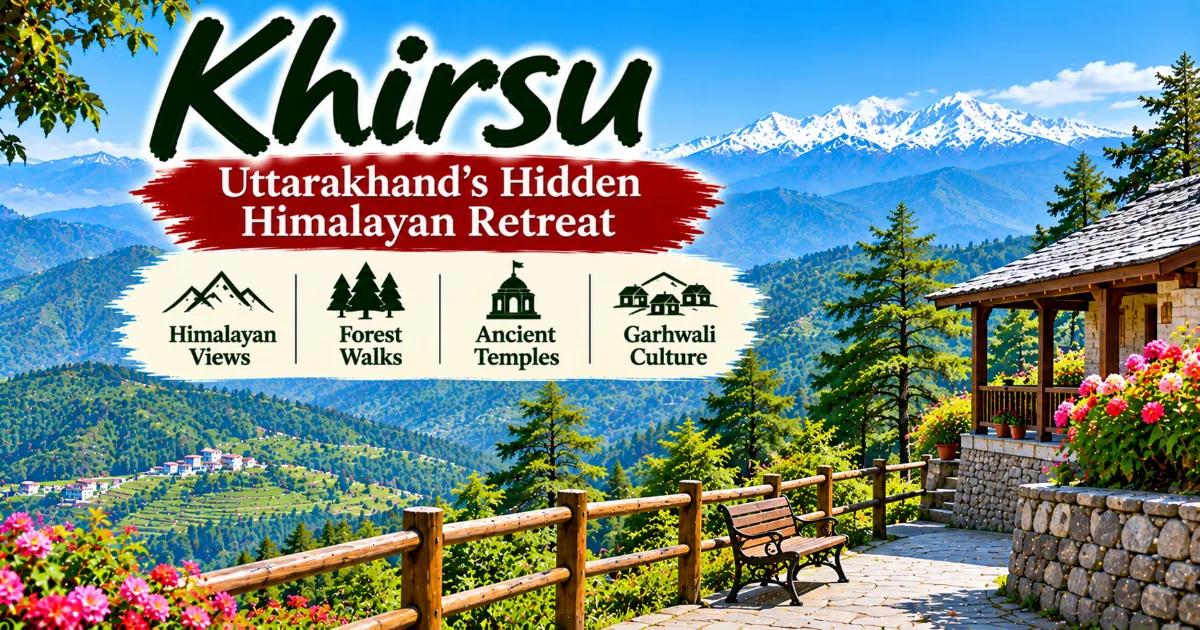
Khirsu is a peaceful hill destination in Pauri Garhwal known for its natural beauty and forested surroundings. People come for its mountain views, quiet atmosphere and rural landscape.
It makes a good excursion if you want to go beyond Pauri's town centre. The scenery varies with the seasons, and clear weather can bring beautiful views of the Himalayan ranges.
Lansdowne
Lansdowne is another well-known hill destination in Pauri Garhwal district, recognised for its colonial-era character, forested slopes and military heritage associated with the Garhwal Rifles.
Travellers who want to combine different hill-town experiences can include it in a longer itinerary.
Devprayag
Devprayag is an important religious and geographical destination in Uttarakhand. It is traditionally recognised as the confluence of the Alaknanda and Bhagirathi rivers, where the Ganga takes its name.
With considerable religious significance, the town attracts pilgrims and visitors interested in the geography of India's sacred rivers. A stop here adds a river and cultural experience to a wider Garhwal journey.
Tarkeshwar Mahadev Temple
Tarkeshwar Mahadev Temple is a religious destination in the wider Pauri Garhwal region. Dedicated to Lord Shiva, it is surrounded by forested mountain scenery, and its peaceful environment attracts devotees and travellers interested in religious heritage.
Check road access and local conditions before planning the journey.
Responsible Tourism in Pauri
Protecting Pauri's natural beauty and cultural identity depends on responsible tourism.
Avoid littering in public spaces, forests, viewpoints and religious areas. Carry reusable water bottles and reduce the use of single-use plastic where practical.
Leave wildlife undisturbed, and do not remove plants, flowers and other natural materials from forest areas.
At temples, respect religious customs and avoid loud behaviour near places of worship. When exploring villages, ask permission before photographing residents or entering private property.
Support local businesses, accommodation providers and transport services wherever possible.
During the monsoon, follow road safety instructions and avoid travelling through areas affected by landslides or flooding.
Travelling this way helps keep Pauri a welcoming destination for future generations while supporting the people who live there.
Travel Tips Before Visiting Pauri
Plan your road journey in advance and allow sufficient time for mountain travel.
Carry warm clothing even during summer, because mornings and evenings can be cooler than expected. Comfortable walking shoes help when exploring temples, parks and nearby trails.
Check weather forecasts and road conditions during the monsoon and winter. Book accommodation in advance for school holidays and busy travel periods.
Pack essential medicines and personal supplies, especially if travelling with children or older family members.
Not every viewpoint or local attraction has restaurants, public toilets or other visitor facilities, so do not count on them.
Keep some cash available for small purchases and local transport.
Respect local traditions and follow instructions at religious and public sites.
Above all, allow time to enjoy the scenery instead of treating Pauri only as a transit point.
Why Pauri Deserves a Place in Uttarakhand Tourism
Pauri deserves greater attention because it represents the quieter and culturally rich side of Uttarakhand.
Its mountain setting offers Himalayan views, while Kandoliya Temple and other local attractions show the spiritual identity of the region. Markets, traditional food and surrounding settlements introduce visitors to everyday Garhwali life.
Administrative and cultural importance also sets the town apart from destinations developed primarily for tourism. As a base, it is convenient for exploring nearby locations such as Khirsu, Srinagar Garhwal and other parts of the district.
Promoting Pauri as a destination can encourage more balanced tourism across Uttarakhand, support local businesses and introduce visitors to the cultural heritage of mountain communities.
A good trip does not always need large resorts, crowded attractions or expensive activities. Sometimes the natural environment and local culture are enough.
Who Should Visit Pauri
Here mountain scenery, cultural heritage and a peaceful atmosphere come together. From its elevated location you can enjoy Himalayan views, and Kandoliya Temple and the surrounding natural environment give visitors plenty to see.
Its markets, traditional food and connection with Garhwali culture suit travellers who want to understand the region beyond its famous pilgrimage routes and commercial hill stations.
Whether you are planning a family holiday, a quiet break with your partner, a photography trip or a longer journey through Garhwal, the town deserves consideration. Spend time exploring its surroundings, enjoy the mountain air, get to know local traditions and settle into the slower rhythm of life in the Himalayas. In return, you get a close look at the natural and cultural character of Uttarakhand.