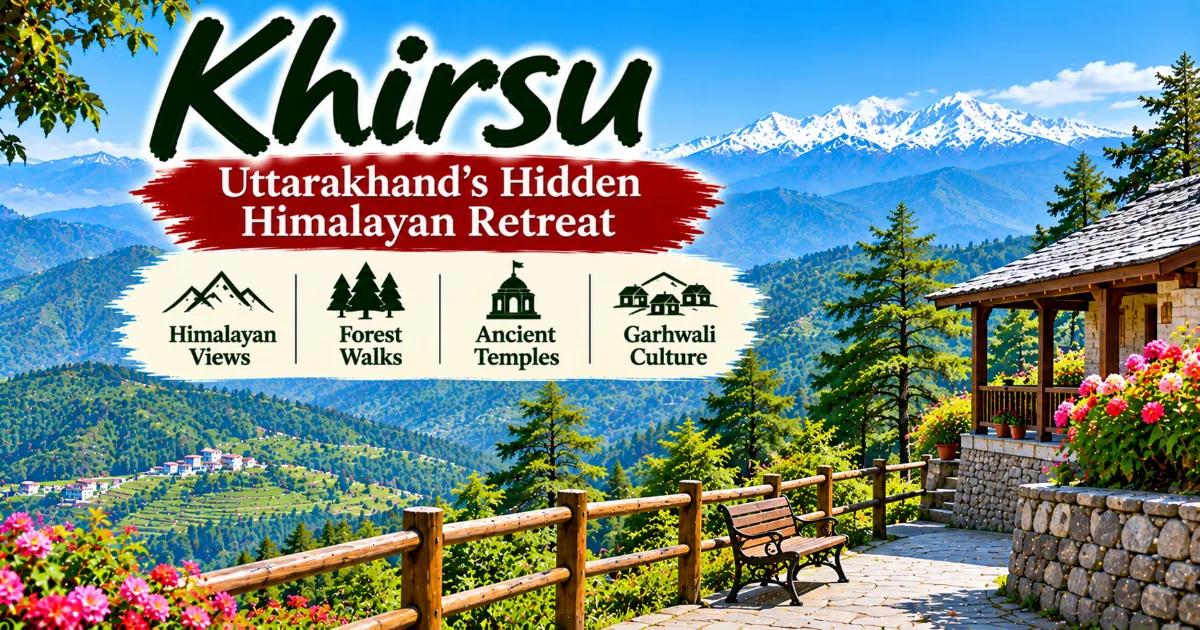
A quiet hill settlement in the Pauri Garhwal district of Uttarakhand, Khirsu has wide Himalayan views, oak and deodar forests and traditional Garhwali villages all around it. It sits away from the crowds of the popular hill stations, and the pace is slower: people come to look at the mountains, get to know the local culture, visit the ancient temples nearby and spend unhurried time outdoors.
A Quiet Hill Stop in Pauri Garhwal
Uttarakhand has plenty of mountain destinations, each showing a different side of Himalayan life. Adventure sports pull people to one, while pilgrimage, colonial history, lakes or commercial tourism draw them to others. There are also quieter places where the landscape itself is the main reason to go, and Khirsu is one of them.
This small hill destination in the Pauri Garhwal district is surrounded by forests, traditional settlements and open slopes. People like it for the calm and for the views of the Himalayan ranges. On clear days, distant snow-covered peaks rise above the nearer hills, a fine backdrop for a relaxed holiday.
Unlike heavily commercialised hill stations, Khirsu has kept much of its rural character. In the villages around it, mountain life still runs on farming, local customs, seasonal celebrations and close community ties. You get a quieter side of Uttarakhand here, set in the Garhwal Himalayas.
Continue Reading
Travellers who like nature, photography and easy walks tend to enjoy it, and so do couples and families wanting a short break from crowded tourist centres. There is no need for a packed schedule. Your days go on watching the light change on the mountains, walking under the trees, eating local food and simply being somewhere calm.
A trip here also fits into a wider tour of Pauri Garhwal. You can combine it with Pauri, Srinagar Garhwal and other towns in the region, depending on how much time you have and the state of the roads.
For anyone looking for a mountain trip that feels lived-in rather than staged, this is a good place to see the quieter character of Uttarakhand.
Where Is Khirsu Located?
Khirsu lies in the Pauri Garhwal district of Uttarakhand, within the Garhwal Himalayan region. Its elevation is approximately 1,700 metres above sea level, though the height varies a good deal across the surrounding landscape.
Pauri is a relatively short drive away, so it is easy to see both places in one journey. Srinagar Garhwal, another important town in the wider region, can be added if you have time for a longer itinerary.
Forested hills and traditional villages surround the settlement, and its height gives views of the Himalayan ranges when the weather is clear. Slopes, farming terraces, woods and small hamlets make up the rest of the landscape, which gives the place its rural Himalayan feel.
Access is by road. People usually plan the route using Pauri or Srinagar as reference points. Road conditions, transport and travel time are all worth confirming before setting out, especially in the monsoon and winter.
Forests, Slopes and Seasons
Nature is the main draw here. Trees and other vegetation cover the surrounding hills and change through the year. Oak and deodar forests set the tone, while other plants vary with elevation, soil and season.
Forested slopes alternate with open viewpoints, so you can see the terrain from different angles without a demanding trek. On clear days the distant Himalayan peaks form the skyline, and they look different depending on sunlight, haze and cloud. Mornings often give the clearest views; evenings bring softer light.
In the monsoon the hills turn greener and clouds drift through the valleys. It can look dramatic, although heavy rain makes travel difficult.
If you care more about natural scenery than about a full programme of adventure activities, Khirsu suits you well.
Himalayan Mountain Views from Khirsu
Many travellers come for the panoramic mountain views, the snow-covered ranges seen above the forests and terraced fields. In good weather, several Himalayan peaks are visible; exactly which ones depends on the viewpoint, how clear the air is and the cloud cover.
Snow on the ranges stands out against the green forests and terraced fields in front, a contrast that photographs well. In winter and early spring the distant peaks carry more snow and the view is at its best.
Visibility is never guaranteed, though. Clouds, haze and seasonal weather can hide the distant mountains even when the weather in Khirsu itself feels pleasant.
Your best chance of a clear view is early in the morning, from one of the open viewpoints. Give yourself more than one attempt over your stay instead of expecting the peaks to stay visible all day.
Keen photographers should carry a camera or a phone with good zoom. Photography is only part of it, though: sitting quietly and watching the light shift across the range is often the most rewarding part of a visit.
Khirsu Forests: A Peaceful Natural Escape
Much of the calm comes from the forests surrounding the settlement. Trees shade parts of the hillside, and the wooded slopes are good for slow walks. The woodland also supports local biodiversity and the wider ecology of the region.
On a forest walk you notice the smaller details of mountain life that a drive past would miss: birds calling, seasonal plants, the sound of wind in the trees. Each season looks different. Spring brings new growth, summer is green, the monsoon makes the undergrowth thick and autumn usually clears the skies.
Stay on established paths and keep out of unfamiliar forest. The ground in mountain woods is often uneven, with steep slopes and animal habitats that should be left alone. Exploring carefully, without wandering off into sensitive natural areas, is the right way to enjoy them.
Birdwatching Around Khirsu
Birdwatchers will find the forests here worth a morning. Across the wider Garhwal region there are many Himalayan and foothill species, and what you see in one spot depends on elevation, habitat, season and weather.
Look along forest edges, open slopes and farmland. Each of these habitats can turn up different species, so it pays to move slowly between them. Early morning is usually best, since many birds are more active in the cooler hours.
Binoculars and a field guide are worth packing, even for beginners. A camera with a suitable lens lets you photograph distant birds without disturbing them.
Avoid playing loud recorded calls, going near nests or trying to feed wild birds. Quiet watching is the best way to enjoy the area's birdlife.
No sighting is guaranteed, and Khirsu is not a wildlife-viewing destination in that sense. The pleasure of birding here comes from time spent in the forest and slowly learning to recognise the birds that live there.
The Rural Character of Khirsu
The place is closely tied to the villages and communities of Pauri Garhwal. Around it, mountain life follows an old pattern in which farming, livestock, family ties and local customs still matter.
Terraced fields are a familiar sight on the slopes around the settlement. Cutting the hillside into level strips makes it possible to farm ground that would otherwise be too steep. Depending on the season, you may see work in the fields, traditional houses and people walking between villages and plots.
This is a different trip from a commercial hill station. Instead of shops and entertainment facilities, what you get is a chance to see how communities actually live in the mountains.
Remember that these villages are homes where people live and work, not open-air attractions. Be respectful with a camera, and ask before entering private property or photographing residents. Visiting this way supports local businesses and gives you a better sense of Garhwal's culture.
Garhwali Culture and Traditions
Khirsu belongs to the Garhwal region, where traditions grew out of life in the mountains: farming, worship and the seasons. Language, folk music, dance, festivals and food all carry that culture.
Garhwali and its local dialects remain central to identity, and you will hear them spoken in the villages. Hindi is widely understood too, especially in offices and shops.
Old songs tend to be about mountain life, the changing seasons, family, farming and longing for home. Folk dances come out at festivals and other occasions, often with traditional clothes, music and the whole group joining in.
You may come across a local celebration if your timing is lucky. Festivals differ from village to village. Their dates are not fixed either, so it is better not to build a trip around one.
To learn more about the culture, talk to residents politely and with genuine interest. Trying the regional food and spending your money at local establishments are also good ways in, and they help the people who live here.
Traditional Mountain Houses and Architecture
Garhwal's older houses show generations of experience in building for mountain conditions. Builders mostly used local stone and timber, and the design followed the climate, the slope, the materials at hand and what each family needed day to day.
In traditional settlements you may see stone walls, wooden details, sloping roofs and small windows. Styles differ between villages, depending on the resources available in each area.
Modern building has changed the look of many settlements. Concrete houses and newer methods are increasingly common, although the older structures still stand as an important part of the region's heritage.
If architecture interests you, notice how the houses sit among the terraces and the slopes around them. Never walk into a traditional house without permission; these are private homes.
Religious Heritage Around Khirsu
Religion is part of how Garhwal sees itself. Temples and local shrines belong to everyday community life: they are places of worship, and residents also gather at them during festivals and other religious occasions.
Across Pauri Garhwal there are several important temples and pilgrimage sites. A few are within easy driving distance of Khirsu; others need more planning. You can fit nearby temples into a wider tour of the region.
Mountain religious traditions often include local legends, seasonal rituals and community festivals, which add to the cultural diversity of Uttarakhand.
At temples, dress modestly, keep quiet where required and follow local custom. Take photographs only where permitted, and ask if you are unsure.
Best Time to Visit Khirsu
You can visit in any season, but each one suits a different kind of trip, so the best time depends on what you want from it.
Spring: March to April
This is one of the pleasant times to come. The weather is usually comfortable and the trees are putting out new growth, so the hills look fresh and green after winter.
Sightseeing, forest walks and photography are easy without the intense heat of the plains. Couples, families and nature lovers who like moderate temperatures will be comfortable.
Summer: May to June
Summer is busy because the mountain climate stays more comfortable than the weather in many northern Indian cities. The forests and open slopes are pleasant for walks and other time outdoors.
School holidays bring families, so rooms fill up on weekends and peak vacation dates. Book ahead, and pack light clothes for the day plus a jacket for the cooler evenings.
Monsoon: July to September
Rain turns everything green and brings mist. Clouds drift across the valleys and the forests grow thick.
Heavy rain also makes roads slippery and raises the risk of landslides, and access can be cut during intense spells. Get the local forecast and an update on road conditions before leaving. Avoid travelling in heavy rain, and keep away from unstable slopes and swollen streams.
Autumn: October to November
Autumn is one of the best seasons. Once the monsoon withdraws the air usually clears, and the Himalayan ranges are more often visible, which helps photography and sightseeing. It is comfortable weather for walking, for long days outdoors and for visiting the villages around the settlement.
Winter: December to February
Winter is cold, particularly in the mornings and evenings. Clear days show the surrounding Himalayan peaks under snow, and the views can be very good.
Snowfall in Khirsu itself is not something to count on, as it varies from year to year. Pack warm clothes and check the weather and roads before you travel.
How to Reach Khirsu
You get here by road, and Pauri and Srinagar Garhwal are the useful reference points for planning.
By Road
Driving is the most convenient option. Travellers from Delhi usually head towards Kotdwar and continue into the Garhwal region on the road network. Coming from Dehradun or Rishikesh, plan the route along the regional highway connections.
Pauri, the nearest important town, is the usual base for reaching Khirsu.
A private car or hired taxi gives you flexibility, especially if you want to explore villages and viewpoints around the settlement. Public transport can be limited on some stretches, so confirm bus services and onward connections before leaving.
Expect bends, steep sections and changeable weather on the mountain roads. Drive at safe speeds and avoid night travel where you can.
By Train
Kotdwar is one of the nearest major railheads, and it is the station most visitors heading to the Pauri Garhwal region use. At Kotdwar, arrange road transport on to Pauri and Khirsu. Look up train times and onward transport schedules before planning the trip.
By Air
Jolly Grant Airport near Dehradun is the main airport gateway for the Garhwal region. Arriving by air, take a taxi or other road transport for the rest of the way.
Because Khirsu is up in the mountains, the road journey adds a good deal of time, so avoid tightly scheduled connections.
Suggested Two-Day Khirsu Itinerary
Two days are enough to see the main sights and spend some unhurried time outdoors, which is what most visitors come for.
Day 1: Arrival and Mountain Exploration
Arrive, check in and settle down after the drive. Then walk around the area, taking in the mountain scenery and any accessible stretch of forest, and get a feel for the local landscape.
In the evening, find a good viewpoint and watch the colours change on the peaks as the light goes. Have dinner at your accommodation or a local place and spend a quiet night in the hills.
Day 2: Village Life and Nearby Exploration
If the weather is clear, start the morning with the mountain views. Afterwards, walk to a nearby village and look at the farmland and terraces around it.
With time to spare, visit a temple nearby or drive towards Pauri for more sightseeing, depending on your interests. Return to collect your bags and set off on your onward journey.
Suggested Three-Day Khirsu Itinerary
A slower holiday of three days leaves room for Khirsu and a nearby town, without any rushing.
Day 1: Arrival and Relaxation
Reach Khirsu and settle in. Spend the afternoon close by, looking at the mountains, and keep the first day easy so you can recover from the drive.
Day 2: Nature and Cultural Exploration
Go for an early walk somewhere accessible and watch the forests, the birds and the peaks. Later, visit nearby villages respectfully and learn a little about farming practices and daily life there. Try the regional food, and be back at your accommodation before evening.
Day 3: Regional Sightseeing
Plan a road excursion towards Pauri or Srinagar Garhwal, whichever interests you more. Explore it, and return in line with your travel plans. Spread over three days, the trip lets you see Khirsu properly.
Khirsu for Couples and Honeymoon Travellers
Couples who like quiet places and scenery will find this a good fit. The wooded hills and calm make it easy to spend time together: morning walks, mountain views, photographs and slow evenings.
It is a particularly good choice if you want to avoid crowded markets and heavily commercialised tourist areas, and would rather spend the day outdoors than in shops.
Places to stay include guesthouses, hotels and other small properties. Before booking, check the exact location, the room facilities, privacy, heating and whether meals are provided.
For a longer romantic holiday, combine Khirsu with Pauri and other places in Garhwal.
Khirsu for Families
For families, this is a calm mountain retreat. Children can learn about forests, mountain geography and village life, and parents can explain why traditional farming, local culture and conservation matter. A walk past the terraced fields or through the oak woods makes those lessons easy to grasp.
It suits families who enjoy sightseeing and nature more than those wanting big entertainment facilities.
With young children or older relatives, choose a place to stay with easy road access and suitable facilities. Pack comfortable shoes, warm clothes and essential medicines.
When the monsoon arrives, cut down on outdoor plans and keep a close eye on road conditions.
Khirsu for Nature Lovers
Anyone who enjoys being outdoors will be happy here. Forests, slopes and open hillsides are good for walking, observation and photography, and you can spend hours looking at plants, watching birds and noticing how the hills change with the seasons.
There is no long list of commercial attractions to tick off. What you get is the natural setting, and the time to enjoy it at a relaxed pace, without a schedule pushing you on.
Be careful not to disturb wildlife, damage plants or leave rubbish behind. The hills stay this way only if visitors treat them gently.
Khirsu for Photography Enthusiasts
Photographers have plenty to work with in every season. For landscapes, there are the Himalayan ranges, wooded hills and terraced fields.
Early morning often brings clear views and soft light, while late afternoon puts warmer colours on the mountains. Mist and cloud make monsoon shots moody, and autumn usually gives the best visibility for distant peaks.
Villages are worth photographing too, for the way the traditional houses fit into the landscape around them. Always ask before photographing residents, private homes or religious activities.
Drones need extra care: confirm the applicable rules and get the necessary permissions before flying one.
Local Garhwali Cuisine in Khirsu
Eating local is one of the easiest ways into the culture of the Garhwal Himalayas. Traditional Garhwali cooking follows the region's farming and climate, and it makes good use of whatever ingredients are locally available.
Mandua roti, made from finger millet flour, is a regional staple, often served with vegetables, lentils or chutney. Chainsoo uses roasted black gram and has a rich flavour. Phaanu is another lentil dish from the same tradition.
Kafuli is made with green leafy vegetables and has a taste of its own. Aloo ke gutke, a popular potato dish, is seasoned with regional spices. Expect seasonal vegetables, rice, lentils and other simple home-style food as well, much of it cooked the way local families cook it.
Food options in Khirsu are more limited than in bigger tourist towns, which is part of the trade-off of staying somewhere small. Confirm meals with your accommodation, particularly if you have dietary needs. Eating the local dishes also shows how closely Garhwali food is tied to farming and mountain life.
Accommodation Options in Khirsu
The choice of places to stay is small compared with major hill stations. In and around the settlement there are guesthouses, hotels, homestays and other small properties.
Rooms with open mountain views appeal to many travellers; others prefer to stay close to the main settlement for convenience. Before booking, confirm the exact location, road access, parking, meals, heating and mobile coverage. Not every property has the facilities you would find in a larger tourist town, so ask rather than assume.
Book ahead for summer holidays and long weekends, when the small number of rooms fills quickly. A locally run property is also a good way to learn about the area and keep money in the local economy.
Shopping and Local Products
This is not a major shopping destination. What you will find is a few small shops serving residents and travellers. What they stock, from regional products to everyday items and local food, depends on the season and the shop.
If you want traditional Garhwali goods, ask about locally made handicrafts, woollens and farm produce. Khirsu is no place for a big haul of souvenirs, since the choice is small. Buying what is available still helps the livelihoods of mountain families.
Nearby Destinations to Explore from Khirsu
Several places in Garhwal are within reach on the regional road network, so Khirsu fits easily into a longer itinerary.
Pauri
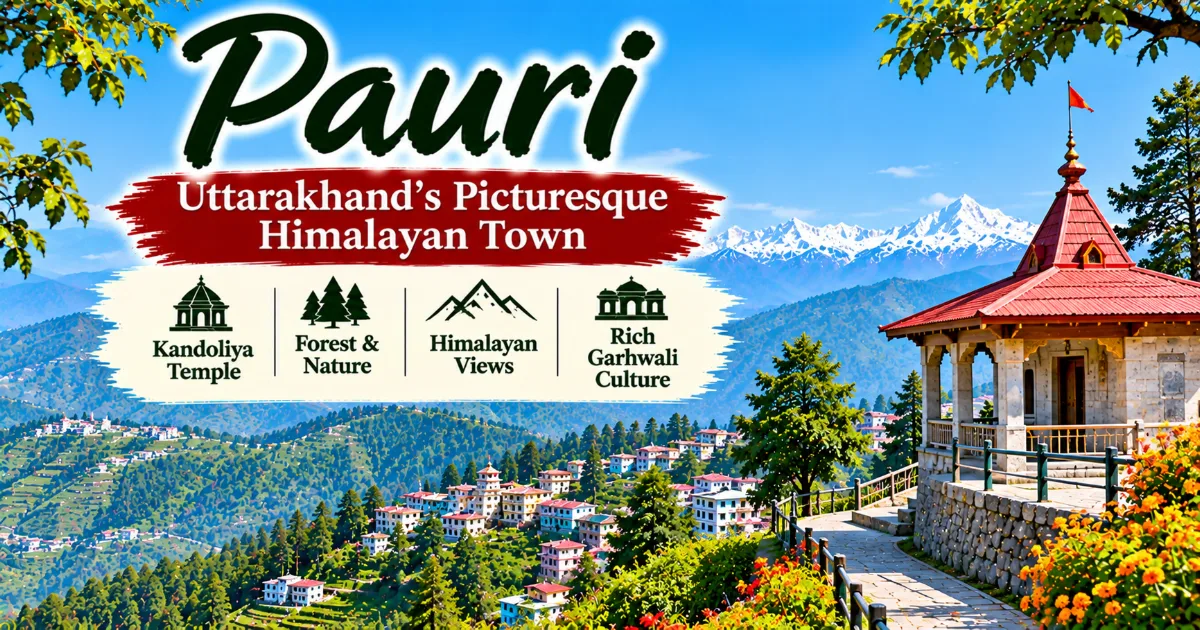
This hill town is the administrative headquarters of Pauri Garhwal district. It is known for its mountain views, Kandoliya Temple, local markets and its own character. Pairing it with Khirsu shows you two quite different mountain settlements in the same region, only a short drive apart.
Srinagar Garhwal
A major town on the Alaknanda River, Srinagar Garhwal matters historically, as a place of learning and as a religious site, and it serves as a regional centre. Spend some time by the river that shapes the town's landscape, and learn about the part Srinagar Garhwal has played in the history of Garhwal.
Devprayag
Devprayag is an important religious and geographical site in Uttarakhand. By tradition it is the confluence of the Alaknanda and Bhagirathi rivers, where the river takes the name Ganga. The town is known for its religious heritage and its setting where the two rivers meet, and it adds a good stop to a wider journey through Garhwal.
Lansdowne
Lansdowne is a well-known hill station in Pauri Garhwal district. It is associated with the Garhwal Rifles and has forests, historic landmarks and a calm feel. If you want to see several hill towns, add it to a longer route, allowing for the road time between towns.
Tarkeshwar Mahadev Temple
This important temple in the wider Pauri Garhwal region is dedicated to Lord Shiva. The setting is peaceful, among wooded hills, and devotees come throughout the year. It suits travellers interested in both religious heritage and natural surroundings, and the quiet setting is part of the appeal. Confirm road conditions and access before you go.
Responsible Tourism in Khirsu
The forests, the old settlements and the quiet are what make Khirsu worth visiting, and careless tourism would wear them down. Visiting responsibly is how they survive.
Keep forests, villages and public spaces free of litter, and carry your rubbish until it can be disposed of properly. Use less single-use plastic and bring a refillable water bottle where you can.
Leave birds and other wildlife alone, even when they come close. That means no loud music, no feeding animals and no going into sensitive forest areas.
Respect residents and their privacy, and ask before photographing people, homes or work in the fields. Where possible, use locally run accommodation, transport and small shops. At temples and shrines, follow religious custom.
During the monsoon, follow road safety advice and avoid areas hit by landslides or flooding, even if it means changing your plans.
Travelling this way means the money reaches local communities and the environment is protected for future generations.
Travel Tips Before Visiting Khirsu
Plan ahead and confirm the best road route, especially if you are combining Khirsu with other towns in the district. If you are not driving yourself, check what public transport runs on your route.
Warm clothes are needed, especially in winter, and for cool evenings at other times of year. Comfortable shoes help on village lanes and forest paths, where the ground can be uneven.
During the monsoon and winter, check the weather forecast and road conditions before each day's travel. Book accommodation early for busy holiday periods, and confirm meals before you arrive because places to eat are few.
Bring essential medicines and personal supplies, as shopping options here are limited. Mobile network quality varies across the hills, so do not rely on your phone completely.
Allow extra time on the roads and avoid driving at night unless you must. Keep the plan loose so you can enjoy the place according to the weather and local conditions rather than a fixed timetable.
Why Khirsu Deserves a Place in Uttarakhand Tourism
This is a quieter, more natural side of Uttarakhand, and it deserves more attention than it gets. Himalayan views, wooded hills and old villages make it a very different trip from a heavily commercialised hill station.
It is also a chance to understand Garhwal through its food, architecture, farming and community traditions, things that are easy to miss in a busier resort.
Places like this draw travellers beyond the state's most famous destinations. When people add smaller mountain settlements to their routes, tourism spreads more evenly across the state. Local guesthouses, drivers, food businesses and small shops all gain when visitors stay a while.
Growth has to respect the region's ecological limits, however. Unplanned construction, waste and too many visitors could damage exactly what makes Khirsu attractive. Careful planning can protect its natural and cultural character and still create work for local people.
Khirsu at a Slower Pace
This is a place for travellers who want to see the Himalayas slowly. Mountain views, quiet forests, traditional villages and Garhwali culture make it a good choice for a short holiday or as one stop on a longer journey through Pauri Garhwal.
Expect clear mountain mornings, forest walks, Garhwali food and a look at everyday life in a traditional Himalayan region. Couples, families, nature lovers, photographers and anyone who prefers quiet places to crowded tourist centres will feel at home.
Visit it on its own, or combine it with Pauri and Srinagar Garhwal for a longer trip. Either way, leave enough time to watch the mountains, listen to the forest and get to know the place beyond its sights, and you will come away having seen the natural and cultural side of Uttarakhand that most tourist trips skip.