
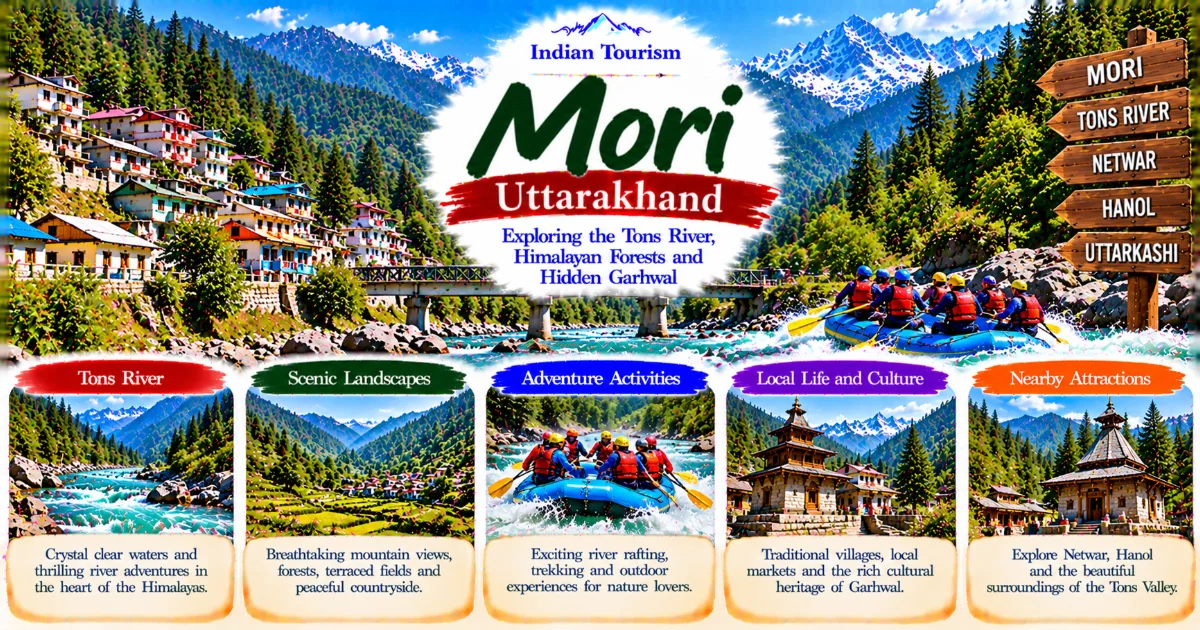
Discovering the Riverside Beauty of Mori
Uttarakhand is a land of remarkable contrasts. Its landscape moves from the busy pilgrimage towns of the plains to forested foothills, traditional mountain villages, high-altitude meadows, and snow-covered Himalayan peaks. While destinations such as Mussoorie, Nainital, Auli, and Rishikesh attract large numbers of visitors, the state also offers quieter places where nature, culture, and everyday life remain closely connected. Mori, located in Uttarkashi district in the western Garhwal region, is one such destination.
Situated beside the Tons River, Mori offers a different experience of the Himalayas. Instead of being defined by a famous hill station promenade or a large collection of commercial attractions, its character comes from the river, surrounding forests, mountain roads, nearby villages, and opportunities for outdoor exploration. It is a place where travellers can spend time listening to flowing water, observing the changing mountain landscape, exploring the surrounding countryside, and learning about the cultural traditions of this part of Uttarakhand.
Mori is particularly interesting for people who enjoy road trips, river landscapes, camping, trekking, and discovering destinations beyond the usual tourist circuit. It also serves as a useful starting point for understanding the wider Tons Valley, a region associated with traditional Himalayan settlements, forested slopes, and routes leading towards some of Uttarakhand's more remote mountain landscapes.
The experience here depends on the traveller's interests. Adventure enthusiasts may be drawn to the river and the possibility of organised rafting during suitable conditions. Nature lovers may prefer quiet walks and forest scenery. Cultural travellers can explore nearby settlements and learn about the traditions of the western Garhwal region. Those simply looking for a peaceful break may appreciate the opportunity to spend a night near the river and enjoy a slower pace of travel.
Mori is not a destination that needs to be rushed. Its appeal lies in the combination of natural surroundings and the everyday life of a small Himalayan town. By allowing enough time to appreciate both, visitors can discover a side of Uttarakhand that feels distinctly different from its more heavily visited holiday centres.
Where Is Mori Located?
Mori is situated in Uttarkashi district in the Garhwal division of Uttarakhand. The town lies along the Tons River, an important river in the western Himalayan drainage system. The Tons eventually joins the Yamuna, making it an important part of the broader river network of this region.
The surrounding landscape includes mountain slopes, forested areas, cultivated land, and settlements connected by winding roads. Mori is also positioned near the boundary between Uttarakhand and Himachal Pradesh, a location that helps explain some of the cultural connections and travel routes found in the wider region.
For visitors travelling through western Uttarakhand, Mori can be approached by road through the Purola area or by routes connecting the region with Chakrata and Hanol. The most suitable route depends on the starting point, current road conditions, and available transport. Because the region is mountainous, travellers should check local information before setting out rather than assuming that journey times remain consistent throughout the year.
The journey is part of the experience. Roads move through changing landscapes, passing settlements, agricultural fields, wooded hillsides, and sections where the terrain opens towards the river valleys. The scenery may shift considerably over a relatively short distance as the road follows the contours of the mountains.
Mori's location also makes it relevant to travellers planning a broader exploration of Uttarkashi district. It can form part of a journey that includes smaller settlements, traditional villages, forest landscapes, and the routes towards trekking regions farther north. However, the distances and travel requirements between these places should be considered carefully. A location that appears close on a map may take considerably longer to reach by mountain road.
Rather than treating Mori only as a stop on the way to somewhere else, travellers can make it a destination in its own right. Spending time beside the Tons River, exploring accessible parts of the town, and appreciating the surrounding landscape can make a visit rewarding even without an extensive sightseeing schedule.
The Tons River: The Natural Heart of Mori
The Tons River is one of the defining features of Mori. Its presence shapes the scenery, attracts visitors interested in outdoor activities, and provides the setting for many of the experiences associated with the area.
Unlike destinations where the principal attraction is a monument or a constructed viewpoint, Mori's river landscape is something to experience over time. The appearance of the water changes with the light, weather, season, and flow. On a clear day, the river may reflect the surrounding hills and sky. During periods of stronger flow, the water can appear more energetic, moving around rocks and through sections of the valley with considerable force.
The sound of flowing water can create a relaxing atmosphere, particularly when experienced away from traffic and busy commercial areas. Visitors who enjoy nature photography may find opportunities to capture the river alongside wooded slopes, riverbanks, bridges, and the wider valley.
The river is also an important reminder of the power of Himalayan water systems. Flow can change quickly following rainfall or upstream weather events. Water that appears manageable from the bank may be dangerous in reality, especially during the monsoon or periods of high discharge. Visitors should never enter the river without appropriate guidance and should avoid swimming in unfamiliar sections.
Riverbanks also need to be treated carefully. Rocks may be slippery, currents can be stronger than they appear, and the water level may rise unexpectedly. Families travelling with children should keep them away from exposed edges and flowing water unless a location has been assessed as safe.
For people who prefer quiet experiences, simply spending time at an accessible riverside location may be enough. A short walk, a period of photography, or a relaxed break beside the water can provide a memorable introduction to the Tons Valley without requiring an organised adventure activity.
The river's significance extends beyond tourism. It belongs to a larger ecological system supporting the surrounding landscape. Keeping rubbish away from the water, avoiding the disturbance of natural habitats, and respecting local restrictions are essential parts of visiting responsibly.
River Rafting and Outdoor Adventure
Mori is recognised as a destination for river-based adventure, particularly rafting on the Tons River. Its river setting and mountain environment make the area attractive to visitors interested in outdoor experiences away from more established adventure tourism centres.
Rafting can provide a thrilling way to experience a Himalayan river, but it requires suitable conditions, trained guides, proper equipment, and a clear understanding of the risks. The difficulty of a river section depends on water volume, gradient, obstacles, weather, and other conditions that may change throughout the year.
Visitors should choose an established operator that follows appropriate safety procedures. Before booking, ask about guide qualifications, life jackets, helmets, rescue arrangements, medical support, age and fitness requirements, and the specific river section included in the activity. The operator should explain the expected conditions and provide a safety briefing before participants enter the water.
Do not assume that rafting is available every day simply because it is associated with the destination. Water levels, weather, seasonal restrictions, and operator decisions can affect availability. If conditions are considered unsafe, the activity should be postponed or cancelled.
Other outdoor experiences may be possible in the wider area, including guided walks, nature observation, cycling on suitable roads, and camping at authorised sites. Availability depends on the season and local providers. Travellers should confirm arrangements in advance rather than relying on assumptions about services at a small destination.
Adventure activities are most enjoyable when the entire journey is planned realistically. Participants should consider their physical fitness, medical needs, clothing, and comfort with water or mountain environments. Anyone uncomfortable with strong currents or uncertain about an activity should choose a gentler alternative.
Mori demonstrates that adventure tourism does not have to mean pursuing the most difficult experience available. For some visitors, a short guided river activity may be ideal. Others may prefer a riverside walk, a quiet evening outdoors, or an uncomplicated road journey through the surrounding hills.
Forests, Hills and the Beauty of the Tons Valley
The landscape around Mori is characterised by the relationship between the river valley and the surrounding hills. Forests, cultivated land, settlements, and mountain roads combine to create scenery that changes with elevation and season.
Forested slopes provide a strong visual contrast with the river. Trees follow the contours of the land, while exposed areas reveal rock, soil, fields, and the structures of nearby settlements. In some places, the valley opens into wider views; elsewhere, the road remains close to the hillside or follows the river through a narrower stretch.
For visitors arriving from urban environments, the variety of these landscapes can be refreshing. The sounds of traffic and commercial activity may give way to birdsong, moving water, wind through the trees, and the ordinary sounds of rural life. The experience depends on the location and time of day, but the surrounding environment offers many opportunities to slow down.
Nature walks can be a good way to appreciate the area, provided that visitors choose established paths or obtain local guidance. A route that appears simple on a map may include steep slopes, loose ground, exposed sections, or private land. Travellers should avoid setting out on unfamiliar trails without checking their suitability.
The forest environment also supports wildlife, birds, insects, and plant life. Visitors should observe animals from a distance, avoid feeding wildlife, and refrain from collecting plants or disturbing habitats. Early mornings can be rewarding for nature observation, but quiet behaviour and patience are more useful than trying to force an encounter.
The scenery around Mori is not static. Spring and summer may bring greener hillsides, while autumn can offer different colours and clearer views when weather conditions cooperate. Monsoon rainfall can make vegetation appear lush but may also increase the risks associated with landslides and swollen streams. Winter conditions can bring colder temperatures and changing access conditions.
The most responsible way to explore the Tons Valley is to recognise that its natural beauty depends on ecological processes that tourism should not disrupt. Visitors can enjoy the landscape without leaving rubbish, creating noise, or treating forests and riverbanks as disposable recreation spaces.
Nearby Netwar: A Gateway to the Upper Tons Region
Netwar is a settlement in the wider Mori region that is particularly relevant to travellers interested in local history, religious traditions, and the upper Tons Valley. The surrounding area connects visitors with a landscape of villages, forests, and mountain routes that lead towards more remote parts of Uttarkashi district.
One of the notable cultural attractions near Netwar is the temple dedicated to Karna. Karna is an important character in the Mahabharata, and traditions associated with the epic have a distinctive place in parts of the western Himalayan region. The presence of a temple connected with this figure offers visitors an opportunity to explore how religious belief, regional identity, and local storytelling intersect.
A visit to a temple should be approached as a cultural experience rather than simply a sightseeing stop. Travellers should observe local customs, dress appropriately, ask before taking photographs, and avoid disrupting worship or community activities. If a caretaker or local resident is available to explain the site's background, a respectful conversation can add depth to the visit.
Netwar is also significant because the surrounding area provides access towards the Rupin and Supin valleys and routes associated with trekking and nature tourism. These are not necessarily casual excursions that every visitor can undertake without preparation. Some routes involve long walking days, substantial elevation changes, and conditions that require experienced guides and suitable equipment.
Travellers who wish to explore beyond Mori should distinguish between visiting a nearby settlement and undertaking a serious mountain journey. The latter may require permits, advance arrangements, local guidance, and careful attention to weather and trail conditions.
Netwar can therefore complement a stay in Mori by adding a cultural and geographical dimension to the journey. It helps visitors understand that the town belongs to a much larger mountain region whose character extends beyond the riverfront.
Hanol and the Cultural Connections Across the Region
The wider area around Mori has cultural connections that extend across the Uttarakhand and Himachal Pradesh border. Hanol, located on the other side of the regional landscape, is known for its Mahasu Devta Temple and its place in the religious traditions of the Jaunsar-Bawar and neighbouring areas.
The Mahasu Devta tradition is important to many local communities, and the temple at Hanol is recognised as a significant regional religious site. Its architectural character and cultural associations can make it a valuable addition to a journey focused on understanding the heritage of the western Himalayan region.
The journey between places such as Mori and Hanol should be planned according to current road conditions and transport availability. Mountain routes can take longer than expected, and travellers should not assume that a short distance on a map translates into a quick transfer.
The cultural landscape around the border is particularly interesting because administrative boundaries do not always correspond to clear divisions in language, food, architecture, or religious practice. Communities living in neighbouring valleys may share traditions while maintaining their own local identities.
For visitors, this provides a reason to approach the region with curiosity rather than relying on broad labels. The western Himalayas contain diverse cultural traditions, and each settlement may have its own stories, festivals, and ways of organising community life.
When visiting a religious site, travellers should follow local guidance and avoid treating ceremonies as public performances. Photography should be permitted by the site's rules, and any restrictions on entering particular areas should be respected.
Including Hanol in a broader itinerary can provide a different perspective from the river landscapes of Mori. Together, the two places help reveal the relationship between natural geography, regional history, and living cultural traditions.
Traditional Settlements and Himalayan Architecture
The countryside around Mori contains settlements that reflect the practical realities of life in a mountainous environment. Traditional building styles in the wider region have been shaped by available materials, weather, slope conditions, local skills, and the needs of households.
Wood has an important place in the architectural traditions of several western Himalayan communities. In some villages, older houses display timber construction and carved details that reflect local craftsmanship. The appearance and preservation of these buildings vary from place to place, and visitors should avoid assuming that every settlement contains the same architectural features.
Traditional houses are more than attractive subjects for photography. They represent knowledge developed through generations of living in the mountains. Their construction can reflect local understanding of temperature, rainfall, snow, available materials, and the organisation of family life.
A village walk can help visitors notice these details, but such walks should be arranged respectfully. Many narrow paths lead directly between homes, fields, and working areas. Visitors should ask permission before entering private spaces and avoid photographing household activities without consent.
Modern construction is also part of the region's story. Concrete buildings, newer roads, changing transport patterns, and improved access to services reflect the evolving needs of local communities. It is not useful to view every modern change as a loss of authenticity. Residents have the same right to comfort, safety, and development as people elsewhere.
The most meaningful cultural exploration recognises both continuity and change. A traditional house, a newer home, a village shop, and a roadside gathering place can all help explain how the region is adapting while retaining aspects of its local identity.
Travellers who spend time observing these details often gain a deeper understanding of the Himalayas than those who visit only the most photographed landmarks.
Local Food and the Flavours of the Mountains
Food can be an important part of a journey through Mori and the surrounding region. Local eating places may offer straightforward meals suited to residents, workers, and travellers moving through the valley. Options can be more limited than in major tourist centres, so visitors should plan with realistic expectations.
The wider Garhwali food tradition includes dishes prepared with grains, lentils, legumes, seasonal vegetables, and locally available ingredients. Recipes vary across the region and between households. Some preparations are associated with particular seasons, agricultural practices, or family traditions.
Travellers may encounter familiar North Indian meals alongside local Pahadi preparations, depending on the establishment and what is available that day. Rather than expecting every regional speciality to appear on a menu, ask what has been freshly prepared and whether the kitchen can accommodate dietary requirements.
A simple meal can become part of the cultural experience when approached with interest. Asking about an unfamiliar dish, learning which ingredients are locally grown, or understanding how food changes with the season can provide insights into daily life.
Food safety remains important. Choose places that appear clean, ensure that meals are prepared and stored appropriately, and use safe drinking water. Visitors with allergies or specific dietary needs should explain their requirements clearly rather than relying on assumptions about ingredients.
Travellers should also remember that small local businesses operate within the constraints of a mountain economy. Menus may be limited, supply deliveries may be affected by weather, and opening hours can vary. Patience and flexibility are useful qualities when travelling beyond major commercial destinations.
A visit to Mori does not require an elaborate culinary itinerary. A freshly prepared meal, a warm drink after a day outdoors, or a conversation with a local host can become a memorable part of the journey.
Best Time to Visit Mori
The most suitable time to visit Mori depends on the activities planned and the prevailing weather conditions. The river, mountain roads, and surrounding trails are all influenced by seasonal changes, so visitors should consider safety and access before choosing their travel dates.
Spring and early summer can be attractive for travellers interested in exploring the countryside, enjoying riverside scenery, and undertaking suitable outdoor activities. The surrounding landscape may appear green, and the weather can be comfortable for road journeys. However, conditions vary from year to year, and visitors should still check local forecasts.
Summer can be suitable for camping and guided trekking when the relevant routes and services are operating. Anyone planning a longer walk should confirm the condition of the route, the availability of guides, and the expected temperatures at higher elevations. Warm conditions in the valley do not guarantee similar weather on a high mountain trail.
The monsoon season requires particular caution. Heavy rain can raise river levels, increase the risk of landslides, and damage mountain roads. Rafting and other water activities should only take place when authorised operators consider conditions appropriate. Visitors should follow local warnings and avoid exposed riverbanks during periods of high flow.
The post-monsoon period can offer attractive scenery and favourable visibility when the weather is stable. October and November may be suitable for travellers interested in road trips, landscape photography, and exploring nearby settlements. Temperatures can fall in the evenings, so warm clothing remains useful.
Winter brings colder conditions, especially at higher elevations and on routes farther into the mountains. Visitors planning a winter journey should confirm road access, accommodation availability, and weather conditions before departure.
There is no single season that guarantees the ideal experience. People interested in rafting should consult established operators about the safest operating period. Those focused on photography may prefer periods with clear skies, while travellers planning trekking should prioritise trail conditions and appropriate preparation.
The central rule is simple: choose dates based on the activity, and let current safety information take precedence over a preferred itinerary.
How to Reach Mori
Mori is primarily accessed by road. Travellers coming from Dehradun can continue towards the western Uttarakhand mountain region and approach through routes connected with Purola or via the Chakrata and Hanol side, depending on their starting point and the current condition of the roads.
Public transport options may include buses and shared vehicles serving towns and settlements in the wider area. Travellers should confirm current departure points, operating schedules, and onward connections before travelling. Services may be less frequent than those on major routes, particularly outside busy periods.
For those arriving by air, Jolly Grant Airport near Dehradun is a commonly used airport for journeys into this part of Uttarakhand. From there, onward travel to Mori requires a substantial road journey. Travellers arriving by train can consider Dehradun railway station and continue by road, but the best arrangement depends on the available connections and total travel schedule.
Private vehicles provide flexibility for stopping at viewpoints and exploring nearby settlements, but mountain driving requires care. Roads can be narrow, bends may limit visibility, and unexpected weather can affect travel. Drivers should avoid rushing, use safe stopping areas, and plan to reach their accommodation before dark whenever possible.
Before leaving, check fuel availability, road advisories, weather forecasts, and any restrictions affecting the intended route. Carry essential medicines, drinking water, warm clothing, and some cash. Mobile network coverage may vary along the way, so having key travel details available offline is sensible.
The journey should be treated as part of the holiday rather than an obstacle to overcome as quickly as possible. Allowing extra time makes it easier to respond safely if conditions change.
Where to Stay in Mori
Accommodation in Mori and the surrounding area may include small hotels, guesthouses, and seasonal camping options. The choice depends on the time of year, the kind of experience desired, and the availability of services.
Travellers who want to spend time near the river may prefer a suitable riverside property or an authorised campsite. However, the phrase riverside accommodation should not be taken to mean that every location is safe during changing river conditions. Visitors should choose established sites that follow appropriate safety practices and respect local environmental restrictions.
Before booking, confirm the location, access road, room facilities, hot water, meals, parking, payment methods, and cancellation policy. If travelling with children, older family members, or anyone with mobility needs, ask about the terrain around the property and the distance from parking to the room.
Camping can provide a memorable outdoor experience, particularly for people who enjoy the sound of the river and the surrounding natural environment. It should nevertheless be undertaken at authorised sites with suitable sanitation, waste management, and emergency arrangements. Visitors should not set up tents on exposed riverbanks or other locations vulnerable to flooding.
Travellers planning to explore nearby villages or undertake outdoor activities should also ask their accommodation provider about local transport and reliable guides. Local advice can be especially valuable when conditions change after rainfall.
Mori is best suited to visitors who appreciate a relatively simple travel experience. The objective need not be luxury or an extensive entertainment programme. A comfortable place to sleep, access to food, and an opportunity to explore the surrounding landscape may be enough to make the stay worthwhile.
Responsible Tourism Along the Tons River
The natural appeal of Mori depends on the condition of its river, forests, and surrounding settlements. Responsible tourism is therefore essential to ensuring that visitors can enjoy the area without placing unnecessary pressure on local ecosystems.
The first responsibility is to manage waste carefully. Plastic bottles, food packaging, disposable plates, and other rubbish should never be left along the river or in the forest. Carry reusable items where practical and dispose of waste through appropriate facilities.
Visitors should also avoid using the river as a place to wash vehicles, discard household waste, or release harmful substances. Waterways support ecological systems and downstream communities, so pollution can have consequences far beyond the place where it occurs.
Noise is another consideration. Loud music at campsites can disturb wildlife and nearby residents, particularly at night. A quiet riverside setting is best enjoyed without creating unnecessary disturbance.
When choosing an adventure operator, ask about environmental practices and safety arrangements. Responsible operators should explain the rules for river activities, manage waste, and discourage behaviour that damages the riverbank or surrounding landscape.
Support for local businesses can help distribute the benefits of tourism within the region. Staying at locally operated accommodation, purchasing supplies from local shops, and using legitimate local guides can contribute to the local economy when these options meet the traveller's needs.
Respecting local culture is equally important. Ask permission before photographing people or private property, follow rules at religious sites, and avoid entering fields or homes without invitation. A destination is not simply a collection of attractions for visitors to consume. It is a living environment where people work, raise families, and maintain community traditions.
Responsible travel also means accepting that some activities may be unavailable because of weather, river conditions, or safety concerns. Cancelling an activity when conditions are dangerous is not a failed holiday. It is a necessary part of travelling responsibly in the Himalayas.
A Suggested Two-Day Itinerary for Mori
A two-day visit can provide a balanced introduction to Mori, the Tons River, and the surrounding countryside. The itinerary should remain flexible and be adjusted according to road conditions, weather, and the availability of local services.
On the first day, travel to Mori with enough time to arrive before evening. After checking into your accommodation, spend some time exploring accessible parts of the town and identifying safe locations from which to appreciate the river. A gentle walk, a few landscape photographs, and a relaxed meal can provide a pleasant introduction to the area.
If time permits and local conditions are suitable, ask about a short excursion to a nearby settlement or a scenic section of the valley. Do not attempt a long trek or a demanding outdoor activity late in the day without appropriate preparation. Use the evening to confirm arrangements for the following morning.
On the second day, choose an activity that matches your interests. Adventure enthusiasts may consider rafting through an established operator if the activity is available and conditions are suitable. Travellers who prefer a quieter day can explore the countryside, take a guided walk, or visit Netwar to learn about the area's cultural heritage.
A visit to a nearby religious site should be planned with enough time to appreciate the setting without rushing. If the itinerary includes travel towards Hanol or another settlement, confirm the route and transport arrangements beforehand.
Return to Mori or continue to the next destination while allowing sufficient time for mountain roads. Avoid scheduling multiple distant stops into a single day, particularly during periods when rainfall or traffic may cause delays.
This two-day plan is intended as a starting point rather than a fixed schedule. Visitors who want to undertake a multi-day trek should plan separately, using current information about permits, guides, equipment, accommodation, and trail conditions.
Who Should Visit Mori?
Mori is particularly suitable for travellers who enjoy natural scenery and prefer destinations where the environment is central to the experience. People interested in river landscapes, outdoor adventure, quiet road trips, rural culture, and photography may find the town rewarding.
It can also appeal to visitors who have already explored some of Uttarakhand's better-known destinations and want to understand another part of the state. The Tons Valley provides a different perspective from the lake districts, popular hill stations, and major pilgrimage centres.
Adventure travellers may appreciate the possibilities for organised river activities and access to trekking regions in the wider area. Nature lovers can focus on the river, forests, birds, and changing mountain scenery. Cultural travellers may find value in exploring Netwar, learning about regional religious traditions, and observing everyday life in the surrounding settlements.
Families can also consider Mori, provided they plan activities according to the ages and abilities of everyone travelling. Rivers and mountain roads require particular care, and children should be supervised closely around water and on uneven terrain.
Mori may not suit visitors who expect a large selection of luxury resorts, extensive nightlife, or numerous major attractions within walking distance. Its appeal is quieter and more closely connected to nature and regional life.
The destination is most rewarding when visitors arrive with realistic expectations. Rather than expecting every moment to be organised, allow time to enjoy the scenery, learn about the region, and experience the slower rhythm of a smaller Himalayan town.
Final Thoughts: Let the Tons Valley Reveal Its Character
Mori offers a distinctive way to experience Uttarakhand. The Tons River, wooded hills, mountain roads, nearby settlements, and regional cultural traditions combine to create a destination that rewards travellers who are willing to explore at a slower pace.
Its appeal is not limited to adventure sports or riverside views. Mori also provides an opportunity to understand the relationship between people and the Himalayan environment. The surrounding landscape supports agriculture, transport, local livelihoods, and cultural practices that have developed in response to the conditions of the mountains.
A meaningful visit can be as simple as spending time beside the river, exploring the town, enjoying a local meal, or travelling to a nearby settlement with an interest in its history. Those seeking more active experiences can investigate organised rafting or guided trekking, provided they prepare carefully and follow local safety advice.
The most important part of planning a journey to Mori is flexibility. Mountain weather can change, roads can be affected by rainfall, and outdoor activities depend on conditions that cannot always be predicted far in advance. Travellers who allow extra time and prioritise safety are better placed to enjoy the region.
For anyone building a wider Indian Tourism itinerary through Uttarakhand, Mori deserves consideration as a destination in the western Garhwal Himalayas. It offers a different atmosphere from the state's busiest tourist centres and creates an opportunity to discover the Tons Valley through its landscapes, communities, and outdoor experiences.
Sometimes the most memorable journeys are those that leave room for observation rather than constant movement. In Mori, the river, the forested hills, and the life of the surrounding settlements provide more than enough reasons to pause, explore, and appreciate the quieter side of the Himalayas.
#IndianTourism #MoriUttarakhand #UttarakhandTourism #Uttarkashi #TonsRiver #GarhwalHimalayas #ExploreUttarakhand #HimalayanTravel #RiverRafting #MountainRoadTrips #RuralTourism #ResponsibleTourism #HiddenPlacesOfIndia #TravelIndia
