A Quiet Himalayan Destination Beyond the Famous Pilgrimage Route
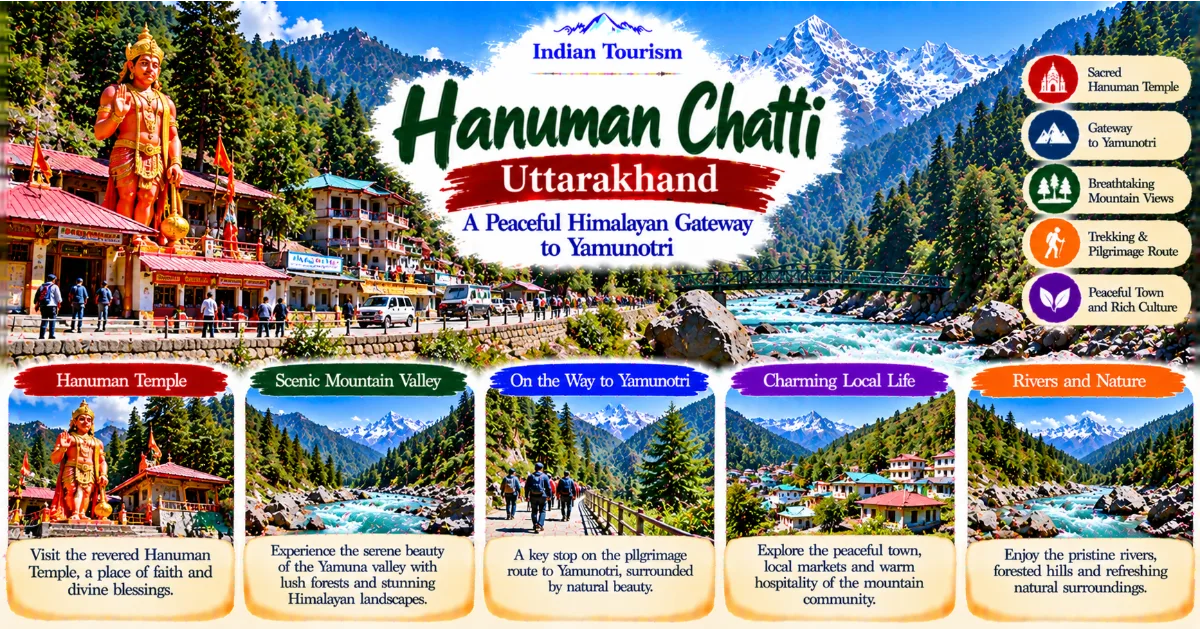
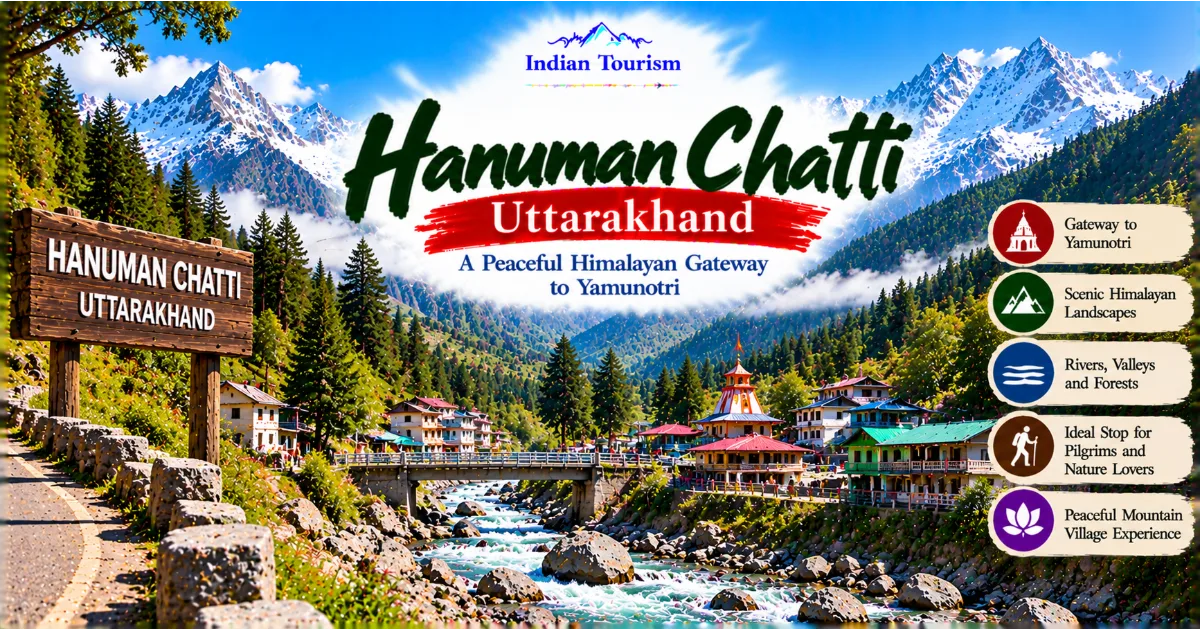
Uttarakhand is home to some of the most spectacular mountain landscapes in India, where snow-covered summits, deep river valleys, pine forests, traditional villages, and ancient pilgrimage routes come together to create an extraordinary travel experience. While destinations such as Mussoorie, Nainital, Kedarnath, and Badrinath receive considerable attention, the Himalayan state also contains smaller settlements that offer a quieter introduction to mountain life. Hanuman Chatti is one such destination. Located in the Yamuna valley in Uttarkashi district, this small mountain settlement is an important point along the route to Yamunotri, one of the four sacred sites of the Char Dham pilgrimage.
Hanuman Chatti is not a conventional hill station with extensive shopping streets, luxury resorts, or a long list of commercial attractions. Its appeal lies in its natural surroundings, religious significance, river landscapes, and position along an old Himalayan pilgrimage corridor. The settlement offers travelers an opportunity to experience the quieter side of Uttarakhand, particularly when they take time to explore the surrounding valleys and villages rather than treating the place merely as a transit stop.
The journey to Hanuman Chatti introduces visitors to the changing character of the Garhwal Himalayas. Roads wind through steep slopes, settlements appear beside rivers, and the landscape shifts between forested hillsides, terraced agricultural fields, rocky cliffs, and distant mountain ridges. Depending on the season, the valleys may be filled with the fresh green colors of the monsoon, the clear light of autumn, or the crisp atmosphere of winter.
For pilgrims, Hanuman Chatti is associated with the journey toward Yamunotri and the traditions surrounding the Yamuna River. For nature lovers, it provides access to beautiful mountain scenery and opportunities to understand life in a Himalayan valley. For photographers, the settlement and its surroundings offer changing light, dramatic terrain, and glimpses of everyday life in a region shaped by geography and faith.
Continue Reading
Hanuman Chatti rewards travelers who approach it with patience. Its importance is not defined by a single monument or viewpoint but by the combination of landscape, history, spirituality, and the experience of traveling through the mountains.
Understanding the Location and Geography of Hanuman Chatti
Hanuman Chatti lies in Uttarkashi district in the Garhwal region of Uttarakhand. It is situated along the mountain route toward Yamunotri, the source region traditionally associated with the Yamuna River and one of the principal pilgrimage destinations of northern India. The settlement lies within a landscape shaped by the river system, steep Himalayan slopes, and the geological forces that have formed the surrounding mountains.
The geography of this region is markedly different from the broad plains of northern India. Roads follow narrow valleys and negotiate sharp bends, while villages occupy relatively small areas of land suitable for habitation and cultivation. The mountains rise steeply from the riverbanks, and the available flat ground is often limited. This geography has influenced settlement patterns, transportation, agriculture, and the development of pilgrimage routes over generations.
The Yamuna valley is particularly important because it connects communities at different elevations. Lower settlements are generally easier to reach and have more developed road connections, while higher villages may depend on narrow roads, footpaths, and seasonal access. Hanuman Chatti occupies a position within this network, making it a useful place to understand how mountain travel and pilgrimage are organized in the region.
The surrounding environment is characterized by rocky mountain slopes, river channels, forested areas, and patches of cultivated land. Vegetation changes with altitude, slope orientation, rainfall, and temperature. During warmer months, the hillsides can appear green and vibrant, while winter brings colder conditions and may introduce snow to higher elevations.
The river is an essential feature of the landscape. Himalayan rivers are not simply scenic elements. They influence where settlements develop, how agricultural land is used, and how people move through mountain valleys. They also carry deep cultural and religious meanings. The Yamuna is revered across India, and its association with the Himalayan landscape gives the valley a significance that extends far beyond its geographical boundaries.
Travelers should remember that the mountain environment is dynamic. Roads can be affected by landslides, heavy rain, falling rocks, or other natural events. A journey that appears short on a map may take longer than expected because of road conditions, traffic, or weather. Allowing sufficient travel time is therefore an essential part of visiting Hanuman Chatti.
The Religious Significance of Hanuman Chatti
Hanuman Chatti is closely connected with the wider religious landscape of Uttarakhand. The name evokes Hanuman, one of the most widely revered figures in Hindu tradition. Hanuman is associated with strength, devotion, courage, service, and unwavering commitment to righteousness. His presence in religious place names throughout India reflects the enduring influence of the Ramayana and the devotional traditions that have developed around him.
In the Garhwal Himalayas, religious places often exist within landscapes that are themselves considered sacred. Rivers, mountain peaks, forests, caves, springs, and high-altitude lakes can carry spiritual associations that shape the way local people and pilgrims experience the environment. A journey through such a region is therefore not only a physical movement from one settlement to another. For many travelers, it is also a journey through stories, traditions, and places of worship.
Hanuman Chatti is particularly associated with the route toward Yamunotri. Pilgrims traveling to Yamunotri traditionally move through a sequence of settlements and stopping points as they approach the higher Himalayan terrain. These places provide opportunities to rest, arrange transport, obtain supplies, and prepare for the next part of the journey.
Religious travel in Uttarakhand is deeply connected with seasonal patterns. The major Himalayan pilgrimage routes are generally busiest during the warmer months when access is more practical. The pilgrimage season brings visitors from different parts of India, creating a temporary rhythm of activity in places that may otherwise remain relatively quiet. Shops, guesthouses, food stalls, and transport services often respond to this seasonal demand.
The spiritual atmosphere of Hanuman Chatti is best appreciated through respectful observation. Visitors may encounter pilgrims preparing for the onward journey, families traveling together, local people visiting places of worship, and service providers supporting the pilgrimage economy. These ordinary activities are part of the living religious culture of the valley.
Travelers who are unfamiliar with local traditions should approach temples and religious spaces with courtesy. Appropriate clothing, permission before photographing people or ceremonies, and respect for local instructions help ensure a positive experience. The significance of a sacred place is not always visible through its architecture alone. It is also expressed through the behavior, memories, and beliefs of the people who visit it.
Hanuman Chatti and the Journey to Yamunotri
The principal reason many travelers come to Hanuman Chatti is its connection with Yamunotri. Yamunotri is one of the four destinations associated with the Char Dham pilgrimage in Uttarakhand, alongside Gangotri, Kedarnath, and Badrinath. It is dedicated to Goddess Yamuna and occupies a significant place in Hindu pilgrimage traditions.
The journey toward Yamunotri takes travelers from lower mountain settlements into increasingly elevated terrain. The landscape becomes more rugged, the valley narrows in places, and the surrounding mountains create a stronger sense of remoteness. The pilgrimage route has developed over time to support people traveling on foot and, in some sections, using locally available transport services.
Hanuman Chatti has long been associated with this wider travel corridor. However, travelers should not assume that every historical route arrangement remains unchanged. Roads, walking routes, transport facilities, and administrative procedures can change over time. Visitors planning a pilgrimage should confirm the current route, road access, transport arrangements, and local restrictions before beginning their journey.
For people who are not traveling primarily for religious reasons, the route is still valuable as a way to experience Himalayan geography. The changing scenery, river valleys, mountain settlements, and traditional ways of life reveal how communities have adapted to difficult terrain. The journey also demonstrates how pilgrimage routes influence the economy and infrastructure of remote regions.
A visit to Hanuman Chatti can be combined with an appropriately planned trip toward Yamunotri, provided travelers account for the physical demands of the route and the possibility of changing weather. The high-altitude sections require particular attention to fitness, hydration, clothing, and pacing. Visitors should not treat the route as an ordinary roadside excursion, especially when conditions are uncertain.
Those traveling with older family members or children should plan conservatively and avoid rushing. It is important to understand the walking requirements of the intended itinerary, identify suitable stopping points, and carry essential supplies. If local authorities issue advisories or impose restrictions, those instructions should take priority over a prearranged travel plan.
Hanuman Chatti is therefore more than a place to pause on the way to a famous pilgrimage destination. It is part of the broader experience of approaching the high Himalayas, where travel requires preparation and where the relationship between landscape and faith remains visible.
The Natural Beauty of the Yamuna Valley
One of the most appealing aspects of Hanuman Chatti is the surrounding mountain environment. The Yamuna valley contains a combination of river scenery, steep slopes, forested hills, and settlements that appear to cling to the available land. The landscape changes continuously as travelers move through the region, making even an ordinary drive an opportunity to observe the natural character of the Himalayas.
The river gives the valley a strong visual identity. Depending on the season and recent rainfall, its water may appear clear, grey, or turbulent. Rocky banks and boulders reveal the power of flowing water, while vegetation grows wherever the terrain and soil provide suitable conditions. The sound of the river often accompanies the journey, especially in sections where the road passes close to the water.
The surrounding mountains are equally striking. Their shapes vary from rounded forested ridges to steep rocky faces. Clouds may gather around the higher slopes, changing the appearance of the landscape within minutes. Early morning often provides softer light, while late afternoon can emphasize the contours of the mountains and the depth of the valley.
During spring and summer, vegetation becomes more prominent, and cultivated terraces add patterns of green to the hillsides. In autumn, clearer skies can create excellent conditions for viewing distant ridges. Winter brings a colder atmosphere and may produce snow or icy conditions at higher elevations. The exact experience depends on altitude, weather, and the timing of the visit.
Wildlife and birdlife are part of the wider Himalayan environment, although sightings are never guaranteed. Visitors who move quietly and observe their surroundings may notice birds along the river, insects among vegetation, or signs of animal activity in less disturbed areas. It is important not to feed wild animals, approach them, or attempt to attract them for photographs.
The region's natural beauty should not be separated from its environmental vulnerability. Mountain ecosystems can be affected by road construction, deforestation, uncontrolled waste disposal, river pollution, and poorly managed tourism. Heavy rainfall can intensify erosion and landslide risks, while unplanned development can place additional pressure on already limited land.
Responsible visitors can contribute to protecting the valley by carrying their waste back to appropriate disposal points, avoiding single-use plastic wherever possible, staying on established paths, and following local instructions. They should also avoid entering river channels for photographs, particularly when water levels are high or conditions are uncertain.
Experiencing Everyday Life in a Himalayan Settlement
Hanuman Chatti offers a glimpse into the everyday life of a mountain settlement whose activities are influenced by geography, climate, pilgrimage, and transportation. Although visitors may focus on the destination's religious significance, the people who live and work in the valley have practical responsibilities that continue throughout the year.
Mountain communities often depend on a combination of agriculture, local trade, transport services, tourism, government employment, and other forms of work. The relative importance of these activities varies from village to village. In pilgrimage areas, seasonal visitors can create opportunities for accommodation providers, food vendors, drivers, guides, porters, and small shopkeepers.
The arrival of pilgrims changes the rhythm of local life. During busy periods, shops may stock additional supplies, accommodation facilities may operate at greater capacity, and transport services may experience increased demand. Outside the main season, some businesses may reduce their activity because the number of visitors declines and mountain weather becomes more challenging.
Agriculture remains important in many parts of the Garhwal Himalayas, although the steep terrain limits the amount of land available for cultivation. Terraced fields allow people to use sloping ground more effectively, and traditional agricultural practices have developed in response to local conditions. Crops, livestock, and household food production can remain closely connected to the seasons.
Visitors should understand that mountain settlements are not simply scenic backdrops. They are living places where residents manage their own routines, responsibilities, and challenges. Travelers should avoid blocking narrow roads, entering private property without permission, or photographing people in ways that make them uncomfortable.
A respectful visit can include purchasing locally prepared food, using legitimate local accommodation, and asking residents about the area's traditions when they have time to speak. Such interactions can create a more meaningful experience than simply passing through the settlement to photograph the landscape.
Local knowledge is particularly valuable in mountain regions. Residents often understand seasonal weather patterns, road conditions, and practical travel considerations through experience. Nevertheless, travelers should combine local advice with current official information, especially when dealing with dangerous weather, road closures, or high-altitude journeys.
Photography Opportunities Around Hanuman Chatti
Hanuman Chatti and the surrounding valley offer several kinds of photography opportunities. The strongest images often come from observing how the landscape changes with light rather than searching for a single famous viewpoint.
River photography is one possibility. The flowing water, rocky banks, and mountain slopes create a natural composition. Photographers can experiment with different shutter speeds to capture either the texture of moving water or a more detailed view of the river's surface. Care must always come before composition. Riverbanks may be unstable, wet rocks can be slippery, and rising water levels can make apparently safe positions dangerous.
Mountain landscapes are another attraction. Wide-angle photographs can communicate the scale of the valley, while longer focal lengths can isolate distant ridges, forest patterns, or small settlements on the slopes. Including a road, bridge, building, or person in the frame can help convey the size of the surrounding landscape.
Village scenes offer opportunities to document the relationship between architecture and terrain. Houses, cultivated terraces, roadside shops, and footpaths show how people use limited space in the mountains. These scenes are often most interesting when they are photographed with attention to context rather than as isolated objects.
Weather can transform the photographic experience. Clear conditions reveal distant details, while low clouds and mist create a softer, more atmospheric mood. After rain, the vegetation may appear brighter and the air can seem especially fresh. However, wet weather also increases the risks associated with slippery paths, landslides, and unstable road conditions.
Photography should never interfere with religious practices or local privacy. Ask permission before taking close photographs of residents, particularly children. If a ceremony is taking place, follow the instructions of the people responsible for the site. Avoid using drones without confirming the applicable rules and obtaining any required permissions.
The best photographs of Hanuman Chatti may not be dramatic images of distant peaks. They may instead capture the small details that make the valley distinctive: a river flowing below a mountain road, morning light falling across a hillside, a pilgrim preparing for the next stage of a journey, or a row of houses surrounded by steep terrain.
Best Time to Visit Hanuman Chatti
The best time to visit Hanuman Chatti depends on the purpose of the journey. Travelers heading toward Yamunotri need to consider the official pilgrimage season and the conditions on the route. Visitors interested primarily in the scenery should consider weather, road access, and the seasonal character of the valley.
Spring and Early Summer
Spring and early summer generally bring milder conditions to many lower and middle Himalayan settlements compared with winter. Vegetation begins to develop, the landscape becomes greener, and the pilgrimage season attracts increasing numbers of travelers.
This period can be suitable for people planning to continue toward Yamunotri, provided the route is officially open and current conditions are favorable. Visitors should remember that temperatures and weather can vary considerably with altitude. A comfortable afternoon in a lower settlement does not guarantee similar conditions farther up the mountain.
Accommodation and transport demand may rise as the pilgrimage season becomes busier. Travelers should make practical arrangements in advance during popular dates and avoid assuming that every service will be available without booking.
Monsoon
The monsoon season brings rainfall that can make the Himalayan landscape lush and dramatic. Rivers may become more forceful, vegetation grows rapidly, and clouds often move through the valleys. The region can look especially beautiful during breaks in the rain.
However, monsoon travel in the Himalayas requires particular caution. Heavy rain can trigger landslides, damage roads, cause falling rocks, and lead to sudden changes in river conditions. Journey times can become unpredictable, and some routes may be temporarily closed.
Visitors should not plan a trip solely around photographs of green mountains without considering these risks. Check official weather forecasts, road updates, and local advisories before departure. If authorities advise against travel, postponing the journey is the safest choice.
Autumn
Autumn can offer clear skies and favorable conditions for viewing the mountains, particularly after the main monsoon period has passed. The atmosphere may be crisp, and the surrounding slopes can be easier to see from the road.
For photographers and travelers interested in scenery, this season can be especially rewarding. However, conditions still vary from year to year, and late-season travel toward higher pilgrimage destinations must be planned according to official opening dates and route conditions.
Winter
Winter brings cold temperatures and more challenging conditions in the higher reaches of the region. Some roads and facilities may operate differently, while snowfall or icy surfaces can affect travel at higher elevations.
Hanuman Chatti may still be accessible under suitable conditions, but visitors should not assume that access to Yamunotri or higher routes will remain available. The pilgrimage temple follows a seasonal schedule, and travel plans must respect official closures.
Winter visitors should carry appropriate warm clothing, check road and weather updates, and avoid attempting high-altitude walks without suitable preparation. For travelers seeking a relaxed mountain experience, winter can be peaceful, but it is not automatically the easiest season.
How to Reach Hanuman Chatti
Reaching Hanuman Chatti generally involves traveling through the road network of Uttarakhand's Garhwal region toward the Yamunotri route. The precise journey depends on the starting point, road conditions, transport availability, and the current route arrangements.
By Road
Road travel is the main way to reach Hanuman Chatti. Travelers commonly approach the Yamuna valley through the wider network connecting major towns and settlements in Uttarkashi district. The journey includes winding mountain roads, steep slopes, and sections where the road follows the river.
The actual travel time depends on the starting location, traffic, roadwork, weather, and the condition of the route. Mountain distances can be misleading because vehicles must travel at speeds appropriate to the terrain. It is wise to begin early, avoid driving after dark where possible, and include time for breaks.
Drivers should remain alert around blind bends, narrow sections, falling-rock zones, and areas where pedestrians or animals may share the road. Use designated parking areas rather than stopping in a way that obstructs traffic.
By Train
There is no railway station in Hanuman Chatti itself. Travelers coming from other parts of India may use a suitable railway station in the wider region and continue by road. The most practical station depends on the origin of the journey and the transport connections available at the time of travel.
Train and road arrangements should be planned together, particularly during the busy pilgrimage season. Allow enough time between arrival and onward departure so that delays do not create pressure to drive through the mountains late at night.
By Air
Travelers arriving by air can consider an airport serving the wider Dehradun region and continue by road toward the Yamunotri route. Flight schedules, road travel times, and seasonal traffic should all be considered before confirming the itinerary.
Air travel does not eliminate the challenges of the mountain journey. The final road section can still take considerable time, and the weather may affect transportation. Travelers should avoid arranging an itinerary that leaves insufficient time to reach their accommodation safely.
Local Transport
Depending on the season and current local arrangements, shared vehicles, taxis, and other road transport services may be available for parts of the journey. Availability can change according to demand, weather, and road conditions.
Before traveling, confirm where vehicles operate, whether onward travel requires a separate arrangement, and what the current restrictions are near the pilgrimage route. Do not rely exclusively on old travel descriptions, because road networks and local procedures can change.
Accommodation and Food
Hanuman Chatti is a relatively small mountain settlement rather than a large resort town. Accommodation options may be more limited than in major tourist centers, and the range of facilities can vary with the season. Travelers should confirm current availability, room conditions, heating arrangements, meal services, and access to essential facilities before making a booking.
During the pilgrimage season, accommodation demand can increase significantly. Booking in advance is sensible, especially for families, larger groups, and visitors arriving during popular pilgrimage dates. Outside the main season, travelers should confirm whether the intended property is open and whether meals and transport services are available.
Visitors may find simple guesthouses, lodges, or seasonal accommodation in the wider area. Travelers who require particular facilities should communicate those requirements before arrival rather than assuming that every property will provide them.
Food options in small Himalayan settlements are often practical and influenced by the needs of local residents and pilgrims. Depending on the establishment, travelers may find familiar Indian meals, tea, snacks, rice, lentils, vegetables, and other basic dishes. Menus and opening hours can vary, especially outside busy periods.
It is sensible to carry drinking water and a few suitable snacks for the journey, particularly if traveling with children or older adults. Drink safe water and use established sources rather than collecting water directly from a river or stream without appropriate treatment.
Travelers with dietary restrictions should explain their requirements clearly when ordering food. Those taking medication or managing particular dietary needs should carry the essentials required for the journey, because access to specialized products may be limited in small settlements.
Visitors should also plan for the possibility of mobile network interruptions, limited charging facilities, or reduced access to services. Carry essential documents, emergency contacts, and any necessary medicines. Keeping some cash available is useful in places where digital payments may not work consistently.
Suggested One-Day Visit to Hanuman Chatti
A one-day visit can provide a useful introduction to Hanuman Chatti for travelers who are already staying within the Yamuna valley. The itinerary should remain flexible because mountain road conditions, weather, and local transport arrangements may affect the day's activities.
Begin the morning with a relaxed exploration of the settlement and its immediate surroundings. Early hours can offer softer light and a quieter atmosphere before road traffic and visitor activity increase. Observe the river, the mountain slopes, and the way buildings are positioned along the available land.
If a religious site is open to visitors, spend some time learning about its local significance while respecting the customs followed there. Travelers who are unfamiliar with the area can ask local residents or accommodation staff for practical information about appropriate access and current conditions.
Late morning can be used for photography and a short walk on an established, locally recommended route. Choose a path suitable for the group's fitness level and avoid wandering onto unstable slopes or unmarked trails. If the weather is changing, return to the settlement rather than continuing toward an exposed area.
For lunch, choose a local establishment and allow enough time to rest. Mountain travel can be tiring even when the physical distance appears short. A relaxed meal also provides an opportunity to experience the hospitality and everyday rhythm of the region.
The afternoon can be devoted to observing the surrounding valley, visiting an accessible nearby settlement if transport and road conditions permit, or preparing for the next stage of a journey toward Yamunotri. Travelers who intend to continue the pilgrimage should confirm the requirements and route conditions before departure.
End the day by returning to accommodation well before darkness where possible. Avoid treating a mountain itinerary as a fixed checklist. A shorter visit conducted safely is preferable to a longer journey that ignores weather, fatigue, or road restrictions.
Suggested Two-Day Visit
A two-day visit allows travelers to experience the region at a slower pace and provides greater flexibility for weather changes.
On the first day, travel to Hanuman Chatti, settle into the accommodation, and explore the immediate surroundings. Keep the schedule light after the mountain drive. Visit accessible religious sites, observe the river landscape, and learn about the route toward Yamunotri.
The second day can focus on the next stage of the journey, depending on the traveler's purpose. Pilgrims may continue toward Yamunotri if the route is open and the required arrangements are in place. Travelers who prefer a less demanding itinerary can spend additional time exploring accessible parts of the valley or visiting nearby settlements with local guidance.
The two-day format is particularly useful for people traveling with families or those who do not want to rush through the mountain region. It provides time to respond to delays, rest after driving, and enjoy the landscape without feeling compelled to cover every possible stop.
Visitors should not assume that every nearby destination can be reached safely within a fixed schedule. Walking distances, elevation changes, road access, and seasonal conditions should be confirmed locally. Some areas may require additional time or may not be appropriate for inexperienced hikers.
Nearby Places to Consider
Hanuman Chatti can serve as a starting point for exploring parts of the Yamuna valley and the wider Uttarkashi region. The most appropriate nearby destinations depend on the time available, road access, and the traveler's interests.
Yamunotri
Yamunotri is the principal pilgrimage destination associated with the valley. It is revered as the sacred source region of the Yamuna and is one of the four Char Dham destinations in Uttarakhand. The journey involves higher-altitude terrain and requires attention to official route conditions, seasonal opening dates, and physical preparation.
Travelers should check the current arrangements before departure rather than relying on an itinerary created for a previous year. Pilgrimage routes may be affected by weather, maintenance work, and administrative decisions.
Barkot
Barkot is an important town in the wider Yamuna valley travel network and is used by many travelers as a base for journeys toward Yamunotri. It offers a different atmosphere from the smaller mountain settlements farther along the route.
Depending on the itinerary, Barkot can be useful for accommodation, transport arrangements, supplies, and rest before or after the pilgrimage. Visitors should consider it as part of a broader route plan rather than assuming that every traveler must stay in the same location.
Kharsali
Kharsali is associated with the religious traditions of the Yamunotri region and is known for its connection with the winter worship arrangements for Goddess Yamuna. The village offers insight into the cultural landscape surrounding the pilgrimage.
As with other mountain destinations, visitors should confirm the current road access, local customs, and availability of facilities. Religious sites and village spaces should be approached respectfully, especially during ceremonies or periods of increased pilgrimage activity.
Other Settlements in Uttarkashi District
The wider Uttarkashi region contains many settlements with distinctive landscapes and traditions. Some are known for pilgrimage routes, while others are associated with agriculture, mountain views, forests, or access to trekking areas.
Travelers who want to explore beyond the main pilgrimage circuit should research each destination separately and confirm the practical requirements. A location that appears close on a map may require a long journey because of mountain roads or restricted access.
Responsible Tourism in Hanuman Chatti
Responsible tourism is particularly important in mountain settlements because the environment is fragile and local infrastructure may be limited. Visitors can enjoy the region while minimizing their impact through a few straightforward practices.
Carry reusable water bottles where safe refill facilities are available, and avoid leaving plastic packaging, food wrappers, or disposable items along the road or riverbank. If public waste bins are unavailable or full, keep the waste with you until it can be disposed of properly.
Respect the river environment. Do not throw waste into the water, wash vehicles near the river, or enter dangerous sections for photographs. Himalayan rivers can rise rapidly during heavy rain, and currents may be much stronger than they appear.
Support local businesses where practical. Using local accommodation, purchasing food from established shops, and hiring legitimate local transport providers can help distribute tourism income within the region. Ask about prices and arrangements clearly before committing to a service.
Respect religious spaces and community traditions. Dress appropriately when visiting temples, follow posted instructions, and avoid disturbing ceremonies. Always seek permission before photographing residents, homes, or private activities.
Stay on established roads and walking paths. Unmarked trails can lead to unstable ground, steep drops, or areas where rescue would be difficult. Visitors should not attempt challenging walks simply because a route looks attractive from a roadside viewpoint.
Be considerate when driving. Mountain roads can be narrow, and vehicles may need room to pass safely. Do not stop suddenly at blind bends, block access to homes or shops, or park in places that interfere with emergency vehicles.
Finally, understand that local people are managing the same environment in which visitors are spending a few days. Their needs, safety, and livelihoods deserve consideration. Responsible travel means leaving the destination as clean and undisturbed as possible.
Important Safety Tips for Visitors
Travel in the Himalayan region requires preparation because the weather, terrain, and road conditions can change quickly. A safe trip begins with realistic expectations and a willingness to change plans when conditions require it.
Check weather forecasts and road advisories before departure. During the monsoon, pay particular attention to warnings about heavy rainfall, landslides, and river levels. If authorities close a route or advise against travel, follow their instructions.
Wear footwear with reliable grip if you intend to walk around the settlement or explore nearby paths. Even short walks can involve uneven surfaces, loose stones, wet ground, or steep edges. Avoid footwear that is unsuitable for mountain terrain.
Carry clothing appropriate to the season. Temperatures can fall quickly in the evening, and conditions at higher elevations may be much colder than in the lower valley. Rain protection and an additional warm layer are useful even when the day begins with sunshine.
Travelers planning to continue toward Yamunotri should consider their fitness and any existing limitations that could affect walking. Take regular breaks, drink safe water, and avoid rushing. If you feel unwell or unusually exhausted, stop and seek appropriate assistance rather than forcing yourself to continue.
Keep essential medicines and a basic first-aid kit available. Travelers with medical conditions should plan carefully and consult a qualified health professional when necessary before undertaking demanding high-altitude journeys.
Do not assume that mobile connectivity will be reliable everywhere. Share your itinerary with someone you trust, keep important contact information available offline, and make sure your transport and accommodation arrangements are clear.
Use licensed or otherwise legitimate transport providers and confirm the return journey before traveling to less accessible places. If weather conditions deteriorate, prioritize safety over sightseeing.
Who Should Visit Hanuman Chatti?
Hanuman Chatti can appeal to several types of travelers, although the experience will vary according to their interests and expectations.
Pilgrims traveling toward Yamunotri may value the settlement as part of the wider religious journey. It offers a practical opportunity to pause, prepare, and observe the culture surrounding one of Uttarakhand's important pilgrimage routes.
Nature lovers may appreciate the river valley, mountain scenery, and changing atmosphere of the surrounding landscape. Visitors who enjoy observing ordinary places rather than seeking major commercial attractions can find the region rewarding.
Photographers can explore river scenes, mountain slopes, local architecture, and the everyday activity of a Himalayan travel corridor. The best results often come from patience and attention to light rather than from rushing between locations.
Travelers interested in rural life may appreciate the way settlements, agriculture, transportation, and religious tourism interact in the mountains. The valley illustrates how geography shapes daily life and how communities adapt to seasonal opportunities and challenges.
Hanuman Chatti may be less suitable for visitors seeking luxury shopping, extensive nightlife, large entertainment facilities, or a highly developed resort environment. Its character is quieter and more closely connected with pilgrimage and mountain travel.
Families can consider visiting if they plan appropriate transport, accommodation, and activities. Parents should account for road conditions, walking requirements, weather, and the needs of children. Older travelers should avoid overambitious itineraries and ensure that accommodation and onward transport meet their requirements.
The most rewarding visit is one planned around the character of the destination rather than expectations formed by large tourist towns.
Final Thoughts: Discovering the Quiet Character of Hanuman Chatti
Hanuman Chatti represents an important part of Uttarakhand's Himalayan travel landscape. Its value lies not in a long list of commercial attractions but in its relationship with the Yamuna valley, the pilgrimage route toward Yamunotri, and the everyday life of communities living among steep mountains and flowing rivers.
The settlement offers an opportunity to experience the Garhwal Himalayas at a human scale. Roads, houses, fields, religious traditions, and local businesses reveal how people have adapted to a landscape where geography shapes almost every aspect of life. The river provides both a visual focus and a reminder of the natural forces that influence the valley.
For pilgrims, Hanuman Chatti forms part of a meaningful journey toward Yamunotri. For nature lovers and photographers, it provides a quieter setting from which to observe mountain scenery and seasonal changes. For travelers interested in local culture, it offers a chance to appreciate the relationship between religious traditions, tourism, and rural life.
A successful visit depends on preparation. Travelers should confirm road access, accommodation, weather conditions, and current pilgrimage arrangements before setting out. They should also allow enough time to travel safely through the mountains rather than attempting to fit too many destinations into a short schedule.
Most importantly, visitors should approach Hanuman Chatti with respect for its people, environment, and religious significance. Carrying away memories and photographs while leaving the landscape clean is a simple but meaningful way to contribute to responsible tourism.
In a state celebrated for its dramatic Himalayan destinations, Hanuman Chatti reminds us that the journey itself can be as meaningful as the final destination. The quiet mountain roads, the movement of the river, the rhythm of local life, and the traditions surrounding the Yamuna together create an experience that reflects the enduring connection between people, nature, and faith in Uttarakhand.
#IndianTourism #UttarakhandTourism #HanumanChatti #Yamunotri #GarhwalHimalayas #YamunaValley #HimalayanTravel #ReligiousTourism #NatureTravel #MountainDestinations #ExploreUttarakhand #ResponsibleTourism #TravelIndia #HiddenPlacesOfIndia