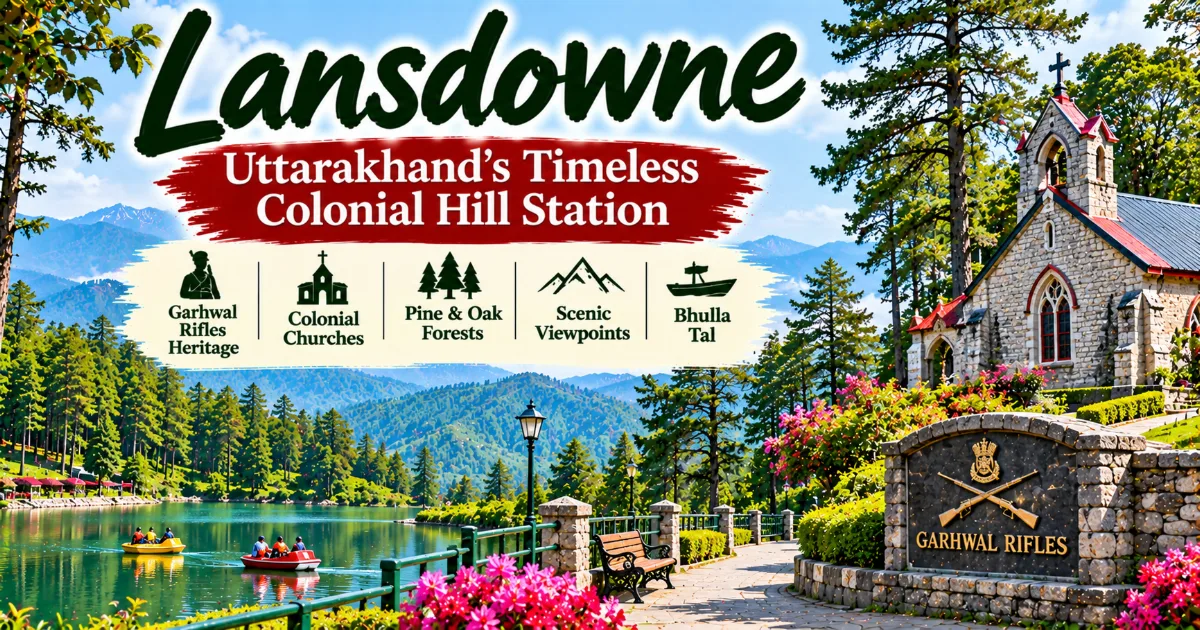
Discover Lansdowne, a peaceful hill station in the Pauri Garhwal district of Uttarakhand, known for its pine-covered hills, colonial-era architecture, mountain viewpoints, quiet walking trails and rich military heritage. Unlike crowded Himalayan destinations, Lansdowne offers a slower travel experience where visitors can enjoy forest landscapes, explore historic landmarks and experience the understated charm of the Garhwal Himalayas.
Introduction: The Quiet Hill Station of Pauri Garhwal
Uttarakhand has many hill stations, and each shows a different side of the Himalayan landscape. Some are known for snow-covered mountain views, others for lakes, adventure sports or religious heritage. What sets Lansdowne apart is its calm, its dense forests and its history.
Located in the Pauri Garhwal district, this small town is surrounded by oak and pine forests. Quiet streets, old buildings and good viewpoints suit travellers who want a relaxed mountain holiday. It is also closely tied to the Garhwal Rifles, one of the distinguished infantry regiments of the Indian Army.
Lansdowne began as a British-era military cantonment, and its history, architecture and institutional character still shape how the town looks. You can walk between colonial-era churches, old buildings, memorials and military heritage sites with forested hills all around.
Continue Reading
Couples, families, photographers, nature lovers and anyone wanting a short break from busy cities will find it suits them. There are no large entertainment complexes or crowded commercial markets here. Instead, people come for forest walks, fresh mountain air, quiet viewpoints and the chance to spend unhurried time in a Himalayan setting.
The town also works well as a base for seeing more of the Garhwal region. Kotdwar, Pauri and other destinations in Uttarakhand are all within reach for onward journeys, depending on how much time you have and on road conditions.
A trip to Lansdowne is a chance to slow down, take in the landscape and spend time in a hill station where nature and history remain closely connected.
Where Is Lansdowne Located?
Lansdowne sits in the Pauri Garhwal district of Uttarakhand at an elevation of approximately 1,700 metres above sea level. It lies in the lower Himalayan region, with forested mountain slopes on every side.
Being well above the plains, it has become a popular mountain retreat for visitors travelling from Delhi and other northern Indian cities. Kotdwar is the main gateway for road journeys up to the town, while Pauri and other Garhwal destinations can be added to longer itineraries.
All around are rolling hills, deep valleys and extensive forest cover. Oak and pine trees give the area its characteristic appearance, especially along the roads and walking routes.
Where many hill stations have grown large commercial centres, this one has kept a fairly compact settlement pattern. Its cantonment status and controlled development have helped preserve much of the quiet.
Its geographical location also influences the weather. Summers are generally more comfortable than in the plains, while winters can be cold, with occasional snowfall in the wider region when conditions permit.
The History of Lansdowne
The town's story is bound up with British colonial administration and the military development of the Garhwal region.
Developed as a cantonment during the late nineteenth century, the town was named after Lord Lansdowne, who served as Viceroy of India from 1888 to 1894.
British officials saw both strategic and climatic advantages in the site. Its height, together with a fairly easy connection to the plains, made it suitable for a military establishment and for training.
Once the cantonment was in place, the area became an important military settlement. Roads, administrative buildings, homes and religious institutions were added over the years.
Early on, the town became closely associated with the Garhwal Rifles. That regiment's history and its part in India's military tradition are still central to how the town sees itself.
After Indian independence, it remained an important military centre. The presence of the Garhwal Rifles has shaped development here and helped keep the town's character intact.
This legacy is still visible in the architecture, memorials and military institutions. Remember that Lansdowne is an active cantonment, so some areas and facilities may have restricted access.
The Garhwal Rifles and Lansdowne’s Military Heritage
Much of Lansdowne's identity comes from the Garhwal Rifles.
With origins in the late nineteenth century, the regiment has a long and respected place in India's military tradition, and its soldiers have served in many military campaigns and operations.
Locally, the link with the Garhwal region matters a great deal. Military service has long been a respected profession in many parts of the region, and the regiment is a direct connection between local families and India's armed forces.
Today the town serves as an important regimental centre, and its military character shows in the disciplined environment, institutional buildings and memorial spaces.
To a traveller, this history gives the place more depth. Besides the mountain views, a trip here is a chance to learn what the region has given to India's military history.
Everyone must follow military and cantonment regulations. Do not enter or photograph restricted establishments without permission. Authorised public spaces and designated visitor attractions are the way to see the town's heritage.
Garhwal Rifles Regimental War Memorial
Among the town's heritage attractions, the Garhwal Rifles Regimental War Memorial is one of the most important.
Soldiers who served and made sacrifices in military conflicts are honoured here, and the memorial stands for the courage, discipline and dedication of the regiment.
Here military history becomes personal. Treat it as a place for reflection, not just a sightseeing stop.
Set in quiet surroundings against a mountain backdrop, it is an easy place to linger and read about what the regiment has done.
Military regulations may govern access, so confirm current entry requirements before you go. Follow the instructions of the authorities on photography and movement within military areas.
Darwan Singh Sangrahalaya: Exploring Military History
Darwan Singh Sangrahalaya is a museum devoted to the history of the Garhwal Rifles, and anyone interested in military heritage should put it on their list.
The museum is named after Darwan Singh Negi, a decorated soldier of the Garhwal Rifles who received the Victoria Cross for his bravery during the First World War.
Inside are objects and displays from the regiment's past. You can learn about military service, historical campaigns, uniforms, weapons, medals and what soldiers experienced in different periods.
Spending an hour here explains the bond between Lansdowne and the Garhwal Rifles far better than the viewpoints can. It gives context that scenery alone does not.
Students, history enthusiasts and families tend to find it worthwhile. For younger visitors, it is a way to understand military institutions and the sacrifices made by soldiers.
Opening times and access conditions can change, so confirm the current arrangements before travelling.
St. Mary's Church: A Colonial-Era Landmark
St. Mary's Church is one of the town's historical landmarks.
Built in the colonial era, it is an example of the architectural and religious institutions set up during the cantonment period.
Quiet grounds surround it, and both the building and its setting are good for photography and heritage walks.
Churches such as St. Mary's also show how British military settlements created their own social and institutional spaces in the hills.
Anyone interested in colonial architecture can appreciate the structure, its setting and its place in the history of Lansdowne.
When visiting religious buildings, keep silent and respect restrictions on entry or photography.
St. John's Church: A Quiet Place of Heritage
St. John's Church is another religious and historical landmark in Lansdowne.
Linked to the colonial history of the cantonment, it adds to the town's architectural identity.
The grounds are peaceful and suit anyone interested in old buildings and unhurried sightseeing.
Add it to a walking route that covers the other heritage attractions in town. Check access arrangements first, as some religious and institutional properties have specific visiting conditions.
Between them, the two churches keep alive the memory of how the town grew during the British period.
Bhim Pakora: A Curious Natural Attraction
Bhim Pakora is a natural attraction near Lansdowne.
Two large rocks sit here in an unusual balance, one appearing to rest on top of the other. People stop to look, and the spot has gathered local stories and legends.
The name is linked with Bhima, a character from the Indian epic Mahabharata. Local narratives connect the rocks with the Pandavas, although these tales belong to folklore rather than established geological history.
The site therefore combines a natural curiosity with a piece of local cultural storytelling.
Reaching it usually means a walk along a forested route, which makes it a good outing for those who like nature trails and unusual geology.
Wear footwear with a good grip, especially after rainfall. Avoid climbing on unstable rocks or attempting risky photographs.
Tip-in-Top: Enjoy Panoramic Mountain Views
Tip-in-Top, also known as Tiffin Top, is one of the best-known viewpoints in Lansdowne.
The view takes in the surrounding Himalayan landscape and forested hills. On clear days distant mountain ranges may be visible, although that depends on the weather.
It is popular with photographers and with people who prefer quiet sightseeing. Because it sits high, it is a good place to watch the colours of the mountains change in the morning and evening.
The walking routes leading up to it pass through forest, so the approach is part of the pleasure.
Plenty of couples and families come here for a relaxed outing. No elaborate activity plan is needed, which suits visitors who simply want to sit and enjoy the landscape.
Carry drinking water and wear comfortable shoes. Mornings tend to give clearer views, while cloud cover and mist may reduce visibility later in the day.
Bhulla Tal: A Peaceful Lake Experience
Bhulla Tal is one of the popular recreational spots in Lansdowne.
Kept as a visitor-friendly lake, it is especially good for families. Calm water and landscaped grounds make it a pleasant place for a short break.
Boating and other recreational facilities may be available, depending on current operating arrangements.
Short sightseeing itineraries often include it because it is a change from the forest viewpoints and historical attractions.
Children usually enjoy the time here, and photographers can capture reflections and the surrounding greenery.
The lake's name comes from the Garhwali term for a younger brother and is commonly explained through its connection with the Garhwal Rifles.
Follow local rules, do not feed animals or throw waste into the water, and keep an eye on children near the edge.
Lover's Lane: A Scenic Forest Walk
Lover's Lane is a popular walking route in Lansdowne, known for its forest and its calm.
Along the way the path passes through pine and oak, so you see the woods at walking pace.
The walk is a favourite with couples, nature lovers and photographers. Because it is quiet, it makes a relaxed walk away from the busier parts of town.
With each season the forest looks different. Spring and summer bring fresh green growth, while autumn and winter bring other colours and light.
Stay on established paths and do not wander into unfamiliar forest areas. It is best to walk during daylight hours and follow local guidance.
The Natural Beauty of Lansdowne
Above everything else, people come to Lansdowne for its natural setting.
Forested hills ring the town, mostly oak and pine. With mountain slopes, valleys and open viewpoints all around, the scenery shifts through the day.
Early mornings can bring mist across the hills. As sunlight reaches the forest, it slowly clears and layers of mountain terrain appear.
Birdsong and the wind moving through the trees are often the only sounds, and they add to the calm of the place.
Nature enthusiasts can go birdwatching, take photographs or walk in the forest. A variety of birds and other wildlife live in the wider forest ecosystem, although sightings are never guaranteed.
These woods are also important for local environmental health. Forests help protect soil, regulate water systems and support biodiversity.
Please do not litter, disturb wildlife or make unnecessary noise in forested areas.
Flora and Fauna Around Lansdowne
Around the town, the forests are part of the wider Himalayan foothill ecosystem.
Oak and pine species dominate the slopes, while other vegetation varies according to elevation, soil conditions and seasonal climate.
Birds, insects and mammals all live here. Birdwatchers will find the most activity during the quieter hours of the day.
Beyond the town, these woods connect with the forest ecosystems of the Garhwal Himalayas, where wildlife habitats extend across different elevations.
Wildlife sightings are not guaranteed here. Animals in the forest are best watched from a respectful distance, and many stay hidden.
Never feed wildlife or approach animals for photographs. Avoid playing loud music or entering restricted forest zones.
Careful behaviour protects the very forests that draw people to Lansdowne.
Best Time to Visit Lansdowne
Lansdowne can be visited for much of the year, and each season gives a different kind of trip.
Spring: March to April
Spring is one of the most pleasant times to go.
Temperatures are usually comfortable, and the surrounding forests start to show fresh seasonal growth.
Sightseeing, photography and walking trails are all easy in this weather. You can explore Tip-in-Top, Bhulla Tal and the heritage sites without the intense heat of the plains.
This season suits travellers who want to combine outdoor exploring with a relaxed holiday.
Summer: May to June
Summer is busy because temperatures in Lansdowne are generally more comfortable than in many northern Indian cities.
The forested landscape keeps walking and sightseeing pleasant, even in the warmer months.
School holidays bring many families. Weekends and holiday periods bring more visitors, though, so arrange accommodation in advance.
Pack light clothing for the daytime and a light jacket for cooler evenings.
Monsoon: July to September
In the monsoon, the hills turn a deep green.
The forests look their best, mist often drifts across the slopes, and photographers may enjoy the dramatic atmosphere created by clouds and rain.
Heavy rainfall, however, makes mountain roads slippery and raises the risk of landslides or road disruptions.
Before departure, check weather and road conditions. Avoid unnecessary driving during heavy rain and stay off exposed or slippery trails.
Autumn: October to November
Autumn is another excellent time to visit.
By now the monsoon has usually withdrawn, leaving clearer skies and comfortable sightseeing weather.
When visibility is good, the mountain views can be particularly rewarding.
Couples, photographers and anyone who prefers quieter surroundings will enjoy this season.
Winter: December to February
Winter brings cold mornings and evenings to Lansdowne.
Temperatures can fall sharply, so carry warm clothing. Occasional snowfall may occur in the wider region under suitable weather conditions, but never assume it will snow in Lansdowne itself.
Winter suits travellers who enjoy peaceful hill towns and cooler weather.
Before travelling, check local forecasts and road conditions, especially during periods of severe cold or rain.
How to Reach Lansdowne
Road is the main way in. Kotdwar is the nearest major rail gateway that travellers use.
By Road
Driving is the most convenient option.
Travellers coming from Delhi and nearby cities drive towards Kotdwar and then continue uphill to Lansdowne.
On the way, the plains slowly give way to the forested hills of the Garhwal region.
Private vehicles and hired taxis give you flexibility. If you prefer public transport, travel to Kotdwar and arrange onward transport from there.
Expect bends and steep climbs on the mountain roads, so drive carefully and avoid unnecessary night driving.
By Train
Kotdwar Railway Station is the nearest railway station that most visitors use.
Trains link Kotdwar with selected destinations, and from the station you can continue by taxi or other road transport.
Look up train schedules before planning the journey.
By Air
Jolly Grant Airport near Dehradun is the nearest major airport commonly used for the region.
Road transport can be arranged from the airport. Since the town is in the Garhwal hills, the onward leg needs planning.
Travellers arriving by air should factor in the road distance and allow enough time for the rest of the journey.
Suggested Two-Day Lansdowne Itinerary
Two days are enough to see the main attractions without rushing.
Day 1: Heritage and Town Exploration
Arrive in Lansdowne and check into your accommodation.
Start with the Garhwal Rifles heritage attractions, subject to current access arrangements. At Darwan Singh Sangrahalaya, learn about the history of the regiment.
Next, walk to the historic churches and other accessible colonial-era landmarks.
In the afternoon, head to Bhulla Tal and relax by the water.
Finish with an easy walk through town and an early dinner.
Day 2: Nature, Viewpoints and Forest Walks
Go to Tip-in-Top in the morning for panoramic views of the surrounding hills.
Then walk on to Lover's Lane for a stretch through the forest.
If time and interest allow, explore Bhim Pakora or another nearby attraction.
After a leisurely lunch, spend what time is left in town before beginning your return journey.
Over these two days you cover both the town's history and its forests.
Suggested Three-Day Lansdowne Itinerary
Travellers who prefer a slower holiday can stretch the trip to three days.
Day 1: Arrival and Local Heritage
Reach Lansdowne, settle into your accommodation and explore the town.
See the authorised heritage attractions linked to the Garhwal Rifles and learn about the history of the cantonment.
Keep the evening free to enjoy the quiet.
Day 2: Viewpoints and Nature
Visit Tip-in-Top in the morning and explore the surrounding forest trails.
Spend time at Bhulla Tal and use its recreational facilities if available.
Later, take Lover's Lane or another suitable walking route.
Day 3: Nearby Exploration and Departure
Start with a relaxed breakfast, then see any local attractions you missed.
Travel plans permitting, you may include a visit to Bhim Pakora or travel towards Kotdwar.
Leave plenty of time for the mountain road when you set off home.
Lansdowne for Couples and Honeymoon Travellers
Couples who prefer quiet surroundings to crowded tourist centres will find Lansdowne a good fit.
Forest, quiet walking routes and open viewpoints make it an easy place to spend quality time together.
Start with morning views from Tip-in-Top, take a slow walk along Lover's Lane and spend time near Bhulla Tal.
Short romantic breaks and relaxed holidays suit it best.
Compared with large commercial hill stations, the experience here is low-key. You can focus on the natural surroundings and keep the itinerary slow.
Options range from simple stays to more comfortable resorts and hotels. Check room facilities, location, road access and meal arrangements before booking.
Lansdowne for Families
Families get a mix of history, nature and fairly simple sightseeing activities in one small town.
Bhulla Tal is popular with children, and the heritage sites introduce them to the history of the Garhwal Rifles and the colonial period.
Parents can also use the trip to talk about why forests, biodiversity and responsible tourism matter.
Larger tourist towns have a wider range of commercial entertainment facilities. Here, plan the days around sightseeing, nature walks and relaxation instead.
Supervise children near water, forest trails and roads. Depending on the season, suitable footwear and warm clothing are important.
Lansdowne for Photography Enthusiasts
Photographers will find landscapes, architecture and nature subjects here.
Tip-in-Top gives a wide view of the mountain ranges. Along the forest roads and walking routes, pine-covered slopes catch the changing light.
Old buildings and the historic churches make good subjects for architectural photography.
At Bhulla Tal there are reflections to work with, and the forests offer texture and pattern.
Early morning and late afternoon are the best times to shoot, because the natural light is softer.
Military restrictions apply to photography as well, so do not photograph restricted establishments. Ask permission before photographing local residents or private property.
Local Food and Cuisine in Lansdowne
A trip here is also a chance to try the food of Uttarakhand.
Garhwali cooking grew out of the region's farming and mountain conditions. Traditional dishes often use lentils, grains, seasonal vegetables and other local ingredients.
Mandua roti, chainsoo, phaanu, kafuli and aloo ke gutke are among the well-known preparations associated with Uttarakhand.
Selected hotels and local restaurants serve regional dishes, although availability varies.
Restaurants and hotels in town also serve familiar North Indian meals and other common tourist food.
Ask about traditional preparations and seasonal ingredients if local cuisine interests you.
Eating regional food is one of the easiest ways to connect with the culture and farming heritage of the area.
Accommodation Options in Lansdowne
There are places to stay for different budgets and preferences.
In and around the town you will find hotels, guesthouses, resorts and smaller properties.
Properties near the forest appeal to travellers who want a quieter atmosphere. Others stay closer to the main town for easy access to restaurants and sightseeing.
Before booking, check the exact property location, road conditions, parking facilities, heating arrangements, food services and whether connectivity is reliable.
Rooms can be harder to find during summer holidays, long weekends and festive periods, so book in advance for peak dates.
Remember too that this is a cantonment town. Hotels and guests alike must follow local regulations and restrictions.
Shopping in Lansdowne
Nobody comes here to shop, but small shops do sell everyday items, souvenirs and local products.
Like the town itself, the shopping experience is generally simple and quiet.
Look for local handicrafts, woollen items and packaged food where available.
Steer clear of items made from protected wildlife materials or products that cause environmental damage.
Buying from small local businesses helps the area's tourism economy.
Nearby Destinations to Explore from Lansdowne
Several Garhwal destinations can be combined with a stay in Lansdowne, depending on travel time and road conditions.
Kotdwar
Kotdwar is the main gateway town for Lansdowne.
Transport connections, markets and other facilities there are useful when entering or leaving the region.
Visitors often use it as a transit point on the road journey into the hills.
Pauri
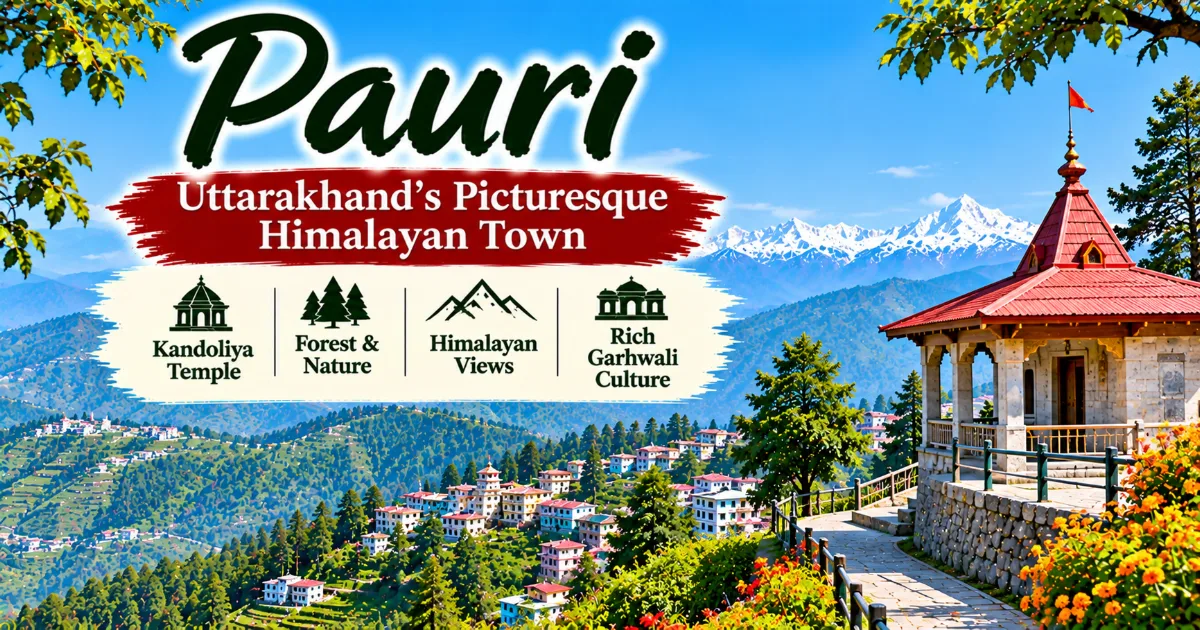
Pauri is the district headquarters of Pauri Garhwal, with fine mountain scenery.
Known for its elevated setting, it has views of the surrounding Himalayan landscape.
Add Pauri to a longer itinerary if you want to see more of the Garhwal region.
Tarkeshwar Mahadev Temple
Tarkeshwar Mahadev Temple is a well-known religious site in the wider Lansdowne region.
Dedicated to Lord Shiva, it stands among forested hills. That setting draws visitors interested in religious heritage as well as those who simply want quiet.
Tied to local religious traditions, it attracts devotees throughout the year.
Road and access conditions should be checked before planning the journey.
Satpuli
Satpuli is a settlement in Pauri Garhwal on the regional road network.
Travellers exploring different parts of the district can include it in longer journeys through the Garhwal region.
Around it, the landscape is rural, with river valleys.
Responsible Tourism in Lansdowne
Quiet and forest are what make Lansdowne worth visiting, and both depend on how travellers behave.
Never drop litter, particularly along forest roads, viewpoints and walking trails.
Take plastic bottles, food packaging and other waste away with you or use proper bins. A reusable water bottle and fewer single-use products reduce the pressure on the environment.
Leave birds and other wildlife undisturbed. Loud music, feeding animals and entering restricted forest areas all harm the ecosystem.
Respect the cantonment and follow all instructions from local authorities and military establishments.
Avoid photographing restricted facilities or entering areas without permission.
At religious sites, follow local customs and behave appropriately.
Spend money with local businesses and treat residents with respect. Protecting nature is one half of responsible tourism; making sure your visit benefits the people who live here is the other.
Travel Tips Before Visiting Lansdowne
Plan your journey in advance, particularly if you are travelling by public transport. Confirm onward connections from Kotdwar and arrange local transport where necessary.
Even in summer, pack warm clothing, because evenings and mornings can be cooler than expected.
Comfortable walking shoes make the forest paths and viewpoints easier.
During the monsoon and winter, check weather and road conditions.
Museums and other attractions change their opening arrangements, so confirm them before visiting.
Stay out of unauthorised areas and follow military restrictions.
Bring basic medicines and personal essentials, particularly if you are travelling with children or older family members.
Mobile data and the internet should not be relied on completely, as network quality may vary depending on the location and service provider.
Keep your itinerary flexible and allow extra time for mountain road journeys.
Why Lansdowne Deserves a Place in Uttarakhand Tourism
This town brings together forest, history and an unhurried pace of life in one place.
The link with the Garhwal Rifles sets it apart within Uttarakhand tourism. Through the museums, memorials and colonial-era landmarks, you can explore an important part of the region's history.
Forested hills, viewpoints and quiet walking routes appeal to travellers who want nature without a crowded sightseeing schedule.
Its compact size also suits short holidays. Two or three days cover the major attractions and still leave time to rest.
Successful tourism, Lansdowne shows, does not always need large commercial developments. Often the strongest draw is a place that has kept its local character, forests and history.
Within Uttarakhand, Lansdowne is an example of heritage-based and nature-conscious tourism. Sending more visitors to places like this can spread tourism across different parts of the state.
A Weekend or Longer in Lansdowne
It is one of the state's most charming options for travellers seeking a peaceful mountain escape.
Pine-covered hills, colonial-era landmarks, military heritage and wide viewpoints make a trip that is relaxing and teaches you something too.
Visitors can explore the history of the Garhwal Rifles, learn the stories behind the town's old churches, take in the views from Tip-in-Top and spend quiet moments around Bhulla Tal.
Couples, families, nature lovers, photographers and anyone wanting to see the quieter side of the Garhwal Himalayas will find something here.
Whether you come for a weekend or fold it into a longer journey through Uttarakhand, Lansdowne connects you with the region's forests and its history.
Some of the most memorable journeys are measured by the quality of the time spent along the way rather than the number of attractions visited, and a few slow days here make that clear.