A Hill Town Where Heritage Meets the Himalayas
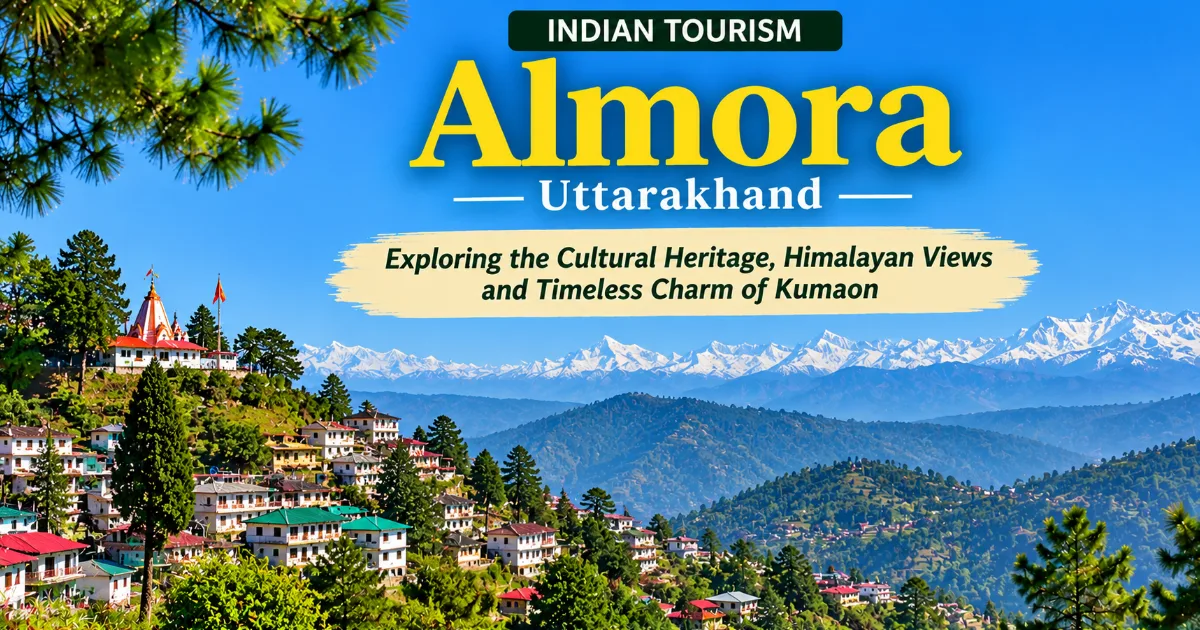
Set in the Kumaon region of Uttarakhand, Almora is a destination where mountain landscapes and centuries of regional history come together. Unlike hill stations that are primarily associated with colonial-era resorts or modern tourism, Almora has a distinct identity shaped by Kumaoni traditions, old temples, traditional markets, local craftsmanship and the legacy of the Chand rulers. Its location on a long, curved mountain ridge gives the town a recognisable profile, while its surrounding hills offer views of the greater Himalayan ranges on clear days.
You can photograph the mountains here, but the town itself is the reason to come, and it rewards a slow pace. Its narrow lanes, stone-paved market areas, traditional houses, temple courtyards and small shops reveal a way of life that has developed over generations. The day shapes it. Mornings bring cool air and distant mountain views, afternoons are suited to exploring the old town and nearby heritage sites, and evenings invite visitors to pause at viewpoints as the light changes over the hills.
The town is also an important cultural centre of Kumaon. Its history is closely associated with the Chand dynasty, which helped establish Almora as a political and administrative centre. Temples to regional deities carry its religious traditions, while its artistic heritage survives through folk painting, woodwork, metal craft, textiles and traditional food. Around it lie forested slopes, terraced fields, village settlements and historic religious sites.
For travellers interested in understanding Uttarakhand beyond its most frequently photographed destinations, Almora is a good introduction to Kumaoni culture. Temples, food and everyday local life sit side by side in a town that remains closely connected to its regional roots. The Uttarakhand Tourism department describes Almora as the cultural capital of Kumaon and highlights its Himalayan views, handicrafts and cuisine as important parts of its identity (uttarakhandtourism.gov.in).
Continue Reading
The Geography and Natural Setting of Almora
At approximately 1,638 metres above sea level, the town occupies a distinctive horseshoe-shaped ridge, with the Kosi and Suyal river valleys forming part of its surrounding landscape. The ridge is traditionally described through two sections, Talifat and Selifat, which contribute to the town's unusual topography. Rather than spreading across a broad flat valley, Almora developed along the contours of the mountain, giving its neighbourhoods and streets a layered arrangement.
The ridge shapes the character of the whole town. Roads and pathways follow the natural slopes, buildings occupy terraces and ridgelines, and viewpoints open towards distant mountain ranges. On clear days, snow-covered Himalayan peaks rise above the nearer forested hills. How much you see depends on weather, season, cloud cover and atmospheric conditions, so do not assume that every visit will give uninterrupted mountain views.
Pine and oak forests, cultivated slopes and small settlements surround the town. The forests influence the local climate and shelter many birds and other wildlife, and the region looks different in every season. Spring brings fresh growth and flowering trees, the monsoon turns the hills intensely green, autumn often offers clearer skies, and winter brings colder conditions with occasional frost in higher or exposed areas.
The setting suits travellers who enjoy walking, photography, scenic drives and quiet time outdoors. No demanding trek is needed to appreciate the landscape. A relaxed walk through the ridge-side neighbourhoods, a visit to a viewpoint or a drive through nearby villages can provide a meaningful experience of the Kumaon hills.
A Journey Through Almora's History
Almora's history is closely connected with the Katyuri and Chand dynasties that shaped the political and cultural development of Kumaon. Before Almora became the prominent hill town known today, the surrounding region was influenced by earlier local rulers and settlements. The district's official history records that the ancient town was once under the possession of a Katyuri ruler named Baichaldeo before its later development under the Chand dynasty.
The Chand rulers made Almora their political centre. A defensible ridge that also linked different parts of the Kumaon region was strategically valuable, and over time administration, temples, trade and settlement turned it into the hub of regional life.
You can still trace the Chand period through the town's temples, traditional neighbourhoods and museum collections. Much of the religious architecture grew out of royal patronage. The Nanda Devi Temple, in particular, is closely associated with the history of the Chand rulers and remains an important religious and cultural centre.
During the British period, Almora continued to develop as an administrative and hill settlement. Colonial administration brought new institutions and changed parts of the built environment. Yet the older town survived. Traditional markets, temples, local customs and Kumaoni social life continued to shape it.
The result is a layered town: neither frozen in the past nor defined entirely by modern tourism. Its heritage lives in the streets, religious spaces and local institutions, and in the communities around them.
The Cultural Identity of Kumaon
Kumaon has its own languages, folk traditions, festivals, music, dance forms, crafts and food practices, and Almora is widely regarded as one of the region's important cultural centres. None of this exists only as a performance arranged for visitors. It remains part of family celebrations, religious observances, village life and seasonal customs.
Kumaoni culture has developed in close relationship with the Himalayan environment. Agriculture, forest resources, livestock, seasonal weather and mountain geography have influenced traditional occupations and daily routines. The region's songs and stories often reflect migration, family relationships, devotion, harvests, nature and the emotional experience of living in mountain settlements.
Folk music and dance belong at festivals, weddings and community celebrations, where traditional songs may accompany seasonal dances or tell stories of local deities and historical memory. If you come across a local cultural programme, remember that it has a living social context. It is not tourist entertainment.
Clothing, jewellery and household objects carry the same identity. Woollen garments matter in the colder months, while traditional ornaments are associated with ceremonies and regional customs. Craft traditions vary between communities and localities, but each reflects practical knowledge and skills passed between generations.
With temples, markets, museums and craft traditions in one place, the town is a useful starting point for understanding Kumaoni culture. Explore it with curiosity and respect, and the region becomes more than a scenic Himalayan destination.
Nanda Devi Temple: The Religious Heart of Almora
The Nanda Devi Temple is among the most significant religious landmarks in Almora. The shrine to Goddess Nanda Devi is tied to the religious traditions of Kumaon and to the town's own history. It is more than a place of daily worship: a major annual festival here brings the community together.
The temple is linked with the Chand rulers, who contributed to its development and religious significance. The district administration describes the Nanda Devi Mela as a long-established tradition that has been part of the temple's history for more than four centuries. Held in September, it draws devotees and visitors from different parts of the region.
Rituals, traditional music, local gatherings and festive activity fill the streets around the temple during the Mela, and it is one of the clearest places to see how faith and community identity meet in Kumaon. Crowds can be large. If you plan to go during this period, book accommodation and local transport in advance.
Outside festival time, the temple is still worth visiting for its religious architecture and living worship. Because it sits in the old town, a temple visit combines easily with a walk through Almora's historic market streets.
Dress respectfully, follow temple instructions and avoid disturbing worshippers. Photography rules may vary within religious spaces, so it is best to seek permission before taking pictures of rituals or individuals.
Kasar Devi Temple and the Quiet Ridge Beyond It
Located in the hills near Almora, Kasar Devi is known for its temple, peaceful surroundings and association with spiritual seekers. The temple is dedicated to Kasar Devi and is an important religious site in the area. The district administration identifies the temple structure with the second century CE, and the village has also become known among people looking for meditation and quieter travel.
Kasar Devi gained wider international attention through the spiritual and cultural visitors who spent time in the area during the late nineteenth and twentieth centuries. Swami Vivekananda is said to have visited the temple in the 1890s. Other spiritual thinkers and seekers also became associated with the locality. During the 1960s and 1970s, the nearby ridge attracted travellers connected with the wider counterculture movement.
The area is often associated with Crank's Ridge, a stretch of hillside that became known among visitors seeking solitude, alternative spiritual experiences and scenic surroundings. Its reputation has contributed to the village's distinctive atmosphere, although travellers should separate documented history from exaggerated claims about mysterious natural powers.
Don't rush it. See the temple, walk the surrounding roads, take in the mountain views and spend time in the quiet local surroundings. Small cafés and guesthouses in the wider area have created a relaxed visitor culture, but the village still expects respectful behaviour and care for its natural surroundings.
It suits travellers who prefer slower journeys. Instead of filling every hour with sightseeing, you can read, walk, watch the light change or simply sit with the views.
Chitai Golu Devta Temple: A Distinctive Tradition of Faith
Chitai Golu Devta Temple is one of the most recognisable religious sites near Almora. Its deity, Golu Devta, is highly revered in Kumaon, and the temple is known for the large number of bells hung across its premises. Devotees come to the shrine with prayers and written petitions, seeking the deity's blessings and justice.
In Kumaoni belief, Golu Devta is the god of justice and fairness who grants sincere wishes. Devotees may submit written applications describing their concerns or prayers. When they believe a wish has been granted, some return to offer a bell in thanks. Over the years those bells have covered the temple, and they are what most people remember about it.
Forest surrounds the temple, so the journey there is part of the experience. Ringing bells, stacks of written petitions and steady worship around the shrine show a tradition that is still very much alive; the building matters less than the continuing relationship between the deity and the people who come.
Approach it with sensitivity. The petitions and offerings are expressions of personal faith, so do not treat them as props or move them for photographs. This is a place of worship, and local customs should be respected.
Chitai can be combined with other nearby attractions around Almora, depending on available time and road conditions. It is especially worth the trip if you want to see how regional beliefs shape the cultural geography of Kumaon.
Bright End Corner: Watching the Himalayas Change with the Light
Bright End Corner is a well-known viewpoint located at the end of Almora's ridge. People come here mostly at sunrise and sunset, when the light moves across the surrounding hills and distant ranges. It is easy to reach, the views are wide open, and the place is usually peaceful.
At sunrise the hills appear slowly as the sky brightens behind the mountains; at sunset the colours shift across the ridges. Both are good for photography. Weather decides the rest. Clouds, haze or rain may hide distant peaks, though the sky and nearby hills often make the trip worthwhile anyway.
The spot is also tied to Swami Vivekananda. Near the viewpoint are a place connected with his meditation, the Ramakrishna Kutir and the Vivekananda Library, which give the visit a spiritual and historical side as well as a scenic one.
Take your litter with you and be careful near exposed edges. Give yourself time here instead of stopping only for a quick photograph.
Katarmal Sun Temple: A Ninth-Century Heritage Site
Katarmal Sun Temple is one of the most important historic monuments in the Almora region. Built for Surya, the Sun God, the temple is also known as Bara Aditya. It is generally dated to the ninth century and is an important example of the region's early medieval religious architecture. A principal shrine stands among several smaller temples, a tight group of stone structures set against the hills.
Its architecture reflects the religious and artistic traditions that flourished in the Himalayan region, and its stonework, carved details and the layout of the complex draw anyone interested in Indian temple history. The hills around it make a dramatic backdrop, and because the site is fairly quiet you can study the carvings closely.
For heritage travellers, Katarmal is a chance to see a historic Sun temple away from the better-known monuments of the plains. It also shows how religious architecture developed in the mountains, where local materials, terrain and community traditions influenced construction.
Allow time to explore the complex respectfully. These stone structures are centuries old and easily damaged. Avoid climbing on fragile sections, scratching surfaces or leaving waste behind. Since access involves travel from the main town and may include walking, comfortable footwear is recommended.
Lakhudiyar: Discovering the Prehistoric Past
Lakhudiyar is an important prehistoric archaeological site in the Almora district. The name is commonly translated as a reference to a large number of caves, and the locality is known for prehistoric rock paintings. These paintings provide evidence of early human activity and offer a glimpse into the visual expression of communities that lived in the region long before the rise of the historic kingdoms.
The site pushes the story of Almora back well before its dynasties and temples. The Himalayan region has a long human history, and rock paintings like these help researchers understand how earlier communities interacted with their environment. They are valuable evidence even when their exact meanings cannot be established with certainty.
According to Uttarakhand Tourism information, the site is around 20 kilometres from Almora town.
Approach it with care and do not touch or damage the painted surfaces. They are fragile. Preserving them is essential for future study, and for the visitors who come after you.
Families, students and anyone who enjoys history will find it interesting. It gives a different perspective on the region and is a reminder that the cultural story of Kumaon began long before the historical town of Almora developed.
Simtola: Forested Slopes and Cultural Memory
Simtola is a scenic area near Almora known for its forested surroundings and connection with the cultural history of the town. Located a short distance from the main settlement, it offers a quieter landscape for visitors who want to spend time outdoors without undertaking a difficult journey.
The area is also associated with the Uday Shankar India Cultural Centre, established by the dancer Uday Shankar in 1938. The centre is an important chapter in the history of modern Indian dance and artistic experimentation, and a sign of how Almora drew artists who found inspiration in the Himalayan environment.
With forested slopes, open spaces and views of the surrounding hills, it is a calm change from the busy market and good for relaxed walks and photography. Check local access conditions before planning a visit to any specific property or institutional site.
Royal history and religion are only part of Almora's identity. Artists, thinkers and cultural practitioners have also come here for creative work, and Simtola is where that side of the town is easiest to see.
Govind Ballabh Pant Museum: Preserving the Heritage of Kumaon
The Govind Ballabh Pant Museum, situated along Almora's Mall Road, is an important place to understand the historical and artistic traditions of the region. Named after Govind Ballabh Pant, the museum preserves objects connected with the history of Kumaon, including material associated with the Chand and Katyuri dynasties. Its collections help visitors connect the town's surviving monuments with the wider political, social and artistic history of the hills.
If you want to understand the region beyond its scenery, start here. Historical objects, sculptures, traditional art and cultural displays give context to the temples and old settlements you will see later. The museum also highlights Aipan, a traditional form of folk art associated with Uttarakhand, usually drawn as white patterns on a red or ochre background and used in religious and ceremonial settings.
Aipan is more than decoration. The motifs and where they are drawn are tied to auspicious occasions, household rituals and regional artistic knowledge. Designs are traditionally made by hand, with the skill passed through generations, and museum displays introduce visitors to an art that is still part of everyday practice.
Check the museum's current opening days and timings before travelling, as public access arrangements can change. Seeing it before the town's temples and traditional market streets makes both easier to read.
Lala Bazaar: Exploring the Traditional Streets of Almora
Lala Bazaar is one of the most characteristic parts of old Almora. Its traditional streets, closely arranged shops and historic atmosphere offer a glimpse into the town's long-standing commercial life. The district administration describes it as a market with a history extending over more than two hundred years, known for its paved stone streets and distinctive traditional setting.
A stroll here shows everyday Almora better than almost anything else. Residents buy daily necessities, visitors browse local products and old family businesses still serve the surrounding neighbourhoods, so it is a working market as much as a souvenir stop.
The narrow lanes slow you down. Small shops display garments, household goods, local snacks, sweets, jewellery and craft items, and the street layout follows the way the old town grew along its ridge. Look up and around: traditional building details, old façades and the way the market sits beside nearby religious spaces are easy to miss if you hurry.
Buying here supports local makers. Ask where craft products come from and learn to tell handmade regional items from mass-produced souvenirs. A thoughtful purchase helps keep traditional skills and small businesses going.
Go on foot. Roads in the old town can be narrow and busy, so watch for local traffic and avoid blocking shop entrances while taking photographs.
The Traditional Art and Handicrafts of Almora
The town has long been linked with the handicrafts of Kumaon. Its craft heritage answers practical needs as much as it pleases the eye. Local artisans have worked with whatever the mountains provide, making objects for the household, for ceremonies and for decoration.
Of the traditional art forms, Aipan is the best known across the wider Kumaon region. Floors, walls and ritual spaces are decorated with it during festivals, weddings and other auspicious occasions, and its geometric patterns and symbolic motifs are part of both daily and religious life. Museum and cultural displays in town are the easiest place to learn about it.
Woodwork is another strand of the region's craft heritage. Look for carved wooden doors, windows and household details in older buildings and traditional homes; the designs vary, but they show fine local craftsmanship and how important wood has been as a building material in Himalayan settlements.
Woollen shawls, caps, sweaters and other garments sell well in the colder climate and make practical souvenirs. Shops around town also carry metal craft, jewellery and locally made decorative objects.
When buying handicrafts, take time to talk with sellers and find out what is locally made. Genuine regional products keep craft traditions going and support artisans' livelihoods. Bargaining politely is common in many markets. Just don't push so hard that skilled handmade work is undervalued.
The Cuisine of Almora: Flavours of the Kumaon Hills
Eat well here. Kumaoni cuisine grew out of the farming, climate and ingredients of the mountains, and many traditional dishes use locally grown grains, pulses, seasonal vegetables, leafy greens and dairy products. It is cooking closely tied to the land and the rhythms of rural life.
One of the familiar dishes of Kumaon is bhatt ki churkani, a preparation made using black soybeans known locally as bhatt. The beans are cooked into a thick, flavourful dish and are commonly served with rice. Bhatt is valued as a source of plant protein and has an established place in regional food traditions.
Aloo ke gutke is another well-known preparation. Potatoes are cooked with spices and often served with local accompaniments. It is a simple dish, but its flavour and texture make it a popular part of Kumaoni meals. Madua roti, prepared using finger millet flour, is also associated with the region. Finger millet has traditionally been cultivated in parts of the Himalayan belt and is valued for its nutritional qualities.
Jhangora, a local variety of barnyard millet, is used in several preparations, including a sweet pudding commonly known as jhangora ki kheer. The dish is often served during festivals and family occasions. Other regional foods include seasonal greens, lentil preparations, chutneys and dishes made with local herbs and spices.
Bal Mithai is perhaps the most recognisable sweet associated with Almora. It is made from roasted khoya, shaped into a dense brown sweet and coated with small white sugar balls. Its distinctive appearance and flavour have made it a popular speciality among visitors. Singauri is another traditional sweet, commonly prepared with khoya and flavoured with cardamom, then wrapped in a leaf that contributes to its aroma.
Established local sweet shops and restaurants are the best places to try regional preparations. Menus change with the season, and family-run places may serve dishes that larger restaurants do not. If you have dietary restrictions, ask about ingredients.
Festivals and Celebrations in Almora
Festivals are central to the town's cultural identity. Religious occasions, seasonal celebrations and local fairs bring communities together and keep traditions that have developed over generations going. The Nanda Devi Mela is the best known.
Held in September, the Mela is a major religious and cultural gathering. Devotees come to honour the goddess, and the whole town fills with music, rituals, gatherings and market stalls. Few events show as clearly how closely the deity is bound up with Kumaoni identity.
Other Hindu festivals are observed in Almora with local variations in food, worship and community customs. Diwali, Holi, Navratri and Makar Sankranti are celebrated across the region, while local observances may include traditional songs, family gatherings and seasonal foods.
Harela is an important festival in Uttarakhand associated with greenery, agriculture and the monsoon season. It celebrates the relationship between people and the natural environment. The festival's customs vary across the state, but its themes of planting, renewal and prosperity are particularly meaningful in communities whose lives remain connected with agriculture.
If you plan to attend a festival, remember that religious events are community occasions first. Respect local instructions, avoid obstructing processions and ask before photographing ceremonies or participants. Accommodation may become harder to find during major gatherings, so advance planning is advisable.
Nature, Walking and Outdoor Experiences Around Almora
You don't need specialised trekking equipment or mountaineering skills to enjoy the outdoors here. The ridge, the forests around it and a network of local roads are made for gentle walks, scenic drives and short excursions.
Start with the town itself, which is rewarding on foot. Old neighbourhoods, temple approaches and market lanes show how people built on steep ground. Some streets are steep, uneven or paved with stone, so wear comfortable footwear, and go slowly: it helps with fatigue at altitude, particularly if you have come up from the plains.
Beyond town are terraced fields, forested slopes and villages linked by narrow roads. A drive through them brings you closer to rural Kumaoni life, with traditional houses, small farm plots, orchards and local shrines along the way. People live here. Respect private property and do not enter fields or homes without permission.
Birdwatching is another option, since the forested hills hold many resident and seasonal birds. Early morning is usually best, when they are most active. Please don't play loud music or use calls to disturb wildlife.
For photography, aim for clear mornings and late afternoons, when the light picks out the contours of the hills, the patterns of terraced fields and the old town's architecture. A telephoto lens can help capture distant mountain features, while a wide-angle lens is useful for landscapes and streetscapes.
The town also works as a base for exploring the wider Kumaon region, but plan excursions realistically. Hill roads take longer than expected, and weather, traffic or road conditions may affect journey times. Fewer stops, enjoyed properly, beat an overly crowded itinerary.
Where to Stay in Almora
Accommodation ranges from hotels and guesthouses to homestays and smaller properties in the surrounding hills. Which suits you depends on the kind of trip you want. Staying near the main town puts shops, restaurants and transport close by; for something quieter, look outside the busiest market areas.
Homestays are the more personal choice. Some serve regional meals, share tips on nearby villages and explain local customs. Before you book one, be clear about facilities, meal arrangements, access roads and check-in timings.
A mountain view is attractive, but confirm what it actually includes. A listing may promise a Himalayan view without saying it depends on season and weather. Check, too, whether the property needs a steep walk from the road or has convenient parking, especially if you are travelling with heavy luggage.
Before booking, think about heating arrangements for winter, hot water availability, road access, mobile network coverage and distance from the town centre. During festivals and popular holiday periods, booking in advance is advisable.
Best Time to Visit Almora
It depends on what you want from the trip. Spring, the monsoon, autumn and winter each feel different, and the weather varies from year to year.
March to May: Spring and Pleasant Weather
Spring is one of the most comfortable periods for visiting Almora. Days are generally pleasant, the surrounding vegetation begins to look fresh and outdoor sightseeing is easier than during the colder months. This period is suitable for walking through the town, visiting temples, exploring markets and enjoying scenic viewpoints.
April and May are busy, as people from warmer parts of India head for cooler mountain destinations. Book ahead around holidays.
June: Early Monsoon Transition
June can bring warmer days followed by changing weather as the monsoon approaches. It may still be possible to enjoy sightseeing, but travellers should pay attention to forecasts and road conditions. Rain can affect visibility and make some walking routes slippery.
July to August: Monsoon Season
The hills turn intensely green, but travel gets harder. Heavy rainfall can lead to landslides, road closures, reduced visibility and delays. If you come now, keep your schedule flexible, check local advisories and avoid unnecessary journeys during heavy rain.
September to November: Clearer Skies and Autumn Landscapes
The period after the main monsoon is often attractive for visitors. The landscape remains green, while clearer conditions may improve distant mountain views. September is also important for travellers interested in the Nanda Devi Mela. October and November can be particularly suitable for photography, sightseeing and cultural exploration.
December to February: Winter in the Kumaon Hills
Mornings and nights get cold. The town is quiet, and clear days can give fine mountain views. Carry warm clothing and confirm heating arrangements at their accommodation. Snowfall should not be assumed in Almora town itself, as conditions vary.
The Uttarakhand Tourism department identifies March to May and the period from mid-September to December as favourable times to visit Almora.
How to Reach Almora
Roads connect the town with several major towns in Uttarakhand and with cities in the northern plains. Most journeys end on winding mountain roads, so allow plenty of time and don't plan too tightly.
Air Travel
The nearest airport commonly used is Pantnagar Airport, approximately 127 kilometres from Almora; the actual journey time depends on road conditions and traffic. Flight availability and schedules can vary, so confirm connections before finalising your plans. Taxis and other road transport cover the rest of the way from the airport.
Train Travel
Kathgodam is the nearest major railway station, approximately 105 kilometres away by road. It has rail connections with several cities, including Delhi and Lucknow. From the station, continue by taxi, shared vehicle or bus, depending on availability.
Coming by Road
Road is the most practical option. A network of hill roads links the town to other parts of Kumaon and Uttarakhand, and from Delhi or other northern cities you head towards the Kumaon region and continue on the hill routes.
Buses, taxis and private vehicles cover the final stretch. If you drive yourself, you should be comfortable with hill roads, bends and changing weather. Avoid driving after dark where possible, particularly on unfamiliar stretches.
Suggested Two-Day Almora Itinerary
Two days cover the historic centre, the main temples and a viewpoint or two. With more time, you can explore the same places at a slower pace.
Day One: Discovering the Historic Town
Begin the morning at Nanda Devi Temple and take time to understand its place in Kumaoni tradition. From there, explore the surrounding old-town streets and make your way through Lala Bazaar. The market is a good place to observe traditional architecture, shop for local products and sample regional snacks.
After lunch, visit the Govind Ballabh Pant Museum to learn about the historical and artistic heritage of Kumaon. Continue towards Bright End Corner later in the afternoon. If the weather is clear, stay for the sunset and enjoy the changing colours over the surrounding hills.
The evening can be spent exploring local restaurants and tasting traditional Kumaoni dishes. Try regional preparations such as bhatt ki churkani, aloo ke gutke or madua roti, depending on availability.
Day Two: Temples, Heritage and Mountain Scenery
Start the day with an excursion to Chitai Golu Devta Temple, where the bell offerings and the traditions around Golu Devta are worth time.
Continue towards Kasar Devi for the temple and the quiet ridge around it. Leave room for a relaxed walk and a meal at a local café; this is the place for peaceful views and unhurried exploration.
Depending on travel time and interest, you can add Katarmal Sun Temple or Lakhudiyar for the region's religious and archaeological history. Both lie outside the central town, so allow for the drive there and back. Pick one according to the time you have rather than trying to fit every attraction into a single afternoon.
A Three-Day Experience for a Slower Journey
With three days in Almora, you can explore without rushing between attractions.
The first day can focus on the old town, including Nanda Devi Temple, Lala Bazaar, the museum and Bright End Corner. The second day can be dedicated to Kasar Devi and Chitai Golu Devta Temple, allowing time for quiet walks and cultural observation. The third day can be reserved for a heritage excursion to Katarmal Sun Temple or Lakhudiyar, followed by a relaxed afternoon exploring local food and craft shops.
This pace suits families, photographers and anyone travelling for culture. It also leaves room for weather changes. Those can affect mountain visibility and road journeys alike.
Shopping in Almora: What to Bring Home
Shopping here is a chance to discover the products and craftsmanship of Kumaon. Skip the generic souvenirs and look for things that reflect local traditions.
Bal Mithai is one of the most popular edible gifts associated with the town, easy to spot by its brown khoya base and coating of small white sugar balls. Singauri is another traditional sweet worth trying. Both are perishable, so check freshness, packaging and storage advice before buying them for a long journey.
Handmade Aipan-inspired products make good souvenirs: decorative pieces, paintings, household objects and gift items with traditional motifs. Woollen garments and locally made textiles are practical buys, particularly in the colder months.
The traditional market also sells jewellery, wooden craft objects and other regional products. When something is described as handmade or locally produced, it is reasonable to ask what it is made of and where. You get an informed purchase, and genuine local businesses get the sale.
Responsible Tourism in Almora
Almora's old streets, temples, forests, archaeological sites and traditional neighbourhoods matter first to the people who live and work there. Travel with that in mind.
Local customs come first. Temples are active religious spaces, so follow instructions on footwear, photography, dress and entry. During festivals, processions and ceremonies, do not obstruct participants or treat religious practices as staged performances.
Waste is a particular problem in mountain destinations. Plastic packaging, disposable bottles and food waste damage the surrounding environment and create problems for local communities. Carry a reusable water bottle where practical, use designated waste bins and take your rubbish back when there are none.
Use water carefully too. Hill settlements may depend on limited local water resources, especially during dry periods, so avoid unnecessary consumption in hotels and homestays.
Spend locally. Choosing locally owned accommodation, eating regional food, buying authentic handicrafts and hiring local guides where appropriate means tourism money reaches the people who sustain the town's culture.
At heritage sites, never write on old structures, remove stones or objects, or climb on fragile architectural features. Archaeological remains and historic temples cannot be replaced once damaged, and careful behaviour now is what keeps them standing for future generations.
Practical Travel Tips for Visiting Almora
Good planning makes the difference here. Mountain weather changes quickly, so pack layers even in the warmer months. A light jacket is usually enough for evenings, while winter needs proper warm clothing.
Wear comfortable walking shoes. The old town has sloping roads, uneven surfaces and stone-paved lanes, and temples and heritage sites often involve steps and short uphill walks.
Mobile and internet coverage may vary between the main town and more remote areas. Download essential maps and keep accommodation and transport details available offline.
In the monsoon, check weather forecasts and local road advisories before setting out, because landslides and temporary road closures can affect mountain journeys. In winter, confirm road conditions and accommodation facilities in advance.
Photographers should carry rain protection for cameras and phones. Sunrise and sunset visits need attention to visibility and safe access, especially in the half-light, and don't stand near exposed edges for a shot.
Above all, plan enough time to enjoy Almora itself. Its traditional markets, local food, neighbourhoods and mountain air are as much the point as any checklist of sights.
Why Almora Deserves a Place on Your Uttarakhand Travel List
This is a different kind of Himalayan holiday: a historic hill town with all of Kumaon's culture around it. The old markets still run on traditional mountain commerce, the temples hold centuries of regional faith, and the museums and archaeological sites cover everything from prehistoric settlements to the hill kingdoms.
Aipan art, folk traditions, local festivals, traditional foods and regional craftsmanship explain Kumaoni identity in a way mountain views alone cannot. Forested hills, terraced fields, quiet roads and wide viewpoints complete the picture.
Heritage lovers get temples and a museum, nature lovers get scenic walks and mountain surroundings, and food lovers get Kumaoni cooking. Anyone after a slower holiday can spend days among the markets, cafés, temples and nearby villages.
Slow down. Give yourself time to look beyond the main attractions. Sit at a viewpoint, walk through an old market lane, learn about a local festival, taste a traditional sweet or speak with a craftsperson. Those small, everyday encounters are often what people remember most about a journey.
Almora is the cultural heart of Kumaon. Here the Himalayan setting and regional traditions are still closely tied together. Bring curiosity, patience and respect, and it will show you the many layers of Uttarakhand.