A Himalayan View That Invites You to Slow Down
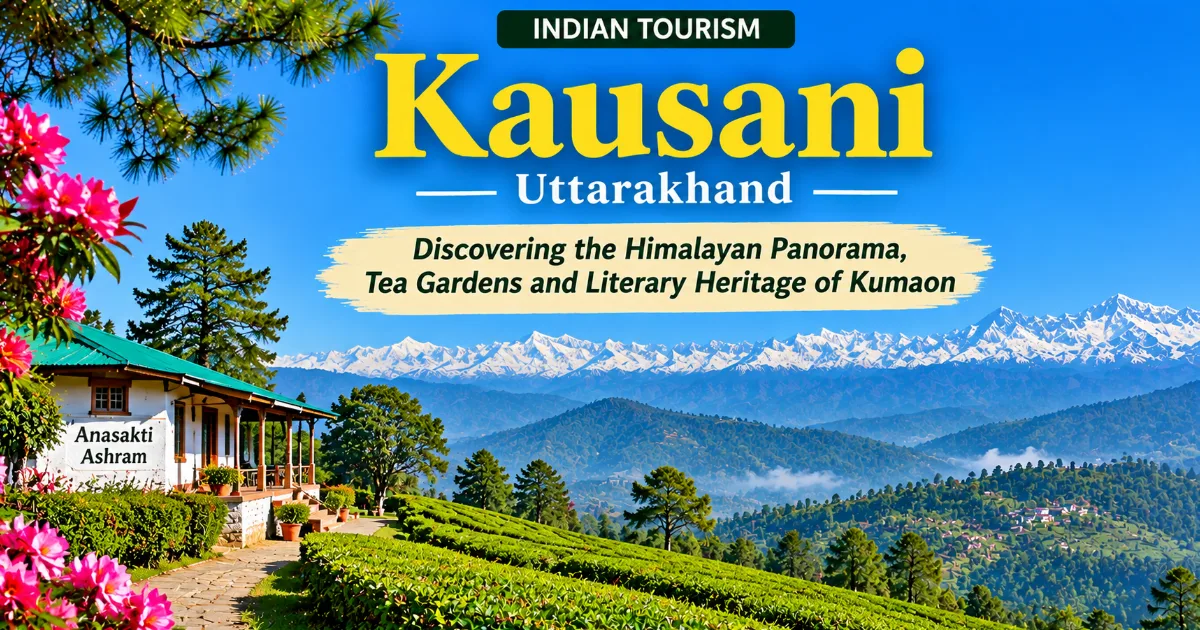
In Kausani, the landscape is the main attraction. This quiet settlement in Bageshwar district of Uttarakhand sits on a mountain ridge at an altitude of approximately 1,890 metres. From there the view stretches across the Kumaon Himalayas, with prominent peaks such as Trishul, Nanda Devi and Panchachuli visible in favourable weather. Snow-covered mountains form a distant horizon. Closer in, the slopes are covered with pine forests, cultivated terraces and scattered villages.
Unlike busy commercial hill stations, this is a place to take slowly. People come to watch the mountains change colour, walk through the surrounding countryside, explore tea gardens and discover the area's literary and historical connections. The village is relatively peaceful, and its appeal lies as much in quiet moments as in sightseeing.
There is cultural weight here too. Mahatma Gandhi stayed in the village in 1929 and was deeply impressed by its natural setting; the experience inspired his reflections on the Bhagavad Gita, later associated with his work Anasakti Yoga. It is also the birthplace of the Hindi poet Sumitranandan Pant, whose writing was strongly influenced by the natural beauty of his surroundings. These associations give Kausani an identity that goes beyond its mountain views.
For travellers exploring Uttarakhand, Kausani combines Himalayan scenery, spirituality, literature, tea culture, village life and outdoor activity. It suits anyone who wants to see the quieter side of Kumaon while enjoying one of the region's best mountain panoramas.
Continue Reading
Understanding Kausani's Geography and Natural Setting
The village lies in the Kumaon region of Uttarakhand, within Bageshwar district, along a ridge that overlooks the Katyur Valley and the distant Himalayan ranges. Its elevation and open orientation give a wide field of view, so several peaks can be seen from suitable viewpoints when the sky is clear.
Around it is a mixture of forested slopes, agricultural terraces, orchards and small settlements. Chir pine and other mountain vegetation keep the area green, and the seasons change the colour and character of the countryside. In the warmer months the hills are pleasant for walking and outdoor exploration. After the monsoon the land often looks especially fresh, while winter brings colder mornings and a different mood to the mountains.
The Himalayan panorama defines the place. Trishul, Nanda Devi, Nanda Kot and Panchachuli are among the peaks associated with views from the area, but their visibility depends on cloud cover, haze and weather conditions. Stay for more than one morning and you have a better chance of seeing different views as the light and atmosphere change.
Early morning is the best time. As sunlight reaches the snow-covered peaks, they can shift from pale grey to pink, orange and gold. Later in the day, clouds may gather around the ridges and change the scene completely. Sunset is also beautiful when the sky is clear.
Forests matter here for more than scenery. They support birds and other wildlife, and the countryside around them is good for nature walks and observation. The area is known for birdlife, Uttarakhand Tourism notes, with species such as woodpeckers, barbets, parakeets, robins and fork-tailed birds recorded in the region.
The Historical Background of Kausani
Kausani's history is tied to the wider development of the Kumaon region. Historic kingdoms, religious traditions, agriculture and trade shaped the surrounding valleys and settlements. The wider area has associations with the Katyuri rulers, whose influence is visible in several historic temple complexes across Kumaon.
Local communities, religious institutions and mountain settlements all left their mark on the region's culture. Temples, traditional houses, agricultural terraces and village routes show how people adapted to the geography of the hills. The village itself became better known as a destination because of its scenery and its links with important figures in modern Indian history and literature.
A turning point in its modern history was Mahatma Gandhi's visit in 1929. His stay brought national attention to the village and its natural surroundings. Gandhi's reflections on the Bhagavad Gita during this period became associated with Anasakti Yoga, a work centred on the principle of non-attachment. The place where he stayed is now known as Anasakti Ashram and remains one of Kausani's most important heritage attractions.
Literature is the other strand. Sumitranandan Pant, one of the leading poets of modern Hindi literature and a major figure associated with the Chhayavaad movement, was born here. His writing often celebrated nature, beauty and the relationship between human experience and the natural world, and the hills of his childhood shaped his literary imagination.
Because of these connections, a visit can take in the ideas and creative traditions tied to the place as well as its scenery.
Anasakti Ashram: Gandhi's Retreat in the Kumaon Hills
Anasakti Ashram is one of the most important landmarks in Kausani. Mahatma Gandhi stayed here during his visit to the village in 1929, and the peaceful surroundings and wide mountain views left a strong impression on him. While here, he worked on his reflections on the Bhagavad Gita, which became known as Anasakti Yoga.
The word anasakti means non-attachment. In Gandhi's philosophy, it expresses the idea of performing one's duties without becoming attached to personal rewards or outcomes. This principle was part of his broader approach to ethical living, self-discipline and public service.
Today the ashram is a place of historical memory, reflection and study. Its facilities include a prayer room, a small museum, a library and accommodation spaces. The building is simple; much of the experience comes from its setting. You can learn about Gandhi's stay, read about the philosophy associated with the place and look out over the Himalayas from the grounds.
Sunrise and sunset draw people here as well. In the early morning, the distant peaks may catch the first light of day. Toward evening, the colours change gradually as sunlight fades across the mountains. It is a place for quiet watching rather than hurried sightseeing.
Keep silence in prayer and study areas and follow the institution's instructions. Timings and access rules can change, so check current visiting arrangements before travelling.
Sumitranandan Pant Museum: The Literary Soul of Kausani
Sumitranandan Pant, one of the most influential poets in modern Hindi literature, was born in Kausani. His ancestral house is now a museum dedicated to his life, writing and literary contribution, and it draws people interested in Indian literature and the cultural history of Uttarakhand.
Pant is closely associated with the Chhayavaad movement, a major phase in modern Hindi poetry that placed emphasis on imagination, emotion, individual experience, beauty and nature. His poetry is particularly recognised for its sensitivity to the natural world. Mountains, forests, flowers, sunlight and changing seasons appear often in his writing, reflecting his deep connection with the Himalayan environment.
On display are objects from his personal and literary life: manuscripts, draft writings, letters, photographs, awards and everyday belongings. Together they show how a poet's work developed and how his birthplace influenced his imagination.
A walk through the surrounding countryside after the museum makes the visit more meaningful. With the forests and distant mountains in front of you, it is easy to see why nature mattered so much in Pant's writing. Even if you have never read his poetry, you come away with a better sense of how place shapes creative expression.
For students and readers of Hindi literature, the museum is a direct link with a major literary figure. It is also a reminder that this small hill village has contributed to India's cultural and intellectual history, beyond tourism.
Kausani Tea Estate: Discovering the Flavours of the Hills
The Kausani Tea Estate stands out among the region's attractions. It lies along the Bageshwar road and is known for its green tea gardens and the local tea produced in the area. Uttarakhand Tourism describes the estate as covering approximately 200 hectares and notes that visitors can explore the gardens and buy Kausani tea from local outlets.
Rows of tea bushes spread across the slopes, a lighter green against the darker pine forests and distant mountain ranges. The gardens are good for photography and relaxed walks.
Climate, soil, rainfall and altitude all influence tea cultivation, and the quality and character of the tea depend on growing conditions and the methods used in processing. If the subject interests you, you can learn the basic stages of production, from harvesting the leaves to processing and packaging. Guided visits and factory access may vary, so confirm arrangements before arriving.
The tea also makes a good souvenir, since buying from local outlets means taking home a product of the region. Check the packaging, origin and variety before purchasing.
Birdwatchers come to the estate too. Its vegetation and surroundings attract different bird species, which makes the area interesting for nature lovers. Avoid disturbing birds, damaging plants or entering restricted areas.
Kausani Shawl Factory: Supporting Traditional Kumaoni Weaving
The Kausani Shawl Factory shows how tourism and traditional craftsmanship can support local livelihoods. It was established in 2002 to promote Kumaoni artistic traditions and provide employment for local people, and it is known for shawls woven by local artisans in different colours, patterns and designs.
uttarakhandtourism.gov.in+1
Woollen shawls matter in Himalayan regions for practical and cultural reasons. The cold climate creates demand for warm garments, and weaving has developed into an expression of local skill and design. Shawls from Kausani combine utility with decorative patterns, which makes them popular purchases.
At the factory you can see the work that goes into a woven garment: the yarn, the weaving techniques, the design choices and the time needed to finish a piece. Watching craft production makes shopping more meaningful because you understand the labour behind the finished item.
Buying locally made shawls supports artisans and small-scale enterprises. Ask about the material and production process, particularly when comparing handmade products with factory-produced alternatives. Much of a traditional craft's value lies in the skill and knowledge needed to produce it, as well as in how it looks.
Rudradhari Falls and Caves: Nature, Water and Spiritual Tradition
Rudradhari Falls and Caves are among the most appealing natural attractions in the wider Kausani area. Surrounded by forested hills, the waterfall is a refreshing contrast to the open Himalayan viewpoints of the main settlement. The route there is part of the experience, so the visit suits travellers who enjoy walking and quieter countryside.
Local religious traditions and legends link the falls with Lord Shiva, and some visitors regard the nearby caves as spiritually significant. As at many Himalayan locations, religious stories and natural features are closely connected in local belief, which gives the site both cultural and environmental importance.
Around the waterfall are forest vegetation, rocky terrain and seasonal water flow. How the falls look depends on rainfall and the time of year. In and after the monsoon there may be more water, but the trail can also become slippery. In drier months, the flow may be less dramatic.
Wear suitable footwear and do not attempt unsafe crossings or climb wet rocks. Treat the forest with care, and never leave litter behind. Anyone travelling with children should supervise them closely near water and uneven surfaces.
Rudradhari is a good way to add a nature excursion to a cultural visit. It shows the forested side of the Kumaon hills, where natural features and local traditions meet.
Pinnath: A Scenic Walk Through the Kumaon Landscape
Pinnath is a small village near Kausani known for its scenic setting and a temple dedicated to Lord Bhairon. The walk there is often recommended for anyone who wants to see the countryside beyond the main settlement. According to Uttarakhand Tourism, the route is a trek of approximately five kilometres, leading towards the village at the foot of Gopalkot peak.
Forested slopes, mountain paths and open views line the way. On foot, you move at a slower pace and notice details that are easy to miss from a vehicle. Depending on the season, the trail may show flowering plants, changing forest colours and views of the valleys below.
At the end of the walk, the temple at Pinnath gives the excursion a cultural and spiritual focus. Respect the temple environment and follow local guidance.
Although the trek is short compared with longer Himalayan routes, it still requires a reasonable level of fitness. Rain, erosion or maintenance can change trail conditions, so ask local residents or your accommodation about the current route before starting. Carry drinking water, sun protection and a light jacket, and do not set off too late in the day.
If you enjoy walking, Pinnath is a rewarding way to see the countryside and culture around Kausani.
Baijnath Temple Complex: Exploring the Katyuri Heritage
Baijnath is one of the most important historical and religious sites within reach of Kausani. It stands in the Garur Valley along the Gomti River and is known for its ancient temple complex and its association with the Katyuri dynasty. The settlement was an important centre during the Katyuri period, and the surviving temples are evidence of the region's architectural and religious history.
The principal Baijnath Temple is dedicated to Lord Shiva and is generally dated to the twelfth century. Besides the main shrine, the complex has several smaller temples dedicated to different Hindu deities. They are built in the Nagara style, with the curving towers and carefully carved stone elements typical of northern Indian temple architecture. The Archaeological Survey of India protects the complex because of its historical and architectural importance.
The riverside location adds a great deal. Stone temples, the Gomti and the surrounding hills sit close together here. If temple architecture interests you, look at the carvings, the arrangement of the shrines and the way the complex relates to its surroundings.
Baijnath rewards anyone who wants to understand the history of Kumaon beyond the better-known hill stations. The drive from Kausani also passes through the farmland and settlements of the valley. Do not touch fragile carvings or climb on protected structures, and follow any restrictions displayed at the monument.
Someshwar Valley: Terraced Fields and Rural Kumaon
Someshwar Valley, near Kausani, is known for its terraced agricultural fields, surrounding mountains and rural settlements. It lies around the meeting area of the Kosi and Sai rivers and looks quite different from the exposed ridge-top views of Kausani. Here you look at cultivated slopes, river valleys and forested hills rather than straight at distant snow peaks.
It is a useful place to understand the agricultural life of Kumaon. Terraced farming is common in Himalayan settlements because steep slopes make conventional flat-field cultivation difficult, so farmers shape the land into stepped fields that make cultivation possible across uneven terrain. These terraces may be used for grains, vegetables and other crops suited to the local climate.
Someshwar changes through the year. In the growing seasons, the fields can be green and lively. At harvest time they take on different shades as crops mature and farm work picks up. The monsoon brings fresh vegetation, although heavy rain can affect roads and walking conditions.
You can explore the valley by road and, where appropriate, take short walks through accessible areas. Keep in mind that cultivated fields and village paths are part of people's daily lives: do not enter private farmland without permission or disturb agricultural work for photographs.
For rural scenery, photography and a look at everyday life in Kumaon, Someshwar is an excellent excursion. It is also a welcome change of pace after time spent at Kausani's mountain viewpoints.
Lakshmi Ashram: A Legacy of Gandhian Values and Women's Education
Lakshmi Ashram is another place of cultural and social significance in the Kausani area. It is associated with Catherine Mary Heilman, better known as Sarla Behn, a British-born follower of Mahatma Gandhi who devoted much of her life to social work in the Himalayan region.
Sarla Behn worked to promote Gandhian principles, rural development, education and women's empowerment. Her work created opportunities for women and girls in mountain communities, where access to education and social resources could be limited. The ashram became known for a practical approach to community service and self-reliance.
A visit here shows another side of Kausani's heritage. Anasakti Ashram is tied to Gandhi's philosophical reflections; Lakshmi Ashram shows Gandhian values applied through education and social work, and the part individuals and institutions can play in strengthening local communities.
Check whether the ashram is open to the public and whether a visit needs to be arranged in advance. Since it runs educational and social activities, respect its working environment and avoid disrupting residents or programmes.
Bageshwar: A Spiritual and Cultural Excursion
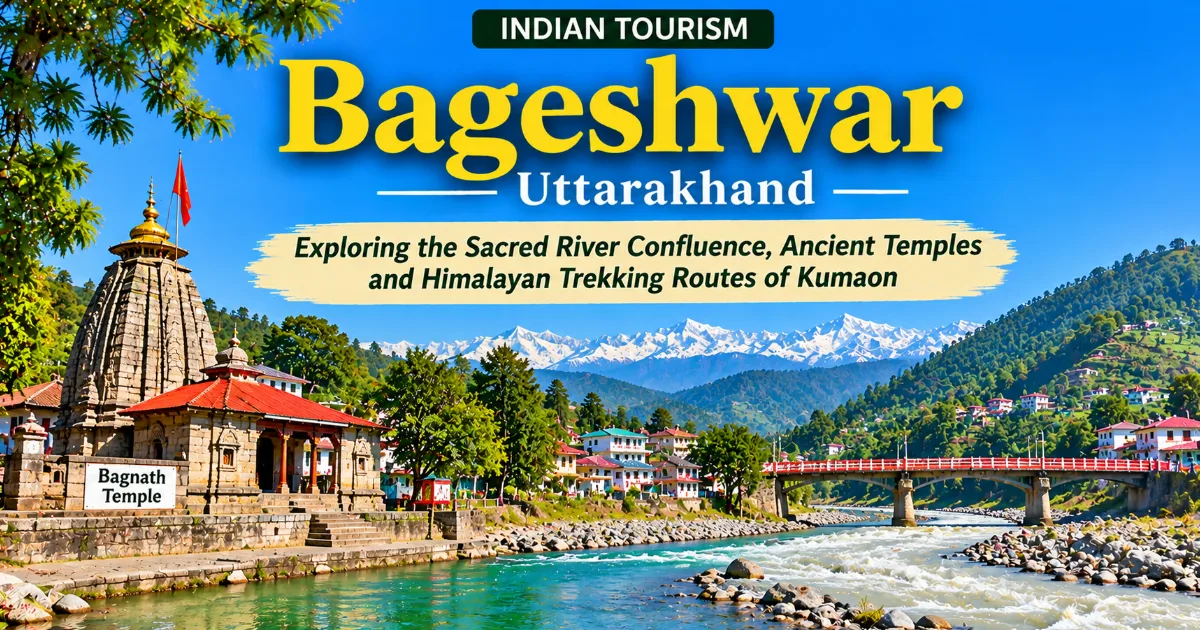
Bageshwar is an important town in the Kumaon region and a rewarding excursion from Kausani. It is known for its religious significance, its river setting and its place in the wider cultural history of the region. Above all, the town is associated with Bagnath Temple, a prominent shrine dedicated to Lord Shiva.
The temple stands near the confluence of the Saryu and Gomti rivers. Devotees come throughout the year, and the rivers give the town a distinctive setting. Tradition holds that Lord Shiva appeared here in the form of a tiger to bless the sage Markandeya, a story connected with the name Bagnath.
Pilgrimage has long been part of town life. You can explore the temple area, watch the local market and see how the settlement relates to its rivers. On religious occasions the town can get very busy, so plan accordingly.
The town also serves as a gateway to several trekking and mountain routes in the wider region. If longer excursions interest you, it is a good place to learn about routes towards the Pindari Glacier and other high Himalayan areas. Such journeys require separate planning, appropriate equipment and attention to local conditions.
A trip here from Kausani shows a different part of the district, with religious heritage, river scenery and access to the wider Himalayas.
Birdwatching and Nature Photography in Kausani
Forests, tea gardens, orchards and open countryside around Kausani make it a good place for birdwatching. The varied vegetation attracts different bird species, including woodpeckers, barbets, parakeets, robins and other Himalayan and foothill birds. The tea estate and nearby wooded areas are particularly good spots for anyone who enjoys observing wildlife.
uttarakhandtourism.gov.in
Early morning is generally best, because birds are often more active and the surroundings are quieter. You do not need specialised equipment. Binoculars help with distant observation, and a camera with a suitable zoom lens is useful for photography.
Patience and respect matter most. Avoid loud noises, chasing birds or disturbing nests. Playing recorded bird calls to attract wildlife can interfere with natural behaviour and should be avoided. Staying on established paths also protects vegetation and reduces disturbance.
Photography here goes beyond birds: mountain silhouettes, tea gardens, village houses, terraced fields and changing weather all make good subjects. Sunrise is the popular time, but the softer light of late afternoon deserves attention too. The best photographs usually come from watching patiently rather than stopping at a viewpoint for only a few minutes.
Stargazing and the Night Sky
With its mountain setting and relatively quiet atmosphere, Kausani appeals to people interested in the night sky. On clear nights you may be able to see stars and prominent celestial objects from suitable open areas away from strong artificial lighting.
Astrophotographers and astronomy enthusiasts have come to the region for its mountain views and opportunities for sky observation. Stargazing and astronomy-related visitor facilities in the area are also highlighted by Uttarakhand Tourism.
An observatory or guided astronomy session makes the night sky accessible if you do not own a telescope. Such sessions may include explanations of planets, constellations and other celestial objects. Confirm availability, timings and weather suitability directly with the facility before planning a visit.
If you stargaze on your own, choose a safe location, carry a torch and dress warmly. Night temperatures can fall even outside winter, and walking on unfamiliar mountain paths after dark is not advisable. Cloud cover and moonlight also affect visibility, so a clear, darker night generally offers better conditions.
Stargazing adds something different to a stay. By day, the Himalayan panorama defines Kausani. At night, the open sky takes over, and the place feels even more connected with nature.
Local Food and Kumaoni Cuisine in Kausani
Food is an important part of travelling through Kumaon, and Kausani is a good place to try regional dishes made with locally familiar ingredients. Traditional Kumaoni cooking reflects the mountain climate, farming practices and the availability of grains, pulses, vegetables and dairy products.
Bhatt ki churkani is one of the region's well-known dishes. It is made with black soybeans, cooked into a thick and flavourful preparation, and is commonly eaten with rice. Bhatt is an important traditional ingredient in Kumaoni cooking and is valued for its protein content.
Aloo ke gutke is another popular preparation: potatoes cooked with regional spices and often served with chutneys or other accompaniments. It is a simple but flavourful dish that turns up in many Kumaoni kitchens.
Madua roti is made from finger millet flour. Finger millet has traditionally been grown in Himalayan areas and is valued as a hardy grain, and its distinctive flavour goes well with lentil and vegetable dishes. Jhangora, a local millet, is used in preparations such as jhangora ki kheer, a sweet dish often served during festivals and family occasions.
Other regional foods include seasonal greens, lentil preparations, local chutneys and dishes made with ingredients gathered or cultivated in the surrounding hills. The exact menu varies between restaurants and homestays.
Tea from the local estate is worth trying too, either with a view of the mountains or as packaged tea to take home. Local shops and roadside sellers also offer fruit-based products such as jams, jellies and pickles, made from the area's orchards and seasonal produce.
If you have food allergies or dietary restrictions, ask about ingredients and preparation methods. Choosing local dishes is a simple way to experience the region's culture and support establishments that serve traditional food.
Best Time to Visit Kausani
Kausani can be visited at different times of year, but the experience changes with the season. The best time depends on whether you want clear mountain views, pleasant walking weather, greenery or a quieter winter stay.
March to May: Spring and Early Summer
Spring and early summer are among the most comfortable periods to visit. Days are generally pleasant and suit sightseeing, walking, photography and the tea gardens. Vegetation starts to look fresh, and clear mornings can bring especially rewarding mountain views.
April and May are popular months with people escaping warmer conditions in the plains. Book accommodation early for school holidays and long weekends.
June: The Transition Towards Monsoon
June can still offer pleasant spells for sightseeing, although temperatures may be warmer and the weather begins to change. Watch the forecasts as the monsoon approaches, and keep outdoor plans flexible, particularly those involving forest paths or longer drives.
July to August: Monsoon Season
The monsoon turns the hills green and fills the streams. The countryside can look beautiful, but heavy rainfall may bring landslides, slippery trails, road disruption and reduced visibility. If you travel in this period, check local advisories and avoid unnecessary journeys in intense rain.
September to November: Post-Monsoon and Autumn
After the monsoon, conditions suit mountain views and outdoor exploration. The land often stays green while clearer weather improves visibility. October and November are good for photography, walking and visiting nearby temples and valleys.
December to February: Winter
Winter brings cold mornings and nights. The mountains can look especially striking in clear weather, but be prepared for low temperatures. Snowfall is possible in the wider area, though you should not assume the village will always be covered in snow. Weather and road conditions can vary.
Uttarakhand Tourism identifies September to May as a favourable visiting period, and its destination information mentions the pleasant summer months and the possibility of winter snowfall in the area.
How to Reach Kausani
Kausani is connected by road with several important towns in Kumaon. The final part of the journey is on mountain roads, so allow plenty of time and avoid tight connections.
Air
Pantnagar Airport is the nearest commonly used airport. Uttarakhand Tourism lists the distance as approximately 178 kilometres, though actual journey time depends on traffic and road conditions. Taxis can be arranged at the airport for the onward journey. Check flight schedules and connectivity before booking.
Train
Kathgodam is the nearest major railway station for Kausani, approximately 140 to 145 kilometres away by road depending on the route. It has rail connections with cities including Delhi and other parts of northern India. From the station you can continue by taxi, shared vehicle or bus, depending on availability.
Road
Road travel is the most practical way to reach Kausani. The village is connected with Almora, Ranikhet, Bageshwar and other destinations in Kumaon. According to Uttarakhand Tourism's destination information, the route from Almora is approximately 51 kilometres, while Ranikhet is around 60 kilometres away.
Travellers from Delhi can take the road route through the Kumaon region. Buses and taxis operate on different sections, although service frequency may vary by season. A private vehicle gives flexibility for sightseeing, but drivers should be comfortable with winding mountain roads.
Where to Stay in Kausani
Accommodation ranges from hotels, guesthouses and resorts to homestays and smaller family-run properties. Many are positioned to make the most of the Himalayan views; others offer a quieter stay among trees and village surroundings.
If mountain views are your priority, confirm the room orientation and what the property actually looks out on. A listing that mentions Himalayan views does not guarantee visibility in every season, because clouds and haze can cover the distant peaks.
Homestays suit those who want local hospitality and food. Several offer traditional meals and information about nearby villages, walking routes and regional customs. Before booking, ask about meal arrangements, road access, parking and hot water.
In winter, confirm heating arrangements and the availability of warm bedding. In the monsoon, ask about road conditions and access to the property. A few places sit along narrow roads or require a short walk from the vehicle drop-off point.
Two or three nights is enough for most people to see the main attractions without rushing. Photographers, birdwatchers and anyone after quiet time in nature may prefer to stay longer.
Shopping in Kausani: Local Products and Meaningful Souvenirs
Shopping here is more closely connected with regional products and traditional crafts than with large commercial markets. Look for items that reflect the culture and natural produce of Kumaon.
Among local products, Kausani tea is one of the most recognisable. Packaged tea from local outlets makes a practical souvenir that carries a flavour of the region home with you. Local fruit products, including jams, jellies and pickles, are also worth looking for where available.
For locally woven woollen products, go to the Kausani Shawl Factory. Shawls, stoles and other garments come in different colours and patterns, and buying from local craft outlets helps support artisans and keep traditional weaving skills alive.
Small shops may also sell regional decorative objects, handmade products and everyday items. It is worth asking about the origin and materials of anything described as locally made; this helps distinguish genuine regional crafts from mass-produced souvenirs.
Treat shopping as a chance to learn about local work rather than simply collecting objects. Knowing how tea is grown, how a shawl is woven or how a regional food product is prepared makes the purchase more meaningful.
Suggested Two-Day Kausani Itinerary
Two days give a balanced introduction to Kausani's main attractions, though with more time you can explore the surrounding region more thoroughly.
Day One: Mountain Views, Gandhi Heritage and Local Culture
Start early at a suitable viewpoint to watch the sunrise over the Himalayan ranges. Clear mornings give the best chance of seeing the distant peaks lit by the first sunlight.
After breakfast, visit Anasakti Ashram and spend time learning about Mahatma Gandhi's stay in 1929 and the ideas associated with Anasakti Yoga. Continue to the Sumitranandan Pant Museum to explore the life and literary contribution of the Hindi poet.
In the afternoon, go to the Kausani Tea Estate. Walk through the tea gardens, learn about the local tea tradition and buy tea from an authorised outlet if available. Later, stop at the Kausani Shawl Factory to see traditional weaving and local craftsmanship.
Finish with a relaxed evening overlooking the mountains. If the weather is clear, sunset gives another good view of the Himalayas.
Day Two: Nature, Temples and the Surrounding Valley
Begin the second day with an excursion to Rudradhari Falls and Caves. Allow enough time for the walk and take care on slippery sections, especially after rain.
Depending on fitness and available time, consider the walk towards Pinnath village, which takes you through the countryside to the temple dedicated to Lord Bhairon.
If you would rather make a longer road excursion, Baijnath Temple Complex is an excellent alternative. Its historic temples and riverside setting show the architectural heritage of Kumaon.
Return to Kausani in the evening for a traditional regional meal and a quiet end to the day.
Suggested Three-Day Kausani Itinerary
Three days let you explore at an easier pace and include nearby places without making any single day overly demanding.
Spend the first day on Kausani itself: Anasakti Ashram, the Sumitranandan Pant Museum, the tea estate and the shawl factory. Keep time free for sunrise and sunset views.
On the second day, explore Rudradhari Falls and Caves and consider the Pinnath walk. If you prefer a less physically demanding day, spend more time around the village, visit local viewpoints and see the countryside by road.
On the third day, take a road excursion to Baijnath and, if time permits, on towards Bageshwar. The Baijnath temple complex is an important historical stop, while Bageshwar offers a different side of the region with its river setting and Bagnath Temple.
Adjust the plan for weather, fitness, road conditions and personal interests. Do not try to cover every nearby attraction in a single day, as mountain travel often takes longer than expected.
Responsible Tourism in Kausani
The appeal of Kausani depends on the health of its natural environment and the traditions of its local communities. Responsible tourism helps protect both, so that visitors and residents can keep benefiting from the destination.
Waste management matters especially in mountain settlements. Do not throw plastic bottles, food packaging or other waste along roads, forest paths and viewpoints. Carrying a reusable water bottle and taking rubbish back to designated collection points cuts unnecessary pollution.
Use water carefully. Mountain communities may depend on limited local water sources, and visitor demand adds pressure on these resources in busy periods. Simple steps such as avoiding unnecessary water use in your accommodation make a difference.
Respect agricultural land and private property. Terraced fields, orchards and tea gardens are working landscapes, not open recreational spaces. Ask permission before entering private areas or photographing residents at close range.
At Anasakti Ashram, temples and other cultural institutions, follow local instructions and behave respectfully. Religious and educational spaces are not ordinary photo locations.
Supporting local businesses is another form of responsible travel. Staying in locally managed accommodation, buying genuine regional products, eating local food and hiring local guides where appropriate all help keep tourism income within the community.
Forests and wildlife need space too. Avoid loud music, littering, disturbing birds or feeding wild animals. Quiet is part of what makes Kausani valuable, and protecting it benefits everyone.
Practical Travel Tips for Visiting Kausani
A little preparation makes a Kausani trip more comfortable. Pack clothing in layers, because temperatures change between sunny afternoons and cool mornings or evenings. Warm clothing is essential in winter.
Comfortable walking shoes help on the tea gardens, village roads and forest trails. For the Pinnath walk or the Rudradhari excursion, wear footwear with good grip.
Mountain weather can change quickly. Check forecasts before planning outdoor activities, especially in the monsoon, and keep some flexibility in the itinerary in case rain, fog or road disruption forces a change.
Mobile network coverage and internet access vary between the main settlement and more remote locations. Save accommodation details, transport information and essential maps for offline use where possible.
For sunrise photography, pick a safe viewpoint in advance and avoid walking along unfamiliar roads in darkness. Stargazers should carry a torch and warm clothing, and use safe locations away from vehicle traffic.
Confirm the opening arrangements of museums, ashrams, tea facilities and other attractions before travelling, as some places have specific visiting hours or access restrictions.
Why Kausani Deserves a Place on Your Uttarakhand Travel List
Natural beauty and cultural history are closely connected in Kausani. Its Himalayan panorama is the most famous attraction, but the village offers much more than a distant view of snow-covered mountains.
Anasakti Ashram links it with Mahatma Gandhi and his reflections on non-attachment. The Sumitranandan Pant Museum preserves the memory of a poet whose writing was deeply influenced by the hills where he was born. The tea estate and shawl factory introduce local products, livelihoods and craftsmanship, while nearby temples, waterfalls, caves and villages show more of Kumaon's culture and countryside.
Pace shapes the experience as much as the sights. A day here might mean watching sunlight reach the Himalayan peaks early in the morning, walking through the countryside, drinking local tea, exploring a historic temple and ending with a quiet evening overlooking the valley. That suits travellers who value nature, heritage and unhurried exploration.
Families get a peaceful holiday with sightseeing and learning. Photographers get mountain panoramas, forests and changing light. Readers and students find associations with Gandhi and Sumitranandan Pant, and nature lovers find forest walks, birdwatching and easy access to nearby countryside.
You do not need an overloaded itinerary. The real draw is the chance to pause and take in the surroundings, and a few days here make a good introduction to the quieter side of Uttarakhand and the culture of the Kumaon hills.