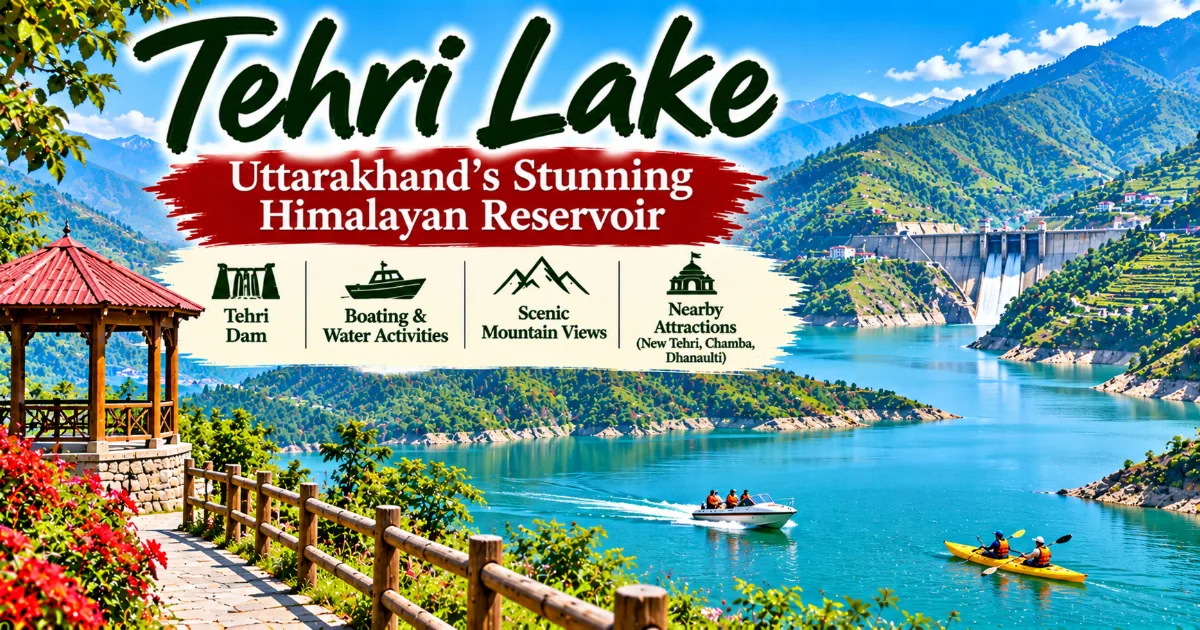
Explore Tehri Lake, one of Uttarakhand’s most remarkable water destinations, surrounded by the mountains of the Garhwal Himalayas. Created by the Tehri Dam on the Bhagirathi River, this vast reservoir is known for its dramatic mountain scenery, water-based recreation, scenic viewpoints and connection with the history of the Tehri region.
Discovering the Beauty of Tehri Lake
Uttarakhand is famous for its Himalayan landscapes, sacred rivers, ancient temples and picturesque hill towns. However, the state also offers destinations where engineering, geography and natural scenery come together in remarkable ways. Tehri Lake is one such destination.
Located in the Tehri Garhwal district, Tehri Lake is an extensive reservoir formed by the construction of the Tehri Dam across the Bhagirathi River. Surrounded by steep mountain slopes and settlements, the lake has become an important attraction for travellers interested in scenic landscapes, photography and water-based recreational experiences.
The lake presents a different side of Himalayan tourism. Instead of forest trails, alpine meadows or traditional hill markets, visitors encounter a vast body of water framed by mountain ridges. The changing colours of the water, the surrounding hills and the shifting light create a landscape that can be enjoyed from several viewpoints and lakeside locations.
Continue Reading
Tehri Lake is also connected with an important chapter in the modern history of Uttarakhand. The construction of the Tehri Dam transformed the geography of the region and led to the creation of the reservoir. It also resulted in the relocation of the historic town of Old Tehri and several surrounding settlements. Understanding this history helps visitors appreciate the lake beyond its visual appeal.
Today, the Tehri region is increasingly recognised for tourism opportunities, including boating and other activities offered through authorised operators. Visitors can also explore nearby destinations such as New Tehri, Chamba and surrounding villages.
Whether you are planning a family holiday, a photography trip, a road journey through Garhwal or an adventure-focused visit, Tehri Lake offers an experience that deserves attention.
Where Is Tehri Lake Located?
Tehri Lake is located in the Tehri Garhwal district of Uttarakhand. It occupies a large section of the Bhagirathi River valley and extends across a landscape of mountain slopes, ridges and surrounding settlements.
The reservoir was created by the Tehri Dam, one of India's major multipurpose dam projects. Its location in the Garhwal Himalayas makes it a distinctive geographical feature of the region.
New Tehri, the administrative headquarters of Tehri Garhwal district, is an important nearby town and a convenient base for visitors exploring the area. Chamba is another significant settlement that provides access to the wider region.
The lake can be included in a broader Garhwal itinerary covering Dhanaulti, Kanatal, Chamba and other nearby destinations. Travellers should remember that the reservoir is extensive, and different viewpoints, activity centres and settlements may require separate road journeys.
The landscape changes considerably according to the water level, weather and season. Some areas that appear close on a map may require a longer drive because of the winding mountain roads.
The Tehri Dam: Engineering Behind the Lake
The most important structure associated with Tehri Lake is the Tehri Dam. Built across the Bhagirathi River, the dam is a major engineering project designed for multiple purposes, including hydroelectric power generation, irrigation and water supply.
The dam is an earth and rock-fill structure and is among the tallest dams in India. Its construction transformed the river valley into a large reservoir that now defines much of the surrounding landscape.
The Tehri Hydro Development Project was developed to utilise the water resources of the Bhagirathi River. Hydroelectric generation is one of its major functions, while the wider project has also been associated with water supply and irrigation benefits.
The dam's scale is impressive, but its significance extends beyond engineering. It represents a major intervention in the geography and social history of the region.
Visitors interested in infrastructure and engineering can appreciate the scale of the project from authorised viewpoints. However, the dam is an operational infrastructure facility, not an unrestricted tourist attraction. Access to restricted areas is controlled, and visitors should follow all official instructions.
Understanding the relationship between the dam and the reservoir provides useful context for exploring Tehri Lake.
How Tehri Lake Was Created
Tehri Lake was formed when the Tehri Dam was constructed across the Bhagirathi River. The dam restricted the river's flow and created a large reservoir upstream.
Before the reservoir existed, the valley contained the historic town of Old Tehri and numerous villages. The construction of the dam gradually changed the landscape, and areas within the reservoir's submergence zone were relocated.
The creation of the lake was therefore not simply a change in the natural environment. It also brought major social and economic changes for the people who lived in the affected settlements.
New Tehri was developed as a planned settlement to accommodate administrative functions and relocated residents. The surrounding region also experienced changes in transport, infrastructure and economic activity.
Today, the reservoir is recognised for its scenic value and tourism potential. Yet its history remains important to understanding the human dimension of large infrastructure projects.
Visitors should remember that the water landscape represents both an engineering achievement and a significant transformation in the lives of local communities.
New Tehri: The Town Overlooking the Reservoir
New Tehri is an important urban centre in the Tehri Garhwal district and a useful base for exploring the lake and surrounding region.
The town was developed as part of the resettlement and administrative arrangements associated with the Tehri Dam project. Its elevated location offers views of the surrounding mountain landscape and parts of the reservoir.
New Tehri provides essential facilities for travellers, including accommodation, shops, restaurants and transport services. It can be a convenient place to stay when planning excursions around Tehri Lake.
Visitors can explore the town, enjoy its mountain setting and use it as a starting point for nearby sightseeing.
The town also provides an opportunity to understand the modern development of the Tehri region. Its history is closely linked with the relocation of Old Tehri and the transformation caused by the dam project.
Travellers interested in local history can learn about this transition through available information and conversations with residents, while remembering that the experience of displacement is an important part of the region's social history.
Old Tehri: The Town Beneath the Reservoir
One of the most significant historical aspects of Tehri Lake is its connection with Old Tehri.
Old Tehri was once the principal town of the former Tehri princely state. It occupied a location near the meeting of the Bhagirathi and Bhilangana rivers and served as an important administrative and cultural centre.
The construction of the Tehri Dam led to the submergence of the old town and several surrounding settlements. Residents were relocated as the reservoir filled.
The disappearance of Old Tehri beneath the water represents a major transformation in the region's history. It is an important reminder that infrastructure projects can reshape not only landscapes but also communities, memories and cultural connections.
For visitors, learning about Old Tehri adds historical depth to the experience of the lake. The reservoir is not simply a scenic destination. It is also a landscape connected with a former town, its people and the changes brought by development.
Respectful tourism should acknowledge this history rather than presenting the lake only as a recreational attraction.
Bhagirathi River: The Source of Tehri Lake
The Bhagirathi River is one of the most important rivers in Uttarakhand. It originates in the Gangotri region of the Himalayas and flows through mountainous terrain before joining the Alaknanda at Devprayag, where the river is known as the Ganga.
The Tehri Dam is constructed across the Bhagirathi River, and the resulting reservoir forms Tehri Lake.
The river has deep geographical, cultural and religious importance in Uttarakhand. Its waters support settlements, agriculture and infrastructure across the region.
The transformation of a section of the Bhagirathi valley into a reservoir created a new water landscape while changing the river's natural flow in the affected stretch.
Visitors exploring Tehri Lake can appreciate the relationship between the river, the dam and the surrounding mountains. This geographical context makes the destination particularly interesting for students of geography, environmental studies and engineering.
Water-Based Activities at Tehri Lake
Tehri Lake has become an important destination for water-based recreation. Depending on current operating arrangements, visitors may find activities such as boating, kayaking, jet skiing and other organised water experiences.
These activities provide an opportunity to experience the reservoir from the water rather than viewing it only from the surrounding roads and hills.
Boating
Boating is among the most accessible ways to enjoy Tehri Lake. Visitors can experience the scale of the reservoir, observe the surrounding mountain slopes and appreciate the changing scenery from the water.
The availability of different boating experiences depends on authorised operators and local conditions.
Before booking, confirm the duration, safety equipment, passenger limits and operating arrangements.
Jet Skiing
Jet skiing may be available through authorised activity providers in designated areas. It offers a faster-paced experience for visitors interested in water recreation.
Participants should follow the operator's safety instructions, use the required protective equipment and meet any applicable age or health requirements.
Kayaking
Kayaking offers a more active way to experience the reservoir. It allows participants to move across the water at a slower pace while enjoying the surrounding landscape.
The activity requires suitable instruction and equipment. Beginners should use authorised operators and avoid attempting kayaking independently in unfamiliar conditions.
Other Organised Water Experiences
Additional water-based activities may be available depending on the season, weather and local tourism arrangements.
The availability of activities should never be assumed. Travellers should confirm current operations, pricing, safety standards and any restrictions before arriving.
Water sports should always be undertaken under suitable supervision. Weather, wind and water conditions can change, and visitors must follow local safety instructions.
Tehri Lake for Photography
Tehri Lake offers excellent opportunities for landscape photography. Its large water surface, mountain surroundings and changing weather create a variety of photographic scenes.
The appearance of the lake changes throughout the day. Morning light may create soft reflections, while late afternoon can produce warm colours across the surrounding hills.
The contrast between the blue water and green or brown mountain slopes can be particularly attractive. During cloudy weather, mist may move across the ridges and create a dramatic atmosphere.
Photographers can explore authorised viewpoints and accessible roads around the reservoir. Some elevated locations offer wide views of the water and surrounding valleys.
Drone photography should only be undertaken where legally permitted and with the required permissions. Restricted infrastructure areas and security-sensitive locations must be respected.
Visitors should also avoid entering private property or unsafe slopes to obtain photographs. A good landscape photograph is never worth risking personal safety.
Best Viewpoints Around Tehri Lake
The reservoir can be viewed from several locations around the Tehri region. Rather than relying on one fixed viewpoint, travellers can explore accessible locations along the surrounding roads and near established tourism areas.
New Tehri Viewpoints
New Tehri offers elevated perspectives of the surrounding mountains and reservoir. Visitors can enjoy the landscape from suitable public locations and explore the town's scenic surroundings.
Chamba Road
The road connecting Chamba with the wider Tehri region offers changing views of mountain slopes and the reservoir landscape.
Travellers should stop only at safe and permitted locations. Avoid parking on narrow road sections or standing close to traffic.
Designated Lakeside Areas
Some locations near the reservoir are used for organised tourism activities. These areas may provide opportunities to enjoy the water from a closer perspective.
Access and facilities vary, so visitors should check locally available arrangements before planning a stop.
Best Time to Visit Tehri Lake
Tehri Lake can be visited throughout much of the year, but weather and water conditions influence the experience. The best season depends on whether visitors prefer pleasant sightseeing weather, greenery, photography or outdoor activities.
Spring: March to April
Spring is a pleasant time to explore the Tehri region. Temperatures are generally comfortable, and the surrounding landscape begins to show fresh seasonal growth.
The weather can be suitable for sightseeing, scenic drives and photography. Visitors can explore New Tehri, Chamba and accessible areas around the reservoir.
Spring is a good choice for travellers who prefer moderate temperatures and outdoor exploration.
Summer: May to June
Summer is one of the popular periods for visiting Tehri Lake. The mountain setting provides a welcome alternative to the heat of the plains.
Visitors can explore viewpoints and participate in authorised water-based activities where available.
School holidays and weekends may attract more travellers, so accommodation and activity arrangements should be checked in advance.
Monsoon: July to September
The monsoon brings rainfall and fresh greenery to the surrounding hills. The reservoir and mountain slopes can look especially attractive during this period.
However, heavy rainfall can create road difficulties, landslides and changing water conditions. Outdoor activities may be suspended when weather or safety conditions are unsuitable.
Visitors should check forecasts and local advisories before travelling. Avoid approaching unstable slopes or entering restricted water areas.
Autumn: October to November
Autumn is an excellent period for sightseeing around Tehri Lake. Rainfall generally decreases, and visibility may improve.
The weather is often suitable for road trips, photography and exploring nearby settlements.
Travellers interested in peaceful sightseeing may find this season particularly rewarding.
Winter: December to February
Winter brings cooler temperatures to the Tehri region, particularly in the mornings and evenings.
The mountain landscape can appear especially clear on suitable days. However, some higher roads and nearby destinations may experience colder conditions.
Visitors should carry warm clothing and check the weather before planning outdoor activities.
How to Reach Tehri Lake
Tehri Lake is accessible by road from several important towns in Uttarakhand. New Tehri and Chamba are useful reference points for planning a visit.
By Road
Road travel is the most practical way to reach Tehri Lake.
Travellers commonly begin their journey from Dehradun, Rishikesh or other towns in the Garhwal region. New Tehri provides access to the wider reservoir area.
Private vehicles and hired taxis offer flexibility for exploring different viewpoints and activity locations.
Mountain roads include bends and gradients, so drivers should maintain a safe speed and avoid unnecessary overtaking.
During the monsoon, road conditions can change because of rainfall and landslides. Check local updates before departure.
By Rail
Rishikesh is a commonly used rail access point for visitors travelling towards the Tehri region, while Dehradun is another major railway station for broader travel connections.
From either location, travellers can continue towards New Tehri and the reservoir by road.
Rail services and onward transport arrangements should be checked before departure.
By Air
Jolly Grant Airport near Dehradun is the nearest major airport commonly used by visitors travelling to the Tehri region.
After reaching the airport, travellers can arrange road transport towards New Tehri and the lake.
The journey takes additional time depending on traffic, weather and the selected route.
Suggested Two-Day Tehri Lake Itinerary
A two-day trip provides a comfortable opportunity to explore the reservoir and some nearby locations.
Day 1: New Tehri and the Lake
Begin your journey from Dehradun or Rishikesh and travel towards New Tehri.
After reaching your accommodation, spend time exploring the town and enjoying its mountain surroundings.
Later, visit an accessible viewpoint overlooking Tehri Lake. Observe the reservoir, take photographs and learn about the relationship between the lake and the Tehri Dam.
If authorised water-based activities are operating and weather conditions are suitable, consider including a boating experience.
Return to your accommodation and enjoy a relaxed evening.
Day 2: Chamba and Nearby Scenic Areas
Begin the second day with a drive towards Chamba and explore the surrounding landscape.
Enjoy the mountain views and visit suitable public viewpoints along the route.
Depending on available time, return towards the lake area for another scenic stop or explore additional locations recommended by reliable local sources.
Start the return journey with sufficient time for mountain driving.
This itinerary provides a balance of sightseeing, relaxation and local exploration.
Tehri Lake for Families
Tehri Lake can be a rewarding destination for families who enjoy scenic travel and outdoor experiences.
The reservoir offers a different kind of mountain landscape, and families can spend time exploring viewpoints, enjoying the surrounding scenery and learning about the region's history.
Boating may be suitable for families when authorised operators provide appropriate equipment and safety arrangements. Parents should confirm age restrictions and passenger requirements before booking.
Families travelling with young children should avoid unsafe water edges and steep slopes. Children must remain under adult supervision throughout the visit.
New Tehri provides access to accommodation and essential services, making it a practical base for a family holiday.
The destination is particularly suitable for families who want to combine a scenic road trip with an educational experience about rivers, dams and mountain geography.
Tehri Lake for Couples
Tehri Lake offers a scenic setting for couples looking for a peaceful mountain holiday.
The reservoir, surrounding hills and changing light create an attractive environment for photography and relaxed sightseeing.
Couples can explore accessible viewpoints, enjoy a boating experience where available and combine their visit with nearby destinations such as Chamba or Dhanaulti.
Accommodation options in the wider region include hotels, guesthouses and resorts. Travellers should compare facilities, location and transport access before booking.
The lake is especially enjoyable when explored without a rushed schedule. Spending time appreciating the mountain scenery can become one of the most memorable parts of the journey.
Tehri Lake for Adventure Enthusiasts
The reservoir has become an important destination for water-based recreation in Uttarakhand.
Visitors may find organised activities such as kayaking, boating and selected motorised water experiences, depending on current local arrangements.
The surrounding mountains also provide opportunities for scenic drives, photography and exploration of nearby outdoor destinations.
Adventure enthusiasts should confirm that every activity is being operated by an authorised provider. Ask about safety equipment, instructor qualifications, emergency arrangements and weather restrictions.
Do not attempt water sports independently without suitable experience and equipment.
The reservoir is a large water body, and conditions may change according to weather and dam operations. Visitors should follow all official instructions and avoid restricted zones.
Food and Local Cuisine Around Tehri Lake
The Tehri region offers opportunities to experience the food traditions of Garhwal.
Traditional Garhwali cuisine is shaped by local agriculture, seasonal ingredients and mountain living. Meals may include preparations made from lentils, local grains, vegetables and traditional spices.
Popular regional dishes include chainsoo, phaanu, kafuli, aloo ke gutke and mandua-based preparations. Availability varies between restaurants and local establishments.
Visitors may also find familiar North Indian dishes in New Tehri, Chamba and other settlements.
Travellers interested in regional food should ask local restaurants about traditional preparations and seasonal dishes.
If planning a longer excursion around the reservoir, carry drinking water and basic snacks. Food facilities may be limited in some less-developed areas.
Accommodation Around Tehri Lake
Accommodation options are available in New Tehri, Chamba and other parts of the surrounding region.
New Tehri can be a convenient base for visitors who want access to local shops, restaurants and transport services.
Chamba may be suitable for travellers who prefer to combine their lake visit with other Garhwal destinations.
Some visitors may also choose accommodation in nearby tourism areas, depending on their preferred atmosphere and travel plans.
Before booking, check the property's exact location, road access, parking, food availability and room facilities.
If you plan to participate in water-based activities, confirm the distance between your accommodation and the authorised activity centre.
Advance booking is recommended during summer holidays, weekends and major festival periods.
Understanding the Environmental Impact of Tehri Lake
Tehri Lake is a human-created reservoir that has significantly altered the original river valley. Its environmental significance should be understood alongside its tourism value.
The creation of the reservoir changed the natural flow of the river in the affected area and transformed the surrounding landscape.
Large reservoirs can influence local ecosystems, sediment movement, water conditions and the relationship between communities and natural resources.
The Tehri Dam project has also been the subject of public discussion concerning environmental impacts, seismic considerations, displacement and the social consequences of large infrastructure development in the Himalayas.
Visitors do not need to be experts in environmental science to appreciate these issues. A basic understanding of the region's history can make the experience more thoughtful.
Tourism should not ignore the environmental responsibilities associated with large water bodies. Visitors should avoid littering, respect water safety rules and follow restrictions around sensitive areas.
The lake's long-term value depends on responsible management and careful attention to the surrounding environment.
The Social History of Tehri and Displacement
The history of Tehri Lake cannot be fully understood without considering the people affected by the construction of the dam.
The formation of the reservoir required the relocation of Old Tehri and several villages located within the submergence area.
For families who lived in these settlements, relocation involved changes to homes, livelihoods, neighbourhood relationships and connections with familiar places.
New Tehri became an important resettlement and administrative centre. However, the social and emotional dimensions of relocation remain part of the region's history.
The development of the dam brought benefits associated with electricity generation and water management, but it also raised questions about the distribution of costs and benefits.
Visitors should approach this history with sensitivity. The lake may be an attractive destination today, but its creation was a major event in the lives of many people.
Understanding these experiences allows travellers to appreciate the region as more than a scenic tourist location.
Responsible Tourism at Tehri Lake
Responsible tourism is particularly important around a large reservoir.
Visitors should follow all water safety instructions and use only authorised activity operators.
Do not enter restricted areas around the dam or attempt to access operational infrastructure.
Avoid swimming in unfamiliar sections of the reservoir. Water depth, currents and underwater conditions may be difficult to assess.
Do not throw plastic bottles, food wrappers or other waste into the lake or surrounding landscape.
Avoid approaching unstable slopes or standing close to unsafe edges for photography.
Respect local communities and private property. Ask permission before photographing residents or entering village areas.
Support local accommodation providers, restaurants and transport operators where possible.
Most importantly, remember that Tehri Lake is part of a larger water and infrastructure system. Its recreational use must remain secondary to safety and responsible management.
Travel Tips Before Visiting Tehri Lake
Check weather forecasts and road conditions before beginning your journey. Heavy rainfall can affect mountain roads and outdoor activities.
Confirm the current availability of boating and other water sports before planning your visit.
Use authorised operators and check safety equipment before participating in any activity.
Carry comfortable footwear, drinking water, sun protection and suitable clothing according to the season.
If travelling with children, supervise them closely around the reservoir and all water-based activity areas.
Do not assume that every viewpoint or lakeside location is accessible to visitors. Follow local restrictions and safety instructions.
Plan sufficient time for mountain travel. Road distances can take longer than expected because of winding routes and changing conditions.
If you are interested in the history of Old Tehri, read about the town and the dam project before visiting. This background will help you understand the significance of the reservoir.
Why Tehri Lake Deserves a Place in Uttarakhand Tourism
Tehri Lake represents an important part of modern Uttarakhand. It brings together engineering, geography, tourism and social history in a single landscape.
The reservoir has become a recognisable destination for visitors interested in boating, scenic photography and mountain holidays. Its surrounding towns and roads provide access to a wider network of attractions in the Tehri Garhwal region.
At the same time, the lake offers an opportunity to understand how major infrastructure projects can transform Himalayan valleys and affect local communities.
For Uttarakhand tourism, Tehri Lake is significant because it expands the range of experiences available to travellers. It provides an alternative to traditional hill stations and pilgrimage destinations while supporting opportunities for local tourism businesses.
Its future tourism potential depends on responsible management, safe recreational facilities and sensitivity towards the environment and communities connected with the reservoir.
A successful tourism destination should preserve not only its scenic appeal but also the historical and social understanding that makes the place meaningful.
Final Thoughts: Experience the Changing Landscape of Tehri
Tehri Lake is one of Uttarakhand's most distinctive destinations. Its vast water surface, surrounding mountain slopes and connection with the Tehri Dam create a landscape unlike many other places in the state.
Visitors can enjoy boating and other authorised water-based activities, explore scenic viewpoints, discover New Tehri and Chamba, and learn about the history of the former town that now lies beneath the reservoir.
The destination also provides an opportunity to understand the relationship between rivers, engineering, development and local communities in the Himalayan region.
Whether you are planning a family holiday, a romantic escape, a photography journey or an adventure-focused trip, Tehri Lake offers a rewarding addition to your Uttarakhand itinerary.
A visit becomes even more meaningful when travellers look beyond the water and mountain views to understand how the landscape was created and how it continues to shape life in the region.
Tehri Lake deserves to be explored as both a scenic attraction and an important part of Uttarakhand's modern history.
#TehriLake #UttarakhandTourism #TehriGarhwal #TehriDam #ExploreUttarakhand