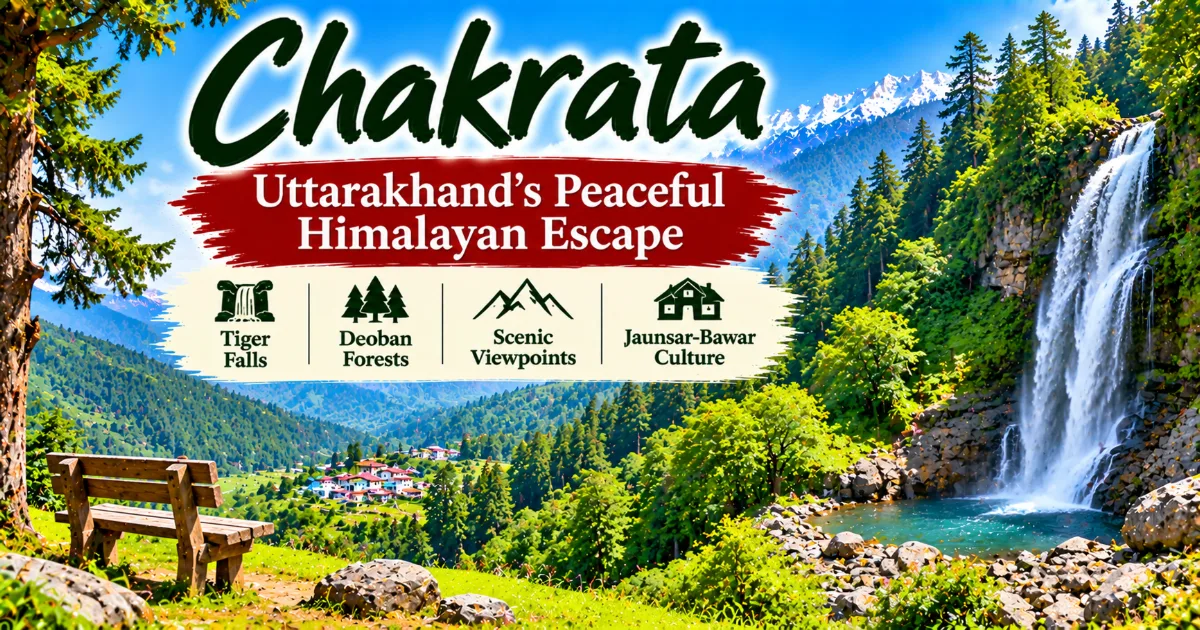
Discover Chakrata, a beautiful hill destination in Uttarakhand known for its dense forests, mountain landscapes, traditional villages and refreshing natural surroundings. Located in the Dehradun district, this peaceful Himalayan retreat offers a different experience from the state's crowded tourist towns, with opportunities to explore waterfalls, forest trails, scenic viewpoints and the distinctive cultural landscape of Jaunsar-Bawar.
Discovering the Quiet Beauty of Chakrata
Uttarakhand is home to several hill destinations that attract travellers throughout the year. While Mussoorie, Nainital and Auli are among the state's best-known tourist locations, there are many lesser-known places where visitors can experience the mountains at a slower and more peaceful pace. Chakrata is one such destination.
Situated in the Dehradun district, Chakrata is a scenic hill town surrounded by forests, mountain slopes and traditional settlements. Its natural environment makes it an attractive destination for people looking to take a break from busy cities and spend time in the Himalayan foothills. The region is particularly known for its forests of deodar, oak and pine, its pleasant summer climate and the panoramic views available from several surrounding locations.
Chakrata is not simply a place to visit for a mountain photograph. It offers a combination of natural beauty, local culture, outdoor exploration and opportunities to understand the life of communities living in the western Himalayan region. Visitors can explore waterfalls, enjoy forest walks, discover traditional villages and experience a quieter side of Uttarakhand.
Continue Reading
One of its most popular attractions is Tiger Falls, a beautiful waterfall located in the surrounding hills. Other experiences include exploring the scenic areas around Deoban, enjoying the mountain atmosphere at Budher and visiting nearby settlements that reflect the distinctive culture of Jaunsar-Bawar.
For travellers who prefer peaceful destinations, scenic drives and nature-based experiences, Chakrata deserves a place on the Uttarakhand travel itinerary.
Where Is Chakrata Located?
Chakrata is located in the northwestern part of Dehradun district in Uttarakhand. It lies in the western Himalayan region at an elevation of approximately 2,100 metres above sea level. Its elevated position contributes to a climate that is generally cooler than the plains of northern India.
The town is surrounded by forested hills and mountain landscapes. It is also geographically connected with the broader Jaunsar-Bawar region, which has a distinctive cultural identity within Uttarakhand.
Chakrata's location makes it a suitable destination for travellers beginning their journey from Dehradun. The road journey passes through changing landscapes, including cultivated areas, forested slopes, mountain villages and scenic valleys.
The surrounding region is spread across a wide geographical area, so individual attractions may require separate drives or walks from the main town. Visitors should plan their itinerary according to road conditions, available transport and the amount of time they have.
Chakrata is especially suitable for travellers who want to explore more than one attraction during a holiday. A stay of two or three days can provide enough time to enjoy the town, visit Tiger Falls, explore forest viewpoints and experience the surrounding countryside without rushing.
Why Is Chakrata Special?
Chakrata has a character that is different from many commercial hill stations. Its appeal lies in its relatively quiet atmosphere, forest surroundings and opportunities for outdoor exploration.
The region has not developed in the same way as some of Uttarakhand's more heavily visited tourist centres. Visitors may find fewer large commercial markets and entertainment facilities, but they can enjoy a closer connection with the natural environment.
The surrounding forests are among the destination's most attractive features. Tall trees, mountain paths and the changing colours of the landscape create a pleasant setting for walking and photography.
The region also provides access to several natural attractions. Waterfalls, viewpoints, mountain meadows and forest areas offer different experiences depending on the season.
Another important part of Chakrata's identity is its relationship with Jaunsar-Bawar. The area's villages, traditions, architecture and community practices reflect a cultural landscape that deserves attention alongside its natural attractions.
Chakrata is therefore an excellent choice for people who want to combine nature tourism with cultural exploration.
Tiger Falls: The Famous Waterfall of Chakrata
Tiger Falls is one of the most recognised natural attractions in the Chakrata region. Located amidst forested hills, the waterfall attracts visitors who enjoy nature walks, mountain scenery and the refreshing atmosphere of flowing water.
The waterfall descends from a considerable height into a natural pool below. Its setting among green slopes and trees makes it particularly attractive during and after the monsoon season, when the water flow can become stronger.
Reaching Tiger Falls involves travelling from Chakrata towards the waterfall access area and completing a walk along the designated route. The walk adds to the experience because visitors gradually move away from the main road and enter a quieter natural environment.
The surrounding landscape provides opportunities for photography and relaxation. Visitors can spend time observing the waterfall, listening to the sound of flowing water and enjoying the forest atmosphere.
However, Tiger Falls should be approached with care. Rocks near waterfalls can become slippery, particularly during the monsoon. Water levels and currents can also change quickly after rainfall. Visitors should avoid swimming in unfamiliar sections or entering areas where access is restricted.
It is advisable to wear comfortable shoes with good grip and carry drinking water. Families travelling with children should supervise them closely around the water and uneven terrain.
Tiger Falls is an excellent example of how Chakrata combines natural beauty with outdoor experiences.
Deoban: Forests, Mountain Views and Peaceful Trails
Deoban is another major attraction in the Chakrata region. The name is associated with the area's beautiful forest landscape, where tall deodar trees create a distinctive Himalayan environment.
The forest surroundings make Deoban particularly attractive to people interested in nature photography, peaceful walks and mountain scenery. The dense trees, fresh air and quiet atmosphere provide a welcome contrast to the noise of urban life.
The region also offers opportunities to observe the natural diversity of the western Himalayas. Depending on the season and local conditions, visitors may notice different forest plants, birds and changing vegetation.
Deoban is often appreciated for its mountain viewpoints. On clear days, the surrounding Himalayan landscape can be especially impressive. Visibility depends on weather, atmospheric conditions and the season, so travellers should not assume that every visit will provide uninterrupted distant views.
The forest environment is best enjoyed slowly. Instead of treating Deoban as a quick photography stop, visitors can spend time walking along accessible paths and observing the landscape.
Because the area is forested, travellers should follow local instructions and avoid disturbing wildlife. Do not leave food waste behind, play loud music or attempt to explore restricted forest areas.
Deoban is an ideal destination for people who want to experience the quieter natural side of Chakrata.
Budher Caves and the Surrounding Mountain Landscape
The Budher area is associated with the natural landscape around Chakrata and is known for its caves and open mountain surroundings. It attracts travellers interested in exploring less commercialised natural locations.
The caves are a distinctive feature of the region, although visitors should understand that cave exploration requires preparation and caution. Natural cave environments can have uneven floors, low visibility, slippery surfaces and narrow passages.
Anyone considering a visit should check current local access arrangements and seek reliable guidance before entering. Carrying appropriate lighting and footwear is important, and visitors should never enter unfamiliar cave passages without suitable preparation.
The surrounding landscape can also provide beautiful views of forested hills and mountain slopes. Depending on the season, the area may offer different colours and textures, from green summer vegetation to clearer autumn landscapes.
Budher is best suited to travellers who enjoy natural exploration and are comfortable with basic outdoor conditions. It may not be suitable for visitors seeking easily accessible commercial attractions.
The broader lesson of visiting such places is that natural tourism should always be balanced with safety and conservation.
Chilmiri Neck: A Scenic Viewpoint Near Chakrata
Chilmiri Neck is one of the well-known viewpoints around Chakrata. It is valued for its elevated position and the panoramic scenery available from the surrounding area.
The viewpoint provides an opportunity to enjoy the mountain landscape without undertaking a long trekking expedition. It is therefore suitable for travellers who want to experience the beauty of the region through a relatively accessible excursion.
The scenery changes throughout the day. Morning light can create a fresh appearance across the hills, while late afternoon may bring softer colours to the landscape.
Weather plays an important role in the quality of the views. On clear days, the surrounding mountain ranges become more visible, while clouds and mist can create a completely different atmosphere.
Chilmiri Neck is also a pleasant place to spend time away from the busy parts of the town. Visitors can enjoy the open surroundings, take photographs and appreciate the natural setting.
Travellers should avoid approaching unsafe edges and should remain within accessible public areas. Mountain viewpoints may not have extensive safety barriers, so caution is essential.
Exploring the Forests Around Chakrata
The forests surrounding Chakrata are an important part of its natural identity. They create a landscape that is visually attractive and ecologically significant.
Deodar, oak and pine trees are among the characteristic elements of the broader forest environment. The exact vegetation changes according to altitude, slope, moisture and local conditions.
Forest walks are among the simplest ways to enjoy the region. Visitors can explore accessible routes, observe the changing vegetation and experience the sounds of the natural environment.
Birdwatching can also be rewarding for people who enjoy observing wildlife. Early morning is often a pleasant time to look for birds, although sightings depend on weather, habitat and seasonal movement.
Travellers should remember that forests are living ecosystems, not recreational spaces created exclusively for visitors. Avoid disturbing birds and animals, damaging plants or leaving waste behind.
Do not light fires in forest areas unless specifically permitted within an authorised facility. Even a small fire can become dangerous during dry weather.
Respecting the forest is essential to ensuring that future visitors can continue to enjoy Chakrata's natural beauty.
The Cultural Identity of Jaunsar-Bawar
Chakrata is closely connected with the wider cultural region of Jaunsar-Bawar. This region has a distinctive history, social structure, traditional architecture and cultural practices.
The communities of Jaunsar-Bawar have developed traditions shaped by their mountain environment, agricultural activities and historical interactions. Their cultural identity is reflected in local festivals, music, dance, village architecture and community life.
Traditional houses in the region often use locally available materials such as stone and timber. Their construction reflects practical knowledge developed over generations, including adaptation to the climate and geographical conditions.
Agriculture remains an important activity in many villages. Terraced fields demonstrate how communities have adapted cultivation to mountain slopes. Seasonal farming practices influence daily routines and local celebrations.
Visitors may also encounter traditional forms of music and dance during local festivals and community events. These practices are important expressions of regional identity and should be understood with respect.
Chakrata provides a convenient starting point for travellers interested in learning about this cultural landscape. Exploring nearby villages can make the holiday more meaningful, particularly when visitors take time to understand local life rather than treating settlements as simple sightseeing locations.
Traditional Festivals and Community Celebrations
Festivals are an important part of the cultural life of Jaunsar-Bawar. They bring communities together and reflect the region's relationship with agriculture, religious traditions and seasonal changes.
Local celebrations may include traditional music, dance, community gatherings and customary rituals. The form and timing of festivals can vary between villages.
Visitors interested in experiencing local celebrations should remember that these are community occasions rather than tourist performances. It is important to respect the purpose of each event and follow local expectations.
If a festival is open to visitors, travellers should ask about appropriate behaviour, photography and participation. Some rituals may be private or restricted to members of the community.
Supporting local businesses during cultural visits can contribute to the regional economy. However, visitors should avoid pressuring residents to provide access to private events or traditional ceremonies.
Understanding local festivals adds depth to a visit because it shows how culture continues to shape everyday life in the Himalayan region.
Best Time to Visit Chakrata
Chakrata can be visited during different seasons, but the experience changes considerably throughout the year. Choosing the right time depends on whether visitors prefer pleasant weather, green landscapes, autumn visibility or a quiet winter atmosphere.
Spring: March to April
Spring is a pleasant season for visiting Chakrata. Temperatures are generally comfortable for sightseeing, and the surrounding landscape begins to show signs of seasonal renewal.
The forests and mountain slopes provide an attractive setting for photography and outdoor walks. Visitors can explore viewpoints and nearby attractions without the intense summer heat experienced in many lowland destinations.
Spring is suitable for families, couples and travellers who prefer moderate weather.
Summer: May to June
Summer is one of the popular periods for travelling to Chakrata. The cooler mountain climate makes it an appealing escape from the heat of northern Indian cities.
The forests remain attractive, and the region offers suitable conditions for visiting Tiger Falls, exploring viewpoints and enjoying outdoor activities.
However, popular holiday periods may bring more visitors. Accommodation should be arranged in advance, especially during weekends and school holidays.
Monsoon: July to September
The monsoon transforms Chakrata into a greener landscape. Forests, slopes and waterfalls become particularly attractive during this period.
Tiger Falls may have stronger water flow, and the surrounding vegetation can look especially fresh.
However, heavy rainfall also creates travel risks. Mountain roads may experience landslides, falling rocks and temporary closures. Walking trails can become slippery, and streams may rise quickly.
Visitors should check weather forecasts and local road information before travelling. Avoid trekking during heavy rain and never attempt to cross flooded streams.
Autumn: October to November
Autumn is an excellent period for exploring Chakrata. Rainfall generally decreases, and the surrounding landscape may offer clearer mountain views.
The weather is often suitable for sightseeing, forest walks and photography. Travellers interested in peaceful holidays may particularly enjoy this season.
It is also a good time to explore the surrounding villages and learn about local culture.
Winter: December to February
Winter brings colder temperatures to Chakrata, especially during mornings and evenings. The atmosphere becomes quieter, and visitors can enjoy a different perspective of the forested landscape.
Cold-weather clothing is essential. Weather conditions can change, and travellers should check road accessibility before setting out for remote attractions.
Snowfall is not guaranteed in the town every winter, so visitors should avoid planning a trip solely around an expectation of snow.
How to Reach Chakrata
Chakrata is accessible by road from Dehradun and other towns in Uttarakhand. Road travel is the most practical way to reach the destination.
By Road
Dehradun is the main starting point for most visitors travelling to Chakrata. The road journey passes through the lower Himalayan region and gradually moves towards higher forested slopes.
Travellers can use private vehicles, hired taxis or available local transport services. A private vehicle offers greater flexibility for exploring attractions located outside the main town.
The route includes mountain roads, so drivers should be comfortable with hill driving. Avoid speeding, especially around sharp bends and narrow sections.
During the monsoon, road conditions may change quickly. Check local updates before starting the journey.
By Rail
Dehradun Railway Station is the nearest major railway station for most travellers. It connects the city with several important destinations across India.
After reaching Dehradun, visitors can continue towards Chakrata by road.
By Air
Jolly Grant Airport near Dehradun is the nearest major airport. Travellers arriving by air can arrange road transport to Chakrata.
Flight availability and transport arrangements should be checked before travel, particularly if arriving late in the day.
Suggested Three-Day Chakrata Itinerary
A three-day itinerary allows visitors to explore the main attractions without rushing. The exact schedule should be adjusted according to weather, road conditions and local access arrangements.
Day 1: Arrival and Local Exploration
Begin the journey from Dehradun and travel towards Chakrata. Enjoy the changing scenery along the way, including forested hills and mountain settlements.
After reaching the town, check into your accommodation and spend some time exploring the immediate surroundings.
The first day should remain relatively relaxed. Enjoy the mountain atmosphere, explore accessible local areas and prepare for the following day's excursions.
Day 2: Tiger Falls and Chilmiri Neck
Start the day early and travel towards Tiger Falls. Complete the walk to the waterfall at a comfortable pace and spend time appreciating the natural surroundings.
After returning, allow time for lunch and rest.
Later, visit Chilmiri Neck if weather and road conditions permit. Enjoy the surrounding mountain scenery and take photographs from safe public areas.
Return to your accommodation before evening.
Day 3: Deoban and the Forest Landscape
Dedicate the third day to exploring Deoban and its forest surroundings.
Enjoy the natural environment, take a short walk along accessible routes and observe the mountain landscape.
If time permits, explore additional nearby locations or visit a local settlement with appropriate guidance.
Begin the return journey according to your transport schedule and road conditions.
This itinerary offers a balance of nature, sightseeing and relaxation. Travellers interested in more demanding outdoor activities should plan additional time and seek reliable local guidance.
Chakrata for Families
Chakrata can be a pleasant destination for families who enjoy nature and quiet holidays.
The town offers a slower atmosphere than many busy hill stations. Families can enjoy scenic drives, accessible viewpoints and short outdoor walks.
Tiger Falls can be an interesting excursion, but parents should consider the walking distance and terrain before taking young children. The area around waterfalls requires particular care because wet rocks and uneven surfaces can be hazardous.
Families should choose accommodation with suitable facilities and confirm transport arrangements before visiting attractions outside the town.
It is also important to carry essential medicines, drinking water, snacks and warm clothing according to the season.
Chakrata is best suited to families who prefer outdoor exploration and relaxation rather than a holiday centred on shopping malls, amusement parks or extensive commercial entertainment.
Chakrata for Couples
The peaceful environment of Chakrata makes it an attractive option for couples looking for a relaxed mountain holiday.
The forest surroundings, scenic drives and natural viewpoints provide opportunities to spend time together away from crowded tourist centres.
Couples can plan a two- or three-day stay, explore Tiger Falls, enjoy the views from Chilmiri Neck and spend time in the quieter parts of the region.
Accommodation options vary, so travellers should compare facilities, location and transport access before booking.
Visitors should remember that the natural environment is the main attraction. A holiday in Chakrata is best enjoyed through simple experiences such as walking through forested surroundings, observing the mountains and discovering local culture.
Chakrata for Adventure and Outdoor Enthusiasts
Chakrata offers opportunities for travellers who enjoy outdoor experiences. Its forests, hills, waterfalls and surrounding natural areas create an environment suitable for walking, nature photography and selected trekking experiences.
However, the availability and safety of activities depend on local conditions and authorised access.
Visitors interested in trekking should obtain reliable information about the route, distance, elevation, weather and required equipment. It is important not to assume that every forest path is a maintained tourist trail.
People unfamiliar with mountain terrain should consider going with an experienced local guide.
Waterfall visits and cave exploration also require caution. Natural environments can change quickly, particularly after rainfall.
Adventure tourism should never be based on unnecessary risk. Proper preparation allows travellers to enjoy the landscape while protecting their safety.
Food and Local Cuisine in Chakrata
Food is an important part of discovering a destination, and Chakrata provides an opportunity to experience the cuisine of the wider Uttarakhand and Jaunsar-Bawar region.
Traditional food habits in the surrounding communities are influenced by local agriculture, climate and seasonal availability. Meals may include locally grown grains, pulses, vegetables and preparations that reflect mountain cooking traditions.
Visitors may find familiar North Indian dishes in local restaurants and accommodation facilities. The availability of regional specialities varies, particularly in smaller establishments.
Travellers interested in local food should ask about seasonal dishes and regional preparations rather than expecting every speciality to be available everywhere.
Freshly prepared meals are a sensible choice, and visitors planning long excursions should carry sufficient drinking water and snacks.
Food availability may be limited in remote areas, so it is advisable to plan meals before travelling away from the main town.
Accommodation in Chakrata
Accommodation in Chakrata includes different types of stays, depending on location, facilities and the season.
Travellers may find hotels, guesthouses, homestays and other small accommodation establishments in and around the town.
People who prefer easy access to local facilities may choose a stay closer to the main town. Those looking for a quieter environment may consider properties located outside the central area, provided that road access and transport arrangements are reliable.
Families should check room facilities, heating arrangements during winter, food availability and parking before booking.
Couples may prefer accommodation with scenic surroundings, while adventure travellers may prioritise proximity to their planned routes.
It is important to confirm the exact location of a property. A hotel described as being near Chakrata may still require additional travel to reach the main attractions.
Advance booking is recommended during weekends, summer holidays and other busy travel periods.
Responsible Tourism in Chakrata
Chakrata's natural beauty depends on the health of its forests, rivers, waterfalls and surrounding ecosystems. Tourism can provide economic opportunities, but unmanaged visitor activity can also create environmental pressure.
Visitors should follow basic responsible tourism practices throughout their stay.
Avoid throwing plastic bottles, food wrappers and other waste along roads, forest trails and waterfall areas. Carry waste back to an appropriate disposal point.
Do not disturb wildlife or attempt to feed wild animals. Feeding can change natural behaviour and create risks for both people and animals.
Avoid loud music in forests and quiet natural areas. These environments are important habitats for birds and other wildlife.
Do not remove plants, stones or other natural objects as souvenirs. Natural resources should remain part of the landscape.
When visiting villages, respect private property, local customs and community spaces. Ask permission before photographing residents or entering private areas.
Support local businesses where possible. Choosing local transport, food services and accommodation can help tourism contribute to the surrounding economy.
Responsible behaviour ensures that Chakrata remains an attractive destination for future generations.
Practical Travel Tips Before Visiting Chakrata
Before leaving for Chakrata, check the weather forecast and road conditions. Mountain roads can become difficult during heavy rainfall, and travel time may increase because of traffic or road maintenance.
Carry comfortable walking shoes, particularly if you plan to visit Tiger Falls or explore forest trails.
Bring warm clothing even during summer, as mornings and evenings can be cooler than expected.
Carry basic medicines, personal essentials and drinking water. Medical and shopping facilities may be limited compared with larger cities.
If travelling with children or older family members, consider the walking distance and physical demands of each attraction.
Arrange reliable transport for locations outside the town. Public transport availability may not be convenient for every sightseeing stop.
Avoid driving on unfamiliar mountain roads after dark whenever possible. Plan your excursions so that you can return safely before nightfall.
Most importantly, keep your itinerary flexible. The weather and local conditions should determine whether a particular excursion is suitable on a given day.
Why Chakrata Deserves a Place in Uttarakhand Tourism
Chakrata represents a different side of Uttarakhand. It is not defined by a single famous temple, a large commercial market or an extensive collection of tourist facilities. Its identity comes from the combination of forest landscapes, waterfalls, mountain viewpoints and traditional communities.
The destination also demonstrates the tourism potential of the western Himalayan region. Visitors who travel beyond the state's most famous hill stations can discover places with distinctive natural and cultural characteristics.
Tiger Falls offers a rewarding natural excursion, while Deoban provides an opportunity to experience the region's forests. Chilmiri Neck introduces visitors to the mountain scenery, and the wider Jaunsar-Bawar region provides cultural depth.
Chakrata can also support more balanced tourism development. Encouraging visitors to explore different parts of Uttarakhand may create opportunities for local accommodation providers, transport operators, restaurants and small businesses.
However, the development of tourism should remain sensitive to the environment and local communities. Forest conservation, responsible waste management and respect for regional traditions are essential.
The long-term value of Chakrata lies in preserving the qualities that make it special rather than transforming it into another overcrowded hill station.
Final Thoughts: Experience the Peaceful Side of the Himalayas
Chakrata is a destination for travellers who want to slow down, explore nature and experience the quieter beauty of Uttarakhand.
Its forested mountains, scenic viewpoints, waterfalls and traditional settlements create a rewarding travel experience. Tiger Falls offers a memorable encounter with the region's natural beauty, while Deoban and Chilmiri Neck provide opportunities to enjoy the forests and mountain landscape.
The cultural connection with Jaunsar-Bawar adds another dimension to the journey. It reminds visitors that Uttarakhand's identity is shaped not only by its mountains and rivers but also by the communities that have lived in these landscapes for generations.
Whether you are planning a family holiday, a peaceful trip with your partner, a photography journey or a nature-focused escape, Chakrata offers an experience worth considering.
A visit here does not need a packed schedule. Sometimes, the most rewarding part of a mountain holiday is simply enjoying the fresh air, walking through a quiet forest, listening to a waterfall and observing the changing colours of the Himalayan landscape.
Chakrata deserves to be discovered as one of Uttarakhand's peaceful mountain retreats, where natural beauty and cultural heritage come together.
#Chakrata #UttarakhandTourism #TigerFalls #JaunsarBawar #ExploreUttarakhand