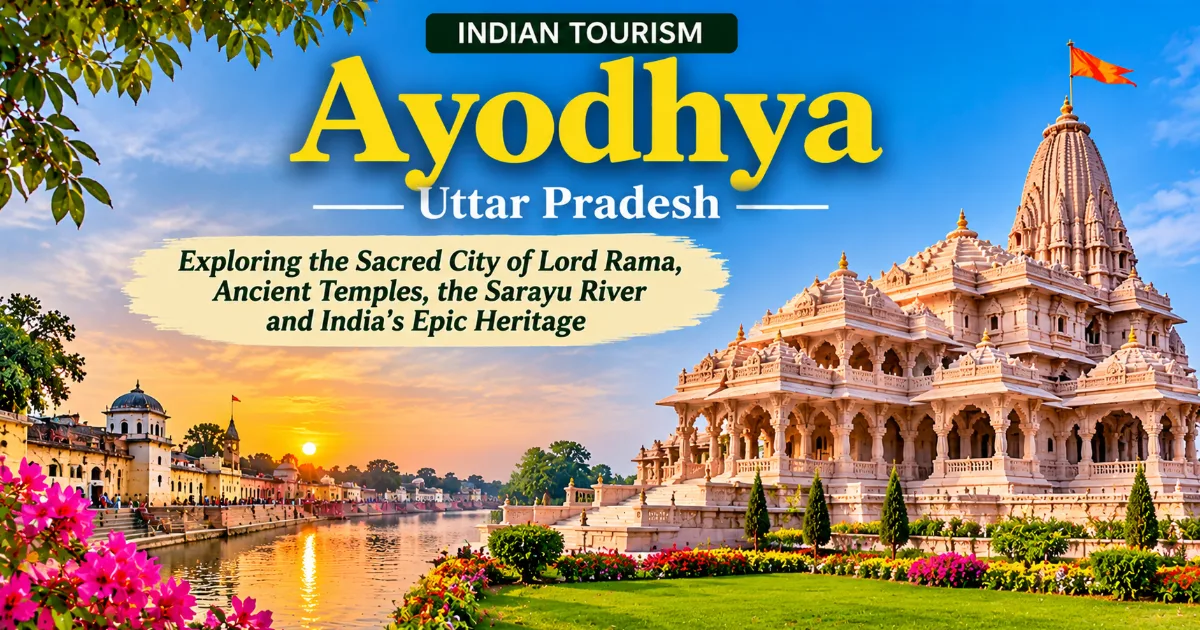
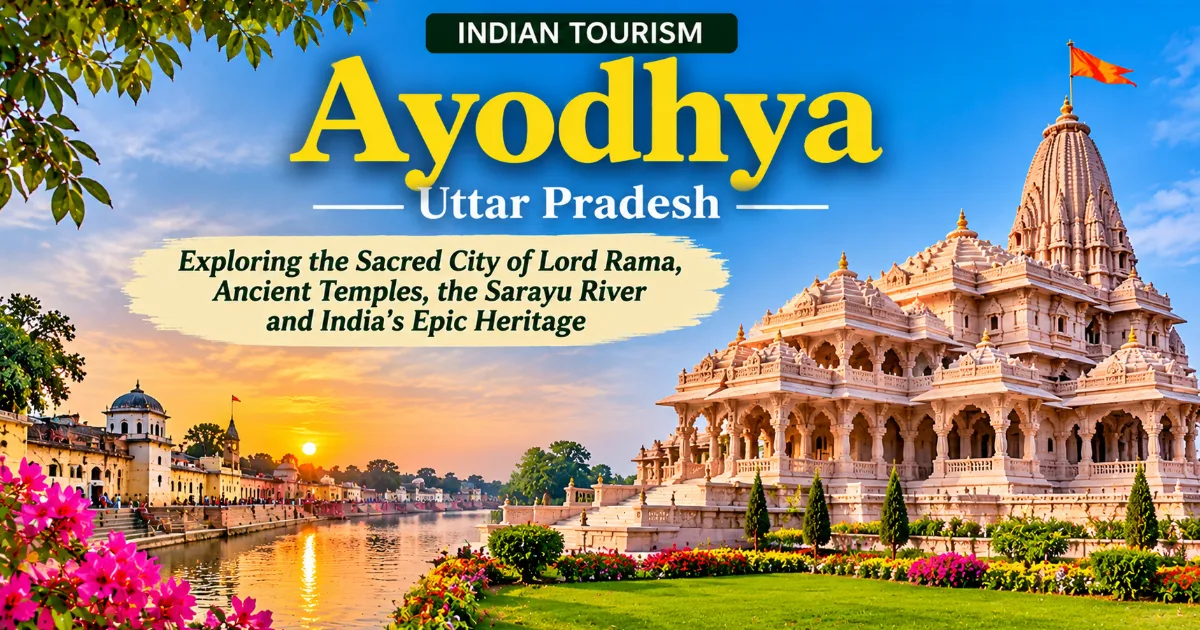
Ayodhya sits on the banks of the River Sarayu in Uttar Pradesh and matters to India both as history and as a place of faith. Hindu tradition regards it as the birthplace of Lord Rama, one of the most revered figures in Hindu religion. Because of its central place in the Ramayana, one of India's great epics, pilgrims, scholars and travellers have been coming here for centuries.
Ancient literature knows the city as Saket as well as Ayodhya, and links it to the legendary kingdom of Kosala and the Ikshvaku dynasty. Its religious identity rests above all on the story of Lord Rama, whose life and ideals have shaped Indian philosophy, literature, performing arts and social customs across generations.
Hindu tradition is only part of the picture. Jainism and Buddhism also have associations here, and the wider landscape reflects the religious diversity of the Gangetic plains. Over several historical periods the city went through political change, new religious movements, rebuilding and repeated revivals of pilgrimage.
Recent years have brought major infrastructure and urban development, especially after the construction and inauguration of the Ram Mandir. Better transport, larger public spaces, new accommodation and visitor amenities have changed how tourists experience the city.
Still, the newest projects explain only part of Ayodhya's importance. Its older temples, the riverfront, festivals, local markets and the habit of religious storytelling remain central to its identity.
Continue Reading
On a trip through Uttar Pradesh, a stop here shows how mythology, faith and history meet contemporary India. It is a place where ancient traditions still shape everyday life, from the morning crowds at the ghats to the stories told in its temples.
The Ancient History and Cultural Significance of Ayodhya
Few places hold so central a position in India's ancient literary and religious traditions. It is traditionally identified as the capital of the kingdom of Kosala and the birthplace of Lord Rama, whom Hindu belief regards as an incarnation of Lord Vishnu.
According to the Ramayana, it was a prosperous kingdom ruled by King Dasharatha, whose sons were Lord Rama, Lakshmana, Bharata and Shatrughna. The epic follows Rama's exile, the abduction of Sita, the battle against Ravana and his eventual return home.
That return is traditionally celebrated at Diwali, which symbolises the victory of righteousness over wrongdoing and the triumph of light over darkness. For this reason the city has become a major centre for Diwali celebrations.
Its history is also tied to the ancient Ikshvaku dynasty, which features prominently in Hindu genealogies. Through the Ramayana, the city has influenced religious art, theatre and storytelling throughout India and beyond.
For Jains, too, the city matters a great deal. Their tradition recognises it as the birthplace of several Jain Tirthankaras, including Rishabhanatha, Ajitanatha, Abhinandannath, Sumatinath and Anantnath, which makes it significant for Jain pilgrims and scholars.
The wider region also appears in Buddhist traditions as a place of ancient settlements and religious activity. Taken together, these strands show a landscape in which several religious communities shaped the region's development.
Different political authorities and religious movements left their mark over the centuries. Temples and public spaces were built, rebuilt and renovated in many phases.
Today Ayodhya is both a major pilgrimage destination and a strong symbol in India's cultural imagination.
Shri Ram Janmabhoomi Temple: The Centre of Ayodhya's Spiritual Landscape
The most prominent religious landmark in contemporary Ayodhya is the Shri Ram Janmabhoomi Temple. It is dedicated to Lord Rama and stands where tradition holds that Rama was born.
Its construction and inauguration marked a significant moment in the city's modern history, and the surrounding area has changed with it. The temple has become a major pilgrimage destination, attracting devotees from different parts of India and abroad.
North Indian temple design is the main inspiration for the architecture. Stone construction, carved pillars, sculpture and a carefully planned layout reflect the craft of Hindu temple building.
Planners designed the temple complex to accommodate both religious worship and very large numbers of visitors. Detailed carvings show religious themes and figures from Hindu tradition.
At its heart is the main shrine of Ram Lalla, the child form of Lord Rama. Worshippers come to offer prayers and take darshan under the temple's prescribed arrangements.
Building the temple also reshaped the surrounding infrastructure. Roads, visitor facilities, public spaces and transport arrangements have all undergone significant changes to support pilgrimage activity.
Before travelling, check the latest temple guidelines. Security procedures, entry arrangements, permitted belongings, darshan timings and crowd-management rules can change depending on the day and how many people are expected.
This is an active place of worship, so behave respectfully throughout your visit.
Hanuman Garhi: A Major Centre of Devotion
Hanuman Garhi is among Ayodhya's most visited temples. Built on raised ground and dedicated to Lord Hanuman, it is linked to the belief that Hanuman protected the city.
Many devotees stop here before going on to the Ram Janmabhoomi Temple. The custom reflects the importance of Hanuman in the religious traditions associated with Lord Rama.
A flight of steps leads up to the complex. From the top you can see parts of the city, and the courtyard and shrines are busy with worshippers.
Inside the main shrine is an image of Lord Hanuman, worshipped as a symbol of devotion, strength, courage and service. The temple attracts large numbers of worshippers throughout the year, with the biggest crowds on Tuesdays, Saturdays and during Hanuman Jayanti.
Around the temple, shops sell flowers, sweets, religious offerings and souvenirs, and you can watch traditional forms of worship up close.
With steps to climb and crowds to manage, visitors with mobility difficulties should plan accordingly.
Kanak Bhawan: A Temple Associated with Rama and Sita
Kanak Bhawan is one of the most beautiful temples in Ayodhya. It is dedicated to Lord Rama and Goddess Sita, and tradition says the palace was a gift to Sita after her marriage to Rama.
"Kanak Bhawan" is usually understood to mean a golden palace. Today the temple is known for its decorated architecture, richly finished interiors and calm devotional mood.
Images of Rama and Sita in the principal shrine are often dressed in ornate clothing and jewellery. Worship here centres on celebrating their relationship.
Over time Kanak Bhawan has undergone renovation and reconstruction more than once. Its present form reflects the patronage of later rulers and religious supporters who helped preserve the city's sacred sites.
It is especially popular with devotees who want to see places linked with the domestic and family life of Rama and Sita, as told in traditional storytelling.
It fits easily into a walking tour of the central religious area alongside Hanuman Garhi and Dashrath Mahal, although local traffic and crowds may affect access.
Nageshwarnath Temple: An Important Ancient Shrine
Nageshwarnath Temple is the city's best-known Shiva temple. It is traditionally associated with Kush, the son of Lord Rama, and local tradition holds that it was established in his honour.
It holds an important place in the city's religious geography and becomes one of the busiest shrines in town during Maha Shivaratri.
As the story goes, Kush lost an ornament in the Sarayu River and later met a Nag Kanya who had found it. She was a devotee of Lord Shiva, and Kush is said to have set up a shrine in her honour.
The temple shows that Shaivism also has a firm place in Ayodhya's religious traditions. Lord Rama dominates the city's identity, yet its sacred landscape includes important shrines to other Hindu deities.
If you want to see more than the Ram Mandir, add Nageshwarnath Temple to your itinerary.
The Sarayu River: A Sacred Part of Ayodhya's Identity
Ayodhya's spiritual identity is bound up with the Sarayu River. Closely linked to the Ramayana, it is traditionally regarded as sacred because of its association with the life and departure of Lord Rama.
Some of the calmest and most memorable hours in the city are spent on the riverfront, where people gather on the ghats to bathe, pray and take part in religious ceremonies.
Major festivals and religious occasions bring the largest crowds to the banks, when worshippers perform rituals of purification, remembrance and devotion.
Walking along the Sarayu shows how closely the city is tied to its sacred geography: ghats, temples and settlements here have been shaped by centuries of religious activity.
Boat rides are sometimes available, depending on local operators and safety conditions. Early morning and evening are the best times to go, when the light changes and the mood along the water is at its most rewarding.
Protecting the river matters for both its ecology and its religious meaning. Do not litter, throw plastic into the water or disturb religious ceremonies.
Ram Ki Paidi: The Famous Riverfront Steps
Ram Ki Paidi is one of the best-known spots on Ayodhya's riverfront. A series of steps runs down towards the Sarayu River, and pilgrims and visitors gather here throughout the day.
Crowds peak during religious festivals and evening ceremonies. Set right on the river, it is a good place for photographs, quiet walks and watching local religious customs.
Redevelopment of the riverfront, part of the city's wider transformation, has improved the steps and the area around them. Access is easier now, and the spot has become a major tourism landmark.
On special occasions the steps host religious activities and public celebrations. Diwali and other events linked to Lord Rama are when the place looks most striking.
Stay aware of river conditions and follow safety instructions, especially when water levels are high.
Guptar Ghat: A Sacred Site Associated with Lord Rama
Further along the Sarayu lies Guptar Ghat. This is where, according to religious belief, Lord Rama entered the river and departed from the earthly world.
"Guptar" is usually linked to the idea of a hidden or secret departure, which is why the site matters so much in accounts of the final phase of Rama's life.
Temples and spaces for worship and ritual line the ghat. It is generally quieter than the central pilgrimage areas, so it suits visitors who want a calmer visit.
Guptar Ghat is also part of the wider cultural history of Ayodhya and its long relationship with the Sarayu. Coming here shows a different side of the city's sacred geography, away from the busiest temples.
Combine it with other riverside sites, depending on transport and time.
Treta Ke Thakur: A Temple Connected with the Ramayana
Treta Ke Thakur takes its name from the Treta Yuga and is tied to the religious traditions surrounding Lord Rama.
Local tradition says it marks the spot of the Ashwamedha Yajna performed by Lord Rama, part of the story of his rule after returning to Ayodhya.
Those interested in the historical and religious stories of the Ramayana value it highly. It is also associated with images of Rama, Sita, Lakshmana, Bharata, Shatrughna and other figures from the epic.
Access arrangements vary, so check local information before you plan a visit.
Dashrath Mahal: Exploring the Traditional Palace of King Dasharatha
Dashrath Mahal is a prominent religious site associated with King Dasharatha, the father of Lord Rama.
Thanks to its place in the Ramayana, the palace is an important part of the city's traditional religious landscape and draws devotees interested in Rama's family history.
Decorated entrances and colourful interiors greet visitors, and religious ceremonies and festivals keep the complex busy.
For anyone tracing the royal household described in the Ramayana, it is one of the most meaningful stops.
It also shows how religious narrative shapes the layout of sacred spaces in Ayodhya. Its significance rests largely on religious and cultural tradition rather than on conventional archaeological interpretation.
Sita Ki Rasoi: A Site Associated with Sita's Household Traditions
Sita Ki Rasoi is a religious site associated with Goddess Sita and the household life described in the Ramayana.
Its name means Sita's kitchen. Devotional tradition remembers her here as a symbol of dedication, compassion and family responsibility.
Inside the complex are religious representations and objects drawn from traditional interpretations of Sita's life in Ayodhya.
For visitors, the site gives another perspective on the city's Ramayana heritage. Major temples focus on divine worship, while places like Sita Ki Rasoi link religious storytelling to domestic and social life.
Jain Heritage of Ayodhya
Ayodhya is an important destination for Jain pilgrims because it is traditionally recognised as the birthplace of several Jain Tirthankaras.
Jainism has a long history in the region, and its traditions are part of the city's wider heritage.
There are Jain temples and pilgrimage sites dedicated to different Tirthankaras. Devotees come to these places to learn about the religious history of Jainism and to pay respect to its spiritual teachers.
Through Rishabhanatha, Ajitanatha, Abhinandannath, Sumatinath and Anantnath, the city has a significance that goes beyond its well-known Hindu pilgrimage identity.
Visitors interested in religious history can explore these sites to understand the diversity of India's spiritual traditions.
Architecturally, Jain temples usually follow their own and artistic conventions, with carefully designed shrines and images of Tirthankaras. They are evidence of the city's role in the growth of more than one religious community.
Ayodhya's Connection with Buddhist Traditions
References to Ayodhya also appear in Buddhist historical and literary sources, although as a Buddhist destination it is far less prominent than nearby Sarnath.
In ancient times the wider region belonged to the Gangetic cultural landscape, where Buddhist teachings and monastic institutions spread.
Texts from the Buddhist tradition refer to settlements and regions of the ancient kingdom of Kosala. That makes the area an important context for understanding how religious and philosophical traditions developed in northern India.
Travellers following the history of Buddhism can treat Ayodhya as one stop on a longer route through Uttar Pradesh that includes Sarnath, Kushinagar and other Buddhist destinations.
Ayodhya's Traditional Markets and Local Crafts
Markets here mix the city's religious identity with everyday trade. Shops near the major temples sell offerings, flowers, sweets, devotional books, pictures and souvenirs.
You can buy small decorative items, religious objects, wooden products and clothing tied to local customs.
Food is everywhere too. The markets offer a range of food products and sweets, and local vendors serve snacks and refreshments to pilgrims throughout the day.
During major religious festivals, when visitors arrive in large numbers, the bazaars get very busy. For many families, buying offerings and souvenirs to take home is part of the pilgrimage itself.
Compare prices and check quality before buying anything expensive. Buying from local shopkeepers and artisans helps the city's economy.
Festivals and Celebrations in Ayodhya
Ayodhya celebrates several religious and cultural festivals, and most of them are tied to the Ramayana and the worship of Lord Rama.
Diwali is the biggest. It commemorates Lord Rama's return to Ayodhya after fourteen years of exile and his victory over Ravana. Lamps, lights and religious displays cover the city, and special celebrations on the Sarayu riverfront draw huge crowds.
Ram Navami marks the traditional birth anniversary of Lord Rama. People visit temples, join religious ceremonies and attend devotional programmes, with the main celebrations at the Ram Janmabhoomi Temple.
Ram Vivah commemorates the wedding of Lord Rama and Goddess Sita, with religious processions and cultural programmes based on the marriage traditions of the Ramayana.
Hanuman Jayanti is celebrated at Hanuman Garhi and other Hanuman temples, where worshippers gather to pray and take part in religious activities.
Kartik Purnima is another important occasion, when pilgrims come to the Sarayu River for religious bathing and prayers.
Shravan celebrations are marked through temple worship and religious activities, particularly at Shiva temples.
Worship, storytelling, music and community gatherings all come together at these times. If you plan to visit during a festival, book transport and accommodation early, because visitor numbers rise sharply.
The Food Culture of Ayodhya
Food in Ayodhya follows the vegetarian customs that go with its religious identity. Most restaurants serve vegetarian meals, snacks and sweets.
For breakfast, kachori-sabzi is a favourite: fried bread with a spiced vegetable preparation, eaten across the region.
Poori-sabzi is another common meal, especially at festivals and religious gatherings.
Chaat is a market staple, made in several versions with potatoes, spices, chutneys and other ingredients.
Jalebi, crisp and soaked in sugary syrup, goes well with breakfast or as an afternoon snack.
Peda and other traditional sweets are easy to find, and many visitors buy them as offerings or as gifts for family.
On warmer days, try lassi, a dairy-based drink often served in older establishments alongside local snacks.
What is on offer changes with the seasons, so ask residents and shopkeepers about regional specialities.
Choose hygienic places to eat, as you would at any destination, and be careful with food that has been left out in heat or dust.
Shopping and Souvenirs
Shopping in Ayodhya is closely connected with its pilgrimage economy. Common purchases include religious books, images of Lord Rama and Sita, devotional objects, prayer items and decorative souvenirs.
Small wooden and metal religious artefacts, framed pictures and traditional clothing used in Hindu worship are also easy to find.
The markets also sell sweets and packaged food products, which visitors often buy as gifts for family and friends.
Readers can pick up books about the Ramayana, religious philosophy and Indian traditions, which make meaningful souvenirs.
Look for products made by local artisans and small businesses. Buying genuine local handicrafts helps keep traditional skills alive and supports the city's shopkeepers.
Best Time to Visit Ayodhya
Ayodhya can be visited throughout the year, but sightseeing is most comfortable from October to March.
October to November brings the festive season, when Diwali and related celebrations light up the whole city. Expect accommodation and transport demand to rise sharply.
December to February is cooler and good for exploring temples, markets and the riverfront. Carry warm clothing for early mornings and evenings.
March to April starts pleasant, though temperatures climb as summer approaches. The Ram Navami festival may bring large numbers of pilgrims, depending on the religious calendar.
May to June is hot, with high daytime temperatures. Plan temple visits and outdoor activities for early morning or later in the evening.
July to September is monsoon season. The countryside turns greener, but heavy rain and changing river conditions can disrupt outdoor plans.
If sightseeing is your main aim, the cooler months are usually the most comfortable. For the major festivals, plan around the dates and expect large crowds.
How to Reach Ayodhya
Getting here has become much easier thanks to improvements in road, rail and air infrastructure.
Flying in, you arrive at Maharishi Valmiki International Airport, which has improved air connectivity for pilgrims and tourists. Flights and routes change, so check current schedules before planning your journey.
Rail travellers have a choice of railway stations, which connect the city to several important cities in Uttar Pradesh and other parts of India. Confirm your station and arrival details when booking tickets.
Road links run to Lucknow, Varanasi, Prayagraj, Gorakhpur and other regional destinations. Buses, taxis and private vehicles are all common.
From Lucknow the drive usually takes several hours, depending on traffic and where you start. During festivals, allow extra time for traffic restrictions and crowd-management arrangements.
Local Transportation in Ayodhya
Visitors have several options for getting around, including auto-rickshaws, cycle-rickshaws, taxis and other local services.
The main pilgrimage areas are fairly close together, but traffic restrictions and pedestrian zones limit vehicle access. Walking is often the easiest way to explore the central temple area and nearby markets.
Agree on fares before setting off on any local journey. At major festivals, transport demand rises sharply and some roads may be closed or diverted.
Travellers with mobility difficulties should plan routes carefully, because temple visits can involve walking, queues, steps and crowded public spaces.
Accommodation in Ayodhya
The range of places to stay keeps growing: hotels, guesthouses, dharamshalas, budget lodges and larger hospitality properties.
Staying in or around the central pilgrimage area puts you close to the major temples and cuts local travel time, although pedestrian restrictions mean some properties have limited vehicle access.
Hotels in newer parts of the city tend to offer more spacious rooms, parking facilities and contemporary amenities.
Religious accommodation facilities are economical options for pilgrims, but confirm availability, booking procedures and facility arrangements in advance.
Demand for rooms becomes extremely high during Diwali, Ram Navami and other major festivals, so early reservations are strongly recommended.
When choosing a place, weigh cleanliness, transport access, security and the distance from major attractions.
A Suggested Three-Day Ayodhya Itinerary
Day One: Exploring the Major Temples
Begin at Shri Ram Janmabhoomi Temple, following the latest entry and security procedures. From there, walk on to Hanuman Garhi and Kanak Bhawan, then see Dashrath Mahal and the religious sites nearby. In the evening, stroll along the Sarayu riverfront to Ram Ki Paidi.
Day Two: Exploring the Sacred River and Historic Sites
Start at Guptar Ghat. Next, visit Nageshwarnath Temple and other shrines tied to the city's religious traditions, and see Treta Ke Thakur and Sita Ki Rasoi if access allows. Leave time for local markets and traditional places to eat.
Day Three: Religious Heritage and Local Culture
Spend the morning at the Jain pilgrimage sites and other religious institutions, which show the city's links with several spiritual traditions. In the afternoon, browse the markets for handicrafts and regional food. End with an evening by the Sarayu River.
Adjust the plan to suit temple timings, local transport and your own interests.
Responsible Tourism and Preservation of Ayodhya's Heritage
This is a living religious city, and visitors share responsibility for protecting its spiritual and environmental heritage.
Behave respectfully in temples and religious spaces. Dress appropriately, take photographs with care and follow local instructions.
The Sarayu River is one of the city's most important natural and religious resources and needs protecting. Do not litter, throw plastic into the water or leave waste on the ghats.
Crowd management is particularly important during major festivals. Follow designated routes, do not push through queues and cooperate with local authorities.
Supporting local businesses is another part of responsible tourism. Buying from local artisans, using local transport and staying in locally run accommodation spreads the benefits of tourism.
Heritage conservation should remain a priority as well. Historic buildings, traditional temples and older neighbourhoods are valuable resources that need careful maintenance if they are to survive.
Visitors can help by respecting public spaces, avoiding damage to structures and remembering that active religious sites are not ordinary tourist attractions.
Practical Travel Tips for Visitors
Crowds can become extreme at major festivals and religious occasions. Book accommodation and transport in advance, particularly around Diwali and Ram Navami.
Temple entry may involve security checks and limits on personal belongings, so carry only essentials and check current guidelines before travelling.
Wear comfortable footwear, since exploring the city usually means a considerable amount of walking. In some places you will need to remove your shoes before entering religious premises.
Summers are hot: bring drinking water, sun protection and lightweight clothing. In winter, pack warm layers for early mornings and evenings.
Keep personal belongings secure in crowded markets and pilgrimage areas. It also helps to have your accommodation and transport details readily available.
Use authorised guides and reliable local transport providers. At major festivals, find the official information points and follow crowd-management instructions.
Ayodhya's Role in Indian Literature, Theatre and Popular Culture
The city's influence reaches well beyond its temples. Through the Ramayana it has shaped Indian literature, theatre, music, painting and popular storytelling for centuries.
Lord Rama's story has been retold in many regional languages and artistic forms. Goswami Tulsidas's Ramcharitmanas, composed in Awadhi, did most to bring it to ordinary people across northern India.
Traditional Ram Lila performances act out the epic through drama, dialogue and music. They are staged in many parts of India and remain closely tied to Ayodhya's cultural identity.
The influence of the Ramayana can also be seen in dance traditions, devotional music, sculpture, television, cinema and contemporary literature.
Seen this way, Ayodhya is a cultural source for artistic traditions across India and in several countries where the Ramayana became part of local religious and literary heritage.
Beyond Ayodhya: Exploring More of Uttar Pradesh
Several other major destinations show how varied the history of Uttar Pradesh is.
Across the state are important Buddhist, Hindu, Jain, Islamic and colonial heritage sites, and its cities and towns have contributed to India's religious history, political development, literature, architecture and art.
Varanasi, already covered in this Uttar Pradesh series, is another major spiritual centre. Prayagraj is known for the Triveni Sangam and its great religious gatherings, and Lucknow for the architecture and food of the Awadh region.
Further east, destinations such as Gorakhpur and Kushinagar offer more chances to understand the religious and historical significance of the region.
A trip to Ayodhya can easily become part of a longer journey through Uttar Pradesh, taking in different historical periods and religious traditions.
What Ayodhya Offers Today
Religious belief, ancient literature and modern development meet in Ayodhya. Its link with Lord Rama gives it exceptional importance in Hindu tradition, while its Jain and Buddhist connections show the wider religious diversity of the region.
The Shri Ram Janmabhoomi Temple, Hanuman Garhi, Kanak Bhawan, Nageshwarnath Temple and the sacred ghats along the Sarayu River are the core of any visit. Markets, traditional food, religious festivals and everyday cultural practices fill in the rest and add depth to the experience.
New infrastructure has strengthened the city's position as a major pilgrimage destination. As visitor numbers grow, though, its historic sites, riverfront and local traditions still need protecting.
For travellers in Uttar Pradesh, the city is more than a sightseeing stop. It shows how stories, faith and architecture shape the identity of a living Indian city, and a visit here is a journey through India's epic heritage and the spiritual ideas that have influenced generations.