
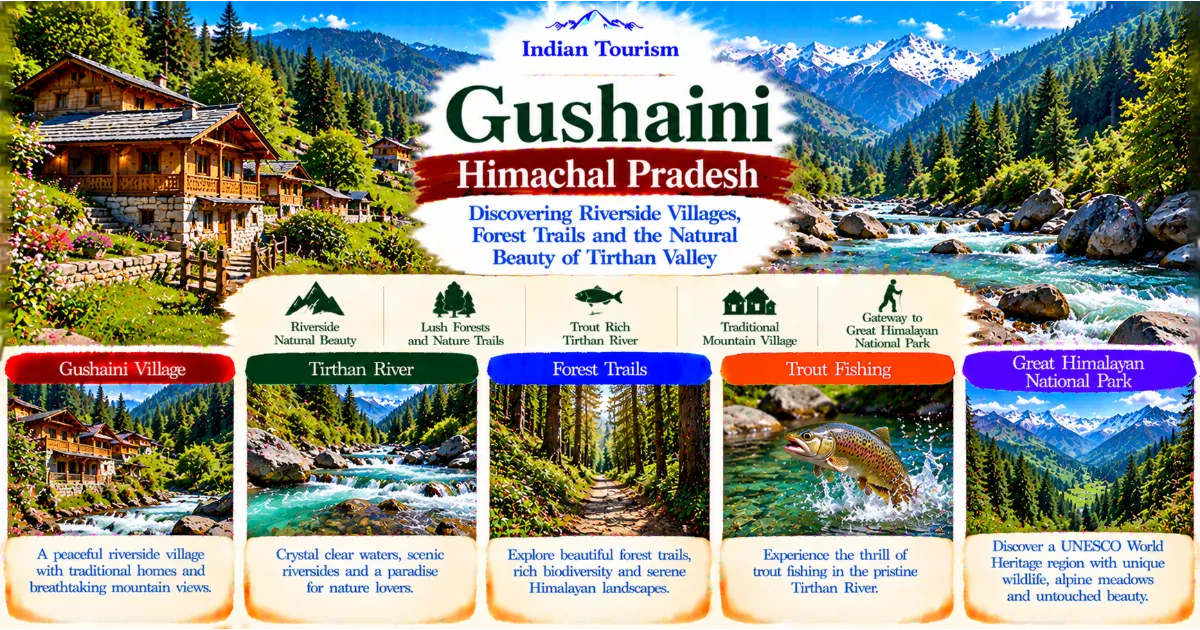
Exploring the Peaceful Riverside Charm of Gushaini
Himachal Pradesh offers a remarkable range of travel experiences, from lively hill stations and high mountain passes to remote villages, forested valleys and riverside settlements. Among its quieter destinations, Gushaini stands out for its connection with the Tirthan River, its traditional mountain surroundings and its proximity to one of the western Himalayas' most important protected landscapes. Located in the Tirthan Valley of Kullu district, Gushaini appeals to travellers who want to experience nature, village life and outdoor exploration without relying on the commercial atmosphere of a large tourist town.
The village is particularly attractive to visitors who enjoy the sound of flowing water, walks through green landscapes, views of forest-covered mountains and the slower rhythm of rural life. The Tirthan River is a defining feature of the region, shaping its scenery and contributing to the area's reputation among anglers and nature enthusiasts. Small settlements, cultivated slopes and mountain homes form part of a landscape in which daily life remains closely connected to the surrounding environment.
Gushaini also serves as a useful base for exploring parts of the wider Tirthan Valley. Depending on the season and current access conditions, visitors may plan excursions towards forest trails, nearby villages, mountain viewpoints and the region associated with the Great Himalayan National Park. The combination of riverside scenery and access to natural areas makes the destination suitable for travellers who prefer a mixture of relaxation and gentle adventure.
Unlike major hill stations, Gushaini is not defined by shopping streets, large entertainment complexes or a packed schedule of commercial attractions. Its appeal is more subtle. Visitors may spend a morning beside the river, enjoy a walk through the village, observe the changing light on the mountains and learn about local traditions from residents or accommodation hosts.
The destination is especially suitable for couples seeking a peaceful retreat, families who enjoy nature, photographers interested in Himalayan landscapes and independent travellers who want to explore the countryside at their own pace. It can also appeal to responsible travellers who wish to understand the relationship between mountain communities and protected natural environments.
A visit to Gushaini requires practical planning. Mountain roads can be affected by rain, landslides and other seasonal conditions, while outdoor routes may require local guidance. Travellers should confirm accommodation, transport and activity arrangements before departure.
When approached with care, Gushaini offers an opportunity to experience a quieter side of Himachal Pradesh, where the river, forests, village life and surrounding mountains form the heart of the journey.
Where Is Gushaini Located?
Gushaini is situated in the Tirthan Valley of Kullu district in Himachal Pradesh. The valley takes its name from the Tirthan River, which flows through a landscape of forested slopes, cultivated areas and small settlements.
The region lies within the western Himalayas and is connected by mountain roads to the wider Banjar area and other parts of Kullu district. The terrain is shaped by steep hillsides, narrow valleys and river channels, creating a landscape that changes considerably with elevation.
Gushaini is widely associated with nature-based tourism because of its riverside setting and proximity to the Great Himalayan National Park region. Visitors can use the village as a starting point for exploring suitable local walking routes and selected attractions in the wider valley.
However, the exact journey and travel time depend on the starting point, road conditions and the route selected. Travellers should confirm current access information rather than relying entirely on estimated distances.
The village is smaller and quieter than major tourist centres. Accommodation options and local services may therefore be more limited, and some activities require advance arrangements.
Visitors who plan carefully can combine a stay in Gushaini with other destinations in the Banjar and Tirthan areas. Allowing enough time for road travel helps make the experience more comfortable and reduces the pressure to rush between attractions.
The Tirthan River: The Heart of the Valley
The Tirthan River is one of the defining features of Gushaini. Its flowing water, rocky banks and surrounding greenery create a distinctive riverside atmosphere that attracts visitors throughout suitable travel periods.
The river contributes to the valley's visual identity and supports the wider ecological system. Waterways connect mountain habitats, influence vegetation and provide essential resources for communities living nearby.
For visitors, the river offers opportunities to observe the landscape, enjoy the sound of moving water and photograph the changing scenery. Depending on the location and local rules, suitable riverside areas may provide peaceful places to sit and appreciate the environment.
The river should never be treated as a harmless recreational feature in every condition. Mountain streams can rise quickly after heavy rainfall, and currents may be stronger than they appear. Slippery rocks, uneven banks and sudden changes in water levels can create serious risks.
Visitors should avoid entering the water unless a particular activity is legally permitted and appropriate safety arrangements are in place. Never swim or wade into unfamiliar sections of a mountain river simply because the water appears shallow.
Keep children under close supervision near the river and remain well away from unstable banks. During heavy rain or periods of high flow, avoid exposed riverside areas.
The river is also part of the local environment, not merely a tourist attraction. Do not leave plastic, food packaging or other waste beside the water, and never wash substances into the river.
A responsible riverside visit allows travellers to appreciate the scenery while respecting the natural processes that shape the valley.
Gushaini and the Great Himalayan National Park Region
One of the most important reasons travellers visit the Tirthan Valley is its connection with the Great Himalayan National Park region. The protected landscape is recognised for its ecological significance and its Himalayan biodiversity.
The wider region contains mountain forests, alpine environments, rivers and habitats that support a variety of plant and animal life. Changes in elevation create different ecological conditions, making the landscape particularly valuable for nature conservation.
Gushaini can serve as a base for visitors interested in learning about the surrounding natural environment. However, access to specific trails and protected areas depends on local regulations, entry requirements, weather and the arrangements available at the time of travel.
Visitors should not assume that every route near the village enters the national park or that all trails are open to unrestricted access. Before planning an excursion, confirm the designated entry point, permit requirements and whether a guide is recommended or required.
Protected areas exist to conserve habitats and wildlife. Visitors should follow official instructions, remain on authorised routes and avoid activities that could disturb animals or damage vegetation.
The natural environment is especially vulnerable to careless waste disposal. All rubbish should be carried back and disposed of appropriately. Food scraps should not be left behind, because they can attract animals and alter natural behaviour.
A visit to the region can be an educational experience as well as a scenic one. Understanding the purpose of conservation helps travellers appreciate why certain areas have restrictions and why responsible behaviour matters.
Forests, Wildlife and Biodiversity
The forests around the Tirthan Valley are an important part of the region's character. They provide habitat for wildlife, contribute to the stability of mountain slopes and help maintain ecological processes.
The vegetation changes with elevation, moisture and exposure to sunlight. Lower areas may differ considerably from higher forest zones, while seasonal weather influences the appearance of plants and the availability of food for wildlife.
Visitors walking through forested areas may notice birds, insects, wildflowers and other signs of natural activity. Wildlife sightings, however, are never guaranteed, and animals should be observed without interference.
The best way to experience a forest is to move quietly and remain attentive to the surroundings. Sudden noise, chasing animals or attempting to approach them for photographs can cause unnecessary disturbance.
Do not feed wildlife or leave food waste on trails. Feeding animals can change their behaviour and create problems for both wildlife and visitors.
Travellers should also avoid collecting plants, flowers, stones or other natural materials from protected areas. What appears insignificant to one person can become damaging when repeated by many visitors.
Walking should take place on authorised and suitable paths. Creating shortcuts through vegetation can contribute to soil erosion and damage fragile habitats.
The forests are not separate from the lives of local communities. They form part of the ecological setting in which agriculture, water resources and rural livelihoods operate.
Respecting these forests helps preserve the natural qualities that make the Tirthan Valley a distinctive destination.
Riverside Walks and Nature Exploration
One of the simplest pleasures of visiting Gushaini is spending time outdoors without following an ambitious schedule. Riverside walks and short excursions around accessible parts of the village can provide a rewarding introduction to the landscape.
A walk may reveal changes in vegetation, small bridges, cultivated land and views across the surrounding hills. The sound of the river creates a constant background, while shifting sunlight changes the appearance of the valley throughout the day.
Visitors should choose routes according to their fitness, footwear and the prevailing weather. Paths near the river may be uneven, and wet stones can become slippery after rain.
Ask a local host or reliable guide about suitable walking routes before setting out. Some paths may cross private land or connect with working agricultural areas, so permission and local guidance are important.
Carry drinking water, a charged phone and an extra layer of clothing. Allow enough time to return before dark, particularly if the route is unfamiliar.
Do not assume that every riverside path is safe during periods of high water. Heavy rainfall can affect riverbanks and increase the risk of rockfalls or local flooding.
Short walks can be just as rewarding as longer excursions. Travellers who slow down often notice more of the natural environment and gain a better understanding of the valley.
Traditional Villages and Local Life
Gushaini is part of a wider landscape of rural settlements where daily life remains connected to the mountains, rivers and agricultural land.
Village homes, cultivated plots and small local businesses reflect the practical demands of living in a Himalayan environment. The availability of flat land, access to water and the layout of roads all influence where settlements develop.
Agriculture and livestock remain important across many rural areas of Himachal Pradesh, although individual households have different livelihoods. Tourism has also created opportunities through accommodation, food services, transport and guided outdoor activities.
Visitors can learn about these connections by observing the village respectfully and speaking with residents who are willing to share their experiences.
It is important to remember that local communities are not attractions arranged for tourists. Residents have their own responsibilities and private spaces, and visitors should avoid interrupting everyday activities.
Ask permission before photographing people or entering private courtyards. Do not walk through cultivated fields or approach livestock without permission.
Purchasing meals, using legitimate local accommodation and arranging transport through local businesses can help tourism contribute to the regional economy.
A village visit becomes more meaningful when travellers recognise the people behind the destination. The landscape may draw visitors to Gushaini, but the knowledge and work of local communities help maintain the character of the valley.
Traditional Architecture and Mountain Homes
The built environment around Gushaini reflects the practical requirements of mountain life. Homes must respond to cold weather, rainfall, sloping terrain and the materials available in the surrounding area.
Across Himachal Pradesh, traditional building methods vary between regions. Timber, stone and other locally available materials have been used in different combinations, while modern construction has introduced new materials and designs.
In the Tirthan Valley, houses are often integrated into the surrounding landscape. Their position may reflect access to roads, sunlight, cultivated land and suitable building sites.
Visitors interested in architecture can observe roof forms, balconies, wall materials and the relationship between homes and the terrain. These details reveal how communities have adapted buildings to local conditions.
The village environment continues to change. New homes, guesthouses and other tourism-related properties reflect changing needs and the growing importance of visitor services.
Travellers should not assume that every older-looking building is historic or that all structures follow the same design. Architecture varies according to local traditions, household resources and individual choices.
Respect for private property is essential. Ask permission before entering buildings or photographing household interiors, and avoid climbing on fragile structures.
Observing local architecture thoughtfully can help visitors appreciate the relationship between culture, climate and the physical environment.
Local Food and the Taste of the Tirthan Valley
Food is an important part of experiencing rural Himachal Pradesh. In and around Gushaini, visitors may find simple meals prepared with regional ingredients and familiar North Indian dishes.
The range of food available depends on the accommodation or restaurant. Smaller establishments may offer limited menus, particularly during quieter travel periods.
Meals based on grains, lentils, vegetables and dairy products are common in many parts of Himachal Pradesh, although regional cooking traditions differ between districts and communities.
Travellers interested in local cuisine can ask their hosts which dishes are commonly prepared in the surrounding area. A home-style meal may provide a better understanding of everyday food traditions than a menu designed exclusively for tourists.
The Tirthan region is also known among anglers for trout fishing. However, visitors should not assume that fishing is permitted everywhere or that they can catch fish without checking the rules. Fishing regulations, licences, permitted stretches and seasonal restrictions must be confirmed with the relevant local authorities before any fishing activity.
If you are interested in tasting locally prepared trout, ask restaurants or accommodation providers about lawful sourcing and preparation.
Food availability can vary according to the season and the number of visitors. Confirm meal arrangements in advance if you expect to arrive late.
Visitors with allergies or dietary restrictions should communicate their needs clearly and carry suitable alternatives when necessary.
Choosing legitimate local food establishments can support small businesses and make the travel experience more connected to the region.
Trout Fishing and Responsible Angling
The Tirthan River has attracted interest from anglers because of its association with trout fishing. The activity can be an appealing part of a nature-based holiday for visitors who enjoy quiet outdoor experiences.
However, fishing in mountain rivers is subject to rules that may vary by location and season. Visitors should check current regulations, licensing requirements and permitted fishing stretches before making plans.
Do not assume that fishing is allowed simply because a river contains fish. Protected areas, local conservation rules and seasonal restrictions may limit what activities are permitted.
Visitors should also consider the ecological effects of angling. Avoid damaging riverbanks, leaving fishing line behind or disturbing aquatic habitats.
If fishing is permitted, follow all applicable requirements concerning equipment, catch limits and handling. Where local rules require catch-and-release practices, follow the instructions carefully.
Those who are unfamiliar with the river should seek guidance from a reputable local operator or authorised source. Mountain rivers can have powerful currents, slippery rocks and rapidly changing water levels.
For visitors who do not fish, the river remains valuable as a place for observation and photography. The surrounding scenery can be enjoyed without entering the water or disturbing aquatic life.
Responsible angling, where legally permitted, should support conservation rather than undermine it. Respect for the river helps protect the ecological qualities that make the Tirthan Valley special.
Best Time to Visit Gushaini
Gushaini offers different experiences throughout the year, but the most suitable travel period depends on the weather, the activities planned and the visitor's comfort with mountain conditions.
Spring: Fresh Colours and Renewed Landscapes
Spring brings a gradual transition from winter towards warmer weather. Vegetation begins to renew itself, and the surrounding hills may become increasingly green.
This period can suit visitors interested in village walks, photography and relaxed exploration. Temperatures may remain low in the mornings and evenings, so warm clothing is advisable.
Travellers planning excursions towards forest routes should confirm trail conditions and any access restrictions before setting out.
Summer: A Comfortable Season for Nature Travel
Summer is often a practical period for exploring the Tirthan Valley. Daytime conditions may be suitable for riverside walks, village visits and selected outdoor excursions.
The valley can provide a refreshing environment for visitors seeking a break from the heat of the plains.
However, weather can change quickly in the mountains. Visitors should carry suitable clothing, drinking water and basic essentials.
Monsoon: Lush Scenery and Increased Risks
The monsoon brings moisture to the region and can make the landscape especially green. Mist and cloud formations may create dramatic views across the valley.
At the same time, heavy rainfall can affect roads and walking routes. Landslides, falling rocks, slippery paths and rising river levels are possible.
Travellers should check current conditions and avoid unnecessary movement during hazardous weather. Riverside activities require particular caution when water levels rise.
Autumn: Pleasant Conditions and Clear Views
Autumn can provide attractive conditions for sightseeing, depending on the weather. Clear days may reveal broader views of the surrounding mountains.
Temperatures begin to fall as winter approaches, especially after sunset. Warm clothing is advisable for early morning walks and evenings outdoors.
This season can suit visitors who prefer a combination of scenic exploration and comfortable daytime conditions.
Winter: Quiet Landscapes and Cold Weather
Winter brings colder temperatures to the Tirthan Valley, and higher areas may experience snow or icy conditions.
Road access and outdoor activities can be affected by the weather. Travellers should check conditions before departure and avoid attempting routes that are unsafe.
Warm clothing and flexible plans are essential during this season.
For many visitors, spring, summer and autumn provide a practical balance between comfortable weather and outdoor access. The final choice should depend on current conditions and the activities planned.
How to Reach Gushaini
Gushaini is reached primarily by road through the wider Kullu and Banjar region. Mountain roads can be winding, and travel times depend on traffic, weather and road conditions.
From Banjar
Banjar is a useful reference point for reaching the Tirthan Valley. Travellers can arrange onward road transport towards Gushaini after confirming the current route.
From Aut
Aut is an important access point for journeys towards the Banjar region. Visitors arriving through this area can continue by road towards the valley, subject to transport availability and current conditions.
From Kullu
Travellers starting in Kullu can plan a road journey towards Banjar and the Tirthan Valley. Allow sufficient time for the mountain route and possible delays.
From Manali
Visitors travelling from Manali should confirm the most suitable route and current road conditions before departure. The journey may involve travelling through the wider Kullu region before continuing towards the Tirthan Valley.
From Chandigarh
Travellers from Chandigarh can first reach a suitable transport hub in Himachal Pradesh and then arrange onward transport towards Gushaini.
From Delhi
Visitors travelling from Delhi generally need to reach the Kullu or Banjar region before continuing by road. Depending on the chosen transport, the journey may involve buses, taxis or a private vehicle.
By Private Vehicle
A private vehicle offers flexibility for exploring the valley and stopping at suitable viewpoints. Drivers should be comfortable with mountain roads and should check the vehicle's condition before departure.
By Taxi or Public Transport
Taxis can provide direct transport where services are available. Confirm the fare, route and return arrangements before travelling.
Public transport services and onward connections may vary by season and day. Check current schedules rather than relying entirely on older travel information.
Before departure, confirm road conditions, weather forecasts and accommodation arrangements. If travelling during the monsoon or winter, allow additional time and keep the itinerary flexible.
Accommodation and Facilities
Gushaini offers a quieter accommodation experience than major tourist centres. Visitors may find homestays, guesthouses and other locally operated properties in the village and surrounding valley.
The facilities available vary between properties. Travellers should confirm room arrangements, heating, hot water, meal availability, parking and cancellation conditions before booking.
Those visiting during colder months should pay particular attention to heating arrangements and access conditions. Accommodation located close to the river or on a steep slope may require additional consideration during heavy rainfall.
Advance booking can be helpful during holidays and periods of high visitor demand. Travellers visiting during quieter months should confirm that their chosen property is open and providing meals or other required services.
Mobile connectivity and internet access can vary across the valley. Download offline maps and keep important contact information available.
Visitors should carry essential medicines and personal supplies, especially if travelling with children or older family members. Those with specific medical needs should plan access to suitable services before departure.
Local hosts can often provide practical information about current weather, walking routes and transport. Their advice may be especially valuable when conditions change unexpectedly.
Choosing legitimate local accommodation can support the regional economy and provide a more connected experience of the valley.
Photography Opportunities in Gushaini
Gushaini offers a range of photography opportunities centred on the river, forested hills, mountain homes and rural life.
The Tirthan River provides a natural focal point. Depending on the season and location, visitors may photograph flowing water, rocky banks and reflections of the surrounding landscape.
Forested slopes and mountain ridges offer additional subjects. Early morning light may reveal the contours of the hills, while mist can create a softer and more atmospheric scene.
Village architecture, small bridges, cultivated plots and everyday activities can provide a deeper sense of place.
Photographers should choose safe locations, particularly near the river and on narrow mountain roads. Wet rocks and unstable banks should never be approached simply to obtain a closer photograph.
Ask permission before taking close portraits or photographing private homes. Follow all restrictions at religious sites and protected natural areas.
Protect cameras and mobile phones from rain and moisture, especially during the monsoon.
The most effective travel photographs often combine scenery with details that explain how people live within the landscape. Images of village life, river environments and mountain architecture can communicate the character of Gushaini more fully than scenery alone.
A Suggested Three-Day Itinerary for Gushaini
Day One: Arrival and Riverside Exploration
Arrive in Gushaini after checking road conditions and accommodation arrangements. Settle in and allow time to rest after the journey.
Spend the afternoon exploring accessible parts of the village and enjoying the riverside scenery from safe locations.
Ask your host about local walking routes and current conditions. Keep the first day relaxed, especially if the journey has been long.
Day Two: Forest Walk and Nature Exploration
Plan a suitable walk based on your fitness, the weather and local advice. Choose an authorised route and confirm whether any permits or guide arrangements are required.
If conditions permit, explore a nearby forest route or visit an appropriate destination associated with the wider Tirthan Valley.
Carry water, suitable footwear and warm clothing. Allow enough time to return before dark.
Avoid riverside activities if water levels are high or weather conditions are uncertain.
Day Three: Village Life and Departure
Spend the morning enjoying a short walk or observing the village environment.
If residents are willing to share their experiences, learn about local livelihoods, seasonal changes and regional traditions.
Depart with sufficient time for the mountain journey and possible delays.
This itinerary is a flexible framework. Adjust it according to the weather, route conditions, available transport and any local restrictions.
Responsible Tourism in Gushaini
Responsible tourism is essential for preserving the river environment, forest habitats and village character of Gushaini.
Visitors should carry all waste away from the river, forests and walking routes. Plastic packaging, bottles and other rubbish should never be left behind.
Avoid polluting the Tirthan River or disturbing its banks. Do not wash substances into the water or leave food waste where it may attract wildlife.
Respect local customs and residents' privacy. Ask permission before entering private property or photographing people.
Support legitimate local businesses where possible, including accommodation providers, food establishments, transport operators and authorised guides.
Follow rules concerning protected areas and fishing. Do not assume that an activity is permitted simply because other visitors appear to be doing it.
Stay on suitable paths and avoid damaging vegetation. Wildlife should be observed from a respectful distance.
Fire safety matters in forested mountain environments. Never light fires in unauthorised locations or leave burning materials unattended.
Visitors should also make safe decisions when weather conditions change. Heavy rain, rising river levels and road damage can make excursions dangerous. Postponing an activity is preferable to taking unnecessary risks.
A responsible visit protects the destination while allowing local communities to benefit from tourism.
Common Travel Mistakes to Avoid
One common mistake is assuming that the river is safe for swimming or wading. Mountain water can be cold, fast-moving and unpredictable, so visitors should avoid entering unfamiliar sections.
Another mistake is underestimating travel time. Mountain roads can be winding, and delays may occur because of traffic, roadwork or weather.
Visitors should avoid planning excursions into protected areas without checking access rules and permit requirements. Some routes may require authorised entry or guidance.
Travellers should also avoid assuming that fishing is permitted throughout the river. Check the current regulations and obtain any required licence before angling.
Leaving rubbish behind is another serious mistake. Waste can damage river ecosystems and reduce the quality of the destination for residents and future visitors.
Finally, avoid overloading the itinerary. Gushaini is best experienced at a relaxed pace, with time for nature observation and unplanned discoveries.
Is Gushaini Worth Visiting?
Gushaini is worth considering for travellers who enjoy riverside scenery, forested mountain landscapes and quieter rural destinations.
Its position in the Tirthan Valley makes it appealing to visitors interested in nature-based travel and the wider Great Himalayan National Park region. The river provides a distinctive atmosphere, while the surrounding landscape offers opportunities for walking, photography and cultural exploration.
The village is particularly suitable for travellers who prefer peaceful surroundings to crowded commercial centres. It can also form part of a longer journey through the Banjar region and neighbouring parts of Kullu district.
However, visitors should understand that the experience depends on the season, the available facilities and current road conditions. Outdoor activities may require planning, and access to protected areas is subject to local regulations.
Those seeking nightlife, extensive shopping or a large selection of organised entertainment may prefer a major tourist town.
For travellers who appreciate nature, village life and responsible outdoor exploration, Gushaini offers a rewarding way to experience the quieter character of Himachal Pradesh.
Conclusion: Discover the Natural Beauty of the Tirthan Valley
Gushaini provides a peaceful introduction to the landscapes and communities of the Tirthan Valley. Its riverside setting, forested surroundings and connection with the Great Himalayan National Park region make it an appealing destination for nature-focused travel.
The experience is best enjoyed without rushing. Visitors can spend time observing the river, walking along suitable routes, learning about village life and appreciating the changing appearance of the mountains.
Preparation remains essential. Confirm transport and accommodation, check weather conditions and follow local guidance before undertaking outdoor activities.
Respect for the environment is equally important. Keep waste away from the river, follow protected-area rules, avoid disturbing wildlife and ask permission before photographing residents.
For travellers exploring Himachal Pradesh beyond its best-known hill stations, Gushaini offers a different perspective on the Himalayas. It is a place where water, forest, mountain scenery and rural life come together, creating an experience shaped more by nature and tranquillity than by commercial attractions.
#IndianTourism #HimachalPradesh #Gushaini #TirthanValley #KulluDistrict #GreatHimalayanNationalPark #HimalayanTravel #RiversideVillage #NatureTourism #ForestTrails #ResponsibleTourism #ExploreIndia
