Discovering Gokul, the Childhood Home of Lord Krishna
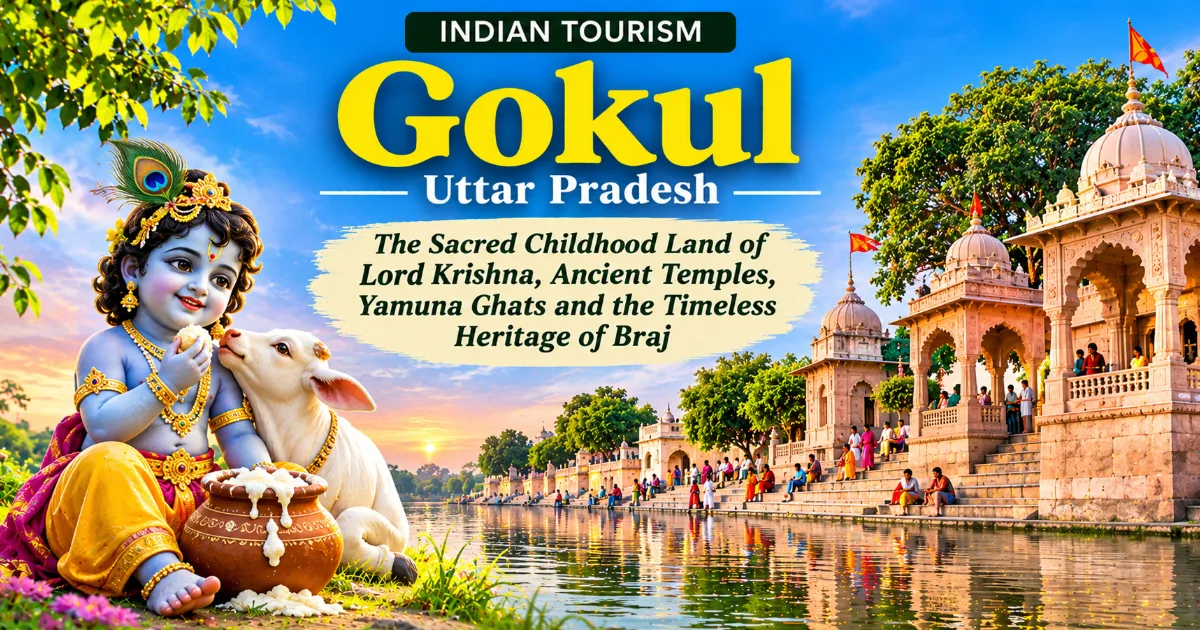
Gokul, located in the Mathura district of Uttar Pradesh, is one of the most spiritually significant destinations in the Braj region. Revered as the place where Lord Krishna spent his early childhood, Gokul holds a special position in Hindu religious traditions and attracts pilgrims, history enthusiasts and travellers interested in India's cultural heritage. Its ancient temples, sacred riverfront, traditional settlements and devotional atmosphere make it an important destination for anyone exploring the spiritual landscape of Uttar Pradesh.
According to Hindu religious traditions, Krishna was born in Mathura to Devaki and Vasudeva. To protect the newborn child from the threat posed by King Kansa, Vasudeva carried him across the Yamuna River and placed him in the care of Nanda and Yashoda in Gokul. Krishna's childhood in Gokul is remembered through stories of his playful nature, his affection for Yashoda, his friendship with the cowherd community and the divine events associated with his early years.
These stories have shaped the religious identity of Gokul. Many locations throughout the town and its surroundings are associated with episodes from Krishna's childhood. Temples and sacred sites preserve these traditions through worship, storytelling and festivals. The town is particularly important to devotees who wish to explore the places connected with Krishna's early life beyond the more widely visited temples of Mathura and Vrindavan.
Gokul offers a different experience from the larger pilgrimage centres of Braj. Its atmosphere is closely connected with traditional religious practices and the stories of Krishna's childhood. Visitors can explore ancient shrines, spend time near the Yamuna, observe local devotional activities and discover the cultural traditions that continue to shape the region.
For travellers planning an Uttar Pradesh tourism journey, Gokul is a meaningful destination that adds another dimension to the heritage of Mathura and the wider Braj region.
Historical and Religious Significance of Gokul
Gokul's importance comes primarily from its association with the childhood of Lord Krishna. Hindu religious literature describes the events surrounding Krishna's early years and the role played by Nanda and Yashoda in raising him.
According to traditional accounts, Krishna was secretly brought to Gokul after his birth in Mathura. Nanda, the leader of the cowherd community, and his wife Yashoda raised him as their own child. Krishna's childhood stories became central to devotional literature and religious storytelling across India.
The name Gokul is closely connected with the pastoral traditions of the region. The word is commonly associated with cows and the settlements of cowherds. Cattle rearing, dairy production and rural life form an important part of the traditional cultural landscape of Braj.
The religious identity of Gokul developed around the places associated with Krishna's childhood. Temples, shrines and sacred locations became important destinations for pilgrims who wished to connect with these stories. Over time, Gokul became part of a wider pilgrimage network that includes Mathura, Vrindavan, Mahavan, Govardhan, Barsana and Nandgaon.
The town is also connected with the devotional traditions of Vallabhacharya and the Pushtimarg movement. These traditions placed considerable emphasis on Krishna's childhood form and the loving relationship between Krishna and his devotees.
Gokul's heritage therefore reflects several aspects of Indian religious culture. It preserves stories from Hindu mythology, traditional devotional practices, pastoral traditions and the development of Krishna worship in northern India.
Raman Reti: The Sacred Sand Associated with Krishna's Childhood
Raman Reti is one of the most important attractions in Gokul. The name is associated with the traditional belief that Lord Krishna played in the sandy landscape of this area during his childhood.
Raman Reti is regarded as a sacred place by devotees because of its connection with Krishna's early years. The sandy surroundings, trees and peaceful atmosphere create a setting that encourages prayer and reflection. Pilgrims often visit to walk through the sacred sand, meditate and remember the childhood stories of Krishna.
The site is particularly meaningful to devotees who are interested in the playful and affectionate aspects of Krishna's personality. Religious traditions describe Krishna as a child who enjoyed playing with his friends, caring for calves and participating in the everyday activities of the cowherd community.
Raman Reti is also associated with religious institutions and places of worship. Visitors can explore the surroundings, observe devotional activities and experience a quieter atmosphere compared with the crowded temples of central Mathura and Vrindavan.
The best time to visit is generally during the cooler hours of the morning or evening. Visitors should maintain cleanliness, avoid damaging the natural surroundings and respect the religious character of the location.
For travellers exploring Gokul tourism, Raman Reti is an essential stop because it provides a direct connection with the town's most important religious identity.
Nanda Bhavan: The Traditional Home of Nanda and Yashoda
Nanda Bhavan is one of the most significant religious sites associated with Gokul. It is traditionally identified as the residence of Nanda Maharaj and Yashoda, the foster parents who raised Lord Krishna during his childhood.
According to Hindu religious traditions, Nanda and Yashoda played an important role in Krishna's early life. Their affection for him is remembered in countless devotional stories, songs and religious performances. Yashoda's relationship with Krishna is especially celebrated as an example of unconditional maternal love.
The traditional stories associated with Nanda Bhavan include Krishna's playful activities, his interactions with other children and the affectionate relationship he shared with his family. These stories have influenced religious art, classical music, literature and devotional traditions across India.
The temple complex is visited by pilgrims who wish to remember Krishna's childhood and the family traditions of Braj. Its religious importance comes from the stories associated with Nanda and Yashoda rather than from monumental architectural scale.
Visitors should allow time to understand the traditions connected with the site. Local religious guides and temple representatives may help explain the significance of different areas and the stories associated with them.
Nanda Bhavan is particularly meaningful for families and devotees who wish to explore the maternal and childhood dimensions of Krishna worship.
Chaurasi Khamba: The Eighty-Four Pillared Heritage Site
Chaurasi Khamba, traditionally associated with the residence of Nanda Maharaj, is another important heritage attraction in the Gokul and Mahavan area. Its name refers to eighty-four pillars, and the site is connected with religious traditions surrounding Krishna's childhood.
The structure is associated with the sacred geography of Braj and is traditionally remembered as a place connected with Nanda's household. The site attracts visitors interested in the religious history and architectural heritage of the region.
Its importance lies in the relationship between the physical structure and the stories preserved through local tradition. Visitors can explore the architectural features while learning about the religious significance of Nanda Maharaj and the early life of Krishna.
The surrounding area forms part of the wider pilgrimage landscape associated with Mahavan and Gokul. Travellers should confirm current access arrangements before visiting because conditions at smaller heritage sites can vary.
Chaurasi Khamba is particularly interesting for those who want to explore places beyond the most prominent temples and understand how religious traditions are connected with the wider geography of Braj.
Gokulnath Temple: A Centre of Krishna Devotion
Gokulnath Temple is an important religious attraction associated with the Pushtimarg tradition. The temple reflects the importance of Krishna's childhood form within this devotional movement.
Pushtimarg, also known as the Path of Grace, was established by Vallabhacharya. It places strong emphasis on devotion, divine grace and the loving service of Lord Krishna. The tradition gives special importance to Krishna's form as a child and to the devotional relationship between the deity and the devotee.
Gokul holds a significant position in the history of Pushtimarg because of its association with Vallabhacharya and the development of Krishna worship in the region.
Gokulnath Temple preserves religious practices connected with this devotional tradition. Visitors can learn about the temple's history, observe worship activities and understand how different schools of Krishna devotion developed in Braj.
The temple is particularly relevant to travellers interested in the religious diversity of the region. Although Gokul is closely associated with Krishna's childhood, its temples reflect several devotional traditions with distinct rituals and interpretations.
Thakurani Ghat: Exploring the Sacred Yamuna Riverfront
The Yamuna River is central to the religious and cultural identity of Gokul. Its banks are associated with stories from Krishna's childhood and continue to serve as places of prayer and religious observance.
Thakurani Ghat is among the riverfront locations associated with the sacred landscape of Gokul. Devotees visit the ghats to offer prayers, participate in traditional rituals and spend time near the river.
The riverfront provides an opportunity to understand the relationship between the people of Braj and the Yamuna. In Hindu religious traditions, the river is revered as a sacred waterway connected with Krishna's divine pastimes.
Early morning visits offer a peaceful experience as devotees gather for prayers and religious activities. Evening visits provide another perspective, with changing light and devotional practices along the riverbank.
Visitors should be careful near the water and follow local safety instructions. River conditions can change, and not every area is suitable for bathing or boating.
Responsible behaviour is particularly important. Avoid leaving plastic, food packaging or other waste along the ghats or in the river. Preserving the Yamuna is essential for protecting the natural and cultural heritage of the region.
Brahmand Ghat: The Story of the Universe in Krishna's Mouth
Brahmand Ghat is one of the most famous religious locations associated with Krishna's childhood in the Gokul region. It is connected with the traditional story in which Yashoda discovers the universe inside Krishna's mouth.
According to the story, Krishna was playing with other children when a complaint was made that he had eaten mud. Yashoda asked him to open his mouth to prove whether the accusation was true. When Krishna opened his mouth, she is said to have witnessed the entire universe within it, including celestial bodies, worlds and the elements of creation.
The story is an important part of Krishna's childhood traditions because it reveals the contrast between his appearance as a playful child and his divine nature.
Brahmand Ghat is traditionally identified as the location associated with this event. The site attracts pilgrims who wish to connect with the story and understand its religious symbolism.
The story has inspired paintings, devotional songs and literary descriptions across different parts of India. It is also a reminder of the importance of childhood narratives in Krishna worship.
Visitors can include Brahmand Ghat in a wider exploration of Gokul's religious sites. Spending time here offers an opportunity to understand how local geography and religious storytelling are closely connected.
Dauji Temple: The Sacred Shrine of Lord Balarama
Dauji Temple, located in the wider Braj region near Gokul, is dedicated to Lord Balarama, the elder brother of Lord Krishna. The temple is one of the important religious destinations associated with the Krishna traditions of the region.
Balarama holds a special place in Hindu religious literature. He is traditionally described as Krishna's elder brother and companion during his childhood activities. Stories of their relationship are central to many accounts of Krishna's life.
The temple is known for its religious importance and traditional celebrations. Devotees visit throughout the year, particularly during festivals connected with Balarama.
The Huranga celebration associated with Dauji is one of the distinctive festival traditions of the Braj region. It is connected with Holi and involves colourful community celebrations. The event attracts considerable attention from pilgrims and cultural travellers.
Visitors planning to attend should confirm the schedule and local arrangements in advance. Large gatherings can create traffic and crowd management challenges.
Dauji Temple is a valuable addition to a Gokul and Braj itinerary because it broadens the religious experience beyond the temples dedicated directly to Krishna.
Mahavan: Exploring the Wider Sacred Landscape of Krishna's Childhood
Mahavan is closely connected with the religious geography of Gokul and is traditionally associated with the childhood stories of Lord Krishna.
The area forms part of the wider landscape in which Nanda and Yashoda are believed to have raised Krishna. It contains religious sites, traditional settlements and locations associated with important episodes from his early life.
Mahavan is particularly important because it helps visitors understand that Krishna's childhood traditions are connected with a wider geographical area rather than a single temple or town.
Religious visitors often explore Mahavan alongside Gokul, including places associated with Nanda Maharaj and the stories of Krishna's childhood.
The area's cultural landscape reflects the pastoral identity of Braj. Traditional settlements, religious institutions and local customs preserve aspects of the region's historical character.
Travellers interested in religious history should consider spending additional time in Mahavan rather than limiting their visit to Gokul's central attractions.
The Childhood Stories of Krishna and Their Cultural Importance
The religious identity of Gokul is deeply connected with the childhood stories of Lord Krishna. These stories have been passed down through religious texts, oral traditions, devotional songs, paintings and performances.
One of the most familiar stories concerns Krishna's relationship with Yashoda. His playful activities and occasional mischief are described in devotional literature with affection and humour. The image of Yashoda trying to discipline Krishna has become one of the most popular subjects in Indian religious art.
Another important story concerns Krishna stealing butter from household containers. The butter-stealing episodes reflect the pastoral culture of Braj, where milk, curd and butter were central to everyday life.
Krishna's friendship with the cowherd boys is another major theme. These stories describe his participation in village activities, his affection for animals and his playful interactions with the children of the community.
The childhood narratives also include events in which Krishna protects the people of Braj from dangers. These stories establish his divine identity while preserving the affectionate image of a child who remains closely connected with his family and community.
Gokul's temples and sacred locations provide a geographical connection to these narratives. Visiting the town allows travellers to understand how religious stories have shaped the identity of a real landscape and influenced its traditions over centuries.
Festivals in Gokul: Celebrating the Childhood Traditions of Krishna
Festivals are an important part of Gokul's cultural and religious identity. They bring together devotees, local residents and visitors through worship, music, processions and community celebrations.
Krishna Janmashtami
Janmashtami celebrates the birth of Lord Krishna and is among the most important festivals in Gokul. Since the town is traditionally associated with Krishna's childhood, the festival carries particular religious significance.
Temples are decorated, devotional songs are performed and special ceremonies take place. Devotees observe fasting and participate in religious activities that commemorate Krishna's birth.
The celebrations attract pilgrims from different parts of India. Visitors should plan accommodation and transport carefully because the wider Braj region can become extremely crowded during this period.
Nandotsav
Nandotsav is associated with the celebrations following Krishna's birth. According to religious tradition, Nanda Maharaj and the people of Gokul celebrated the arrival of Krishna with great happiness.
The festival reflects the joy of the cowherd community and the affectionate atmosphere surrounding Krishna's childhood.
Religious institutions organise special programmes and devotional activities. The celebration is particularly meaningful in Gokul because of its association with Nanda and Yashoda.
Holi
Holi is celebrated with great enthusiasm throughout the Braj region. The festival is connected with Krishna's playful relationship with Radha and the people of the region.
Different towns and villages have their own Holi traditions. Gokul and nearby destinations participate in the wider celebrations through devotional programmes, colours and community gatherings.
Visitors should respect local customs and follow event-specific guidance. It is advisable to wear clothing suitable for colour celebrations and protect electronic devices.
Annakut and Govardhan Puja
Annakut and Govardhan Puja are important festivals in Krishna devotional traditions. They are associated with the story of Krishna lifting Govardhan Hill to protect the people of Braj from heavy rain.
The festival involves food offerings, prayers and community celebrations. Temples may organise elaborate displays of food prepared as an offering.
Kartik Month Celebrations
The month of Kartik is considered especially important in the Braj region. Devotees undertake pilgrimages, participate in prayers and observe religious practices associated with Krishna.
Gokul receives pilgrims during this period, making it a significant time for visitors interested in traditional devotional activities.
The Cultural Traditions of Gokul
Gokul's culture is closely connected with the religious and pastoral traditions of Braj. Its identity has developed through centuries of devotional practices, storytelling, music and community customs.
Braj Bhasha has played an important role in the region's literary and devotional heritage. Many songs and poems describing Krishna's childhood, Radha's devotion and the sacred landscape of Braj were composed in this language.
Bhajans and kirtans are regularly performed in temples and religious institutions. These devotional forms use music and poetry to communicate stories from Krishna's life and express the emotional relationship between devotees and the divine.
Traditional storytelling remains important in the region. Religious performers and local guides explain episodes from Krishna's childhood and connect them with specific temples, ghats and settlements.
Raas Leela and other devotional performances are also important cultural expressions throughout Braj. Through acting, music and dance, performers present stories from Krishna's life for religious and cultural audiences.
Gokul's traditions also reflect the region's association with cattle and dairy production. The pastoral background of Braj is visible in its religious narratives, food culture and local customs.
Food of Gokul: Experiencing Traditional Braj Cuisine
The food culture of Gokul is closely connected with the vegetarian traditions of the Braj region. Dairy products, sweets, traditional snacks and simple vegetarian meals are widely associated with the area.
Mathura Peda and Traditional Sweets
Mathura peda is among the most famous sweets associated with the wider region. Prepared using reduced milk solids and sugar, it is known for its distinctive flavour.
Visitors travelling through Gokul can find traditional sweets in nearby Mathura and local markets. These products are popular among pilgrims and are often purchased as gifts.
Other milk-based preparations, including rabri and regional sweets, are also part of the wider Braj food culture.
Kachori and Aloo Sabzi
Kachori served with potato curry is a popular breakfast and snack option in the region. It is commonly available in traditional food establishments and local markets.
The combination of crisp fried bread and spicy curry provides a filling meal for visitors beginning a day of sightseeing.
Puri and Seasonal Vegetables
Puri with vegetable preparations is another familiar vegetarian meal. Many local establishments serve traditional combinations that reflect regional cooking practices.
Lassi and Dairy-Based Drinks
The Braj region has a long association with dairy production, making lassi and other milk-based drinks popular choices.
Visitors can enjoy these drinks during warmer months, although it is advisable to choose clean and hygienic establishments.
Temple Prasad
Food offerings distributed at temples form an important part of the religious experience in Gokul. Prasad traditions vary between institutions and religious occasions.
Visitors should follow the rules of individual temples and respect the religious significance of food offerings.
Shopping in Gokul: Religious Souvenirs and Local Products
Shopping in Gokul offers a relatively traditional experience compared with larger commercial destinations. Visitors can find religious products, devotional images, prayer accessories and souvenirs associated with Krishna worship.
Small shops near temples sell Krishna and Balarama idols, pictures of Radha and Krishna, incense, prayer beads and religious books.
Tulsi malas are popular among devotees who follow Krishna devotional traditions. They are available in different styles and are commonly used during prayer and chanting.
Visitors may also find traditional clothing, decorative items and sweets. Those looking for a wider variety of products can explore the larger markets of Mathura.
When purchasing religious souvenirs, compare quality and prices before making a decision. Choose reputable sellers and avoid buying objects that may have been taken from protected heritage sites.
Best Time to Visit Gokul
The best time to visit Gokul is generally between October and March, when temperatures are more comfortable for temple visits and outdoor sightseeing.
Winter, from November to February, is suitable for exploring temples, ghats and traditional settlements. The weather is usually pleasant during the day, although early mornings and evenings can be cold.
Spring, particularly February and March, is attractive for visitors interested in Holi celebrations across Braj. Festival periods offer an opportunity to experience traditional cultural events, but they also bring large crowds.
Summer, from April to June, can be extremely hot. Visitors should schedule outdoor activities during early morning and evening hours, carry drinking water and avoid prolonged exposure to direct sunlight.
Monsoon, from July to September, brings rainfall and increased humidity. The surrounding landscape becomes greener, but rain can affect local travel and riverfront activities.
Janmashtami and Nandotsav are especially significant occasions for visiting Gokul. Travellers interested in these celebrations should confirm festival dates and make travel arrangements in advance.
For a quieter sightseeing experience, ordinary weekdays outside major festivals are generally more suitable.
How to Reach Gokul, Uttar Pradesh
Gokul is located close to Mathura and can be reached through the wider transport network of the Mathura district.
By Train
Mathura Junction is the principal railway station used by travellers visiting Gokul. It is connected to several major cities across India.
From Mathura Junction, visitors can continue to Gokul by taxi, auto-rickshaw or other local transport.
Travellers arriving during Janmashtami, Holi or other major festivals should allow additional time because railway stations and surrounding roads can become crowded.
By Road
Gokul is connected to Mathura and nearby destinations through regional roads. Private vehicles, taxis and local transport services are commonly used for the journey.
Travellers arriving from Delhi, Agra and other parts of Uttar Pradesh can reach the Mathura region through major road networks and continue to Gokul.
Road travel is convenient for visitors who wish to combine Gokul with Mathura, Vrindavan and other destinations in Braj.
By Air
Gokul does not have a commercial airport. Travellers generally use airports in the wider region, particularly Delhi, and continue by road or rail.
The most suitable airport depends on flight availability, travel budget and onward transport arrangements.
Getting Around Gokul
Gokul is best explored using a combination of walking and local transport. Many religious sites are located within traditional neighbourhoods where roads can be narrow and vehicle movement may be restricted.
Auto-rickshaws and cycle-rickshaws are useful for short journeys. Taxis and private vehicles can be arranged for travelling between Gokul, Mahavan and other nearby destinations.
Visitors interested in exploring several sacred sites should plan their route in advance to avoid unnecessary travel.
Walking is particularly suitable around temple areas and traditional settlements. Comfortable footwear is recommended because sightseeing may involve uneven pathways and steps.
During festivals, road access can change because of crowd management arrangements. Follow local instructions and allow additional time for travel.
Accommodation in Gokul
Gokul has a more limited range of accommodation compared with Mathura and Vrindavan. Visitors can find simple guesthouses, religious accommodation and budget lodging options in the wider area.
Many travellers prefer staying in Mathura or Vrindavan and visiting Gokul as part of a day trip. These larger pilgrimage centres offer a broader selection of hotels, guesthouses and accommodation facilities.
Pilgrims seeking a quieter experience may consider available religious guesthouses, subject to their entry requirements and facilities.
Before choosing accommodation, check cleanliness, transport access, food availability and guest facilities. During Janmashtami and Holi, accommodation across the Braj region can become heavily booked, so advance reservations are recommended.
Suggested One-Day Gokul Travel Itinerary
A full day is sufficient to explore the major religious attractions of Gokul and gain an introduction to its cultural heritage.
Morning: Exploring Krishna's Childhood Sites
Begin your visit at Raman Reti. Spend time exploring the sacred sandy landscape and understanding its association with Krishna's childhood.
Continue to Nanda Bhavan, traditionally identified with the home of Nanda and Yashoda. Learn about the stories of Krishna's early life and the role played by his foster family.
Visit Chaurasi Khamba and explore the surrounding heritage area. Allow time to understand its connection with the traditional religious geography of Braj.
Afternoon: Temples and Sacred Riverfront
Visit Gokulnath Temple and learn about its connection with the Pushtimarg tradition.
Continue to Brahmand Ghat, associated with the story of Krishna revealing the universe to Yashoda.
Spend some time near the Yamuna River and explore accessible ghats. Follow local safety guidance and avoid unsafe river activities.
Evening: Devotional Experiences and Local Food
Visit another accessible temple or religious institution according to current timings.
Explore local shops for devotional souvenirs and traditional products. Enjoy regional vegetarian food and try local sweets.
If time permits, visit additional attractions in the Mahavan area before returning to Mathura or Vrindavan.
Visitors with more than one day can extend the journey to include Dauji Temple and other destinations across the wider Braj region.
Suggested Three-Day Braj Itinerary Including Gokul
Travellers with additional time can explore Gokul as part of a broader journey through the sacred destinations of Braj.
Day One: Mathura
Explore Shri Krishna Janmabhoomi, Dwarkadhish Temple, Vishram Ghat and the Government Museum. Spend the evening experiencing the riverfront and traditional food culture of Mathura.
Day Two: Gokul and Mahavan
Visit Raman Reti, Nanda Bhavan, Chaurasi Khamba, Brahmand Ghat and Gokulnath Temple. Explore the religious landscape associated with Krishna's childhood and the traditions of Nanda and Yashoda.
Day Three: Vrindavan
Explore Banke Bihari Temple, Prem Mandir, ISKCON Krishna Balaram Mandir, Radha Raman Temple and Keshi Ghat. Allow sufficient time for temple visits and local travel.
This itinerary provides an introduction to three important destinations connected with Krishna traditions. Travellers with additional time can explore Govardhan, Barsana and Nandgaon separately.
Responsible Tourism in Gokul
Responsible tourism is essential for preserving Gokul's religious, cultural and environmental heritage. The town is an active pilgrimage destination where local residents and devotees follow traditional practices throughout the year.
Visitors should dress respectfully when entering temples and follow the rules regarding footwear, photography and access to worship areas.
The Yamuna River is an important part of Gokul's religious identity. Avoid throwing plastic, food packaging or other waste into the river or along the ghats. Do not disturb religious activities taking place near the water.
Respect the local traditions associated with sacred locations. Religious stories and beliefs form an important part of the identity of the town and should be approached with sensitivity.
Support local businesses where possible by purchasing traditional food, religious products and locally made items. Choose hygienic food establishments and avoid creating unnecessary waste.
During festivals, follow crowd management instructions and respect the movement of pilgrims. Avoid blocking temple entrances or emergency access routes.
Responsible visitor behaviour helps protect Gokul's heritage while supporting the communities that preserve its traditions.
Practical Travel Tips for Visitors
Plan your visit around temple schedules because darshan timings may differ between religious institutions. Some locations may have separate morning and evening access arrangements.
Wear comfortable clothing and footwear suitable for walking through traditional neighbourhoods. Carry drinking water, particularly during the summer months.
Keep personal belongings secure in crowded areas and avoid carrying unnecessary valuables during major festivals.
If visiting during Janmashtami, Nandotsav or Holi, arrange accommodation and transport well in advance. Crowds can affect travel times and access to popular sites.
Follow local instructions around the Yamuna River. Avoid entering the water in unsafe areas and do not assume that boating or bathing is permitted everywhere.
Visitors interested in photography should ask permission before photographing people, religious ceremonies or restricted areas.
If you are exploring several places in the wider Braj region, arrange local transport in advance and allow enough time between destinations.
Why Gokul Deserves a Place on India's Tourism Map
Gokul deserves recognition as one of Uttar Pradesh's important spiritual and cultural destinations because of its unique connection with the childhood of Lord Krishna.
While Mathura is traditionally identified as Krishna's birthplace and Vrindavan is associated with his youthful divine pastimes, Gokul preserves the stories of his early childhood and family life.
Raman Reti, Nanda Bhavan and Brahmand Ghat provide a geographical connection to the religious narratives that have influenced Indian devotional culture for centuries. Gokulnath Temple reflects the development of important Krishna devotional traditions, while the Yamuna ghats preserve the relationship between the river and the sacred landscape of Braj.
The town also offers opportunities to understand the pastoral traditions of the region. Its cultural identity reflects the importance of cattle, dairy production, village life, devotional music and traditional storytelling.
For pilgrims, Gokul provides a meaningful religious experience. For history enthusiasts, it offers insight into the development of Krishna worship and the cultural heritage of Braj. For families and cultural travellers, it offers a quieter destination where traditional stories and religious practices remain central to everyday life.
Gokul is also an important part of a larger Uttar Pradesh tourism journey. Its proximity to Mathura and Vrindavan makes it possible to explore several destinations associated with Krishna within a single regional itinerary.
Conclusion: Experience the Sacred Childhood Heritage of Gokul
Gokul is one of the most meaningful destinations for understanding the childhood traditions of Lord Krishna. Its temples, sacred groves, riverfront locations and traditional settlements preserve stories that have influenced Indian religious culture for generations.
A visit to Raman Reti offers a glimpse into the traditional landscape associated with Krishna's childhood. Nanda Bhavan connects visitors with the story of his upbringing, while Brahmand Ghat recalls one of the most memorable episodes from his early life.
The temples of Gokul preserve important devotional traditions, and the Yamuna River continues to shape the spiritual identity of the region. Festivals such as Janmashtami, Nandotsav and Holi bring these traditions to life through worship, music and community celebrations.
Beyond its religious importance, Gokul provides an opportunity to explore the cultural heritage of Braj, experience traditional vegetarian food and discover the stories that connect Mathura, Vrindavan and nearby sacred destinations.
For anyone planning an Uttar Pradesh pilgrimage or cultural tourism journey, Gokul is a destination worth including. It offers an experience rooted in devotion, family traditions, history and the enduring stories of Krishna's childhood.
Gokul is more than a pilgrimage town. It is a living reminder of the childhood stories of Lord Krishna and an important part of India's spiritual and cultural heritage.
#GokulTourism #UttarPradeshTourism #KrishnaJanmashtami #BrajCulture #ExploreIndia