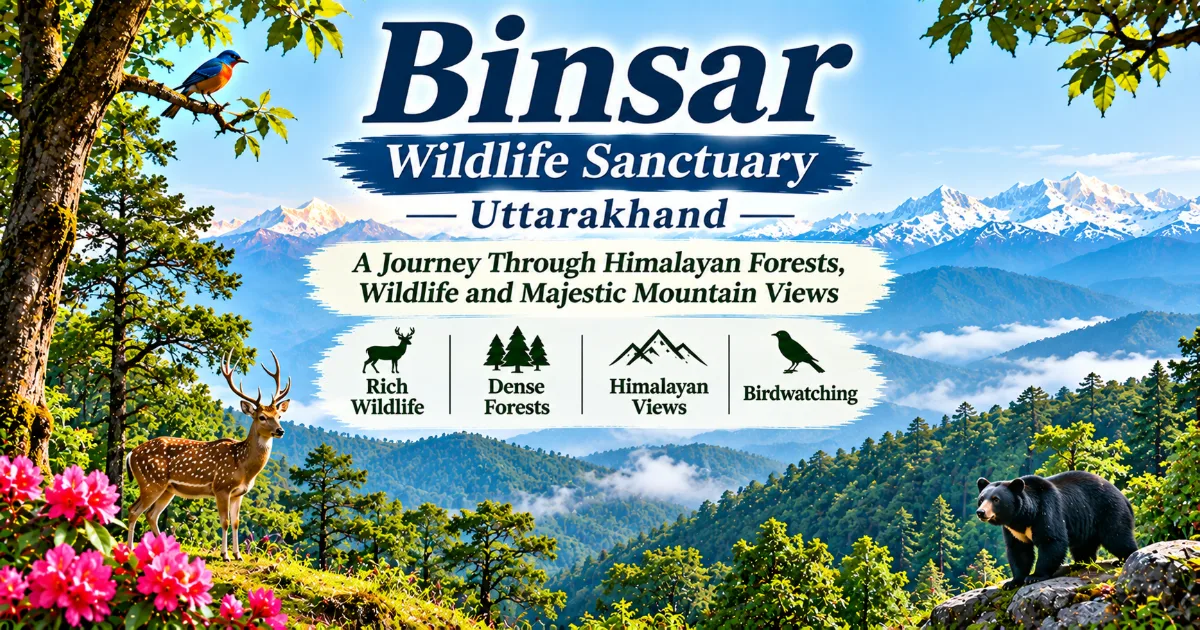
Uttarakhand offers many ways to experience the Himalayas. Some places are known for their sacred temples, others for snow-covered peaks, traditional villages, rivers or adventure activities. For travellers drawn to the quieter meeting of nature and mountain life, Binsar Wildlife Sanctuary in the Kumaon region is especially rewarding. Set in the Almora district, it is known for dense forests, rich biodiversity, peaceful mountain trails and wide views of the Himalayan ranges.
Unlike conventional hill stations built around hotels, markets and busy tourist streets, Binsar offers a different kind of holiday. Forests, wildlife, small settlements and the turning seasons shape its identity. Oak, rhododendron and other Himalayan trees form a green canopy, birds call from the branches and narrow roads wind along the slopes. Here you can watch wildlife, take forest walks and see how ecologically rich the western Himalayas are.
One of the most memorable experiences is the panoramic view from Zero Point, a popular viewpoint within the sanctuary. On clear days, several prominent Himalayan peaks rise above the surrounding ranges. Good visibility matters most: that is when the distant snow-covered mountains stand sharply against the sky.
Ecologically, the sanctuary matters as well. Its forests shelter a variety of birds, mammals, insects and plants, and help conserve Himalayan forest ecosystems. A visit shows why protected areas are needed to maintain biodiversity.
Travellers exploring Kumaon can combine Binsar with Almora, Jageshwar, Kasar Devi and other nearby destinations. Nature lovers, photographers, birdwatchers, families and anyone who prefers slower travel will find it a good fit.
Continue Reading
This article covers the sanctuary's location, forests, wildlife, viewpoints, best visiting season, travel routes, accommodation, activities and practical tips. Whether you are planning a weekend escape or a longer journey through Uttarakhand, Binsar is one of the region's most beautiful nature destinations to consider.
Where Is Binsar Wildlife Sanctuary Located?
Binsar Wildlife Sanctuary lies in the Almora district of Uttarakhand, in the Kumaon division. Forested slopes, traditional villages and farming settlements surround it in the middle Himalayan belt.
Elevations vary considerably across its terrain. The highest areas give wide views of the Himalayan ranges, while lower sections hold forested valleys and slopes. That range of altitude is why the protected area contains so many different habitats.
Almora is one of the main access points. A road runs from Almora to the sanctuary, though the final stretch winds through forested mountain country. You can drive a private vehicle or arrange a taxi from nearby towns.
Because of where it sits, Binsar fits easily into a wider Kumaon trip. Itineraries often pair it with Almora, Jageshwar, Kasar Devi and other cultural and natural attractions.
Don't expect a conventional town or commercial hill station. Facilities are spread around the surrounding area, and access to certain sections may be regulated. Entry procedures, vehicle permissions and visiting arrangements should all be confirmed before travelling.
The History and Establishment of Binsar Wildlife Sanctuary
Established in 1988, Binsar Wildlife Sanctuary was created to protect the region's natural forests and wildlife. That decision recognised how much the forest mattered ecologically and the need to conserve habitats for a variety of Himalayan species.
Broadleaf forests in the Kumaon region are a particular focus of its conservation work. These forests support diverse plant communities and give shelter and food to numerous animal species.
Over time, the sanctuary has also become a destination for nature education and responsible tourism. People come to walk in its forest, watch birds and learn why protected mountain landscapes matter.
Its establishment reflects a wider conservation challenge in the Himalayas. Mountain ecosystems face pressure from changing land use, infrastructure development, forest degradation, climate change and growing human activity. Protected areas help keep habitats intact and give wildlife space to survive.
Much of Binsar's conservation value lies beyond the animals a visitor might see. Its forest supports soil stability, water regulation, carbon storage and other functions that surrounding communities depend on.
Knowing this should change how you experience the place. Binsar is a protected natural area first, and tourism here has to work alongside ecological responsibility.
Why Binsar Is Special
Forest biodiversity, mountain views and a relatively peaceful atmosphere come together at Binsar. Many destinations in Uttarakhand are known for one major attraction, but this sanctuary offers several within a single protected area.
The forest defines it. Roads and trails pass through wooded slopes under a natural canopy, and the surroundings shift with elevation and season. Anyone who enjoys walking, birdwatching and observing nature will feel at home.
Then there is the Himalayan panorama. From the higher viewpoints, distant snow-covered peaks appear on clear days, white mountains set against the green forest in front of them.
Birdlife is another draw. Birdwatchers come to look for Himalayan and other forest-dwelling species, and the mix of habitats supports different bird communities, so both experienced birders and beginners find plenty to see.
Being close to Almora adds a cultural side to the journey. With Binsar as the main nature stop, you can also explore traditional Kumaoni settlements, local markets, temples and regional food.
Exploring the Forests of Binsar
Forests are the heart of Binsar Wildlife Sanctuary, a complex environment that supports numerous species of plants and animals.
Among the trees, oak is one of the most important features of the sanctuary. Different oak species grow across Himalayan elevations, and their leaves, branches and surrounding vegetation provide habitat for birds, insects and small mammals.
Rhododendron is the other characteristic tree. In spring its flowering season turns parts of the forest red and other colours, and the blossoms stand out clearly against the green.
Other tree species add to the sanctuary's vegetation diversity. Which ones grow where depends on altitude, soil, moisture and exposure, so ecological conditions differ from one part of the protected area to another.
On foot you notice details that a quick road journey misses: different leaf shapes, moss-covered surfaces, forest-floor plants, birds moving between branches and the shifting light beneath the canopy.
These trees also keep the region in ecological balance. They regulate water movement, reduce soil erosion and give wildlife somewhere to live, so conserving them matters for biodiversity and for the well-being of surrounding communities.
Stay on permitted trails and leave the vegetation alone. Collecting plants, damaging branches or removing natural materials can harm the ecosystem.
Zero Point: The Famous Himalayan Viewpoint
Zero Point is one of the most popular attractions within Binsar Wildlife Sanctuary. Its panoramic views of the Himalayan ranges are a major reason many travellers add Binsar to their Kumaon itinerary.
A forest walk from the permitted access area leads to the viewpoint. Because the route passes through woodland, the walk is part of the experience, with chances to watch the forest and hear birds and other wildlife.
On clear days, a series of Himalayan peaks stretches across the horizon. Their snow stands in sharp contrast to the green forested hills in the foreground.
What you see depends heavily on the weather. When skies are clear, particularly after suitable weather systems have passed, the distant peaks can look sharp and impressive. Cloud cover, haze or rainfall can hide them, so don't assume the panorama will always be unobstructed.
Early morning is often a good time, since the air may be clearer before clouds and haze build up. Still, follow the sanctuary's opening hours and safety instructions, and do not try to enter restricted areas outside permitted times.
Bring a camera or binoculars if you want a closer look at the distant peaks. A wide-angle lens helps capture the forest and the mountain panorama in one frame.
Standing here also gives a sense of the geographical scale of the Himalayas and of how the ranges dominate the natural identity of Uttarakhand.
Wildlife of Binsar Wildlife Sanctuary
A variety of Himalayan wildlife lives in Binsar. Its forests support mammals, birds, reptiles, insects and other organisms that make up the mountain ecosystem.
Sightings are never guaranteed, however long you wait. Animals may stay hidden in dense vegetation, move during quieter hours or avoid places with a lot of human activity. Come with patience rather than expecting to see a particular species on every visit.
Leopard
Leopards are among the large carnivores associated with the wider forests of the Kumaon region. Elusive by nature, they are rarely seen by ordinary visitors, even those who spend several days here. Their presence matters ecologically because they keep prey populations in check and help balance the forest ecosystem.
Under no circumstances should you track or approach a leopard. If you see any wildlife, keep a safe distance and follow instructions from forest personnel.
Himalayan Black Bear
Forest habitats in the region are also home to the Himalayan black bear. It is a powerful wild animal that may use different parts of the forest for feeding and movement.
Do not leave food waste, approach animals or walk into dense vegetation without guidance. Store food responsibly and report any encounter to the appropriate authorities.
Barking Deer
Barking deer, also known as muntjac, are small deer found in several Himalayan forest habitats. Their distinctive alarm call can sound like barking.
Spotting one is hard because they often move through dense undergrowth. Walking quietly and patiently may improve your chances, but never pursue animals for photographs.
Wild Boar
Wild boar are adaptable mammals found in many kinds of forest. Their feeding and movement shape the ecosystem around them.
However familiar they may look, they are strong animals and should not be approached. Give them space and avoid blocking their path.
Other Mammals
Smaller carnivores, rodents and other forest-dwelling species also live in the sanctuary and the surrounding forest, adding to the ecological complexity of Binsar.
Many are active at different times of day and stay out of sight during busy visiting hours. Seeing no wildlife does not mean the forest lacks animal life.
Birdwatching in Binsar
Birdwatchers value Binsar because its forest habitats support a rich variety of species. Oak forests, rhododendron, mixed woodland and a spread of elevations create suitable conditions for many Himalayan and resident birds.
Among all the activities here, birdwatching can be one of the most rewarding, particularly for anyone who likes watching nature without disturbing it.
Look for woodpeckers, barbets, tits, laughingthrushes, flycatchers, nuthatches and other woodland birds. What you actually encounter depends on season, elevation and local conditions.
Experienced birders often carry binoculars and field guides to identify birds by appearance, movement and calls. Beginners can enjoy it too, simply by listening and watching for movement among the branches.
Many birds are most active in the cooler early-morning hours, so that is generally the most productive time. Walk slowly, keep conversations low and listen.
Photograph responsibly. Do not use excessive playback of bird calls, approach nests or disturb breeding activity; the aim is to observe wildlife without changing its behaviour.
Nature enthusiasts who want to learn about Himalayan bird diversity will find a lot here. Careful observation usually gives more than hurried sightseeing.
Plant Life and Biodiversity
Biodiversity at Binsar goes well past the larger trees and visible wildlife. Shrubs, grasses, flowering plants, mosses, lichens, fungi and numerous smaller organisms all belong to the forest ecosystem.
Different vegetation types reflect variation in elevation and conditions. Moisture, sunlight, soil composition and temperature decide which plants grow in which parts of the sanctuary.
Rhododendron catches the eye during its flowering season, when its blossoms add colour to the forest and attract pollinators. The oaks, meanwhile, form the structural backbone of the woodland and support numerous organisms, from insects on the bark to birds in the canopy.
Smaller plant communities on the forest floor keep ecological processes running. Fallen leaves decompose and add organic matter to the soil, while fungi and microorganisms break down natural material and drive nutrient cycling.
Most of this goes unseen during a casual visit. Yet the forest could not function without it.
Please do not pick flowers, remove plants or disturb fallen wood and other natural material. Even small disturbances can affect habitats and ecological processes.
Best Time to Visit Binsar Wildlife Sanctuary
Any season can work for a visit, but the experience changes through the year. The right time depends on whether you care most about Himalayan views, birdwatching, forest walks, flowering trees or a quieter atmosphere.
March to April: Spring and Rhododendron Season
Spring is one of the most attractive periods to explore. Weather is generally pleasant, and rhododendron trees may be in colourful flower.
With the forest at its liveliest, you can walk through the woods without the intense heat of summer or the heavy rain of the monsoon.
Photography, nature walks and birdwatching all suit this season. Anyone interested in the flowering forest may find spring the best choice.
May to June: Summer Forest Escape
Summer is a popular time in the Kumaon hills. Compared with much of the plains, Binsar's forest feels cooler, although temperatures vary with elevation and weather.
Summer holidays covering Almora and nearby destinations can easily include the sanctuary. Carry water and plan walks for the comfortable hours of the day.
School holidays may push up demand for accommodation, so plan ahead.
July to September: Monsoon Forest Landscape
Monsoon rain brings fresh greenery. Mist drifts through the hills, the vegetation grows dense and the forest looks at its greenest.
Heavy rainfall, though, can affect roads, walking paths and visibility. Expect slippery surfaces and possible weather-related travel disruptions.
Local advisories are worth checking, and unnecessary movement during intense rain is best avoided. Monsoon travel best suits people who are comfortable with changing weather and flexible plans.
October to November: Clear Mountain Views
Autumn is often a rewarding season. Clearer visibility improves the chances of seeing distant Himalayan peaks from Zero Point.
Cooler temperatures make walking comfortable for many visitors, and the forest remains attractive.
Landscape photographers, mountain watchers and nature lovers will find this a particularly good period.
December to February: Winter Experience
Winter brings colder temperatures, especially in the early morning and evening. Pack warm clothing and check weather and road conditions before departure.
Quieter forests appeal to travellers who want peace. Cold conditions and occasional weather disruptions may, however, affect travel plans.
How to Reach Binsar Wildlife Sanctuary
Roads connect Binsar with Almora and other major towns in Kumaon. Plan the route carefully, as the final stretch runs on mountain roads.
By Road
Almora is the most convenient major town for reaching Binsar. From there, hire a taxi or drive your own vehicle to the sanctuary entrance and nearby accommodation areas.
The route passes forested slopes and mountain settlements. Travel time depends on traffic, road conditions and exactly where you are staying.
Before departure, ask about the permitted entry route and current vehicle arrangements, since these can change.
By Rail
Kathgodam is a major railway access point for Almora and the surrounding Kumaon region. The rest of the journey, towards Almora and Binsar, continues by road from Kathgodam.
Train availability and onward transport should be checked in advance, particularly for weekends and holiday seasons.
By Air
Pantnagar Airport is one of the airport options for the Kumaon region. Flight schedules and onward road transport should be confirmed before you plan the journey.
Depending on where you start, it may be easier to travel through Delhi or another major transport centre and continue by rail or road.
Local Transport
Private vehicles and taxis are among the most convenient ways to reach Binsar. Local transport may be limited in some areas, so if you plan to cover several destinations, consider arranging transport for the whole journey.
Entry Permits and Sanctuary Rules
As a protected wildlife sanctuary, Binsar has entry regulations that visitors must follow. Entry fees, vehicle charges, timings and other conditions may change over time.
Get the latest information from the relevant forest authorities before visiting. Older travel information may be out of date, because conservation regulations and visitor arrangements get updated.
Follow designated routes and keep out of restricted areas. Drive at a controlled speed, particularly where wildlife may cross the road.
Loud music, littering, feeding animals and disturbing wildlife are all to be avoided. Fires, smoking in prohibited areas and anything else that could create a forest hazard must be taken seriously.
Remember that this is a conservation area first and a tourist destination second. Respecting its rules protects wildlife and keeps the natural environment intact for future visitors.
Activities to Enjoy in Binsar
Forest Walks
Walking through the forest is one of the most enjoyable things to do at Binsar, and it needs no special equipment or experience. On the trails you can take in the vegetation, listen to birds and watch the surroundings change.
Use authorised routes and avoid walking alone into unfamiliar areas. Comfortable shoes, drinking water and weather-appropriate clothing are important.
Birdwatching
Beginners and experienced birders alike can enjoy this. Binoculars improve the experience, and a field guide helps identify different species.
Go out in the early morning if you can. Stay quiet and keep away from nests or feeding areas.
Himalayan Viewpoint Photography
One of the most memorable views within the sanctuary is from Zero Point. Clear weather can reveal distant snow-covered peaks.
Look at the forecast, carry suitable equipment and allow enough time for the forest walk.
Nature Observation
Trees, leaves, flowers, insects and other small organisms all have something to teach about the forest. A slow walk reveals details that are easily missed from a vehicle.
Relaxed Nature Retreat
Plenty of travellers simply want to spend time in a peaceful forest. Staying in suitable accommodation near the sanctuary lets you enjoy the surroundings without rushing between attractions.
Suggested Travel Itineraries
One-Day Binsar Visit
Start early from Almora and travel towards Binsar Wildlife Sanctuary. Complete the entry formalities and explore the permitted forest routes.
Walk to Zero Point if conditions and access arrangements allow. Spend time watching the view and the birdlife before heading back towards Almora.
Visitors with limited time who want to see the sanctuary's main attractions will find this plan works well.
Two-Day Binsar Nature Retreat
Day one is for travelling from Almora to Binsar and checking into suitable accommodation, with the afternoon spent exploring the immediate surroundings and the forest.
Start early on the second day for birdwatching and a walk towards Zero Point. If visibility is clear, take your time with the Himalayan panorama. Return for lunch, then continue towards Almora or your next destination.
Two days let you experience Binsar without rushing.
Three-Day Kumaon Nature and Heritage Trip
Use the first day for Binsar Wildlife Sanctuary, its forests and the Zero Point viewpoint. Reserve the second for Almora, with its local markets, temples and traditional Kumaoni culture.
Day three can take you to Jageshwar or another nearby destination, depending on road conditions and available time. Over three days you get nature, architecture and regional culture.
Nearby Places to Explore
Several other Kumaon destinations are close enough to include in the same journey.
Almora
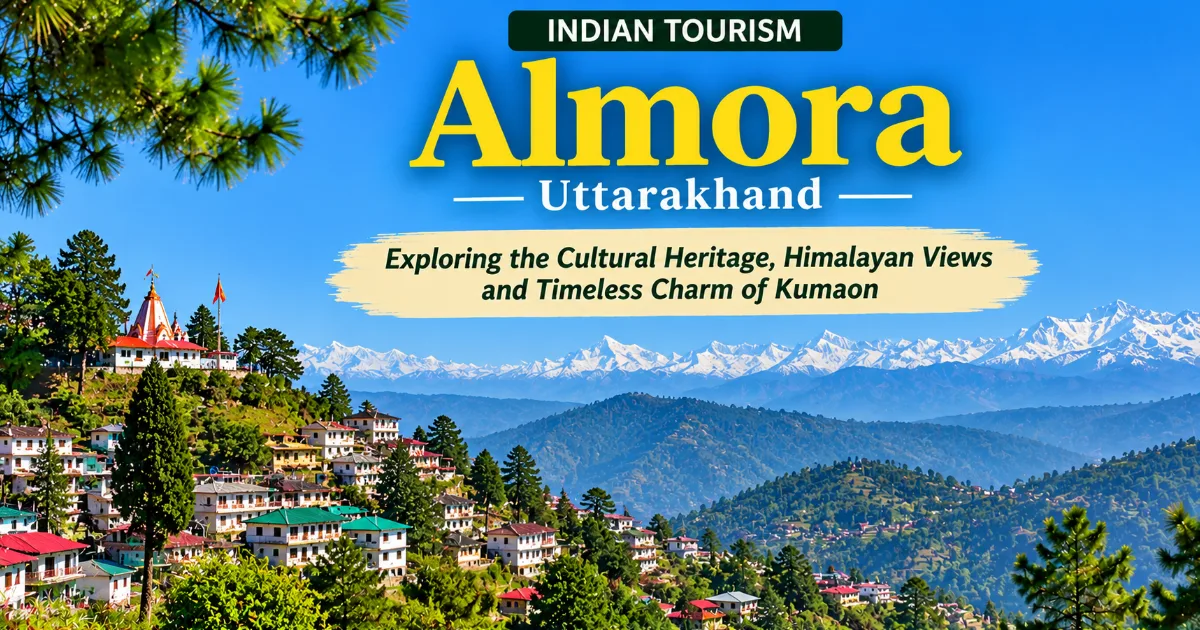
Known for its cultural identity, traditional markets, temples and mountain views, the historic hill town of Almora makes a convenient base for travellers visiting Binsar.
Explore the local bazaar, try traditional Kumaoni food and learn about the region's history.
Jageshwar Dham
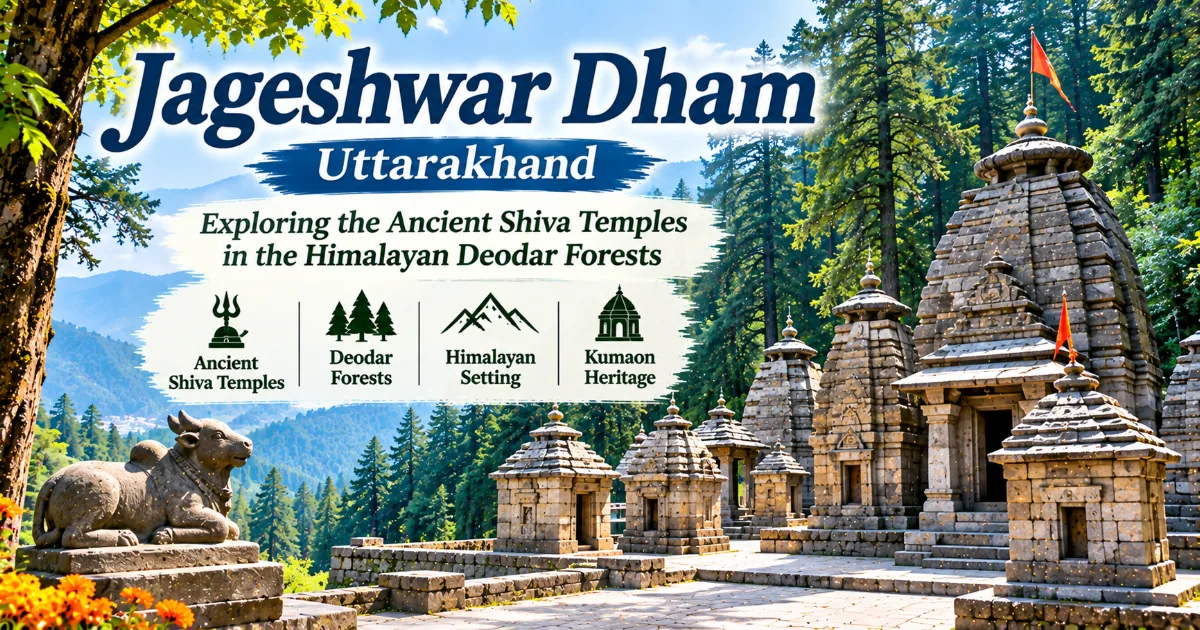
Deodar forests surround the temple complex at Jageshwar. Its ancient stone temples and religious importance make it one of the most significant heritage destinations in Kumaon.
Travellers interested in both nature and architecture can combine Binsar and Jageshwar in a longer itinerary.
Kasar Devi
Kasar Devi is known for its hilltop temple, scenic surroundings and peaceful atmosphere. People come here for spirituality, meditation and mountain views.
The area fits well into a wider Almora trip.
Katarmal Sun Temple
Katarmal Sun Temple is an important historical monument in the Almora district. Dedicated to the Sun God, it shows another side of the region's architectural heritage.
Visitors interested in ancient temples can add it to a broader Kumaon heritage route.
Food to Try Around Binsar
Food is a big part of exploring Kumaon. Traditional cuisine here reflects local farming, the climate and locally available ingredients.
Expect dishes made with lentils, grains, seasonal vegetables and regional spices. Some are closely tied to the rural communities of the Kumaon hills.
Bhatt Ki Churkani
Bhatt ki churkani is a traditional Kumaoni dish made with black soybeans. It is generally cooked with spices and served with rice or other accompaniments.
Aloo Ke Gutke
Aloo ke gutke is a popular potato preparation made with local spices, commonly eaten as a snack or side dish.
Mandua Roti
Made from finger millet flour, mandua roti is an important traditional food in several parts of Uttarakhand. It is often served with vegetables or lentils.
Kumaoni Raita
Kumaoni raita is a regional preparation that can include cucumber and mustard-based seasoning, a refreshing side to traditional meals.
Bal Mithai
Bal mithai is a famous sweet associated with Almora. Look for it in local shops as you travel through the region.
Food inside the sanctuary area may be limited. Ask your accommodation about meal arrangements, and carry suitable snacks for longer walks.
Accommodation Options Around Binsar
Options around Binsar include forest retreats, guesthouses, small hotels and nature-oriented stays in the wider area. Facilities vary by location and season.
Staying close to the sanctuary puts you in the forest and lets you reach walking routes early in the morning. Almora, on the other hand, has a wider range of accommodation, restaurants and transport.
Before booking, check the distance from the sanctuary entrance, road access, meal arrangements and the availability of essential services.
Ask, too, whether a property follows responsible environmental practices. Waste management, water use and respect for the surrounding forest all matter in a protected area.
Rooms can be hard to find during peak holiday periods. Book ahead, particularly if you are travelling with family or on a fixed itinerary.
Photography Tips for Binsar
For nature and landscape photography, Binsar is an excellent choice. Tree canopies, forest trails, flowering plants and wildlife habitats all make good subjects.
Weather and light decide the best conditions. Early morning brings soft sunlight and active birds, while later in the day the forest shows changing patterns of light and shadow.
Panoramic shots work particularly well at Zero Point when visibility is clear. Use a wide-angle lens for the mountain range and a telephoto lens for distant details.
Bird photographers should carry binoculars or suitable camera equipment and keep a respectful distance from wildlife. Never approach nests, chase birds or use methods that disturb animals.
Fog and mist make for atmospheric photographs, especially in cooler months and when the weather is changing. Slippery trails call for care, and unsafe viewpoints are best avoided.
Always follow sanctuary rules. No photograph is worth interfering with conservation work or the natural behaviour of wildlife.
Binsar for Families
Families who enjoy nature and educational travel can get a lot from Binsar. Children can learn about Himalayan forests, wildlife habitats, bird diversity and why protected areas matter.
Use the visit to explain how forests support water, soil, climate and biodiversity. Encourage children to identify different trees, listen to bird calls and observe their surroundings without disturbing anything.
Plan around the age and physical ability of your children. Walks to viewpoints need comfortable footwear and enough time, and younger children should stay under close supervision, especially on uneven trails.
Keep children away from wildlife and do not let them feed animals. Carry enough water, snacks and warm clothing for the season.
Families looking for entertainment facilities and shopping streets may find Binsar quieter than conventional hill stations. What it offers instead is outdoor learning, scenery and time in nature.
Binsar for Birdwatchers and Nature Researchers
Birdwatchers, photographers and people interested in ecological research all have reason to come here. Varied forest habitats support different bird communities and show how vegetation and wildlife depend on each other.
Species identification, feeding behaviour, calls and seasonal movement can all be studied. You can also see how different species use different layers of the forest.
Nature researchers may be interested in the role of oak forests, the ecological functions of broadleaf woodland and the pressures on Himalayan habitats.
Students of biodiversity, conservation biology, environmental science and geography can use the sanctuary as an outdoor classroom.
Serious observation or research requires the relevant permissions. Protected areas may have specific rules on research activity, equipment and access.
Responsible Tourism and Forest Conservation
Responsible tourism is what keeps Binsar's ecological value intact. The sanctuary protects a sensitive Himalayan forest ecosystem, and how visitors behave affects its condition.
First, do not disturb wildlife. Never feed, approach or chase animals for photographs; stay quiet and follow the guidance of forest staff.
Waste management matters just as much. Carry reusable bottles where possible and take all non-biodegradable waste back to designated disposal points. Leave no plastic packaging, food waste or other litter along trails.
Keep to permitted routes and avoid damaging vegetation. Do not collect flowers, plants, seeds, wood or other natural materials from the sanctuary.
Keep noise to a minimum. Loud music and unnecessary vehicle horns disturb wildlife and spoil the experience for others.
Fire safety deserves special attention. Forest fires can cause extensive ecological damage, particularly in dry periods, so strictly follow restrictions on smoking, cooking and open flames.
Supporting local communities is part of responsible travel too. Stay in locally operated accommodation, buy regional products and choose local services where appropriate.
In the long run, tourism at Binsar will only succeed if visitor access stays in balance with conservation.
Practical Travel Tips Before Visiting
Plan the journey in advance and confirm current sanctuary timings, entry fees and vehicle regulations. Since these details may change, check with the relevant authorities before travelling.
Pack comfortable walking shoes, drinking water, basic medicines and weather-appropriate clothing. Inside the forest it can be cooler than in nearby towns, particularly in the morning and evening.
Keep some cash, because digital payment may not be accepted everywhere. Mobile connectivity also varies within forested areas.
Birdwatchers should bring binoculars and a field guide. Keep voices low and be patient.
Accommodation providers do not all offer the same facilities. Before booking, check what is included: meals, transport, electricity, heating and anything else you need.
Visitors with mobility limitations should check the walking distance and terrain of planned routes before departure. Some sections may be difficult for anyone who cannot walk comfortably on uneven ground.
Don't try to rush between several destinations in one day. Mountain roads take time, and the weather can change quickly.
Why Binsar Is an Ideal Destination for Slow Travel
Slow travel means understanding a place rather than ticking off as many attractions as possible. Binsar suits this approach well, because its best experiences take time and attention.
Walking in the forest means more when you stop to notice different trees, listen to birds and watch the light change. At a viewpoint, spending time with the scale of the mountains stays with you longer than a quick photograph.
Staying near the sanctuary for a night or two lets you see the forest at different times of day. Morning sounds, changing weather and evening quiet each give a different impression of the same place.
Slow travel also invites more thoughtful contact with local communities. Eating regional food, learning about village life and staying with local accommodation providers all add to the journey.
People who spend much of their time in busy cities will find Binsar a chance to slow down and reconnect with the natural environment.
Why Binsar Deserves More Attention in Uttarakhand Tourism
Uttarakhand has several internationally recognised mountain destinations, but its protected forests matter just as much to the state's tourism identity. Binsar shows that a Himalayan trip does not always require high-altitude trekking or crowded hill stations.
Here you find biodiversity, forest trails, mountain viewpoints and opportunities for environmental learning in one place. It appeals to visitors who want to understand the natural heritage of Kumaon rather than take a conventional holiday.
Responsible promotion of Binsar can also support tourism in the Almora district. Local accommodation providers, guides, restaurants, transport operators and small businesses benefit when visitors spend more time in the region.
More tourism should not come at the cost of forest conservation, however. Infrastructure development, waste management and visitor movement must be planned around the ecological sensitivity of the sanctuary.
Nature tourism works best when visitors understand that the land is not an unlimited resource. Forest, wildlife and local communities all need protection and respect.
With care, Binsar could become an important destination for responsible nature tourism, birdwatching and environmental education while keeping its peaceful character.
Planning a Visit to Binsar
Binsar Wildlife Sanctuary is one of the most rewarding nature destinations in the Kumaon region of Uttarakhand. Oak and rhododendron forests, rich birdlife, diverse wildlife habitats and panoramic Himalayan views make it ideal for travellers who want to see the natural side of the state.
The famous Zero Point viewpoint draws most people, but the forest trails, seasonal vegetation and quiet atmosphere matter just as much, letting you take in the Himalayan environment at a slower pace. Depending on the weather, season and wildlife activity, no two visits are the same.
Visiting also shows why forest conservation matters. The sanctuary's ecosystem supports biodiversity, contributes to environmental stability and forms part of the natural heritage of the Kumaon Himalayas.
Travellers exploring Almora, Jageshwar and the wider Kumaon region should include Binsar in the itinerary, especially those who enjoy nature, photography, birdwatching and peaceful mountain surroundings. Come ready to walk through Himalayan forests, notice the variety of mountain wildlife and plants, and enjoy the quiet of Uttarakhand.