Discovering Barkot in the Western Garhwal Himalayas
Uttarakhand is home to mountain destinations that attract travellers for different reasons. Some are famous for their snow-covered peaks, others for their ancient temples, and many for their peaceful valleys, forested hills, rivers, and traditional villages. Beyond the best-known tourist centres, the state also offers smaller mountain towns where travellers can experience the natural beauty of the Himalayas while discovering the everyday life of communities that call these mountains home. Barkot is one such destination.
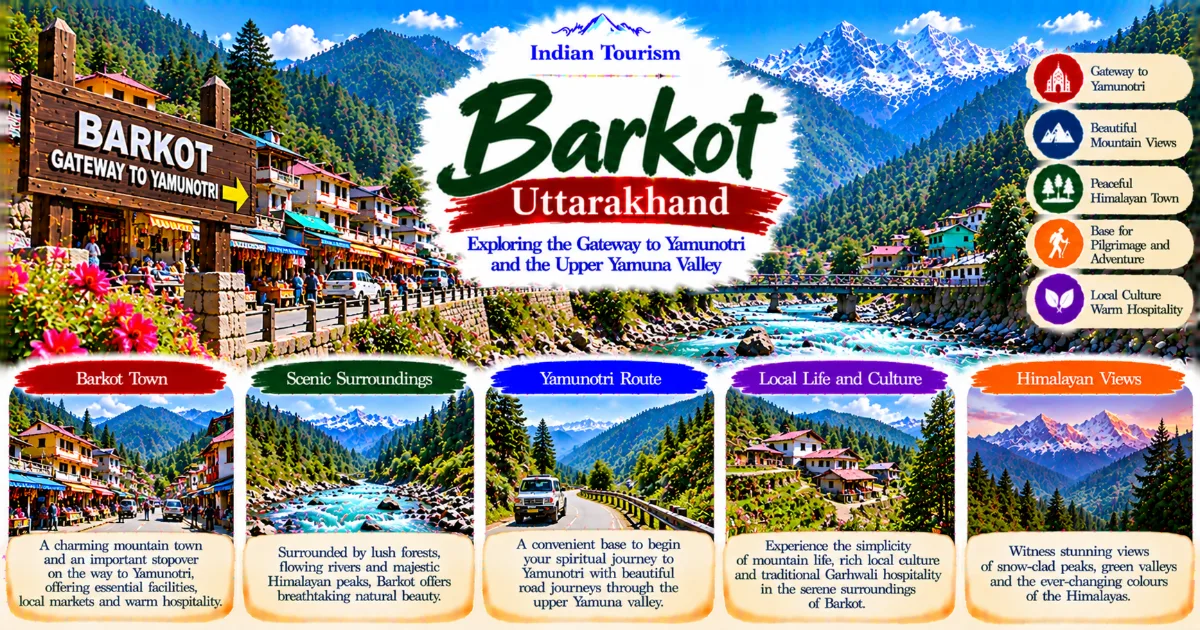
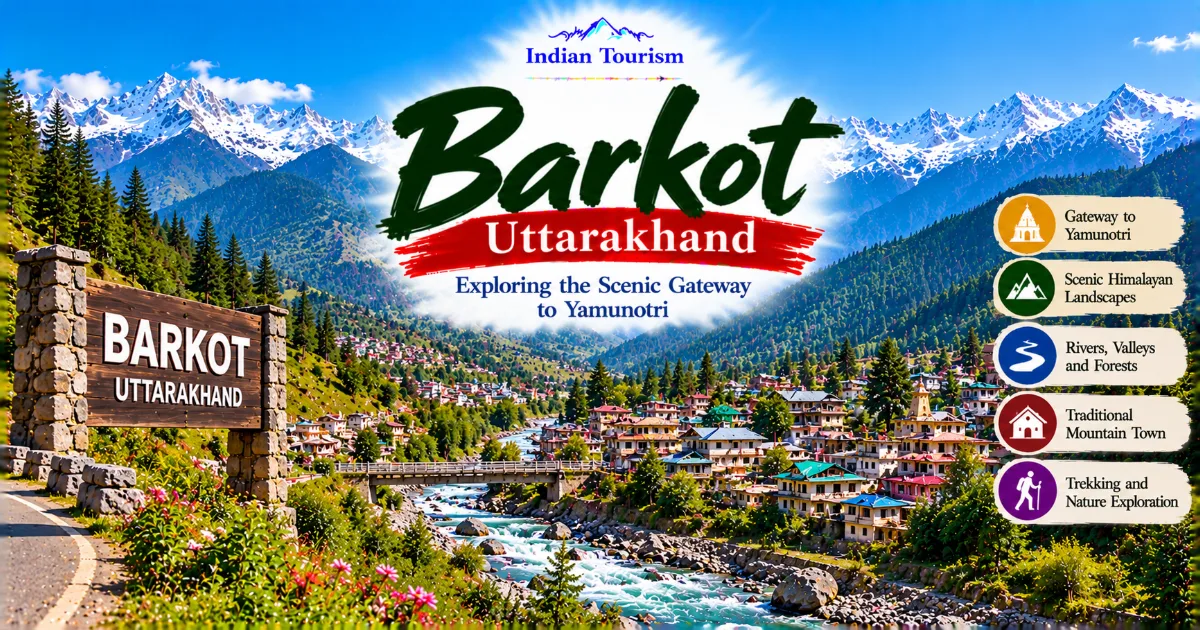
Situated in the Uttarkashi district of Uttarakhand, Barkot is an important mountain town in the western Garhwal Himalayas. It lies in the broader Yamuna valley region and serves as a convenient base for travellers visiting Yamunotri, one of the four sacred pilgrimage destinations traditionally associated with the Char Dham circuit. Its surroundings include green mountain slopes, river valleys, agricultural terraces, traditional settlements, and distant Himalayan landscapes that change with the seasons.
For many visitors, Barkot is a stopping point on the journey towards Yamunotri. However, looking at the town only as a transit destination means overlooking much of its appeal. Barkot offers an opportunity to experience a quieter side of Uttarakhand, where travel is shaped by winding mountain roads, changing weather, local markets, village life, and the relationship between people and the surrounding landscape.
The town is particularly attractive to travellers who want to explore the Yamuna valley without staying exclusively in the busiest pilgrimage centres. Its location makes it useful for planning visits to nearby settlements, scenic viewpoints, orchards, and other destinations in the western Garhwal region. Depending on the season and road conditions, travellers can also use Barkot as a base for exploring parts of the wider Uttarkashi district.
Continue Reading
Barkot is not a destination defined by a single monument or one dramatic viewpoint. Its appeal comes from the combination of mountain scenery, regional culture, religious travel, and its role in connecting different parts of Uttarakhand. The surrounding landscape encourages visitors to slow down, appreciate the journey, and understand the region beyond the usual tourist checklist.
Whether you are planning a pilgrimage to Yamunotri, a road journey through the Himalayas, a family holiday, or a broader exploration of Uttarakhand, Barkot deserves consideration as more than just a place to spend the night.
Where Is Barkot Located?
Barkot is located in Uttarkashi district in the state of Uttarakhand, northern India. The town lies in the western part of the Garhwal Himalayas, within a mountainous region shaped by rivers, steep slopes, forests, and agricultural settlements.
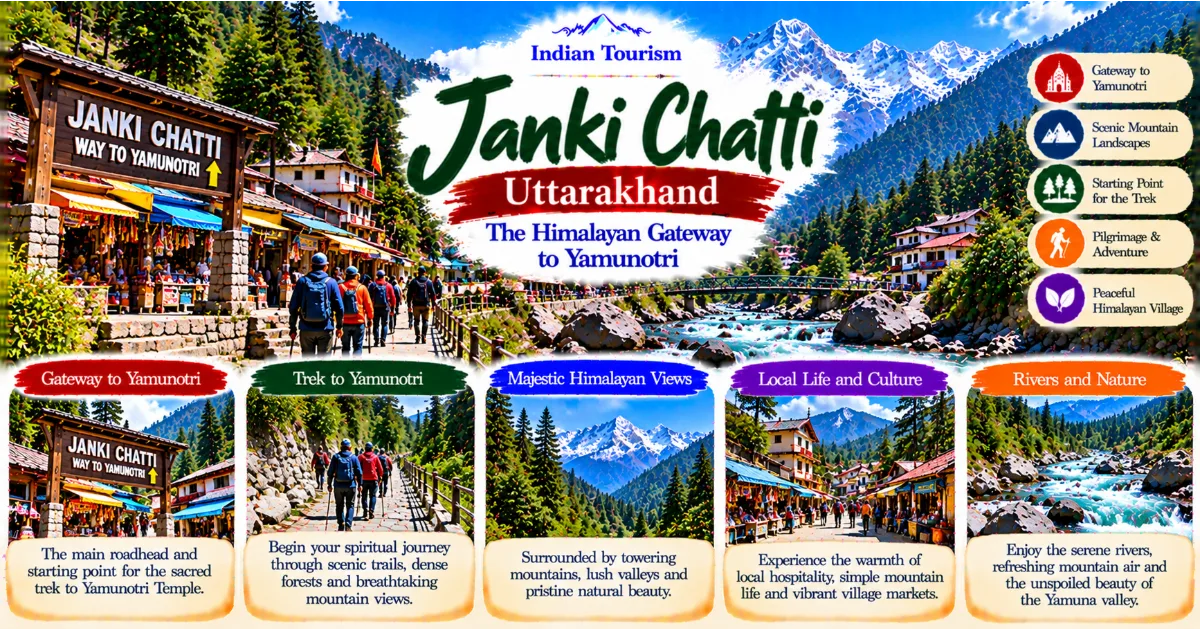
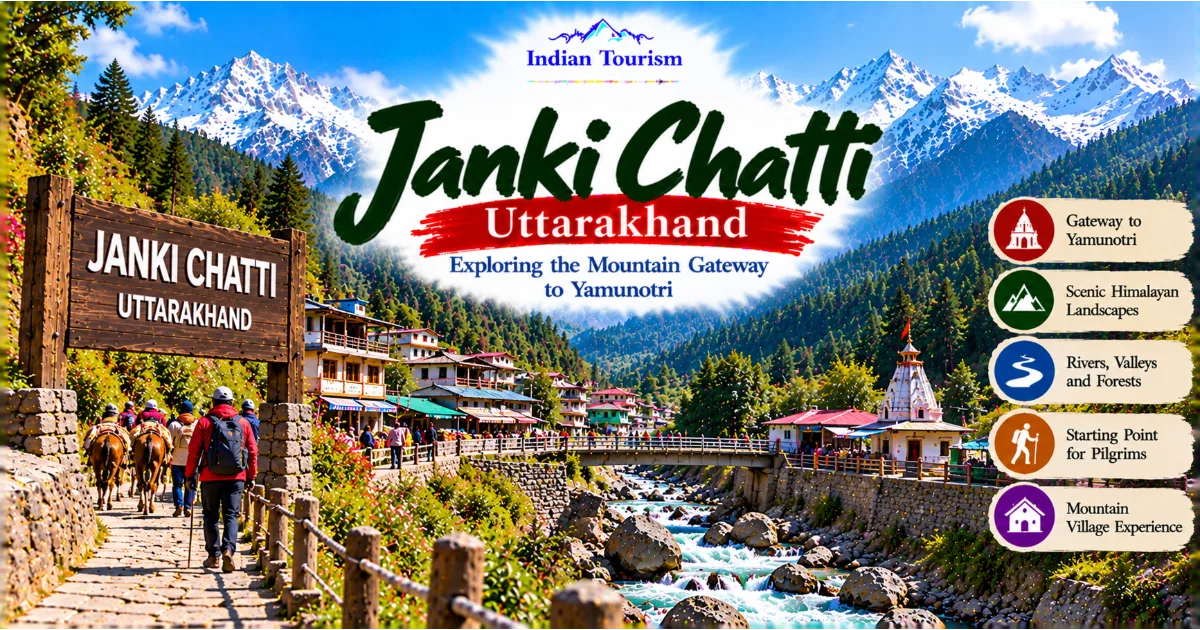
Its geographical position makes it an important stop for travellers heading towards Yamunotri. The route connects Barkot with the Hanuman Chatti and Janki Chatti area, from where pilgrims and trekkers continue towards the Yamunotri temple on foot or through other locally available arrangements permitted by the prevailing rules and conditions.
The surrounding terrain is characteristic of the middle Himalayan region. Roads wind through hillsides and valleys, while settlements occupy comparatively accessible slopes and areas suitable for agriculture. Rivers and streams descend through the landscape, supporting vegetation and providing water to communities along their courses.
Barkot is also connected by road to other parts of Uttarakhand, including routes towards Uttarkashi and the Dehradun region. The exact travel time depends on the starting point, traffic, weather, road maintenance, and seasonal restrictions. Travellers should avoid treating mountain journeys as fixed-duration transfers because road conditions can change unexpectedly.
The journey to Barkot is part of the experience. As vehicles move away from the larger urban centres, the scenery gradually becomes more mountainous. Roads follow the contours of the hills, villages appear along the slopes, and views open towards the surrounding valleys.
For visitors who enjoy road trips, these transitions are one of the most memorable aspects of travelling through Uttarakhand.
Why Barkot Is Worth Visiting
A Peaceful Mountain Base
One of Barkot's main advantages is its position as a practical base for exploring the Yamunotri region. Travellers can stay in the town before continuing towards the pilgrimage route, allowing them to organise transport, purchase essential supplies, and prepare for the next stage of the journey.
Compared with staying only at a major pilgrimage destination during its busiest period, Barkot can provide a different atmosphere. The town has the character of a working mountain settlement, with local shops, accommodation, small eateries, transport services, and everyday activity connected to the surrounding villages.
It is important to remember that Barkot also experiences busy periods, particularly during the Yamunotri pilgrimage season. Accommodation availability and traffic can change significantly during these times. Booking in advance is advisable when travelling during major pilgrimage dates or public holidays.
Outside the busiest periods, the town and its surroundings can offer a more relaxed introduction to the western Garhwal Himalayas.
Beautiful Mountain Landscapes
Barkot is surrounded by the rolling and steep slopes of the Himalayan foothills and middle mountain region. The landscape includes forested ridges, agricultural terraces, small settlements, and valleys that change colour with the seasons.
On clear days, the surrounding hills provide an attractive setting for photography and quiet observation. Morning light can illuminate the slopes, while evening light creates shadows across the valleys. Depending on weather and the precise location, distant higher mountain features may also become visible.
The region is particularly appealing to travellers who enjoy landscapes that feel lived in rather than completely remote. Farmland, houses, roads, forests, and rivers exist alongside one another, revealing how people have adapted to mountain geography.
Rain and cloud can transform the scenery dramatically. Hills that appear sharply defined on a clear morning may disappear behind mist later in the day. During the monsoon, vegetation becomes lush, although heavy rain can also make roads and trails more difficult to navigate.
Barkot's scenery is therefore best appreciated with flexibility. Instead of expecting every day to deliver uninterrupted mountain views, allow time to enjoy the landscape as conditions change.
A Gateway to the Yamuna Valley
The Yamuna River is one of the major geographical and cultural features of northern India. Its Himalayan origins and the landscapes surrounding its upper reaches are closely associated with the Yamunotri region.
Barkot's location makes it useful for travellers interested in understanding this landscape. The surrounding valley system reveals how water flows from the mountains through steep terrain, supporting forests, farms, settlements, and communities along the river's course.
The river and its tributaries also influence road construction, agricultural activity, and settlement patterns. Mountain communities must adapt to steep slopes, limited flat land, seasonal rainfall, and the risks associated with changing water levels.
Visitors can gain a deeper appreciation of the region by observing these connections. A mountain road is not simply a route between two destinations. It follows a landscape shaped by geology, rivers, climate, and human adaptation.
A Blend of Pilgrimage and Nature
Barkot is especially useful for travellers who want to combine religious travel with an appreciation of the natural environment.
Yamunotri attracts pilgrims who come to honour the goddess Yamuna and visit the temple associated with the sacred river. The surrounding mountains, forests, and streams contribute to the spiritual atmosphere of the journey.
At the same time, the region offers experiences for visitors who are interested in photography, village life, mountain roads, and Himalayan landscapes.
This combination makes Barkot suitable for different kinds of travellers. Some may arrive with a clearly defined pilgrimage itinerary, while others may want to explore the area more broadly. The town provides a practical connection between these interests.
Best Time to Visit Barkot
Spring: March to April
Spring is a pleasant time to explore the lower and middle elevations around Barkot, although temperatures can vary according to altitude and weather.
As winter gradually gives way to warmer conditions, the landscape begins to change. Vegetation becomes greener, agricultural activity resumes in many areas, and the surrounding hills can appear especially fresh.
Spring can be a good period for travellers who prefer to explore the region before the busiest part of the pilgrimage season. However, the timing of local activities and the opening of particular routes can vary.
Travellers planning to visit Yamunotri should check the official temple opening arrangements for the relevant year. The pilgrimage season does not begin on exactly the same Gregorian calendar date every year.
Early mornings and evenings may still be cold, so warm clothing remains useful. Mountain weather can change rapidly, and travellers should carry suitable protection against rain and wind.
Summer: May to June
Summer is one of the busiest periods for travel through Barkot because many pilgrims visit the Yamunotri region during the Char Dham season.
The weather in Barkot is generally more moderate than in the hotter plains, although daytime temperatures can still rise during sunny conditions. The surrounding hills and valleys provide a welcome change for travellers seeking relief from the heat of northern Indian cities.
This period is suitable for visitors who want to combine pilgrimage with sightseeing in the region. Roadside viewpoints, local markets, and the mountain landscape can all become part of the journey.
However, the increase in visitors means that accommodation, transport, and road access may be under pressure. Travellers should make reservations in advance and allow extra time for delays.
The journey towards Janki Chatti and the Yamunotri trekking route may become particularly busy during peak pilgrimage dates. Starting early and following local instructions can make the experience more manageable.
Monsoon: July to September
The monsoon brings heavy rainfall to many parts of Uttarakhand. Around Barkot, rain can intensify the green colour of the landscape, fill streams, and create dramatic cloud formations across the mountains.
However, this season also presents substantial travel challenges. Landslides, falling rocks, road damage, poor visibility, and delays can affect mountain routes. Conditions may change quickly, and a road that is open in the morning may face disruption later in the day.
Travellers should carefully consider whether a monsoon visit is necessary. If travelling during this period, check weather forecasts, road advisories, and local instructions before setting out.
Do not attempt to cross flooded roads or streams, and avoid stopping beneath unstable slopes where falling rocks may be a risk. Flexibility is essential because delays may affect accommodation and onward travel.
The monsoon can be visually beautiful, but it is not automatically the best season for a relaxed road trip through the Himalayas.
Autumn: October to November
Autumn can offer a rewarding travel experience around Barkot. Following the main monsoon period, clearer conditions may provide better visibility across the valleys and hills.
The weather generally becomes cooler, particularly during mornings and evenings. The surrounding landscape may display a mixture of green vegetation, agricultural colours, and the changing tones of the season.
For travellers who prefer a quieter atmosphere, the period after the main pilgrimage rush can be attractive. However, the opening dates of temples, availability of accommodation, and seasonal transport arrangements should always be checked before booking.
Temperatures can drop considerably at night, especially when the weather turns cold. Warm layers are advisable, and travellers should prepare for conditions that may differ from those experienced in the daytime.
Winter: December to February
Winter brings colder weather to Barkot and the surrounding mountains. Higher areas may experience snowfall, while lower settlements can have cold mornings and evenings.
The town may offer a peaceful atmosphere during this season, but it is not the ideal period for every kind of traveller. Some roads and routes can be affected by snowfall, ice, or weather-related disruption.
The Yamunotri temple has a seasonal pilgrimage schedule and is generally closed to regular pilgrimage during winter, with worship arrangements shifting according to established local traditions. Visitors should verify the current arrangements rather than assume the temple is accessible throughout the year.
Travellers visiting Barkot in winter should confirm road conditions, check accommodation availability, and carry appropriate cold-weather clothing.
Top Things to Do in and Around Barkot
Explore the Local Town
One of the simplest ways to experience Barkot is to spend some time exploring the town itself.
Walk through the local market, observe the daily activity, and discover the small shops that serve residents, pilgrims, and travellers. The town offers an opportunity to see how a Himalayan settlement functions beyond its role in tourism.
Local markets may offer everyday goods, packaged snacks, seasonal produce, basic trekking supplies, and other essentials. The range of products varies according to the season and local demand.
Travellers should not expect a large shopping district or extensive entertainment facilities. Barkot's appeal lies in its practical mountain-town character rather than a sophisticated urban tourism scene.
Take time to enjoy a simple meal, speak respectfully with local shopkeepers, and observe the rhythm of daily life. Small experiences can sometimes provide a more meaningful understanding of a destination than a hurried visit to a famous viewpoint.
Visit Yamunotri
For many visitors, Yamunotri is the principal reason for staying in Barkot.
Yamunotri is one of the four pilgrimage destinations associated with the Char Dham tradition in Uttarakhand. The temple is dedicated to the goddess Yamuna and occupies a mountainous setting connected with the river's sacred origins.
The journey from Barkot generally continues by road towards the Janki Chatti area, from where pilgrims proceed on the established route to the temple. The walking distance and travel arrangements should be confirmed locally because access conditions and permitted transport options may change.
The pilgrimage requires preparation. The route involves elevation gain, and weather conditions can shift quickly. Comfortable walking shoes, water, suitable clothing, and enough time to complete the journey are important.
Travellers should follow local instructions, respect religious customs, and avoid littering along the route.
Even for visitors who are not undertaking the journey for religious reasons, the surrounding mountain landscape can offer insight into the relationship between spirituality and geography in Uttarakhand.
Enjoy the Mountain Road Journey
The roads around Barkot are part of the destination's appeal. Winding through hills and valleys, they reveal changing views of forests, settlements, agricultural terraces, and mountain ridges.
A road journey can be particularly enjoyable when there is enough time to travel without rushing. Safe roadside stops may provide opportunities for photography and quiet observation.
However, mountain roads demand attention. Drivers should avoid stopping at blind corners, narrow stretches, or locations where other vehicles cannot pass safely. Travellers should also avoid leaning over unprotected edges for photographs.
During the monsoon, landslides and falling rocks can create hazards. In winter, frost and snow may affect road conditions at higher elevations.
The safest approach is to use experienced local drivers who understand the road and to follow official restrictions when routes are affected by weather.
Discover Nearby Villages
The wider Barkot region includes small settlements that reflect the agricultural and cultural traditions of the Garhwal Himalayas.
Village landscapes may feature terraced fields, traditional houses, livestock, orchards, and narrow paths connecting homes with agricultural land. The arrangement of these settlements often reflects the practical challenges of living on steep mountain slopes.
Visitors interested in local culture should approach village exploration with respect. Ask permission before photographing people or private property, and avoid entering homes or agricultural areas without an invitation.
Buying local products or using legitimate local services can help support the communities that contribute to the region's tourism economy.
Village visits should not be treated as opportunities to observe residents without their consent. They are living places where people work, study, raise families, and carry out everyday responsibilities.
Experience the Changing Seasons
Barkot's surroundings offer different experiences throughout the year.
Spring brings fresh vegetation and changing agricultural activity. Summer is associated with the busiest pilgrimage movement and lively roads. The monsoon creates lush hills and flowing streams, while autumn may bring clearer views and cooler weather. Winter introduces a quieter atmosphere and colder mountain conditions.
These changes make repeat visits interesting for travellers who want to understand the region more deeply.
The best seasonal experience depends on individual preferences. Visitors seeking pilgrimage activity may choose the summer period, while those prioritising a quieter road trip may prefer dates outside major travel peaks, provided the routes and facilities they need are operating.
Exploring the Wider Yamuna Valley
Barkot's geographical position makes it useful for discovering more of the Yamuna valley and the surrounding western Garhwal region.
Hanuman Chatti
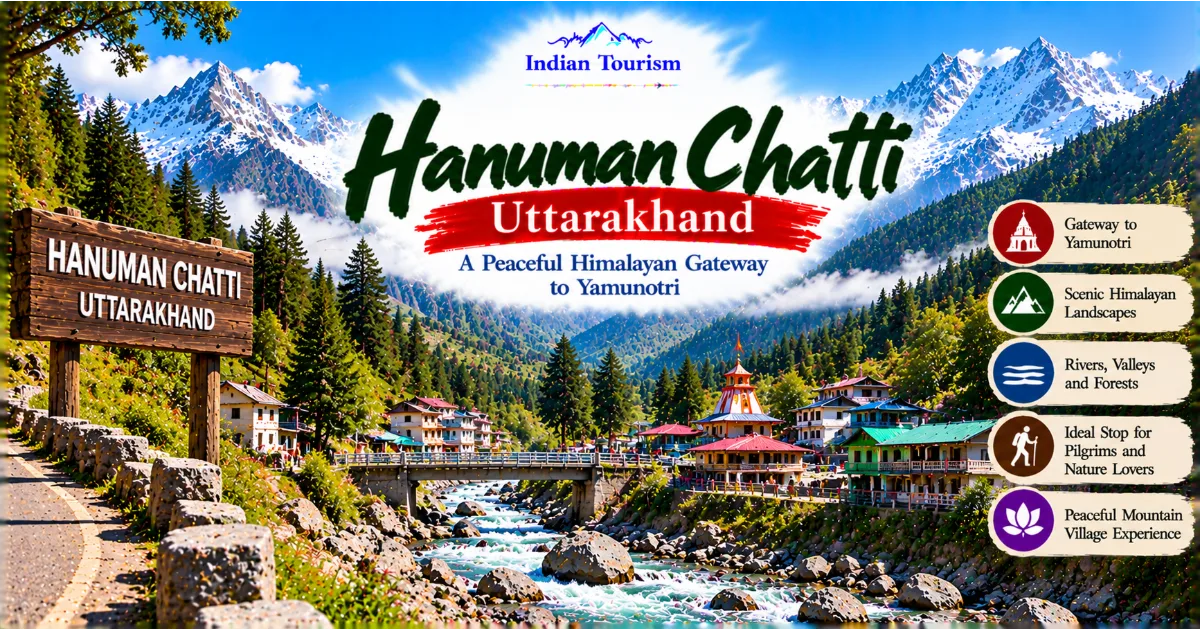
Hanuman Chatti is associated with the route towards Yamunotri and forms an important point in the broader pilgrimage landscape. Its mountain setting provides a glimpse of the terrain that visitors encounter as they move closer to the upper reaches of the valley.
The area can serve as a useful stopping point during travel planning, although the precise arrangements depend on road access, the itinerary, and local conditions.
Travellers should verify whether a particular stop is practical on their intended travel date. Weather, traffic, and pilgrimage arrangements may affect access.
Janki Chatti
Janki Chatti is a key access point for the established pilgrimage route to Yamunotri. It is commonly used by visitors who continue on foot towards the temple.
The settlement becomes busy during the main pilgrimage season, when pilgrims gather to prepare for the onward journey.
Visitors should allow adequate time for the route, take weather conditions seriously, and avoid assuming that the walk will be easy simply because transport has brought them close to the trailhead.
The elevation gain, weather, and individual fitness level can all affect the experience.
Uttarkashi
Uttarkashi is another important destination in the wider district and offers a different experience from Barkot. It has a more established town centre and serves as a base for travellers exploring parts of the Bhagirathi valley and other Himalayan routes.
The journey between Barkot and Uttarkashi passes through mountain landscapes and settlements, although travel times can vary according to road conditions.
Visitors planning to explore both areas should consider the overall route carefully rather than treating them as immediately adjacent destinations. Allow enough time for driving, stops, and possible delays.
Other Mountain Destinations
The wider Uttarkashi district contains a range of destinations associated with trekking, pilgrimage, forests, rivers, and high Himalayan scenery.
Some routes are suitable for general travellers, while others require specialist preparation and experienced guides. Their accessibility can vary significantly according to season.
Before adding a remote trek or high-altitude excursion to a Barkot itinerary, confirm the distance, expected walking time, altitude, required permits, and current safety conditions.
A carefully planned journey is generally more rewarding than trying to visit too many places within a limited period.
Local Culture and Traditions
The cultural identity of the Barkot region is connected with the broader traditions of Garhwal. Religious practices, agricultural livelihoods, seasonal travel, local festivals, and relationships with the surrounding landscape all contribute to the area's character.
Himalayan settlements have historically depended on local knowledge to manage farming, water, forests, and travel through difficult terrain. Communities have adapted their homes, agricultural practices, and daily routines to the realities of mountain life.
Religion also plays an important role in the wider region. The Yamunotri pilgrimage attracts visitors from different parts of India, creating a seasonal flow of people through towns and villages along the route.
For travellers, the best way to understand local culture is through respectful observation and genuine interaction. Local food, market visits, conversations with service providers, and an appreciation of traditional building styles can reveal aspects of daily life that are not always visible through conventional sightseeing.
The experience should remain respectful and unobtrusive. Traditions vary between communities, and visitors should avoid making broad assumptions based on one encounter.
Food to Try in Barkot
Food is an important part of travel, and Barkot offers opportunities to experience simple meals suited to the needs of residents and travellers moving through the mountains.
Local eateries and accommodation providers may serve familiar North Indian dishes alongside regional preparations. Availability depends on the establishment, season, and demand.
Travellers interested in Garhwali food can ask about traditional dishes prepared with locally available ingredients. Regional cooking often reflects the agricultural conditions of the mountains, where seasonal produce, grains, pulses, and locally sourced ingredients have historically played important roles.
Aloo ke gutke, a preparation of potatoes with spices, is associated with Uttarakhand's regional food traditions. Mandua, also known as finger millet, is used in traditional preparations in different parts of the state. Local lentil dishes and seasonal vegetables may also be available.
Not every restaurant in Barkot will offer a broad selection of traditional Garhwali food, so travellers may need to ask accommodation providers or local residents for recommendations.
During pilgrimage season, eateries may become busy. Travellers with dietary restrictions should communicate their requirements clearly and carry suitable snacks for long road journeys.
Accommodation in Barkot
Barkot offers accommodation options that serve pilgrims, families, road travellers, and visitors exploring the Yamunotri region.
Depending on the season, travellers may find guesthouses, budget hotels, small lodges, and other basic accommodation facilities. The range of available services varies, so expectations should match the property selected.
Visitors should confirm the essentials before booking. These include room availability, heating arrangements if needed, hot water, meal options, parking, road access, and cancellation policies.
During the main Char Dham pilgrimage season, accommodation can fill quickly. Booking in advance is advisable, particularly for families, larger groups, and travellers arriving during public holidays.
For visitors seeking a quieter experience, staying outside the busiest dates may be preferable, provided the intended destinations and services remain accessible.
Travellers should also remember that Barkot is a mountain town. Facilities may differ from those available in large cities, and weather-related disruptions can affect transport and supplies.
A flexible itinerary and realistic expectations can make the stay more comfortable.
How to Reach Barkot
By Road
Road travel is the most common way to reach Barkot.
Travellers coming from Dehradun can use the road network towards the western Garhwal region. The route generally passes through mountainous terrain, with journey times influenced by traffic, weather, roadworks, and local restrictions.
Visitors travelling from other parts of India may first reach Dehradun or another suitable transport hub before continuing by road.
Because mountain journeys can take longer than expected, it is wise to avoid scheduling tight connections. Travelling during daylight can also make navigation easier and provide better visibility of the road and surrounding terrain.
Use a reliable driver familiar with mountain roads, especially during the monsoon or winter.
By Train
Travellers arriving by train generally need to connect through a railway station serving the Dehradun or Haridwar region, depending on their itinerary.
From there, onward travel to Barkot is usually arranged by road. The most practical railway connection depends on the origin city, train schedules, and the final travel plan.
Confirm current train availability and allow enough time between arrival and onward road transport.
By Air
For visitors travelling from distant cities, the nearest practical airport depends on the chosen itinerary and available flights. Dehradun's Jolly Grant Airport is commonly used by travellers exploring parts of Uttarakhand, but onward road travel is still required to reach Barkot.
Flight schedules and road conditions should be checked together when planning the journey. A delayed flight may affect a prearranged transfer, and weather can also influence mountain travel.
Where possible, build flexibility into the arrival and departure schedule.
A Suggested Two-Day Barkot Itinerary
A short visit to Barkot can provide a useful introduction to the town and the surrounding landscape. The itinerary should be adapted according to the season, road conditions, and whether the primary purpose of the trip is pilgrimage or sightseeing.
Day One: Arrival and Local Exploration
Arrive in Barkot by road and check into your accommodation. Allow time to rest after the mountain journey, especially if you have travelled from a distant city.
In the afternoon, explore the local market and observe everyday life in the town. If conditions permit, enjoy a short drive to a safe viewpoint or nearby settlement, taking care not to disrupt local activity.
Spend the evening preparing for the next day's journey if you intend to visit Yamunotri. Confirm transport arrangements, check the weather forecast, and pack suitable clothing, water, and other essentials.
A relaxed first day can help reduce the pressure of trying to complete too much immediately after arrival.
Day Two: Yamunotri Region
Start early if you plan to visit Yamunotri, allowing sufficient time for the road journey towards Janki Chatti and the onward pilgrimage route.
The walking portion requires preparation. Wear suitable footwear, carry water, and follow local instructions. Conditions may change with altitude, so bring layers and rain protection.
After completing the visit, return according to the available transport arrangements. Avoid planning additional long-distance travel too tightly around the same day, as crowding, weather, or road delays may affect the schedule.
Travellers who are not visiting Yamunotri can use the day for a more relaxed exploration of the surrounding area, provided they choose accessible locations and confirm local conditions.
A Longer Three-Day Experience
Visitors with more time can enjoy a slower introduction to Barkot and its surrounding region.
On the first day, arrive and explore the town. Use the evening to learn about local transport, check weather conditions, and discuss possible excursions with reliable local providers.
On the second day, visit the Yamunotri region if it is open and accessible. Allow enough time for the journey, the walk, and the return.
On the third day, consider a scenic road excursion or travel onwards towards another destination in Uttarakhand. The choice should depend on the route, available daylight, and the time needed to reach the next overnight stop.
A longer stay provides more flexibility if weather disrupts the original plan. It also allows travellers to enjoy the mountain landscape without rushing between destinations.
For families and older travellers, a flexible schedule can be particularly helpful. The most suitable itinerary is one that reflects the abilities and interests of everyone in the group.
Photography Opportunities Around Barkot
Barkot and the surrounding Yamuna valley offer a variety of photography opportunities.
Mountain roads provide views across forested slopes and valleys. Local settlements reveal the relationship between homes, agricultural terraces, and the surrounding terrain. River landscapes and changing weather create opportunities for images that communicate the atmosphere of the region.
Early morning can provide soft light across the hills, while late afternoon may reveal contrasting shadows and colours. During the monsoon, clouds and mist create dramatic scenes, although visibility may be limited.
Travellers should always prioritise safety when taking photographs. Avoid standing in the road, climbing onto unstable rocks, or approaching unprotected edges for a better view.
Ask permission before photographing residents, especially in private or religious settings. A respectful approach helps ensure that photography does not interfere with daily life.
Even a simple photograph of a village path or a roadside market can communicate the character of Barkot more effectively than an image that focuses only on dramatic scenery.
Responsible Tourism in Barkot
Tourism provides income for many mountain communities, but it also creates responsibilities for visitors.
The Himalayan environment is sensitive to waste, erosion, water contamination, and poorly managed development. Travellers can help reduce these pressures through small but meaningful choices.
Carry reusable water bottles where practical and avoid leaving plastic packaging, tissues, or other rubbish behind. Use designated waste facilities and follow local instructions for disposal.
Respect rivers and streams by avoiding the disposal of food waste, soap, or other pollutants into water sources. Use toilets and sanitation facilities appropriately.
Support local businesses when possible. Choosing legitimate local accommodation, guides, drivers, and shops can help ensure that tourism income reaches the people who provide services.
Visitors should also respect religious sites, local customs, and private property. Ask before taking photographs and avoid disturbing residents or wildlife.
Mountain roads and trails require particular care. Follow road restrictions, listen to local advice, and never enter a closed area simply because it appears accessible.
Responsible travel helps preserve the qualities that make Barkot attractive: its mountain scenery, cultural landscape, and connection with the wider Himalayan region.
Practical Travel Tips
Before travelling to Barkot, confirm accommodation and transport arrangements, especially during the main pilgrimage season. Availability can change quickly when visitor numbers increase.
Check weather forecasts and road advisories before departure. The mountain environment can change rapidly, and landslides or heavy rainfall may affect access.
Carry warm clothing even during summer, as temperatures can fall in the evenings and conditions may differ between the town and higher elevations.
Bring any personal medicines you require and keep essential items accessible during road journeys. Travellers with medical concerns should seek appropriate professional advice before undertaking strenuous walking at altitude.
Keep some flexibility in the itinerary. Road delays and weather changes are common realities of Himalayan travel, not necessarily signs that a trip has gone wrong.
Finally, avoid trying to visit every nearby destination in a single day. The region is best experienced when there is enough time to appreciate its scenery, culture, and changing atmosphere.
Conclusion: Barkot, a Gateway to the Beauty of Uttarakhand
Barkot offers travellers a valuable introduction to the western Garhwal Himalayas. Its mountain setting, practical location, local markets, and connection with Yamunotri make it an important destination for both pilgrimage and broader exploration.
The town's appeal lies in its combination of everyday mountain life and access to a remarkable landscape. Forested slopes, river valleys, traditional settlements, and winding roads reveal the many ways in which people live within the Himalayan environment.
For pilgrims, Barkot can provide a convenient base before continuing towards Yamunotri. For families and road travellers, it offers a chance to experience the mountains at a manageable pace. For photographers and nature enthusiasts, the surrounding region presents opportunities to observe the changing colours, weather, and geography of Uttarakhand.
Barkot may not always receive the same attention as the state's most famous destinations, but it rewards travellers who look beyond the main attractions. Its value lies in the journey, the scenery, the local culture, and the connections between the valleys and settlements of the western Himalayas.
When planning a visit, choose the season carefully, respect local conditions, and leave enough time to enjoy the experience. Travel responsibly, support local communities, and remember that the mountains are both a beautiful destination and a living environment that deserves protection.
Barkot is more than a stop on the way to Yamunotri. It is an invitation to discover another side of Uttarakhand, where the journey itself becomes an essential part of the adventure.
#IndianTourism #UttarakhandTourism #Barkot #Yamunotri #GarhwalHimalayas #YamunaValley #ExploreUttarakhand #HimalayanTravel #MountainDestinations #ResponsibleTourism #IncredibleIndia #TravelIndia