Discovering the Quiet Beauty of Bhaba Valley
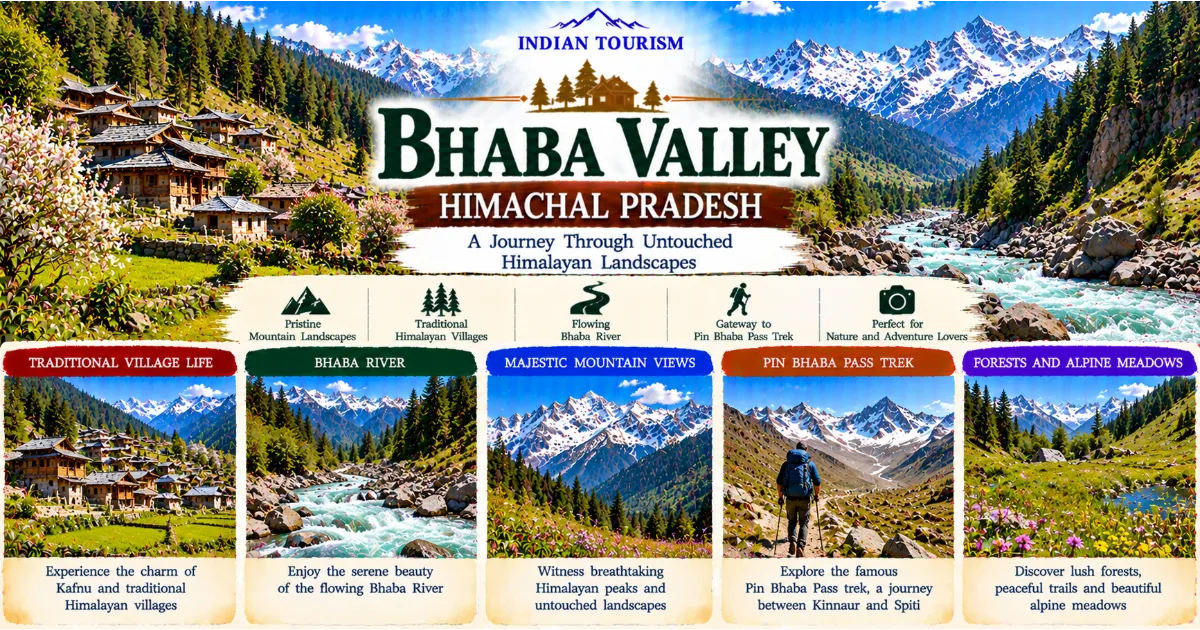
Himachal Pradesh is home to some of the most remarkable landscapes in the Indian Himalayas, from green mountain villages and apple orchards to high-altitude deserts and snow-covered passes. While destinations such as Shimla, Manali, and Spiti attract travellers from across the country, several valleys continue to preserve a quieter, more intimate relationship with nature. Bhaba Valley, located in the Kinnaur district of Himachal Pradesh, is one such destination. Known for its dramatic mountains, dense forests, traditional villages, flowing rivers, and trekking routes, the valley offers an experience that feels far removed from crowded tourist centres.
Bhaba Valley is particularly appealing to travellers who want to explore the Himalayas beyond familiar sightseeing circuits. The landscape changes gradually as visitors travel through the valley, beginning with cultivated fields, villages, and forested slopes before opening into wider mountain scenery. The Bhaba River flows through the region, shaping the valley and supporting the communities that have lived here for generations. High ridges, rocky slopes, alpine meadows, and snow-covered peaks create a striking natural setting.
The valley is also associated with the journey between the greener landscapes of Kinnaur and the rugged terrain of Spiti. The famous Pin Bhaba Pass trek connects the Bhaba Valley with the Pin Valley region, making the area especially interesting for experienced trekkers. However, the valley is not only for adventure seekers. Travellers who appreciate village life, mountain photography, quiet walks, and cultural discovery can also find meaningful experiences here.
Bhaba Valley is best approached as a destination for slow travel. Its greatest attractions are not necessarily large monuments or organised entertainment facilities. Instead, its appeal lies in the rhythm of the mountains, the architecture of its settlements, the changing colours of the landscape, and the opportunity to experience a less commercialised side of Himachal Pradesh.
Continue Reading
Where Is Bhaba Valley Located?
Bhaba Valley lies in the Kinnaur district of Himachal Pradesh, in the western Himalayan region of northern India. The valley is associated with the Bhaba River and the mountainous terrain around its upper reaches. The settlement of Kafnu is one of the principal access points for travellers visiting the valley and is widely known among trekking enthusiasts as the starting point for the Pin Bhaba Pass route.
Kinnaur itself is a geographically diverse district. Its landscapes include deep river valleys, terraced agricultural settlements, forests, orchards, and high mountain areas where vegetation becomes increasingly sparse with elevation. Bhaba Valley forms part of this varied environment, offering a landscape that combines the greenery of the lower mountains with the dramatic terrain of the higher Himalayas.
The journey into the valley is an important part of the experience. Roads wind through mountain slopes and follow the contours of the landscape, revealing changing views of rivers, villages, cliffs, and forests. Travel times can vary considerably because of road conditions, weather, construction, and seasonal restrictions. Visitors should avoid planning the journey around overly ambitious schedules and should allow sufficient time for unexpected delays.
Although Bhaba Valley is connected to the wider Kinnaur region, it has a distinct atmosphere. It feels quieter than many established tourist destinations, and visitors should expect fewer conventional facilities than they would find in major hill stations. Accommodation, transport, food supplies, and mobile connectivity can be limited in some areas. Preparing in advance helps travellers enjoy the landscape without placing unnecessary pressure on local communities or the environment.
The Natural Landscape of Bhaba Valley
Mountains, River Valleys, and Forested Slopes
The defining feature of Bhaba Valley is its dramatic mountain environment. Steep slopes rise above the river, while distant ridgelines create layers of depth across the horizon. Depending on the season and altitude, the landscape may display green vegetation, flowering meadows, dark forests, exposed rock, or snow-covered summits.
The Bhaba River is central to the character of the valley. Its water moves through a landscape shaped by glaciers, rainfall, snowmelt, and mountain erosion. Along the river, the terrain changes from narrow stretches enclosed by steep slopes to wider sections where settlements and cultivated land become possible. The sound of flowing water often accompanies the journey through the valley, creating a peaceful atmosphere that contrasts with the noise of busy urban life.
Forests add another dimension to the landscape. Depending on altitude and local conditions, visitors may encounter coniferous trees, including pine and other Himalayan species. Higher areas gradually transition into more open terrain, where the influence of altitude, wind, temperature, and limited growing seasons becomes increasingly visible.
The variety of these environments makes Bhaba Valley rewarding for travellers who enjoy observing landscapes rather than simply visiting individual attractions. A short walk can reveal changes in vegetation, soil, rock formations, and mountain views. These details are part of what makes the valley special.
A Landscape That Changes With Elevation
One of the most fascinating aspects of the Himalayas is the way the environment changes over relatively short distances. Bhaba Valley demonstrates this clearly. Lower areas may support agriculture and settlements, while higher slopes have shorter growing seasons and more exposed terrain. As travellers move towards the upper valley, the scenery becomes increasingly alpine and rugged.
These changes influence local livelihoods as well. Agricultural practices, grazing patterns, settlement locations, and seasonal movement are all shaped by altitude and weather. The mountains are not simply a backdrop for tourism. They determine how people travel, build homes, cultivate crops, and manage resources.
For photographers, the changing elevation creates opportunities to capture contrasting landscapes within a single journey. For nature enthusiasts, it offers a chance to observe the relationship between climate, vegetation, water, and human settlement. Visitors should remember that mountain ecosystems are sensitive, and even seemingly empty areas may support wildlife, fragile plants, and important water sources.
Kafnu: The Gateway to Bhaba Valley
Understanding the Village
Kafnu is closely associated with Bhaba Valley and is an important settlement for visitors entering the region. It is particularly familiar to trekking groups because of its connection with the Pin Bhaba Pass route. The village provides a useful introduction to the valley's rural character and mountain environment.
Rather than expecting a conventional tourist town, visitors should approach Kafnu as a living Himalayan settlement. Houses, agricultural land, local roads, and the surrounding mountains form part of everyday life here. The village is shaped by its environment, and the practical needs of residents remain more important than tourist expectations.
A respectful visit can offer insight into the relationship between mountain communities and their surroundings. Travellers may notice how homes are positioned in relation to slopes, how cultivated land follows the available terrain, and how local movement is influenced by the valley's geography. These observations can be more memorable than a hurried attempt to cover several places in a single day.
Visitors should arrange accommodation and meals in advance whenever possible, especially outside the busiest trekking periods. Facilities may be basic, and services can vary by season. Travellers should also avoid assuming that every household is available for homestays or that local residents can provide transport without prior arrangements.
Village Life and Cultural Respect
The villages of Kinnaur have developed cultural traditions shaped by geography, history, agriculture, trade, and interactions between neighbouring Himalayan regions. Architecture, clothing, food, festivals, and religious practices reflect this long relationship between communities and the mountains.
Bhaba Valley should be explored with sensitivity to these traditions. Visitors can learn a great deal by speaking politely with residents when they are available and willing to talk. Asking before photographing people, private homes, religious spaces, or community gatherings is important. Travellers should also respect restrictions around sacred sites and avoid treating local customs as performances arranged for visitors.
Mountain communities often depend on a combination of agriculture, animal husbandry, local employment, and seasonal economic activity. Tourism can provide additional income when visitors use local accommodation, hire authorised local guides, and purchase available regional products. Responsible travel helps ensure that tourism supports communities without overwhelming their resources or changing village life solely to satisfy outside expectations.
The Pin Bhaba Pass Trek
A Route Between Two Himalayan Worlds
The Pin Bhaba Pass trek is one of the most recognised adventure experiences associated with Bhaba Valley. The route links the Bhaba Valley side of Kinnaur with the Pin Valley region of Spiti. It is known for its dramatic changes in scenery, taking trekkers from relatively green mountain environments towards the more arid landscapes associated with the high-altitude cold desert.
This transition is one of the trek's greatest attractions. On the Kinnaur side, vegetation and forests may dominate portions of the route. As trekkers gain altitude and approach the pass, the terrain becomes more exposed and rugged. After crossing into the Pin Valley side, the landscape can appear markedly drier, with open slopes, sparse vegetation, and expansive views.
The journey illustrates how Himalayan geography can create striking differences between neighbouring regions. Mountain ranges influence rainfall patterns, while altitude and terrain affect vegetation and the availability of water. The contrast between the two sides of the pass is therefore not merely visual. It reflects the broader environmental diversity of the western Himalayas.
Who Should Attempt the Trek?
The Pin Bhaba Pass trek is generally better suited to people with previous trekking experience, good physical conditioning, and an understanding of high-altitude travel. It involves extended walking days, significant elevation changes, variable weather, and terrain that may be difficult to navigate in poor conditions. Snow, rain, strong winds, river crossings, and low temperatures can complicate the journey.
Beginners should not assume that enthusiasm alone is sufficient preparation. Before choosing this trek, travellers should assess their fitness, discuss their experience with a reputable trekking operator, and understand the demands of the route. Guided travel is strongly advisable for those unfamiliar with the region, and appropriate permits or local requirements should be confirmed before departure.
Acclimatisation is essential. Ascending too quickly can increase the risk of altitude-related illness, and symptoms should never be ignored. A responsible itinerary allows time for the body to adjust and includes a clear plan for descending or seeking help if a trekker becomes unwell.
The trek should only be attempted during a suitable seasonal window, as determined by current weather, snow conditions, and local guidance. Conditions vary from year to year, so a route that was accessible in one season may not be safe in another. Travellers should follow the advice of experienced local professionals rather than relying only on older travel accounts.
The Importance of Preparation
Preparation for a high-altitude trek begins well before reaching the valley. Cardiovascular fitness, leg strength, balance, and the ability to walk for several hours with a backpack are useful foundations. Training hikes on uneven terrain can help prepare the body for the demands of mountain trails.
Equipment should match the season and conditions. Sturdy trekking footwear, warm layers, waterproof outerwear, sun protection, a headlamp, a first-aid kit, and a suitable sleeping system may be necessary depending on the organised itinerary. Trekkers should also carry personal medication and enough drinking water or suitable water-treatment supplies.
The environmental impact of trekking must be taken seriously. All non-biodegradable waste should be carried out, and food packaging should never be left along trails or campsites. Campfires should be avoided unless explicitly permitted and safely managed by local authorities. Cutting vegetation, disturbing wildlife, and contaminating streams can damage the very environment that draws visitors to the region.
Best Time to Visit Bhaba Valley
Summer: A Season for Exploration
The summer months are generally the most practical period for exploring many parts of Bhaba Valley, although exact conditions depend on altitude and the year's weather. During this season, lower areas may become greener, village surroundings can be more accessible, and trekking routes may gradually open as snow conditions change.
Summer is suitable for travellers interested in village exploration, photography, short walks, and carefully planned trekking. The valley's vegetation and river scenery can be particularly appealing during this period. However, mountain weather remains unpredictable, and rainfall can cause landslides or road disruptions in parts of Himachal Pradesh.
Travellers should check road conditions and local advice shortly before departure. Even if the weather is pleasant in a nearby town, conditions in the upper valley may be significantly colder or more difficult. A flexible itinerary is preferable to a schedule that leaves no room for delays.
Monsoon: Beautiful but Unpredictable
The monsoon can bring intense greenery to parts of Himachal Pradesh, but it can also create serious travel challenges. Heavy rainfall may trigger landslides, rockfalls, road closures, and sudden changes in river conditions. Mountain roads can become hazardous, particularly where slopes are steep and drainage is poor.
Visitors planning a monsoon journey should monitor local weather and road advisories and be prepared to postpone travel. Trekking plans require particular caution because rainfall can reduce visibility, increase stream flow, and make trails slippery. Remote areas may become difficult to access when roads are blocked.
The possibility of beautiful scenery should never outweigh safety. Travellers should not attempt river crossings or continue along unsafe roads simply to maintain an itinerary. If local authorities or experienced guides advise against travel, their guidance should be followed.
Autumn: Clear Views and Cooler Days
Autumn can provide rewarding conditions for mountain photography and scenic travel. After the monsoon, periods of clearer weather may reveal impressive views of surrounding ridgelines. The air can feel crisp, and changing vegetation may add colour to the landscape.
Temperatures drop as the season progresses, particularly at night and in higher areas. Travellers should bring warm clothing and confirm accommodation arrangements before setting out. For trekking, the suitability of the route depends on snow conditions, weather forecasts, and the guidance of experienced local operators.
Winter: A Season for Experienced Travellers
Winter brings much colder conditions to the upper Himalayan regions. Snowfall, freezing temperatures, limited services, and road restrictions may make parts of Bhaba Valley difficult or impractical to visit. Travellers should not assume that the valley remains accessible simply because lower towns in Himachal Pradesh are open.
A winter journey requires careful planning, suitable equipment, reliable local information, and an honest assessment of experience. Independent travel into remote or snowbound areas can be dangerous. Visitors without the appropriate skills and equipment should choose a safer season.
How to Reach Bhaba Valley
Reaching the Region by Road
Road travel is the principal way most visitors approach Bhaba Valley. Travellers generally plan their journey through the wider Kinnaur region before continuing towards the valley and Kafnu. The route chosen will depend on the starting city, road conditions, transport availability, and current access restrictions.
The journey from larger towns can be long, and the final mountain roads may be narrow, winding, and vulnerable to weather-related disruptions. Travellers should avoid planning a late arrival in unfamiliar mountain areas. Reaching the destination during daylight provides better visibility and allows more time to respond to unexpected problems.
A private vehicle offers flexibility, but drivers must be comfortable with mountain roads and should avoid aggressive overtaking or stopping at unsafe viewpoints. Public transport may be available on portions of the wider route, but services can be infrequent and may not align with a traveller's preferred schedule. Local transport arrangements should be confirmed in advance.
Travel by Bus and Shared Transport
Travellers using public transport can investigate bus connections to towns and settlements in the Kinnaur region before arranging onward travel towards Bhaba Valley. Availability and schedules can change by season, road condition, and local operating requirements.
Shared vehicles may be used by residents and visitors on some routes, but they should not be treated as guaranteed services. If a journey depends on a particular connection, it is wise to verify it locally and keep additional time available. Travellers carrying trekking equipment should also consider storage space and the practicalities of transporting their luggage.
The Nearest Airport and Railway Options
There is no major commercial airport or railway station within Bhaba Valley itself. Travellers arriving from distant cities generally combine air or rail travel with a substantial road journey into Himachal Pradesh. The most suitable gateway depends on the overall itinerary, seasonal access, and available transport connections.
Before booking flights or trains, visitors should calculate the full journey rather than considering only the distance to the nearest major transport hub. Mountain travel can take considerably longer than expected because of road conditions and changes in elevation. An overnight stop along the route may make the journey safer and more comfortable.
Places and Experiences to Include in a Bhaba Valley Itinerary
Exploring Kafnu and Its Surroundings
Kafnu is a natural starting point for a visit focused on the valley. Travellers can spend time understanding the village setting, observing the surrounding mountain landscape, and taking short walks where local conditions permit. The experience is especially rewarding for those who prefer unhurried travel and are interested in the everyday life of Himalayan settlements.
Visitors should keep walks within their ability and avoid entering agricultural land or private property without permission. If a route is unfamiliar, asking a local guide about safe paths is sensible. Weather can change quickly, and even a short walk should be planned with suitable clothing, water, and enough daylight for the return journey.
Following the Bhaba River Landscape
The river is an important visual and geographical feature of the valley. Suitable viewpoints along accessible roads or established paths may provide opportunities to appreciate its course through the mountains. Photographers can focus on the relationship between water, rock, vegetation, and the built environment.
Rivers in the Himalayas can be deceptively powerful. Their flow may change with snowmelt, rainfall, and upstream conditions. Visitors should remain well away from unstable banks and avoid entering the water. A photograph is never worth the risk of standing on loose ground or approaching a fast-moving channel.
Observing Mountain Agriculture
Agriculture provides another way to understand the valley. Cultivated plots and terraced fields reflect the ways residents make use of limited suitable land in a challenging environment. The growing season, water availability, slope, and local weather all influence what can be cultivated.
Visitors may learn about these practices through respectful conversations with residents who are willing to share their knowledge. It is important to remember that farms are working spaces, not open-air attractions. Do not walk through crops, pick produce without permission, or interfere with irrigation channels and equipment.
Landscape Photography
Bhaba Valley offers subjects for landscape photographers throughout the day. Morning light can reveal details in the surrounding slopes, while afternoon conditions may produce strong contrasts between sunlit ridges and shaded valleys. Clouds can add depth to the mountains, although poor visibility may limit distant views.
Photography should be approached with patience. Instead of rushing from one viewpoint to another, travellers can spend time observing how the light changes across a single landscape. A simple composition showing a village, a river, and the surrounding mountains can communicate the character of the valley more effectively than a crowded frame filled with unrelated elements.
Local Culture and Architecture
The broader Kinnaur region is known for distinctive architectural traditions shaped by local materials, climate, and cultural history. In many Himalayan settlements, buildings reflect the practical need to manage cold weather, steep terrain, and seasonal changes. Wood and stone have traditionally played important roles in local construction, although building styles differ from village to village.
Religious and cultural traditions are also significant across Kinnaur. Temples, community gatherings, seasonal festivals, and local customs form part of the region's living heritage. Visitors should avoid making assumptions about the beliefs or practices of individual communities, as traditions can vary across settlements and families.
A cultural visit becomes more meaningful when travellers approach local life with curiosity and respect. Learning a little about the region before arrival can help visitors understand why certain buildings, rituals, or community spaces hold special significance. Appropriate behaviour includes dressing respectfully at religious sites, following posted rules, and asking before photographing ceremonies or sacred objects.
Tourism should not encourage the treatment of local culture as a spectacle. Residents have their own routines, responsibilities, and privacy. A thoughtful visitor recognises that the privilege of travelling through a village comes with a responsibility to behave considerately.
Food and Accommodation
What to Expect From Local Food
Food availability in Bhaba Valley is likely to be more limited than in major tourist centres. Depending on the season and the accommodation provider, travellers may find simple home-style meals, regional dishes, and basic provisions. The emphasis is generally on practical hospitality rather than an extensive restaurant scene.
Visitors should communicate dietary requirements before arrival, particularly if they follow a strict vegetarian, vegan, or medically necessary diet. People with food allergies should explain their needs clearly and carry appropriate backup supplies when travelling in remote areas. It is unwise to assume that every ingredient or packaged food will be available locally.
Travellers should also carry drinking water or reliable purification equipment according to their itinerary. Clear mountain water is not automatically safe to drink. Water may contain microorganisms even when it appears clean, so suitable treatment is important.
Staying in Homestays and Guesthouses
Accommodation options around the valley can be basic and may vary significantly by season. Homestays and small guesthouses, where available, can offer a more personal experience of local hospitality. However, travellers should confirm facilities, meal arrangements, heating, sanitation, and transport access before booking.
People planning a trek should coordinate accommodation and camping arrangements with their guide or operator. The requirements of a trekking itinerary may differ from those of a village stay, and weather can affect where overnight stops are possible.
Visitors should not expect every property to offer continuous electricity, high-speed internet, or hotel-style amenities. A willingness to adapt is part of the experience. Carry essential personal items, keep electronic devices charged when possible, and have a backup plan for communication and transport.
Responsible Tourism in Bhaba Valley
Protecting a Fragile Mountain Environment
Mountain landscapes can appear vast and resilient, but their ecosystems are often sensitive to disturbance. Soil erosion, waste accumulation, damaged vegetation, and pressure on water resources can have lasting effects. As tourism grows, small individual actions become increasingly important.
Visitors should carry out all litter, including plastic packaging, tissues, batteries, and food wrappers. Waste should not be buried or burned in the mountains. Organic waste should also be managed responsibly because it can attract animals and alter local conditions. Travellers should use established paths where possible and avoid creating shortcuts across fragile slopes.
The valley's rivers and streams deserve particular protection. Washing with soap, disposing of waste, or leaving food near water sources can affect the surrounding environment. Toileting arrangements should follow local guidance, especially during treks and overnight stays.
Supporting Local Communities
Choosing local accommodation, guides, drivers, and available regional products can help tourism contribute to the local economy. Visitors should agree on prices and services clearly before beginning a journey or activity. Fair payment and respectful communication help build better relationships between travellers and residents.
Tourists should avoid pressuring local people to provide services outside their normal work or availability. A remote village may not have the resources to accommodate sudden changes in group size or travel plans. Advance arrangements reduce uncertainty for both visitors and hosts.
Responsible tourism also means understanding the limits of infrastructure. Water, electricity, waste disposal, and road access can be more difficult to manage in mountain settlements. Travellers who minimise waste and avoid unnecessary resource consumption help reduce pressure on local systems.
Safety Tips for Travelling in Bhaba Valley
Mountain travel requires preparation, patience, and respect for changing conditions. Visitors should check weather forecasts and road updates before departure and continue monitoring conditions during the journey. If a road is officially closed or local authorities advise against travel, do not attempt to bypass restrictions.
Altitude can affect people differently. Headaches, nausea, unusual fatigue, dizziness, and difficulty sleeping can occur during ascent. Serious symptoms require immediate attention and may make descent necessary. Travellers should not ignore symptoms or rely on willpower to continue. A gradual itinerary and appropriate acclimatisation reduce risk but cannot eliminate it.
Mobile network coverage may be unreliable, particularly in remote areas. Travellers should inform someone they trust about their itinerary and expected return time. Trekking groups should carry suitable navigation equipment, emergency supplies, and a realistic plan for delays. For longer routes, a qualified guide and appropriate emergency arrangements are essential.
Wildlife and livestock should be given space. Do not approach unfamiliar animals, feed them, or block their movement. At night, use a torch on uneven paths and avoid walking near riverbanks or exposed slopes without adequate visibility.
Travel insurance should be reviewed carefully before undertaking remote trekking. Policies differ in their treatment of high-altitude activities, evacuation, and medical assistance. Travellers should understand the coverage limits and exclusions rather than assuming that all outdoor activities are included.
A Suggested Three-Day Visit
A three-day visit can provide a gentle introduction to the accessible parts of Bhaba Valley, provided road conditions and accommodation arrangements allow it. The itinerary should remain flexible and should not be confused with a full Pin Bhaba Pass trekking schedule, which requires a separate plan based on route conditions and professional guidance.
On the first day, travel towards the valley and settle into accommodation around Kafnu or another suitable nearby location. Keep the first evening relaxed. Use the available daylight to become familiar with the settlement and surrounding landscape, and confirm plans for the following day with local hosts.
On the second day, explore the village and accessible surroundings at an unhurried pace. A short walk, landscape photography, and conversations with local residents can provide a deeper understanding of the area. Avoid travelling onto unfamiliar trails without guidance. If weather or road conditions are poor, spend the day locally rather than attempting to reach a distant viewpoint.
On the third day, enjoy a final morning in the valley before beginning the return journey. Leave sufficient time for road delays and avoid scheduling an important onward connection too close to the expected arrival time. If the purpose of the trip is trekking, the number of days should be increased according to the route, acclimatisation requirements, and the advice of an experienced operator.
Who Should Visit Bhaba Valley?
Bhaba Valley is particularly suitable for travellers who value nature, quiet surroundings, and cultural discovery. Landscape photographers can appreciate its combination of river scenery, mountain ridges, forests, and villages. Slow travellers may enjoy spending time in one location rather than moving between several crowded attractions. Experienced trekkers may be drawn to the valley because of its connection with the Pin Bhaba Pass route.
The destination can also appeal to visitors interested in rural Himalayan life. Observing the relationship between agriculture, architecture, and terrain offers a different perspective on Himachal Pradesh. Those who enjoy learning about local traditions and the challenges of mountain living may find the experience especially rewarding.
However, Bhaba Valley may not be the ideal choice for travellers seeking luxury resorts, nightlife, extensive shopping, or a packed schedule of commercial attractions. Facilities are limited compared with established hill stations, and the journey itself can require patience. Families with young children or people with mobility limitations should assess road access, accommodation conditions, and the suitability of activities before making arrangements.
The best visitor is not necessarily the person who covers the greatest distance. It is the person who arrives prepared, respects local life, and takes the time to appreciate the landscape without expecting it to operate like a large tourist centre.
Why Bhaba Valley Deserves a Place on Your Himachal Pradesh Travel List
Bhaba Valley offers a valuable reminder that the Himalayan experience is not limited to famous viewpoints or heavily developed destinations. Its beauty comes from the connection between land, water, forests, villages, and the people who call the mountains home. The valley encourages travellers to slow down and notice details that are often missed during rushed journeys.
Its position within Kinnaur gives it a distinctive geographical character, while the Pin Bhaba Pass route connects it with one of the region's most dramatic trekking experiences. Yet even visitors who do not undertake a long trek can appreciate the accessible landscape, the atmosphere of Kafnu, and the opportunity to learn about life in a remote mountain environment.
Planning is essential. Weather, road conditions, limited facilities, and the demands of high-altitude terrain require visitors to remain flexible. With suitable preparation, responsible behaviour, and realistic expectations, Bhaba Valley can become one of the most memorable parts of a journey through Himachal Pradesh.
The true appeal of Bhaba Valley lies in its quiet authenticity. It is a destination for those who want to experience the Himalayas with patience and respect, discovering not only scenic beauty but also the relationship between mountain communities and the extraordinary environment that surrounds them.
Conclusion
Bhaba Valley is one of the quieter natural treasures of Himachal Pradesh. Located in Kinnaur, it brings together forested slopes, a flowing mountain river, traditional settlements, and access to a dramatic high-altitude trekking corridor. Its scenery changes with elevation and season, offering a compelling view of the environmental diversity of the western Himalayas.
A visit is most rewarding when planned carefully. Travellers should confirm road access, choose suitable accommodation, prepare for changing weather, and seek reliable local guidance for trekking or remote excursions. Respect for local customs and responsible waste management are equally important.
For anyone seeking a Himalayan experience beyond the usual tourist circuit, Bhaba Valley offers an opportunity to discover a quieter side of Kinnaur. Its mountains, villages, and river landscapes invite visitors to travel slowly, observe carefully, and leave the valley as undisturbed as possible.
#IndianTourism #HimachalPradesh #BhabaValley #Kinnaur #Kafnu #HimalayanTravel #HimachalTravel #MountainDestinations #ResponsibleTourism #NatureTravel #AdventureTravel #PinBhabaPass #HimalayanVillages #ExploreHimachal