
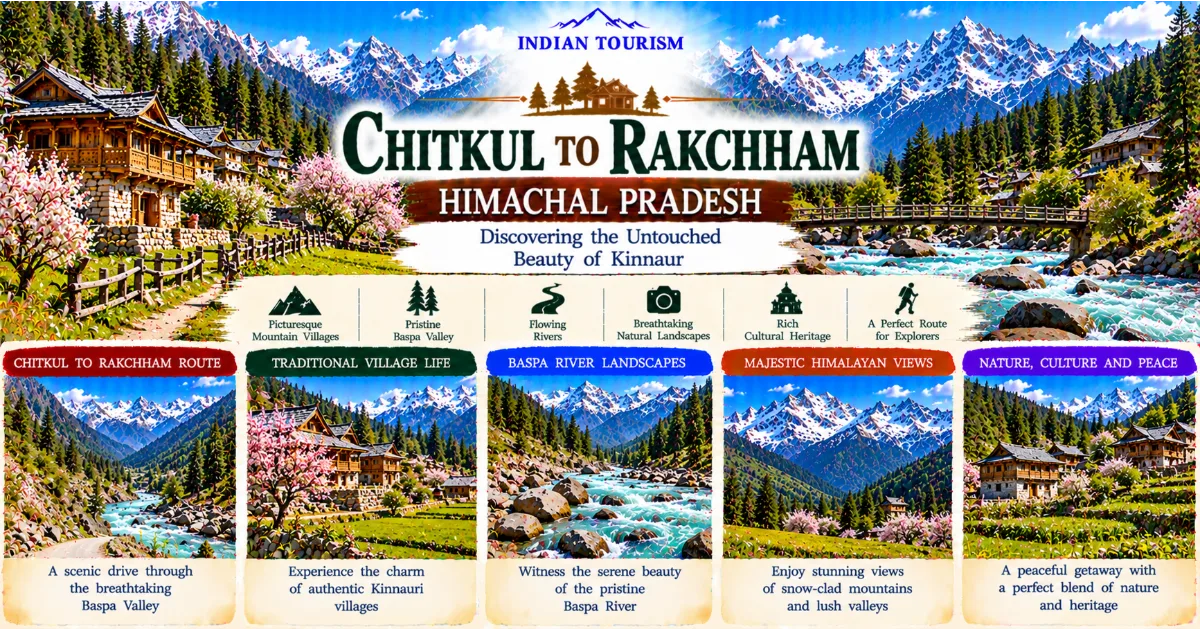
A Journey Into the Quiet Himalayas
Kinnaur, in the northeastern part of Himachal Pradesh, is a region where dramatic mountain scenery meets distinctive village traditions, winding river valleys, and a way of life shaped by the challenges and opportunities of the Himalayas. Travellers often associate the district with famous destinations such as Kalpa, Sangla, and Chitkul, but the surrounding countryside contains many smaller settlements and natural landscapes that deserve attention. Rakchham is one such destination. Situated in the Baspa Valley between the Sangla region and Chitkul, this mountain village offers a quieter experience of Kinnaur, with traditional homes, cultivated land, forested slopes, and impressive views of the surrounding mountains.
Rakchham is particularly appealing to visitors who want to experience the Himalayan environment without spending every day in a busy tourist centre. The village is surrounded by a landscape that changes with altitude and season. The Baspa River flows through the wider valley, while mountain slopes rise above settlements and fields. Depending on the time of year, travellers may encounter green meadows, flowering vegetation, cultivated plots, autumn colours, or snow-covered peaks.
The experience of visiting Rakchham is not limited to scenery. The village also provides an opportunity to understand the relationship between rural communities and their environment. Agriculture, horticulture, livestock, transport, and seasonal weather influence everyday life in this part of Kinnaur. The location of homes and fields reflects the available land, while mountain roads connect residents with neighbouring settlements and larger markets.
Rakchham is often explored as part of a journey through the Baspa Valley. Travellers may combine a stay here with visits to Sangla and Chitkul, but the village deserves time of its own. A slow walk, a quiet morning beside the landscape, or an opportunity to learn about local traditions can create a more meaningful experience than a hurried visit focused on photographs alone.
This destination is especially suitable for nature lovers, photographers, cultural explorers, and travellers who enjoy peaceful mountain settings. Visitors should arrive with realistic expectations, as facilities may be more limited than in major hill stations. Careful planning, respect for residents, and responsible travel practices can help make a visit to Rakchham both enjoyable and considerate.
Where Is Rakchham Located?
Rakchham is located in the Baspa Valley of Kinnaur district, Himachal Pradesh, in the western Himalayas of northern India. The village lies along the route connecting the wider Sangla region with Chitkul, one of the best-known settlements in the valley. Its position makes it a useful stop for travellers exploring the cultural and natural landscapes of this part of Kinnaur.
The Baspa Valley is known for its combination of river scenery, cultivated land, mountain forests, and high peaks. The Baspa River forms an important geographical feature of the valley, influencing the surrounding terrain and supporting the wider landscape. Settlements developed where the land, water, and access routes made living and cultivation possible.
Rakchham's location provides a different atmosphere from larger tourist centres. Rather than an extensive commercial area, visitors encounter a smaller mountain settlement surrounded by nature. The experience depends heavily on the season, weather, and the condition of the roads.
The journey through the Baspa Valley is an important part of the destination. Roads follow the contours of the terrain and pass through changing scenery. Although the distance between settlements may appear manageable on a map, travel can take longer than expected because of winding mountain roads, roadwork, and weather-related disruptions.
Visitors should confirm current road conditions and accommodation availability before travelling. The best itinerary is one that allows sufficient time for the journey rather than relying on optimistic estimates. During periods of heavy rainfall, snowfall, or landslide activity, local advice should take priority over a fixed schedule.
The Natural Beauty of Rakchham
The Baspa River and Its Mountain Setting
The Baspa River is one of the defining features of the wider valley. Its presence contributes to the character of the landscape, creating a natural corridor between mountain slopes and settlements. The river's surroundings change from place to place, with rocky sections, vegetation, cultivated land, and forested areas forming part of the scenery.
For visitors, the river provides opportunities for landscape observation and photography from safe, accessible viewpoints. The contrast between flowing water and the surrounding mountains can be particularly striking when the light changes throughout the day.
However, mountain rivers should never be treated as harmless scenic features. Water levels and currents can change with rainfall, snowmelt, and upstream conditions. Riverbanks may be unstable, and rocks can be slippery. Visitors should remain at a safe distance, avoid entering the water, and never attempt to cross a stream without reliable local guidance.
The river also reminds travellers that mountain landscapes are connected systems. Water influences agriculture, vegetation, settlement patterns, and the wider ecology of the valley. Protecting the river environment is therefore important not only for tourism but also for the communities and wildlife that depend on it.
Forests, Meadows, and Mountain Slopes
The landscape around Rakchham includes a variety of natural environments, shaped by altitude, exposure, soil, and water availability. Forested slopes may give way to more open terrain, while cultivated areas occupy suitable land near settlements. Higher elevations create a dramatic backdrop of ridges and peaks.
The variety of scenery makes the village attractive to travellers who enjoy observing nature at a relaxed pace. Short walks along established routes can reveal changes in vegetation, views across the valley, and the relationship between the village and the surrounding mountains.
The best experience often comes from taking time rather than covering a long distance. A traveller who spends an hour observing a single landscape may notice changing light, moving clouds, birds, and details in the vegetation that would be missed during a hurried itinerary.
Visitors should avoid damaging plants, disturbing wildlife, or creating new paths across fragile ground. Mountain vegetation can be slow to recover from damage, especially in areas with short growing seasons. Staying on established routes helps protect the environment while making walking safer.
Changing Scenery Through the Seasons
Rakchham's appearance changes throughout the year. Spring brings renewed growth to many parts of the valley, while summer generally supports greener surroundings and agricultural activity. Autumn can add colour to the landscape, and winter introduces colder conditions that may bring snow to the village and nearby slopes.
These seasonal differences influence what travellers can expect. Visitors seeking green landscapes may prefer warmer months, while those hoping to experience snow must understand that snowfall and road access vary from year to year. No particular weather condition should be considered guaranteed.
The time of day also affects the landscape. Morning light can reveal details in the surrounding slopes, while afternoon shadows create depth across the valley. Cloud cover may enhance the atmosphere but can also reduce visibility.
Travellers should plan according to their interests while remaining flexible. Mountain weather can change quickly, and a day that begins with clear skies may develop into rain, wind, or snowfall depending on the season.
Exploring Rakchham Village
A Traditional Himalayan Settlement
Rakchham is a place to appreciate village life as much as natural scenery. Like many settlements in Kinnaur, it exists within a landscape where steep slopes, limited level ground, and seasonal weather influence how homes and agricultural land are arranged.
Walking through accessible parts of the village can help visitors understand the relationship between buildings, paths, cultivated plots, and the surrounding terrain. Houses and fields are not simply decorative elements. They reflect practical choices about available space, water, access, and the needs of residents.
The village should be approached as a living community rather than an open-air museum. Residents may be working, managing household responsibilities, tending animals, or carrying out agricultural tasks. Visitors should move respectfully and avoid interfering with everyday activities.
Private homes, courtyards, and agricultural plots should not be entered without permission. Photography should be approached thoughtfully, particularly when people are present. Asking politely before taking a photograph helps protect privacy and creates more respectful interactions.
Understanding Rural Life in Kinnaur
Rural life in Kinnaur is shaped by the relationship between the mountains and the resources available to communities. Agriculture, horticulture, livestock, local employment, and trade contribute to household livelihoods, although the balance differs between settlements.
Seasonal changes affect work schedules and transport. Warmer months may involve agricultural activity, while winter can bring different challenges related to cold weather, snow, and road access. These conditions influence how families organise their daily routines and maintain their homes.
Visitors can gain insight into these realities by observing the village carefully and speaking with residents who are willing to share their experiences. Questions about farming, local food, building materials, or seasonal weather may provide a useful introduction to the region.
Travellers should avoid romanticising village life or assuming that communities remain unchanged by modern developments. Education, transport, technology, tourism, and changing employment opportunities all influence rural settlements. Traditional practices and contemporary life often exist side by side.
The Culture and Heritage of Kinnaur
A Distinctive Himalayan Identity
Kinnaur has a distinctive cultural landscape shaped by its geography, history, religious traditions, agricultural practices, and connections with neighbouring Himalayan regions. Local customs vary between communities, and the district should not be treated as culturally uniform.
Architecture, clothing, language, food, music, festivals, and religious practices all contribute to regional identity. These traditions have developed over generations, reflecting both the challenges of mountain life and the relationships between communities.
Travellers exploring Rakchham should approach local culture with curiosity and humility. Reading about Kinnaur before arriving can provide useful background, but the experiences of residents are often the best way to understand how traditions are practised today.
Visitors should remember that residents are not required to explain their customs or provide cultural experiences on demand. Respectful questions, careful listening, and acceptance of personal boundaries help create positive interactions.
Festivals and Community Gatherings
Festivals and community celebrations are important in many parts of Kinnaur. Depending on the locality, events may involve music, dance, religious observances, traditional clothing, and gatherings that bring residents together.
The timing and character of festivals can differ from one village to another. Travellers who want to visit during a particular celebration should confirm dates and local arrangements before planning their journey.
When visitors are welcomed at a community event, they should follow local instructions. Some ceremonies or spaces may be restricted, and photography may not be appropriate. Avoid interrupting proceedings or treating participants as performers arranged for tourists.
A visit outside festival periods can still provide valuable cultural insight. The village's architecture, agricultural routines, food traditions, and use of shared spaces reveal aspects of community life throughout the year.
Respecting Religious and Sacred Places
Religious traditions form an important part of the cultural landscape across Kinnaur. Temples and sacred spaces may serve as places of worship, centres of local identity, and locations for community gatherings.
Visitors exploring Rakchham and the wider Baspa Valley may encounter religious buildings or sites with particular significance for residents. Travellers should seek reliable local information before making claims about a site's history or meaning.
When visiting a sacred place, follow local expectations regarding footwear, clothing, photography, and access. Some areas may have restrictions that differ from those at major tourist temples. If guidance is unclear, ask politely or refrain from entering.
Sacred spaces should be treated as living places of worship rather than simply as backgrounds for photographs. Quiet behaviour and respect for local customs are essential.
Best Time to Visit Rakchham
Spring: Fresh Growth and Peaceful Walks
Spring can be an attractive season for exploring parts of the Baspa Valley. As temperatures rise, vegetation begins to change and agricultural activity increases. Depending on the year and location, visitors may encounter flowering plants, fresh growth, and greener surroundings.
Spring conditions vary with elevation and weather. Cold nights may continue, and some routes can remain affected by snow or other seasonal conditions. Visitors should check current road access and accommodation availability before departure.
This season suits travellers who enjoy quiet walks, photography, and observing the transition from winter to the growing season. Warm layers remain useful because mountain temperatures can change quickly.
Summer: A Practical Season for Exploration
Summer is generally a convenient period for exploring much of the Baspa Valley, as road access and local services may be more reliable than during winter. Daytime temperatures can be comfortable for walking, although evenings may still be cool.
Visitors can use the season to explore Rakchham, enjoy the surrounding landscape, and include nearby destinations in a broader Kinnaur itinerary. The weather can still change unexpectedly, so a flexible schedule is important.
Summer may bring more visitors to Sangla and Chitkul, particularly during popular holiday periods. Travellers should arrange accommodation in advance and avoid assuming that every service will be available at short notice.
Monsoon: Beautiful Scenery With Travel Risks
The monsoon can make parts of Himachal Pradesh greener, but it can also create serious travel challenges. Heavy rainfall may cause landslides, falling rocks, road closures, and delays. Mountain roads can become hazardous when drainage is poor or slopes become unstable.
Travellers considering a monsoon visit should monitor official weather and road advisories. Do not drive through flooded sections, approach unstable slopes, or continue along roads that authorities have closed.
The possibility of attractive scenery should not outweigh safety. Flexible travel dates and a willingness to change plans are essential during unsettled weather.
Autumn: Clear Views and Changing Colours
Autumn can offer rewarding conditions for photography and village exploration. Clear periods may reveal impressive views of the surrounding mountains, while changing vegetation adds seasonal character to the valley.
Temperatures become cooler as the season progresses, particularly at night. Visitors should carry warm clothing and confirm accommodation arrangements before travelling.
Autumn is also a useful time to observe the agricultural landscape. Travellers should respect working fields and orchards and avoid interfering with seasonal activities.
Winter: Snow, Cold, and Limited Access
Winter can bring freezing temperatures, snow, ice, and road restrictions to parts of the Baspa Valley. Conditions vary from year to year, and some services may operate on a reduced schedule or close temporarily.
A winter visit requires careful planning, current local information, appropriate clothing, and reliable transport arrangements. Travellers should not assume that a route remains open because it was accessible during a previous season.
Visitors unfamiliar with mountain winter travel should consider a more accessible time of year. Safety should take priority over attempts to reach a particular viewpoint.
How to Reach Rakchham
Travelling by Road
Road travel is the main way to reach Rakchham. Visitors generally travel through the wider Kinnaur region towards the Baspa Valley, using the road connections that link the Sangla area with Chitkul.
The exact journey time depends on the starting point, road conditions, weather, and traffic. Mountain roads can be narrow and winding, and travel may take longer than a map suggests. Visitors should check current conditions before leaving and allow extra time for delays.
A private vehicle provides flexibility, but drivers should be comfortable with mountain roads. Avoid unnecessary night driving in unfamiliar areas and never stop at blind bends or unsafe road shoulders to take photographs.
Public Transport and Shared Vehicles
Travellers using public transport can investigate connections to larger towns and settlements in Kinnaur before arranging onward travel to the Baspa Valley. Bus schedules and shared vehicle availability can vary by season and road conditions.
Before beginning the journey, confirm departure points, arrival locations, luggage arrangements, and onward transport. If reaching Rakchham depends on a particular connection, an overnight stop may be more practical than relying on a tight schedule.
Shared taxis may be available on some routes, but visitors should agree on the destination and fare in advance. Travellers carrying substantial luggage should confirm that the vehicle can accommodate it.
Planning the Journey From Other Parts of India
Visitors arriving from distant cities may combine air or rail travel with a long road journey into Himachal Pradesh. Rakchham does not have its own major airport or railway station. The most suitable gateway depends on the starting point and available transport connections.
Travellers should consider the complete journey rather than focusing only on the distance to the nearest transport hub. Mountain roads can make the final section considerably longer than expected, and an overnight stop can improve comfort and safety.
Keep accommodation details, essential documents, and emergency contacts available offline. Mobile coverage can vary across the mountain routes, so do not depend entirely on continuous internet access.
Things to Do in Rakchham
Explore the Village on Foot
Walking through accessible parts of Rakchham is one of the simplest ways to experience the settlement. A slow walk allows visitors to observe homes, paths, cultivated land, and the relationship between the village and its surroundings.
Choose established routes and avoid entering private property without permission. If a path becomes unfamiliar or unsafe, turn back rather than continuing without guidance.
Short walks can be rewarding at different times of day. Morning light may reveal details in the surrounding slopes, while late afternoon can create interesting shadows. Visitors should carry water, wear suitable footwear, and return before dark.
Enjoy the Baspa Valley Landscape
The wider Baspa Valley offers a combination of river scenery, forests, cultivated areas, and mountain views. Visitors can appreciate these landscapes from safe roadside viewpoints or established walking routes.
The best experience often comes from observing the landscape rather than attempting to reach every possible viewpoint. Weather and light can change quickly, creating different moods across the valley.
Stay away from unstable riverbanks and exposed slopes. Do not enter fast-flowing water or attempt risky crossings for photographs. The natural environment should be appreciated without unnecessary danger.
Photography and Nature Observation
Rakchham can be rewarding for landscape photographers because of the contrast between the village, vegetation, river, and mountains. Photographers can focus on how the natural and built environments fit together.
Early and late daylight may provide attractive conditions, but cloud cover and weather influence visibility. Visitors should choose safe viewpoints and avoid obstructing traffic.
Nature observation can include looking for changes in vegetation, listening to the river, and noticing how the landscape shifts with elevation. Visitors should not disturb wildlife, collect plants, or leave established paths unnecessarily.
Experience the Wider Sangla and Chitkul Region
Rakchham can form part of a broader journey through the Baspa Valley. Sangla and Chitkul are nearby destinations often included in regional travel plans, each offering a different perspective on the landscape and settlements of Kinnaur.
Visitors should plan these journeys according to realistic driving times and current road conditions. Trying to cover too many places in a single day can reduce the time available for meaningful exploration and increase travel fatigue.
An overnight stay in the valley can make the experience more relaxed. Travellers can explore at a comfortable pace rather than treating Rakchham as a brief stop between larger destinations.
Local Food and Dining Expectations
Food is an important part of travel, but visitors to smaller mountain villages should expect fewer dining choices than in established tourist centres. Meal availability in Rakchham will depend on local accommodation, seasonal demand, and arrangements made before arrival.
Travellers may be able to arrange simple home-style meals through a homestay or guesthouse. Visitors with dietary restrictions should communicate their requirements in advance. Anyone with serious food allergies should confirm ingredients directly and carry appropriate medication.
For long road journeys, carrying a small supply of snacks and drinking water can be useful. Clear water from a mountain stream is not automatically safe to drink, so use reliable treatment methods or properly supplied drinking water.
Waste should be managed responsibly. Carry packaging and bottles until they can be disposed of appropriately, and avoid leaving food waste near homes, riverbanks, or natural areas.
Accommodation in Rakchham
Accommodation in Rakchham and the surrounding Baspa Valley may include homestays, guesthouses, and small lodgings. Availability and facilities vary by season, so visitors should confirm their arrangements before arriving.
When booking, ask about heating, hot water, meals, sanitation, electricity, vehicle access, and payment methods. Travellers who require particular amenities should confirm them explicitly rather than assuming they will be available.
Staying with local hosts can offer a more personal understanding of village life. Guests should respect household routines, ask about meal times and shared spaces, and avoid unnecessary noise. Water and electricity should be used carefully.
Visitors should maintain realistic expectations about facilities. A small mountain guesthouse may provide simple accommodation rather than the services of a large hotel. Flexibility and preparation help make the stay more comfortable.
During busy travel periods, accommodation in the wider Baspa Valley may fill quickly. Booking ahead is particularly useful for travellers who have fixed onward connections or are travelling with family.
Responsible Tourism in Rakchham
Protecting the River and Natural Environment
The Baspa Valley's natural environment is central to its appeal. Visitors should help protect it by carrying out all waste, including plastic packaging, bottles, tissues, and food wrappers.
Do not leave rubbish near the river or bury it along walking routes. Avoid washing with soap directly in streams and do not dispose of food waste near water sources. These actions can affect water quality and local ecosystems.
Stay on established paths where possible and avoid damaging vegetation. Mountain plants can be slow to recover from disturbance, particularly in areas with short growing seasons.
Respecting Local Residents
Rakchham is a living community, and tourism should not interfere with everyday life. Keep noise low, avoid blocking narrow lanes, and ask before photographing residents or private property.
Do not enter homes, courtyards, or agricultural plots without permission. Residents may be working or attending to family responsibilities, and visitors should respect their time and privacy.
Cultural tourism is most rewarding when it encourages genuine understanding rather than treating local customs as attractions arranged for visitors. Travellers should listen carefully, avoid assumptions, and accept local guidance.
Supporting the Local Economy
Using local accommodation, transport, guides, and available regional products can help tourism provide economic benefits to residents. Visitors should agree on prices and services clearly before beginning an activity or journey.
Fair payment and respectful communication create better relationships between travellers and service providers. Avoid demanding unpaid assistance or expecting services that have not been agreed upon.
Supporting local businesses also encourages travellers to learn about the region's food, products, and traditions. Responsible tourism should create positive exchanges while respecting the needs and priorities of the community.
Safety Tips for Visiting Rakchham
Mountain travel requires preparation because weather, road conditions, and access can change quickly. Check forecasts and local road information before departure and continue monitoring conditions during the journey. Follow official closures and local safety advice.
Wear suitable footwear for uneven surfaces and carry warm layers even when daytime temperatures are comfortable. Conditions can become colder after sunset, and rain or snow may occur depending on the season.
Stay away from unstable slopes, exposed edges, and fast-flowing riverbanks. Do not attempt to cross streams when the depth or current is uncertain. Avoid walking on narrow roads after dark, particularly where vehicle visibility is limited.
Mobile coverage may be inconsistent. Keep essential information available offline and tell someone about your travel plans. Carry basic first-aid supplies and any personal medication you need.
Visitors should also be aware of altitude-related symptoms. Headache, nausea, dizziness, unusual fatigue, and breathing difficulties can occur during mountain travel. Symptoms that worsen or become severe require prompt medical attention. Continuing to ascend while unwell can be dangerous.
A Suggested Three-Day Rakchham Itinerary
Day One: Travel Into the Baspa Valley
Begin the journey early enough to reach the valley during daylight. Allow extra time for mountain road conditions and unexpected delays. After arriving, settle into your accommodation and confirm local walking routes and transport arrangements.
Spend the remaining daylight exploring accessible parts of Rakchham. Observe the relationship between village homes, cultivated land, and the surrounding mountains. Keep the first evening relaxed after the journey.
Day Two: Village Exploration and Nature
Start the morning with a short walk along an established route. Use the cooler hours to appreciate the landscape and take photographs from safe locations.
Spend the rest of the day exploring the accessible surroundings at a relaxed pace. If residents are willing to share information, ask respectful questions about local traditions and seasonal work. Avoid entering private property or agricultural areas without permission.
Return to your accommodation before dark and prepare for the next day's travel. Check the weather and confirm road conditions if you plan to visit another settlement.
Day Three: Explore the Wider Valley and Return
Depending on your itinerary and current conditions, spend the morning exploring another accessible part of the Baspa Valley or travelling towards a nearby destination such as Sangla or Chitkul.
Allow enough time for the return journey and avoid scheduling an important connection too close to the expected arrival time. If the weather is poor or roads are disrupted, change the plan rather than attempting to maintain a fixed schedule.
Travellers with more time can extend their stay to explore the wider Kinnaur region. A longer itinerary allows a deeper experience of village life and reduces the pressure of long daily drives.
Who Should Visit Rakchham?
Rakchham is well suited to travellers who appreciate nature, traditional villages, quiet mountain settings, and cultural exploration. It may appeal to photographers, slow travellers, families seeking peaceful surroundings, and visitors who want to experience Kinnaur beyond its most famous destinations.
The village can also be rewarding for people interested in the relationship between geography and rural life. Observing the river, cultivated land, settlement patterns, and surrounding mountains offers insight into the environmental conditions that shape the region.
However, Rakchham may not be ideal for travellers seeking nightlife, extensive shopping, luxury resort facilities, or a packed programme of organised activities. Services can be limited, and road travel requires patience.
Families, older travellers, and people with mobility limitations should assess road access, walking requirements, accommodation facilities, and available medical support before visiting. Anyone with specific accessibility needs should confirm practical arrangements directly with their accommodation provider.
The best visitor is one who arrives prepared, respects local life, and appreciates the destination without expecting it to function like a major tourist town.
Why Rakchham Deserves a Place on Your Kinnaur Travel List
Rakchham offers an opportunity to experience the Baspa Valley through a quieter and more intimate setting. Its natural surroundings combine river scenery, mountain slopes, cultivated land, and traditional settlement patterns, creating a landscape that rewards careful observation.
The village also provides a useful perspective on the cultural and economic life of Kinnaur. Rather than separating the mountains from the people who live among them, a visit reveals how geography influences agriculture, architecture, transport, and daily routines.
Rakchham can be particularly memorable for travellers who prefer to spend time in one place rather than rushing between attractions. A quiet morning walk, a view of the surrounding mountains, or a conversation with a local resident can provide a meaningful connection with the region.
Careful planning remains important. Visitors should confirm road access and accommodation, prepare for changing weather, and remain flexible when conditions affect travel. Respect for residents and responsible waste management should be part of every visit.
For anyone exploring Himachal Pradesh, Rakchham deserves consideration as part of a wider Kinnaur itinerary. It offers a chance to appreciate the Himalayan landscape at a slower pace and to discover the cultural character of a region where nature and community remain closely connected.
Conclusion
Rakchham is a peaceful village in the Baspa Valley of Kinnaur district, Himachal Pradesh. Its setting combines mountain scenery, the wider Baspa River landscape, cultivated areas, and traditional village life. The destination is best experienced through slow exploration, nature observation, and respectful engagement with the local community.
Visitors should plan their transport and accommodation in advance, check seasonal road conditions, and prepare for changing mountain weather. Responsible behaviour is essential, particularly around the river, private property, and agricultural land.
For travellers seeking a quieter Himalayan experience beyond crowded tourist centres, Rakchham offers an appealing opportunity to discover the natural and cultural character of Kinnaur. It is a destination that encourages visitors to slow down, observe carefully, and leave the landscape as undisturbed as possible.
#IndianTourism #HimachalPradesh #Rakchham #BaspaValley #Kinnaur #SanglaValley #Chitkul #HimachalTravel #HimalayanVillages #MountainTravel #NatureTourism #ResponsibleTourism #SlowTravel #ExploreHimachal
