
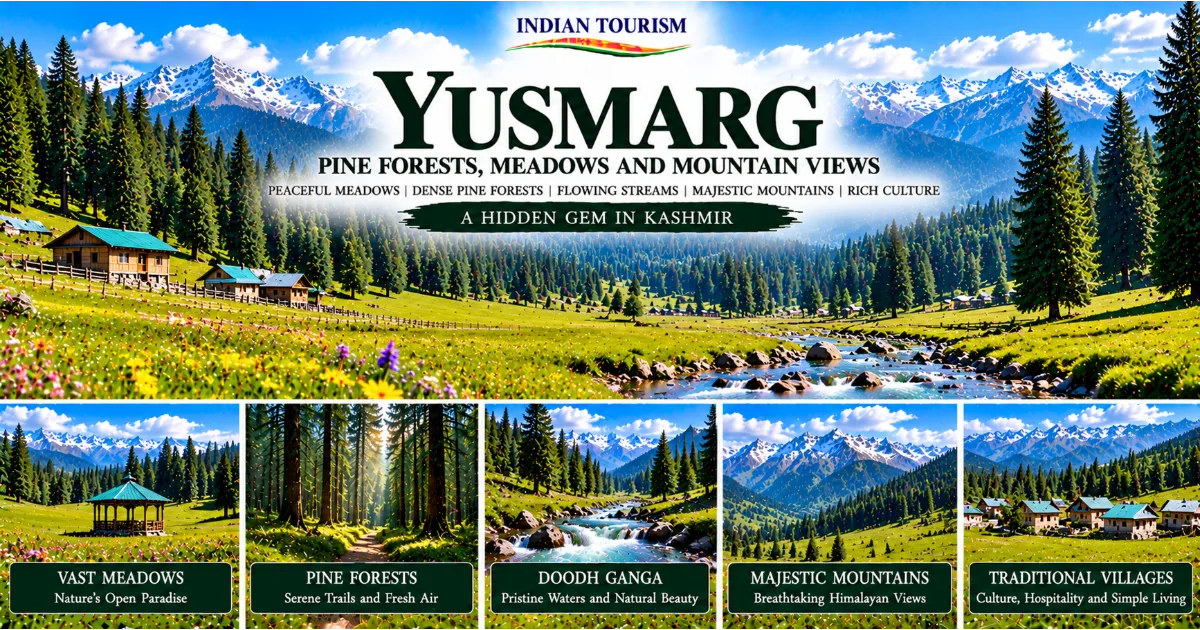
Discovering Kashmir's Peaceful Meadowland, Forest Trails, Mountain Streams and Natural Beauty
The Quiet Charm of Yusmarg
Kashmir is celebrated for its lakes, gardens, snow-covered mountains and beautiful valleys, but some of its most memorable destinations are places where nature remains the main attraction. Yusmarg, located in the Budgam district of Jammu and Kashmir, is one such destination. Known for its open meadows, pine-covered slopes, mountain streams and peaceful atmosphere, Yusmarg offers travellers an opportunity to experience a quieter side of the Kashmir Valley.
The name Yusmarg is commonly associated with the idea of a meadow, and the landscape lives up to this image. Broad grassy areas open between forests, while distant mountains create a dramatic backdrop. Depending on the season, the meadows may appear fresh and bright green, dotted with wildflowers, or covered by snow during colder months. The surrounding forests provide shade and contrast, making the destination attractive for nature lovers, photographers and visitors who prefer unhurried travel.
Yusmarg is often considered an appealing excursion from Srinagar because it provides a change of scenery without requiring travellers to organise a long expedition into a remote mountain region. However, the journey should still be planned carefully, particularly during winter or periods of poor weather. Road conditions, available services and the accessibility of individual attractions can vary with the season.
The destination is more than a photographic viewpoint. It offers opportunities to walk through open landscapes, observe the changing vegetation, enjoy mountain air and learn about the relationship between rural communities and the surrounding environment. Visitors can also explore the wider Budgam region, where villages, cultivated land and local traditions provide a cultural dimension to the journey.
Yusmarg is best appreciated at a relaxed pace. Instead of rushing through a short visit, travellers can allow time to enjoy the scenery, walk along suitable paths and observe the details of the landscape. Its beauty lies in the combination of open space, forested hills and the quiet atmosphere that distinguishes it from some of Kashmir's busier tourist destinations.
1. Where Is Yusmarg Located?
Yusmarg is a scenic meadow destination in the Budgam district of Jammu and Kashmir, in the western part of the Kashmir Valley. It lies amid a landscape of grassy clearings, forested hills and mountain views. Its location makes it a popular choice for travellers looking for a nature-focused excursion from Srinagar.
Budgam district contains a mixture of settlements, cultivated areas, wooded slopes and rural landscapes. Yusmarg represents one of the region's best-known natural attractions, drawing visitors who want to experience Kashmir's meadows without committing to a long journey into high mountain terrain.
The route to Yusmarg passes through countryside that offers glimpses of local life. Depending on the road and season, travellers may see cultivated fields, village settlements and stretches of forest before reaching the open meadowland. The changing landscape is part of the experience, especially for visitors who enjoy scenic road journeys.
Yusmarg should be understood as a broader natural destination rather than only a single point on a map. The main meadow, surrounding forests and nearby landscapes provide different ways to experience the area. Some visitors prefer to remain near the principal open spaces, while others may choose suitable walks or locally guided excursions.
Before travelling, visitors should confirm road access and weather conditions. Winter snowfall, rainfall or other local factors may affect the journey. It is also sensible to check the availability of transport, food and other facilities, particularly when travelling outside the main tourist season.
2. Why Is Yusmarg Called a Meadow Paradise?
Yusmarg's appeal comes from the contrast between open grassland and the forests that surround it. The meadows create a feeling of space, while the forested slopes provide depth and a sense of enclosure. Beyond them, mountain ridges complete the landscape.
In spring and summer, grassy areas can become especially attractive as vegetation grows and seasonal flowers appear. The colours of the meadow change with rainfall, temperature and elevation, creating a landscape that can look different from one visit to the next.
The open terrain also makes Yusmarg appealing to visitors who prefer gentle outdoor experiences. A walk across an accessible section of meadow can provide opportunities to observe the scenery, take photographs and enjoy the fresh air. Travellers do not necessarily need to complete a demanding hike to appreciate the destination.
The word paradise is often used in tourism descriptions, but Yusmarg's attraction is not that it resembles every other famous mountain destination. Its appeal lies in its own combination of forest, grassland and local character. The experience is often quieter than that of destinations centred on busy markets, lakeside promenades or large commercial attractions.
Visitors should also remember that meadows are living environments. Grasslands support vegetation, insects, grazing animals and other ecological processes. Walking responsibly, avoiding litter and respecting local land use help protect the landscape.
The meadow is best enjoyed with patience. A short visit may provide a beautiful photograph, but a longer stay can reveal subtle changes in light, cloud, wind and colour that make the setting more memorable.
3. The Pine Forests of Yusmarg
The forests surrounding Yusmarg are an important part of its identity. Tall trees create shaded areas along the edges of the meadows, while forested slopes frame the open landscape. This contrast between woodland and grassland gives the destination much of its visual appeal.
Pine and other forest vegetation contribute to the atmosphere of the area. Trees provide habitat for wildlife, help protect soil and influence how water moves through the landscape. Their presence also creates a cooler environment in shaded areas during warmer months.
For visitors, forest edges can offer pleasant places for short walks and photography, provided the routes are suitable and access is permitted. The light filtering through trees can create striking patterns on the ground, particularly when the sun is low.
The forest environment changes with the seasons. In warmer months, vegetation creates a rich green setting, while winter may bring snow or frost to some areas. The appearance of the forest also depends on cloud cover and recent weather.
Travellers should avoid wandering into unfamiliar forest terrain without local guidance. Paths may become difficult to follow, and weather conditions can change quickly. Visitors should remain on appropriate routes and make sure they can return before daylight fades.
Responsible behaviour is essential. Do not leave food wrappers or bottles behind, damage trees or disturb wildlife. Open fires can create serious risks in forested areas and should never be started where they are unsafe or prohibited.
The forests are not merely a decorative background to the meadow. They are an essential part of the local environment and contribute to the ecological health of the wider region.
4. Doodh Ganga River: Water and Scenic Landscapes
The Doodh Ganga is a river associated with the wider Budgam region and is often included in descriptions of the natural landscapes around Yusmarg. Its name is commonly translated as the River of Milk, reflecting the pale or foamy appearance that flowing water can sometimes create.
The river and its surrounding landscape add another dimension to a visit. While the meadow offers open views and broad grassy spaces, a river setting provides movement, sound and a closer connection to the water systems that shape the region.
Streams and rivers are important features of the Kashmir Valley. They support natural habitats, contribute to water availability and form part of the relationship between mountain environments and human settlement. Their appearance changes with rainfall, snowmelt and the shape of the channel.
Visitors should treat the water with caution. Mountain streams can flow strongly, and rocks near the water may be slippery. Water levels may change after rain or snowmelt, sometimes more quickly than visitors expect.
It is unsafe to assume that a river is suitable for wading or swimming simply because a section appears shallow. Families should supervise children closely, and everyone should remain away from unstable banks or dangerous currents.
The river is best appreciated from safe viewpoints. Travellers should avoid littering near the water and should never dispose of food packaging, plastic or other waste in the stream.
For nature lovers, the combination of water, forest and meadow illustrates the interconnected character of Yusmarg's landscape. The destination becomes more interesting when visitors understand that each feature is part of a larger ecological system.
5. Sang-e-Safed Valley and Nearby Natural Attractions
The wider Yusmarg area is associated with several scenic locations that attract visitors interested in meadows, streams and mountain landscapes. One of the names often encountered in descriptions of the surrounding region is Sang-e-Safed Valley.
The area is associated with open scenery and mountain surroundings, but visitors should confirm current access and the precise route with reliable local sources before planning an excursion. Conditions and the suitability of routes can vary according to season and weather.
Nearby landscapes may offer opportunities for walking, photography and observation of the changing vegetation. The main meadow is often sufficient for travellers seeking a relaxed visit, while those interested in exploring further should allow additional time and seek local advice.
A common mistake in mountain travel is assuming that a location described as nearby will be easy to reach. Distances on a map do not always reflect the time required to travel over winding roads or walk across uneven terrain. Visitors should check the route, expected duration and return arrangements before leaving the main tourist area.
For those who enjoy exploring the natural environment, a guided excursion can provide useful information about local geography, vegetation and seasonal conditions. Guides familiar with the area may also help travellers identify suitable routes and avoid unsafe terrain.
Yusmarg's surrounding landscapes are best approached with flexibility. If weather conditions make a planned excursion unsuitable, visitors can enjoy the main meadow or choose another accessible activity rather than attempting a difficult journey.
6. Wildlife and Biodiversity Around Yusmarg
The forests, meadows and waterways around Yusmarg form part of a wider Himalayan ecosystem that supports a variety of plant and animal life. The exact wildlife encountered depends on habitat, season, human activity and the time of day.
Forests provide shelter and food for wildlife, while meadows support grasses, flowering plants and insects. Streams and wet areas create additional habitats. Together, these environments contribute to the ecological diversity of the region.
Visitors may notice birds, butterflies and other small forms of wildlife during quiet walks. Observing these species requires patience. Animals may avoid areas with heavy human activity, and sightings are never guaranteed.
Travellers should not feed wild animals or attempt to approach them for photographs. Feeding can change animal behaviour and may expose wildlife to unsuitable food. Visitors should also avoid loud noise, chasing animals or leaving food waste behind.
Plant life deserves equal attention. Seasonal flowers and grasses add colour to the meadow, but visitors should avoid picking plants or trampling sensitive areas unnecessarily. Staying on suitable paths helps reduce damage to vegetation.
Responsible wildlife observation does not require specialised equipment. A quiet walk, careful listening and an interest in the surrounding environment can provide a rewarding experience.
Yusmarg's ecological value extends beyond tourism. Forests, grasslands and waterways support environmental processes that benefit the wider region. Protecting these habitats helps preserve the natural character that attracts visitors in the first place.
7. Photography in Yusmarg: Meadows, Forests and Mountain Views
Yusmarg is a rewarding destination for landscape photography because its scenery combines open grassland, tall trees, distant mountain slopes and seasonal changes in vegetation. The landscape offers different compositions depending on where visitors stand and the time of day.
Morning light can create a fresh appearance across the meadows, while late afternoon may bring warmer tones to the trees and hills. Cloud cover can also add depth to mountain views, although poor visibility may limit distant scenery.
Photographers should allow time to explore suitable viewpoints rather than trying to capture everything immediately after arrival. A slower approach can reveal interesting details such as tree patterns, the texture of the grass, streams crossing the landscape and the relationship between open meadow and forest edge.
Seasonal conditions influence the results. Spring and summer may bring greener grass and flowers, while autumn can create a different palette. Winter may provide snow-covered scenery when conditions permit.
Visitors should not leave designated paths or enter private land simply to obtain a photograph. Avoid standing on unstable ground, approaching dangerous water edges or stopping in places where vehicles cannot safely pass.
Photography of people should be approached respectfully. Ask permission before photographing local residents, workers or families, especially in rural areas where visitors may be unfamiliar with local customs.
Yusmarg's strongest photographs often communicate its atmosphere rather than simply its size. A quiet meadow framed by trees, a winding stream or a mountain view softened by clouds can convey the peaceful quality of the destination.
8. Best Time to Visit Yusmarg
Yusmarg can be attractive in different seasons, but the best time depends on the experience visitors want and the accessibility of the route.
Spring: Fresh Greenery and Seasonal Flowers
Spring brings gradual changes in temperature and vegetation. As the weather warms, the meadow begins to regain colour, and the surrounding countryside becomes increasingly attractive for nature walks and photography.
The exact timing of flowering and fresh growth varies with weather conditions. Visitors should not assume that every year will produce the same colours on the same dates.
Spring is suitable for travellers who enjoy mild weather and a relatively relaxed outdoor experience. Layered clothing is advisable because mornings and evenings can remain cool.
Summer: The Meadow at Its Greenest
Summer is often a popular period for visiting Yusmarg. The meadow may be covered in green grass, forested slopes provide shade and the longer daylight hours make it easier to enjoy the surroundings.
This season is suitable for families, couples, photographers and travellers interested in gentle walks. However, weekends and holiday periods may bring more visitors, so early arrival can help provide a quieter experience.
Rain can still affect road conditions and walking paths. Visitors should carry suitable footwear and check the weather before setting out.
Autumn: Calm Landscapes and Cooler Air
Autumn can offer a quieter atmosphere and cooler temperatures. The appearance of the vegetation may change, creating a different photographic experience from the bright greenery of summer.
Travellers should bring warm clothing, particularly if they plan to remain outdoors in the morning or late afternoon. Facilities and transport should be confirmed if visiting outside the main tourist period.
Winter: Snow and Seasonal Limitations
Winter can transform the meadow and surrounding forests when snowfall occurs. Snow-covered trees and open ground can create an attractive landscape, but access may become difficult or temporarily unavailable.
Visitors should confirm road conditions before travelling and follow official advisories. Appropriate footwear, warm clothing and flexible plans are essential.
Across all seasons, current conditions should guide the final decision. A beautiful location is not worth reaching through an unsafe journey.
9. How to Reach Yusmarg
Yusmarg is commonly visited by road from Srinagar and other parts of the Kashmir Valley. Travellers should check the route and travel time for their specific starting point because road conditions, traffic and weather can affect the journey.
By Road
Road travel is the principal way to reach Yusmarg. Visitors may hire a taxi, arrange a local vehicle or travel using available transport connections. The most suitable option depends on the number of travellers, budget and intended itinerary.
Before leaving, confirm that the road is open and suitable for the planned journey. During winter or periods of heavy rain, conditions may change. Drivers should be familiar with mountain roads and avoid rushing along narrow or winding sections.
Travellers should allow sufficient time for the return journey, especially if they intend to spend several hours outdoors. Carrying drinking water, snacks and a charged phone is sensible.
By Air
Visitors arriving from other parts of India may investigate flights to Srinagar and continue to Yusmarg by road. Flight schedules, transfers and road conditions should be checked for the intended dates.
The total journey includes the transfer from the airport and the onward road trip, so travellers should not plan activities too tightly around their arrival time.
By Train
Travellers may consider rail services to Jammu followed by onward travel towards the Kashmir Valley, depending on available connections and their starting point. The most suitable route depends on schedules, road access and the overall travel plan.
Rail and air options should be compared as complete journeys rather than by the duration of one segment alone.
Local Transport
Local transport availability may vary by season and demand. Visitors planning to explore beyond the main meadow should arrange return transport in advance and confirm whether the intended routes are accessible.
10. Where to Stay Near Yusmarg
Many travellers visit Yusmarg as a day excursion from Srinagar, which can be convenient for those who want to return to a larger city for accommodation and dining. Others may prefer to investigate available accommodation in the surrounding area, depending on seasonal operations and local facilities.
Staying in Srinagar can provide access to a broader range of accommodation, restaurants and transport services. It can also make it easier to combine Yusmarg with other destinations in the Kashmir Valley.
If choosing accommodation closer to Yusmarg, confirm the location, operating dates, road access and available facilities before booking. Services may differ from those found in larger tourist centres, particularly during winter.
Visitors should ask about heating, hot water, meals, electricity and parking. If travelling with children or older family members, check whether the property provides the level of comfort and access required.
Travellers planning an early visit to the meadow should consider the time needed to reach the destination. An overnight stay nearby, where available and appropriate, may make the excursion more relaxed.
Choosing locally operated accommodation can support community livelihoods. Guests should respect household rules, conserve water and electricity and follow local guidance about the surrounding environment.
11. A Suggested One-Day Yusmarg Itinerary
Yusmarg can be explored as a day trip, provided the road conditions and travel schedule are suitable. A flexible plan allows visitors to enjoy the scenery without rushing.
Morning: Journey to Yusmarg
Begin the journey early enough to reach the meadow with time to explore. Check the weather and road conditions before departure, and arrange transport with a realistic return schedule.
Enjoy the changing scenery along the route. If stopping for photographs, use safe locations that do not obstruct traffic.
Late Morning: Explore the Main Meadow
Spend time walking through accessible sections of the meadow and appreciating the surrounding forest and mountain views. Visitors who prefer a relaxed experience can remain near the main open areas rather than attempting a long excursion.
Carry water and suitable clothing. Follow local guidance about where walking is permitted and avoid disturbing vegetation or grazing animals.
Afternoon: Enjoy the Surrounding Landscape
Depending on conditions and available time, consider a suitable nearby viewpoint or a short guided walk. Confirm the route before leaving the main area and make sure the return journey remains practical.
Enjoy a meal or refreshments where available, or carry appropriate snacks if services are limited.
Late Afternoon: Return Journey
Begin the return journey with enough daylight remaining. Avoid adding unplanned detours that could make the drive difficult or delay arrival.
This itinerary should be adjusted to the season and current conditions. A shorter, relaxed visit is preferable to an ambitious schedule that creates unnecessary risk.
12. Yusmarg for Families, Couples and Solo Travellers
Yusmarg can suit different kinds of visitors because its main attraction is the natural landscape rather than a demanding activity.
Families may enjoy the open meadow and the opportunity to spend time outdoors. Parents should supervise children carefully, especially near streams, uneven ground and areas where horses or other animals may be present. Comfortable footwear and warm clothing can make the visit easier.
Couples may appreciate the quiet scenery, mountain views and opportunities for photography. A relaxed itinerary allows time to enjoy the surroundings without feeling pressured to complete a long list of attractions.
Solo travellers may value the peaceful atmosphere and the opportunity to explore at their own pace. They should confirm return transport, share their itinerary with someone they trust and avoid unfamiliar forest routes without local guidance.
Older visitors or people with mobility limitations should check the terrain before planning long walks. The meadow may contain uneven or wet ground, and accessibility can vary with weather.
The destination is most rewarding when the experience is matched to the traveller. Visitors do not need to undertake a difficult hike to appreciate Yusmarg. A comfortable walk, a quiet viewpoint and time spent observing the landscape can be enough.
13. Local Culture and Rural Life Around Yusmarg
Yusmarg lies within the wider Budgam region, where rural settlements and agricultural landscapes form an important part of local life. The countryside around the destination offers a glimpse of how communities maintain livelihoods and traditions in the Kashmir Valley.
Agriculture, household activities, local trade and seasonal work influence the rhythm of rural settlements. Fields and village paths are working spaces, and visitors should be careful not to treat them as public attractions without permission.
Local food and hospitality can provide opportunities to understand the region's culture. Travellers may learn about household dishes, seasonal ingredients and everyday customs through respectful conversations with hosts and local business owners.
Cultural traditions vary between families and communities. Visitors should avoid assuming that every settlement follows identical practices or that every resident wishes to participate in tourism activities.
Religious and cultural places should be approached with respect. Ask about local expectations regarding clothing, photography and access, and avoid interrupting ceremonies or private gatherings.
Rural tourism can create economic opportunities when it is developed in ways that respect community priorities. Purchasing local products, using legitimate local services and behaving courteously can help visitors contribute positively.
The surrounding villages are part of the reason Yusmarg feels connected to the wider landscape. Its meadows and forests are not separate from human life; they exist alongside agricultural practices, local routes and the communities that have lived in the region for generations.
14. Responsible Tourism in Yusmarg
The natural beauty of Yusmarg depends on the health of its meadows, forests and waterways. Responsible tourism is essential if these landscapes are to remain attractive for future generations.
Visitors should carry their waste back to appropriate disposal points rather than leaving plastic bottles, wrappers or food containers behind. Waste should never be thrown into streams or forested areas.
Grasslands can be damaged by unnecessary trampling, particularly when visitors create informal paths across sensitive areas. Walking on suitable routes helps reduce erosion and protects vegetation.
Forests require additional care. Avoid unsafe fires, do not damage trees and follow any restrictions on access. Wildlife should be observed from a distance, and animals should never be fed or chased for photographs.
Water conservation is important because local communities depend on streams and other sources for household needs and agriculture. Visitors should avoid polluting water and follow local sanitation guidance.
Respect for residents is equally important. Ask permission before photographing people, avoid entering private land without consent and follow local customs at religious or cultural places.
Visitors can support the local economy by using legitimate local businesses and purchasing regional products where available. However, they should avoid pressuring residents to provide services or experiences that are not offered.
Responsible tourism is not separate from the travel experience. It is the way visitors protect the landscape, respect local communities and ensure that their presence creates more benefits than harm.
15. Practical Travel Tips for Visiting Yusmarg
Preparation can make a visit more comfortable and help travellers respond to changing mountain conditions.
First, check the weather and road conditions shortly before departure. Do not assume that a route remains open simply because it was accessible during a previous visit.
Second, wear comfortable footwear suitable for uneven ground. The meadow may be wet or muddy after rainfall, and forest paths can be slippery.
Third, carry drinking water, snacks, essential medicines and a charged phone. Mobile connectivity may vary, so do not rely entirely on uninterrupted internet access.
Fourth, dress in layers. Conditions can change between the journey, the meadow and shaded forest areas. Warm clothing is useful during cooler months and for visitors who plan to remain outdoors for several hours.
Fifth, arrange transport and return timing in advance. If travelling by taxi, confirm the agreed route and return arrangements before leaving.
Sixth, avoid entering unfamiliar forest terrain without local guidance. Even a short detour can become difficult when paths are unclear or weather changes.
Finally, keep the itinerary flexible. If rainfall, snow or road conditions make a planned activity unsuitable, choose a safer alternative rather than attempting to continue at all costs.
Conclusion: Experience the Peaceful Beauty of Yusmarg
Yusmarg is one of the Kashmir Valley's appealing meadow destinations, combining open grassland, pine forests, mountain views and the presence of nearby waterways. Its natural setting offers a welcome change of pace for travellers who want to spend time outdoors and appreciate the landscape without an overly demanding itinerary.
The destination can be enjoyed through scenic drives, gentle walks, photography and observation of the surrounding environment. Its wider cultural setting in Budgam adds another dimension to the experience, connecting the meadows with rural settlements, agricultural life and local traditions.
The best visit is one that allows enough time to appreciate the scenery while respecting the environment and the people who live nearby. Checking road conditions, dressing appropriately and following local guidance are essential parts of responsible travel.
For visitors exploring Jammu and Kashmir, Yusmarg deserves consideration as a peaceful natural escape. Its appeal lies in its own character: the meeting of meadows and forests, the changing light across the hills and the quiet atmosphere that invites travellers to slow down and enjoy the moment.
#IndianTourism #Yusmarg #Budgam #KashmirTourism #JammuAndKashmir #KashmirMeadows #PineForests #NatureTourism #MountainViews #TravelKashmir #ResponsibleTourism #HiddenGemsOfIndia #ExploreIndia
