
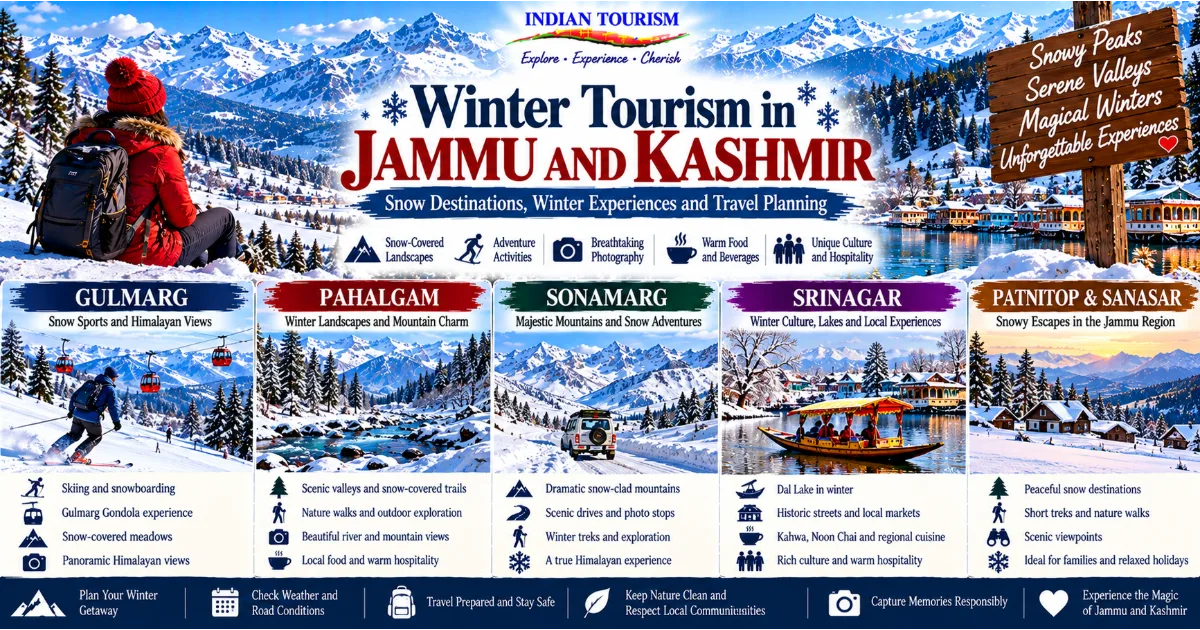
Discover the Magic of Winter in Jammu and Kashmir
Winter transforms Jammu and Kashmir into a destination of snow-covered mountains, frozen landscapes, quiet valleys and unforgettable Himalayan scenery. For travellers who enjoy cold-weather holidays, the region offers a remarkable combination of winter sports, mountain views, traditional food, cultural experiences and peaceful stays surrounded by nature.
From the snow-covered slopes of Gulmarg to the winter landscapes around Pahalgam and Sonamarg, Jammu and Kashmir provides opportunities to experience the Himalayas in a completely different way. Srinagar offers its own winter character, with historic neighbourhoods, traditional markets, local bakeries and the possibility of snowfall during suitable weather conditions. In the Jammu region, places such as Patnitop and the surrounding mountain areas can offer cooler temperatures, scenic views and occasional snowfall, depending on the season.
Winter tourism is not limited to watching snow fall. Visitors can explore winter sports, enjoy traditional Kashmiri beverages, discover regional cuisine, photograph mountain landscapes, stay in comfortable hotels or houseboats, and learn how local communities adapt to cold weather. A winter holiday can be adventurous, relaxed or culturally focused, depending on the destinations selected and the prevailing conditions.
However, winter travel requires more preparation than many ordinary sightseeing trips. Snowfall can affect road access, mountain weather can change rapidly, temperatures may fall sharply after sunset, and transport schedules can be disrupted. Not every destination receives snow at the same time, and a snowfall experience can never be guaranteed for a particular date.
This guide explores winter tourism in Jammu and Kashmir, including the best-known snow destinations, winter activities, seasonal food, accommodation choices, travel preparation, safety considerations and responsible tourism practices. It is designed to help travellers plan a comfortable and realistic winter holiday while appreciating the region's landscapes and cultural traditions.
1. Understanding Winter in Jammu and Kashmir
Winter conditions vary significantly across Jammu and Kashmir because of differences in elevation, geography and local climate. The Kashmir Valley, the higher Himalayan areas and the Jammu region can experience different temperatures and snowfall patterns during the same period.
The winter season is generally associated with December, January and February, although colder conditions can begin earlier and continue into spring at higher elevations. The timing and intensity of snowfall vary from year to year, so travellers should check current forecasts and local reports before finalising their plans.
Early winter
Early winter can bring falling temperatures and occasional snowfall to higher locations. Some lower areas may remain relatively accessible, while mountain destinations begin experiencing more challenging conditions.
This period can suit travellers who want to experience cold weather and winter scenery without necessarily planning their entire holiday around deep snow. However, the actual conditions at a particular destination depend on the weather during the travel dates.
Midwinter
January is often associated with some of the coldest conditions in the Kashmir Valley and surrounding mountains. Snowfall may create beautiful landscapes, but it can also affect roads, transport and outdoor activities.
Visitors should prepare for freezing temperatures, especially during early mornings and evenings. Warm clothing, suitable footwear and reliable accommodation arrangements are essential.
Late winter
February can offer continued winter scenery, particularly in higher areas, while temperatures may begin changing in lower locations as the season progresses. Snow conditions vary, so travellers should not assume that every destination will remain equally snowy throughout the month.
Late winter can be appealing to visitors interested in combining snow experiences with sightseeing. Nevertheless, current conditions should determine the final itinerary.
2. Gulmarg: The Centre of Winter Adventure
<escape>Gulmarg</escape> is one of the most recognised winter destinations in Jammu and Kashmir. Located in the Kashmir Valley's mountain landscape, it attracts visitors interested in snow scenery, skiing, snowboarding and panoramic Himalayan views.
The destination is especially popular during periods when snow conditions support winter activities. Its meadows and surrounding mountains take on a distinctive character during winter, creating opportunities for photography, outdoor recreation and relaxed stays.
Skiing and snowboarding
Gulmarg is known for skiing and snowboarding, attracting both beginners and experienced participants. Beginners should take lessons from qualified instructors and start on suitable terrain.
Skiing involves more than simply moving down a snowy slope. Participants need to learn how to control speed, stop safely, turn and understand the rules governing the areas where they are permitted to ski.
Snowboarding requires its own equipment and techniques. Visitors should choose instruction appropriate to their experience and avoid attempting difficult slopes before developing the necessary skills.
The Gulmarg Gondola experience
The Gulmarg Gondola is one of the area's best-known attractions. It provides access to elevated mountain viewpoints and is popular with visitors who want to appreciate the surrounding landscape.
Operations depend on weather, visibility, maintenance and other local conditions. Tickets, operating arrangements and access rules should be checked through official channels before travelling.
The experience at higher elevations can be much colder than in the main settlement. Visitors should carry warm clothing and follow all instructions from the operators.
Enjoying Gulmarg without skiing
Not every winter visitor wants to participate in a sport. Gulmarg can also be enjoyed through scenic views, suitable walks, photography and time spent in local accommodation.
The availability of particular activities depends on snowfall, access and current safety arrangements. Avoid entering restricted slopes or attempting to walk across deep snow without suitable equipment and guidance.
How long to stay
A two-night stay can provide a reasonable introduction to Gulmarg for many travellers, although the ideal duration depends on the planned activities and travel conditions.
Visitors who want to learn skiing may benefit from additional time. A flexible itinerary is particularly useful because weather can affect both the Gondola and outdoor activities.
3. Pahalgam: Winter Landscapes and Quiet Mountain Experiences
Pahalgam is known for its river valley, surrounding mountains and scenic environment. During winter, the landscape can become especially attractive, with snow-covered slopes and cold-weather scenery when conditions permit.
Unlike a holiday focused entirely on winter sports, a visit to Pahalgam can combine nature, local food, comfortable accommodation and relaxed sightseeing.
Winter scenery
The appearance of Pahalgam changes with snowfall, temperature and the amount of snow remaining on the ground. Some areas may be covered in white, while others may display a mixture of exposed ground, snow and flowing water.
Travellers should not assume that every photograph of a snow-covered Pahalgam represents the conditions they will encounter. Check current reports and be flexible about which outdoor areas to visit.
River and valley views
The Lidder Valley contributes to Pahalgam's appeal throughout the year. In winter, the surrounding landscape may look dramatically different from the greener scenes associated with warmer months.
Riverbanks can be slippery, and water conditions may be dangerous. Visitors should remain in permitted areas and avoid approaching unstable edges or attempting to enter the river.
Local experiences
Pahalgam can provide opportunities to enjoy Kashmiri cuisine, traditional tea, local shopping and relaxed evenings in suitable accommodation.
Travellers who prefer a slower holiday can spend time learning about regional food and the surrounding landscape rather than trying to visit several distant attractions in one day.
Planning for winter access
Road conditions can change after snowfall, and some outdoor attractions may have restricted access. Confirm local arrangements before travelling to specific sites.
If conditions become unsafe, postpone an excursion rather than pressuring a driver or guide to continue.
4. Sonamarg: Dramatic Mountain Scenery in Winter
Sonamarg is famous for its mountain scenery, high-altitude surroundings and access to Himalayan landscapes. In winter, snow can transform the area into a striking environment of white slopes and dramatic peaks.
However, winter access to Sonamarg can be more complicated than travel to destinations with more established year-round tourism infrastructure. Road closures, snow accumulation and local restrictions can affect whether a visit is possible.
Understanding winter access
Before planning a trip, verify whether the road is open and whether ordinary tourist vehicles are permitted to travel. Do not rely on old photographs or previous visitors' experiences to determine current conditions.
Some periods may allow access to parts of the area, while others may require visitors to postpone the journey. A responsible itinerary should treat accessibility as a condition to verify, not an assumption.
Enjoying the landscape safely
Where access is permitted, visitors may appreciate the surrounding mountain scenery and winter atmosphere. Any walking or snow-related activity should be appropriate to the conditions and carried out with suitable guidance.
Do not attempt to enter closed areas, walk onto unstable snow or approach steep slopes without proper knowledge of the terrain.
Who should consider Sonamarg?
Sonamarg may appeal to travellers who enjoy dramatic mountain landscapes and are comfortable with a flexible itinerary. It is less suitable for anyone who expects every attraction to be accessible regardless of weather.
If the road is closed or conditions are unsafe, consider spending more time in an accessible destination rather than trying to force the original plan.
5. Srinagar: Winter Culture, Food and City Experiences
Srinagar offers a different kind of winter holiday from the mountain resorts. The city combines cultural heritage, traditional markets, regional food, historic neighbourhoods and access to nearby natural attractions.
Snowfall can occur during winter, but it is not guaranteed on every date. Even without a fresh snowfall, Srinagar can provide a memorable cold-weather experience through its food, architecture and everyday life.
Dal Lake and the surrounding landscape
Dal Lake remains one of Srinagar's best-known attractions. During winter, its appearance changes according to temperature, weather and light.
Visitors can explore the lake through permitted activities and established operators, subject to current conditions. They should follow local instructions and avoid assuming that every boating activity operates normally during severe weather.
Houseboat stays may be available during winter, but heating, water facilities and other services can vary between properties. Ask specific questions before booking.
Historic neighbourhoods and markets
Winter is a good opportunity to explore Srinagar's cultural side at a relaxed pace. Visitors can discover traditional markets, local shops, historic architecture and regional food.
Respect religious sites and private spaces. Ask permission before photographing residents, shopkeepers or activities taking place inside homes and workplaces.
Traditional winter food
Kashmiri cuisine offers many dishes and beverages that are appealing in cold weather. Kahwa provides a fragrant tea experience, while Noon chai offers a distinctive savoury flavour. Traditional breads from local bakeries can make a simple and satisfying breakfast.
Visitors can also explore regional dishes such as Rogan Josh, Yakhni, Dum Aloo and other seasonal preparations. Food availability varies, so ask local hosts about the dishes commonly prepared during the period of your visit.
A comfortable winter itinerary
Srinagar can serve as a base for a winter holiday because it offers a range of accommodation and dining options. It can also provide a practical alternative when road or weather conditions prevent travel to higher destinations.
Allow time for local experiences instead of treating the city only as a transit point.
6. Patnitop: Winter Tourism in the Jammu Region
Patnitop is a well-known hill destination in the Jammu region, associated with forested landscapes, mountain views and cooler weather. During suitable winter conditions, the area may receive snowfall and attract visitors interested in a cold-weather holiday.
Unlike the Kashmir Valley's main winter destinations, Patnitop offers a different geographical and cultural setting. It can be useful for travellers who want to explore the Jammu region rather than concentrating their entire trip on Srinagar and nearby valleys.
Scenic surroundings
Patnitop is appreciated for its open views and surrounding hills. Winter weather can create a distinctive atmosphere, although snowfall is not guaranteed for any particular date.
Visitors should check current forecasts before travelling, particularly if their main purpose is to experience snow.
Outdoor activities
Suitable outdoor experiences depend on weather, access and local arrangements. Visitors may enjoy scenic walks and photography when conditions permit.
If snow-based activities are offered, confirm that the equipment, supervision and location are appropriate. Avoid using informal services that cannot explain safety arrangements.
Accommodation and planning
Patnitop can be considered for an overnight stay or a longer break, depending on the itinerary. Confirm heating facilities, transport access and meal availability before booking.
If travelling during a busy winter period, reserve accommodation in advance and allow additional time for road journeys.
7. Sanasar: A Quieter Winter Escape
Sanasar is a scenic destination in the Jammu region, known for its open landscapes and outdoor recreation opportunities during suitable seasons. Its character differs from the busier winter centres, making it an option for travellers who prefer a quieter setting.
Winter conditions can limit the activities available, and snow cover varies. Visitors should verify road access and local facilities before planning an overnight stay.
Enjoying the surroundings
When conditions allow, travellers can appreciate the landscape through gentle walks and photography. The area may offer a more relaxed alternative to destinations focused on skiing and large visitor numbers.
Outdoor activities should be chosen according to current weather and the abilities of the participants.
Preparing for colder conditions
Even when a destination is at a lower elevation than a major Himalayan resort, winter temperatures can be uncomfortable without proper clothing.
Carry warm layers, suitable footwear and rain or snow protection according to the forecast. Ask accommodation providers about heating and other essential facilities.
Planning a combined visit
Sanasar may be considered alongside other destinations in the Jammu region, subject to road conditions and available travel time. Avoid planning too many stops if snow or traffic could delay the journey.
A flexible itinerary can make a winter trip more enjoyable and safer.
8. Doodhpathri: Winter Beauty and Seasonal Access
Doodhpathri is known for its meadows, streams and mountain scenery. In winter, the landscape can take on a different appearance when snow and cold weather affect the surrounding hills.
Access and available facilities depend on current conditions. Travellers should confirm whether the destination is suitable for a visit during their intended dates.
Winter scenery
Snow-covered meadows and hills can create beautiful photographic opportunities when snowfall occurs. However, the amount of snow, visibility and accessibility may change quickly.
Do not assume that a destination shown in a winter photograph is accessible under the same conditions throughout the season.
Walking and outdoor safety
If access is permitted, choose short walks appropriate to the weather and terrain. Snow can hide uneven ground, and streams or slopes may present additional hazards.
Avoid walking into deep snow without suitable equipment or local guidance. Follow restrictions and turn back when conditions deteriorate.
A slower nature experience
Doodhpathri can appeal to travellers who want to appreciate scenery rather than participate in demanding winter sports. The most suitable experience may be a short visit, depending on weather and access.
Respect the landscape by carrying waste away and avoiding damage to vegetation or other sensitive areas.
9. Winter Food and Traditional Beverages
Food is an important part of the winter experience in Jammu and Kashmir. Cold weather often encourages travellers to spend more time enjoying warm meals, traditional tea and relaxed conversations with local hosts.
Kahwa
Kahwa is a traditional Kashmiri beverage commonly prepared using green tea and aromatic ingredients. Depending on the recipe, it may include cardamom, cinnamon, saffron or nuts.
The exact preparation varies between households and establishments. A cup of Kahwa can be a pleasant way to begin the day or relax after an outdoor excursion.
Noon chai
Noon chai is a distinctive Kashmiri tea often recognised by its pink colour and savoury flavour. It is commonly enjoyed with traditional bread.
Visitors who are accustomed to sweet milk tea may find Noon chai different from their expectations. Trying it with local bakery products provides an introduction to an everyday food tradition.
Traditional breads
Local bakeries prepare a range of breads that can accompany tea and breakfast. Girda and other regional varieties are worth exploring, although availability differs between bakeries and locations.
Ask accommodation hosts which bakery is popular locally and when fresh bread is usually available.
Warm regional meals
Visitors can explore traditional Kashmiri dishes as well as the food of the Jammu region. The choice may include rice preparations, vegetable dishes, meat gravies and regional comfort foods.
Ask about ingredients and portion sizes, especially if you have dietary restrictions. Food should be selected according to personal requirements rather than assuming every traditional dish will suit everyone.
10. Choosing Winter Accommodation
Accommodation is one of the most important decisions when planning a winter holiday. Cold weather can make heating, hot water, reliable transport and meal arrangements particularly important.
Jammu and Kashmir offers hotels, guesthouses, homestays and houseboats, but facilities vary widely.
Hotels and guesthouses
Hotels can be convenient for travellers who want established services and easier access to restaurants or transport. Before booking, ask about the heating system, hot water availability and arrangements during power interruptions.
Check the property's location and access conditions. A hotel may appear close to a destination on a map but still require a difficult journey in winter weather.
Houseboats
A houseboat stay can provide a distinctive experience in Srinagar. Winter comfort depends on the property, its heating arrangements and the services available during the travel period.
Ask about room heating, bathrooms, hot water, meals and access to transport. Do not assume that every houseboat provides the same level of winter facilities.
Homestays
Homestays can offer opportunities to experience regional food and hospitality. They may be particularly rewarding for travellers who want to learn about local routines and traditions.
However, facilities differ between households. Discuss heating, meals, bathroom arrangements and transport before confirming the booking.
Booking considerations
Read accommodation details carefully and ask direct questions if information is unclear. Confirm cancellation terms and what happens if severe weather affects access.
A flexible booking can be useful during winter, when changes to travel plans are more likely than in stable weather.
11. Winter Road Trips and Transportation
Winter road travel in Jammu and Kashmir requires attention to weather, road conditions and the capabilities of the vehicle being used.
Snowfall, ice, fog, landslides and traffic congestion can affect journey times. Routes that are straightforward during warmer months may become difficult or temporarily inaccessible during winter.
Plan realistic travel times
Avoid scheduling several distant destinations on the same day. Mountain journeys can take longer than expected, especially when weather conditions change.
Leave a reasonable buffer for transfers and avoid travelling late at night on unfamiliar mountain roads unless there is a clear and safe reason to do so.
Use suitable transport
Choose a legitimate operator with a vehicle appropriate for the route and conditions. Ask whether the driver has experience with winter mountain travel.
Do not pressure drivers to continue when they believe conditions are unsafe. Safety should take priority over reaching a viewpoint or maintaining a sightseeing schedule.
Check road status
Confirm the current status of major routes before departure. Follow official advisories and instructions from local authorities.
If a road is closed, do not attempt to bypass the closure through an unfamiliar route. Choose an accessible alternative or postpone the journey.
Prepare for delays
Carry essential medication, drinking water, snacks, warm clothing and charged communication devices. These supplies can be useful if a journey takes longer than expected.
Travellers with children or older family members should pay particular attention to warmth, comfort and access to necessary facilities.
12. Clothing and Essential Winter Packing
Appropriate clothing can make the difference between an enjoyable winter holiday and an uncomfortable one. The right packing list depends on the destinations, activities and expected temperatures.
Layering
Several layers usually provide greater flexibility than relying on a single heavy garment. A base layer helps manage moisture, an insulating layer provides warmth and an outer layer protects against wind or precipitation.
The exact clothing required depends on the activity. A relaxed city visit may need less specialised equipment than a long walk in snow or a skiing session.
Footwear
Choose footwear suitable for the expected surface. Ordinary trainers may not provide sufficient grip or warmth for icy paths or deep snow.
If you plan to walk on snow, ask a qualified local provider whether specialised footwear or traction equipment is necessary.
Gloves, hats and socks
Hands, ears and feet can become uncomfortable quickly in cold conditions. Carry suitable gloves, a warm hat and enough socks for the length of your trip.
Keep spare clothing available if you expect to spend extended periods outdoors.
Personal essentials
Pack necessary medication, personal hygiene items, moisturiser and lip protection. Cold weather and wind can affect skin comfort.
A power bank can help keep communication devices charged, but keep electronics protected from moisture and extreme cold.
Activity-specific equipment
Skiing, snowboarding and trekking require equipment suited to the activity. Confirm what is provided by the operator and what you need to bring.
Do not rely on improvised equipment for technical activities.
13. Health and Safety During a Winter Holiday
Winter travel can involve cold exposure, slippery surfaces, altitude and sudden weather changes. Sensible preparation reduces avoidable risks.
Prevent cold-related problems
Wear appropriate layers and take breaks in suitable sheltered places. If clothing becomes wet, change into dry items when possible.
Pay attention to persistent shivering, numbness, confusion or unusual fatigue. These can be signs of serious cold-related problems and should not be ignored.
Avoid slips and falls
Snow and ice can make paths and steps slippery. Walk carefully, use suitable footwear and follow any instructions concerning restricted areas.
Avoid standing on frozen water bodies unless the area has been officially assessed and specifically opened for that activity. The appearance of ice does not establish that it is safe.
Respect altitude
Some winter destinations involve significant elevation. Altitude-related symptoms can occur even in people who are physically fit.
If you develop a persistent headache, nausea, dizziness or unusual fatigue, do not ignore the symptoms. Seek appropriate advice and avoid further ascent if symptoms are concerning.
Plan for limited services
Remote areas may have fewer medical facilities and limited transport during severe weather. Carry essential medication and know how to contact local assistance where possible.
People with medical conditions should seek appropriate medical advice before undertaking demanding winter activities.
14. Winter Photography and Responsible Sightseeing
Winter landscapes can be visually striking, with snow-covered rooftops, mountain silhouettes, misty valleys and changing light. Photography can be an enjoyable part of the holiday, but it should never take priority over safety or respect for local communities.
Choose safe viewpoints
Use established viewpoints and permitted areas. Do not stand near unstable edges, walk onto frozen water or enter restricted slopes for a photograph.
Roadside photography should be undertaken only where stopping is safe and permitted. Never block traffic or stand in a dangerous position on a narrow mountain road.
Protect equipment
Cold conditions can affect batteries and camera performance. Keep spare batteries protected from extreme cold and avoid exposing equipment unnecessarily to snow or moisture.
Allow time for equipment to adjust when moving between very cold outdoor conditions and warm indoor spaces, particularly where condensation may occur.
Respect privacy
Ask permission before photographing people, homes and private activities. Religious sites and family spaces deserve particular consideration.
Do not assume that a person has agreed to be photographed simply because they are in a public place.
Share images honestly
Avoid presenting a photograph from a previous winter as evidence of current conditions. If you share travel information, distinguish between what you personally experienced and what you have heard from others.
Accurate information helps future visitors plan realistic holidays.
15. Winter Shopping and Local Handicrafts
Winter evenings can provide time to explore local markets and discover regional products. Jammu and Kashmir is associated with a range of traditional crafts, including textiles, embroidery, carpets and woodwork.
Shopping can support local livelihoods when visitors make thoughtful choices.
Ask about origin and materials
Ask sellers where a product was made, what materials it contains and how it was produced. Products sold in tourist areas may vary in origin and manufacturing method.
Choose reputable sellers who communicate clearly about their goods.
Buy thoughtfully
Select items that you will use or value rather than purchasing large quantities simply because they are marketed as souvenirs.
Pay fair prices and recognise the labour involved in skilled craft production. If you are uncertain about a product, compare several options before making a decision.
Transport and packaging
Cold-weather shopping may include food products, spices or other items. Check that goods are appropriately packaged for the journey and comply with any relevant transport restrictions.
Avoid products made from protected wildlife or materials whose legality cannot be established.
16. Responsible Winter Tourism and Environmental Care
Winter destinations can experience environmental pressure when visitors leave waste, damage vegetation or place excessive demands on local services.
Responsible travel helps protect the landscape while supporting the communities that depend on tourism.
Carry waste away
Snow can hide litter rather than remove it. When the snow melts, discarded packaging and other waste may reappear in meadows, streams and roadside areas.
Carry your waste to an appropriate disposal point. Do not bury it in snow or leave it beside a path.
Use resources thoughtfully
Cold weather may increase demand for heating and hot water. Use accommodation facilities responsibly and avoid unnecessary waste of electricity or water.
Choose properties that communicate clearly about their facilities and manage waste responsibly.
Respect wildlife
Winter can be a difficult period for wildlife because food and shelter may be more limited. Do not feed wild animals or approach them for photographs.
Follow local guidance and avoid entering restricted habitats.
Support local livelihoods
Use legitimate local guides, transport providers, accommodation and food businesses. Pay agreed prices and respect working conditions.
Responsible tourism recognises that residents need reliable services and a healthy environment long after the visitor season ends.
17. Winter Tourism for Families
A winter holiday can be a memorable family experience, but it requires planning around the needs of children and other family members.
Choose suitable destinations
Families may prefer destinations with reliable accommodation, manageable transport and activities that do not require demanding physical effort.
Gulmarg, Srinagar and Patnitop may be considered depending on the family's interests and current conditions. The final choice should reflect accessibility, weather and the age of the children.
Prepare children for cold weather
Pack suitable layers, gloves, hats and footwear. Keep spare clothing available in case items become wet.
Children may become cold before they clearly communicate discomfort, so check regularly and take breaks indoors when necessary.
Select appropriate activities
Not every snow activity is suitable for every child. Use qualified instructors and suitable equipment for skiing or other organised activities.
Keep children away from steep slopes, unstable snow and frozen water bodies. Follow local safety rules.
Keep the itinerary flexible
Allow time for rest, meals and changing weather. Avoid scheduling multiple long transfers in a single day.
If snowfall affects transport, prioritise safety and adjust the plan rather than attempting to preserve every activity.
18. Winter Tourism for Couples and Honeymoon Travellers
Jammu and Kashmir is a popular choice for couples seeking mountain scenery, peaceful accommodation and a romantic winter atmosphere.
A successful winter holiday does not require visiting every famous destination. A comfortable itinerary with enough time to enjoy the surroundings can be more rewarding than a rushed tour.
Choose accommodation carefully
Look for properties with suitable heating, reliable hot water and convenient transport access. Confirm these facilities before booking.
A scenic property may be less suitable if access becomes difficult during heavy snowfall or if essential facilities are unavailable.
Balance sightseeing and relaxation
A couple may combine a stay in Srinagar with a visit to Gulmarg or another accessible destination. The best combination depends on the travel dates and current road conditions.
Leave time for traditional meals, local markets and relaxed evenings rather than filling every day with long journeys.
Plan outdoor experiences safely
If you want to enjoy skiing, snow walks or other activities, choose options appropriate to your experience and fitness.
Avoid isolated or restricted areas for photographs and follow all local safety guidance.
19. A Seven-Day Winter Itinerary for Jammu and Kashmir
A week can provide an introduction to the region's winter landscapes, culture and food. The following itinerary is illustrative and should be adjusted according to current weather, access and transport conditions.
Day One: Arrive in Srinagar
Arrive in Srinagar and settle into accommodation with suitable winter facilities. Keep the first day relatively relaxed, especially if you have travelled a long distance.
Explore a nearby market or enjoy a traditional meal if conditions permit. Confirm the next day's transport and check current weather reports.
Day Two: Explore Srinagar
Spend the day discovering the city's cultural attractions, local markets and food traditions. If lake activities are operating safely, consider an appropriate excursion through a legitimate operator.
Enjoy traditional bread and Kahwa, and allow time for a relaxed evening.
Day Three: Travel to Gulmarg
Travel to Gulmarg after confirming road conditions and activity availability. Explore suitable areas and consider skiing or snowboarding if conditions and your experience allow.
Visitors who do not participate in winter sports can enjoy the scenery and local atmosphere.
Day Four: Continue Exploring Gulmarg
Use the day for another suitable winter activity or a more relaxed exploration of the area. Check current operating arrangements before visiting elevated attractions.
Avoid entering restricted terrain or attempting activities beyond your ability.
Day Five: Visit Pahalgam if Conditions Permit
Travel to Pahalgam only after confirming the road status and expected journey time. Enjoy accessible scenic areas and local food.
If conditions make the journey unsuitable, remain in Srinagar or choose another accessible activity instead.
Day Six: Return to Srinagar
Return to Srinagar and use the day for shopping, food experiences or relaxed sightseeing. Purchase local handicrafts thoughtfully and confirm the arrangements for departure.
Day Seven: Departure
Allow sufficient time for the journey to your departure point. Keep essential items and warm clothing accessible until the final transfer is complete.
This itinerary is not a guarantee that every destination will be accessible. Winter conditions should determine the final plan, and travellers should be prepared to change the order or omit a destination when necessary.
20. Common Mistakes to Avoid During Winter Travel
One common mistake is assuming that snowfall will occur on the exact dates of a holiday. Weather patterns vary, and some destinations may receive little or no fresh snow during a particular visit.
Another mistake is booking accommodation without checking heating, hot water and access arrangements. These facilities can significantly affect comfort during a cold-weather trip.
Travellers may also underestimate journey times. Snowfall, fog and road conditions can create delays, making tightly packed itineraries impractical.
Wearing unsuitable footwear is another frequent problem. Ordinary shoes may not provide adequate warmth or grip on snow and ice.
Some visitors also attempt to enter restricted areas for photographs or walk onto frozen water because it appears solid. These choices can create serious risks.
Finally, do not treat winter adventure as an activity that can be improvised without preparation. Use qualified instructors for winter sports, follow local instructions and understand the limits of your experience.
Conclusion: Experience the Winter Magic of Jammu and Kashmir Responsibly
Winter tourism in Jammu and Kashmir combines Himalayan scenery, outdoor adventure, regional food and cultural experiences in a way that few destinations can match. Gulmarg offers opportunities for winter sports, Pahalgam provides beautiful valley landscapes, Sonamarg can reveal dramatic mountain scenery when accessible, and Srinagar offers a rich mix of heritage, markets and traditional cuisine.
The Jammu region adds another dimension through destinations such as Patnitop and Sanasar, where visitors can explore mountain surroundings and enjoy a different setting from the Kashmir Valley.
The key to a successful winter holiday is preparation. Check current weather and road conditions, choose accommodation with suitable facilities, pack appropriate clothing and allow flexibility in the itinerary. Use qualified professionals for skiing and other specialist activities, and never allow a desire for snow or photographs to override safety.
Responsible winter tourism also means respecting local communities and the natural environment. Carry waste away, avoid disturbing wildlife, use legitimate local services and treat residents with consideration.
Snowfall can be unpredictable, but the appeal of Jammu and Kashmir extends beyond a single weather event. Traditional food, warm hospitality, historic streets, mountain views and the everyday life of the region can make a winter visit memorable even when conditions differ from expectations.
Plan carefully, travel at a comfortable pace and appreciate the landscape as it is. A thoughtful winter journey can provide lasting memories while supporting the communities and environments that make Jammu and Kashmir such a remarkable destination.
#IndianTourism #JammuAndKashmir #WinterTourism #KashmirWinter #Gulmarg #Pahalgam #Sonamarg #Srinagar #Patnitop #Sanasar #SnowTourism #SkiingInKashmir #WinterTravel #ResponsibleTourism #ExploreIndia
