
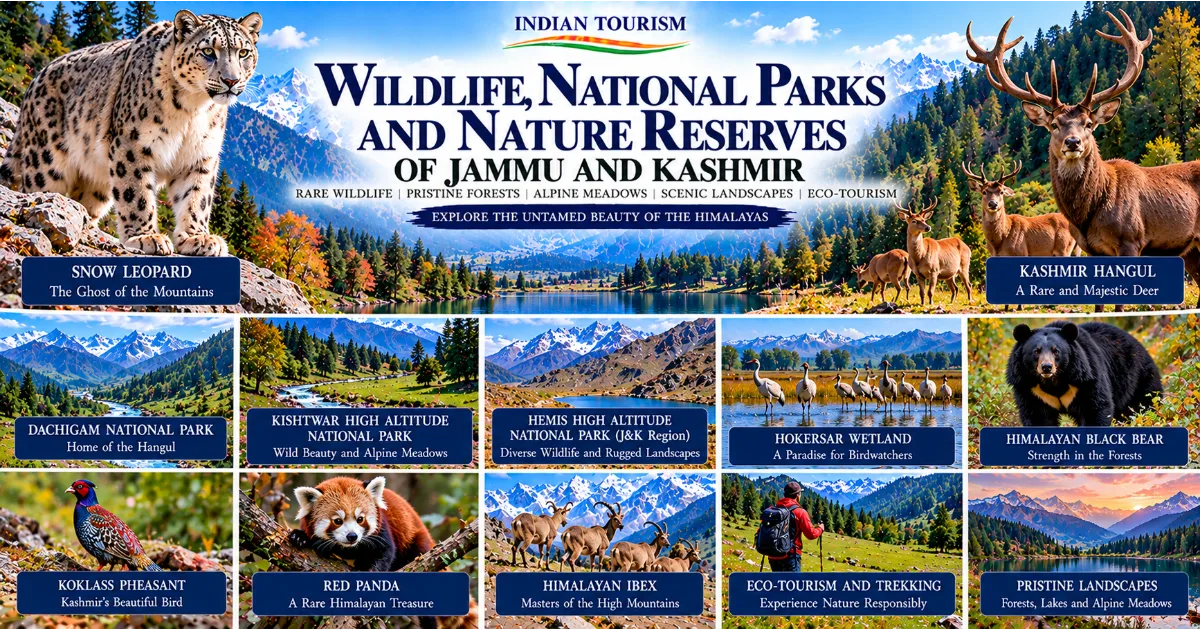
Discovering the Wild Side of Jammu and Kashmir
Jammu and Kashmir is famous for its snow-covered mountains, beautiful lakes, green valleys, historic gardens and spiritual destinations. Yet beyond its familiar tourist attractions lies another extraordinary world: a landscape of forests, alpine meadows, high-altitude mountains, rivers and wetlands that supports a remarkable variety of wildlife. For nature lovers, birdwatchers, photographers and responsible travellers, this region offers an opportunity to discover the Himalayan environment and understand why protecting its natural heritage is essential.
The wildlife of Jammu and Kashmir reflects the extraordinary variety of its geography. The Kashmir Valley contains temperate forests, wetlands and meadows, while the Jammu region includes subtropical woodland, river valleys and higher mountain habitats. As elevation increases, temperatures, vegetation and animal communities change. Forests of pine, fir, deodar and other trees provide shelter for mammals and birds, while alpine landscapes support wildlife adapted to cold conditions and sparse vegetation.
Among the region's most notable animals is the Kashmir hangul, a rare red deer associated with the forests of the Kashmir Valley. The Himalayan black bear, leopard, musk deer and several mountain-dwelling species also form part of the wider wildlife landscape. Wetlands attract migratory birds, while protected mountain areas conserve habitats that are important for biodiversity and ecological stability.
Jammu and Kashmir's protected areas include national parks, wildlife sanctuaries, conservation reserves and wetlands. Each serves a different purpose, from protecting endangered species and their habitats to maintaining ecological processes and supporting scientific research. These areas also offer opportunities for carefully managed nature tourism, provided that visitor activities do not disturb wildlife or damage sensitive environments.
Wildlife tourism requires a different attitude from conventional sightseeing. Animals may remain hidden, sightings are never guaranteed, and weather or access restrictions can change plans. The most rewarding experience often comes from observing a landscape patiently, learning about the species that inhabit it and recognising the importance of preserving their natural behaviour.
This guide explores the major wildlife destinations of Jammu and Kashmir, the animals and birds associated with them, the best ways to experience nature responsibly and the role conservation plays in protecting the region's Himalayan wilderness.
1. Dachigam National Park: The Home of the Kashmir Hangul
Dachigam National Park is one of the most important protected areas in Jammu and Kashmir. Located near Srinagar, the park is especially significant for the conservation of the Kashmir hangul, a rare deer that has become an emblem of the region's wildlife heritage.
The name Dachigam is commonly associated with the idea of ten villages, reflecting a historical connection with the landscape and its communities. The park covers a wide range of terrain, from lower forested areas to higher mountain habitats. This variation in elevation creates different ecological conditions and supports a range of plants and animals.
Dachigam's forests include broadleaf trees, conifers, shrubs and meadow vegetation. The changing landscape provides food and shelter for wildlife, while streams and other water sources contribute to the area's ecological value. Seasonal changes influence vegetation growth, animal movement and the appearance of the park.
The hangul is the park's most celebrated species. It is a distinctive red deer whose survival has become a major conservation concern. Habitat changes, fragmentation, human disturbance and other pressures have contributed to the challenges faced by the population. Conservation programmes focus on protecting its habitat, monitoring numbers and understanding the factors affecting its long-term survival.
Visitors should not expect to see a hangul simply because they enter the park's surroundings. Wildlife sightings depend on location, season, animal behaviour and access conditions. The value of a visit lies in appreciating the protected landscape and learning about the conservation work being undertaken.
Dachigam may also support other mammals and a variety of birds, although sightings vary. Travellers should follow park rules, remain on authorised routes and avoid making noise or attempting to approach animals.
Because access can be regulated, visitors should check current arrangements with the relevant wildlife authorities before planning a trip. Guided visits, where permitted, can help people understand the ecology of the park while minimising disturbance.
Dachigam demonstrates that wildlife conservation is not simply about protecting individual animals. It requires maintaining the forests, water sources and connected habitats that allow species such as the Kashmir hangul to survive.
2. Kashmir Hangul: A Rare Deer and a Conservation Symbol
The Kashmir hangul is one of the most distinctive animals associated with the region. It belongs to the red deer group and has long been connected with the forests and mountain landscapes of the Kashmir Valley. Its conservation status makes it an important focus of wildlife research and habitat protection.
The hangul's survival depends on suitable forest and meadow habitats, access to food, breeding opportunities and sufficient space to move. When habitats become fragmented or human disturbance increases, wildlife may find it harder to feed, reproduce and maintain healthy populations.
Conservationists monitor the species to understand population trends and identify the pressures affecting its survival. Habitat management, anti-poaching measures, research and public awareness all contribute to the broader effort. Protecting the hangul also helps conserve other species that share its environment.
The species is often highlighted in educational material and nature tourism because it provides a clear example of the relationship between local identity and biodiversity. However, its significance should not be reduced to a tourist symbol. The hangul is a wild animal whose survival depends on effective long-term conservation.
Visitors hoping to see this deer should understand that wildlife observation requires patience and restraint. Calling out, chasing animals, leaving designated paths or attempting to attract them with food can cause harm. Binoculars and appropriate photography equipment can help people observe wildlife from a distance when access rules permit.
The best way to support hangul conservation is to respect protected-area regulations, avoid wildlife products and learn about the challenges facing Himalayan ecosystems. Responsible visitors can also support legitimate conservation education and research initiatives.
The future of the Kashmir hangul depends on continued protection of its habitat and cooperation among conservation authorities, researchers and local communities. Its story reminds travellers that some of the region's greatest natural treasures are also among its most vulnerable.
3. Kishtwar National Park: High Mountains and Remote Wilderness
Kishtwar National Park is located in the Kishtwar district of the Jammu region. Its mountainous terrain, forested slopes, deep valleys and remote landscapes make it an important part of the region's natural heritage.
The park lies within a landscape shaped by steep elevation changes and the influence of the western Himalayas. Rivers, rocky ridges, forested areas and high mountain environments create a range of habitats. These conditions can support wildlife adapted to rugged terrain, including mountain mammals and forest-dwelling species.
Kishtwar's relative remoteness distinguishes it from more accessible tourist destinations. The park is not simply a conventional sightseeing attraction with guaranteed facilities and easy access. Travellers must account for local roads, weather, terrain and the rules governing entry into protected areas.
The landscape is particularly interesting to visitors who appreciate mountain ecology. Changes in altitude influence plant growth, temperature and the availability of food and shelter. Forests may occupy lower slopes, while higher terrain becomes increasingly exposed and may experience harsh seasonal conditions.
The wider Kishtwar region is known for its dramatic scenery, and nature-oriented travel can help visitors appreciate the importance of protecting its forests and watersheds. However, a beautiful mountain view does not necessarily indicate that a location is open for unrestricted tourism.
Wildlife sightings in such environments can be unpredictable. Many animals avoid people, remain active during particular periods or occupy remote sections of the landscape. Travellers should not enter restricted areas or attempt to track wildlife independently.
Before visiting, confirm current access arrangements, available guides, road conditions and any permissions required. Those planning longer walks should carry suitable clothing, sufficient water and essential supplies. In remote mountain areas, communication and emergency services may be limited.
Kishtwar National Park illustrates the value of protecting large, relatively undisturbed landscapes. Its importance extends beyond tourism, contributing to biodiversity conservation, water regulation and the ecological stability of the wider mountain region.
4. The Himalayan Black Bear: An Important Forest Mammal
The Himalayan black bear is among the mammals associated with forest habitats in parts of Jammu and Kashmir. Recognisable by its dark coat and distinctive pale chest marking, this bear occupies forested environments where food availability, shelter and seasonal conditions influence its behaviour.
The species is an omnivore, meaning that its diet can include plant material, fruits, nuts, insects and other available food sources. Its feeding habits vary with the season and local ecosystem. Forests that provide a diversity of natural food sources are therefore important for its survival.
Human activity can create challenges when settlements, roads, agriculture and tourism overlap with bear habitats. Improperly stored food and rubbish may attract bears towards human-use areas, increasing the risk of encounters. Feeding wildlife, even with good intentions, can encourage animals to associate people with food and lead to dangerous situations.
Visitors exploring forested areas should follow the guidance of local authorities and experienced guides. They should never approach a bear, attempt to photograph it at close range or try to block its movement. If an animal is encountered, people should remain calm and follow the advice of trained local personnel rather than improvising a response.
The presence of bears is not a reason to avoid all forest tourism. Instead, it highlights the need for sensible planning, clear information and respect for wildlife. Visitors should use established routes, avoid entering restricted areas and report concerning encounters to the appropriate authorities.
Conservation of the Himalayan black bear also depends on maintaining healthy forests and reducing unnecessary conflict with people. Better waste management, public awareness and responsible land-use practices can help reduce risks for both humans and animals.
Understanding this species encourages a more realistic view of wildlife tourism. Forests are living ecosystems occupied by animals with their own needs and behaviours. A responsible traveller visits to observe and learn, not to control what the wildlife does.
5. The Himalayan Brown Bear and High-Altitude Habitats
The Himalayan brown bear is associated with high-altitude environments in parts of the wider Himalayan region. Its distribution is limited and varies according to suitable habitat, food availability and local environmental conditions. Travellers should not assume that the species is present at every high mountain destination.
Brown bears living in mountain environments must cope with changing weather, short growing seasons and the seasonal availability of food. Alpine meadows, open slopes and other habitats can provide important resources, while remote terrain may offer shelter from disturbance.
The wider Himalayan landscape is changing under the influence of climate variability, infrastructure development, grazing patterns and other pressures. Changes in temperature and vegetation can affect the timing and availability of food, with possible consequences for animals that depend on seasonal resources.
Wildlife research is important for understanding the distribution and needs of rare or elusive species. Monitoring, habitat studies and cooperation between local communities and conservation authorities can improve knowledge and help guide management decisions.
For visitors, the key principle is to avoid treating a rare animal as a sighting target. Searching for bears without proper guidance can disturb wildlife and create unnecessary risk. In sensitive habitats, access may be restricted to protect animals and people.
If a permitted wildlife excursion is available, travellers should use experienced guides who understand local conditions and follow established safety practices. Visitors should never attempt to approach dens, feeding sites or animals with young.
Protecting high-altitude habitats benefits many species beyond the brown bear. Healthy mountain ecosystems also support vegetation, water regulation and the natural processes that sustain communities downstream.
6. Leopards and Other Elusive Carnivores
Leopards are among the adaptable large carnivores found in parts of the wider Jammu and Kashmir landscape. They use a variety of habitats, including forests, rocky terrain and areas near human settlements where suitable cover and prey are available.
Their ability to remain concealed makes them difficult to observe. Leopards are generally elusive, and a traveller may visit a forest for several days without seeing one. This is normal and should not be regarded as a failure of a wildlife trip.
Carnivores play an important role in ecosystems by influencing prey populations and contributing to ecological balance. Their survival depends on suitable habitat, adequate prey, and the ability to move through landscapes without excessive disturbance.
Encounters between leopards and people can become a concern when habitat changes, livestock losses or other pressures bring animals closer to settlements. Effective management requires local knowledge, reliable reporting systems and measures that reduce conflict without indiscriminately harming wildlife.
Travellers should never attempt to follow a leopard, lure it with food or enter areas where authorities have restricted access. If an animal is reported nearby, follow local guidance and avoid approaching the location simply to obtain a photograph.
Nature tourism can contribute to public appreciation of carnivores when it focuses on ecology rather than spectacle. Learning about tracks, habitat requirements and conservation challenges can be valuable even without a direct sighting.
A responsible approach recognises that the presence of a large predator is part of a functioning ecosystem. Its protection requires careful management, respect for local concerns and an understanding that wildlife and human communities share parts of the same landscape.
7. Musk Deer: A Secretive Animal of Himalayan Forests
Musk deer are among the distinctive mammals associated with Himalayan mountain habitats. They differ from familiar deer in several physical characteristics, including the absence of antlers in both sexes and the presence of elongated canine teeth in males.
These animals inhabit environments where dense vegetation, steep terrain and suitable cover help them remain concealed. Their feeding habits and movement patterns are influenced by the availability of plants and the conditions of their habitat.
Musk deer have faced serious pressures from illegal hunting because of the value historically associated with musk produced by males. Habitat disturbance and other pressures can add to the challenges faced by populations. Protection from poaching and preservation of suitable habitat are therefore important elements of conservation.
The species is not an animal that visitors should expect to see during an ordinary forest walk. Its secretive behaviour and the conditions of its habitat make observation difficult. In some places, research and monitoring may provide more reliable information than tourism-based sightings.
Visitors can support conservation by refusing to purchase products claimed to contain wild musk and by avoiding wildlife souvenirs of uncertain origin. When travelling through protected areas, they should remain on authorised routes and follow rules designed to minimise disturbance.
Musk deer highlight an important lesson about biodiversity. Some of the most significant wildlife in the Himalayas is small, quiet and difficult to observe. Conservation value does not depend on an animal being easy to photograph.
Protecting these species requires sustained scientific research, habitat management and public awareness. Responsible nature tourism can contribute by encouraging people to appreciate wildlife without demanding direct contact.
8. Kashmir's Wetlands: Essential Habitats for Migratory Birds
The wetlands of the Kashmir Valley are among the region's most valuable natural environments. These areas support resident and migratory birds, provide feeding and resting places, help regulate water and contribute to the ecological health of the valley.
Wetlands include shallow lakes, marshes, reed beds and seasonally flooded areas. Their vegetation and water conditions create habitats for birds that depend on aquatic plants, fish, insects and other food sources. Different wetland environments support different species, and the birdlife changes with the seasons.
Kashmir's wetlands are particularly important during migration periods, when birds travel between breeding grounds and wintering areas. Some use the wetlands as temporary resting places, while others remain for longer periods depending on the conditions and availability of food.
Birdwatching can be a rewarding way to experience these landscapes. Visitors may observe waterfowl, waders and other birds from permitted viewing locations. Binoculars help reduce the need to approach wildlife, while a field guide can make the experience more informative.
Wetlands are also vulnerable to pollution, encroachment, changes in water flow, invasive vegetation and disturbance. Wastewater, plastic rubbish and poorly managed development can damage the ecological functions that make these areas important.
Responsible visitors should remain on designated paths, avoid entering reed beds and refrain from making loud noises that disturb feeding or resting birds. Drones and other activities may be restricted, particularly where they could affect wildlife.
Wetland conservation benefits more than birds. These environments can help retain water, support aquatic biodiversity and contribute to flood regulation. Their protection is important for the wider communities and ecosystems that depend on them.
9. Hokersar Wetland: A Destination for Birdwatching
Hokersar Wetland, situated near Srinagar, is one of the important wetland habitats in the Kashmir Valley. It is known for its role in supporting migratory waterbirds and provides an opportunity to learn about the ecological importance of wetlands.
The wetland's water, marsh vegetation and surrounding landscape create conditions that attract birds during suitable seasons. The number and variety of birds present can change with migration patterns, weather, water levels and habitat conditions.
Birdwatchers may encounter different kinds of ducks, geese, waders and other water-associated species, depending on the time of year. Exact sightings are never guaranteed, and visitors should avoid relying on outdated bird lists when planning a trip.
A successful visit is often quiet and patient. Rather than walking quickly through the area, visitors can spend time observing the water and vegetation from suitable viewpoints. Binoculars make it possible to identify birds at a distance without disturbing them.
The wetland's conservation importance extends beyond tourism. It provides feeding and resting habitat for migratory birds and supports ecological processes linked to the valley's water systems. Pollution, habitat alteration and disturbance can reduce its value for wildlife.
Visitors should follow current access rules and use local guidance when available. Not every section of a wetland is suitable for public entry, and some areas may be restricted for conservation reasons.
Hokersar is a reminder that natural beauty does not always take the form of dramatic mountain peaks. A marsh filled with bird calls and seasonal movement can be just as remarkable, particularly when viewed with an understanding of the ecological relationships it supports.
10. Other Wetlands and Bird Habitats Across the Valley
Hokersar is only one part of Kashmir's wider wetland network. Other wetlands and water bodies in the valley also support birds and aquatic life, contributing to regional biodiversity and providing important resting places for migratory species.
Wetlands such as Shallabugh and other marshland habitats are valuable because they offer a variety of conditions. Water depth, vegetation, seasonal flooding and the availability of food influence which species use a particular location.
The wetlands are connected to the wider landscape through water flow, agriculture, settlements and changing weather patterns. Their condition can be affected by activities far beyond their immediate boundaries. Conservation therefore requires planning at the level of the wider catchment, not just the visible wetland.
For birdwatchers, exploring several wetland locations with a knowledgeable guide can reveal differences in habitat and species behaviour. However, visitors should confirm which sites are open to public access and whether any restrictions apply.
Bird identification can be challenging, particularly for beginners. Observing body shape, size, feeding behaviour and movement can be more useful than trying to identify every bird immediately. Photographs taken from a respectful distance may assist later identification, provided photography is permitted.
Wetland visits should avoid disturbing nesting areas, damaging reeds or leaving food waste behind. Visitors should not attempt to feed wild birds, as this can alter their behaviour and create dependence on human-provided food.
The protection of wetlands is a shared responsibility. Public awareness, scientific monitoring, sensible land management and effective pollution control all contribute to maintaining these habitats for future generations.
11. Dachigam's Forests and the Importance of Habitat Conservation
Although Dachigam is widely recognised for the Kashmir hangul, its importance extends to the wider forest ecosystem. Forests provide shelter, food, breeding areas and movement corridors for many forms of wildlife. Their ecological value cannot be measured only by the number of large animals that visitors might see.
A forest is made up of interconnected elements. Trees provide cover and influence the local climate, while shrubs and ground vegetation support insects, birds and herbivorous mammals. Streams and soil processes help sustain plant growth, and fallen wood can provide habitat for organisms involved in decomposition.
Changes to any part of this system can affect other components. Habitat fragmentation may isolate animal populations, while excessive disturbance can alter feeding or breeding behaviour. Invasive species and changes in fire patterns may also affect some forest environments.
Protected areas help maintain these ecological relationships, but their management requires continued attention. Scientific surveys, habitat monitoring, restoration work and cooperation with surrounding communities can all contribute to conservation.
Visitors can help by staying on authorised trails, avoiding litter and following restrictions on noise, vehicles and photography. They should not collect plants, disturb nests or remove natural materials from protected locations.
Nature interpretation can make a visit more valuable. A knowledgeable guide may explain why certain trees grow at particular elevations, how animals use forest cover or why a stream is important to the surrounding ecosystem. Such learning provides a deeper experience than simply walking through the landscape.
Dachigam demonstrates that conservation is about protecting a living system. The future of the hangul and other wildlife depends on maintaining the ecological conditions that allow the forest to function.
12. Mountain Birds and the Richness of Himalayan Avifauna
Jammu and Kashmir's varied elevations and habitats support a wide range of birds. Wetlands attract waterbirds, forests provide nesting and feeding grounds for woodland species, and mountain landscapes support birds adapted to cooler temperatures and rugged terrain.
Birds play many ecological roles. Some disperse seeds, others feed on insects, and scavenging species help remove animal remains. Their presence and behaviour can also provide information about habitat conditions, although a single observation should not be used to draw broad conclusions about ecosystem health.
Birdwatching is an accessible activity because it does not require visitors to approach wildlife. Binoculars, patience and an interest in learning can make even a short walk rewarding. Beginners can start by noticing size, colour patterns, calls and feeding habits rather than attempting to identify every species immediately.
The Himalayan monal is one of the region's striking mountain birds, while the koklass pheasant is associated with parts of the wider Himalayan landscape. Different habitats support different bird communities, and sightings depend on location, season and conditions.
Birdwatchers should avoid using recorded calls to attract birds in sensitive areas, especially during breeding periods. Playback can disturb territorial behaviour and interfere with normal activity. Approaching nests or handling eggs and chicks is also harmful and should never be attempted.
Photography should be carried out with appropriate equipment and from a respectful distance. A photograph is not worth causing a bird to abandon a nest or waste energy escaping from repeated approaches.
Jammu and Kashmir offers valuable opportunities for birdwatching, but the experience is best when it combines observation with an understanding of habitat conservation. Every bird seen in its natural setting is part of a much larger ecological story.
13. Alpine Meadows: Seasonal Landscapes and Wildlife
Alpine meadows are open mountain landscapes found at elevations where conditions differ from the forests below. During the growing season, these meadows can support grasses, herbs and flowering plants that provide food for grazing animals and habitat for insects and other wildlife.
Their appearance changes dramatically with the seasons. Snow may cover the ground during colder periods, while warmer months bring new plant growth. The length of the growing season is often limited, making the timing of plant development important for animals that depend on these resources.
Alpine meadows can be especially sensitive to heavy foot traffic, unmanaged grazing, litter and off-road vehicles. Vegetation may take time to recover from disturbance, particularly in harsh environments where growth is slow.
Visitors should use established routes and avoid trampling flowering plants. Camping, fires and other activities should take place only where permitted. In areas where grazing animals are present, travellers should maintain distance and follow local instructions.
Wildlife can use meadows for feeding, movement or seasonal activities. However, human presence may affect animal behaviour, particularly when visitors approach too closely or remain in one place for extended periods near sensitive habitat.
A responsible meadow visit combines appreciation of the scenery with an understanding of its ecological limits. Travellers can enjoy the views, learn about plant communities and observe wildlife from a distance without assuming that every open area is suitable for unrestricted recreation.
The conservation of alpine meadows helps protect biodiversity, maintain mountain ecosystems and preserve the natural character of the Himalayan landscape. Their beauty depends on careful management as much as on their dramatic setting.
14. The Importance of Rivers, Streams and Forest Water Sources
Rivers and streams are essential parts of Jammu and Kashmir's natural environment. They shape valleys, provide water for communities and agriculture, and support aquatic habitats. In forested and mountainous areas, small streams can also be important sources of water for wildlife.
Water systems connect landscapes that may appear separate on a map. Rainfall and snowmelt influence river flow, while vegetation and soil affect how water moves through a catchment. Changes in the upper reaches can influence water quality and availability downstream.
Healthy river corridors may provide habitat for birds, insects, fish and other wildlife. Vegetation along the banks can help stabilise soil, reduce erosion and create shade. When natural river edges are damaged, the ecological consequences may extend beyond the immediate site.
Tourism can create pressure through litter, untreated wastewater, vehicle activity and poorly managed development near waterways. Visitors should never leave plastic, food waste or other rubbish beside streams and lakes. They should also avoid washing with detergents or releasing waste into water sources.
Water safety matters as well. Mountain rivers can be cold, fast-flowing and deeper than they appear. Travellers should not enter unfamiliar water or approach unstable banks simply to take photographs.
Conservation of river systems requires cooperation among authorities, communities, farmers, tourism operators and visitors. Responsible tourism is only one part of the solution, but it can help reduce avoidable disturbance.
When travellers appreciate a river as an ecological system rather than a scenic background, they are more likely to protect it. The streams of Jammu and Kashmir support both wildlife and human life, making their conservation essential to the region's long-term wellbeing.
15. Wildlife Sanctuaries and Conservation Reserves
National parks receive considerable attention, but wildlife sanctuaries and conservation reserves are also important components of Jammu and Kashmir's protected-area network. Their legal status, management objectives and access rules may differ, but they can all contribute to habitat conservation.
A sanctuary may protect important wildlife populations or habitats, while a conservation reserve can help safeguard areas of ecological importance, including places that support wildlife movement. The exact purpose and permitted activities depend on the designation and applicable rules.
Protected areas work best as part of a connected landscape. Animals may need to move between feeding grounds, breeding sites and seasonal habitats. If natural corridors become fragmented, populations can become isolated and more vulnerable to environmental changes.
The surrounding countryside is also important. Agricultural land, forests, village edges and river corridors may influence how wildlife moves and where encounters with people occur. Conservation planning must consider these relationships rather than focusing only on the boundaries drawn on a map.
Visitors should verify the official name and designation of a site before planning an excursion. Some places marketed informally as wildlife destinations may not provide public entry, guided tours or facilities. Local rules can change, so current guidance is essential.
Responsible tourism in sanctuaries and reserves means avoiding disturbance, using permitted routes and respecting the purpose for which the area is protected. It also means accepting that conservation needs may take priority over visitor access.
By recognising the wider protected-area network, travellers can appreciate the amount of planning and cooperation needed to conserve biodiversity. National parks may be the best-known destinations, but smaller reserves and connected habitats can be equally important to the survival of wildlife.
16. Eco-Tourism: Exploring Nature Without Harming It
Eco-tourism aims to encourage nature-based travel that supports conservation, environmental learning and benefits for local communities. In Jammu and Kashmir, it can include guided forest walks, birdwatching, responsible visits to rural landscapes and educational experiences near protected areas where these activities are permitted.
The term should not be treated as a guarantee that an activity is environmentally responsible. A tourism provider may use the word eco-tourism in marketing without following strong environmental practices. Travellers should look for clear information about waste management, local employment, visitor limits and respect for wildlife.
A responsible nature excursion starts with suitable planning. Visitors should choose activities that match their fitness, experience and equipment. They should also ask whether a guide is required, whether permits apply and what safety measures are in place.
Small actions can make a difference. Carrying reusable containers, taking rubbish away, remaining on marked paths and avoiding unnecessary noise can reduce disturbance. Travellers should not feed animals, collect plants or purchase products made from protected wildlife.
Local communities should be active participants in eco-tourism. Hiring local guides, using locally owned accommodation and purchasing genuine regional products can help distribute income. Fair payment and clear agreements are important, particularly when community members share their knowledge or provide access to private land.
Environmental education is another key element. A guided walk becomes more meaningful when visitors learn about plant species, animal behaviour, water systems and conservation challenges. This knowledge can encourage long-term support for habitat protection.
Eco-tourism should not promise guaranteed wildlife encounters. Responsible operators understand that animals are unpredictable and that visitor satisfaction must not come at the expense of animal welfare.
When managed carefully, nature tourism can strengthen public appreciation for Jammu and Kashmir's biodiversity. Its success should be measured not only by visitor numbers but also by the quality of the experience, the benefits to local people and the protection of the environment.
17. Best Time to Explore Wildlife Destinations
The best time for wildlife travel in Jammu and Kashmir depends on the destination, the species of interest and current access conditions. Wetland birdwatching, forest exploration and high-altitude travel have different seasonal patterns, so a single month cannot be recommended for every activity.
The cooler months can be valuable for observing migratory birds at suitable wetlands, although weather and water conditions influence which species are present. Visitors should consult recent local bird reports or knowledgeable guides rather than relying on the same list of sightings each year.
Spring and summer may offer easier access to some forest and mountain locations, depending on elevation and local conditions. Plant growth, breeding cycles and animal activity change with the season, so wildlife behaviour may differ even at the same site.
Higher mountain areas can experience snow, cold temperatures and sudden weather changes. Roads and trails may become difficult or inaccessible during certain periods. Visitors should check current access information before travelling and avoid assuming that a destination is open simply because it appears in a travel guide.
The best time for a particular animal sighting is not always the best time for the animal itself. Visitors should avoid breeding areas, dens and other sensitive locations, even if they have heard that an animal is present.
For a first wildlife trip, a locally guided visit to an accessible protected area or wetland may be more suitable than an ambitious journey into remote terrain. It offers opportunities to learn about habitats without taking unnecessary risks.
A flexible itinerary is essential. Weather, wildlife movement and conservation restrictions can change plans, and responsible travellers should be willing to adapt rather than pressure guides to deliver a particular sighting.
18. Practical Tips for Wildlife Travellers
Preparation is important for any nature-based journey. Before leaving, travellers should confirm the current access arrangements for each protected area, including opening times, permit requirements, guide availability and any seasonal restrictions.
Clothing should be suitable for the location and season. Forest walks may require sturdy footwear and protection from rain, while mountain trips may need warm layers and equipment appropriate for changing conditions. Visitors should avoid attempting difficult routes without suitable preparation.
Binoculars are useful for observing birds and mammals at a distance. A camera with an appropriate zoom lens can help visitors photograph wildlife without approaching too closely. Equipment should never become a reason to violate access rules or disturb animals.
Carry drinking water and basic supplies suitable for the duration of the trip. In remote areas, mobile coverage may be unreliable, and emergency facilities may be limited. Inform someone of your plans when travelling into less accessible locations.
Follow the instructions of guides, park staff and local authorities. Do not enter restricted zones, cross barriers or approach wildlife to improve a photograph. Never feed animals, attempt to touch them or use calls and other methods to attract them.
Travellers should also be careful about sharing precise locations of sensitive wildlife sightings on social media. Publicly revealing the location of a rare animal or nest can attract unwanted attention and increase disturbance. When in doubt, share general information rather than exact coordinates.
Respect local communities living near protected areas. They may face the practical consequences of wildlife movement, crop damage or livestock losses. Listening to local perspectives helps visitors understand that conservation involves social and economic questions as well as ecological goals.
Above all, keep expectations realistic. A trip may produce no sightings of a particular mammal, but it can still provide valuable knowledge about forests, birds, plants and conservation. The purpose of wildlife travel should be to understand nature, not to demand that nature perform for visitors.
19. Conservation Challenges and the Future of Himalayan Wildlife
Jammu and Kashmir's wildlife faces a combination of pressures that vary across habitats and species. Habitat loss, fragmentation, illegal hunting, pollution, unmanaged development and human-wildlife conflict can all affect animal populations. Climate change may also influence vegetation, snow conditions, water availability and seasonal patterns.
Human-wildlife conflict can occur when animals move near villages, damage crops or prey on livestock. These encounters can create genuine concerns for local residents, especially where livelihoods depend on farming and animal husbandry. Conservation programmes need to consider the experiences of these communities and provide practical approaches to reducing conflict.
Habitat connectivity is another important issue. Wildlife may need to move between areas to find food, suitable breeding grounds or seasonal shelter. Roads, settlements and other forms of development can make these movements more difficult if they are not planned carefully.
Pollution threatens wetlands and water systems, while waste left by visitors can attract animals to areas where encounters with people are more likely. Better waste management, responsible tourism practices and effective enforcement of environmental rules are therefore important.
Scientific research provides information about population trends, habitat use and the effectiveness of conservation measures. Camera traps, field surveys, bird counts and other monitoring methods can help researchers understand changes over time. The quality of these efforts depends on reliable data, trained personnel and continued support.
Local communities are essential partners in conservation. People who live near forests, wetlands and protected areas often possess detailed knowledge of the landscape. Conservation initiatives are more likely to succeed when they listen to this knowledge, address local concerns and create fair opportunities for participation.
Visitors can contribute through responsible behaviour and by supporting credible conservation education. They should avoid spreading unverified claims about rare species, refrain from purchasing wildlife products and respect restrictions designed to protect sensitive habitats.
The future of Himalayan wildlife depends on sustained cooperation. Protecting a species requires more than public attention; it requires suitable habitat, effective management, research, community participation and a long-term commitment to ecological health.
Conclusion: Protecting the Natural Treasures of Jammu and Kashmir
The wildlife of Jammu and Kashmir is one of the region's most valuable natural assets. From the rare Kashmir hangul of Dachigam to the migratory birds of the valley's wetlands, the region's forests, mountains and water systems support a rich variety of life.
Dachigam National Park, Kishtwar National Park, Hokersar Wetland and other protected habitats demonstrate the importance of maintaining landscapes where wildlife can feed, breed and move with minimal disturbance. Each area contributes to a wider ecological network that supports biodiversity and benefits people as well as animals.
For travellers, wildlife tourism offers an opportunity to experience the Himalayas from a different perspective. A quiet morning watching birds, a guided walk through a forest or an explanation of hangul conservation can be more meaningful than a hurried attempt to see as many animals as possible.
Responsible travel begins with respect. Visitors should follow local rules, keep their distance from wildlife, avoid litter and accept that sightings are never guaranteed. They should also recognise the concerns of communities living near protected areas and support tourism practices that provide fair local benefits.
Conservation is a shared responsibility involving government authorities, scientists, local communities, tourism operators and the public. Protecting forests, wetlands, alpine meadows and river systems helps maintain the natural processes on which wildlife and human communities depend.
Jammu and Kashmir's wilderness deserves to be explored with patience and care. Its greatest natural treasures are not simply animals to photograph or landscapes to admire. They are living ecosystems that require protection so that future generations can continue to learn from and appreciate the extraordinary biodiversity of the Himalayas.
#IndianTourism #JammuAndKashmir #WildlifeTourism #HimalayanWildlife #DachigamNationalPark #KishtwarNationalPark #KashmirHangul #HimalayanBlackBear #MuskDeer #HokersarWetland #Birdwatching #MigratoryBirds #WetlandConservation #NationalParks #WildlifeSanctuaries #NatureReserves #EcoTourism #ResponsibleTourism #NaturePhotography #Biodiversity #WildlifeConservation #Himalayas #KashmirNature #ExploreKashmir #ExploreJammu #ExploreIndia

