
Discover the Historic Spring of Kashmir
Kashmir is renowned for its lakes, snow-covered mountains, traditional gardens and green valleys, but its beauty is also connected to the springs and rivers that have shaped the region's geography and history. Verinag, located in the Anantnag district of Jammu and Kashmir, is a destination where natural scenery and historical heritage come together. Famous for its spring and the surrounding Mughal-era garden, Verinag offers a distinctive experience for travellers who want to explore Kashmir beyond its best-known lakes and mountain resorts.
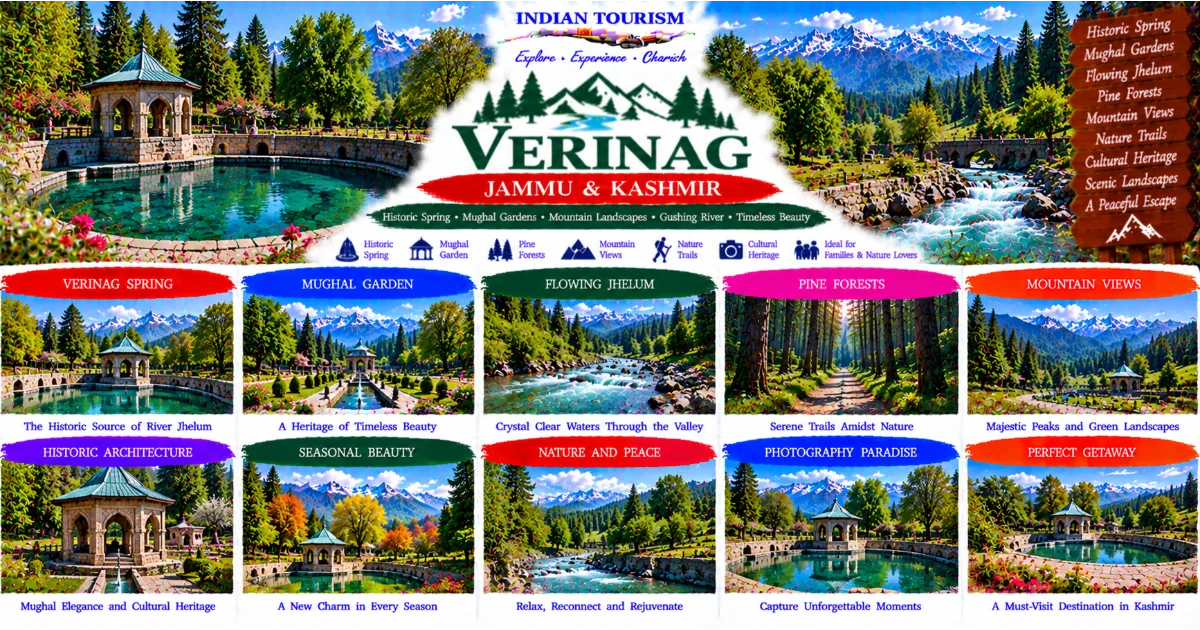
The Verinag Spring is traditionally associated with the source of the Jhelum River, one of the major rivers of the Kashmir Valley. The spring emerges in a striking natural setting, surrounded by stone structures, trees and carefully arranged garden spaces. Its clear water and distinctive octagonal stone enclosure give the site a character that differs from the region's open meadows and forested valleys. The nearby garden, developed during the Mughal period, adds an architectural and cultural dimension to the visit.
Verinag is particularly appealing to travellers interested in history, architecture, nature and photography. Visitors can admire the spring, walk through the garden, observe the relationship between water and Mughal landscape design, and enjoy the countryside of southern Kashmir. Unlike destinations where the main attraction requires a long mountain trek, Verinag can be explored at a relaxed pace by visitors who prefer accessible sightseeing.
The destination also provides an opportunity to understand the importance of water in Kashmir's cultural and physical landscape. Springs, streams and rivers have influenced settlement patterns, agriculture, gardens and travel routes for centuries. At Verinag, this connection is visible in the relationship between the natural spring and the surrounding historic structures.
A visit can form part of a wider journey through southern Kashmir, particularly for travellers interested in combining historical sites with scenic countryside. However, visitors should confirm current access arrangements, opening conditions and transport options before travelling. By exploring respectfully and protecting the historic environment, travellers can enjoy Verinag while helping preserve its character for future generations.
Where Is Verinag Located?
Verinag lies in the Anantnag district of Jammu and Kashmir, in the southern part of the Kashmir Valley. It is situated near the foothills of the Pir Panjal range and is accessible by road from other parts of the valley. Srinagar is a common starting point for travellers planning a visit, while Anantnag and other nearby settlements may provide alternative bases depending on the itinerary.
The journey to Verinag takes visitors through the countryside of southern Kashmir, where cultivated fields, settlements and mountain views form part of the landscape. The scenery gradually changes as the road approaches the area around the spring. This combination of rural travel and historic sightseeing makes Verinag a suitable stop for people who want to experience both cultural heritage and natural beauty.
The destination's location also connects it with the wider geography of the Jhelum River. The river has played a significant role in the development of Kashmir's settlements, agriculture and transport networks. Verinag's spring is traditionally regarded as its source, making the site important not only for its appearance but also for its place in regional geographical understanding and cultural memory.
Travel times depend on the starting point, traffic, road conditions and weather. Visitors should check current directions before departure and allow sufficient time for the return journey. If combining Verinag with other destinations, plan according to actual road distances rather than relying only on the apparent proximity of places on a map.
Why Is Verinag Famous?
The Historic Verinag Spring
The spring is the central attraction of Verinag. Its water emerges from the ground into a carefully constructed stone enclosure that gives the site a distinctive appearance. The structure is traditionally associated with Mughal-era development, and its geometric design creates a striking contrast with the natural water flowing within it.
The spring is valued for its clarity and the sense of continuity it represents. Water has long been essential to life in Kashmir, supporting settlements, agriculture and gardens. At Verinag, visitors can observe how a natural water source became the centre of an important historic landscape.
The spring should be appreciated as both a natural feature and a heritage site. Visitors should avoid entering the water, throwing objects into it or disturbing the surrounding stonework. Keeping the area clean and following local instructions helps preserve the site for future visitors.
The experience is particularly rewarding for travellers who enjoy places where natural processes and human design intersect. The spring is not simply a scenic pool. It reflects the importance of water in the history and identity of the Kashmir Valley.
The Mughal Garden
The garden surrounding Verinag Spring is an important part of the destination's appeal. Mughal gardens are known for their formal layouts, carefully arranged pathways, water features and relationships between architecture and landscape. At Verinag, the spring and the surrounding garden create a setting in which water becomes both a natural resource and a central design element.
The garden offers a different experience from the wide, open landscapes of Kashmir's meadows. Here, visitors can explore structured spaces, observe the relationship between trees and stonework, and appreciate how the landscape has been shaped for visual harmony. The arrangement of paths and garden features encourages a slower form of sightseeing.
Visitors interested in architecture can pay attention to the use of stone, the geometry of the spring enclosure and the way the garden frames the water. These details provide insight into the design principles associated with historic garden landscapes.
The garden should be treated as a heritage environment rather than a recreational area without restrictions. Visitors should remain on appropriate paths, avoid damaging plants and structures, and follow any instructions concerning access or photography.
The Connection with the Jhelum River
Verinag is traditionally recognised as the source of the Jhelum River, an important waterway that flows through the Kashmir Valley. The river has influenced the region's geography, agriculture and settlement patterns, making the spring significant within the broader story of Kashmir's natural environment.
The connection between spring and river helps visitors understand how water systems begin and develop. A spring may appear modest compared with a major river, yet it forms part of the wider network that sustains landscapes and communities downstream.
Visitors should recognise that the spring's historical and cultural significance extends beyond the immediate garden. It is part of a larger water system whose health depends on environmental protection and responsible management.
Natural Beauty and Mountain Surroundings
Verinag's setting near the foothills of the Pir Panjal range contributes to its scenic appeal. The surrounding countryside includes fields, trees and mountain views that create a pleasant contrast with the formal garden. Depending on the season and weather, the landscape may appear bright and green, softly coloured in autumn or quieter during colder months.
The approach to Verinag can be as rewarding as the main site. Travellers can observe the changing countryside and appreciate the relationship between villages, cultivated land and the surrounding mountains.
Photography opportunities include the spring enclosure, garden paths, water features and wider landscape. Visitors should choose suitable positions and avoid standing on fragile stonework or entering restricted areas to obtain a particular image.
Best Time to Visit Verinag
Spring: March to May
Spring brings gradual changes to the countryside around Verinag. Trees and garden vegetation begin to develop fresh growth, and the surrounding fields take on a brighter appearance as the season progresses. The combination of water, stone architecture and emerging greenery can make this a pleasant period for sightseeing.
Temperatures may vary considerably between morning and afternoon. Visitors should carry light layers and a jacket, particularly if travelling early in the day. Rain and changing weather can affect the comfort of outdoor exploration, so a flexible schedule is useful.
Spring is well suited to travellers who enjoy gardens and historical sites in a setting that is gradually becoming greener. The exact appearance of the garden depends on seasonal conditions, so visitors should not expect every plant to be in bloom on a particular date.
Summer: June to August
Summer is often a comfortable period for visiting Verinag. The garden and surrounding countryside can appear lush, and longer daylight hours allow visitors to explore at a relaxed pace. The combination of the spring, trees and formal garden paths makes the destination suitable for families, couples and photographers.
Summer can also bring increased travel demand across Kashmir. Visitors should arrange transport and accommodation in advance if their itinerary includes several destinations. A morning visit may be preferable for travellers who want to explore before the busiest period of the day, although actual crowd levels vary.
Rain remains possible, and wet paths may become slippery. Visitors should wear comfortable footwear and take care around water features and stone surfaces. It is better to explore slowly than to rush through the garden.
Autumn: September to November
Autumn brings cooler air and changing colours to the surrounding countryside. Trees may develop warmer shades, while clear days can offer attractive views towards the nearby hills. The combination of historic stonework, water and seasonal foliage creates opportunities for photography.
Visitors should carry warm layers, especially if they plan to arrive early or remain outdoors late in the afternoon. As the season advances, temperatures can fall and daylight becomes shorter.
Autumn is also a suitable time for travellers who prefer a quieter style of sightseeing. The spring and garden can be explored without the need for a demanding outdoor schedule, making the destination an appealing stop on a broader southern Kashmir itinerary.
Winter: December to February
Winter brings colder conditions to the region, and the surrounding landscape may experience frost or snow depending on the weather. Verinag's garden can take on a different atmosphere during this period, with bare trees and subdued colours emphasising the stone architecture and water.
Visitors should check current road conditions and site accessibility before travelling. Cold weather may make paths slippery, and the availability of local services can vary. Warm clothing and suitable footwear are essential.
Winter is best approached with a flexible itinerary. If conditions are poor, visitors should consider postponing the trip rather than attempting to reach the site in unsafe weather. For a first visit focused on comfortable outdoor exploration, spring through autumn may be more practical.
Places and Features to Explore in Verinag
The Octagonal Spring Enclosure
The spring's stone enclosure is one of the most distinctive features of the site. Its geometric form creates a structured setting for the naturally emerging water, showing how historic design can complement the landscape without replacing its central natural feature.
Visitors can observe the shape of the enclosure, the surrounding stonework and the relationship between the spring and the garden. These architectural details may be especially interesting to people who enjoy heritage sites and historical landscape design.
Do not climb onto the structure, enter the water or touch fragile features unnecessarily. Historic stonework can be damaged by repeated contact, and access restrictions should always be respected.
Garden Pathways and Water Features
The garden pathways provide an opportunity to explore the site at a relaxed pace. The arrangement of paths, trees and water features helps organise the landscape and creates different views as visitors move through the garden.
Take time to observe how the garden's design directs attention towards the spring. The relationship between water and movement is an important feature of many historic gardens, and Verinag offers an accessible example of this approach.
Visitors should remain on suitable paths and avoid trampling planted areas. If some sections are closed for maintenance or conservation, follow the instructions rather than attempting to enter them.
Trees and Shaded Garden Spaces
Trees contribute to the atmosphere of Verinag by providing shade and framing views of the historic structures. Their appearance changes with the season, creating different experiences for visitors throughout the year.
Shaded areas can be pleasant places to pause during a visit, particularly in warmer weather. Visitors should use designated seating or suitable public spaces and avoid damaging branches or vegetation.
Photography can capture the contrast between the trees, stonework and water. The best compositions often come from observing the existing landscape rather than rearranging objects or entering restricted areas.
Views of the Surrounding Countryside
The wider area around Verinag includes rural settlements, fields and mountain scenery. These surroundings provide a broader context for the historic site and help visitors understand how the garden fits within the landscape of southern Kashmir.
If time allows, travellers can enjoy the countryside along the approach road or make a suitable stop at an accessible public viewpoint. Any stops should be planned carefully so that vehicles do not obstruct local traffic.
Visitors should respect private property and ask permission before photographing people or homes. Rural landscapes are living environments, and responsible behaviour helps maintain good relationships with the local community.
Nearby Southern Kashmir Attractions
Verinag can be included in a wider itinerary through southern Kashmir, depending on travel time and current conditions. Travellers may consider combining it with suitable historical, cultural or natural attractions in the broader region.
The itinerary should be based on actual access, distances and available daylight. Not every nearby place will be suitable for a quick visit, and local circumstances may affect the route. Visitors should confirm the current status of any additional destination before setting out.
A balanced itinerary allows time to appreciate Verinag itself rather than treating it as a brief stop between several distant attractions.
Things to Do in Verinag
Explore the Historic Spring
The main activity is to observe the spring and appreciate its historical setting. Visitors can take time to examine the stone enclosure, watch the movement of water and understand why the site has remained important in Kashmir's landscape and cultural memory.
The experience is best enjoyed slowly. Rather than taking a quick photograph and leaving, spend time noticing the details of the structure and its relationship with the garden. If interpretive information or local guidance is available, it can add context to the visit.
Follow site rules and avoid entering the water or disturbing the stonework. Preserving the spring is essential to ensuring that future visitors can enjoy it.
Walk Through the Mughal Garden
A walk through the garden offers a chance to appreciate historic landscape design. The pathways, trees and water features create a setting that encourages quiet observation and photography.
Visitors can pay attention to the geometry of the layout, the use of shade and the way the spring forms the focal point of the garden. These details help explain how gardens have historically combined beauty, water management and leisure.
Comfortable footwear is useful, especially after rain. Visitors should avoid walking on fragile surfaces or entering sections that are closed for maintenance.
Photograph Architecture and Nature
Verinag offers a combination of architectural and natural subjects. The spring enclosure provides strong geometric lines, while the garden introduces trees, water and seasonal colours. The surrounding countryside can add further variety to a photography session.
Morning and late afternoon may provide softer light, although weather and site conditions will determine the best opportunities. Visitors should avoid obstructing other people and follow any restrictions on photography.
The goal should be to capture the site respectfully. Do not climb onto structures, move objects or enter restricted areas to achieve a particular composition.
Learn About Kashmir's Water Heritage
Verinag provides an opportunity to think about the importance of springs and rivers in Kashmir. Water supports agriculture, settlements and ecosystems, while also shaping cultural traditions and historic design.
Visitors can learn about the connection between the spring and the Jhelum River through reliable interpretive information and local guidance. This adds an educational dimension to the visit and helps place the site within the wider geography of the valley.
The spring should be treated as a valuable natural resource. Avoid throwing waste into the water or engaging in any activity that could affect its cleanliness.
Enjoy a Relaxed Family Outing
Verinag can be a pleasant destination for families who enjoy gardens, architecture and outdoor scenery. The historic spring provides an opportunity to introduce children to the relationship between natural water sources and human settlements, while the garden offers a calm environment for walking.
Families should supervise children around water features and stone structures. Explain why barriers and signs must be respected, and choose a walking pace that suits the group.
Carry drinking water, snacks and any essential medicines. Confirm facilities and transport arrangements before departure, particularly when travelling with young children or older family members.
Combine Heritage with Countryside Exploration
The surrounding countryside can complement a visit to the spring. Travellers may enjoy observing fields, villages and mountain scenery along the route, adding a rural dimension to the historical experience.
Plan countryside stops only where parking is safe and permitted. Avoid blocking roads or entering private land without consent. A respectful approach allows visitors to appreciate the area without disturbing residents.
This combination of heritage and landscape makes Verinag a suitable destination for travellers who prefer a balanced itinerary rather than a day devoted entirely to one type of attraction.
Local Food and Refreshments
A visit to Verinag can be combined with an exploration of the wider culinary traditions of Kashmir. Regional food includes rice-based meals, breads, vegetables, aromatic preparations and meat-based dishes. The specific options available near the spring depend on local businesses, the season and the services operating during the visit.
Kahwa, a traditional Kashmiri tea prepared with green tea and aromatic ingredients, is associated with hospitality throughout the region. Visitors may encounter it in local establishments, although preparation and availability vary.
Travellers should not assume that a full range of restaurants will be available immediately beside the historic site. If a particular meal is important to the itinerary, confirm suitable options before departure. Carry drinking water and snacks, especially when travelling with children or people who have dietary restrictions.
Food hygiene should remain a priority. Choose clean establishments, drink water from a reliable source and communicate dietary requirements clearly. Visitors with allergies should confirm ingredients rather than relying on assumptions.
Supporting legitimate local businesses where appropriate can also help ensure that tourism contributes to the surrounding community.
Where to Stay Near Verinag
Many travellers visit Verinag as part of a broader trip through southern Kashmir. Staying in an established base such as Srinagar or another suitable town may provide access to a wider selection of accommodation, restaurants and transport services. Visitors can then arrange a day excursion to the spring and combine it with other destinations when practical.
Travellers who prefer to stay closer to Verinag should confirm current accommodation options directly. Availability, facilities and road access may vary by season. Before booking, verify the property's exact location, heating, hot water, meal arrangements, electricity and transport support.
Families and older travellers should ask about stairs, walking distances and other practical requirements. A property that appears close on a map may still involve an inconvenient approach or limited facilities.
If choosing a locally operated guesthouse or homestay, clarify the price and meal arrangements before arrival. Respect household rules and privacy, and remember that accommodation standards may differ from those of larger hotels.
For a first visit, a day trip from an established base can be a convenient way to explore Verinag without relying on uncertain lodging arrangements.
How to Reach Verinag
By Air
Srinagar Airport is the main air gateway commonly used by travellers visiting Kashmir. From the airport, visitors can arrange road transport to Verinag. The journey time depends on traffic, route selection and current road conditions.
Travellers should leave enough flexibility between arrival and sightseeing. Flight delays or road traffic may affect the schedule, and those arriving late in the day may find it more practical to stay overnight before travelling to the spring.
Confirm transport arrangements before departure and ensure that the driver knows the intended destination. If weather conditions are poor, adjust the schedule rather than attempting to complete the trip in unsuitable conditions.
By Road
Road travel is the usual way to reach Verinag. Visitors can arrange a private taxi or another suitable vehicle from Srinagar, Anantnag or a different base in the Kashmir Valley.
Check current directions and road conditions shortly before departure. Drivers should follow local instructions and avoid unfamiliar shortcuts. If planning additional stops, confirm that the route is practical and allows enough time for the return journey.
Parking should be limited to safe and permitted locations. Visitors should not block access to homes, fields or local businesses when stopping to take photographs.
By Rail
Verinag does not have a railway station of its own. Travellers using rail services must arrange onward road transport from a suitable railway connection. The most practical combination depends on the current rail network, arrival point and broader itinerary.
Check train schedules and transfer arrangements before booking. Allow sufficient time for the road journey and possible delays. Travellers carrying substantial luggage or travelling with a group may find it useful to arrange an appropriate vehicle in advance.
Suggested Itineraries for Verinag
One-Day Verinag Excursion
A one-day visit is suitable for travellers based within a practical driving distance. Start early enough to allow for the road journey without rushing. On arrival, explore the spring and garden at a relaxed pace, taking time to observe the stone enclosure, pathways and water features.
Use the middle of the day for refreshments or a meal at a suitable establishment. If time and conditions allow, enjoy the surrounding countryside from safe public areas. Avoid adding distant destinations simply to make the schedule more crowded.
Begin the return journey with sufficient daylight and a reasonable time buffer. If traffic or weather changes, shorten the sightseeing portion rather than rushing. The goal is to enjoy the heritage site and return comfortably.
Two-Day Southern Kashmir Plan
A two-day itinerary allows travellers to combine Verinag with other suitable destinations in southern Kashmir. Spend the first day exploring the spring and its surroundings, then use the second day for another historical or natural attraction selected according to current access conditions and travel time.
This approach provides a more balanced experience than trying to visit several places in a single day. It also allows time for meals, rest and unexpected delays.
Before adding another destination, confirm the route and whether it is practical for the season. A flexible plan is particularly useful when weather or local circumstances may affect travel.
Three-Day Kashmir Heritage and Nature Itinerary
With three days available, travellers can combine Verinag with Srinagar and another suitable destination in the Kashmir Valley. One day can be dedicated to the spring and garden, another to the cultural and scenic attractions of Srinagar, and the third to a location chosen according to the weather and transport arrangements.
Avoid trying to cover several distant destinations in quick succession. Actual travel times, traffic and weather may require more flexibility than an itinerary initially suggests.
A balanced schedule allows visitors to appreciate the historic details of Verinag and still enjoy the wider region without turning the journey into a series of rushed stops.
Travel Budget and Expenses
The cost of visiting Verinag depends on transport, group size, meals, accommodation and the length of the trip. A traveller sharing a vehicle with companions will have a different budget from a family hiring a private taxi. Costs can also vary by season and local demand.
Transport is often a major expense for a day excursion. Before hiring a vehicle, confirm the total price and whether it includes fuel, waiting time, parking and additional stops. Clear arrangements help avoid confusion during the journey.
Food expenses depend on the availability of local establishments and personal preferences. Accommodation costs vary according to location, facilities and season. Visitors should compare the complete arrangement rather than selecting solely on the lowest quoted price.
Keep contingency funds for unexpected changes, including transport adjustments or an additional overnight stay. Carry a practical payment option for places where digital payments may not be available. A realistic budget makes it easier to adapt the itinerary when conditions change.
Essential Travel Tips for Verinag
Check Current Access Conditions
Before departure, confirm road conditions, site access arrangements and the weather forecast. Information from an earlier visit may no longer be accurate. If the route or opening arrangements are uncertain, seek reliable local guidance.
Wear Comfortable Footwear
Garden paths and stone surfaces may become slippery after rain. Comfortable shoes with a good grip can make walking easier. Visitors should take particular care near water features and avoid climbing onto stone structures.
Respect the Historic Site
Do not enter the spring, throw objects into the water, damage stonework or disturb garden features. Follow signs and any restrictions on access. Historic landscapes require careful maintenance, and visitors can help protect them through responsible behaviour.
Carry Essential Supplies
Bring drinking water, snacks, a charged phone, a power bank, identification and any essential medicines. Mobile coverage may vary, so do not rely entirely on online maps or constant connectivity. Share your itinerary and expected return time with someone who is not travelling with you.
Supervise Children Near Water
Children should remain under close adult supervision around the spring and other water features. Explain why barriers and signs must be respected, and do not allow children to climb onto the enclosure or enter the water.
Respect Local Communities
Ask permission before photographing people or private property. Avoid entering fields or orchards without consent, and follow local customs when visiting settlements. Treat the surrounding countryside as a living community rather than an attraction created solely for visitors.
Protect the Environment
Take all rubbish away, avoid damaging plants and do not disturb wildlife. Do not leave packaging near the spring or in the garden. Keeping the site clean helps protect both its natural and historic value.
Keep the Schedule Flexible
Weather, traffic and local access conditions can affect the day's plans. Avoid rushing between several destinations. A relaxed visit to the spring and garden can be more rewarding than an overpacked itinerary.
Is Verinag Suitable for Families and Couples?
Verinag can be an appealing destination for families who enjoy gardens, architecture and accessible outdoor sightseeing. The spring provides an opportunity to introduce children to the importance of water in geography and history, while the surrounding garden offers a setting for a relaxed walk.
Families should supervise children near water features and stone structures. Carry suitable clothing, drinking water and any essential medicines. Visitors should also confirm the availability of facilities before departure, particularly when travelling with young children or older family members.
For couples, Verinag offers a peaceful combination of historical architecture and natural scenery. Walking through the garden, observing the spring and enjoying the surrounding countryside can create a memorable excursion for people who prefer cultural travel and quiet landscapes.
The destination is best suited to visitors who appreciate heritage and nature. Travellers who prefer extensive shopping, nightlife or a large collection of organised entertainment may wish to combine Verinag with a stay in a larger tourist centre.
Responsible Tourism and the Future of Verinag
Verinag's importance comes from the combination of its natural spring, historic architecture and surrounding garden. These features require protection from litter, careless behaviour and unnecessary damage. Visitors should remember that heritage sites are often fragile, and even small acts of carelessness can affect their long-term preservation.
Responsible tourism begins with simple actions. Stay on suitable paths, avoid touching fragile structures unnecessarily, do not enter the spring and carry all rubbish away. Follow local instructions and respect any sections that are closed for maintenance or conservation.
Tourism can also support local livelihoods when visitors use legitimate transport services and purchase food or other goods from local businesses where appropriate. Such spending should be guided by quality and respect for the community.
The future of Verinag depends on preserving its character while allowing people to learn from and enjoy the site. Its value does not come only from its appearance in photographs. The spring, garden and surrounding landscape represent a connection between water, architecture and the history of Kashmir.
Conclusion: Why Verinag Deserves a Place on Your Kashmir Itinerary
Verinag offers a distinctive experience within the Kashmir Valley, combining a historic spring, Mughal-era garden design and the natural beauty of southern Kashmir. Its relationship with the Jhelum River gives it geographical significance, while its stone enclosure and garden provide a compelling example of how water and architecture can shape a historic landscape.
A successful visit begins with sensible planning. Confirm current access and road conditions, arrange reliable transport, wear comfortable footwear and allow enough time to explore the site without rushing. Respect the spring, protect the garden and follow local guidance.
Whether you are interested in history, architecture, photography or a peaceful countryside excursion, Verinag can add depth to your journey through Jammu and Kashmir. Take time to appreciate the details, travel responsibly and experience the destination as both a natural water source and a valuable part of the region's heritage.
#Verinag #VerinagSpring #IndianTourism #KashmirTourism #ExploreKashmir #Anantnag #MughalGardens #JhelumRiver #KashmirHeritage #HistoricGardens #NatureTravel #CulturalTourism #TravelIndia #ResponsibleTourism
