
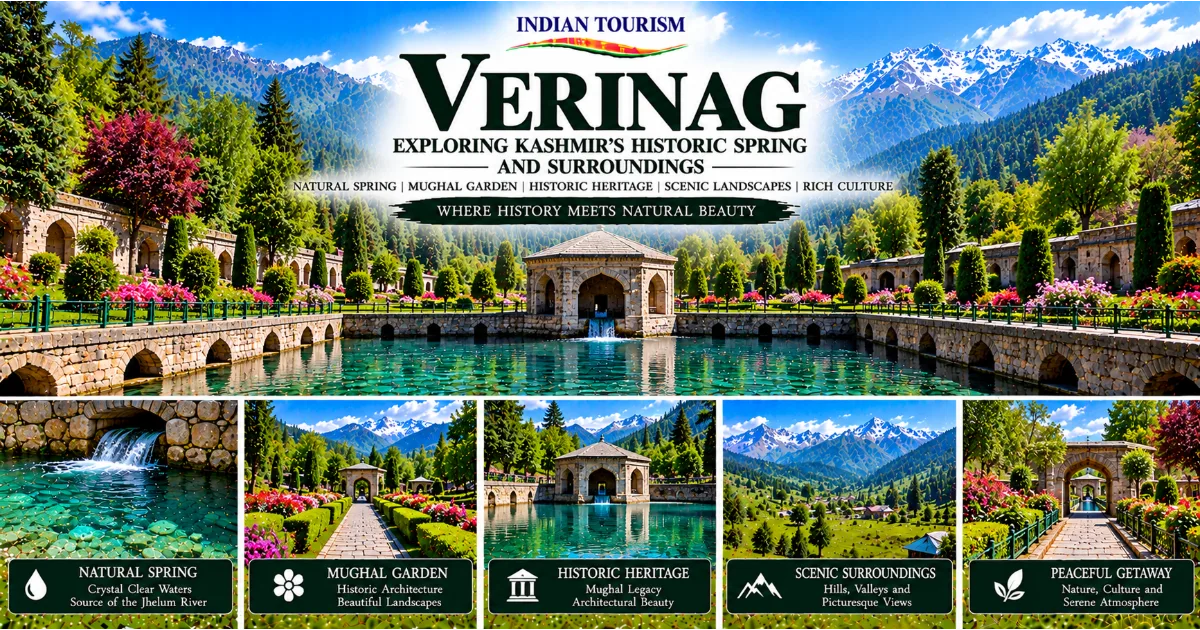
Where History and Natural Beauty Meet
Jammu and Kashmir is known for its breathtaking lakes, green valleys, snow-covered mountains and historic gardens. Among the region's most fascinating destinations is Verinag, a place where natural beauty and architectural heritage come together around one of Kashmir's most celebrated springs. Located in the Anantnag district near the southern entrance to the Kashmir Valley, Verinag offers visitors a distinctive experience shaped by clear water, stone architecture, landscaped gardens and the surrounding mountain countryside.
Verinag is especially famous for its spring, which is traditionally associated with the source of the Jhelum River. The spring emerges into a beautifully constructed stone basin surrounded by a historic garden complex. The combination of water and architecture gives the site a character different from the region's natural waterfalls and open meadows. Here, the landscape has been shaped not only by nature but also by centuries of cultural appreciation for water, gardens and carefully designed outdoor spaces.
The historic garden is closely associated with the Mughal period and Emperor Jahangir, who recognised the beauty and significance of the spring. The surrounding structures and garden layout reflect the Mughal tradition of creating orderly, harmonious spaces around natural features. Visitors can explore the spring, walk through the garden, observe the stonework and enjoy views of the surrounding greenery.
Verinag also occupies an important position in the geography of Kashmir. Situated near the Pir Panjal mountain region, it lies close to routes connecting the Kashmir Valley with the Jammu region. This geographical setting has influenced travel, trade and movement through the area over many generations.
For travellers exploring south Kashmir, Verinag offers a rewarding combination of heritage and nature. It can be visited as a day trip or included in a wider journey that covers Kokernag, Daksum, Aharbal and other destinations in the Anantnag district. Its appeal extends beyond photography. The site provides an opportunity to understand how water, landscape design and historical traditions have influenced Kashmir's cultural identity.
This guide explores Verinag's location, natural spring, Mughal heritage, best visiting season, travel arrangements, photography opportunities, nearby attractions and responsible tourism practices. It also explains how to plan a comfortable visit while preserving the historic structures and natural environment that make Verinag special.
1. Where Is Verinag Located?
Verinag is situated in the Anantnag district of Jammu and Kashmir, near the southern end of the Kashmir Valley. The destination lies in a landscape of foothills, cultivated land, settlements and mountain routes that connect the valley with areas farther south.
Its position makes Verinag an interesting destination for travellers who want to explore the southern part of Kashmir beyond the best-known attractions around Srinagar. The journey offers glimpses of the valley's countryside before reaching the historic spring and garden complex.
Verinag can be reached by road from Srinagar, Anantnag and other suitable bases in the region. Travellers approaching from Srinagar generally pass through parts of the Kashmir Valley before continuing towards the southern districts. Those staying closer to Anantnag may find it easier to include Verinag in a shorter regional excursion.
The surrounding geography is an important part of the destination's identity. The nearby mountain foothills create a transition between the Kashmir Valley and the terrain leading towards the Pir Panjal range. This setting has long made the wider area significant for movement between different parts of the region.
Visitors should plan the journey according to their starting point, current road conditions and the other places they intend to visit. Mountain and valley routes can take longer than expected because of traffic, weather and temporary restrictions.
Verinag is not simply a spring in an isolated landscape. It is a historic place shaped by the relationship between water, architecture, gardens and the wider geography of Kashmir.
2. Why Verinag Is Famous
Verinag is known primarily for its natural spring and the historic Mughal garden constructed around it. These features give the destination both geographical importance and architectural interest.
The Famous Verinag Spring
The spring is the central feature of the site. Clear water emerges from the ground into a carefully constructed stone basin, creating a striking contrast between the movement of water and the solid geometry of the surrounding architecture.
The spring has long been associated with the source of the Jhelum River. This association contributes to Verinag's importance in the geographical and cultural imagination of Kashmir.
Visitors are often drawn to the colour and clarity of the water, the stonework surrounding the basin and the way the spring has been incorporated into the garden. The setting encourages visitors to slow down and observe the relationship between the natural water source and the built environment.
Although the water may appear exceptionally clear, visitors should not automatically assume it is safe to drink. Water quality depends on conditions that cannot be judged through appearance alone. Follow local rules and avoid polluting the spring.
Mughal Garden Architecture
The garden surrounding the spring is associated with the Mughal period and the reign of Emperor Jahangir. Mughal gardens often used water, symmetry, pathways and planted spaces to create an ordered landscape.
At Verinag, the spring provides the natural centre around which the historic setting developed. Stone structures and landscaped surroundings give the place a distinctive architectural character.
The garden can be appreciated both as a designed outdoor space and as an expression of the historical importance attached to natural springs. It demonstrates how Mughal landscape traditions sought to bring together nature, geometry and human craftsmanship.
A Historic Water Source
Water has played an important role in the development of settlements and cultural landscapes across Kashmir. Springs were valued for their practical usefulness as well as their beauty and symbolic significance.
Verinag's association with the Jhelum gives it an additional layer of importance. The river has been central to Kashmir's agriculture, settlement patterns, transport and cultural history.
A Peaceful Heritage Destination
Unlike some tourist centres that depend on shopping districts or large commercial facilities, Verinag's appeal is centred on its historic spring and garden.
Visitors can explore the architecture, walk through the landscaped areas and enjoy the surrounding scenery at a relaxed pace. It is particularly suitable for travellers who appreciate heritage sites that remain closely connected to their natural setting.
3. The Verinag Spring and the Jhelum River
Water is central to understanding Verinag. The spring is traditionally recognised as the source of the Jhelum River, one of the most important rivers associated with the Kashmir Valley.
The Importance of the Jhelum
The Jhelum River flows through the Kashmir Valley and has played a major role in shaping its geography and history. Its waters have supported agriculture, settlements and other aspects of life across the region.
The river is more than a physical feature on a map. It forms part of Kashmir's cultural landscape, appearing in historical accounts, local traditions and the everyday experience of communities living along its banks.
The river's course connects different parts of the valley, linking landscapes that range from mountain foothills to agricultural areas and urban settlements.
Understanding a Natural Spring
A natural spring occurs when groundwater reaches the surface through an opening in the ground or through permeable rock and soil. The water may be supplied by rainfall and other processes that replenish underground reserves.
The characteristics of a spring depend on local geology, underground pathways and the surrounding environment. Springs can maintain relatively steady flows, although changes in rainfall, groundwater conditions and seasonal weather may influence their behaviour.
At Verinag, the spring has been incorporated into a historic architectural setting. This combination allows visitors to observe both a natural water source and the way people have designed spaces around it.
Water as a Cultural Symbol
In many societies, springs and rivers have carried practical, cultural and symbolic significance. Reliable water sources supported communities, while clear springs often became associated with purity, renewal and the beauty of nature.
Verinag's historic garden reflects this wider appreciation of water. The spring is not hidden away as an ordinary utility. Instead, it forms the centrepiece of a landscape designed to be experienced and admired.
Protecting the Spring
Natural springs are sensitive to pollution and changes in the surrounding environment. Wastewater, litter and inappropriate land use can affect water quality.
Visitors should avoid throwing objects into the basin, washing items near the water or entering restricted areas. Respecting the spring helps preserve its historical, environmental and cultural value.
4. Verinag's Mughal Heritage
Verinag is closely associated with Mughal landscape design, particularly the period of Emperor Jahangir. The garden demonstrates the importance Mughal rulers placed on natural beauty, water and carefully organised outdoor spaces.
Emperor Jahangir and the Garden
Jahangir was well known for his appreciation of gardens, flowers, trees and scenic landscapes. His interest in Kashmir is reflected in the historical association between the Mughal court and several garden sites across the region.
Verinag became an important example of this tradition. The spring offered a natural feature around which a garden could be developed, creating a setting where architecture and landscape complemented each other.
The result was not simply a place for viewing water. It was an organised environment designed to make the spring a central visual and experiential feature.
Mughal Ideas of Landscape Design
Mughal gardens frequently used symmetry, water channels, pathways, terraces and carefully arranged planting to create a sense of balance. These elements reflected both aesthetic preferences and ideas about order in the natural world.
Water was especially important. It could provide movement, cooling, reflection and a visual connection between different sections of a garden.
At Verinag, the spring's natural flow forms the foundation of the garden experience. The surrounding stonework demonstrates how architecture can frame and emphasise a natural feature rather than replace it.
Stonework and Craftsmanship
The historic stone structures around the spring deserve careful attention. Their shapes, proportions and relationship with the water reveal the importance of masonry in Mughal garden architecture.
Visitors should observe the structures without climbing on them or touching fragile sections unnecessarily. Historic stonework can be damaged gradually by careless use, weathering and inappropriate restoration.
Preserving these features requires both professional conservation and responsible visitor behaviour.
Verinag Within Kashmir's Garden Heritage
Verinag belongs to a wider landscape tradition that includes historic gardens and water features across Kashmir. These places demonstrate different ways in which natural resources were incorporated into designed environments.
Comparing Verinag with other gardens can help visitors understand the variety of Mughal landscape design. Some gardens are organised around terraces and broad views, while others emphasise springs, channels and the movement of water.
Verinag's distinctive quality comes from the relationship between the spring and the architecture surrounding it.
5. Best Time to Visit Verinag
Verinag can be visited in different seasons, but the appearance of the garden and the comfort of the journey vary with the weather.
Spring: Fresh Growth and Pleasant Scenery
Spring brings a gradual return of greenery after winter. The garden begins to show fresh growth, and the surrounding countryside becomes more colourful as vegetation develops.
This season can be particularly appealing for visitors who enjoy gardens and photography. However, temperatures may remain cool, and rainfall can affect walking conditions.
Carry a light jacket and check the local forecast before setting out.
Summer: A Comfortable Time for Sightseeing
Summer is generally a convenient period for exploring Verinag. The garden surroundings are often green, and daytime conditions may be suitable for walking and photography.
The site can be busier during school holidays and peak travel periods. Visitors seeking a quieter experience may prefer to arrive earlier in the day, subject to current opening arrangements.
Summer is also suitable for combining Verinag with other south Kashmir destinations, provided that travel times are planned realistically.
Autumn: Cooler Air and Changing Colours
Autumn brings cooler temperatures and a different atmosphere to the garden and surrounding countryside. Depending on the timing of seasonal change, the vegetation may display warmer colours and more muted tones.
This season can suit travellers who prefer relaxed sightseeing and landscape photography. Shorter daylight hours should be considered when planning a wider road trip.
Winter: A Historic Garden in a Colder Landscape
Winter can give Verinag a quieter and more subdued appearance. Cold temperatures, frost or snow may affect the surrounding landscape, while some facilities or access arrangements may vary seasonally.
Visitors should check current conditions before travelling and wear suitable footwear. Icy surfaces can make walking difficult, especially near water.
Recommended Season for Most Visitors
For a general visit focused on the garden, spring through autumn is often the most convenient broad period. The exact experience depends on weather, garden conditions and current access arrangements.
Before travelling, confirm local information and allow enough time to explore without rushing.
6. How to Reach Verinag
Verinag is accessible by road from several locations in the Kashmir Valley. The best route depends on your starting point and the other destinations included in your itinerary.
By Air
Srinagar's Sheikh ul-Alam International Airport is the main air gateway for many travellers visiting the Kashmir Valley. From the airport, visitors can arrange road transportation towards Verinag.
Travel time varies with traffic, route choice and road conditions. Travellers arriving by air should avoid scheduling a tightly timed excursion immediately after landing.
A pre-arranged vehicle can be useful for visitors who plan to explore several destinations in south Kashmir.
By Rail
Depending on the origin of the journey and current railway services, travellers may use rail connections serving Jammu or the Kashmir Valley. The final part of the journey to Verinag requires road transport.
Check the latest train services before booking and allow sufficient time for the onward transfer.
By Road from Srinagar
Travellers can reach Verinag by road from Srinagar through the southern Kashmir region. The journey passes through the valley's settlements and countryside before reaching the historic spring.
A private taxi or locally arranged vehicle provides flexibility for visitors who want to explore other attractions along the way.
The route should be planned according to current road conditions. Traffic, maintenance work, weather and temporary restrictions can influence the journey.
By Road from Anantnag
Anantnag is a useful base for visitors exploring Verinag and nearby destinations. Travellers already staying in the area may find it convenient to arrange a shorter excursion.
Confirm transport and return arrangements in advance, particularly if you intend to visit other locations after Verinag.
Is Self-Driving Suitable?
Self-driving can be suitable for travellers who are comfortable with local roads and unfamiliar routes. Visitors who prefer not to navigate may find a local driver more convenient.
Regardless of transport choice, allow time for unexpected delays and avoid driving after dark on unfamiliar roads whenever possible.
7. Best Things to Do in Verinag
Verinag is best enjoyed through a combination of heritage exploration, garden walks and quiet observation of the spring.
Observe the Historic Spring
Begin your visit by spending time at the spring itself. Observe the clear water, the stone basin and the way the architecture frames the natural source.
Rather than treating the spring as a quick photograph stop, take time to appreciate its form and historical significance.
Follow all local rules around the water. Do not enter restricted sections or throw anything into the basin.
Walk Through the Mughal Garden
The garden provides an opportunity to explore the historic relationship between water, planting and architecture. Walk along the permitted paths and observe how the different elements are arranged around the spring.
Look at the relationship between the stone structures and the surrounding greenery. The garden's appeal lies in the balance between its natural and designed features.
Study the Historic Stonework
Verinag's masonry is an important part of the visitor experience. Observe the shapes, proportions and construction details of the structures surrounding the spring.
Avoid climbing onto walls or touching fragile architectural elements unnecessarily. Respectful observation helps protect the site.
Enjoy the Surrounding Countryside
The wider area around Verinag includes settlements, fields and mountain foothills. Travelling through the countryside provides a broader understanding of the region's landscape.
If you stop for photographs, choose safe and permitted locations. Avoid entering private land without permission.
Take Landscape Photographs
Verinag offers opportunities for photographs of water, stone architecture, garden paths and vegetation. The spring provides a strong focal point, while the surrounding structures add depth and historical context.
Photographers should be considerate of other visitors and avoid blocking narrow paths for extended periods.
Learn About Kashmir's Water Heritage
A visit to Verinag can encourage a deeper understanding of the importance of springs and rivers in Kashmir. The site connects natural geography with architecture, history and the development of settlements.
Visitors interested in heritage can use the experience as a starting point for exploring other historic gardens and water-related sites in the region.
8. Architecture and Landscape: What Makes Verinag Special?
Verinag's distinctive character comes from the way architecture and nature have been brought together. The spring is a natural feature, but the surrounding structures influence how visitors see and experience it.
Framing the Water
The stone basin and surrounding architecture give the spring a defined visual setting. Instead of allowing the water to spread without structure, the historic design draws attention towards its source.
This arrangement demonstrates how landscape design can guide attention and create a sense of order.
The Role of Symmetry
Symmetry is an important feature of many Mughal gardens. Paths, walls and planted areas can be organised to establish balance and visual rhythm.
At Verinag, the relationship between the spring and its built surroundings reflects the wider Mughal interest in combining natural beauty with planned geometry.
The Contrast Between Stone and Greenery
Stone architecture provides a strong visual contrast with the garden's vegetation. The solid surfaces establish structure, while plants soften the landscape and change with the seasons.
This contrast is one reason Verinag is attractive to photographers and visitors interested in historic landscapes.
Architecture as Cultural Memory
Historic structures preserve evidence of earlier design traditions and the values attached to particular places. At Verinag, the architecture records the importance of the spring within a garden tradition associated with Mughal Kashmir.
Protecting the site allows future visitors to experience this relationship between built heritage and the natural environment.
9. Verinag for Families, Couples and Solo Travellers
Verinag can appeal to a wide range of visitors, especially those who enjoy gardens, history and peaceful outdoor settings.
Family Visits
Families can use Verinag as an opportunity to introduce children to historic architecture, natural springs and water conservation. The garden provides subjects for observation and conversation without requiring a strenuous hike.
Parents should supervise children near the water and follow all site rules. Do not allow children to climb on historic structures or enter restricted areas.
Bring drinking water, snacks and suitable clothing. Confirm the availability of toilets and other facilities before travelling.
Couples
Couples may appreciate the peaceful garden setting and opportunities for landscape photography. The combination of water, greenery and historic stonework creates a different experience from a typical mountain viewpoint.
Allow enough time to explore the site at a relaxed pace. Plan transportation in advance if Verinag is part of a wider day trip.
Solo Travellers
Solo travellers can explore the garden and spring at their own pace. The historic setting is well suited to visitors who enjoy observing architectural details and photographing landscapes.
Keep your phone charged, confirm transport arrangements and remain aware of local instructions.
History and Architecture Enthusiasts
Visitors interested in Mughal architecture may find Verinag particularly rewarding. The garden demonstrates how water and built structures were combined to create a carefully organised landscape.
Those interested in heritage should observe the site respectfully and avoid touching or climbing on historic features.
10. How Long Should You Spend in Verinag?
The time required depends on your interests and the number of other destinations included in your journey.
A Short Visit
A short visit may be sufficient for travellers who mainly want to see the spring and walk through the garden. Allow enough time to observe the architecture and take photographs without rushing.
Remember to include the road journey when planning the day.
A Half-Day Visit
A half-day can be more rewarding for visitors interested in history, architecture and photography. It provides time to explore the spring, observe the stonework and enjoy the garden at a relaxed pace.
This option may be suitable for travellers staying in south Kashmir.
Combining Verinag with Other Destinations
Verinag can be included in a wider itinerary that explores the natural and cultural attractions of south Kashmir. However, the number of additional stops should depend on actual road conditions and available daylight.
Choose a manageable route and avoid treating every destination as a brief photo opportunity.
11. Where to Stay When Visiting Verinag
Accommodation planning depends on whether Verinag is a short excursion or part of a longer trip through the region.
Staying in Srinagar
Srinagar offers a wide range of accommodation, dining options and transport services. It can be a practical base for travellers who want to explore several parts of the Kashmir Valley.
The journey to Verinag takes time, so visitors planning a day trip should leave early enough to enjoy the site and return comfortably.
Staying in Anantnag
Anantnag can be a convenient base for exploring Verinag and other destinations in south Kashmir. Staying closer to the region may reduce road travel and make it easier to plan a relaxed itinerary.
Confirm the location and services of accommodation before booking. Ask about meals, heating, transport and other essential requirements.
Guesthouses and Homestays
Where suitable local guesthouses or homestays are available, they can provide an opportunity to support local households and experience regional hospitality.
Facilities may differ from those of larger hotels. Confirm the arrangements in advance and respect household routines.
Choosing Responsible Accommodation
Choose accommodation that manages waste properly, uses water carefully and treats workers fairly. Supporting legitimate local businesses can help distribute tourism benefits within the region.
Visitors should also avoid unnecessary waste and follow local practices for responsible resource use.
12. Food and Refreshments During Your Visit
Food planning helps make a heritage excursion comfortable, especially if Verinag is part of a longer road trip.
Carry Drinking Water and Snacks
Bring enough drinking water for the journey and the time you plan to spend exploring. Do not assume that spring water is automatically safe to drink.
Carry snacks if you are uncertain about the availability of food facilities. Take all packaging away with you.
Explore Kashmiri Cuisine
A wider visit to south Kashmir provides opportunities to experience regional dishes. Depending on the restaurant or household, visitors may find rice preparations, breads, vegetable dishes, meat preparations and traditional beverages.
Food traditions vary between communities and establishments. Ask about ingredients and preparation if you have dietary requirements.
Support Local Food Providers
Where local food facilities are available, purchasing from them can support small businesses. Be courteous and respect local customs.
If facilities are limited or closed, having basic supplies prevents unnecessary inconvenience.
13. Practical Travel Tips for Verinag
A little preparation can make a visit more comfortable and help protect the historic site.
Check Current Access Information
Confirm opening arrangements and any temporary restrictions before departure. Maintenance work, weather and local conditions can affect access.
Do not rely exclusively on older travel descriptions.
Wear Comfortable Footwear
Choose comfortable shoes suitable for walking on garden paths and potentially wet surfaces. Take extra care near water and stone structures.
Carry a light jacket during cooler months and rain protection when the forecast is uncertain.
Respect Historic Structures
Do not climb on walls, carve names into stone or remove pieces of masonry. Historic structures can be damaged by repeated careless contact.
Follow signs and directions from site staff.
Protect the Spring
Avoid throwing objects into the water or using the spring for activities that are not permitted. Do not assume that clear water is safe to drink.
Keep children close to responsible adults around the basin and channels.
Plan Your Return Journey
Allow enough time for the road journey and avoid adding too many distant stops. If weather conditions deteriorate, adjust the itinerary rather than rushing.
Keep your phone charged and confirm transport arrangements in advance.
14. Responsible Tourism: Preserving Verinag's Heritage
Verinag combines a valuable natural water source with historic architecture. Protecting both requires visitors to act responsibly.
Keep the Spring Clean
Do not throw rubbish into the spring or surrounding channels. Avoid washing items with detergents near the water and carry waste to appropriate disposal points.
The spring's importance extends beyond its appearance, and pollution can affect the wider environment.
Respect the Historic Garden
Stay on permitted paths and avoid damaging plants or structures. Do not pick flowers, break branches or remove natural materials as souvenirs.
Historic gardens require careful maintenance, and visitors can help preserve them by following site rules.
Reduce Plastic Waste
Use reusable bottles and containers where practical. Carry all packaging away and avoid leaving litter on paths or in surrounding countryside.
Never assume that another visitor or worker will collect waste after you leave.
Respect Other Visitors and Residents
Keep noise at a reasonable level and avoid blocking paths for extended photography sessions. Ask permission before photographing local residents.
Responsible behaviour helps make the site welcoming for everyone.
Support Conservation
Where appropriate local conservation initiatives or responsible guides are available, consider supporting them. Choose services that explain the importance of heritage protection and environmental care.
Preserving Verinag is a shared responsibility involving site managers, local communities and visitors.
15. Photography Guide: Capturing Verinag
Verinag is an appealing destination for photographers because it combines water, stone architecture, garden greenery and mountain surroundings.
Photographing the Spring
The spring is the main focal point. A composition that includes both the water and the surrounding stone structures can communicate the relationship between the natural source and the historic garden.
Use permitted viewpoints and avoid placing equipment near restricted areas.
Capturing Architectural Details
Stone arches, walls, edges and other architectural elements can provide interesting subjects. Look for patterns, textures and the contrast between masonry and vegetation.
Avoid climbing on structures or touching fragile features to obtain a better angle.
Garden and Landscape Photography
Garden paths and planted areas can be photographed to show the relationship between designed space and natural surroundings. Seasonal changes may produce different colours and lighting conditions.
Respect planted areas and avoid blocking paths for other visitors.
Responsible Photography
Ask permission when photographing people and respect refusals. Be mindful of other visitors who may be enjoying the site quietly.
The best photographs should preserve the dignity of the place and leave the environment undisturbed.
16. Common Mistakes to Avoid
A few common mistakes can reduce the quality of a visit or place the site at risk.
Treating Verinag Only as a Photo Stop
The spring and garden have geographical and historical significance. Taking a few photographs without observing the site misses much of what makes it special.
Allow time to understand the relationship between the water, architecture and landscape.
Assuming Spring Water Is Safe to Drink
Clear water is not necessarily safe for drinking. Carry drinking water or use an appropriate treatment method where necessary.
Ignoring Heritage Rules
Do not climb on walls, carve names into stone or enter restricted sections. Follow all instructions from site staff.
Planning Too Many Destinations
Trying to combine several distant attractions can leave little time to appreciate Verinag. Build a realistic itinerary and allow for road delays.
Leaving Waste Behind
Litter damages the appearance of the garden and can affect the surrounding environment. Carry all waste to an appropriate disposal point.
17. Verinag and the Future of Heritage Tourism in Kashmir
Verinag has the potential to play an important role in heritage tourism across south Kashmir. Its combination of natural springs, Mughal architecture and garden design offers a distinctive experience that complements the region's mountain and lake destinations.
Opportunities for Local Communities
Tourism can support transport providers, food businesses, accommodation owners and other local services. These opportunities are most valuable when local residents receive fair benefits and participate meaningfully in tourism planning.
Visitors can contribute by using legitimate local services and respecting community needs.
Protecting Historic Architecture
Historic gardens require ongoing maintenance and careful conservation. Appropriate restoration, clear visitor information and well-managed pathways can help protect the structures while allowing people to experience the site.
Poorly planned development can damage the relationship between the garden and the spring. Conservation should therefore remain central to any improvements.
Protecting Water Resources
The spring is both a heritage feature and a natural resource. Its long-term health depends on water quality, responsible land use and protection of the surrounding environment.
Tourism planning should recognise that the spring's value extends beyond its appeal to visitors.
Encouraging Heritage Awareness
Clear interpretation can help visitors understand the historical significance of Verinag and its place within Kashmir's wider garden tradition.
When visitors understand why a place matters, they are more likely to treat its structures and surroundings respectfully.
18. A Suggested One-Day Itinerary for Verinag
A one-day visit can provide a rewarding introduction to Verinag if road access and weather conditions are suitable.
Morning: Travel to Verinag
Leave your accommodation after checking the road conditions and opening arrangements. Carry water, snacks and suitable clothing.
Enjoy the countryside along the route, stopping only at safe and permitted places.
Late Morning: Explore the Historic Spring
Begin with the spring itself. Observe the stone basin, the water and the way the historic structures frame the natural source.
Take photographs from permitted positions and follow all local rules around the water.
Midday: Walk Through the Garden
Explore the garden paths and observe the relationship between planting, architecture and water. Allow time to appreciate the site's details rather than rushing from one viewpoint to another.
Take a break in an appropriate area and keep the surroundings clean.
Afternoon: Explore the Wider Setting
If time permits, enjoy the surrounding countryside or include another suitable destination in south Kashmir. Check the route and travel time before making additional plans.
Keep the itinerary flexible in case of traffic or weather changes.
Late Afternoon: Return Safely
Begin the return journey with enough time to reach your accommodation comfortably. Carry out all waste and make additional stops optional.
19. Who Should Visit Verinag?
Verinag is especially suitable for travellers interested in historic gardens, natural springs, Mughal architecture and peaceful outdoor experiences. It can appeal to families, couples, photographers and heritage enthusiasts.
It may be less suitable for visitors seeking strenuous adventure activities or extensive commercial entertainment. Its main attractions are the spring, garden and surrounding landscape.
Visitors with mobility limitations should check the accessibility of paths and facilities in advance. Uneven surfaces and historic structures may make some areas difficult to navigate.
Families should supervise children around the water and follow site rules. Photographers and history enthusiasts should avoid touching fragile structures or entering restricted sections.
The destination is most rewarding for people who appreciate the connection between natural geography and human design.
20. Final Thoughts: Discover the Historic Spring of Verinag
Verinag offers a distinctive experience within Jammu and Kashmir's rich collection of natural and cultural destinations. Its famous spring, historic Mughal garden and stone architecture create a setting where water and heritage can be appreciated together.
The destination also helps visitors understand the wider importance of the Jhelum River and the role of water in Kashmir's landscape and history. The spring is not merely a scenic feature. It is connected to the region's geography, cultural memory and long tradition of garden design.
A visit to Verinag can be simple and rewarding. Walk through the garden, observe the spring, study the stonework and take time to enjoy the surrounding countryside. There is no need to rush between attractions to appreciate the place.
Preserving Verinag requires care. Visitors should protect the water, respect the historic structures, avoid littering and support responsible tourism practices. These actions help ensure that the spring and garden remain meaningful to future generations.
For anyone exploring south Kashmir, Verinag is an excellent addition to a journey that includes natural landscapes, historic sites and rural experiences. It offers a quieter way to discover the region's heritage and a reminder that some of Kashmir's most memorable destinations are those where nature and history meet.
#IndianTourism #Verinag #VerinagSpring #KashmirTourism #JammuAndKashmir #SouthKashmir #Anantnag #MughalGardens #KashmirHeritage #HistoricGardens #ExploreKashmir #TravelIndia #ResponsibleTourism #IncredibleIndia #KashmirTravelGuide
