
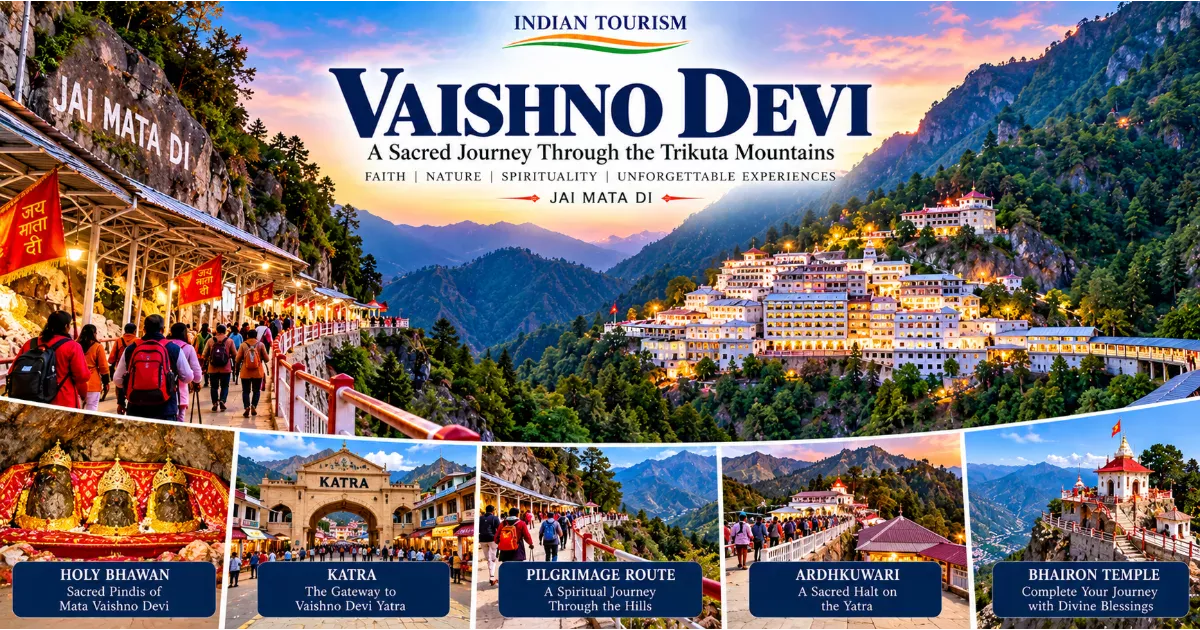
The Spiritual Journey to Mata Vaishno Devi
Nestled in the Trikuta Mountains of Jammu and Kashmir, the holy shrine of Shri Mata Vaishno Devi is one of India's most revered pilgrimage destinations. Every year, millions of devotees travel to the shrine to seek the blessings of Mata Vaishno Devi, undertaking a journey that combines faith, physical endurance, mountain scenery and a deep sense of spiritual devotion. For many pilgrims, the visit is not simply a religious trip. It is a personal journey filled with hope, gratitude, prayer and the desire to experience a sacred place that has been part of India's spiritual landscape for generations.
The shrine is located in the mountains above Katra, a town in the Reasi district of Jammu and Kashmir. Katra serves as the principal base for pilgrims beginning the journey to Bhawan, the sacred cave shrine associated with Mata Vaishno Devi. The traditional pilgrimage involves travelling along a mountain route that passes through changing landscapes, resting points, devotional facilities and viewpoints overlooking the surrounding hills.
The journey is often described through the familiar devotional greeting, "Jai Mata Di," which pilgrims exchange along the route. The words express devotion and encouragement, helping create a shared atmosphere among people from different states, languages, backgrounds and age groups. Some pilgrims walk quietly while reciting prayers, while others sing devotional songs as they make their way up the mountain.
Vaishno Devi is also an important example of how pilgrimage shapes the identity and economy of a destination. Katra has developed extensive accommodation, transport, food and support services for visitors. Shops, guesthouses, restaurants, medical facilities and authorised transport services help pilgrims manage the journey, while the Shri Mata Vaishno Devi Shrine Board oversees important aspects of the pilgrimage and shrine administration.
Although the shrine is widely known throughout India, visiting it requires practical preparation. The route involves a sustained climb, and weather conditions can change quickly in the mountains. Crowd levels may become particularly high during Navratri and other busy periods. Travellers should therefore understand the registration process, available transport options, physical demands and rules that apply at the shrine.
For anyone interested in religious tourism, Indian culture or the landscapes of Jammu and Kashmir, Vaishno Devi offers an experience unlike an ordinary sightseeing trip. It brings together spiritual belief, community participation, mountain geography and the traditions of one of India's most important pilgrimage centres.
The Legend and Spiritual Significance of Mata Vaishno Devi
The spiritual identity of Vaishno Devi is closely connected with traditional accounts of Mata Vaishnavi, a divine manifestation worshipped by devotees as the Mother Goddess. Different retellings of the legend exist, and details may vary across devotional traditions. For pilgrims, these stories provide the religious context for visiting the shrine and understanding the significance of the sacred cave.
According to a widely shared devotional tradition, Mata Vaishnavi undertook a spiritual journey in the mountains and eventually came to reside in the region associated with the present-day shrine. Her story is linked with devotion, spiritual discipline and the triumph of divine power over negative forces. The pilgrimage route and sacred sites associated with the journey have become important parts of the religious experience.
The shrine is especially associated with the worship of the Mother Goddess in her three principal forms, commonly identified as Maha Kali, Maha Lakshmi and Maha Saraswati. Within the sacred cave, the naturally formed rock manifestations known as the Pindis are worshipped as representations of the Goddess. Devotees regard the shrine as a place of extraordinary spiritual importance and travel there to offer prayers for family well-being, strength, peace and fulfilment of personal wishes.
For many pilgrims, the journey begins long before they reach Katra. Families may plan the visit months in advance, save money for travel and prepare for the physical challenge of the climb. Some people undertake the pilgrimage to mark a major life event, while others visit as part of an annual religious practice. Many devotees return repeatedly because the shrine has become an important part of their personal and family traditions.
The pilgrimage also creates a shared experience among strangers. Along the route, people encourage one another, offer help when someone is tired and exchange devotional greetings. These interactions can become meaningful memories, particularly for first-time visitors.
It is important to understand that the legend belongs to a living religious tradition. Visitors who approach the shrine from a cultural or historical perspective can learn about the beliefs respectfully without needing to share them personally. The significance of Vaishno Devi lies not only in the story itself but also in the continued devotion of the millions of people who make the journey.
Katra: The Gateway to the Holy Shrine
Katra is the principal starting point for the Vaishno Devi pilgrimage. Located among the lower hills of the Jammu region, the town has developed around the needs of visitors travelling to the shrine. It offers hotels, guesthouses, restaurants, shops, medical facilities and transport services that support pilgrims before and after the mountain journey.
For many visitors, Katra is their first introduction to the pilgrimage's atmosphere. Devotional songs may be heard in commercial areas, shops display religious offerings and signs direct travellers towards registration facilities and the route. During major pilgrimage periods, the town can become exceptionally busy, with visitors arriving throughout the day and night.
The town is useful as a place to rest, organise documents and prepare for the trek. Travellers should confirm their accommodation, registration requirements and onward transport arrangements before starting the climb. Those arriving after a long train or road journey may benefit from sleeping for several hours rather than immediately beginning the pilgrimage while exhausted.
Katra also offers opportunities to explore local food and shopping. Restaurants serve a range of vegetarian meals, snacks, tea and other refreshments suitable for pilgrims. Shops sell walking sticks, rain protection, warm clothing, footwear, religious items and basic travel supplies. Visitors should compare prices and choose equipment that suits the conditions rather than purchasing unnecessary items simply because they are available near the route.
Although Katra is closely associated with religious tourism, it is also a mountain town with everyday residential and commercial life. Travellers should respect local residents, avoid blocking roads and follow traffic instructions, especially when large crowds gather.
The town's transport connections make it accessible from other parts of India. Visitors commonly arrive by train, road or air through Jammu, although the most suitable route depends on their departure city and current transport schedules.
How to Register for the Vaishno Devi Yatra
Registration is an essential part of planning the pilgrimage. Pilgrims should follow the current procedures announced by the Shri Mata Vaishno Devi Shrine Board and use authorised registration channels. Requirements can change, so travellers should confirm the latest rules before leaving home.
The Yatra Registration Slip, commonly called the Yatra slip, is an important document associated with access to the pilgrimage route. Depending on the applicable system, registration may be completed through official online services or designated registration counters. Visitors should not assume that registration arrangements remain unchanged from a previous year.
When completing registration, enter personal details accurately and keep the relevant confirmation accessible. Carry any identification documents required by the current instructions. If travelling as a family or group, ensure that every member has completed the necessary process and that the group understands where to report before beginning the journey.
Pilgrims should be cautious about unofficial agents who promise guaranteed access, special treatment or shortcuts. Use authorised channels for registration, accommodation and transport. If an unfamiliar person offers to sell a document or bypass official procedures, verify the claim directly with the Shrine Board or authorised staff.
It is also important to understand the role of registration in crowd management and visitor safety. During busy periods, authorities may introduce specific entry arrangements, reporting requirements or restrictions to manage the number of people on the route. These measures are intended to help maintain order and reduce pressure on facilities.
Before departure, check the latest guidance regarding registration, identity documents, reporting points, permitted items, timings and any special instructions. Keep a digital copy of essential confirmations where practical, but do not rely exclusively on a phone battery or mobile network in crowded areas.
Registration should be treated as a necessary part of the journey, not a formality to be completed at the last moment. A few minutes of preparation can prevent confusion when you arrive in Katra.
The Traditional Trek: From Katra to Bhawan
The traditional pilgrimage route from Katra to Bhawan covers a substantial uphill distance, commonly described as approximately 12 to 13 kilometres depending on the route and measurement used. The path passes through the mountain landscape towards the sacred cave shrine. Although the route is developed for pilgrims, it remains physically demanding because of the elevation gain, distance, crowds and changing weather.
Pilgrims usually begin by following the authorised route and signs provided along the way. The journey includes rest areas, food outlets, drinking water facilities and other support services at designated locations. The exact facilities available at any particular point may change, so visitors should follow current information from the Shrine Board.
Some pilgrims prefer to start during the evening or at night, when temperatures may be more comfortable, while others choose daylight travel to enjoy the scenery and see the route more clearly. There is no single ideal departure time for everyone. The decision should take into account fitness, weather, crowd conditions, accommodation arrangements and the needs of the group.
Walking at a steady pace is generally more sensible than trying to complete the route quickly. Frequent short breaks can help prevent exhaustion, particularly for visitors who are not accustomed to uphill walking. People should pay attention to signs of dehydration, dizziness, unusual breathlessness or other symptoms that indicate a need to stop and seek assistance.
Footwear is especially important. Comfortable walking shoes with reliable grip are usually more suitable than new shoes, loose sandals or footwear that has not been tested on a long walk. Socks that reduce friction can help prevent blisters. Pilgrims should avoid carrying unnecessarily heavy bags, since extra weight can make the climb more difficult.
The route's appearance changes as pilgrims gain elevation. At some points, visitors can look back towards Katra and the surrounding hills. At others, the path passes through developed sections with shops and resting facilities. The atmosphere varies according to the time of day, season and number of people travelling.
For many devotees, the physical effort is part of the spiritual meaning of the pilgrimage. The climb offers time for prayer, reflection and shared encouragement. Even so, visitors should remember that physical safety matters more than completing the journey without a break. Anyone who feels unwell should seek help rather than continuing under pressure.
Banganga: An Important Point on the Pilgrimage
Banganga is traditionally associated with the Vaishno Devi pilgrimage and is an important place in the religious landscape around Katra. Devotional accounts connect the site with Mata Vaishnavi's journey through the mountains. For many pilgrims, the area represents the beginning of the sacred route and provides a place to pause before continuing uphill.
The name Banganga is linked in local tradition with a stream associated with the Goddess. The site has religious significance, and its presence forms part of the larger network of places that pilgrims recognise along the journey.
Banganga and the surrounding route can be busy, particularly during peak pilgrimage periods. Visitors should follow the signs and instructions in place, avoid obstructing the path and respect other pilgrims who may be praying or performing religious activities.
The area also illustrates the way sacred geography is created through stories, memory and repeated acts of devotion. A natural feature becomes an important religious landmark because generations of worshippers connect it with a sacred narrative. For pilgrims, the site is therefore more than a geographical point on the route.
Visitors interested in cultural history may find it useful to learn about the traditional associations of Banganga before beginning the trek. Understanding the meaning of the places along the route can make the journey more informative and meaningful.
As with other locations on the pilgrimage, current access and facilities should be confirmed locally. Travellers should not assume that every traditional bathing or water-related practice is permitted under present conditions.
Ardhkuwari: The Sacred Midway Stop
Ardhkuwari, also known as Adhkuwari, is one of the most important places along the Vaishno Devi pilgrimage route. It is traditionally associated with the period when Mata Vaishnavi is believed to have meditated in a cave during her spiritual journey. The site has become a major point of devotion and a familiar landmark for pilgrims travelling between Katra and Bhawan.
Many visitors regard Ardhkuwari as a significant stage of the pilgrimage. It provides a place to pause, rest and continue the spiritual journey. The surrounding facilities support pilgrims who need food, refreshments, medical assistance or a break from walking.
The cave associated with Ardhkuwari is well known among devotees, but access arrangements can depend on crowd management, current operating rules and waiting times. Visitors should follow official instructions rather than relying on outdated information from travel discussions or unofficial guides.
During peak periods, queues may become long. Travellers should allow sufficient time and avoid pushing or attempting to move ahead of others. The site attracts pilgrims of different ages and physical abilities, and patience is particularly important in crowded areas.
Ardhkuwari also offers a useful point for assessing whether to continue walking or use an authorised transport option where available. Pilgrims who are exhausted, unwell or travelling with someone who needs additional support should seek advice from official staff.
The site's religious significance is closely tied to the broader story of Mata Vaishnavi. For many devotees, reaching Ardhkuwari strengthens their sense of connection with the pilgrimage and provides an opportunity for prayer before proceeding to Bhawan.
Bhawan: The Main Shrine of Mata Vaishno Devi
Bhawan is the principal shrine complex associated with Mata Vaishno Devi and the main destination of the pilgrimage. Situated high in the Trikuta Mountains, it is where devotees come to seek darshan of the sacred Pindis. The complex includes facilities designed to manage pilgrims, support worship and provide essential services.
For many visitors, reaching Bhawan is the emotional centre of the entire journey. The long climb, anticipation and devotional atmosphere combine to make arrival a memorable experience. Some pilgrims have travelled from distant states after months of planning, while others arrive as part of family traditions that have continued across generations.
The darshan process is managed according to the rules and arrangements in force at the time. Visitors should follow instructions from Shrine Board staff, security personnel and other authorised officials. Queues and waiting periods vary according to crowd levels, season and operational conditions.
The sacred Pindis are worshipped as representations of the Goddess in her forms commonly associated with Maha Kali, Maha Lakshmi and Maha Saraswati. Devotees approach the shrine with prayers and offerings according to the permitted practices. The experience is deeply personal, and many people describe a sense of relief, gratitude or spiritual fulfilment after completing the pilgrimage.
Visitors should be aware that the shrine is a place of active worship. Photography, carrying particular items and other activities may be restricted in designated areas. Pilgrims must follow the current rules rather than relying on assumptions based on photographs or videos seen elsewhere.
The Bhawan complex also has facilities intended to support pilgrims, but availability can vary during crowded periods. Visitors should carry only what is necessary, keep essential documents secure and remain attentive to directions.
The most meaningful way to experience Bhawan is to approach the shrine with patience and respect. The visit is not a race to finish the queue but an opportunity to participate in a sacred tradition that matters deeply to millions of people.
Bhairon Temple: Completing the Traditional Pilgrimage
Bhairon Temple is located higher up the mountain beyond Bhawan and is an important part of the traditional Vaishno Devi pilgrimage for many devotees. It is associated with the devotional story of Mata Vaishnavi and Bhairon Nath. Many pilgrims regard a visit to the temple as the completion of their spiritual journey.
The route from Bhawan to Bhairon Temple involves additional elevation, and the effort required should not be underestimated. The availability and suitability of walking paths or authorised transport options depend on current arrangements. Visitors should check the latest information before deciding how to proceed.
The temple offers a different perspective on the mountain landscape, with views of the surrounding hills when weather conditions permit. The atmosphere can be particularly memorable for those who have already completed the journey to Bhawan and wish to continue to this additional shrine.
However, not every pilgrim is physically able to make the extra ascent. Older travellers, people with mobility limitations and visitors who feel exhausted should make decisions based on their health and comfort rather than social pressure. The pilgrimage should be approached with care, and there is no need to risk injury to satisfy an expectation.
Crowds and weather can influence the time needed to visit Bhairon Temple. Travellers should keep enough time for the return journey and avoid continuing when conditions become unsafe.
For those who are able to visit, the temple adds another layer to the pilgrimage's religious narrative. For those who cannot, the main darshan at Bhawan remains a significant spiritual experience in its own right.
Helicopter Services and Other Travel Options
Walking the traditional route is central to the experience for many pilgrims, but it is not the only way to access parts of the pilgrimage. Authorised transport services may be available for certain sections, subject to current operating rules, weather, capacity and safety conditions.
Helicopter services have been used by pilgrims travelling between the Katra area and a designated landing point near the shrine complex. The service can reduce the physical effort required for part of the journey, but it does not necessarily remove the need for walking. The distance between the landing point and the relevant shrine facilities, as well as any additional ascent, should be checked before booking.
Helicopter tickets should be obtained through authorised channels. Travellers should be cautious of third-party websites or agents claiming to guarantee tickets outside the official system. Availability can be limited, especially during busy seasons, and flights may be delayed or cancelled because of poor weather or operational reasons.
Other authorised options may include battery-operated vehicles on eligible sections of the route, ponies or palanquins where permitted and available. The services offered and the rules governing them can change. Visitors should confirm the current position with the Shrine Board and use only authorised providers.
When choosing a transport option, consider the needs of the entire group. A service that is convenient for one person may not suit everyone travelling together. Check age restrictions, health considerations, baggage rules, reporting times, refund conditions and the amount of walking that remains.
No transport option should be treated as a guarantee of immediate darshan or freedom from queues. Crowd management applies to all pilgrims, and travel time can vary considerably.
For visitors with limited mobility or medical concerns, contacting official support services before travelling is particularly important. Planning ahead can help determine whether the available facilities are appropriate for their circumstances.
Best Time to Visit Vaishno Devi
Vaishno Devi can be visited throughout much of the year, but the experience varies according to season, weather and crowd levels. Choosing a suitable time depends on whether a traveller prioritises comfortable temperatures, festival participation, quieter conditions or the ability to combine the pilgrimage with other destinations.
Spring: Pleasant Conditions for Pilgrims
Spring can offer relatively comfortable conditions for the journey, although temperatures vary between Katra and the higher parts of the route. Days may be pleasant for walking, while evenings and early mornings can feel cooler.
This period can be suitable for families and visitors who want to combine the pilgrimage with sightseeing around Jammu. However, the exact conditions depend on rainfall, wind and the timing of the visit.
Summer: Plan Around Heat
Summer can bring hot conditions in Katra and the lower parts of the route. Temperatures may be more comfortable at higher elevations, but the uphill walk can still be tiring. Pilgrims should carry water, wear breathable clothing and take regular breaks.
Starting during a cooler part of the day may help, but travellers should avoid beginning the journey when already exhausted. Heat, dehydration and heavy crowds can combine to make the climb more difficult.
Monsoon: Prepare for Rain
The monsoon season brings the possibility of heavy rainfall, slippery surfaces and changing travel conditions. Mountain routes can be affected by poor visibility, drainage issues or local restrictions when weather becomes severe.
Visitors travelling during this period should carry appropriate rain protection and check official advisories before starting. If authorities advise against travel or restrict access, those instructions should be followed.
Autumn: A Popular Period for Pilgrimage
Autumn is often a comfortable time for visiting Jammu and Katra, particularly when temperatures become milder. The period around Navratri, however, can attract exceptionally large numbers of devotees.
Anyone planning a visit during a major festival should book accommodation and transport well in advance, check current registration arrangements and allow additional time for queues.
Winter: Cold Weather in the Mountains
Winter can bring cold temperatures to the higher parts of the route. Conditions vary from year to year, and pilgrims should not assume that the route will always be dry or free from weather-related disruption.
Warm layers, gloves where appropriate and suitable footwear can improve comfort. Travellers should pay attention to current advisories and avoid setting out without adequate preparation.
In every season, the most important rule is to check current weather and pilgrimage information shortly before travelling. Seasonal descriptions are useful for planning, but actual conditions on the day should determine the final decision.
Navratri at Vaishno Devi
Navratri is one of the most significant periods for the Vaishno Devi pilgrimage. The festival is associated with the worship of the Mother Goddess and is observed in different ways across India. At Katra and the shrine, the devotional atmosphere can become particularly intense as pilgrims arrive to seek blessings.
During the festival, the number of visitors may increase substantially. The town's markets, accommodation facilities, transport services and the route itself can experience heavier demand. Waiting times may be longer, and authorities may introduce specific arrangements to manage the crowds.
For many devotees, visiting during Navratri is especially meaningful because the festival directly reflects the religious traditions associated with Mata Vaishno Devi. Families may plan the journey around the festival calendar, while groups from different regions travel together to participate in the pilgrimage.
However, the popularity of the period also means that preparation is essential. Registration should be completed according to current rules, accommodation should be arranged early and travellers should allow flexibility in their schedule. It is wise to carry essential medication, keep children and older family members close in crowded areas and establish a clear meeting point in case group members become separated.
Visitors should also remember that festival celebrations are primarily religious events. Respectful behaviour, patience in queues and compliance with security instructions help maintain a safer atmosphere for everyone.
Those who prefer fewer crowds may consider travelling outside the busiest festival periods, while still checking the expected demand for their chosen dates.
Food and Refreshments During the Yatra
Food is an important part of preparing for the pilgrimage. Katra has a wide range of restaurants, cafés and small food outlets serving vegetarian meals, snacks and drinks. Along the route, designated facilities may provide refreshments and other basic supplies for pilgrims.
Many visitors prefer to eat a balanced meal before beginning the climb. A meal containing carbohydrates and some protein can provide energy for a long walk, while drinking enough water helps reduce the risk of dehydration. Heavy meals immediately before strenuous activity may be uncomfortable, so travellers should consider their usual eating habits and personal tolerance.
During the trek, small portions of food can be easier to manage than a large meal. Bananas, simple snacks or other familiar foods may suit some pilgrims, although availability and personal dietary requirements vary. Visitors with diabetes, food allergies or other health considerations should plan carefully and carry suitable supplies.
Drinking water should be obtained from reliable sources. Even when temperatures are cool, physical exertion can increase fluid needs. At the same time, travellers should not assume that drinking excessive amounts at once is helpful. Regular intake according to thirst and conditions is generally more practical.
Food outlets can become crowded during busy periods. Carrying a small amount of familiar food may be useful, but visitors should avoid unnecessary weight in their bags. Check the cleanliness of food preparation areas where possible and dispose of packaging properly.
Katra's local restaurants also provide an opportunity to explore the wider food culture of the Jammu region. Visitors can enjoy regional dishes before or after the pilgrimage, provided they choose meals that suit their health and travel plans.
Accommodation in Katra and Near the Shrine
Accommodation is available in Katra across a range of budgets. Options include simple guesthouses, budget hotels, family accommodation and more comfortable properties. Facilities and prices vary by season, location and demand.
Staying in Katra before the pilgrimage can be particularly useful for travellers arriving after a long journey. It allows time to rest, organise registration details, prepare equipment and begin the trek when ready. After completing the journey, a night in Katra can also provide an opportunity to recover before travelling onward.
The Shrine Board and other authorised facilities may provide accommodation options at designated locations, subject to current availability and booking procedures. Travellers should check the official information for details rather than relying on old descriptions or unverified promises.
Accommodation closer to the shrine may be useful for some visitors, but access, availability and booking rules can vary. Pilgrims should understand the location of the property and the amount of walking required to reach it.
When choosing a hotel, consider cleanliness, security, access to transport, room facilities and the needs of the group. Families with children or older travellers may benefit from a property with easy access and reliable food options.
During Navratri and other high-demand periods, rooms can become scarce. Booking early is sensible, but visitors should review cancellation conditions in case weather or travel disruptions affect the journey.
Avoid paying unofficial agents for accommodation guarantees. Use established booking channels and verify any special arrangements directly with the relevant provider.
How to Reach Katra
Katra is connected to the wider Jammu region by rail and road, while travellers arriving from distant cities may also use air connections through Jammu.
By Train
Shri Mata Vaishno Devi Katra railway station serves the pilgrimage town and is used by trains from various parts of India. The number of direct services and their schedules depend on the date and route, so travellers should check current railway information before booking.
The railway station is an important arrival point for pilgrims who want to avoid a separate road transfer from Jammu. After arrival, visitors can arrange local transport to their accommodation or the relevant registration and reporting facilities.
Train reservations can be in high demand during major pilgrimage periods. Booking early is helpful when travel dates are fixed, and travellers should allow enough time for station transfers and any required reporting.
By Air
Jammu Airport is an option for visitors arriving by air. From the airport, travellers generally need to arrange onward transport to Katra by road. Journey times vary with traffic, weather and the chosen route.
Flight schedules and onward transport should be checked together. A delayed flight may affect a hotel check-in or a planned pilgrimage start, so a flexible schedule can reduce stress.
By Road
Katra can be reached by road from Jammu and other regional centres. Buses, taxis and private vehicles are used by pilgrims, but travel time depends on the starting point, traffic and current road conditions.
Visitors driving themselves should be familiar with mountain-road conditions and should avoid rushing after a long journey. If travelling in a group, it can be useful to agree on a meeting point and confirm how everyone will reach the accommodation.
Road conditions can change during heavy rainfall or other disruptions. Official advisories should take priority over previously published travel times.
Physical Preparation and Safety on the Pilgrimage
The Vaishno Devi route is manageable for many reasonably fit visitors, but it should not be treated as an effortless walk. The uphill distance, elevation gain, crowds and weather can make the journey tiring, particularly for people who are not accustomed to regular physical activity.
Anyone planning the trek can benefit from walking regularly before the trip. Short walks that gradually increase in duration may help build endurance. Comfortable footwear should be tested before departure so that the journey does not become the first time the shoes are used.
Visitors should consider their individual health circumstances. People with heart or lung conditions, significant mobility limitations or other medical concerns should consult an appropriate healthcare professional before undertaking strenuous activity. Families should plan according to the abilities of the youngest and oldest members rather than assuming that everyone can maintain the same pace.
Carry essential medication and keep it accessible. Do not leave necessary medicines in checked baggage or at the hotel if they may be needed during the trek. Visitors who require regular medical care should identify the available support facilities and understand how to seek assistance.
Rest when tired, drink water regularly and avoid carrying excessive luggage. If symptoms such as chest pain, faintness, severe breathlessness or confusion occur, stop and seek urgent medical help. Continuing to walk in the presence of serious symptoms can be dangerous.
Mountain weather can change quickly. Rain protection and warm layers may be useful even when the weather appears pleasant in Katra. Follow official announcements about closures, delays or restrictions, and do not attempt to bypass barriers or use unofficial shortcuts.
The pilgrimage is a personal spiritual journey, but it also takes place in a demanding physical environment. Good preparation allows visitors to focus on the experience while reducing avoidable risks.
Vaishno Devi with Children and Older Family Members
Many families undertake the pilgrimage together, and the journey can become a meaningful shared experience. However, the needs of children and older adults require careful planning.
Children should have comfortable footwear, appropriate clothing and regular opportunities to rest. Parents should ensure that children drink enough water and eat familiar food. In crowded areas, keep children close and establish a meeting point in case the group becomes separated.
The route may feel much longer to a child than it does to an experienced adult walker. Families should avoid promising a fixed completion time and instead allow breaks according to the child's needs. If a child becomes exhausted or unwell, seek help and reassess the plan rather than forcing the journey to continue.
Older pilgrims may need more time and more frequent rests. The availability of authorised transport or assistance services should be checked in advance, and travellers should confirm whether the arrangements are suitable for their specific mobility needs.
It is important not to assume that a particular service will be available on arrival. During busy periods, capacity can be limited, and access may be subject to rules or weather conditions.
For families travelling with people who have chronic health conditions, consultation with a healthcare professional before the journey is prudent. Carry essential medical information and medications, and avoid making the pilgrimage more demanding than necessary.
The goal should be to create a safe and meaningful experience for the whole family. Completing the route at a comfortable pace is more valuable than trying to meet an arbitrary timetable.
Shopping and Souvenirs in Katra
Shopping is a common part of the pilgrimage experience. Katra's markets sell religious offerings, devotional images, clothing, snacks, dry fruits and a range of travel supplies. Many visitors purchase souvenirs for family members who could not make the journey.
Religious items are widely available, including pictures of Mata Vaishno Devi, prayer materials and other devotional objects. Visitors should choose products according to their personal preferences and avoid feeling pressured by sellers who promise that a particular purchase is necessary for the pilgrimage.
Practical goods such as walking sticks, rain protection and warm layers can be useful, but quality varies. Check the suitability of footwear and clothing before buying them for immediate use on the route.
Food products make popular souvenirs, especially when they can be carried safely and stored properly. Check packaging, freshness and expiry dates before purchasing items for a long journey.
Bargaining may be possible in some shops, but visitors should remain polite and reasonable. Keep wallets, phones and identification secure in crowded markets, particularly during festival periods.
Shopping should not become an unnecessary burden during the trek. If possible, purchase larger or heavier items after completing the pilgrimage rather than carrying them uphill.
Photography, Conduct and Rules at the Shrine
The Vaishno Devi pilgrimage is both a public journey and a sacred religious experience. Visitors should follow the current rules set by the Shrine Board and authorised officials, including restrictions on photography and the items that can be carried into specific areas.
Photography may be permitted in some public locations but restricted in other sections, especially around the shrine itself. Do not assume that a phone or camera can be used everywhere. Follow posted signs and instructions, and avoid photographing worshippers in ways that intrude on their privacy.
Security procedures may include checks of bags and personal belongings. Travellers can help by carrying only necessary items and organising their bags so that checks can be completed efficiently. Prohibited items should not be carried in the hope that they will be overlooked.
The route can become crowded, so maintaining orderly movement is important. Avoid pushing, running through queues or blocking passageways for photographs. Do not leave belongings unattended, and seek assistance if you find a lost child or encounter an emergency.
Respecting religious customs also means being considerate of people who are praying. Keep conversations at an appropriate volume and follow instructions about footwear, dress and devotional offerings.
Rules can change for operational or security reasons. The most reliable information comes from official Shrine Board guidance and announcements at the pilgrimage site, not from old social media posts.
Exploring Beyond the Shrine: Jammu and Nearby Destinations
Many travellers combine the Vaishno Devi pilgrimage with a broader visit to Jammu and Kashmir. Katra provides a convenient base for exploring parts of the Jammu region, while Jammu city offers temples, historical buildings, markets and cultural attractions.
Jammu city is a natural addition for visitors interested in the Dogra heritage. Raghunath Temple, Ranbireshwar Temple, Bahu Fort, Mubarak Mandi Palace and Amar Mahal Palace Museum offer different perspectives on the city's religious and historical identity. Travellers should check current access and opening arrangements before planning the route.
Patnitop is another destination that may interest visitors with additional time. Known for its mountain scenery and cooler surroundings, it offers a contrast with the busy pilgrimage town. However, travel time and weather should be considered, especially if the visit is scheduled immediately before or after the yatra.
Other parts of the Jammu region offer forests, hill towns and cultural sites, but distances can be longer than expected on mountain roads. It is sensible to avoid packing too many destinations into a short trip.
Some visitors continue towards the Kashmir Valley after completing the pilgrimage. This requires separate planning for transport, accommodation, weather and current travel conditions. A pilgrimage itinerary and a mountain sightseeing itinerary have different demands, so allowing adequate time for both can make the overall journey more comfortable.
The best approach is to decide whether the primary goal is pilgrimage, cultural sightseeing or nature-based travel. Once the main purpose is clear, additional destinations can be included without making the schedule unnecessarily tiring.
Responsible Tourism and Environmental Care
The high number of visitors to Vaishno Devi makes environmental responsibility especially important. Waste generated by food packaging, plastic bottles and disposable items can place pressure on mountain ecosystems and the facilities that support the pilgrimage.
Visitors should use designated waste bins and avoid throwing rubbish along the route. Where practical, reusable bottles and bags can reduce the amount of waste generated. Follow local instructions about water refilling, food disposal and prohibited materials.
Do not damage vegetation, disturb wildlife or leave the designated route. Mountain slopes and drainage systems can be sensitive to environmental pressure, particularly during heavy rainfall. Staying on authorised paths helps protect both visitors and the surrounding landscape.
Water should be used thoughtfully, and travellers should respect facilities provided for public use. Toilets, rest areas and drinking water points are shared resources that require care and consideration.
Responsible behaviour also includes respecting the people who work along the route. Staff, cleaners, drivers, medical personnel and other service providers support a complex pilgrimage system. Treat them courteously and follow their instructions, especially during emergencies or periods of crowd pressure.
Visitors should support authorised services and avoid arrangements that appear unsafe or exploitative. If a facility or activity raises a safety concern, seek guidance from the appropriate official rather than relying on an unverified promise.
Protecting the environment and maintaining orderly movement helps ensure that future generations can continue to experience the pilgrimage safely.
A Suggested Two-Day Vaishno Devi Travel Plan
A two-day visit can work for travellers who arrive in Katra with enough time and are comfortable with the physical demands of the pilgrimage. The exact schedule should depend on registration arrangements, transport timings, fitness and current crowd conditions.
On the first day, arrive in Katra and check into your accommodation. Allow time to rest after the journey, organise documents, review current Shrine Board guidance and purchase any necessary supplies. If arriving late in the day, avoid beginning the trek while exhausted.
Begin the pilgrimage at a time that suits your physical condition and the current operational guidance. Follow the authorised route, take breaks as needed and allow enough time for queues at important points. Visit Bhawan for darshan according to the arrangements in place. If you intend to continue to Bhairon Temple, consider the additional effort and time required.
After completing the pilgrimage, return to your accommodation or use an authorised facility that has been arranged in advance. Rest, eat a suitable meal and avoid scheduling another demanding journey immediately if you are tired.
On the second day, allow time for breakfast and a relaxed exploration of Katra's markets. Visitors who have additional time may travel to Jammu city or another nearby destination, provided transport and weather conditions permit. Those who need to catch a train or flight should leave a generous buffer for road travel and check-in procedures.
This is only a planning framework. Some pilgrims may require longer, while others may complete the journey more quickly. The schedule should be adjusted according to individual needs rather than followed rigidly.
Common Mistakes Pilgrims Should Avoid
One common mistake is beginning the trek without adequate rest. Travellers who arrive after a long overnight journey may feel eager to start immediately, but fatigue can make the uphill walk significantly harder. A short rest and a sensible departure plan can improve the experience.
Another mistake is wearing unsuitable footwear. New shoes, slippery soles or sandals without adequate support can lead to discomfort and blisters. Test footwear before the journey and choose a pair that is appropriate for extended walking.
Some visitors carry too much luggage. Heavy bags increase the effort required for every step and can make crowded sections harder to navigate. Carry only what is necessary and check the rules for items permitted along the route.
Ignoring the weather is another avoidable problem. Clear skies in Katra do not guarantee the same conditions higher in the mountains. Check forecasts and official advisories, and carry clothing suited to changing conditions.
Travellers should also avoid relying on unofficial ticket sellers or agents who promise special access. Use authorised registration, accommodation and transport channels. Confirm important details directly with official sources.
Finally, do not treat the pilgrimage as a race. The route is shared by people with different levels of fitness and mobility. Walking patiently, taking breaks and helping others where appropriate create a better experience for everyone.
Why Vaishno Devi Is More Than a Pilgrimage
Vaishno Devi is unquestionably a major religious destination, but its significance extends beyond the act of reaching a shrine. The pilgrimage reveals how faith influences travel, community relationships, local economies and the use of mountain landscapes.
The route brings together people who may otherwise have little in common. Families, students, older pilgrims, workers and visitors from distant states share the same path and often exchange encouragement. This collective experience gives the journey a social dimension that is different from ordinary tourism.
The pilgrimage also demonstrates the practical work required to support a major religious destination. Transport, accommodation, sanitation, medical services, security and crowd management all play important roles. The quality of the visitor experience depends not only on the sacred destination but also on how these services operate together.
For cultural travellers, the yatra offers a chance to learn about devotional practices, regional traditions and the continuing role of religious sites in modern India. For nature lovers, the mountain setting provides a reminder of the physical landscape in which the pilgrimage takes place. For families, it can become a shared memory built around preparation, effort and reflection.
Visitors should approach the experience with an open mind and respect for the beliefs of others. The shrine's importance is rooted in the devotion of millions of people, and understanding that devotion is central to understanding the destination itself.
Conclusion: Jai Mata Di, Begin Your Sacred Journey
The Vaishno Devi pilgrimage is one of India's most meaningful journeys, bringing together spiritual devotion, mountain scenery, cultural traditions and a strong sense of community. From the bustling streets of Katra to the traditional route through the Trikuta Mountains, from the sacred associations of Banganga and Ardhkuwari to the main shrine at Bhawan, every stage contributes to the character of the experience.
A successful visit requires more than enthusiasm. Registration, accommodation, weather checks, suitable footwear and sensible physical preparation are all important. Travellers should follow official guidance, respect religious customs and allow enough time for queues, rest and the return journey.
For devotees, the pilgrimage can be a deeply personal expression of faith. For visitors interested in Indian culture, it offers a window into a living religious tradition that continues to shape the region. For anyone exploring Jammu and Kashmir, it provides an opportunity to understand the connection between people, belief and place.
Whether you travel with family, friends or independently, approach the journey patiently and responsibly. Respect the mountains, the people who maintain the route and the pilgrims who share it with you.
May your journey be safe, peaceful and meaningful.
Jai Mata Di.
#IndianTourism #VaishnoDevi #VaishnoDeviYatra #JammuAndKashmir #Katra #MataVaishnoDevi #TrikutaMountains #ReligiousTourism #PilgrimageIndia #IncredibleIndia #JaiMataDi #IndianCulture #SpiritualJourney #ExploreIndia #TravelIndia

