
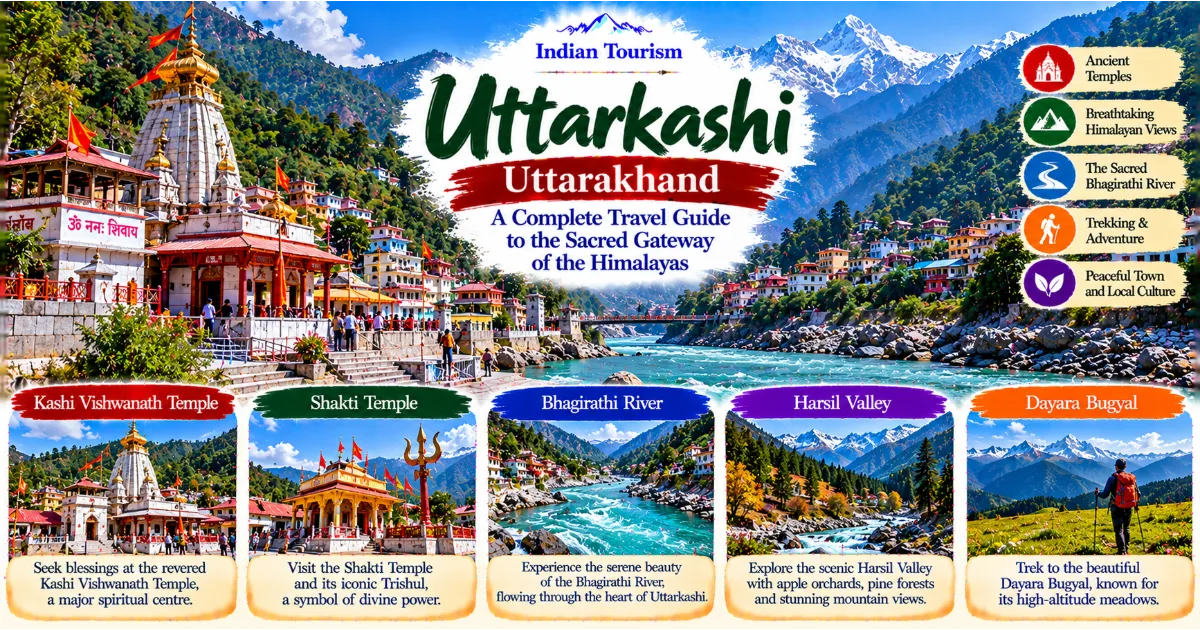
Introduction to Uttarkashi
Uttarkashi is one of the most fascinating destinations in Uttarakhand, offering a remarkable combination of Himalayan scenery, ancient temples, spiritual traditions, mountain villages and opportunities for outdoor exploration. Located in the upper Bhagirathi valley, the town sits beside the Bhagirathi River, which flows through a landscape of forested slopes, terraced fields and towering mountains. Its name is commonly understood as meaning the Kashi of the north, reflecting its religious association with Varanasi, one of Hinduism's most important sacred cities.
For centuries, Uttarkashi has served as a significant centre of pilgrimage and spiritual learning. Its temples, traditional religious institutions and riverfront locations attract devotees travelling through the Garhwal Himalayas. The town is also an important gateway for journeys towards Gangotri, one of the four revered Char Dham pilgrimage destinations in Uttarakhand. Travellers passing through Uttarkashi often discover that the town itself deserves time and attention, rather than being treated only as a transit point.
Beyond its religious identity, Uttarkashi appeals to nature lovers, photographers, trekkers and visitors interested in understanding life in the Himalayan region. The surrounding valleys contain remote settlements, mountain streams, forests and routes leading towards high-altitude landscapes. The Bhagirathi River adds movement and sound to the town, while the surrounding hills provide opportunities for scenic walks and excursions.
Uttarkashi is not a destination defined by luxury resorts or large entertainment complexes. Its appeal lies in its natural setting, cultural traditions and connection with the mountains. Visitors who appreciate quieter travel experiences can explore the temples, observe daily life in the local markets, visit nearby villages and use the town as a base for carefully planned excursions.
The destination also requires thoughtful preparation. Mountain weather can change quickly, road journeys may be affected by rainfall or landslides, and some nearby excursions require permits, guides or suitable physical preparation. Understanding these conditions allows visitors to experience Uttarkashi safely while respecting the natural environment and the communities that live there.
The geographical setting of Uttarkashi
Uttarkashi lies in the Garhwal region of Uttarakhand, in a valley shaped by the Bhagirathi River and the surrounding Himalayan mountains. The landscape changes significantly as travellers move from the lower hills towards the higher reaches of the river valley. Forests, agricultural terraces, rocky slopes and settlements appear along the roads, creating a varied mountain environment.
The Bhagirathi is central to the geography of the area. It flows through the valley from the higher Himalayan region before continuing downstream towards Devprayag, where it meets the Alaknanda. Their combined waters form the Ganga. This connection gives Uttarkashi an important place within the wider geography and religious traditions associated with the river.
The town's location makes it an important centre for people travelling towards Gangotri and other mountain destinations. Roads follow the river valley, winding around slopes and passing through settlements. These routes provide dramatic views, but they can also be vulnerable to heavy rainfall, falling rocks and landslides.
The surrounding mountains influence local weather, transport, agriculture and settlement patterns. Villages often occupy terraces or relatively level areas on hillsides, where people cultivate crops and maintain orchards. Forests provide a habitat for wildlife and help protect the slopes, while streams and rivers support local ecosystems.
Visitors can appreciate this geography simply by spending time beside the Bhagirathi or travelling along the roads outside the town. The changing relationship between the river, mountains and settlements reveals how closely daily life in Uttarkashi is connected to the natural environment.
The valley also provides a useful introduction to the challenges of Himalayan development. Roads, buildings and tourism facilities must adapt to steep terrain and changing weather. Responsible travel involves recognising these limits rather than expecting every location to offer the same level of infrastructure found in a major city.
The history and cultural identity of Uttarkashi
Uttarkashi has a long-standing religious identity connected with Hindu traditions, pilgrimage and the worship of Lord Shiva. The town's name reflects its association with Kashi, the sacred city of Varanasi. Although the two places have distinct histories and geographical settings, Uttarkashi has developed a reputation as an important northern centre of religious devotion.
The wider region has historically been linked with sages, ascetics and pilgrims who travelled into the Himalayas for worship and spiritual practice. Mountain valleys and riverbanks offered settings for meditation, religious study and temple worship. Over time, settlements such as Uttarkashi became important places where pilgrims could rest, obtain supplies and visit sacred sites before continuing their journeys.
The town's temples and traditional institutions remain central to its identity. Religious festivals bring people together, while daily worship continues throughout the year. The local culture reflects the traditions of Garhwal, including regional food, language, music, clothing and community customs.
Uttarkashi is also shaped by its role as an administrative and commercial centre for surrounding mountain communities. Local residents depend on shops, transport services, education, healthcare, agriculture and tourism. This mixture of religious significance and everyday activity makes the town more complex than a conventional pilgrimage stop.
Visitors can gain a better understanding of Uttarkashi by exploring its markets and observing the rhythm of daily life. Early mornings may reveal residents heading towards temples or work, while the main streets become busier as shops open and vehicles move through the valley.
The town's cultural identity is not limited to its most famous temples. It is also expressed through local hospitality, traditional food, seasonal celebrations and the relationship between residents and the surrounding mountains. Travellers who take time to engage respectfully with these everyday details often gain a deeper appreciation of the region.
Kashi Vishwanath Temple
Kashi Vishwanath Temple is one of the most important religious landmarks in Uttarkashi. Dedicated to Lord Shiva, the temple attracts devotees who visit to offer prayers and participate in religious rituals. Its presence reinforces the town's association with the sacred traditions of Kashi and gives Uttarkashi a distinctive place within the religious geography of northern India.
Lord Shiva occupies a central position in Hindu worship, and temples dedicated to him are important pilgrimage destinations across the country. The Uttarkashi temple is particularly significant for travellers exploring the Garhwal region because it offers a place for worship before or after journeys towards higher Himalayan shrines.
The temple's atmosphere is shaped by daily rituals, devotional offerings and the presence of pilgrims. Visitors may find the experience particularly meaningful during religious festivals, when the number of devotees increases and the surrounding area becomes more active.
When visiting, travellers should dress modestly, follow instructions from temple staff and respect local customs regarding footwear, photography and access to worship areas. People attending religious ceremonies should be given space, and visitors should avoid treating the temple solely as a photographic attraction.
The temple can be included in a broader walking tour of the town. Exploring nearby streets and local shops provides an opportunity to understand how religious life fits into the everyday activities of residents.
Travellers should check current opening arrangements and any local restrictions before visiting. Festival schedules and crowd conditions can affect the experience, so allowing additional time is advisable during busy periods.
Shakti Temple and the sacred Trishul
The Shakti Temple is another important religious attraction in Uttarkashi. Located near the Kashi Vishwanath Temple, it is associated with the worship of the divine feminine and attracts devotees who come to offer prayers. The temple is especially known for a large trident, or Trishul, that holds a central place in local religious tradition.
The Trishul is a symbol associated with divine power and is commonly connected with Lord Shiva and forms of Shakti in Hindu iconography. Its presence at the temple gives the site a distinctive visual identity and contributes to its importance among visitors exploring Uttarkashi's religious landmarks.
The temple offers a useful opportunity to understand the relationship between different forms of Hindu worship. While the Kashi Vishwanath Temple is dedicated to Lord Shiva, the Shakti Temple reflects traditions centred on divine feminine energy. Together, these sites illustrate the range of religious practices that shape the town's cultural life.
Visitors should approach the temple respectfully and observe local guidance. Religious sites can be crowded during festivals and special occasions, and access arrangements may change according to local requirements.
The nearby location of the two temples makes it possible to visit them during the same walk. Travellers can combine the experience with a visit to the riverfront and other parts of the town, creating a compact cultural itinerary without needing extensive transport.
The Bhagirathi River and riverside scenery
The Bhagirathi River is one of the defining features of Uttarkashi. Its waters flow through the valley, creating a powerful natural presence that influences the town's scenery, movement and cultural identity. The river's importance extends far beyond its appearance because it is part of the larger river system that becomes the Ganga at Devprayag.
The riverfront offers opportunities to observe the landscape and appreciate the relationship between the town and its surroundings. Depending on the location, visitors may see rocky banks, bridges, riverside structures and mountain slopes rising above the water.
The appearance of the Bhagirathi changes with the season. During drier periods, the water may appear relatively clear in some stretches, while rainfall and increased flow can carry more sediment and create stronger currents. The monsoon can transform the river dramatically, making it more powerful and potentially dangerous.
Visitors should never assume that the river is safe for swimming or wading. Mountain rivers can contain strong currents, submerged rocks and sudden changes in depth. The water may look calm from the bank while moving rapidly beneath the surface. Only use areas officially designated for particular activities and follow local warnings.
Photography enthusiasts may find the river particularly attractive during the early morning and late afternoon, when sunlight creates changing patterns across the water and surrounding hills. However, safe footing should always take priority over obtaining a dramatic photograph.
The Bhagirathi also offers a reminder of the environmental importance of Himalayan rivers. They support communities, ecosystems and agriculture across a large region. Keeping the riverbanks clean and avoiding waste disposal in the water are essential parts of responsible tourism.
Best time to visit Uttarkashi
Uttarkashi can be visited during several seasons, but the best time depends on the traveller's interests, the condition of mountain roads and plans for nearby excursions. Weather conditions in the Himalayas can change quickly, so checking current forecasts and local advisories is important regardless of the season.
Spring from March to April
Spring is generally suitable for sightseeing, temple visits and exploring the town on foot. Daytime temperatures can be comfortable, while mornings and evenings may remain cool. The surrounding hills begin to show seasonal changes, creating pleasant conditions for photography and short excursions.
Travellers planning to visit nearby villages or travel towards Gangotri should still check road conditions and seasonal access arrangements. Higher mountain areas can experience colder conditions even when the weather in town feels mild.
Spring is a useful choice for visitors who want to combine religious sightseeing with an introduction to the region's natural environment.
Summer from May to June
Summer is a popular period for travel through Uttarkashi because many visitors use the town as part of their journey towards Gangotri and other Himalayan destinations. The weather in the valley can be warmer than in the higher mountains, while early mornings and evenings remain suitable for walking.
Pilgrimage traffic can increase substantially during the Char Dham season. Accommodation, transport and food services may become busier, particularly when travel coincides with holidays. Advance planning is advisable.
Visitors should carry drinking water, sun protection and suitable clothing. Those continuing towards higher elevations should prepare for a significant drop in temperature and changing weather.
Monsoon from July to September
The monsoon brings heavy rainfall to parts of Uttarakhand. The surrounding hills become greener, and streams and rivers may carry increased volumes of water. However, the season can also bring landslides, falling rocks, flooding and road closures.
Travellers should be especially cautious when planning journeys during this period. Road access can change rapidly, and a route that was open earlier in the day may become difficult or unsafe after heavy rain.
Check official advisories before travelling and avoid unnecessary journeys during severe weather. Keep extra time in the itinerary and do not attempt to cross flooded roads or unstable slopes.
The monsoon landscape can be beautiful, but safety must remain the priority.
Autumn from October to November
Autumn often offers favourable conditions for sightseeing and exploring the town. After the monsoon, the surrounding landscape can appear fresh, and clearer skies may provide attractive views of the valley.
This season can be suitable for photography, temple visits and shorter excursions. Travellers should nevertheless check the operating schedules and road conditions for destinations at higher elevations, where winter weather may begin earlier than in the lower valley.
Autumn is particularly appealing to visitors who prefer a balance between comfortable daytime conditions and mountain scenery.
Winter from December to February
Winter brings colder mornings and evenings, and temperatures may drop significantly in the surrounding mountains. Visitors should carry warm clothing, particularly if planning early morning walks or journeys to higher elevations.
Some mountain routes and attractions may have limited access because of snow, ice or weather conditions. Travellers should confirm local information before setting out rather than assuming that every destination remains accessible.
Winter can offer a quieter experience of Uttarkashi itself, particularly for visitors focused on temples, local markets and the river valley. However, careful preparation is essential.
Gangotri: The sacred destination beyond Uttarkashi
Gangotri is one of the most important pilgrimage destinations in Uttarakhand and is closely connected with the identity of Uttarkashi. Located farther up the Bhagirathi valley, Gangotri is one of the four revered Char Dham sites of the state. The temple is dedicated to the goddess Ganga and attracts pilgrims who travel to worship in the Himalayan setting.
The journey from Uttarkashi towards Gangotri follows a mountain road through valleys, forests and settlements. The scenery changes as the route gains elevation, and the surrounding landscape becomes increasingly dramatic. The journey itself is a major part of the experience for many visitors.
Gangotri is associated with traditional accounts of the descent of the Ganga from the heavens to the earth. According to Hindu belief, King Bhagiratha undertook severe penance to bring the sacred river to the world, and Lord Shiva received the force of the descending waters. These stories are central to the religious significance of the region.
Visitors should distinguish between the Gangotri temple and the glacial source of the Bhagirathi. The temple is an important pilgrimage site, while the river's glacial source lies farther into the Himalayan landscape. Reaching higher locations requires additional time, preparation and suitable conditions.
The Gangotri route is seasonal, and the temple's operating period depends on traditional arrangements and weather conditions. Pilgrims should check current opening dates, road access and travel requirements before planning their journey.
For travellers interested in the wider geography of the Ganga, the route provides an opportunity to understand the relationship between Himalayan landscapes and the river's cultural importance. However, the journey should be planned carefully, with attention to altitude, weather, road conditions and the physical demands of any additional trek.
Harsil Valley: A peaceful Himalayan escape
Harsil Valley is one of the most appealing destinations in the wider Uttarkashi region. Known for its mountain scenery, forested slopes, river views and relatively peaceful atmosphere, Harsil attracts travellers who want to experience a quieter side of Uttarakhand.
The valley lies along the route towards Gangotri and offers a striking contrast to the busier pilgrimage centres. Visitors may encounter traditional settlements, orchards, streams and views of surrounding mountain peaks. The landscape changes with the seasons, making the area attractive for photography and nature-focused travel.
Harsil is particularly associated with apple cultivation, and orchards contribute to the region's character. During suitable seasons, the combination of agricultural landscapes and mountain scenery creates a distinctive atmosphere.
Travellers can use Harsil as part of a longer journey from Uttarkashi, but the excursion requires attention to road conditions and available accommodation. Facilities may be more limited than in larger towns, so it is sensible to arrange a stay in advance if planning to spend the night.
Visitors should respect local communities and private agricultural land. Orchards and village paths are not automatically open to the public, and permission should be obtained before entering private property or photographing residents closely.
Harsil is well suited to travellers who enjoy walking, photography and spending time in nature. It is less suitable for visitors expecting extensive nightlife or large shopping districts. Its attraction lies in the landscape, quiet atmosphere and opportunity to slow down.
Dayara Bugyal and the high-altitude meadows
Dayara Bugyal is a renowned high-altitude meadow region in Uttarakhand, known for open grasslands, mountain views and trekking opportunities. It is associated with the wider Uttarkashi region and attracts hikers who want to experience the transition from forested trails to expansive alpine landscapes.
The word bugyal refers to a high-altitude meadow in the Himalayan region. Such meadows are ecologically important, supporting seasonal vegetation and providing grazing areas for livestock. Their appearance changes with the seasons, from green grasslands in warmer months to snow-covered landscapes during suitable winter conditions.
Trekking to Dayara Bugyal requires more preparation than a short walk around Uttarkashi. Visitors should consider their fitness, the length of the route, weather conditions, altitude and available facilities. A knowledgeable local guide or authorised trekking operator can help with route planning and safety.
Conditions may vary considerably by season. Monsoon rainfall can make trails slippery, while winter snow may require specialised equipment and experience. Travellers should not attempt high-altitude routes without appropriate preparation simply because the destination appears close on a map.
The meadow is particularly rewarding for people interested in landscape photography and mountain environments. The wide views provide a sense of scale that differs from the enclosed valleys around Uttarkashi.
Responsible trekking is essential. Visitors should carry waste back with them, avoid damaging vegetation, respect grazing areas and follow instructions intended to protect the landscape. Camping should take place only in permitted locations and according to local requirements.
Dodital Lake: A trek into the mountains
Dodital is a freshwater lake in the Uttarkashi region, surrounded by forested mountains and associated with trekking routes that appeal to nature lovers. The lake is known for its peaceful setting and its place in local religious and cultural traditions.
Reaching Dodital generally involves a trek rather than a simple road excursion. Travellers should therefore plan according to the route, available time, physical fitness and current weather. A guided arrangement can be useful, especially for visitors unfamiliar with the terrain.
The forested landscape along the route provides opportunities to observe Himalayan vegetation and enjoy the quieter side of the region. The lake itself offers a scenic setting, but visitors should remember that mountain ecosystems can be fragile.
Weather conditions can change quickly, and rain, snow or low temperatures may affect the difficulty of the trek. Proper footwear, warm clothing, food, water and suitable equipment are important. Travellers should also check whether permits or local arrangements are required.
Dodital is best suited to visitors who want an outdoor experience beyond ordinary sightseeing. It should not be treated as a casual walk that can be completed without preparation. The trek can be rewarding when planned responsibly and undertaken under suitable conditions.
Local markets and traditional food
The markets of Uttarkashi provide an opportunity to experience the town's everyday character. Shops serve local residents, pilgrims and travellers moving through the valley. Visitors can find basic travel supplies, clothing, household goods, religious items, snacks and other everyday products.
Exploring the market streets offers insight into the practical role Uttarkashi plays for surrounding villages. It is not only a pilgrimage centre but also an important place where people purchase supplies, access services and connect with the wider region.
Local food reflects the broader culinary traditions of Garhwal. Travellers may find simple meals based on rice, lentils, vegetables and roti, alongside tea, snacks and seasonal dishes. Food options vary by establishment, and the range may be more limited than in major urban destinations.
Regional dishes in Uttarakhand include preparations made from local grains, pulses and seasonal produce. Depending on availability, visitors may encounter traditional foods associated with mountain communities. Asking local residents about familiar dishes can be a useful way to discover the region's food culture.
Travellers should not expect every establishment to offer an extensive menu. Those with particular dietary requirements should ask about ingredients and preparation methods before ordering.
Food safety remains important. Choose places that maintain reasonable hygiene, drink safe water and carry suitable snacks for longer journeys into the mountains. Supporting local eateries helps keep tourism spending within the community.
Where to stay in Uttarkashi
Uttarkashi offers a range of accommodation options, including simple guesthouses, budget hotels, modest family-run properties and selected establishments with more extensive facilities. The best place to stay depends on the purpose of the visit and whether the traveller intends to continue towards Gangotri or nearby trekking destinations.
Visitors focused on temple visits and local sightseeing may prefer accommodation within convenient reach of the main town. Those planning early departures towards Gangotri or other mountain locations should consider road access and the time needed to begin the journey.
Travellers seeking a quieter setting may find accommodation outside the busiest streets, although transport arrangements become more important when staying farther from the centre. Before booking, check the exact location, room facilities, meal arrangements, heating options where relevant and cancellation policies.
During the pilgrimage season, accommodation demand can rise considerably. Booking in advance is advisable, particularly if travelling with family or requiring specific facilities.
Visitors should also consider the effects of mountain weather. During the monsoon, it is important to choose accommodation with reliable access and to remain flexible if road conditions deteriorate. In winter, confirm what heating and hot-water facilities are available.
A practical location and reliable facilities may be more valuable than a distant property promising dramatic views. Choosing accommodation that matches the itinerary can make the trip more comfortable and reduce unnecessary travel.
How to reach Uttarkashi
Uttarkashi is accessible primarily by road. Travellers commonly reach the region through Dehradun, Rishikesh or other connected towns in Uttarakhand. The journey involves mountain roads, so travel time can vary according to traffic, weather and road conditions.
By air
Jolly Grant Airport near Dehradun is a commonly used airport for visitors travelling towards Uttarkashi. From the airport, travellers continue by road, often through the Rishikesh area and onward into the mountains.
A private taxi can be convenient for visitors carrying luggage or planning to stop at viewpoints. Those using public transport should check connections carefully because the journey may require more than one service.
Travellers arriving late in the day should consider whether it is practical to begin the mountain journey immediately. Depending on conditions, an overnight stay in a connected town may be more comfortable.
By train
Rishikesh and Haridwar are useful railway gateways for visitors heading towards Uttarkashi. The choice depends on available train connections and the traveller's point of origin.
After reaching the rail gateway, visitors can continue by road using buses, shared vehicles or private transport. Schedules can vary, so it is important to confirm onward connections rather than relying on assumptions about availability.
By road
Road travel is the main way to reach Uttarkashi. The route passes through the Himalayan foothills and follows valleys towards the upper Bhagirathi region. It can offer beautiful views, but the roads require patience and careful driving.
Private vehicles provide flexibility, particularly for travellers planning stops at temples and viewpoints. Visitors unfamiliar with mountain driving may prefer an experienced local driver.
Buses and shared transport may be available from connected towns, but services can become crowded during pilgrimage season. Booking or confirming the journey in advance can reduce uncertainty.
Travellers should check official road updates before departure, especially during the monsoon and periods of heavy snowfall in higher areas. Carrying some extra food, water and warm clothing is sensible for longer mountain journeys.
Suggested three-day itinerary for Uttarkashi
A three-day itinerary allows visitors to explore the town's principal attractions and make one carefully planned excursion into the surrounding region.
Day one: Explore the town and its temples
Begin with a visit to Kashi Vishwanath Temple and the nearby Shakti Temple. Take time to understand their religious importance and observe the local atmosphere respectfully.
Later, explore the market streets and the riverfront. Spend time viewing the Bhagirathi from a safe location and learn about its connection with the Ganga. Enjoy a simple local meal and allow the afternoon to remain flexible.
In the evening, take a quiet walk through accessible parts of the town before returning to the accommodation. Avoid planning a demanding journey on the first day if arriving after a long drive.
Day two: Explore the wider valley
Use the second day for an excursion towards Harsil Valley or another suitable nearby destination, depending on weather, road conditions and available time. The journey can provide views of forested hills, traditional settlements and the changing landscape of the Bhagirathi valley.
Visitors should check the condition of the route before leaving and avoid trying to cover too many locations in a single day. If road conditions are uncertain, a shorter excursion closer to town may be a better choice.
Return to Uttarkashi with enough time to rest and prepare for the following day.
Day three: Choose a pilgrimage or outdoor experience
The third day can be devoted to a longer religious or outdoor experience. Travellers with suitable transport and enough time may begin a journey towards Gangotri, subject to seasonal access and current road conditions.
Those interested in trekking can consider a properly organised excursion, provided the route is suitable for their experience and the weather is favourable. Visitors who prefer a relaxed pace can remain in town, revisit the temples or explore the markets more thoroughly.
The itinerary should be adjusted according to physical fitness, road conditions and the time available for onward travel. Mountain journeys should never be rushed to meet an unrealistic schedule.
A five-day itinerary for a deeper Himalayan experience
Five days provide a more flexible introduction to Uttarkashi and its surrounding valleys. This duration allows travellers to balance cultural exploration with a longer excursion without trying to see every destination at once.
On the first day, arrive in Uttarkashi, settle into the accommodation and explore the nearby streets. Visit one of the main temples if time permits, but keep the schedule light.
On the second day, explore Kashi Vishwanath Temple, Shakti Temple, the market area and the Bhagirathi riverfront. Use the afternoon to learn more about local life and prepare for the following excursion.
The third day can be devoted to Harsil Valley, subject to road conditions and available transport. Travellers may choose to spend additional time in the valley rather than returning immediately, provided accommodation and the onward schedule allow it.
The fourth day can focus on a pilgrimage journey towards Gangotri during the appropriate operating season. Visitors should confirm temple access, road conditions and travel requirements in advance. If Gangotri is not accessible or the journey is unsuitable, choose a shorter excursion instead.
The fifth day can be used for a local walk, a visit to a nearby village where access is appropriate, or a return journey towards the next destination.
This slower approach allows visitors to appreciate the landscape without turning the trip into a race between attractions. It also leaves room for changes caused by weather or transport delays.
Estimated travel budget
The cost of visiting Uttarkashi depends on the starting point, accommodation category, transport arrangements, meal choices and planned excursions. A simple trip using budget accommodation, local food and shared transport may cost considerably less than a journey involving private taxis, premium accommodation and guided trekking.
Budget travellers should account for accommodation, meals, local transport, any applicable entry or permit charges and a reserve for unexpected expenses. Mountain travel can involve additional costs if road closures require changes to the itinerary or accommodation.
Mid-range travellers may prefer a comfortable hotel, private transport for selected excursions and a mix of local restaurants and simple cafés. Families should consider room requirements, luggage, children's needs and the additional cost of flexible transport.
Travellers planning treks should budget separately for guides, equipment, food, camping arrangements and any required permits. These expenses vary according to the route and the type of organised trip.
Prices change with the season and local demand. During the Char Dham pilgrimage period, transport and accommodation may be more expensive or harder to arrange. It is sensible to check current rates before travelling and keep an emergency reserve.
The most useful approach is to decide which experiences matter most and allocate the budget accordingly. A carefully planned trip does not require visiting every attraction, particularly when some destinations involve long or demanding journeys.
Responsible tourism in the Himalayan region
The natural environment around Uttarkashi is beautiful but sensitive. Mountain slopes, river valleys, forests and high-altitude meadows can be affected by poorly managed tourism, waste, construction and heavy visitor traffic.
Travellers can help protect the region by carrying reusable water bottles where safe refilling is available, avoiding unnecessary single-use plastic and taking waste back to appropriate disposal points. Rubbish should never be thrown into the Bhagirathi or left beside mountain roads.
Respect for local communities is equally important. Visitors should ask permission before photographing people closely, respect religious customs and avoid entering private homes, fields or orchards without permission.
When trekking, remain on appropriate trails and follow local guidance. Avoid disturbing wildlife, damaging vegetation or leaving food waste behind. Camping should take place only in authorised areas and in accordance with local rules.
Water safety deserves particular attention. Himalayan rivers can become dangerous very quickly after rainfall, and apparently calm stretches may still have strong currents. Visitors should obey warning signs and never take risks for photographs.
Responsible travel also includes being realistic about road conditions and infrastructure. If a route is closed or an activity is suspended, do not seek an unofficial alternative that bypasses safety restrictions. Supporting legitimate local services helps communities benefit from tourism while protecting visitors.
Practical travel tips for first-time visitors
First-time visitors should prepare for the differences between travelling in the Himalayas and visiting a major city. Distances can appear short on a map, but mountain roads, weather and traffic can make journeys lengthy.
Carry comfortable walking shoes, warm layers, sun protection and a small day bag. Even during warmer months, temperatures can drop in the evening or at higher elevations. Rain protection is particularly useful during the monsoon.
Check weather forecasts, road updates and seasonal opening arrangements before beginning longer excursions. Visitors planning to travel towards Gangotri or undertake a trek should confirm the latest conditions rather than relying solely on old travel information.
Keep some cash available for small purchases and local transport. Digital payment services may be available in many places, but connectivity and payment acceptance can vary.
Book accommodation in advance during busy pilgrimage periods. If travelling with older family members or children, check the property's access, heating, hot water and proximity to transport.
Choose reliable transport providers and experienced drivers for mountain journeys. Avoid travelling with a schedule that leaves no room for delays. It is better to experience fewer places comfortably than to attempt an ambitious route in unsafe conditions.
Most importantly, treat Uttarkashi as a living mountain town rather than simply a gateway to another destination. Its temples, riverfront, markets and surrounding communities all contribute to its character.
Is Uttarkashi worth visiting?
Uttarkashi is worth visiting for travellers who want to experience the cultural and natural richness of the Garhwal Himalayas. Its temples provide a connection with long-standing religious traditions, while the Bhagirathi River and surrounding mountains create a striking setting for exploration.
The town is especially useful for people travelling towards Gangotri, but it also offers meaningful experiences of its own. Visitors can explore the Kashi Vishwanath Temple, learn about the significance of the Shakti Temple, walk through local markets and discover the landscape of the upper Bhagirathi valley.
For nature lovers, the surrounding region offers opportunities to visit places such as Harsil Valley and undertake organised trekking routes when conditions are suitable. These excursions require preparation, but they reveal the diversity of the Himalayan environment.
Uttarkashi may not suit travellers looking for extensive nightlife, luxury shopping or large entertainment complexes. Its attraction lies in spiritual heritage, natural scenery, local culture and access to the mountains.
Those who appreciate quiet exploration, religious history and responsible outdoor travel will find the town particularly rewarding. Giving it enough time can transform a transit stop into a memorable part of a wider Uttarakhand journey.
Conclusion
Uttarkashi stands out as a destination where religious heritage, Himalayan geography and everyday mountain life come together. The Kashi Vishwanath Temple and Shakti Temple reflect the town's spiritual identity, while the Bhagirathi River connects it to the wider story of the Ganga. The surrounding valleys, villages and trekking routes reveal a landscape shaped by mountains, forests and changing weather.
Whether visiting as part of a pilgrimage, using the town as a base for exploring the region or seeking a quieter mountain experience, travellers can find many reasons to spend time in Uttarkashi. Its importance is not limited to its role as a gateway to Gangotri. The town itself offers opportunities to learn about the traditions, landscapes and communities of Uttarakhand.
A successful visit depends on thoughtful planning, respect for local customs and awareness of mountain conditions. By travelling responsibly and allowing enough time for exploration, visitors can experience Uttarkashi as more than a stop on the road. It becomes an introduction to the natural beauty and cultural depth of the Garhwal Himalayas.
#IndianTourism #Uttarkashi #UttarakhandTourism #GarhwalHimalayas #BhagirathiRiver #Gangotri #KashiVishwanathTemple #HarsilValley #HimalayanTravel #SpiritualTourism #ExploreUttarakhand #ResponsibleTourism
