
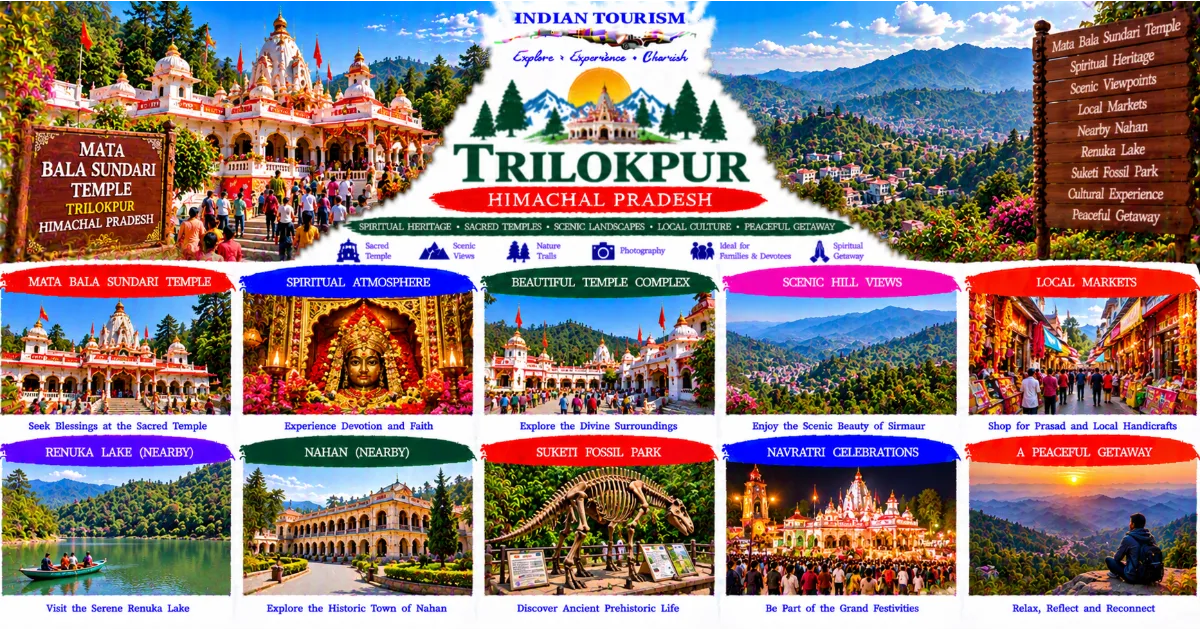
Discover the Spiritual Heritage of Trilokpur
Himachal Pradesh is known for its mountains, forests, historic towns and ancient temples. Across the state, religious destinations preserve traditions that have shaped local communities for generations. While many travellers associate Himachal Pradesh with Shimla, Manali and Dharamshala, the state also contains important pilgrimage sites that offer a deeper understanding of its cultural identity. Trilokpur, located in the Sirmaur district near Nahan, is one such destination. It is best known for the revered Mata Bala Sundari Temple, which attracts devotees throughout the year.
Trilokpur offers a different experience from the state's popular hill stations. Its primary attraction is religious rather than recreational, and the atmosphere of the settlement is closely connected with worship, pilgrimage and regional tradition. Visitors come to seek blessings, participate in religious observances and learn about the history of the temple. The surrounding landscape of the lower Himalayan foothills provides an attractive setting for a journey that combines spirituality with regional exploration.
The Mata Bala Sundari Temple is associated with Goddess Durga and is especially important to devotees who worship the goddess in her various forms. The temple's history is connected with local accounts and religious traditions that have been passed down over generations. During Navratri, the area can become particularly lively as pilgrims arrive for prayers and celebrations. These gatherings offer visitors an opportunity to observe the living traditions of Hindu worship, provided they approach the experience respectfully.
Trilokpur can be explored as a pilgrimage destination in its own right or as part of a wider journey through Sirmaur. Travellers can combine a visit with Nahan, Renuka Lake and other nearby attractions, creating an itinerary that includes religious heritage, natural scenery and local culture. Its accessibility from the surrounding region makes it suitable for families, devotees, cultural travellers and visitors interested in discovering lesser-known destinations in Himachal Pradesh.
The most rewarding way to visit Trilokpur is to understand its religious significance rather than treat it simply as a photographic stop. Allowing time for the temple, respecting local customs and learning about the traditions associated with the goddess can turn a short excursion into a meaningful cultural experience.
Where Is Trilokpur Located?
Trilokpur is situated in the Sirmaur district of Himachal Pradesh, near Nahan and within the lower Himalayan foothills. Its location makes it accessible by road from several towns in the surrounding region. The settlement is best known for its religious significance, and the temple complex is the main reason most visitors travel there.
The wider area consists of foothill terrain, small settlements, agricultural land and roads connecting local communities. Unlike destinations in the higher Himalayas, Trilokpur is not primarily a snow or high-altitude tourism location. Its appeal comes from the pilgrimage experience and the cultural landscape surrounding the temple.
Visitors travelling from Nahan can include Trilokpur in a regional itinerary, while those arriving from Chandigarh and nearby areas can plan a road journey through the foothills. Travel times depend on the starting point, traffic and road conditions, so it is advisable to confirm the route before departure.
Trilokpur has a different atmosphere from larger tourist towns. Facilities are centred on local needs and pilgrimage activity, and the availability of accommodation and dining options may be more limited than in a district headquarters. Travellers who intend to stay overnight should confirm arrangements in advance.
The Religious Significance of Mata Bala Sundari Temple
Goddess Bala Sundari and the Worship of the Divine Mother
The Mata Bala Sundari Temple is dedicated to a form of the Divine Mother, worshipped by devotees as Bala Sundari. The goddess is associated with the wider traditions of Shakti worship, in which the divine feminine is understood as a source of power, protection and spiritual strength.
In Hindu religious practice, the goddess is worshipped in numerous forms, each expressing different aspects of divine energy. Devotees may approach the Divine Mother for blessings, well-being, family happiness and spiritual guidance. The precise significance of a particular form can vary between traditions, communities and regional practices.
For worshippers who visit Trilokpur, the temple is an important place of devotion. Pilgrims may offer prayers, participate in rituals and seek blessings for themselves and their families. The experience is shaped not only by the physical temple but also by the traditions maintained by priests, local residents and visiting devotees.
Visitors who are unfamiliar with the religious practices can still appreciate the temple as a living cultural institution. Observing worship respectfully and learning about the role of the goddess in local belief provides insight into the spiritual life of the region.
The History and Local Traditions of the Temple
The history of Mata Bala Sundari Temple is preserved through religious accounts, local traditions and the memories associated with pilgrimage. As with many temples in northern India, different versions of the temple's origin and development may circulate among devotees and local storytellers.
Travellers should distinguish between documented historical information and religious narratives that express the faith of the community. Both are important for understanding a sacred site, but they serve different purposes. Historical evidence can help establish dates and developments, while oral traditions reveal how the temple is remembered and understood by worshippers.
Visitors interested in the temple's detailed history can ask local guides or temple representatives about its traditions and important events. Listening to local accounts can enrich the visit, especially when the information is presented with respect for the community's beliefs.
The temple's continuing role in pilgrimage demonstrates how religious institutions can remain central to a region's identity even as roads, settlements and daily life change around them.
The Temple as a Centre of Community Life
A major pilgrimage temple often serves as more than a place for individual worship. It can also become a gathering point where families, neighbours and visitors come together during festivals and important religious dates. Mata Bala Sundari Temple plays this kind of cultural role in the Trilokpur area.
Temple activity can influence local markets, transport, food stalls and the rhythm of the settlement during major occasions. For local businesses, pilgrimage periods may create additional activity. For devotees, these gatherings provide opportunities to participate in shared religious traditions.
Visitors should remember that the temple is a place of worship first and a tourist attraction second. Maintaining a respectful attitude, following instructions and avoiding unnecessary disruption helps preserve the experience for everyone.
Top Attractions and Experiences in Trilokpur
1. Mata Bala Sundari Temple
The temple is the principal attraction in Trilokpur and the centre of its religious identity. Visitors come to offer prayers, seek blessings and participate in worship dedicated to the goddess. The temple's importance is reflected in the steady flow of devotees and the increased activity during major festivals.
For pilgrims, the visit may be a central part of a personal religious journey. For cultural travellers, the temple offers an opportunity to understand the traditions of Shakti worship and the role of sacred places in the lives of local communities.
Before entering, visitors should follow the rules displayed at the site or explained by temple staff. These may include removing footwear, maintaining appropriate clothing and observing restrictions on photography. During busy periods, queues and crowd-management arrangements may affect how visitors move through the complex.
It is useful to allow sufficient time for the visit rather than treating the temple as a brief stop on a crowded itinerary. The experience is more meaningful when visitors can observe the surroundings, understand the religious context and participate according to their own beliefs and the temple's customs.
2. The Temple Complex and Its Surroundings
The area around Mata Bala Sundari Temple forms part of the pilgrimage experience. Visitors may encounter devotional activity, local shops and services catering to worshippers. The atmosphere can vary depending on the day of the week, religious calendar and number of visitors.
Exploring the accessible surroundings provides a chance to observe how pilgrimage shapes the settlement. Offerings, devotional items and refreshments may be available from local vendors, depending on the season and the day's activity.
Visitors should purchase items only from legitimate vendors and avoid blocking entrances or pathways. During crowded periods, it is especially important to follow the designated routes and respect instructions from temple personnel.
The temple surroundings can also offer opportunities for photography, but the rules of the site should always take priority. Ask permission before photographing individuals, and avoid taking pictures in areas where photography is restricted.
3. Navratri Celebrations
Navratri is one of the most significant periods for worship of the Divine Mother, and the Mata Bala Sundari Temple attracts devotees during the festival. The event is associated with prayer, fasting, devotional singing and other forms of worship, with practices varying between families and communities.
For visitors, Navratri can provide an opportunity to observe the temple at a particularly active time. The atmosphere may include large numbers of pilgrims, extended queues and additional religious activity. The festival offers a glimpse of the role that collective worship plays in regional culture.
The increased number of visitors also means that planning becomes important. Travellers should check the dates for the relevant year, allow extra time for road travel and confirm accommodation well in advance if an overnight stay is planned.
Visitors who attend during Navratri should remain patient and respectful. Follow crowd-management instructions, keep personal belongings secure and avoid interrupting worship for photographs or other activities.
4. Local Pilgrimage Traditions
The pilgrimage experience at Trilokpur extends beyond the act of entering the temple. Devotees may prepare for the journey through personal prayer, family customs or visits to other sacred places in the region. These practices differ between individuals and communities, reflecting the diversity of Hindu religious life.
Observing these traditions can help visitors understand how faith is woven into everyday routines. Some families may travel together across generations, while others may visit as part of a larger religious itinerary.
Non-pilgrim visitors should approach these activities with sensitivity. Avoid making assumptions about the meaning of a ritual, and ask questions only when it is appropriate to do so. If a ceremony is underway, it is best to observe quietly from a permitted area.
5. Scenic Surroundings of the Sirmaur Foothills
Although Trilokpur is primarily known for its temple, the surrounding region also offers the natural character of the lower Himalayan foothills. Visitors may enjoy views of rolling terrain, cultivated areas and green landscapes depending on the season.
The landscape can be especially attractive after rainfall, when vegetation appears fresh and the hills take on a deeper green colour. Clear conditions may offer wider views, while cloudy weather can create a softer atmosphere.
Travellers should not expect the extensive alpine scenery found at higher elevations. Instead, the appeal lies in the combination of foothill landscapes and cultural heritage. Short pauses along safe roads and designated public areas can provide opportunities to appreciate the region without turning the visit into a demanding outdoor excursion.
6. Local Shops and Pilgrimage Markets
Small markets near pilgrimage sites often provide devotional items, offerings, refreshments and everyday goods. Exploring the shops around Trilokpur can help visitors understand how local commerce responds to religious activity.
Visitors may find flowers, incense, religious images and other items used for worship, depending on the season and the individual shops. Local food stalls may also serve snacks and refreshments to pilgrims.
Be considerate in busy areas and avoid blocking the entrances of shops or temple pathways. If you purchase religious offerings, follow the temple's instructions for their use and disposal. Waste should never be left on roadsides or in the surrounding countryside.
Best Time to Visit Trilokpur
Spring: March to April
Spring is generally suitable for visiting Trilokpur because conditions can be comfortable for road travel and outdoor exploration. Visitors can combine the temple with nearby destinations without the intense heat that may develop later in the year.
The season is particularly appealing for families and cultural travellers who want a manageable pilgrimage or day trip. A light jacket may be useful in the morning and evening, while comfortable walking shoes will help when moving around the temple complex.
If your visit is connected with a specific religious observance, check the calendar rather than relying on the season alone. Festival dates vary, and the temple may be busier on particular days.
Summer: May to June
Summer is a common period for travel from the northern plains, although Trilokpur is located in the lower foothills and can experience warm weather. Visitors should plan outdoor activities for the cooler parts of the day and carry sufficient drinking water.
Families travelling with children or older relatives should allow time for rest, especially if queues are long. Comfortable footwear and sun protection can make the pilgrimage more pleasant.
Accommodation and transport demand may rise during holiday periods. If you plan to combine Trilokpur with Nahan or Renuka Lake, organise the route in advance and avoid scheduling too many distant stops into one day.
Monsoon: July to September
The monsoon brings greenery to the Sirmaur region and can make the surrounding landscape visually appealing. Visitors who enjoy quieter travel may appreciate the fresh atmosphere and reduced emphasis on outdoor sightseeing.
However, heavy rain can cause slippery surfaces, reduced visibility and road disruptions in parts of Himachal Pradesh. Check weather forecasts and local advisories before travelling, and follow any instructions regarding road safety or access.
Temple visits may still be possible during wet weather, but allow additional time for travel and wear footwear suitable for slippery conditions. Avoid exploring exposed roadside areas during heavy rain.
Autumn: October to November
Autumn is often a comfortable period for exploring Trilokpur and the wider Sirmaur region. Weather conditions may become clearer after the monsoon, making road travel and sightseeing more pleasant.
This season can also coincide with important Hindu festivals, depending on the religious calendar. Visitors who want to experience Navratri should confirm the dates for the relevant year and prepare for larger crowds.
During festivals, the temple atmosphere can be particularly vibrant, but travel may take longer than expected. Book accommodation in advance if required and follow local arrangements for parking and queues.
Winter: December to February
Winter generally brings cooler mornings and evenings, while daytime conditions may remain suitable for visiting the temple. The lower foothill location means that Trilokpur should not be treated as a high-altitude snow destination.
Visitors can enjoy a quieter pilgrimage outside major festival periods. Carry a warm layer, check the weather forecast and confirm transport arrangements before departure.
Winter is also suitable for combining the temple visit with nearby destinations, provided road conditions are favourable and enough time is allowed for travel.
How to Reach Trilokpur
By Road
Road travel is the most practical way to reach Trilokpur for many visitors. The temple is connected with Nahan and the wider Sirmaur region by local roads. Travellers arriving from Chandigarh and other nearby cities can plan a journey through the foothills.
Journey times depend on the starting point, traffic and current road conditions. Roads in the region may include bends and stretches where progress is slower than expected, so avoid planning a tightly timed schedule.
If travelling by taxi, confirm the fare, pickup location and return arrangements before setting out. During festivals, parking and traffic conditions may change, and extra time should be allowed.
By Train
Trilokpur does not have a major railway station at the temple itself. Travellers can use suitable railway stations in the wider region and continue by road, depending on their origin and chosen route.
Kalka may be useful for some journeys into the foothills, but the most practical connection depends on current train services and onward transport availability. Check the complete route before booking.
If arriving by train, allow sufficient time for the road journey and consider arranging a taxi in advance, particularly when travelling with family members or luggage.
By Air
Chandigarh Airport is one option for travellers coming from distant parts of India. From the airport, visitors can continue by road towards the Sirmaur region. The total travel time depends on traffic, the selected route and weather conditions.
Travellers arriving late in the day may prefer to arrange transport before arrival. Confirm the pickup point, fare and approximate journey duration with the transport provider.
Suggested Itineraries for Trilokpur
One-Day Pilgrimage Visit
A one-day trip is suitable for visitors whose primary purpose is to visit Mata Bala Sundari Temple. Start early enough to allow for road travel and possible queues. On arrival, follow the temple's access rules and spend time in worship or quiet observation according to your preferences.
After the temple visit, explore the accessible surroundings and local shops. Have a meal or refreshments at a suitable local establishment before returning to your starting point.
Avoid adding too many distant attractions to a short pilgrimage. Allowing sufficient time for worship and rest generally creates a more comfortable experience than rushing between several locations.
Two-Day Trilokpur and Nahan Trip
A two-day itinerary allows visitors to combine the pilgrimage experience with the historic character of Nahan. Spend the first day at Trilokpur, focusing on the temple and its surroundings. Stay overnight in accommodation that provides convenient access to your next destination.
On the second day, travel to Nahan and explore its local markets, historic streets and selected cultural attractions. If time permits, choose one additional stop based on your interests and transport arrangements.
This combination is suitable for families and cultural travellers who want to experience both religious heritage and everyday town life.
Three-Day Trilokpur, Nahan and Renuka Lake Journey
A three-day trip can include Trilokpur, Nahan and Renuka Lake. Use the first day for the Mata Bala Sundari Temple, the second for Nahan and the third for Renuka Lake and its associated religious and natural attractions.
The schedule should be adjusted according to road conditions, festival dates and the opening arrangements of individual sites. Travellers who want to spend more time in worship or nature may prefer to remove an additional stop rather than make the itinerary too demanding.
Festival-Focused Visit
Visitors planning their journey around Navratri should first confirm the relevant festival dates and temple arrangements. The visit may require additional time for queues, traffic and access to the temple.
Book accommodation early if you intend to stay overnight, and consider arriving during the earlier part of the day to reduce the pressure of a tightly timed schedule. Follow crowd-management instructions and keep personal belongings secure.
A festival visit can be a memorable cultural experience, but it requires patience and respect for the religious purpose of the gathering.
Exploring Nearby Destinations
Nahan
Nahan is the principal town of the Sirmaur district and a useful companion destination for a trip to Trilokpur. Its historical identity is connected with the former princely state of Sirmaur, and its markets, temples and older streets offer a broader cultural experience.
Visitors can explore the town at a relaxed pace and use it as a base for excursions into the surrounding region. Accommodation and dining options may be more varied than in smaller pilgrimage settlements.
Renuka Lake
Renuka Lake is a major natural and religious attraction in Sirmaur. It is associated with Goddess Renuka and offers a combination of sacred heritage, green surroundings and opportunities for nature observation.
A visit can include the lakeside area, Renuka Ji Temple and selected accessible parts of the surrounding environment. Travellers should confirm current access arrangements and allow enough time for the road journey from their accommodation.
Suketi Fossil Park
Suketi Fossil Park provides an educational experience centred on prehistoric life and fossil discoveries. It can be a worthwhile addition for families, students and visitors interested in natural history.
Check opening arrangements before travelling and allow time to read the displays. The park offers a contrast to Trilokpur's religious character, giving visitors another perspective on the region.
Solan
Solan is a larger town in Himachal Pradesh, known for its markets, religious landmarks and association with mushroom cultivation. It may be included in a longer regional journey, depending on the starting point and available time.
Solan can provide additional dining and accommodation options, although it should not automatically be treated as a quick stop on the same day as several distant attractions.
Barog and Dagshai
Barog is known for its connection with the historic Kalka to Shimla railway, while Dagshai is associated with a historic cantonment and colonial-era buildings. Both destinations offer heritage experiences that differ from the religious focus of Trilokpur.
These places are better planned as part of a broader trip through the lower Himalayan foothills. Check distances and road conditions before deciding how many destinations to combine.
Local Food to Try During Your Visit
Food options around Trilokpur are likely to include simple meals, snacks and refreshments suited to pilgrims and local residents. The range of choices may be more limited than in a larger town, so visitors staying overnight should confirm meal availability in advance.
Himachali Dham
Dham is a traditional celebratory meal associated with Himachal Pradesh. It is commonly served during weddings, festivals and community gatherings. Depending on the region, it may include rice, lentils and a variety of curries prepared according to local traditions.
A complete traditional dham may not be available every day around Trilokpur. Visitors interested in trying it can ask local hosts or restaurants in nearby towns whether it is offered.
Siddu
Siddu is a traditional Himachali preparation made from fermented wheat dough and commonly served with ghee or other accompaniments. It has a distinctive texture and is worth sampling when available.
Visitors may find more opportunities to try siddu in larger towns or establishments that specialise in regional cuisine. Ask about the filling and preparation before ordering.
Chana Madra
Chana madra is a traditional dish often prepared with chickpeas in a yoghurt-based gravy and seasoned with regional spices. It is associated with the wider culinary traditions of Himachal Pradesh and is commonly served with rice or bread.
Recipes vary, so the flavour and texture can differ between restaurants and households.
Babru
Babru is a traditional Himachali snack made from dough filled with a spiced black gram mixture and fried. It can be a good option for visitors who want to sample a regional speciality.
Availability varies by location, so ask locally rather than assuming every eatery will offer it.
Simple Meals and Refreshments
Simple meals such as dal, rice, roti, seasonal vegetables and tea are practical choices during a day of sightseeing. Visitors can also find familiar North Indian dishes in nearby towns.
Choose clean food outlets, carry drinking water and communicate any dietary restrictions clearly. During crowded festival periods, allow additional time for meals.
Accommodation Near Trilokpur
Staying Near the Temple
Visitors whose primary purpose is pilgrimage may prefer accommodation within convenient travelling distance of Mata Bala Sundari Temple. Availability and facilities can vary, so confirm the exact location and access arrangements before booking.
Check whether meals are provided, whether hot water is available and how far the property is from the temple entrance. If visiting during Navratri, reserve early because demand can increase substantially.
Staying in Nahan
Nahan can be a practical base for travellers who want to combine Trilokpur with other destinations in Sirmaur. The town may offer a wider choice of accommodation, restaurants and everyday services.
Visitors staying in Nahan should arrange transport to Trilokpur and allow enough time for the road journey. If travelling by taxi, confirm the return trip in advance.
Choosing the Right Accommodation
The best accommodation depends on the purpose of the visit. Pilgrims may prioritise access to the temple, families may prefer convenient parking and reliable meals, while cultural travellers may choose a base that makes it easier to explore Nahan and Renuka Lake.
Read recent guest feedback, confirm cancellation conditions and check the final booking details. Visitors with mobility requirements should ask about steps, slopes and access to rooms.
Trilokpur for Different Types of Travellers
Pilgrims
Trilokpur is particularly suited to devotees who want to visit Mata Bala Sundari Temple. The religious traditions associated with the goddess make the temple a meaningful destination for worship and reflection.
Visitors should confirm festival dates, allow time for queues and follow temple rules. During major religious events, patience and respect for other devotees are essential.
Families
Families can combine a temple visit with a wider exploration of the Sirmaur region. Children may learn about religious traditions, local history and the cultural significance of pilgrimage.
Parents should keep children close in crowded areas and supervise them around roads and uneven surfaces. A flexible schedule with regular breaks will make the visit more comfortable.
Couples
Couples interested in culture and spirituality may enjoy a visit to Trilokpur as part of a peaceful regional trip. The temple can be combined with a day in Nahan or an excursion to Renuka Lake.
The destination is best suited to visitors who appreciate religious heritage and local culture rather than those seeking a large entertainment district.
History and Culture Enthusiasts
Trilokpur offers an opportunity to explore how religious institutions shape the identity of a settlement. Visitors can learn about local traditions, observe pilgrimage activity and understand the role of the temple in community life.
A thoughtful visit should distinguish between historical documentation and religious tradition while respecting the beliefs of worshippers.
Photography Enthusiasts
The temple complex and surrounding landscape can provide opportunities for architectural and cultural photography. However, photography rules may apply in the temple, and permission should be sought before photographing people.
Avoid blocking entrances or queues to capture a picture. Respectful observation is more important than obtaining a particular image.
Photography Guide to Trilokpur
Trilokpur offers photographic subjects centred on religious architecture, local markets and the surrounding foothill landscape. The temple's external features and the activity around the pilgrimage area can provide a sense of place, while nearby roads and greenery offer broader landscape compositions.
Early morning and late afternoon may provide softer light, although the conditions depend on season and weather. During festivals, the area can become crowded, so photographers should be patient and avoid interrupting religious activity.
Always follow the temple's photography rules. Some areas may prohibit cameras, and worshippers should not be photographed without consideration. Ask permission before taking pictures of local residents or vendors.
Visitors should also remain aware of their surroundings. Do not stand in roadways, block pathways or enter restricted areas for a photograph. A respectful approach helps preserve the atmosphere of the temple and makes the experience more pleasant for everyone.
Responsible Tourism in Trilokpur
Responsible tourism is especially important at a religious destination. Visitors should keep the temple complex and surrounding public areas clean, dispose of waste properly and avoid leaving plastic packaging along roads or in nearby natural spaces.
Respect local customs and religious practices. Follow instructions regarding footwear, clothing, photography and access to sacred areas. Keep noise low and avoid interrupting worship or ceremonies.
During festivals, be considerate of other pilgrims and follow crowd-management arrangements. Avoid blocking entrances and allow people to move through queues safely. Keep personal belongings secure in crowded areas.
Support local businesses where practical, but purchase offerings and goods responsibly. Respect the privacy of residents and ask permission before photographing people or private property.
The surrounding environment should also be protected. Avoid damaging vegetation, littering and stopping vehicles in unsafe locations. Responsible behaviour helps maintain the destination's religious character and benefits the local community.
Practical Travel Tips for Trilokpur
Before travelling, check the weather forecast, road conditions and temple arrangements. If your visit is planned around Navratri or another major festival, confirm the relevant dates and prepare for larger crowds.
Wear comfortable footwear and clothing suitable for the season. Follow temple instructions about removing shoes and entering particular areas. Carry drinking water and allow time for rest, particularly when travelling with children or older family members.
Plan transport in advance if you are not using a private vehicle. Confirm the return journey and taxi fare before beginning an excursion. During festival periods, road congestion and parking restrictions may affect travel times.
Visitors who want to combine Trilokpur with Nahan, Renuka Lake or other destinations should check the route carefully and avoid overloading a single day. A relaxed itinerary is usually more rewarding than a rushed sequence of stops.
Most importantly, approach the temple as a place of worship. Respectful conduct and an understanding of the site's religious significance will make the visit more meaningful.
Is Trilokpur Worth Visiting?
Trilokpur is worth visiting for travellers interested in religious heritage, Hindu traditions and the cultural life of the Sirmaur region. The Mata Bala Sundari Temple gives the settlement a distinctive identity and attracts devotees throughout the year, with particularly active periods during major festivals.
The destination is not designed around conventional hill-station entertainment. Its appeal lies in the pilgrimage experience, the temple's importance to the community and its location within the lower Himalayan foothills. Visitors who approach it with an interest in culture and spirituality are likely to find the journey rewarding.
Trilokpur can also be included in a wider regional itinerary featuring Nahan, Renuka Lake and other destinations. This combination allows travellers to experience religious traditions, natural landscapes and local history within the same trip.
For a successful visit, confirm travel arrangements, respect temple customs and allow enough time to explore without rushing. With these preparations, Trilokpur can become a meaningful part of a journey through Himachal Pradesh.
Conclusion: Experience the Sacred Traditions of Trilokpur
Trilokpur offers a valuable opportunity to explore the spiritual heritage of Himachal Pradesh. The Mata Bala Sundari Temple is central to the identity of the settlement, drawing devotees who come to worship the goddess and participate in longstanding religious traditions. The temple's role in community life makes it an important destination for understanding the cultural character of the Sirmaur region.
Visitors can combine a pilgrimage with excursions to Nahan, Renuka Lake and other nearby attractions, creating a journey that brings together spirituality, history and nature. Planning around the season and religious calendar can help travellers make the most of the visit, particularly during Navratri.
A respectful approach is essential. Following temple rules, keeping the surroundings clean and showing consideration for worshippers help preserve the destination's significance. For travellers who want to discover the cultural side of Himachal Pradesh beyond its famous hill stations, Trilokpur offers an experience rooted in faith, tradition and regional identity.
#IndianTourism #Trilokpur #HimachalPradesh #MataBalaSundariTemple #Sirmaur #Nahan #HimachalTravel #SpiritualTourism #TempleTourism #Navratri #IndianCulture #ExploreHimachal #TravelIndia #ExploreIndia #ResponsibleTourism
