
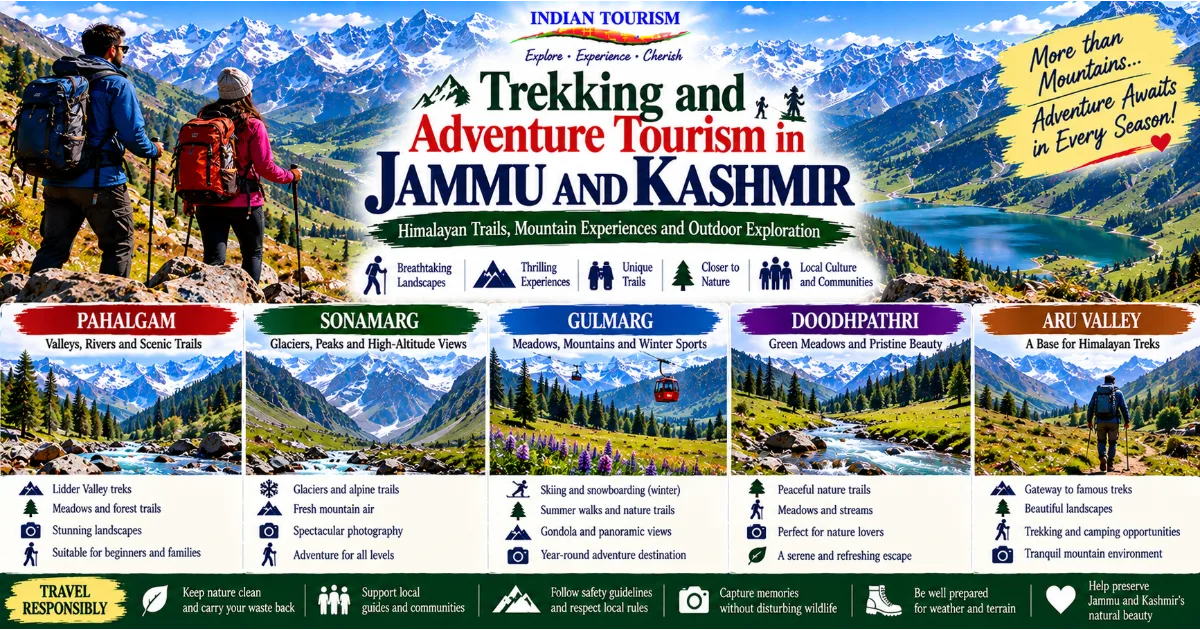
Discover Jammu and Kashmir on Foot
Jammu and Kashmir offers some of India's most captivating landscapes for travellers who enjoy adventure, outdoor exploration and mountain experiences. Towering Himalayan peaks, alpine meadows, forested slopes, glacial valleys, mountain streams and remote settlements create an extraordinary setting for trekking and adventure tourism. While many visitors explore the region through road trips, sightseeing excursions and comfortable stays in popular destinations, trekking offers a different perspective. It allows travellers to experience the landscape gradually, observe changes in vegetation and altitude, and appreciate the relationship between mountain communities and their natural surroundings.
From the meadows surrounding Pahalgam to the mountain routes of Sonamarg, the landscapes around Gulmarg and the high-altitude wilderness of the wider Himalayan region, Jammu and Kashmir offers opportunities for different levels of outdoor adventure. Some experiences are suitable for beginners who want a guided day walk, while others require strong physical preparation, specialist equipment and experienced mountain leadership.
Trekking is not the only outdoor activity available. Depending on the destination, season and current permissions, travellers may also explore camping, mountain photography, nature walks, skiing, snowboarding, cycling on suitable routes and guided excursions through rural landscapes. The possibilities are diverse, but every activity requires careful planning and respect for local conditions.
Mountain adventure should never be treated as an activity that can be undertaken safely simply because a route is popular on social media. Weather can change rapidly, snow may cover familiar paths, river levels can rise, and altitude can affect the body even when a person is physically fit. Routes that appear short on a map may involve steep climbs, difficult terrain or long return journeys.
This guide explores trekking and adventure tourism in Jammu and Kashmir, including notable destinations, different types of outdoor experiences, seasonal considerations, preparation, safety, local guiding services and responsible travel practices. Whether you are planning your first guided mountain walk or a more demanding trekking holiday, understanding the terrain and planning realistically will help you enjoy the region more safely.
1. Why Jammu and Kashmir Is Ideal for Adventure Tourism
The appeal of adventure tourism in Jammu and Kashmir comes from the variety of landscapes available across the region. The terrain ranges from valleys and forested hills to high mountain passes and alpine environments. These differences create opportunities for outdoor activities throughout much of the year, although the suitable activity and location depend heavily on seasonal conditions.
Diverse mountain landscapes
Mountain scenery is one of the region's strongest attractions. Travellers can explore forest paths, open meadows, river valleys and high-altitude routes, each offering a different experience.
A gentle walk through a valley may introduce visitors to local vegetation, streams and mountain views without requiring extensive technical knowledge. A longer trek can involve sustained climbing, changing weather and overnight camping. More demanding mountain activities require specialised skills and cannot be approached in the same way as an ordinary sightseeing excursion.
Opportunities for different experience levels
Adventure tourism is not exclusively for experienced mountaineers. Beginners can enjoy guided walks, accessible nature trails and carefully selected outdoor activities close to established tourist destinations.
Travellers with greater experience may consider longer treks, multi-day routes and challenging mountain terrain where such activities are permitted. The key is to match the route to the participant's fitness, experience, equipment and the conditions expected during the journey.
A connection with local culture
Many mountain routes pass through landscapes shaped by traditional agriculture, grazing, settlement patterns and seasonal movement. A guided excursion may provide opportunities to learn about local geography, food traditions and the lives of communities living in mountain environments.
Visitors should remember that these landscapes are also working environments. Grazing areas, agricultural fields and village paths are not simply recreational spaces. Permission and respect are essential when a route crosses private land or community-managed areas.
Photography and nature observation
Trekking offers opportunities to observe the gradual transition between forests, meadows, streams and mountain terrain. The changing light and weather can create memorable photographic experiences.
However, photography should never take priority over safety. Travellers should avoid stepping onto unstable edges, entering restricted areas or delaying a return journey because they want a better view.
2. Pahalgam: A Gateway to Mountain Walks and Valley Exploration
Pahalgam is one of the best-known destinations in the Kashmir Valley for travellers interested in mountain scenery and outdoor experiences. Its setting along the Lidder Valley, with surrounding hills and forested landscapes, makes it a useful base for exploring nature.
The wider area offers a range of experiences, from relaxed walks near established tourist areas to more demanding excursions that require careful planning. The suitability of any particular route depends on current access rules, weather, local guidance and the experience of the participants.
Exploring the Lidder Valley
The Lidder Valley is known for its river landscapes, mountain views and outdoor atmosphere. Visitors can enjoy suitable walking routes and scenic viewpoints while learning about the relationship between the river, surrounding vegetation and nearby settlements.
Walking beside a river requires caution. Water levels can change, and rocks near the banks may be slippery. Visitors should follow local instructions and avoid entering the water or attempting crossings without appropriate guidance.
Choosing a suitable walk
Beginners should start with short routes that have clear access arrangements and a manageable return journey. More experienced trekkers may explore longer excursions after confirming permissions, route conditions and the availability of qualified guides.
Do not assume that every trail mentioned in an old travel account remains open or safe. Weather, local restrictions and infrastructure can change, so current information should always guide the final decision.
Staying in Pahalgam
Pahalgam offers a range of accommodation options that can suit different budgets and travel styles. Staying for several nights can reduce the pressure to travel long distances every day and allow more time for outdoor activities.
Before booking, ask about transport to the planned trailhead, the availability of local guides and the facilities required for your trip. If you intend to begin early, confirm whether breakfast and transport can be arranged at a suitable time.
3. Sonamarg: Mountain Scenery and High-Altitude Adventure
Sonamarg is known for its dramatic mountain setting, river valleys, meadows and access to high-altitude landscapes. It attracts travellers who want to experience the grandeur of the Himalayas and may serve as a starting point for suitable guided outdoor excursions.
The environment around Sonamarg can change significantly with elevation and season. A route that is accessible during favourable summer conditions may become unsuitable because of snow, poor visibility or other weather-related challenges.
Understanding the landscape
The surrounding mountains create opportunities for scenic walks, photography and guided nature experiences. Travellers can observe how vegetation changes with elevation and how rivers and streams shape the valley.
However, the high-altitude environment demands respect. Cold temperatures, strong winds and sudden changes in weather can affect comfort and safety, even during months that are generally considered suitable for tourism.
Planning outdoor excursions
Before setting out, confirm the permitted route, expected duration, elevation gain and return arrangements. Ask whether the route is suitable for your fitness level and whether specialist equipment is needed.
Avoid beginning a long walk late in the day. Mountain journeys can take longer than expected, and darkness may make navigation and movement more difficult.
Respecting access restrictions
Some routes and surrounding areas may be subject to seasonal restrictions or local permissions. Travellers should follow current instructions rather than assuming that a route is open because it appears on a map or in an online photograph.
4. Gulmarg: Summer Walks and Winter Sports
Gulmarg is widely known for its meadows, mountain views and winter sports. Its character changes with the seasons, creating different outdoor opportunities throughout the year.
During suitable warmer months, visitors may enjoy scenic walks and explore accessible areas. Winter brings snow and attracts people interested in skiing, snowboarding and other cold-weather experiences.
Summer adventure experiences
Summer visitors can explore permitted walking routes and enjoy the surrounding mountain landscape. The best activity depends on current conditions, access arrangements and the participant's abilities.
Even when the weather feels pleasant in the main settlement, higher areas may be colder or exposed to stronger winds. Carry suitable clothing and check conditions before travelling to an elevated location.
Winter sports
Gulmarg is one of India's recognised destinations for skiing and snowboarding. The terrain can appeal to different levels of participants, but conditions and suitable routes vary.
Beginners should receive instruction from qualified professionals and use appropriate equipment. Do not attempt advanced slopes or off-piste terrain without the required skills, equipment and local guidance.
Snow conditions can change rapidly. Follow current safety advice, obey closures and avoid entering restricted terrain simply because it appears attractive.
Equipment and preparation
Visitors should confirm which equipment is included in an activity booking and what they need to bring. Properly fitted boots, suitable clothing and appropriate protective equipment are important for winter sports.
Do not assume that all equipment available for hire is appropriate for every activity. Ask the provider about its condition and suitability before beginning.
5. Doodhpathri: Meadows, Streams and Gentle Nature Exploration
Doodhpathri is known for its green landscapes, flowing water and surrounding hills. It can be attractive to travellers who want to enjoy mountain scenery without necessarily undertaking a demanding multi-day trek.
The area may suit short walks, landscape photography and guided nature experiences, depending on current access and weather conditions.
Enjoying the meadow environment
Meadows provide open views and opportunities to appreciate the region's seasonal vegetation. Visitors can observe the changing colours of the landscape and the relationship between grasslands, streams and surrounding mountain slopes.
However, meadows are sensitive environments. Avoid driving onto vegetation, creating unauthorised paths or leaving litter behind. Stay on permitted routes and respect areas used for grazing or other local activities.
Choosing a comfortable outdoor experience
Families and beginner walkers may prefer shorter routes that remain within easy reach of established access points. Longer walks should be chosen only after confirming their difficulty and current conditions.
Carry water, suitable footwear and weather protection. Even a relatively short mountain outing can become uncomfortable if rain, wind or temperature changes occur unexpectedly.
Photography and nature appreciation
Doodhpathri's open landscapes can be appealing for photography, but visitors should avoid crowding sensitive areas or damaging vegetation to obtain a particular composition.
Take time to observe the environment rather than focusing exclusively on photographs. The quality of an outdoor experience often comes from slowing down and appreciating the landscape.
6. Aru Valley: A Base for Guided Mountain Experiences
Aru Valley, near Pahalgam, is known for its mountain scenery and role as a base for outdoor excursions in the wider area. It attracts travellers interested in walking, camping and exploring the surrounding Himalayan landscape.
The valley may be suitable for different kinds of outdoor experiences, but the difficulty of a route depends on its length, elevation, terrain and seasonal conditions.
Day walks and longer treks
Visitors can explore suitable local paths or arrange guided excursions based on their experience. A short walk can provide an introduction to the landscape, while longer routes may require advance planning and additional equipment.
Do not select a trek solely because its photographs look attractive. Ask about the actual distance, climbing involved, expected duration and facilities available along the route.
Preparing for changing weather
Mountain weather can change quickly, and conditions may differ between the valley floor and higher terrain. Carry layers, rain protection and appropriate footwear.
If the forecast or local guidance indicates unsafe conditions, postpone the excursion. The ability to change plans is an essential part of responsible adventure travel.
Respecting local livelihoods
The surrounding landscape may include grazing areas, settlements and land used by local communities. Follow guidance about where visitors may walk and camp.
If you hire a local guide or arrange transport, confirm the cost and service in advance. Clear arrangements help avoid misunderstandings and support fair working relationships.
7. Gurez Valley: Remote Landscapes and Careful Adventure Planning
Gurez Valley is known for its mountain scenery, distinctive cultural landscape and relatively remote setting. It may appeal to experienced travellers who want to explore areas beyond the busiest tourist circuits.
However, Gurez requires more detailed planning than an excursion close to Srinagar. Access, road conditions, accommodation availability and local requirements can vary according to the season and prevailing circumstances.
Planning the journey
Before travelling, confirm whether the route is open, whether any permissions or identification requirements apply and whether accommodation is available for your intended dates.
Do not rely on old information about road access or travel restrictions. Verify current arrangements through reliable local sources before departure.
Outdoor experiences
Depending on conditions and permissions, visitors may enjoy guided walks, landscape photography and opportunities to learn about the valley's natural and cultural environment.
The remoteness of a destination should not be mistaken for an invitation to explore without preparation. Travellers should understand the terrain, carry suitable supplies and make reliable transport arrangements.
Respecting local communities
Gurez is a living region with its own cultural identity and community priorities. Visitors should ask permission before photographing people or entering private areas.
A respectful visit allows travellers to appreciate the landscape without treating residents as attractions or expecting every part of daily life to be available for public viewing.
8. Kashmir Great Lakes Trek: A Challenging High-Altitude Experience
The Kashmir Great Lakes Trek is one of the best-known trekking experiences associated with the Kashmir Valley. It is famous for alpine lakes, mountain passes, meadows and dramatic views of the surrounding Himalayan landscape.
The trek is generally regarded as a demanding multi-day undertaking rather than a casual walk. Participants may face sustained climbs, high elevations, changing weather and long days on foot.
Because route conditions, access rules and operational arrangements can change, travellers should confirm the current itinerary and requirements with a reputable trekking operator before booking.
What makes the trek special?
The appeal of the route lies in the changing landscape. Trekkers may pass through meadows, rocky terrain, streams and high-altitude lake environments. The scenery can vary dramatically from one section to another.
The experience also involves spending extended periods outdoors, following a planned route and adapting to the conditions encountered each day.
Physical preparation
Participants should prepare for several consecutive days of walking rather than focusing only on the distance covered during a single day. Cardiovascular fitness, leg strength, balance and the ability to carry a suitable pack can all contribute to a more comfortable experience.
Begin training well before departure. Regular walking, hill practice where available and gradual increases in exercise can help prepare the body.
A trekking itinerary should include realistic daily distances, rest opportunities and an appropriate approach to altitude. Do not attempt the route simply because someone with a different level of fitness completed it.
Choosing an operator
Ask the operator about group size, guide qualifications, emergency arrangements, equipment, accommodation or camping arrangements and what the fee includes.
Confirm whether the operator provides suitable support for adverse weather and what happens if the route becomes unsafe. Be cautious of unusually cheap packages that do not clearly explain their services.
Respecting the environment
High-altitude lakes and meadows are sensitive ecosystems. Carry all waste back, use sanitation arrangements provided by the operator and follow instructions concerning camping locations.
Do not wash with soap or detergent directly in lakes or streams. Avoid disturbing wildlife and remain on the route established by the guide.
9. Tarsar Marsar Trek: Alpine Lakes and Mountain Landscapes
The Tarsar Marsar Trek is another recognised trekking experience associated with the Kashmir region. It is known for alpine lakes, mountain scenery and a route that combines open landscapes with challenging terrain.
The experience requires preparation and should not be treated as a simple sightseeing excursion. Weather, altitude, trail conditions and the demands of consecutive walking days all influence the difficulty.
Understanding the route
The route is associated with the alpine lakes of Tarsar and Marsar and the surrounding mountain landscape. The scenery is a major attraction, but reaching the lakes requires careful movement through the terrain.
Exact itineraries, campsites and access arrangements can vary. Travellers should obtain current details from a reputable operator or other reliable local source.
Fitness and acclimatisation
Participants should prepare for sustained walking and the physical demands of altitude. A good level of general fitness is important, but it does not remove the possibility of altitude-related illness.
Allow an appropriate period for acclimatisation according to the route and professional guidance. Do not ignore symptoms such as persistent headache, nausea, dizziness or unusual fatigue at altitude.
If symptoms are concerning or worsening, stop ascending and seek appropriate assistance. Serious altitude illness requires prompt attention, and continuing upward can be dangerous.
Environmental responsibility
Alpine lakes are particularly sensitive to pollution and disturbance. Do not leave packaging, food waste or other rubbish behind.
Follow the operator's instructions concerning camping, sanitation and the use of water sources. A responsible trek leaves the landscape as undisturbed as practical.
10. Beginner-Friendly Trekking: How to Start Safely
Not every traveller needs to begin with a demanding high-altitude trek. Jammu and Kashmir offers opportunities for shorter walks and accessible nature experiences that can help beginners develop confidence.
The right starting point depends on fitness, age, medical considerations, terrain and current conditions.
Start with short, guided walks
Choose a route with a clearly understood distance, duration and return point. A local guide can help with navigation and explain the terrain.
Short walks are useful for learning how your body responds to uneven surfaces, gradual climbing and changing weather.
Build fitness gradually
Walking regularly before a trip can improve endurance. If possible, include gentle uphill routes, stair climbing or other activities that build leg strength and cardiovascular fitness.
Avoid suddenly increasing training intensity immediately before departure. Preparation should be gradual enough to allow recovery.
Use appropriate footwear
Shoes should fit comfortably and provide suitable grip for the expected terrain. New footwear should be tested before a long outing to reduce the risk of blisters.
The type of shoe required depends on the route. A paved nature walk may need different footwear from a rocky trail or a multi-day trek.
Know when to turn back
A successful outdoor experience does not require reaching every planned viewpoint. If the weather deteriorates, someone becomes unwell or the route proves more difficult than expected, turning back can be the safest decision.
Follow the guidance of your guide and avoid allowing group pressure or a desire for photographs to override sensible judgment.
11. Camping in Jammu and Kashmir
Camping can provide a closer connection with the mountain environment, particularly when it is organised through permitted sites or responsible trekking operators.
However, not every scenic meadow or lakeside area is available for camping. Restrictions may apply because of conservation needs, private land, safety concerns or local management arrangements.
Select authorised camping locations
Confirm that camping is permitted before making arrangements. Use designated campsites where available and follow instructions about tents, fires, sanitation and waste.
Do not assume that a remote location is automatically available for overnight stays.
Choose suitable equipment
A tent, sleeping system and clothing must be appropriate for the expected temperatures and weather. Conditions at altitude can become cold even during a season when lower valleys feel comfortable.
If you are joining an organised trek, confirm what equipment is provided and what you need to carry yourself.
Manage food and waste
Store food appropriately and do not leave food scraps around campsites. Waste can attract animals and create long-term environmental problems.
Carry out packaging and other rubbish. Follow the sanitation arrangements established by the campsite operator or trekking leader.
Avoid unnecessary campfires
Fire rules vary by location and conditions. Never light a fire where it is prohibited or where dry vegetation and wind create a hazard.
Use permitted cooking equipment and follow the operator's safety guidance. Protecting the environment is more important than creating a particular camping atmosphere.
12. Skiing and Snowboarding: Winter Adventure in Kashmir
Winter transforms parts of the Kashmir Valley into destinations for snow-based recreation. Gulmarg is especially well known for skiing and snowboarding, attracting both beginners and experienced participants.
Winter sports can be enjoyable, but they involve risks that must be taken seriously. Snow conditions, visibility, slope difficulty and the experience of the participant all affect safety.
Beginners should learn with qualified instructors
If you have never skied or snowboarded, start with suitable instruction. Learn how to control speed, stop, turn and use the equipment before attempting more difficult terrain.
Do not assume that watching online videos is an adequate substitute for practical instruction.
Use appropriate equipment
Equipment should be correctly fitted and suitable for the activity. Protective gear, appropriate clothing and properly adjusted bindings are important considerations.
Ask the provider about the condition of hired equipment and whether the package includes instruction, protective equipment and any required access arrangements.
Respect slope closures and local warnings
Conditions can change quickly, and some terrain may be unsuitable or restricted. Follow current guidance from qualified instructors and relevant authorities.
Do not enter closed slopes or unfamiliar backcountry terrain without the necessary skills, equipment and expert support.
13. River Activities and Adventure Experiences
Rivers and streams contribute to the beauty of Jammu and Kashmir and may provide opportunities for organised outdoor activities in suitable locations.
However, flowing water can be dangerous even when the surface appears calm. Water temperature, current strength, hidden obstacles and changing levels can create serious risks.
Choose legitimate operators
For any organised river activity, verify the operator's experience, equipment, safety procedures and suitability for your ability.
Ask what training is provided and what safety equipment is included. Do not participate if the provider cannot explain the risks or if the conditions appear unsafe.
Respect river conditions
Avoid entering rivers or attempting crossings without appropriate knowledge and guidance. Rain or snowmelt can change water levels rapidly.
Follow restrictions and do not pressure a guide to continue when conditions are unsafe. A cancelled activity is preferable to an avoidable accident.
Protect water quality
Do not throw waste into streams or use soaps and detergents directly in natural water bodies. Keep food packaging and other rubbish away from riverbanks.
Responsible river tourism combines enjoyment of the landscape with care for the ecological systems that depend on clean water.
14. Mountain Biking and Cycling Opportunities
Cycling can be an enjoyable way to experience selected roads and landscapes in Jammu and Kashmir. It allows travellers to move at a slower pace than a vehicle while covering more ground than a walking excursion.
However, the suitability of cycling depends on road conditions, traffic, elevation, weather and the experience of the rider.
Choose appropriate routes
Select roads or trails that are suitable for your cycling ability and equipment. Avoid unfamiliar technical routes unless you have the required skills and reliable local guidance.
Confirm whether cycling is permitted on a trail and whether motor vehicles use the same route.
Prepare for elevation and weather
Mountain roads can involve sustained climbing and long descents. Riders should be comfortable with braking, balance and managing speed on uneven surfaces.
Carry water, weather protection, repair essentials and a suitable helmet. Check the bicycle before starting and ensure that brakes and tyres are in good condition.
Ride responsibly
Follow traffic rules and avoid riding in poor visibility or on dangerous road sections. Be considerate of pedestrians, livestock and other road users.
Do not ride onto meadows or sensitive vegetation simply to obtain a more scenic route.
15. Best Season for Trekking and Adventure Tourism
The best season depends on the destination and activity. A route suitable for a summer trek may be unsafe or inaccessible during winter, while snow-based activities depend on appropriate conditions and local operations.
Spring
Spring can bring changing temperatures and the gradual return of vegetation to many lower and mid-altitude areas. Some routes may remain snow-covered or inaccessible, particularly at higher elevations.
Visitors should verify route status rather than assuming that warmer conditions in Srinagar mean the mountains are ready for trekking.
Summer
Summer is a popular period for many trekking routes and outdoor activities. Some high-altitude trails become more accessible, while meadows and valleys offer opportunities for walking and photography.
Popular routes can experience greater demand, so book with reputable operators and confirm the actual itinerary in advance.
Autumn
Autumn can offer attractive scenery and cooler temperatures, but daylight becomes shorter and higher areas may experience early winter conditions.
Choose routes with appropriate seasonal access and allow sufficient time to complete the journey safely.
Winter
Winter is important for snow-based activities in suitable destinations, but it can make trekking and remote travel more challenging.
Snowfall, cold temperatures, poor visibility and access restrictions may affect routes. Do not undertake a summer-style trek during winter without specialist preparation and current expert guidance.
16. Fitness, Altitude and Health Preparation
Physical preparation is an essential part of adventure travel. The demands of a mountain route depend not only on distance but also on elevation gain, terrain, weather and the weight carried by the participant.
Build endurance before departure
Regular walking and aerobic exercise can help improve endurance. For longer treks, include gradual uphill training and practice walking with the type of pack you expect to carry.
Training should reflect the demands of the planned route rather than a generic fitness goal.
Understand altitude-related risks
Altitude can affect people differently, including those who are physically fit. Headache, nausea, dizziness, unusual fatigue and sleep disturbance may occur during ascent, although symptoms vary.
Do not ignore worsening symptoms or continue ascending simply to remain on schedule. Seek guidance from a qualified professional and follow appropriate procedures if altitude illness is suspected.
Consider personal health needs
Travellers with medical conditions, mobility limitations or concerns about altitude should seek suitable medical advice before undertaking demanding mountain activities.
Carry essential medication and ensure that your guide or travel companion understands any important safety requirements.
Plan recovery and rest
A multi-day trek requires time for recovery. Adequate food, hydration, sleep and sensible pacing can help participants manage physical demands.
Avoid planning a strenuous activity immediately after a long journey if you are tired or poorly rested.
17. Choosing a Reliable Trekking or Adventure Operator
A reputable operator can make a significant difference to the safety and quality of an outdoor experience. However, travellers should not assume that every advertised adventure package provides the same level of service.
Ask about qualifications and experience
Find out who will lead the activity, what experience they have with the specific route and whether specialist qualifications are required.
For technical or high-risk activities, the relevant skills and equipment are essential. General familiarity with a destination is not enough for every mountain activity.
Confirm what the price includes
Ask whether the package includes transport, permits where applicable, meals, camping equipment, guides, support staff and emergency arrangements.
Obtain clear information about additional charges and cancellation terms. A transparent booking process helps prevent misunderstandings.
Understand emergency procedures
Ask how the operator responds to bad weather, injury, altitude-related illness or route closures. Confirm what communication equipment and support arrangements are available for the planned activity.
No operator can eliminate every risk, but a responsible provider should be able to explain how foreseeable problems are managed.
Read reviews critically
Look for detailed feedback about safety, organisation, equipment and communication. Be cautious of providers that promise guaranteed sightings, unrestricted access or unrealistic itineraries.
Choose an operator whose approach matches your experience level and who is willing to recommend a less demanding activity when appropriate.
18. Responsible Adventure Tourism and Environmental Protection
Outdoor recreation can create pressure on natural environments when visitors leave waste, damage vegetation or disturb wildlife. Responsible adventure tourism aims to minimise these effects while allowing people to enjoy the landscape.
Follow the leave-no-trace principle
Carry all rubbish back to appropriate disposal facilities. Do not bury plastic, burn packaging or leave waste behind at campsites.
Avoid damaging vegetation or creating shortcuts through meadows. Remain on permitted routes and follow instructions from local authorities.
Respect wildlife
Do not feed wild animals, chase them for photographs or approach nests and dens. Observe wildlife from a distance and follow any restrictions concerning sensitive habitats.
If animals are present near a trail, allow them space and follow local guidance.
Protect streams and lakes
Keep soaps, detergents, food waste and rubbish out of natural water bodies. Use appropriate sanitation arrangements and follow the instructions of your guide or campsite operator.
Support local communities
Use legitimate local services and pay agreed rates for guides, transport and accommodation. Ask permission before entering private land or photographing residents.
Responsible tourism recognises that the landscapes visitors enjoy are also part of the lives and livelihoods of local communities.
19. Adventure Tourism for Families and First-Time Visitors
Families and first-time adventure travellers can enjoy Jammu and Kashmir without undertaking demanding high-altitude routes. The most suitable experience depends on age, fitness, confidence and the facilities available.
Family-friendly outdoor experiences
Short guided walks, suitable nature trails and accessible scenic areas may be appropriate for families, depending on conditions. Parents should check route difficulty, toilet facilities, transport and weather before setting out.
Children should remain supervised near rivers, steep slopes and uneven terrain. Avoid routes that exceed their abilities or require more endurance than they can comfortably manage.
First-time trekkers
Beginners should choose routes with clear access arrangements and a manageable duration. A guided day walk can provide useful experience before attempting a multi-day trek.
Learn basic outdoor etiquette, prepare suitable clothing and carry enough water and food for the planned activity.
Older travellers
Older travellers may prefer shorter routes with manageable elevation gain and access to nearby facilities. The most suitable activity should be chosen according to individual health, mobility and experience.
Do not assume that every scenic walk is accessible. Ask for precise details about steps, slopes, uneven surfaces and the distance from transport.
20. A Seven-Day Trekking and Adventure Itinerary
A week can provide an introduction to the outdoor experiences available in Jammu and Kashmir. The following example combines established destinations and flexible activities rather than attempting to complete several demanding treks in a single trip.
Day One: Arrive in Srinagar
Arrive in Srinagar, settle into your accommodation and allow time to rest after the journey. Confirm your transport, activity bookings and current weather information.
If you have a demanding trek planned, use the evening to check your equipment and review the operator's instructions.
Day Two: Travel to Gulmarg
Travel to Gulmarg and explore suitable accessible areas according to the season. During warmer months, consider a permitted nature walk. In winter, choose snow activities appropriate to your experience.
Avoid attempting a demanding activity on the first full day if you are tired or unfamiliar with the altitude.
Day Three: Explore Pahalgam
Travel to Pahalgam and enjoy the surrounding landscape. Select a short walk or guided excursion that suits your fitness and the current conditions.
Use the day to learn about local routes and confirm any longer activity planned for the following days.
Day Four: Discover Aru Valley
If access and conditions permit, explore the Aru Valley area with a suitable local guide. Choose a manageable route and allow time for rest, meals and changing weather.
Do not extend the walk simply because the scenery encourages you to continue. Maintain enough time and energy for a safe return.
Day Five: Guided Nature Experience
Arrange a guided nature walk or another suitable outdoor activity based on local advice. Focus on understanding the landscape, observing vegetation and learning about the area's ecology.
Keep the itinerary flexible and follow any restrictions announced by the relevant authorities.
Day Six: Return to Srinagar
Return to Srinagar or explore a nearby accessible attraction, depending on your transport arrangements. Avoid adding a strenuous trek if it would create unnecessary fatigue before departure.
Use the evening to organise your belongings and confirm the next day's journey.
Day Seven: Departure
Allow a generous travel buffer before your flight or onward transport. Return any rented equipment and confirm that you have left no belongings or waste at your accommodation.
This itinerary is an introduction rather than a recommendation to complete all destinations regardless of conditions. Adjust the route according to current access, weather, fitness and safety guidance.
Conclusion: Experience the Himalayas with Preparation and Respect
Trekking and adventure tourism offer a distinctive way to discover Jammu and Kashmir. The region's valleys, alpine meadows, forests, rivers and high mountain landscapes provide opportunities for both gentle outdoor exploration and demanding adventure.
Pahalgam, Sonamarg, Gulmarg, Doodhpathri and Aru Valley can serve as starting points for suitable nature experiences, while recognised multi-day routes such as the Kashmir Great Lakes Trek and Tarsar Marsar Trek appeal to travellers prepared for greater physical demands.
The best adventure is not necessarily the most difficult one. It is the experience that matches your abilities, respects the environment and allows you to appreciate the landscape without taking unnecessary risks.
Prepare physically, choose suitable equipment, confirm current access arrangements and work with qualified guides when needed. Understand the risks of altitude and changing weather, and be willing to change your plans when conditions are unsafe.
Responsible adventure tourism also means protecting the places you visit. Carry your waste, remain on permitted paths, respect wildlife and support local communities through fair and thoughtful choices.
Jammu and Kashmir's mountains reward patience, preparation and humility. By approaching trekking and outdoor activities responsibly, travellers can discover the region's natural beauty while helping preserve its landscapes for future generations.
Travel with curiosity, climb within your abilities and remember that the true achievement of a mountain journey is returning safely with a deeper appreciation of the natural world.
#IndianTourism #JammuAndKashmir #Trekking #AdventureTourism #HimalayanTrekking #KashmirGreatLakesTrek #TarsarMarsarTrek #Pahalgam #Sonamarg #Gulmarg #AruValley #MountainAdventure #ResponsibleTourism #NatureTravel #ExploreIndia
