
The Wide-Open Beauty of Kashmir
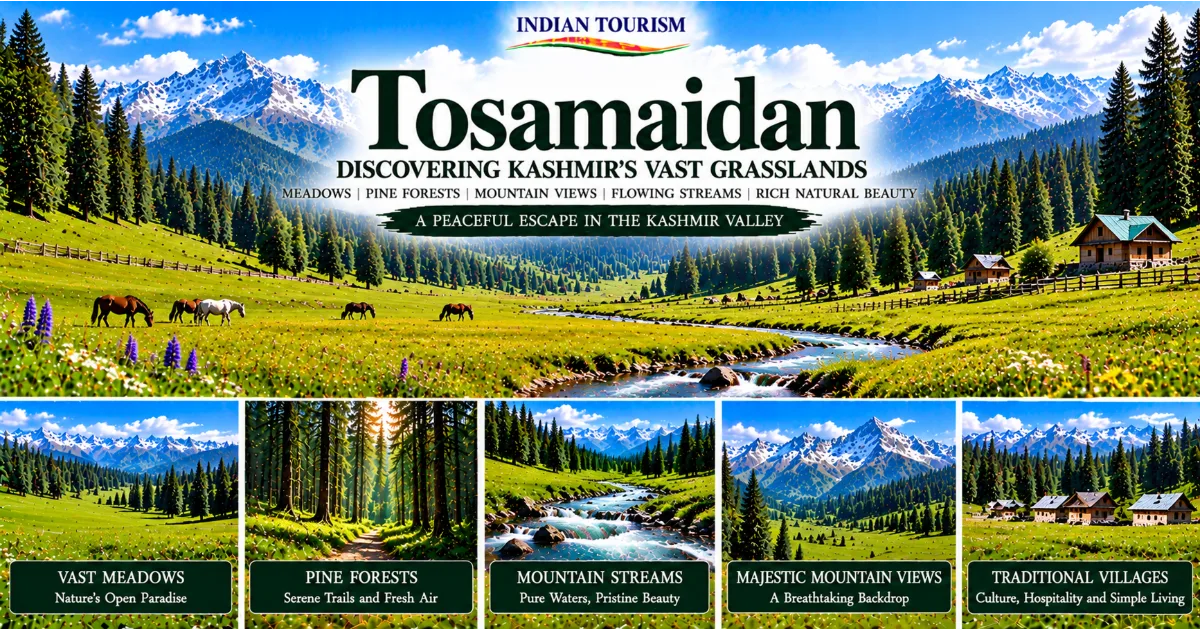
Kashmir is often associated with Dal Lake, the gardens of Srinagar, the snow-covered peaks of Gulmarg and the beautiful meadows of Pahalgam. Yet beyond these celebrated destinations lies another landscape that reveals a quieter and more expansive side of the region. Tosamaidan, a vast meadowland in the Budgam district of Jammu and Kashmir, offers an extraordinary combination of rolling grasslands, forested slopes, mountain views and traditional pastoral life.
Known for its broad open spaces and scenic surroundings, Tosamaidan provides a different experience from the more commercialised tourist destinations of Kashmir. Here, the landscape stretches across green meadows framed by wooded hills, while distant mountain ridges create a natural boundary around the open grassland. During the warmer months, the area becomes a refreshing destination for travellers seeking open-air experiences, photography, nature walks and an opportunity to appreciate the region beyond its familiar tourist centres.
Tosamaidan is not simply a beautiful place to visit. It is also a landscape shaped by geography, seasonal weather, local livelihoods and a complex history. Its meadows have long been associated with grazing and movement through the mountains. In recent decades, the area has also attracted attention for its tourism potential and the importance of making the grasslands accessible in a responsible manner.
For travellers who want to understand Kashmir through its natural landscapes and rural surroundings, Tosamaidan deserves a place on the itinerary. It offers the opportunity to slow down, enjoy the open countryside and experience a part of the Kashmir Valley where nature remains the principal attraction.
1. Where Is Tosamaidan Located?
Tosamaidan lies in the Budgam district of Jammu and Kashmir, west of Srinagar. It forms part of the wider mountain landscape surrounding the Kashmir Valley and is reached through rural roads that pass villages, cultivated fields, wooded slopes and settlements.
The destination is often described as one of Kashmir's expansive meadowlands. Its open terrain contrasts with the surrounding forests and hills, creating a landscape that feels spacious and peaceful. The meadows are particularly striking during the summer, when grasses and seasonal vegetation give the area its green appearance.
The journey to Tosamaidan is an important part of the experience. Travellers gradually leave behind the denser urban environment of Srinagar and move through the countryside of Budgam. Fields, village homes, orchards and forested stretches provide changing views along the route. Depending on the road taken, traffic, weather and the precise starting point, the journey can take several hours or less, so visitors should check local travel conditions before setting out.
Tosamaidan is not a conventional town with a large collection of hotels, shops and restaurants. It is primarily a natural landscape surrounded by rural communities. This means that visitors should plan transportation, food, drinking water and other necessities before travelling.
Its relative distance from the main tourist circuit is part of its appeal. The experience is less about visiting a sequence of attractions and more about spending time in a landscape that invites observation, photography and quiet exploration.
2. Why Tosamaidan Is Famous
Tosamaidan is best known for its extensive grasslands, mountain scenery and open countryside. While many Kashmir destinations combine lakes, gardens, markets and accommodation in a concentrated area, Tosamaidan's appeal is rooted in the scale of its natural environment.
Vast Open Meadows
The defining feature of Tosamaidan is its broad grassland. The meadow opens into wide stretches of green during the growing season, providing a strong contrast to the darker forests on surrounding slopes. Its open character allows visitors to appreciate the landscape without needing to follow a demanding mountain trail.
The meadows are especially attractive to people who enjoy natural scenery rather than crowded commercial attractions. A simple walk across an authorised and safe section of the grassland can become the main activity of the day.
Forests and Mountain Backdrops
The grasslands are framed by hills and forested slopes that give the landscape depth. Depending on the season and weather, the surrounding mountains may appear sharply defined beneath a clear sky or partly hidden by drifting cloud.
This combination of open grassland and woodland creates a varied environment for photography. Wide-angle views capture the scale of the meadow, while closer compositions reveal grasses, wildflowers, tree lines and the changing textures of the landscape.
Peaceful Rural Surroundings
Tosamaidan is also associated with the rural life of the surrounding region. The journey through Budgam introduces visitors to villages, cultivated fields and the everyday rhythms of countryside life. In suitable seasons, pastoral activity adds another dimension to the landscape.
Visitors should remember that these surroundings are not an outdoor theme park. They are part of a living environment used by local communities. Respecting grazing areas, private property and local customs is essential to maintaining a positive relationship between tourism and village life.
3. The Geography and Natural Character of Tosamaidan
The landscape of Tosamaidan reflects the wider geography of the western Himalayan region. The Kashmir Valley is surrounded by mountain ranges, and its upper slopes contain a variety of environments, including forests, meadows, streams and high-altitude pastures.
Tosamaidan's open grasslands form a distinctive part of this mountain setting. The meadow is not isolated from its surroundings. Its character depends on the relationship between elevation, seasonal rainfall and snow, soil conditions, vegetation and the forests that cover neighbouring slopes.
A Landscape of Meadows and Slopes
The open terrain gives Tosamaidan a different appearance from a dense forest or narrow mountain valley. Visitors can see across broad stretches of land, with changes in elevation creating gentle rises and dips across the grassland.
Some areas may be suitable for easy walking, while other sections can be uneven, muddy or affected by drainage channels. The apparent openness of a meadow should not be mistaken for uniform terrain. Travellers should remain aware of ground conditions, especially after rainfall or during periods of melting snow.
The Importance of Seasonal Water
Mountain grasslands depend on seasonal water from rainfall, snowmelt and local drainage. Water availability influences the growth of grasses and other plants, while wet ground can affect access and walking conditions.
Small streams and damp patches may appear in some parts of the landscape, depending on the season. Visitors should not assume that every water source is safe to drink. Carry treated or bottled drinking water and avoid contaminating streams with food waste, soap or litter.
Forests as Part of the Ecosystem
The surrounding forests help define the meadow's visual character and ecological setting. Forests provide habitats for wildlife, influence local water cycles and help stabilise slopes. The transition between woodland and grassland creates a range of conditions for plants and animals.
Keeping these areas undisturbed is important. Visitors should avoid damaging vegetation, lighting fires in unauthorised locations or leaving waste along forest edges. Small actions can have lasting effects when repeated by many travellers.
4. The Best Time to Visit Tosamaidan
The best time to visit Tosamaidan depends on the kind of experience you want. The meadow changes significantly throughout the year, and the weather in a mountain region can differ from conditions in Srinagar.
Late Spring: The Landscape Begins to Awaken
Late spring can bring a gradual change from winter conditions to greener surroundings. The exact appearance of the grassland depends on snowfall, temperature and rainfall during the preceding months.
This period may appeal to travellers who enjoy quieter landscapes and the transition between seasons. However, access can be affected by wet ground, lingering snow or road conditions. Confirm local access before travelling rather than assuming that the meadow will be fully green or easily accessible.
Summer: The Main Season for Meadow Landscapes
Summer is generally the most appealing period for experiencing Tosamaidan's open grasslands. Vegetation becomes greener, the landscape is easier to appreciate on foot, and daytime conditions may be more suitable for outdoor exploration.
The precise timing of the best conditions varies from year to year. Some summers bring dry spells, while others include substantial rainfall. Even during warm weather, temperatures can fall quickly when clouds arrive or the sun disappears behind the mountains.
Visitors should carry a light jacket, comfortable walking shoes, sun protection and rain protection. Starting early also allows more time to explore without rushing back along unfamiliar roads late in the day.
Autumn: Muted Colours and Clear Views
Autumn can bring a different atmosphere to the region. The grassland may lose some of its bright summer colour, while the surrounding vegetation changes in response to cooler temperatures. Clear days can provide excellent visibility across the hills.
This season may appeal to photographers and travellers who prefer subdued colours and a quieter environment. However, temperatures become colder, daylight hours shorten and services may be less readily available. Check conditions before planning a long visit.
Winter: A Different and More Challenging Landscape
Winter can transform the area through snow, cold temperatures and difficult travel conditions. The open grassland may look dramatically different, but access is not guaranteed and should never be assumed.
Winter travel requires current information about roads, weather, security and local restrictions. Visitors should not attempt an isolated trip simply because photographs show a snow-covered landscape. Unless access and safety conditions are confirmed, another season may be more suitable.
The Best Months for Most Visitors
For travellers primarily interested in green meadows, walking and photography, the warmer months are generally the most practical choice. June through September can be considered as a broad planning window, but this is not a guarantee of ideal conditions on any particular day.
Before departure, confirm the road status, local access arrangements and weather forecast. In the mountains, conditions on the ground are more important than a fixed calendar recommendation.
5. How to Reach Tosamaidan
Reaching Tosamaidan requires planning because the destination is located away from the busiest urban and tourist centres.
By Air
Srinagar's Sheikh ul-Alam International Airport is the principal air gateway for most travellers visiting the Kashmir Valley. Visitors arriving by air can arrange onward road transportation towards Budgam and Tosamaidan.
The airport-to-meadow journey should be planned as a road trip rather than a quick transfer. The time required depends on the chosen route, traffic, weather and the exact destination within the Tosamaidan area.
By Rail
Travellers arriving by train generally need to use rail connections serving Jammu or the wider Kashmir railway network, depending on their origin and current services. The onward journey to Tosamaidan involves road transportation.
Rail connectivity and operating arrangements can change, so confirm the current route before booking. Do not assume that a train will take you directly to the meadow.
By Road
Road travel is the most practical way to reach Tosamaidan. Visitors can hire a local taxi, arrange a vehicle with a driver or travel with an organised local operator.
The exact route should be confirmed locally, particularly when travelling during the early season, after heavy rainfall or in winter. Some rural roads may be narrow, winding or affected by temporary restrictions.
Drivers familiar with the region can help assess local conditions and identify suitable stopping points. Visitors should avoid leaving the vehicle in unsafe locations or blocking access for residents and other road users.
Should You Drive Yourself?
Independent driving may suit experienced drivers who are comfortable with mountain roads, changing weather and limited services. However, road conditions and local access can vary. Visitors unfamiliar with the region may find a locally arranged vehicle more convenient.
Regardless of transport choice, avoid driving after dark on unfamiliar rural roads when possible. Keep enough fuel, carry drinking water and allow additional time for delays.
6. What to See and Do in Tosamaidan
Tosamaidan is a destination where the natural setting is the principal attraction. It is best approached with a flexible plan that leaves time for walking, observing the landscape and enjoying the surroundings.
Walk Across the Open Grasslands
Walking is one of the simplest ways to appreciate Tosamaidan. The broad meadow allows visitors to experience the landscape at a relaxed pace, with views changing as the path moves across open ground.
Choose a route that is permitted, clearly understood and appropriate for your fitness level. Do not wander into unknown areas simply to find a more isolated viewpoint. Ground conditions can change quickly, and the absence of buildings or signposts may make it harder to judge distances.
Short walks with regular pauses are often more enjoyable than trying to cover the entire meadow. The aim is to appreciate the landscape, not to turn a peaceful visit into a race.
Enjoy the Mountain Views
The surrounding hills and forested slopes provide a natural frame for the grassland. Take time to observe how the view changes as clouds move across the mountains or sunlight shifts over the meadow.
Morning and late afternoon can offer attractive light, although weather conditions should determine the day's schedule. Visitors should not remain in exposed locations during thunderstorms or rapidly deteriorating weather.
Photography and Landscape Observation
Tosamaidan offers opportunities for landscape photography, nature photography and travel storytelling. Wide views can show the scale of the meadow, while close-up photographs can highlight plants, textures and seasonal details.
Photographers should avoid trampling vegetation to create a composition. If photographing local residents, shepherds or pastoral activities, ask permission rather than assuming that people want to appear in travel photographs.
A useful approach is to document the relationship between the meadow and the surrounding landscape. Photographs of the tree line, changing clouds, grazing areas and distant ridges can communicate the character of the place more effectively than a series of identical panoramic images.
Have a Quiet Outdoor Break
Visitors can enjoy a simple outdoor break while taking in the scenery. Choose a clean, permitted location away from streams, livestock routes and private property.
Carry food from a reliable source and pack every wrapper, bottle and leftover back out. Avoid open fires unless they are explicitly permitted in a designated facility. Even a small fire can create a serious risk in dry vegetation or nearby woodland.
Observe Local Rural Life Respectfully
The surrounding countryside offers opportunities to understand how people live and work in the region. Depending on the season, visitors may encounter agricultural activity or pastoral use of the landscape.
Approach these encounters with respect. Do not interrupt work, approach animals without permission or enter homes and fields uninvited. If a local person shares information about the area, listen carefully and avoid treating community life as a performance arranged for visitors.
Enjoy a Picnic Responsibly
A picnic can be part of a day trip, provided that visitors use an appropriate location and follow local rules. Bring reusable containers where practical and avoid disposable items that can be carried away by wind.
Do not leave food for wild animals or livestock. Food waste can attract animals to roads and visitor areas, creating risks for both wildlife and people.
7. Tosamaidan's Pastoral Traditions and Local Communities
The history of Tosamaidan is closely connected with the wider rural and pastoral landscape of Kashmir. Mountain meadows have traditionally served as seasonal grazing areas, allowing livestock to use highland vegetation during periods when conditions are suitable.
These landscapes are not empty spaces. Their use reflects local knowledge of weather, vegetation, water and movement through the mountains. Families and communities whose livelihoods depend on agriculture or livestock understand seasonal patterns that visitors may not notice during a short trip.
Seasonal Grazing and Mountain Life
In suitable seasons, grasslands can provide valuable grazing for livestock. Access to pasture depends on vegetation growth, weather, local arrangements and the needs of those who use the land.
Visitors should leave animals undisturbed and keep a respectful distance. Dogs, loud music and careless movement can cause stress to livestock. If a shepherd asks visitors to avoid a particular section, follow that guidance.
The presence of pastoral activity also reminds travellers that the meadow has practical importance beyond tourism. Protecting its vegetation and keeping routes clear can help preserve the conditions on which local livelihoods depend.
Villages and Rural Hospitality
The journey towards Tosamaidan passes through rural areas where village life follows its own rhythm. Traditional houses, fields and local roads provide a glimpse of the wider landscape in which the meadow is situated.
Visitors can contribute to local economies by purchasing refreshments or other permitted goods from local businesses and arranging services through responsible local operators. Spending locally can help ensure that tourism provides benefits beyond the largest commercial centres.
Hospitality should never be assumed to mean unrestricted access to private spaces. Ask before taking photographs, entering a property or using a local facility.
Language, Customs and Everyday Courtesy
Kashmiri and other regional languages are part of the cultural landscape of the wider area. Travellers may encounter different linguistic and cultural traditions as they move between communities.
A polite greeting, patience and respectful behaviour go a long way. Dress comfortably for outdoor conditions while remaining sensitive to local customs, particularly when visiting villages or religious sites along the route.
Responsible travel begins with recognising that visitors are guests in a place where people live, work and maintain long-standing traditions.
8. Nature and Biodiversity Around Tosamaidan
Tosamaidan's meadows and surrounding forests form part of a wider mountain ecosystem. Grasslands, woodland edges, streams and slopes can support different plant and animal communities, depending on elevation and season.
A short visit cannot provide a complete picture of local biodiversity. Wildlife sightings are never guaranteed, and travellers should avoid making assumptions about the presence of a particular animal simply because the area contains suitable habitat.
Meadow Vegetation
During the growing season, the meadow can support grasses and other seasonal plants. Their appearance changes with rainfall, temperature, grazing pressure and the timing of seasonal growth.
Visitors should stay on suitable walking routes where available and avoid picking wildflowers. Removing plants may seem insignificant to one person, but repeated collection by many visitors can affect the local environment.
Forest Habitats
The surrounding woodland provides a contrasting habitat and contributes to the landscape's ecological variety. Trees, shrubs, leaf litter and shaded ground create conditions different from those found in open grassland.
Do not cut branches, disturb nests or collect wood. Fires, discarded plastic and noise can affect the forest even when damage is not immediately visible.
Wildlife Observation
Travellers may notice birds, insects and other signs of wildlife during a visit. The best way to observe animals is quietly and from a distance.
Never chase wildlife for photographs, feed animals or attempt to handle unfamiliar species. If you encounter livestock or wildlife on a path, allow it space and follow local guidance.
Protecting the Meadow
The ecological quality of Tosamaidan depends on careful management of tourism and other land uses. Litter, uncontrolled vehicle movement, damage to vegetation and poorly managed visitor facilities can gradually reduce the quality of the landscape.
Visitors can help by staying within permitted areas, carrying out all waste, respecting grazing activity and choosing operators who follow responsible practices. The goal should be to enjoy the meadow without leaving visible evidence of the visit.
9. Tosamaidan for Families, Couples and Solo Travellers
Different kinds of travellers can enjoy Tosamaidan, provided that they plan around the area's rural setting and changing conditions.
Family Trips
Families may appreciate the open landscape and opportunity to spend time outdoors. Children can observe plants, clouds and mountain scenery while learning about the importance of protecting natural places.
Parents should supervise children closely, especially near uneven ground, streams, steep slopes or grazing animals. Do not allow children to wander out of sight in large open areas.
Bring warm clothing, drinking water, snacks and basic first-aid supplies. Facilities may be limited, so families should not rely on finding every essential item at the destination.
Couples
Couples seeking a quiet day in nature may enjoy the meadow's wide views and relaxed atmosphere. A walk, landscape photography and a simple outdoor meal can provide a memorable experience without an elaborate activity schedule.
Plan transport in advance and confirm the return journey. Remote settings are best enjoyed when practical details have been settled beforehand.
Solo Travellers
Solo travellers may value the opportunity to explore the landscape at their own pace. However, isolated areas require additional caution.
Share your itinerary with someone, carry a charged phone and check whether network coverage is available along the route. Do not assume that help can be reached immediately from every part of the meadow.
Solo visitors should avoid unfamiliar routes and return before darkness. Travelling with a local guide can provide additional context and help with route decisions.
Nature Lovers and Photographers
Tosamaidan may be particularly rewarding for people who enjoy landscape observation rather than a long list of attractions. Its open terrain allows visitors to study changing light, vegetation and the relationship between meadow and forest.
Photographers should remain patient and flexible. Weather can change rapidly, and some of the most interesting scenes may emerge when clouds, sunlight and shadows transform the landscape.
10. How Long Should You Spend in Tosamaidan?
The time required depends on your starting point, transport arrangements and the depth of exploration you want.
A Day Trip
A day trip may be practical for visitors staying in the Srinagar area or elsewhere in the Kashmir Valley, provided that road conditions and travel time allow a safe return. The schedule should include enough time for the journey, a walk, photography and a break.
Avoid filling the day with too many additional destinations. Tosamaidan is best experienced without constant rushing between locations.
A Longer Rural Stay
A longer stay in the surrounding region may appeal to travellers who want to explore rural life and nearby landscapes at a slower pace. Accommodation availability and visitor facilities should be confirmed before making arrangements.
Do not assume that accommodation is available directly beside the meadow. Some travellers may need to stay in a nearby town or village and arrange transport for the day.
Combining Tosamaidan with Other Destinations
Tosamaidan may be combined with other places in Budgam or the wider Kashmir Valley, but route planning should be realistic. Mountain roads, local traffic and changing weather can increase travel time.
Choose destinations that make geographic sense and avoid scheduling a distant excursion immediately after a long day outdoors. If a local road is closed or conditions deteriorate, be prepared to change the plan.
11. Where to Stay Near Tosamaidan
Accommodation options should be researched carefully because Tosamaidan is not a major hotel centre. Travellers may find it more practical to stay in Srinagar, Budgam or another suitable nearby settlement, depending on their route and transport arrangements.
Staying in Srinagar
Srinagar offers a wider range of accommodation, restaurants and transport services than the immediate meadow area. It can work well for travellers who want to explore Tosamaidan as part of a broader Kashmir itinerary.
The trade-off is additional road travel. Visitors should leave early enough to enjoy the meadow without rushing and should confirm the return journey before departure.
Staying in a Nearby Town or Village
A closer base may reduce travel time and offer a stronger connection with the rural surroundings. However, facilities can be more limited, and accommodation standards may vary.
Confirm room availability, meals, heating, sanitation, transport and payment arrangements directly before travelling. Ask about the road conditions and whether local permission or a guide is required for the intended visit.
Responsible Homestays
Where genuine homestays are available, they can provide an opportunity to support local households and learn about regional food and daily life. Visitors should choose arrangements with clear terms and reasonable expectations.
Respect the host family's routines, follow household customs and avoid wasting water or electricity. Local accommodation is most rewarding when guests treat it as a cultural exchange rather than simply a cheaper alternative to a hotel.
12. Food and Refreshments During Your Visit
Food planning is important for a destination where commercial services may be limited. Travellers should not assume that restaurants, cafés or shops will be operating near the meadow when they arrive.
Carry Essential Supplies
Bring enough drinking water and food for the planned duration of the visit. Choose items that can be carried safely and that produce minimal packaging waste.
Keep food stored securely and take all wrappers and containers back with you. Do not discard organic waste in the grassland, because it can attract animals and alter natural conditions.
Experience Regional Cuisine
Visitors staying in Srinagar or nearby settlements can explore Kashmiri cuisine and local dishes as part of the wider trip. Regional meals may include rice, vegetables, meat preparations, breads and traditional beverages, depending on the establishment.
Food traditions vary among households and communities. Ask about ingredients and preparation when dietary requirements matter, and do not assume that every restaurant serves the same dishes.
Support Local Businesses
Purchasing refreshments from local shops, where available, can support the rural economy. Be courteous, pay agreed prices and avoid bargaining aggressively over small purchases.
If services are not available at the destination, respect that reality. Carrying supplies is more reliable than expecting local residents to provide facilities that were never intended for large numbers of visitors.
13. Practical Travel Tips for Tosamaidan
A successful trip depends on preparation. The meadow's natural beauty does not remove the need to plan for changing weather, rural roads and limited services.
Check Access Before Travelling
Confirm whether Tosamaidan is accessible on your intended date and whether any local restrictions apply. Weather, road conditions, administrative directions and other local factors may affect access.
Ask a reliable local contact or transport provider for current information. Do not rely exclusively on old travel photographs or outdated itinerary descriptions.
Wear Appropriate Clothing
Comfortable walking shoes with a good grip are useful for uneven or damp ground. Carry a light jacket and rain protection even when the day begins with sunshine.
Layered clothing is more practical than relying on one heavy garment. Conditions can change between the valley and the higher terrain.
Carry Drinking Water and Essentials
Pack sufficient water, food, sun protection, a small first-aid kit and any personal medication you need. Keep your phone charged and consider carrying a power bank.
Mobile coverage may be unreliable in some areas. Download or otherwise prepare the information you need before leaving a well-connected town.
Respect Local Directions
Follow instructions from local authorities, land managers and residents who understand current conditions. If an area is closed or a route is considered unsafe, do not attempt to enter it.
This is especially important in mountain environments where hazards may not be obvious from a distance.
Plan the Return Journey
Work backwards from your expected return time and leave enough daylight for the road journey. Keep your driver informed of the plan and avoid making last-minute detours into unfamiliar areas.
If weather deteriorates, shorten the visit. A flexible schedule is safer and usually more enjoyable than trying to complete every planned activity.
14. Responsible Tourism: Protecting Tosamaidan's Natural Beauty
The long-term value of Tosamaidan depends on the ability to protect its environment while allowing visitors to appreciate the landscape. Responsible tourism requires more than simply avoiding litter. It means understanding that a meadow is part of a living ecosystem and a working rural landscape.
Leave No Waste Behind
Every visitor should carry out the waste they bring in. Plastic bottles, food wrappers, tissues and disposable plates can remain in the environment long after a visit ends.
Use reusable bottles and containers where practical. If waste collection facilities are not available, take the rubbish to an appropriate disposal point elsewhere.
Avoid Unnecessary Vehicle Movement
Driving vehicles across grassland can damage vegetation, compact soil and create tracks that remain visible. Use permitted roads and designated parking areas rather than taking a vehicle onto open meadow surfaces.
Do not block village roads, livestock paths or access routes used by residents.
Protect Water Sources
Avoid washing utensils with detergent in streams and do not throw food waste into water. Even small quantities of pollutants can affect local water quality.
Carry enough water for drinking and basic needs rather than depending on untreated natural sources.
Respect Grazing Areas and Private Land
The meadow may be used by local communities for grazing and other activities. Stay away from restricted areas and avoid disturbing animals or interfering with local work.
Ask before crossing private land or photographing people. Responsible visitors understand that access to a scenic location does not create a right to use every part of the landscape.
Support Local Conservation Efforts
Where locally organised conservation initiatives or responsible tourism services are available, consider supporting them. Choose guides and operators who explain environmental rules and encourage low-impact behaviour.
Tourism can create opportunities for rural communities, but its benefits depend on fair participation and careful management. Protecting the meadow is in the interest of visitors and residents alike.
15. Tosamaidan and the Future of Tourism in Kashmir
Tosamaidan illustrates the potential for tourism that focuses on landscapes rather than concentrated commercial development. Its open meadows and rural setting can attract visitors who want to experience a different side of Kashmir.
However, increased visibility also brings responsibilities. Unplanned parking, unmanaged waste, excessive construction and poorly regulated outdoor activities can undermine the very qualities that make a destination attractive.
Tourism and Local Livelihoods
Tourism can support local drivers, guides, food providers, homestay owners and small businesses. It can also encourage investment in roads, sanitation and visitor information when development is planned carefully.
The greatest benefits occur when local communities have a meaningful role in decisions about tourism. Residents should not be treated merely as people living beside a tourist attraction. Their knowledge, livelihoods and expectations are central to the destination's future.
Infrastructure Without Losing Character
Some infrastructure can improve visitor safety and comfort. Clear information, suitable sanitation, waste management and carefully selected stopping areas can reduce environmental pressure.
Yet development should match the scale and character of the landscape. Excessive construction can turn a quiet meadow into a crowded commercial zone and reduce the sense of openness that draws people there.
Education and Visitor Awareness
Clear visitor information can help travellers understand where they may walk, how to manage waste and which local rules apply. Guides and tourism providers can explain seasonal conditions and the significance of pastoral land use.
A well-informed visitor is more likely to behave responsibly. Tourism education should therefore be treated as part of destination management rather than an optional extra.
16. A Suggested One-Day Itinerary for Tosamaidan
A practical itinerary should remain flexible because travel time and local access can vary.
Early Morning: Depart for the Meadow
Begin early from your accommodation after confirming road conditions and transport arrangements. Carry water, food, weather protection and the essentials required for the day.
The drive itself offers opportunities to observe the countryside, but avoid stopping in unsafe places for photographs. Use suitable stopping points and respect local traffic.
Late Morning: Arrive and Understand the Landscape
After reaching the permitted visitor area, take time to understand the terrain and any local instructions. Identify a suitable walking area and avoid entering unknown or restricted sections.
Begin with a relaxed walk, allowing time to appreciate the surrounding hills and vegetation. If a guide is available and appropriate, a local guide may help explain the landscape and rural traditions.
Midday: Rest and Enjoy the Views
Take a break in a suitable location away from livestock routes and water sources. Eat the food you brought or use an available local facility if one is operating.
Keep the area clean and avoid loud music or activities that disturb other visitors and local residents.
Afternoon: Photography and a Short Walk
Use the afternoon for photography, quiet observation or another short walk within permitted areas. Watch for changes in weather and do not move farther away if clouds, rain or visibility begin to create concerns.
Avoid trying to cover too much ground. A measured visit can be more rewarding than a rushed attempt to see every part of the meadow.
Late Afternoon: Return
Begin the return journey with enough daylight remaining for the road conditions. Carry out all waste and leave the area as you found it.
If you have planned additional stops, keep them optional. Safety and a relaxed journey should take priority over completing a crowded itinerary.
17. Who Should Visit Tosamaidan?
Tosamaidan is especially suitable for travellers who value open landscapes, nature photography, rural surroundings and quiet outdoor experiences. It can appeal to families, couples, independent travellers and visitors who have already explored Kashmir's better-known destinations and want to discover another side of the region.
It may be less suitable for people who expect extensive shopping, nightlife, luxury facilities beside the meadow or a large number of organised attractions within walking distance. The destination's appeal is primarily natural, and visitors should plan around that character.
Travellers with mobility limitations should assess terrain and transport arrangements in advance. Uneven ground and limited facilities may make some areas difficult to access. Families with very young children should also plan carefully because suitable toilets, food outlets and sheltered resting places may not be available nearby.
The best visitor is someone prepared to be patient, flexible and respectful. Tosamaidan rewards attention to its open views and quiet atmosphere rather than a checklist of activities.
18. Final Thoughts: Discover the Open Landscapes of Kashmir
Tosamaidan offers a memorable perspective on Kashmir's natural diversity. Its vast grasslands, forested hills and rural surroundings create an experience that differs from the region's famous lakes, gardens and busy resort towns.
A visit is an opportunity to walk across open terrain, observe the changing mountain light, appreciate the connection between communities and their environment, and enjoy a landscape where nature remains the central attraction. The destination is especially appealing to travellers who prefer a quieter pace and value the experience of being outdoors.
The most important part of planning a visit is recognising that Tosamaidan is a real landscape with changing conditions, local uses and practical limitations. Access should be confirmed, weather should guide decisions and the needs of local communities should be respected. Visitors who prepare carefully can enjoy the meadow without placing unnecessary pressure on its environment.
As Kashmir's tourism destinations continue to attract wider attention, places such as Tosamaidan demonstrate the importance of developing tourism thoughtfully. The objective should not be to transform every meadow into a crowded resort. It should be to make meaningful visits possible while protecting the natural and cultural qualities that give each place its identity.
For anyone exploring the wider Kashmir Valley, Tosamaidan is worth considering as a destination for open-air discovery, landscape photography and a deeper appreciation of the region's mountain countryside.
#IndianTourism #Tosamaidan #KashmirTourism #JammuAndKashmir #ExploreKashmir #KashmirValley #HiddenGemsOfKashmir #MeadowsOfKashmir #NatureTourism #MountainLandscapes #ResponsibleTourism #RuralTourism #TravelIndia #IncredibleIndia #KashmirTravelGuide
