
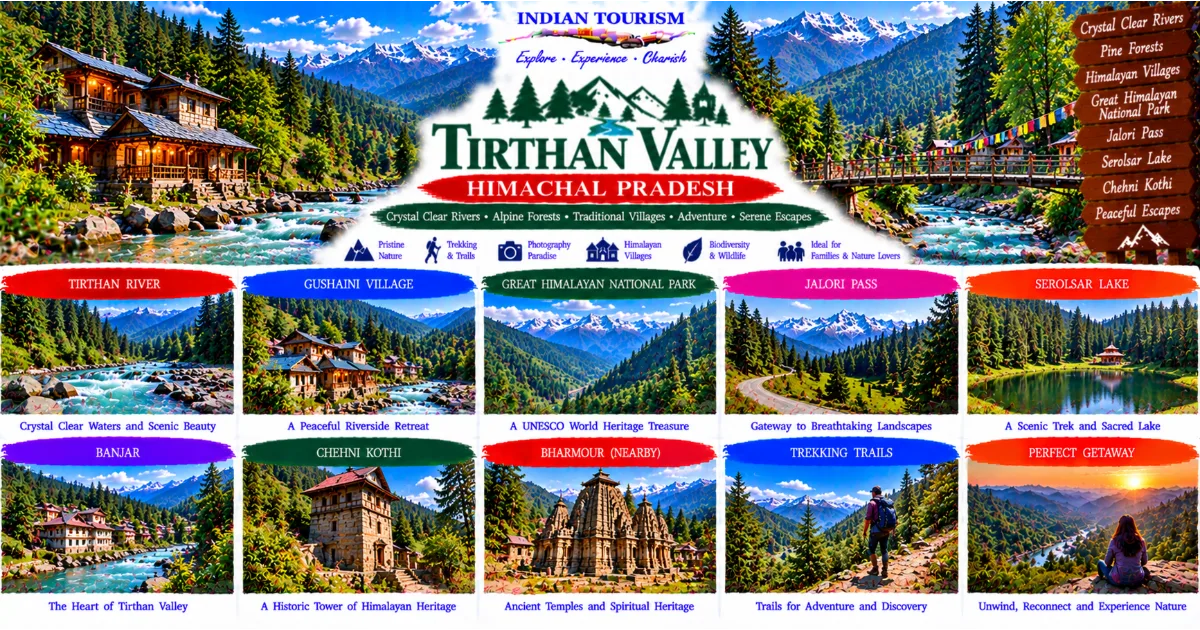
Discover the Peaceful Beauty of Tirthan Valley
Tirthan Valley is one of Himachal Pradesh's most appealing destinations for travellers who prefer peaceful mountain landscapes, riverside villages, forest walks and experiences closely connected with nature. Located in the Kullu district, the valley is named after the Tirthan River, whose clear waters flow through a landscape of wooded slopes, traditional settlements, terraced fields and towering Himalayan mountains. Unlike the more commercialised hill stations that attract large crowds during holiday periods, Tirthan Valley is often associated with a slower and more intimate style of travel.
The valley is particularly popular among nature lovers, photographers, hikers, couples, families and travellers looking for a quieter alternative to busy mountain towns. Its appeal comes from the combination of river scenery, village life, forest trails and access to the Great Himalayan National Park Conservation Area, a globally recognised natural landscape known for its biodiversity. Visitors can spend their mornings listening to the river, explore nearby villages during the day and enjoy peaceful evenings in a riverside guesthouse or mountain homestay.
Tirthan Valley is not a single town with a concentrated group of attractions. It is a region made up of settlements and natural areas connected by winding mountain roads. Villages such as Gushaini and Banjar are useful reference points for exploring the valley, while nearby destinations provide opportunities for short walks, longer treks and cultural experiences. The exact experience depends on where you stay, the season and how much time you have available.
The valley is especially rewarding for travellers who enjoy outdoor experiences without needing every day to be filled with demanding activities. A short riverside walk, a conversation with a local resident, a visit to a traditional village or an afternoon spent watching the surrounding mountains can become the highlights of a trip. Those who want more adventure can explore authorised trekking routes and seek guidance from experienced local professionals.
A responsible visit to Tirthan Valley requires an understanding of its natural environment. The river, forests and surrounding habitats are not simply scenery for visitors. They support local livelihoods and wildlife, and their long-term health depends on careful management. Travellers can help protect the destination by avoiding litter, respecting local customs, using local services and following rules in protected areas.
This guide explores the history and character of Tirthan Valley, its best places to visit, outdoor experiences, local food, seasonal travel conditions, accommodation options and practical planning advice. Whether you are planning a quiet mountain holiday or an adventure in the western Himalayas, Tirthan Valley offers an opportunity to experience a more natural and unhurried side of Himachal Pradesh.
Understanding Tirthan Valley: Geography, River and Mountain Life
Tirthan Valley lies in the Kullu district of Himachal Pradesh, in the western Himalayan region. Its landscape is shaped by the Tirthan River, surrounding mountain slopes, forested hillsides and settlements built along roads and river terraces. The geography creates a distinctive combination of water, vegetation and mountain scenery that changes considerably with elevation and season.
The river is central to the identity of the valley. Its flowing water provides the setting for many of the area's best-known views, while the river corridor influences the location of settlements and travel routes. Visitors often find that the sound of the water becomes part of the experience, particularly when staying in accommodation near the river.
The surrounding hills contain a variety of vegetation and habitats. Lower slopes include cultivated land and settlements, while higher areas support forest ecosystems and mountain environments. As travellers move through the valley, they encounter changes in temperature, vegetation and views that reflect the region's varied elevation.
The valley is also connected with traditional rural life. Agriculture, livestock, small businesses and tourism contribute to local livelihoods, although the balance varies between settlements and households. Traditional homes, terraced fields and village paths offer glimpses of how people have adapted to the mountain environment.
Tirthan Valley's proximity to the Great Himalayan National Park Conservation Area gives it particular importance for nature tourism. The protected landscape supports diverse wildlife and vegetation, and it attracts visitors interested in hiking, ecology and mountain conservation. Access to particular trails and protected areas may be regulated, so travellers should check current rules before planning excursions.
Understanding this geographical setting helps explain why Tirthan Valley is best explored slowly. The distances between attractions may appear short on a map, but winding roads, walking routes and changing conditions can affect travel time. A relaxed itinerary allows visitors to appreciate the landscape instead of spending most of their holiday travelling between stops.
Best Places to Visit in Tirthan Valley
1. Gushaini Village
Gushaini is one of the best-known settlements in Tirthan Valley and a convenient base for visitors who want to enjoy riverside scenery and explore the surrounding countryside. The village is associated with small guesthouses, homestays, local food and access to walks along the river and nearby hills.
The setting is one of Gushaini's greatest attractions. The Tirthan River flows through the wider area, while forested slopes and mountain views create a peaceful atmosphere. Visitors can spend time near the water where access is permitted, walk through the settlement and observe everyday life in the valley.
Gushaini is also useful for travellers interested in guided outdoor activities. Depending on the season and local arrangements, visitors may be able to organise walks, nature excursions and trips towards authorised trekking routes. It is sensible to ask accommodation hosts or qualified local guides about current conditions before setting out.
The village is best enjoyed without an overly ambitious schedule. A morning walk, a relaxed lunch and an afternoon spent exploring nearby paths may provide a more rewarding experience than trying to visit several distant attractions in one day.
Visitors should respect private property and avoid assuming that every riverside area is open for unrestricted access. Ask before entering land or photographing residents, and keep noise to a reasonable level.
2. The Tirthan River
The Tirthan River is the defining natural feature of the valley. Its clear water, rocky banks and surrounding vegetation create some of the region's most recognisable scenery. For many visitors, spending time near the river is an essential part of the trip.
The river offers opportunities for photography, quiet observation and short walks where access is safe and permitted. Its appearance changes with rainfall, snowmelt, sunlight and season. During calmer conditions, the water may look transparent in shallow areas, while stronger flows can create white water around rocks.
Despite its beauty, the river must be treated carefully. Mountain rivers can be cold, fast and unpredictable, and water levels may rise quickly after rainfall. Rocks near the banks can be slippery, and places that appear shallow may have strong currents. Visitors should avoid entering unfamiliar stretches of water and should never assume that the river is safe for swimming.
Travellers should also avoid leaving rubbish along the riverbank or using the water as a disposal point for food waste. The river is part of the local ecosystem and supports communities and wildlife. Keeping its surroundings clean is essential to maintaining the valley's natural appeal.
A simple riverside walk can be one of the most memorable experiences in Tirthan Valley. The combination of flowing water, mountain air and forested scenery encourages visitors to slow down and appreciate the landscape.
3. Banjar
Banjar is an important town in the wider Tirthan Valley region and a useful centre for transport, supplies and local services. It provides a contrast to the smaller riverside settlements, offering shops, markets and connections to surrounding villages.
Travellers may use Banjar as a starting point for exploring the valley or as a stop during a longer journey through the Kullu district. Its position makes it useful for arranging transport and purchasing essentials before travelling to more remote areas.
The town also provides an opportunity to observe everyday life in the region. Local markets serve residents as well as visitors, and the surrounding countryside reveals the relationship between settlements, agriculture and mountain roads.
Banjar may not have the same immediate riverside atmosphere as Gushaini, but it is a practical part of the travel experience. Visitors should consider it when planning accommodation, transport and supplies, particularly if they intend to explore multiple parts of the valley.
4. Great Himalayan National Park Conservation Area
The Great Himalayan National Park Conservation Area is one of the most important natural attractions associated with Tirthan Valley. Located in the Kullu district, the protected landscape is recognised for its biodiversity, mountain habitats and ecological importance. It was inscribed on the UNESCO World Heritage List in 2014.
The conservation area includes a range of elevations and habitats, from forested valleys to higher mountain environments. This variation supports diverse plant and animal life and makes the region valuable for conservation, research and responsible nature tourism.
Visitors interested in the park should understand that it is a protected landscape rather than an unrestricted recreational area. Access to particular routes may require permits, local arrangements or authorised guides. Rules are intended to protect wildlife, vegetation and sensitive habitats.
The experience can include guided nature walks, longer trekking routes and opportunities to learn about Himalayan ecology. The suitability of each activity depends on fitness, season, current conditions and the regulations in force at the time of travel.
Wildlife sightings are never guaranteed. Travellers should focus on appreciating the habitat and learning about the ecosystem rather than expecting to see particular animals. Quiet observation, responsible walking and respect for park rules are essential.
For visitors who prefer not to undertake long treks, the wider valley still provides opportunities to appreciate forest scenery and learn about the importance of the conservation area through local guides and visitor information.
5. Rolla
Rolla is associated with trekking routes into the Great Himalayan National Park area and is often discussed by visitors planning a deeper nature experience in the region. Reaching destinations such as Rolla can involve walking through forested terrain and following routes that require appropriate preparation.
The journey offers an opportunity to experience the landscape beyond the accessible roads and villages. Forest vegetation, streams, changing elevation and mountain scenery create a more immersive outdoor experience than ordinary sightseeing.
However, a trek to Rolla should not be treated as a casual walk without planning. Route conditions, access permissions, weather, fitness and the availability of suitable guidance all matter. Travellers should confirm current arrangements with park authorities or authorised local professionals before setting out.
Carry appropriate footwear, rain protection, warm layers, drinking water and any required supplies. Allow sufficient time for the return journey and avoid continuing when weather or trail conditions become unsafe.
Rolla is best suited to visitors who want a more active experience and are prepared to follow the rules governing access to protected landscapes.
6. Jalori Pass
Jalori Pass is a mountain pass in the wider Banjar region and a popular excursion for travellers exploring the surrounding mountains. It provides access to scenic highland landscapes and walking routes, including the well-known path towards Serolsar Lake.
The pass offers a different perspective from the riverside settlements of Tirthan Valley. At higher elevations, the landscape can feel cooler and more open, with mountain views and forested slopes creating opportunities for photography and short walks.
Road access depends on the season and weather. During winter, snow or ice may affect the route, while heavy rain can create other travel challenges. Visitors should check current conditions before leaving and avoid assuming that the pass will always be accessible.
Jalori Pass is often combined with other nearby destinations, but travellers should allow enough time for the road journey and any walking activities. The drive itself may be slow because of winding mountain roads.
7. Serolsar Lake
Serolsar Lake is a scenic mountain lake reached by a walking route from the Jalori Pass area. Surrounded by forest, it is popular with visitors who enjoy hiking and quieter natural environments.
The walk can be a rewarding way to experience the wider Kullu landscape. The forest route provides changing views and opportunities to observe vegetation, while the lake offers a peaceful destination at the end of the trail.
The difficulty of the walk depends on the individual's fitness, weather and trail conditions. Comfortable footwear, water and suitable clothing are important. Visitors should allow enough time to return before darkness and should check current local advice before starting.
The lake and its surroundings should be treated carefully. Avoid littering, disturbing wildlife or damaging vegetation. Visitors should follow any local rules related to access, worship or environmental protection.
Serolsar Lake can make a good day excursion for travellers staying in the Tirthan Valley region, provided road and trail conditions are suitable.
8. Chehni Kothi
Chehni Kothi is a historic tower structure in the wider Banjar area, known for its traditional Himalayan architecture. Built using local materials and construction techniques, the structure reflects the architectural knowledge developed in mountain communities.
The tower is particularly interesting for travellers who want to explore the cultural heritage of the region rather than focusing exclusively on natural scenery. Traditional buildings reveal how communities responded to the availability of materials, local weather and practical needs.
Reaching the structure may involve a walk from the nearest accessible road or settlement. Visitors should check the route and current access arrangements before planning the visit. The surrounding village is a living community, so travellers should respect private property and local customs.
Chehni Kothi offers a useful contrast to the forest and river attractions of Tirthan Valley. Including a heritage stop in the itinerary helps create a more balanced understanding of the region.
9. Shoja
Shoja is a small mountain settlement in the wider Banjar region, known for its forested surroundings, cool weather and scenic setting. It is often visited by travellers who want a quiet base for exploring the higher landscapes around Jalori Pass.
The village offers a slower atmosphere than larger tourist centres. Visitors can enjoy mountain views, walk along nearby roads and explore the surrounding countryside at a relaxed pace.
Shoja is particularly appealing to photographers and nature lovers because the landscape changes with light, mist and season. Forested slopes and mountain ridges create a setting that can feel very different in the morning compared with late afternoon.
Accommodation options may be limited compared with larger towns, and facilities can vary. Travellers should book ahead during popular periods and confirm meal arrangements, road access and heating facilities if visiting in colder weather.
10. Great Himalayan National Park Buffer Zone and Nearby Villages
The settlements and landscapes surrounding the protected area provide opportunities to learn about the relationship between conservation and local livelihoods. Villages in the wider region are connected to agriculture, tourism, traditional knowledge and access to forest resources, although the details vary between communities.
Visitors can learn about local life through guided walks, conversations with hosts and responsible participation in village-based experiences. Such activities can help travellers understand why conservation and community well-being are closely connected.
It is important not to assume that every village offers the same attractions or that residents are available for informal tours. Ask permission before photographing people, follow guidance about private land and use local services where appropriate.
A village visit can be particularly meaningful when it is organised respectfully and allows local people to explain their own surroundings and traditions.
The Great Himalayan National Park: A Natural Treasure
The Great Himalayan National Park Conservation Area is one of the defining natural features of the region. Its international recognition reflects the importance of its ecosystems and the need to protect the biodiversity of the western Himalayas.
The protected landscape contains forests, alpine meadows, rivers and mountain habitats. Differences in elevation create a range of environmental conditions, supporting diverse plant communities and wildlife. These habitats are valuable not only for their scenic beauty but also for their ecological functions.
The park's conservation significance means that tourism must be carefully managed. Visitors should follow official rules, use permitted trails and respect any requirements for guides or permits. Activities that disturb wildlife, damage vegetation or create waste can undermine the purpose of protection.
Nature tourism can support conservation when it is planned responsibly. Local guiding services, suitable accommodation and visitor spending can contribute to livelihoods, while education can help travellers understand the importance of preserving the landscape.
Visitors should remember that wildlife sightings are unpredictable. A successful visit does not depend on seeing a rare animal. Observing forest structure, listening to birds, understanding local ecology and experiencing the mountain environment can be rewarding in their own right.
Outdoor Experiences in Tirthan Valley
Riverside Walks
Riverside walks are among the simplest ways to enjoy Tirthan Valley. Where access is permitted, visitors can follow suitable paths, observe the flowing water and enjoy views of the surrounding hills.
These walks do not need to be long or physically demanding. A short stroll near the village where you are staying can provide a sense of the landscape and create opportunities for photography.
Choose safe paths and stay away from unstable banks or fast-flowing water. After rain, conditions can change quickly, so follow local advice and avoid walking near the river during unsafe conditions.
Forest Walks
Forest walks provide a chance to experience the valley beyond its roads and settlements. The surrounding vegetation changes with elevation and season, creating opportunities to observe trees, plants, birds and other elements of the ecosystem.
Travellers should use established paths and check whether particular routes require a guide or permit. Some trails may be unsuitable during heavy rain or poor visibility.
A local guide can help identify plants, explain local traditions and provide information about conservation. This can turn a simple walk into a more educational experience.
Trekking
Tirthan Valley is a popular base for trekking because of its proximity to protected mountain landscapes and routes in the wider Kullu region. Trekking opportunities vary in length and difficulty, from short walks to multi-day journeys.
Visitors should select routes according to their fitness and experience. Check current access rules, weather forecasts and trail conditions before leaving. For longer or remote routes, appropriate equipment and qualified local guidance are important.
Never assume that a route is safe simply because it appears on a map or in an old travel description. Mountain weather can change quickly, and trail conditions may vary significantly between seasons.
Photography
The valley is well suited to photography because it combines rivers, forests, mountain villages and changing light. Early morning can provide soft light and quieter surroundings, while overcast weather may create a more atmospheric scene.
Photographers should avoid trespassing on private land, disturbing wildlife or obstructing local roads and paths. Ask permission before photographing people, especially in residential areas.
Birdwatching and Nature Observation
The forests and river corridors provide opportunities for observing birds and other wildlife. Visitors interested in nature should carry binoculars if available and move quietly.
Wildlife is unpredictable, so patience is more valuable than expecting particular sightings. Avoid feeding animals, playing recorded calls or approaching wildlife for photographs. Responsible observation protects both visitors and the ecosystem.
Local Food: What to Eat in Tirthan Valley
Food in Tirthan Valley reflects the broader culinary traditions of Himachal Pradesh, with simple meals, seasonal ingredients and dishes suited to mountain weather. The exact menu depends on the village, accommodation and season, so travellers should ask locally about regional specialties.
Himachali Dham
Dham is a traditional festive meal served at weddings and other important occasions in Himachal Pradesh. The dishes vary across regions and may include rice, lentils, yoghurt-based preparations and other local specialties.
Dham is more than a meal. It reflects hospitality and community participation, with traditions surrounding its preparation and serving. Visitors may not find it available every day, so asking locally can help identify opportunities to try an authentic version.
Madra
Madra is a well-known Himachali dish commonly prepared with chickpeas or other legumes in a yoghurt-based gravy. It is associated with celebratory meals and traditional cooking.
Recipes vary by region and household. Travellers interested in local food should ask how a dish is prepared and whether it is a regional specialty.
Siddu
Siddu is a traditional steamed bread associated with parts of Himachal Pradesh. It may contain a filling and is often served with accompaniments such as ghee or other locally prepared items.
Availability varies between villages and establishments. Visitors should remain flexible and enjoy the food that is freshly prepared rather than expecting every dish to be available at every restaurant.
Trout and River-Region Dining
Some establishments in the wider region may offer trout dishes, depending on availability and local sourcing. Travellers should ask about preparation methods and the origin of the fish rather than assuming that every restaurant serves locally sourced produce.
The valley also offers simple meals, vegetables, lentils, rice, bread and tea. These can be especially welcome after a day spent outdoors.
Homestay Meals
Eating at a locally run homestay can provide a useful introduction to household cooking and regional ingredients. Meals may be simpler than restaurant menus, but they can offer a closer connection to local food culture.
Travellers should communicate dietary requirements clearly when booking. If you plan to stay in a remote village, confirm meal arrangements in advance because alternative dining options may be limited.
Local Culture and Village Life
Tirthan Valley's cultural identity is shaped by mountain geography, traditional livelihoods, local religious practices and relationships between settlements. Village life varies throughout the valley, but agriculture, livestock, family networks and tourism can all form part of the local economy.
Traditional homes and terraced fields reflect practical adaptations to the landscape. The location of houses, paths and cultivated areas often responds to slope, water access and the availability of usable land. Visitors who walk through villages can observe these relationships more closely than those who remain on the main road.
Local festivals and religious occasions bring communities together, although the calendar and customs vary from one settlement to another. Visitors may encounter temple celebrations, family gatherings or other local events depending on the time of year.
Travellers should approach cultural experiences with respect. Ask permission before taking photographs, avoid entering private property and do not assume that local people want to participate in tourist activities. A conversation with a willing host or guide can be more meaningful than an arranged spectacle.
Supporting locally owned accommodation, restaurants, transport and guiding services can help tourism contribute to the regional economy. Visitors should also recognise that the valley is a home for residents, not simply a holiday setting.
Best Time to Visit Tirthan Valley
Tirthan Valley can be visited throughout much of the year, but the best season depends on your preferred activities and tolerance for changing mountain weather.
Spring: March to April
Spring brings gradual changes in temperature and renewed greenery across the valley. It can be a pleasant period for village walks, photography and exploring accessible areas.
Higher routes may remain cold, and weather can change quickly. Travellers planning hikes should check current trail conditions and carry suitable clothing.
Spring is a useful option for visitors seeking a quieter experience before the busiest summer travel period, although local conditions vary each year.
Summer: May to June
Summer is one of the most popular seasons for visiting Tirthan Valley. The weather is often suitable for outdoor activities, riverside walks and exploring nearby villages.
Visitors planning to trek should still remember that conditions at higher elevations can be much colder than in the valley. Suitable equipment and current route information are essential.
Accommodation can become busier during school holidays and long weekends, so booking ahead is sensible if you have a specific property in mind.
Monsoon: July to September
The monsoon brings greenery and dramatic scenery but also creates travel risks. Heavy rainfall can cause landslides, road disruption, swollen rivers and slippery trails.
Travellers should monitor current weather information, avoid riverside activities during unsafe conditions and keep their itinerary flexible. Trekking in poor weather should be avoided, especially on remote routes.
The monsoon can be attractive for those who enjoy misty landscapes, but it requires more caution than a visit during settled weather.
Autumn: October to November
Autumn often provides pleasant conditions for exploring villages and enjoying mountain scenery, although temperatures fall as the season progresses. Clearer days can offer good opportunities for photography and outdoor walks.
Travellers should carry warm layers, particularly for evenings and early mornings. Higher routes may experience colder conditions than the valley itself.
Winter: December to February
Winter brings cold weather and the possibility of snow in higher areas. Some roads and trekking routes may become difficult or inaccessible, depending on the weather.
Visitors should check road conditions and confirm accommodation facilities before travelling. Heating, warm bedding and reliable transport arrangements become more important during this season.
For many first-time visitors, late spring, early summer and autumn offer a practical balance of access and outdoor opportunities. Trekking plans should always depend on current conditions and the rules governing the selected route.
How to Reach Tirthan Valley
By Road
Road travel is the main way to reach Tirthan Valley. Visitors generally travel towards the Banjar region and continue to their chosen village or accommodation. Private vehicles, taxis and available bus services can be used depending on the starting point.
Mountain roads can be winding and journey times may vary with traffic, weather and road conditions. Travellers should allow extra time and avoid scheduling tight onward connections.
If hiring a taxi, confirm the complete fare and clarify whether waiting time or local excursions are included. A driver familiar with the area can be helpful when planning visits to villages and trailheads.
By Train
Tirthan Valley does not have a railway station. Travellers arriving by train need to use a suitable station elsewhere in Himachal Pradesh or a neighbouring region and continue by road.
The most convenient rail connection depends on the city of origin and current train schedules. Consider the complete journey, including the road transfer, rather than choosing a train solely on arrival time.
By Air
The nearest practical airport depends on current flight schedules and the route selected. Bhuntar Airport near Kullu may be useful for some itineraries, although flight availability can be limited and services may be affected by weather. Larger airports farther away may offer more connections but require a longer road journey.
Before booking, check flight schedules, road transfer options and the expected journey time to your accommodation. Weather can affect both flights and mountain roads, so a flexible schedule is useful.
Getting Around Tirthan Valley
The valley is spread across several settlements, and attractions may be separated by winding mountain roads or walking routes. Travellers should choose accommodation according to the activities they plan to undertake.
Short walks may be possible directly from a village stay, while other destinations require a taxi or arranged transport. Public transport may serve some routes, but frequency and convenience vary.
For trekking, ask about the exact trailhead, current access rules, guide requirements and return arrangements. Do not assume that a route is accessible simply because another traveller visited it in a different season.
If travelling with children or older family members, consider the walking distance, road conditions and availability of food and rest facilities. A realistic itinerary is more enjoyable than trying to cover the entire valley in a short stay.
Suggested Tirthan Valley Itinerary
One Day in Tirthan Valley
A one-day visit is best focused on the central valley and its riverside scenery. Begin with a relaxed walk near your chosen village, such as Gushaini, where access is permitted. Spend time enjoying the river and observing the surrounding landscape.
After lunch, explore the village and nearby paths or arrange a short guided nature walk. Finish the day with a relaxed meal and time to enjoy the mountain atmosphere.
A one-day visit is too short for many of the longer trekking routes, so it is better to focus on accessible experiences rather than attempting a demanding excursion.
Two Days in Tirthan Valley
Spend the first day exploring the river, village streets and nearby countryside. Use the afternoon for a short walk or a locally arranged nature experience.
On the second day, choose an excursion according to your interests and current conditions. You might explore a suitable route in the wider Banjar region, visit a nearby heritage site or travel towards Jalori Pass if road conditions allow.
Check travel times carefully and avoid combining too many distant attractions in one day.
Three Days in Tirthan Valley
A three-day visit allows a more balanced experience. Use the first day to settle into the valley and explore the river and nearby village. Spend the second day on a guided nature walk or an authorised excursion connected with the Great Himalayan National Park area.
Reserve the third day for a trip towards Jalori Pass and Serolsar Lake, provided current road and trail conditions are suitable. Alternatively, travellers interested in architecture may prefer to visit Chehni Kothi and explore the surrounding settlements.
Longer treks should be planned separately according to their duration, difficulty and access requirements. Do not attempt to fit a multi-day route into an ordinary sightseeing schedule.
Where to Stay in Tirthan Valley
Accommodation in Tirthan Valley includes homestays, guesthouses, small hotels and nature-oriented properties. The experience varies depending on the village, the property and its location relative to the river and main road.
A riverside stay can provide attractive views and easy access to nearby walking routes, but visitors should check the property's exact location and the safety of the surrounding riverbank. Do not assume that every riverside property has direct access to a safe swimming or recreation area.
Homestays can provide opportunities to learn about local food and village life. Travellers who choose this option should communicate meal requirements, arrival times and transport needs in advance.
During popular travel periods, accommodation may become busy. Book ahead if you need particular facilities, such as reliable heating, parking or a family room. In winter, confirm whether the property remains open and how it manages cold temperatures.
Visitors planning to explore protected areas should consider the distance between their accommodation and the relevant trailhead. A convenient base can reduce unnecessary road travel and make early starts easier.
Tirthan Valley for Couples, Families and Solo Travellers
Tirthan Valley for Couples
Tirthan Valley is well suited to couples who enjoy peaceful surroundings, riverside walks and mountain scenery. The slower pace allows visitors to spend time together without following a demanding sightseeing schedule.
A simple day might include breakfast overlooking the landscape, a walk near the river and an afternoon spent exploring the village. Couples interested in longer hikes should select routes according to their experience and current conditions.
Tirthan Valley for Families
Families can enjoy the valley through short walks, village exploration and relaxed nature experiences. The best itinerary depends on the ages of the children and the accessibility of the chosen accommodation.
Parents should supervise children near rivers, steep slopes and roads. Mountain rivers can be dangerous even when the water looks clear and calm. Choose safe walking routes and avoid activities that exceed the family's experience.
Tirthan Valley for Solo Travellers
Solo travellers may appreciate the opportunity to explore at their own pace and connect with local guides or other visitors through organised activities. Staying in a locally run guesthouse can also provide useful information about routes and transport.
For longer walks, remote trails or protected areas, seek current local guidance and follow any permit requirements. Carry a charged phone, tell someone about your plans and avoid unfamiliar routes after dark.
Responsible Tourism in Tirthan Valley
Tirthan Valley's natural beauty depends on healthy rivers, forests and mountain habitats. Responsible tourism helps protect these resources while supporting the people who live in the region.
Visitors should carry their waste back to appropriate disposal points and avoid leaving plastic bottles, food packaging or disposable items near the river. Waste can harm wildlife, pollute water and reduce the quality of the environment.
Use established paths and follow access rules in protected areas. Do not disturb wildlife, feed animals or remove plants and natural objects. Visitors should respect restrictions on fires and other activities that may damage the forest.
River safety is especially important. Avoid entering fast-flowing water, keep children away from unsafe banks and follow local advice after heavy rainfall. The river should never be treated as a guaranteed swimming area.
Support local businesses where possible by staying in locally run accommodation, using qualified guides and eating at local establishments. Ask permission before photographing people or private homes, and respect the routines of village life.
In protected areas, follow the instructions of park authorities and authorised guides. Conservation rules exist to protect habitats and wildlife, and responsible visitors should treat them as an essential part of the experience.
Practical Travel Tips for Tirthan Valley
Carry comfortable shoes suitable for walking on uneven paths and pack clothing that can be layered. Even during warmer months, mornings and evenings may be cool, while higher areas can be much colder than the valley floor.
Bring rain protection, particularly during the monsoon and periods of unsettled weather. Check road and weather conditions before setting out, and allow extra time for mountain journeys.
Keep some cash available for small purchases and local transport. Digital payments may not be accepted everywhere, particularly in remote areas.
If planning to visit the Great Himalayan National Park Conservation Area or undertake a longer trek, confirm current rules, permits and guide requirements before travelling. Carry appropriate equipment and choose a route that matches your fitness and experience.
Arrange meals and transport in advance when staying in remote settlements. Food options, shops and services may be limited outside the main villages.
Finally, keep your schedule flexible. The valley is best enjoyed when there is enough time to experience the river, explore villages and appreciate the landscape without rushing between distant destinations.
Why Tirthan Valley Deserves a Place on Your Himachal Pradesh Itinerary
Tirthan Valley offers a distinctive mountain experience built around riverside scenery, traditional villages, forested slopes and access to one of the western Himalayas' most important conservation landscapes. Its appeal lies in the opportunity to enjoy nature while remaining connected to the cultural life of the region.
The Tirthan River provides the setting for peaceful walks and scenic views, while settlements such as Gushaini and Banjar offer practical bases for exploring the valley. Nearby attractions such as Jalori Pass, Serolsar Lake and Chehni Kothi add variety for travellers interested in hiking, architecture and mountain landscapes.
The Great Himalayan National Park Conservation Area gives the region special importance for biodiversity and conservation. Visitors who follow the rules and use authorised services can gain a deeper understanding of the mountain ecosystem and the importance of protecting it.
Tirthan Valley is particularly rewarding for travellers who prefer meaningful experiences over crowded attractions. A walk along the river, a conversation with a local host or a quiet evening surrounded by mountains can become the most memorable parts of the trip.
Its future depends on balancing tourism with conservation and community well-being. Travellers can contribute by reducing waste, respecting local customs and supporting local businesses. These simple choices help protect the qualities that make the valley special.
Conclusion
Tirthan Valley is one of Himachal Pradesh's most rewarding destinations for travellers who appreciate rivers, forests, traditional villages and peaceful Himalayan landscapes. Its proximity to the Great Himalayan National Park Conservation Area makes it especially attractive to nature lovers, while nearby settlements and heritage sites provide opportunities to explore the region's cultural character.
Plan your visit according to the season, check access and weather conditions before outdoor activities, and choose experiences that match your interests and fitness. Whether you spend your time beside the river, explore village paths or undertake a carefully planned trek, allow enough time to appreciate the landscape responsibly.
For travellers seeking a quieter alternative to crowded hill stations, Tirthan Valley offers a memorable introduction to the natural and cultural richness of Himachal Pradesh.
#IndianTourism #TirthanValley #TirthanValleyTourism #HimachalPradesh #Kullu #GreatHimalayanNationalPark #Gushaini #Banjar #JaloriPass #SerolsarLake #HimalayanTravel #NatureTourism #MountainVillages #ResponsibleTourism #ExploreIndia
