
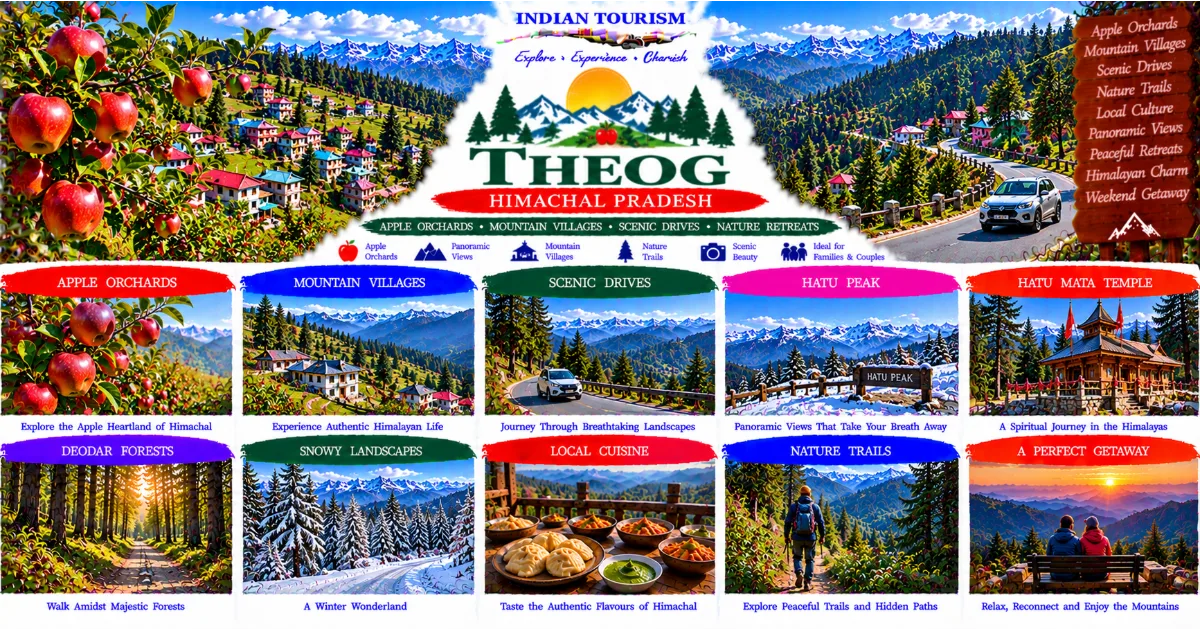
Welcome to the Peaceful Mountain Town of Theog
Himachal Pradesh offers a remarkable variety of mountain destinations, from lively hill stations and historic towns to quiet villages surrounded by forests and orchards. While Shimla is known for its colonial architecture and busy markets, Kufri attracts visitors with its elevated scenery, Chail is associated with royal heritage, and Narkanda is celebrated for its apple-growing countryside and mountain views, Theog offers a quieter experience shaped by rural life, horticulture and the natural beauty of the Himalayas. Located in the Shimla district, Theog is an appealing destination for travellers who want to explore a less commercialised side of Himachal Pradesh.
Theog lies along the mountainous landscape east of Shimla, surrounded by green slopes, cultivated land, forests and scattered settlements. Its location on an important road through the region makes it a useful base for exploring the countryside and travelling towards other destinations in the upper Shimla hills. Yet Theog is not simply a stop along the way. Its surrounding villages, agricultural landscapes and changing seasonal colours offer visitors an opportunity to understand the relationship between mountain communities and their environment.
One of Theog's most distinctive features is its connection with apple cultivation. Horticulture is an important part of the wider Shimla region's economy, and orchards are visible across many surrounding hillsides. These cultivated landscapes change through the year, from flowering trees in spring to developing fruit in summer and harvest activity later in the season. For visitors accustomed to urban environments, the experience offers a valuable introduction to rural livelihoods in the mountains.
Theog is also suitable for travellers who appreciate scenic drives, photography, village exploration and peaceful accommodation away from crowded tourist centres. Its surroundings provide opportunities to observe traditional mountain architecture, local food habits, farming practices and the seasonal rhythms of village life. Travellers who enjoy slow tourism may find that the greatest pleasure comes from spending time in the countryside rather than following a long list of formal attractions.
This guide explores Theog's landscape, apple-growing traditions, nearby viewpoints, seasonal experiences, local culture, accommodation, food and transport. It also explains how to plan a comfortable visit and combine Theog with other destinations in Himachal Pradesh while respecting the environment and local communities.
Understanding Theog and Its Mountain Landscape
Theog is a small town in the Shimla district of Himachal Pradesh, situated within a region characterised by mountain roads, forested slopes, agricultural settlements and orchards. Its location makes it part of the wider network of hill communities that connect Shimla with destinations farther into the eastern Himalayan region.
The surrounding geography is shaped by elevation and terrain. Roads follow the contours of the hills, connecting settlements that may appear close on a map but require time to reach because of winding routes and changing road conditions. Forests occupy many slopes, while cultivated land appears where the terrain and climate support farming and horticulture.
Unlike a major tourist centre, Theog does not depend entirely on sightseeing infrastructure. Its identity is closely connected with everyday community life, including agriculture, local commerce, transport and regional services. Visitors who spend time here can experience a more practical and less theatrical side of mountain living.
The town and its surrounding settlements also provide a useful perspective on the economic importance of horticulture in Himachal Pradesh. Apple production supports growers, seasonal workers, transport services, traders and businesses involved in handling agricultural produce. The landscape therefore reflects not only natural beauty but also the work required to sustain rural livelihoods.
Theog is best approached as a destination for exploration rather than a place with one defining monument. Visitors can enjoy its surroundings through short excursions, scenic road journeys, respectful village visits and time spent observing the changing mountain environment. Its appeal is particularly strong for travellers who prefer a flexible itinerary and value experiences that emerge naturally during a journey.
Apple Orchards: The Agricultural Identity of Theog
Apple cultivation is one of the most important features of the wider Theog region. Himachal Pradesh is widely recognised for its horticultural production, and the Shimla hills contain many orchards that contribute to the state's agricultural economy. Theog's surrounding countryside forms part of this landscape, where farming is closely connected with climate, elevation and the availability of suitable land.
Apple orchards influence the appearance of the region throughout the year. In spring, trees may produce delicate blossoms that bring a fresh character to the hillsides. During the growing season, the orchards develop a fuller green appearance as fruit forms and matures. Later in the year, harvesting and the movement of produce become important activities for many farming communities.
The exact timing of flowering and harvesting varies according to elevation, local conditions, weather and the particular variety being grown. Travellers hoping to see blossoms or mature apples should therefore ask locally about current conditions rather than assuming that every orchard will be at the same stage during a particular month.
Orchard visits can be educational as well as scenic. Visitors may learn about pruning, irrigation, pest management, fruit grading and the work involved in preparing apples for transport. These activities are part of a larger agricultural system that connects mountain farms with markets in different parts of India.
However, orchards are working properties rather than automatically accessible tourist attractions. Visitors should seek permission before entering private land, touching trees or photographing agricultural activities at close range. Fruit should never be picked without the owner's approval, and care should be taken not to damage branches or interfere with farm work.
For families, an orchard experience can help children understand how food is produced and how mountain communities adapt to their environment. For photographers, the rows of trees and surrounding slopes offer a different perspective from the dramatic panoramas usually associated with Himalayan tourism.
Theog's apple-growing landscape is a reminder that rural tourism can create meaningful experiences without requiring large attractions. By learning about horticulture and supporting local businesses, visitors can connect their travel experience with the people whose work shapes the countryside.
Exploring the Villages Around Theog
The villages surrounding Theog offer an opportunity to experience the quieter side of Himachal Pradesh. Rather than concentrating exclusively on major tourist landmarks, visitors can observe the landscape through small settlements, agricultural plots, local roads and everyday community activity.
Mountain villages often reflect the practical realities of their surroundings. Homes are positioned according to terrain and access, cultivated plots make use of available land, and roads connect households with schools, markets and essential services. The pattern of settlement may look different from that of the plains, where roads and buildings can spread across flatter ground.
Walking through an accessible village area can reveal details that are easy to miss during a road journey. Visitors may notice the arrangement of orchards, the use of outdoor spaces, traditional building materials and the seasonal work taking place around farms. These observations help create a more complete understanding of the region.
Village exploration should always be undertaken respectfully. Travellers should remain on public roads or paths, ask permission before entering private property and avoid photographing people closely without consent. Homes, farms and community spaces are part of everyday life, not simply scenery for visitors.
Travellers who wish to learn more about local life can support village shops, purchase regional products from legitimate sellers and ask about the history of the area in a considerate manner. A local guide may help explain the landscape and traditions while ensuring that visits are appropriate for the community.
Theog is especially suitable for visitors who enjoy slow travel. Spending time in one village or taking a relaxed drive through the countryside can be more rewarding than trying to cover numerous locations in a single day. The experience allows the destination to reveal itself through its people, landscapes and everyday rhythms.
Scenic Drives Through the Theog Region
Mountain drives are an important part of travelling around Theog. The surrounding roads pass through forested slopes, orchards and small settlements, creating a changing sequence of views. Even a relatively short journey can reveal differences in vegetation, elevation and the way people use the land.
The experience varies considerably with the season. Summer may bring greener slopes and active agricultural landscapes, while autumn can provide clearer skies and changing colours. During winter, colder conditions may create a dramatic atmosphere, and snowfall can affect road access in suitable weather systems. Monsoon journeys may reveal vivid greenery but also require additional caution because of rain and poor visibility.
Drivers should remember that mountain roads demand concentration. Bends may limit visibility, road widths can vary and traffic conditions may change unexpectedly. Overtaking should be avoided where the road ahead is not clearly visible, and stopping for photographs should only be done at safe, permitted locations.
Travellers who are unfamiliar with mountain driving may prefer to hire an experienced local driver. This can make the journey more comfortable and allow passengers to appreciate the scenery without worrying about navigation and road conditions.
It is also sensible to avoid planning too many stops along a single route. A relaxed drive with time to appreciate a few suitable viewpoints is often more enjoyable than a hurried journey that attempts to cover every possible location.
Scenic drives are particularly rewarding for visitors who see the journey as part of the holiday. The roads around Theog offer a chance to observe the wider mountain environment and understand how communities, forests and orchards are connected across the hills.
Nature and Forest Experiences Around Theog
The wider Theog region contains forested slopes and green mountain landscapes that appeal to travellers who enjoy nature. While the town is closely associated with agriculture, woodland remains an important part of the surrounding scenery and contributes to the region's environmental character.
Nature experiences do not always require a demanding trek. A short walk along a suitable public road, time spent observing the trees or a stop at a safe viewpoint can provide opportunities to appreciate the landscape. Visitors may notice birds, seasonal plants and the way sunlight changes across the hills throughout the day.
Travellers should not assume that every forest track is a marked hiking trail. Some paths may serve local residents, forestry workers or farmers, while others may be difficult to navigate. Before undertaking a longer walk, visitors should ask locally about suitable routes, current conditions and whether a guide is advisable.
Comfortable footwear is useful because paths may include loose stones, mud, roots and uneven surfaces. During winter, snow and ice can make routes hazardous. Visitors should carry water, dress according to the weather and return before daylight fades.
Responsible nature tourism is essential for protecting the landscape. Rubbish should be carried back for proper disposal, wildlife should not be disturbed and loud music should be avoided in forested areas. Fires should never be started outside authorised facilities, particularly during periods when vegetation is dry.
Theog's natural surroundings are valuable partly because they remain closely connected with everyday life. Respecting local land use and following community guidance help ensure that nature experiences remain safe and sustainable for residents and visitors alike.
Photography Opportunities in Theog
Theog offers a variety of subjects for photographers who want to capture the quieter landscapes of Himachal Pradesh. Apple orchards, forested ridges, winding roads, village buildings and changing mountain light create opportunities for both landscape photography and everyday travel pictures.
Early morning can be rewarding when visibility is clear and the surrounding roads are relatively quiet. Light may reveal the shapes of distant ridgelines and the patterns of orchards across the hills. Mist can sometimes settle in the valleys, creating a layered atmosphere, although such conditions depend on the weather.
Late afternoon may provide softer light and warmer tones across the landscape. Photographers should pay attention to daylight when planning road journeys because mountain roads can be difficult to navigate after dark, particularly for visitors unfamiliar with the area.
Orchards can be especially attractive photographic subjects during flowering and fruiting periods. Visitors should always seek permission before entering private land or photographing farm activities closely. Taking pictures from public roads or authorised locations is often the simplest way to respect property boundaries.
Village photography requires additional sensitivity. People should not be treated as anonymous subjects, and permission should be requested before taking close-up portraits. Religious sites and private homes may have their own expectations about photography, which should be followed.
The best photographs often come from taking time to observe rather than moving constantly between locations. A quiet hillside, an orchard after rain or the changing colour of the mountains can create a memorable image without the need for a famous landmark.
The Best Time to Visit Theog
Theog can be visited in different seasons, but the best time depends on whether travellers prioritise comfortable sightseeing, orchard experiences, winter scenery or quieter travel. Weather and road conditions should always be checked before departure because mountain conditions can change quickly.
Spring: March to April
Spring brings renewed growth to the hills, and apple trees in suitable locations may begin flowering during this period. The countryside can feel fresh, and the changing vegetation offers appealing opportunities for photography and relaxed outdoor exploration.
The timing of blossoms varies according to local climate and elevation. Visitors hoping to see apple flowers should confirm current conditions with local accommodation providers or residents. A visit planned around a fixed flowering date may not coincide with the actual season.
Temperatures can vary between daytime and evening, so layered clothing is useful. Travellers should also be prepared for occasional rain and cooler conditions in elevated areas.
Summer: May to June
Summer is a popular period for exploring the Shimla hills because temperatures are generally more comfortable than those in the northern plains. Theog's green surroundings, scenic roads and agricultural landscape make it suitable for families, couples and travellers seeking a mountain break.
This period is useful for sightseeing and learning about the countryside. Visitors can combine Theog with other destinations in the region, provided they allow enough time for road journeys.
School holidays and long weekends may increase demand for accommodation. Booking in advance is advisable, especially for families or travellers with specific room requirements.
Monsoon: July to September
The monsoon can make the countryside especially green. Forests and orchards may appear refreshed, and clouds can create dramatic views across the mountains. Travellers who appreciate atmospheric landscapes may find this season visually appealing.
Heavy rain can also cause landslides, slippery roads, poor visibility and travel delays. Visitors should monitor local weather advisories and avoid unnecessary driving during intense rainfall. Forest walks and exposed viewpoints should be approached cautiously.
Monsoon travel is best suited to visitors with flexible schedules. A plan that allows activities to be postponed when conditions deteriorate is safer and more comfortable than an itinerary that must be followed regardless of the weather.
Autumn: October to November
Autumn can offer clearer views and a quieter atmosphere as the monsoon retreats. Cooler air and changing seasonal conditions make this period attractive for scenic drives, photography and relaxed exploration.
Visitors should pack warm layers because mornings and evenings can be cold. Conditions may vary from year to year, so travellers should not assume that every day will be clear.
Autumn is a good choice for people who want to experience the countryside without the additional challenges of heavy monsoon rainfall or winter snow.
Winter: December to February
Winter brings colder weather and the possibility of snowfall in suitable conditions. Travellers who enjoy quiet mountain destinations may appreciate the atmosphere, especially when the surrounding slopes receive fresh snow.
Snowfall is not guaranteed on particular dates. Visitors should check current weather and road information before travelling, particularly if they plan to visit elevated locations or continue towards Narkanda.
Warm clothing, appropriate footwear and accommodation with reliable heating are important during winter. Road journeys may take longer during poor weather, so travel plans should remain flexible.
For most first-time visitors seeking comfortable sightseeing, spring, summer and autumn can be practical choices. Winter may be rewarding for those prepared for cold conditions, while monsoon travel requires additional attention to safety.
Theog During Apple Harvest Season
Apple harvest is an important period in the wider Shimla region, and the surrounding countryside can become particularly active as fruit matures and growers prepare their produce for market. The timing varies by variety, elevation and weather, so the experience differs from one orchard to another.
During harvest, visitors may observe workers picking fruit, sorting apples and preparing crates for transport. These activities reveal the labour involved in producing and distributing apples from mountain farms. The movement of fruit also demonstrates how road connectivity affects the local economy.
Travellers should remember that harvesting is a commercial activity rather than a tourist performance. Visitors should not enter orchards or interfere with workers without permission. A farm owner may be willing to explain the process or allow a short visit, but access should always be arranged respectfully.
Buying apples from legitimate local sellers can be a simple way to support the regional economy. Visitors should ask about varieties and storage practices if they are interested in learning more. Apples may differ in taste, texture and suitability for particular uses, and local sellers can often provide useful guidance.
The harvest season also provides a broader lesson about mountain agriculture. Weather, transport, labour availability and market prices can all influence the success of a crop. Theog's orchard landscape is therefore connected not only with scenic tourism but with the practical realities of farming.
Local Culture and Everyday Life
Theog's cultural character reflects the wider traditions of the Shimla hills, where community life, religious practices, agricultural work and mountain geography are closely connected. Visitors who spend time outside the main town can gain a better understanding of the region by observing its villages and learning about local routines.
Religious sites and community gatherings are important parts of life in many Himachali settlements. Temples provide places for worship and social connection, while festivals may bring together families and residents from nearby villages. The timing and character of local celebrations vary, so visitors interested in attending an event should seek reliable local information.
Traditional architecture also reflects the practical demands of the mountain environment. Buildings are adapted to slopes, weather and local materials, while roads and paths connect homes with agricultural land and essential services. These details help explain how communities organise daily life in a challenging landscape.
Food, farming and seasonal activity provide further insights. The work associated with orchards changes throughout the year, and local markets reflect the movement of produce and household goods. Visitors who take time to understand these activities can gain a more complete appreciation of the destination.
Cultural tourism should be based on respect. Visitors should ask before photographing people, follow local rules at religious sites and avoid entering private property without permission. Supporting local businesses and using local guides where appropriate can help tourism benefit the community.
Theog's cultural appeal lies in its ordinary rhythms as much as in any single attraction. The opportunity to observe mountain life in a respectful way can make the journey more meaningful than a hurried sightseeing visit.
Food to Try During a Visit to Theog
Food is an important part of exploring Himachal Pradesh, and Theog provides opportunities to enjoy familiar North Indian meals alongside regional preparations. The selection varies by restaurant and accommodation, but visitors can often find simple dishes suited to the cooler mountain climate.
Himachali cuisine includes preparations based on lentils, beans, rice, yoghurt and local spices. Madra is a well-known regional dish that appears in different forms across the state. Rajma dishes, seasonal vegetables and traditional breads may also be available depending on the restaurant.
Dham is a traditional festive meal associated with Himachal Pradesh. Its composition varies by region and occasion, and it is closely linked with community celebrations. Travellers interested in regional cuisine can ask whether a local restaurant offers traditional preparations or whether a particular dish is available during their stay.
Siddu is another recognised Himachali food, although availability varies across the state. Visitors may need to ask local eateries rather than expect every establishment to serve it.
Simple meals can be especially enjoyable after a day spent exploring the countryside. Hot tea, coffee, soup and freshly prepared food provide comfort during cooler mornings and evenings. Visitors staying in smaller properties should confirm meal arrangements in advance.
People with dietary restrictions or food allergies should communicate their needs clearly. Asking about ingredients and preparation methods can help visitors make informed choices while discovering the region's culinary traditions.
Where to Stay in Theog
Accommodation in and around Theog includes hotels, guesthouses and smaller properties suited to different budgets and travel styles. Visitors should choose according to their priorities, whether that means convenient access to the main road, quiet surroundings, family facilities or views of the surrounding hills.
Staying Near the Main Town
Accommodation near the main town can be convenient for travellers who want access to local shops, restaurants and transport. This option may suit visitors making a short stop or using Theog as a base for nearby excursions.
Before booking, check parking, room heating, hot water, meal availability and the distance from the property to the road. Travellers arriving late should confirm check-in arrangements in advance.
Countryside and Orchard Stays
Properties located in the countryside may provide a quieter environment and opportunities to enjoy mountain views. These stays can appeal to couples, photographers and travellers who prefer a slower pace.
The location should be checked carefully. A remote property may require private transport, and restaurants or shops may not be within walking distance. Visitors should ask about road access during heavy rain or winter weather.
Budget Accommodation
Budget-conscious travellers can compare smaller hotels and guesthouses. The lowest price is not always the best value, so it is useful to consider cleanliness, heating, food costs, transport needs and cancellation terms.
Recent guest feedback can help identify potential concerns, but facilities should be confirmed directly before booking. Travellers with families or older companions may need to ask about stairs, access and room arrangements.
Choosing Accommodation for Winter
Winter visitors should pay special attention to heating, hot water and road access. Ask whether the property remains accessible during snowfall and whether transport arrangements may change when conditions deteriorate.
Booking in advance is sensible during busy holiday periods. Confirm the total cost, included facilities and cancellation policy rather than relying only on promotional photographs.
Theog for Couples and Honeymoon Travellers
Theog can be a good choice for couples who enjoy peaceful surroundings, scenic drives and time away from busy tourist centres. Its orchards, mountain roads and rural atmosphere create a setting suited to a relaxed holiday.
Couples can begin the day with a leisurely breakfast, explore the surrounding countryside and spend time at a suitable viewpoint. A visit to an orchard may also be possible when access is permitted. Evenings can be reserved for a comfortable meal and rest at the accommodation.
Photography provides another enjoyable activity. Mountain ridges, forested slopes and cultivated landscapes offer opportunities for memorable pictures. Couples should choose safe stopping areas and respect private property when photographing the countryside.
Accommodation is an important part of the experience. A comfortable room, reliable meals and convenient transport can make the stay more enjoyable, especially during colder months. Travellers should decide whether they prefer to stay near the main town or in a quieter countryside location.
Theog is particularly suitable for couples who value nature and conversation rather than a busy nightlife scene. It can also be combined with Shimla, Chail or Narkanda for a longer holiday, provided travel times are planned realistically.
Theog for Families with Children
Families can enjoy Theog because it offers opportunities to learn about rural life, agriculture and the mountain environment. Children may find apple orchards, winding roads and changing landscapes interesting, while short walks and scenic stops provide opportunities to spend time outdoors.
Parents should choose activities according to children's ages and energy levels. Short walks, frequent breaks and comfortable meal arrangements are generally more practical than an itinerary with many long excursions.
Mountain roads require careful supervision. Children should remain properly seated during journeys, and adults should keep them away from road edges, steep slopes and fast-flowing water. During winter, icy surfaces can be dangerous even when they appear easy to cross.
Families should choose accommodation with appropriate room arrangements, convenient food options and reliable heating when needed. Travellers with elderly relatives should also consider stairs, walking distances and access to parking.
A family holiday does not need to include every nearby destination. Spending time in a suitable orchard with permission, enjoying a scenic drive or learning about local agriculture may provide more lasting memories than rushing through numerous stops.
Responsible Tourism in Theog
Theog's landscape is closely connected with the lives and livelihoods of local residents. Orchards, forests, roads and villages are not simply tourist scenery. They support agriculture, transport, community life and the wider regional economy. Responsible travel helps protect these resources while ensuring that tourism benefits local people.
Visitors should carry their rubbish back when disposal facilities are unavailable and avoid leaving plastic waste along roads or in forests. Waste should never be thrown into streams, cultivated land or roadside vegetation. Reusable bottles and bags can help reduce unnecessary packaging.
Orchards and farms should be treated as private working properties. Visitors must seek permission before entering, avoid picking fruit without approval and take care not to damage crops. Respecting agricultural work is particularly important during flowering and harvest periods.
Noise should be kept to a reasonable level, especially near homes, temples and forested areas. Visitors should not disturb wildlife, remove plants or light fires in unauthorised places. Local rules and environmental guidance should be followed at all times.
Supporting local shops, food businesses, guides and legitimate agricultural sellers can help ensure that some tourism spending remains within the community. Visitors should also ask permission before photographing people and should respect restrictions at religious sites.
Responsible tourism requires awareness as well as good intentions. By respecting property, protecting the environment and treating residents considerately, travellers help preserve the qualities that make Theog worth visiting.
Practical Travel Tips for Visiting Theog
A little preparation can make a mountain holiday much more comfortable. Visitors should check the weather forecast and road conditions shortly before departure, particularly during the monsoon and winter. Heavy rainfall, snowfall or road maintenance may affect travel times.
Clothing should match the season. Summer visitors may need light layers for daytime and a jacket for cooler evenings. Winter travellers should carry warm clothing, gloves, suitable socks and footwear with good grip. Rain protection is useful during the monsoon.
Comfortable shoes are helpful for exploring uneven roads and paths. Visitors planning outdoor activities should carry water, sun protection and basic personal supplies. A small first-aid kit may be useful, especially when travelling with children.
Mobile connectivity and payment options can vary across the countryside. It is sensible to keep essential booking details and important contact information available offline and carry some cash for smaller purchases.
Travellers should reserve accommodation in advance during busy periods and confirm the facilities included in the booking. If staying outside the main town, check whether private transport is required and whether meals are available at the property.
Finally, allow flexibility in the itinerary. Mountain weather can change quickly, and road journeys may take longer than expected. A flexible schedule reduces pressure and makes it easier to enjoy the countryside safely.
Suggested Two-Day Itinerary for Theog
A two-day visit provides a useful introduction to Theog and its surroundings. The itinerary can be adjusted according to the season, accommodation location and interests of the group.
On the first day, arrive and settle into the accommodation before exploring the main town and nearby countryside. Enjoy a relaxed meal, observe the local setting and take a scenic drive if daylight and road conditions permit. Avoid trying to cover several distant attractions after a long journey.
On the second day, spend the morning exploring suitable orchard areas or village surroundings where access is permitted. If a local guide is available, a guided visit may provide useful information about horticulture and rural life. The afternoon can be reserved for photography, a short nature walk or a relaxed drive through the hills.
Visitors should not treat this as a fixed route. Rain, snow, orchard activity and road conditions may require changes. Travellers who want to visit several destinations in the wider Shimla region may benefit from adding another day rather than attempting to fit everything into a short schedule.
A three-day stay provides more time to explore the surrounding countryside and combine Theog with nearby hill destinations. The extra time can be especially valuable for visitors who enjoy photography, local food and slow travel.
Nearby Destinations to Combine with Theog
Theog can be included in a wider journey through Himachal Pradesh, particularly for travellers exploring the Shimla hills and destinations farther east.
Shimla offers colonial architecture, markets, cultural attractions and a more developed hill-station environment. Combining Shimla with Theog allows visitors to experience both a busy tourist centre and a quieter rural landscape.
Kufri provides additional mountain scenery and seasonal recreational options. Chail offers royal heritage and forest surroundings, while Mashobra appeals to visitors who enjoy peaceful woodland settings. Naldehra is another possible stop for travellers seeking scenic outdoor experiences.
Narkanda is particularly relevant for visitors interested in apple cultivation and elevated mountain views. Travellers may choose to combine Theog and Narkanda as part of a longer journey, but they should plan the route carefully and allow enough time for mountain roads.
The best itinerary depends on the total number of days, starting location and current conditions. It is usually more rewarding to explore a few destinations thoroughly than to spend most of the holiday travelling between distant places.
Is Theog Worth Visiting?
Theog is worth considering for travellers who want to experience a quieter side of Himachal Pradesh. Its appeal comes from the surrounding orchards, mountain villages, scenic roads and connection with rural livelihoods rather than a large collection of formal tourist attractions.
The destination is particularly suitable for couples, families, photographers and travellers interested in agriculture and village life. Visitors who appreciate slow travel may find it rewarding to spend time observing the countryside and learning about the seasonal work that shapes the region.
Theog may be less suitable for people seeking extensive nightlife, large shopping districts or a packed entertainment schedule. It is best approached as a place to experience the mountain environment and explore the wider countryside at a comfortable pace.
Its location also makes it useful for travellers building a broader itinerary through the Shimla region. With sensible planning, Theog can complement destinations such as Shimla, Chail and Narkanda while offering a different perspective on the landscape.
Conclusion: Discover the Quiet Charm of Theog
Theog represents an important part of Himachal Pradesh's rural mountain character. Its orchards, forested slopes, small settlements and scenic roads provide a different kind of tourism experience, one shaped by agriculture and everyday life rather than large commercial attractions.
From the changing appearance of apple orchards to the quiet roads winding through the hills, Theog invites visitors to slow down and appreciate the details of the Himalayan landscape. It offers opportunities to learn about local livelihoods, enjoy photography, discover regional food and explore the countryside with respect for the communities that live there.
The best time to visit depends on personal interests, whether the preference is for spring blossoms, summer greenery, autumn clarity or winter scenery. Whatever the season, checking weather conditions, choosing suitable accommodation and planning road journeys carefully can make the experience safer and more comfortable.
For travellers exploring Himachal Pradesh destination by destination, Theog deserves consideration as a peaceful countryside retreat. It reminds visitors that the character of the Himalayas is found not only in famous peaks and busy hill stations but also in orchards, villages and the quiet routines of mountain life.
#IndianTourism #Theog #TheogTourism #HimachalPradesh #HimachalTourism #AppleOrchards #ShimlaDistrict #MountainVillages #HimalayanTravel #RuralTourism #NatureTravel #ScenicDrives #SlowTravel #FamilyTravel #TravelIndia #IncredibleIndia
