
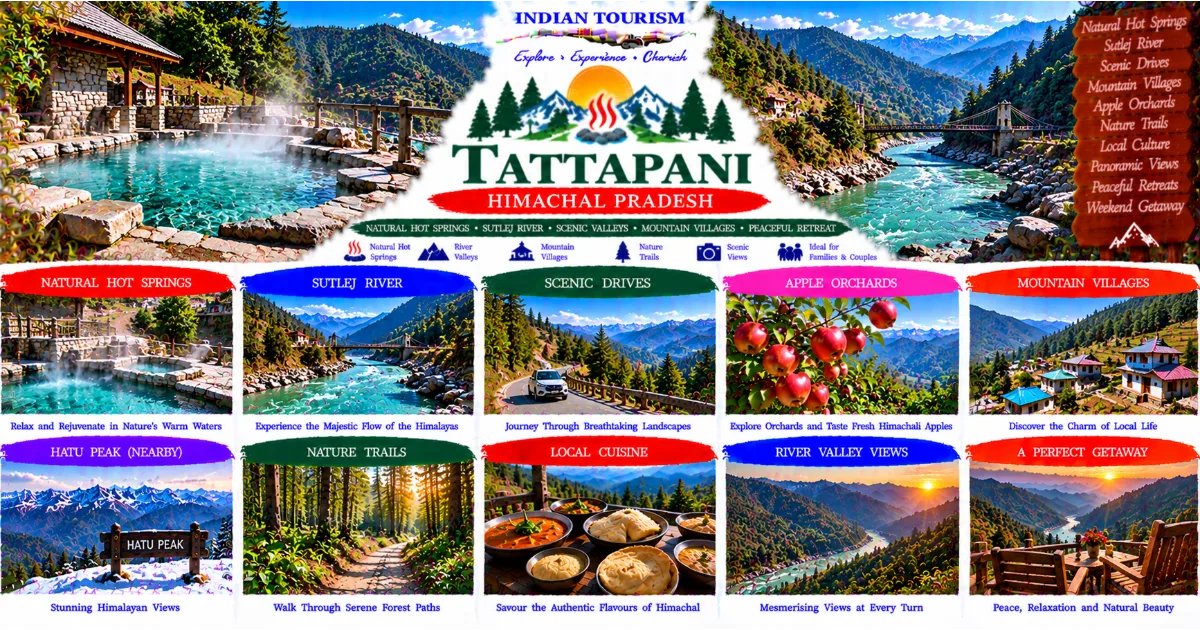
Discover the Riverside Charm of Tattapani
Himachal Pradesh is known for its snow-covered mountains, forested hill stations, apple orchards and traditional villages, but the state also offers destinations where rivers and natural hot springs shape the travel experience. Tattapani, located in the Shimla district, is one such destination. Known for its association with natural hot springs and the Sutlej River, Tattapani offers a different atmosphere from the familiar hill stations of Shimla, Kufri and Chail. Instead of focusing entirely on high mountain viewpoints, visitors can explore riverside landscapes, local traditions, scenic roads and opportunities for a relaxing break in the Himalayan foothills.
The name Tattapani is commonly associated with hot water, reflecting the area's traditional reputation for natural thermal springs. For generations, people have visited the region because of these springs and their place in local life. The wider landscape is shaped by the Sutlej River, which passes through a dramatic valley surrounded by hills and winding mountain roads. This combination of water, terrain and cultural history gives Tattapani a distinct identity within Himachal Pradesh tourism.
Tattapani appeals to travellers who enjoy destinations that combine relaxation with outdoor exploration. Visitors may spend time learning about the area's hot-spring tradition, observing the river valley, enjoying local food or taking scenic drives through the surrounding countryside. Depending on the season and current conditions, the region may also provide access to outdoor recreational activities through local operators.
The destination is especially attractive to travellers who want to experience a less conventional side of Himachal Pradesh. It can form part of a wider itinerary around Shimla and the surrounding hills, offering a contrast to the cooler, forested environments of destinations such as Mashobra and Narkanda. The lower river valley has its own climate and landscape, making the journey an interesting experience in itself.
A visit to Tattapani requires some practical planning. The availability and accessibility of hot-spring facilities can change, and visitors should verify current arrangements before travelling. River conditions, weather, road access and seasonal activity also influence what can be safely enjoyed. Travellers who plan carefully can experience the region's natural and cultural appeal while respecting the environment and local communities.
This guide explores Tattapani's hot-spring heritage, the Sutlej River landscape, nearby attractions, seasonal experiences, food, accommodation, travel routes and practical tips for planning a memorable visit.
Understanding Tattapani and Its Geographical Setting
Tattapani lies in the Shimla district of Himachal Pradesh, in a landscape strongly influenced by the Sutlej River and the surrounding hills. The terrain differs from the elevated forest environments associated with some other destinations in the district. Here, the river valley, rocky slopes, winding roads and settlements near the water contribute to the overall character of the region.
The Sutlej is one of the major rivers of northern India and plays an important role in the geography of Himachal Pradesh. Its course passes through mountainous terrain, creating valleys and dramatic changes in elevation. Around Tattapani, the river forms a central feature of the landscape, influencing road routes, settlement patterns and the experiences available to visitors.
The name Tattapani is closely associated with the area's natural hot springs. These springs have historically attracted visitors seeking bathing experiences and a connection with local traditions. However, the accessibility and condition of particular spring sites may change over time, especially where river levels, development or infrastructure have affected the landscape.
Tattapani is not simply a thermal-spring destination. The surrounding region provides a broader experience of Himalayan foothill life. Visitors can observe local settlements, travel along mountain roads, enjoy the changing views of the river valley and learn about the relationship between communities and the natural environment.
Because of its geographical position, the climate may feel warmer than in some higher hill stations, particularly during the summer months. Visitors should consider this difference when choosing clothing and planning outdoor activities. The river valley can experience substantial seasonal variation, and the conditions at an elevated viewpoint may differ from those near the water.
Understanding the geography helps travellers plan a more rewarding visit. Rather than expecting a landscape of snow-covered peaks throughout the year, visitors can appreciate Tattapani for its river scenery, thermal-spring heritage and distinctive position within the wider Shimla region.
Natural Hot Springs: The Traditional Attraction of Tattapani
Natural hot springs are the most recognisable part of Tattapani's tourism identity. The name itself reflects the area's association with warm water, and the springs have long been connected with bathing traditions and local beliefs about relaxation and wellbeing.
For many visitors, the experience of hot-spring bathing is different from a typical hotel spa. It connects the traveller with the natural environment and with traditions that have been part of local life for generations. The combination of warm water and the surrounding mountain landscape can make a visit feel distinctive, especially for those accustomed to crowded urban wellness facilities.
However, the exact condition of natural springs and their access arrangements should never be assumed. River levels, changes to the landscape, infrastructure development and local management can affect whether a particular spring is accessible or suitable for bathing. Travellers should ask locally about currently operating facilities before making a journey specifically for this experience.
Natural thermal water is not automatically safe for every person or every type of use. Water temperature, hygiene, mineral composition and the condition of the bathing area can vary. Visitors should use only facilities that are open and considered suitable for public bathing, follow local guidance and avoid entering water that is excessively hot or poorly maintained.
People with medical concerns should seek appropriate professional advice before using hot springs, particularly if they have conditions that can be affected by heat. Anyone who feels dizzy, weak or uncomfortable should leave the water and seek assistance. Children should be supervised closely, and visitors should never assume that a natural pool has a uniform depth or temperature.
The hot-spring tradition remains an important reason to consider Tattapani, but a thoughtful visitor should approach it with both curiosity and caution. Learning about the area's history and local practices can be just as valuable as the bathing experience itself.
The Sutlej River: The Natural Heart of Tattapani
The Sutlej River gives Tattapani much of its geographical character. Its presence creates a landscape that differs from the pine forests and elevated meadows found in other parts of Himachal Pradesh. The river valley offers opportunities to observe the movement of water through mountainous terrain, the shape of the surrounding slopes and the ways in which roads and settlements follow the contours of the land.
For visitors, the river provides a natural focus for sightseeing and photography. The changing light across the water, the contrast between rocky slopes and vegetation, and the bends in the valley can produce striking views. The scenery may look different from one season to another, depending on water levels, weather and the amount of vegetation visible along the banks.
The river should always be treated with respect. Mountain rivers can have strong currents, changing depths and dangerous conditions that are not obvious from the shore. Water levels may rise quickly following rainfall upstream, and areas that appear calm can become hazardous. Visitors should not enter the river unless there is a clearly designated and safe facility for the intended activity.
Riverside photography should also be approached carefully. Travellers should remain on stable ground, avoid slippery rocks and stay away from unstable edges. It is unwise to approach the water simply to capture a closer photograph, especially during periods of rain or changing river conditions.
The Sutlej is important beyond its scenic value. It is part of the wider hydrological system that supports communities, agriculture and infrastructure across the region. Understanding this connection encourages visitors to view the river as a living natural resource rather than only a tourist attraction.
A visit to Tattapani is more rewarding when time is set aside to appreciate the river valley itself. Even without taking part in a particular activity, visitors can enjoy the landscape, observe the changing environment and learn about the relationship between the river and the surrounding communities.
Riverside Landscapes and Scenic Viewpoints
The terrain around Tattapani creates a variety of scenic opportunities for travellers who enjoy landscape photography and quiet observation. The river valley is framed by hills, and roads often reveal changing perspectives as they wind through the region. These views make the journey an important part of the destination experience.
Visitors can look for suitable public viewpoints and safe stopping areas along the route. A brief stop at a permitted location may offer an opportunity to observe the river, appreciate the surrounding hills or photograph the landscape. Travellers should avoid stopping on narrow bends or places where parked vehicles could obstruct traffic.
The most attractive viewpoints depend on weather and visibility. Clear conditions can reveal the shape of the valley and the surrounding ridgelines, while clouds and mist can create a more atmospheric landscape. During the monsoon, the hills may appear greener, although heavy rain can reduce visibility and make road travel more difficult.
Early morning and late afternoon can provide pleasant light for photography, but the timing should be balanced against road safety. Visitors unfamiliar with the area should avoid driving unfamiliar mountain routes after dark simply to capture a sunset.
Scenic viewpoints also offer opportunities to understand the region's geography. From an elevated position, travellers may notice how settlements are arranged along roads and slopes, how the river shapes the valley and how cultivated land occupies areas where the terrain permits farming.
For those who enjoy a slower style of travel, the best approach is to select a few safe places to stop rather than trying to photograph every bend in the road. Taking time to observe the landscape can make the journey more memorable and safer.
Local Culture and the Significance of Hot Springs
Tattapani's cultural identity is closely connected with its hot-spring tradition and its location within the wider Shimla region. Natural springs have historically attracted people for bathing and relaxation, while the river valley has shaped settlement patterns and everyday life.
Hot springs in many parts of India have cultural significance beyond their physical characteristics. They may be associated with local beliefs, customary bathing practices or ideas of purification and wellbeing. The exact traditions differ from one place to another, and visitors should learn about Tattapani's practices from reliable local sources rather than assuming that every belief or ritual is shared across the region.
The area's cultural character is also reflected in local food, religious traditions and community life. Small settlements along the surrounding roads serve residents and travellers, and their businesses form part of the wider tourism economy. Visitors who stop at local shops or eat at locally operated establishments can gain a more immediate sense of the region.
Respect is particularly important around religious or traditional sites. Travellers should follow local instructions, dress appropriately where required and ask before taking photographs of people or ceremonies. If a bathing facility has rules about clothing, conduct or access, those rules should be followed.
Cultural tourism is most meaningful when it involves learning rather than treating local traditions as entertainment. Asking thoughtful questions, listening to local explanations and recognising that residents have their own expectations for visitors can create a more positive experience.
Tattapani's hot-spring heritage gives the destination a distinctive place within Himachal Pradesh tourism. It connects the natural environment with local history and traditions, providing a cultural dimension that complements the region's scenery.
Outdoor Recreation and Adventure Activities
The wider Tattapani region may offer opportunities for outdoor recreation, depending on seasonal conditions and local operators. Visitors sometimes look for experiences that combine river scenery with active exploration, but the availability of any particular activity should be confirmed before travel.
Outdoor recreation in mountainous river valleys requires more care than activities in controlled urban environments. Water levels, current strength, weather and road access can change rapidly. Visitors should not enter the river or attempt water-based activities without a recognised operator, appropriate equipment and clear safety arrangements.
Travellers considering activities such as river-based recreation should ask about the operator's experience, safety equipment, weather policies, supervision and emergency procedures. An activity should be postponed if conditions are unsuitable or if the provider cannot explain how risks are managed.
Gentler outdoor experiences may be more appropriate for many visitors. Scenic drives, photography, short walks on suitable paths and time spent observing the valley can provide enjoyment without requiring specialised equipment. These options are especially useful for families and travellers who prefer a relaxed holiday.
Walking routes should be chosen carefully. Some paths may be used by residents or workers rather than designed for tourists, and uneven surfaces can become slippery after rain. Visitors should ask locally about safe routes and avoid exploring unfamiliar terrain in poor visibility.
The most rewarding outdoor experience is not necessarily the most adventurous one. Tattapani's natural setting can be appreciated through thoughtful observation, careful exploration and a willingness to adapt plans to current conditions.
The Best Time to Visit Tattapani
Tattapani can be visited in different seasons, but the best time depends on personal interests, temperature preferences and the activities planned. Because the destination lies in a river valley, its climate may differ from that of higher hill stations nearby.
Spring: March to April
Spring can be a pleasant period for exploring the surrounding countryside. Temperatures generally become more comfortable for sightseeing, and the landscape begins to show fresh seasonal growth. Visitors can enjoy scenic drives, explore suitable viewpoints and learn about local traditions without the cold conditions that may affect higher destinations during winter.
Travellers should still carry layers because mornings and evenings may be cooler than expected. Checking current road and weather conditions remains useful, particularly when planning excursions beyond the main town.
Summer: May to June
Summer is a popular travel period across much of Himachal Pradesh. Tattapani may feel warmer than destinations at higher elevations, but the river valley can still provide a different atmosphere from the hot plains. Visitors can explore the area, enjoy local food and take scenic drives while allowing time for rest during warmer parts of the day.
Hydration and sun protection are important, particularly for travellers spending extended periods outdoors. Visitors planning a hot-spring experience should confirm that the facilities are operating and consider whether the temperature makes bathing comfortable.
Long weekends and school holidays may increase accommodation demand. Booking in advance is sensible if the visit falls during a busy period.
Monsoon: July to September
The monsoon can bring fresh greenery and dramatic cloud formations to the surrounding hills. The landscape may look especially vibrant, and photographers may enjoy the changing atmosphere.
However, heavy rain can cause road disruptions, landslides, poor visibility and dangerous river conditions. The Sutlej and nearby watercourses should be approached with particular caution after rainfall. Visitors should never assume that a riverbank or bathing location is safe simply because it was accessible on a previous visit.
Travellers should check weather advisories and local road conditions before setting out. If heavy rain is forecast, outdoor activities near the river should be postponed. A flexible itinerary is essential during this season.
Autumn: October to November
Autumn can offer comfortable conditions for exploring the river valley and surrounding countryside. As the monsoon retreats, visibility may improve, and cooler air can make sightseeing more pleasant.
This period is suitable for travellers who want to enjoy scenic drives, photography and local experiences without the added challenges of heavy monsoon rainfall. Temperatures may fall during the evening, so carrying a light jacket is advisable.
Winter: December to February
Winter can bring colder weather, particularly during mornings and evenings. The river valley may remain more temperate than some higher mountain destinations, but visitors should not assume that conditions will always be mild.
Travellers interested in hot springs may appreciate the contrast between cool outdoor temperatures and warm water where suitable facilities are operating. However, the safety and availability of particular bathing areas should be confirmed before the trip.
Winter visitors should carry warm clothing and check road conditions, especially if travelling from higher areas where snow or ice may affect routes. Accommodation with suitable heating can improve comfort during colder periods.
For many travellers, spring and autumn offer a practical balance for sightseeing. Summer can also be enjoyable with suitable precautions, while monsoon travel requires particular care around the river and mountain roads.
How to Reach Tattapani
Tattapani is accessible by road from Shimla and other towns in Himachal Pradesh. The most suitable route depends on the starting point, current road conditions and transport options available on the travel date.
By Road
Road travel is the main way to reach Tattapani. Visitors can use a private vehicle, taxi or suitable bus connection from a nearby transport hub. Shimla is an important reference point for travellers planning a visit from the wider hill region.
The road journey is part of the experience, with winding mountain routes and changing views of the surrounding landscape. However, travel times can vary because of traffic, road maintenance, weather and seasonal disruptions.
Drivers should remain cautious on bends, avoid overtaking where visibility is limited and stop only at safe, permitted locations. During heavy rain, travellers should check local advice before setting out. If conditions are dangerous, postponing the journey is preferable to taking unnecessary risks.
By Train
Travellers can use railway services to reach a suitable town in the wider region and then continue by road to Tattapani. The best rail connection depends on the starting city and the services available at the time of travel.
Visitors should check current train schedules and allow enough time for onward transport. A scenic rail journey can form part of a larger Himachal Pradesh holiday, but the final road transfer still needs to be planned.
By Air
Travellers arriving by air generally need to continue by road from an airport serving the wider region. The most practical airport depends on available flights, the total travel time and the onward route.
Mountain weather can affect travel plans, and road journeys may take longer than expected. Visitors with tight connections should allow reasonable flexibility and verify current transport arrangements before departure.
Where to Stay in Tattapani
Accommodation choices in and around Tattapani may include hotels, guesthouses and smaller properties serving visitors to the river valley. Availability and facilities vary, so travellers should confirm the current options before finalising their itinerary.
Accommodation Near the Main Area
Staying near the main settlement can make it easier to access local shops, restaurants and transport. This option may suit first-time visitors, families and travellers who want to keep local journeys relatively straightforward.
Before booking, confirm the distance to the attractions you plan to visit, whether meals are available and whether parking is provided. Visitors planning a hot-spring experience should also verify the current location and operating arrangements of the relevant facility.
Quiet Riverside or Countryside Stays
Some travellers prefer accommodation that offers a peaceful setting or views of the surrounding hills. Such properties may appeal to couples and visitors who want to spend time relaxing rather than moving between attractions.
However, a scenic location may be farther from services. Travellers should check road access, mobile connectivity and transport arrangements, particularly if the property is located outside the main settlement.
Budget Guesthouses
Budget-conscious visitors can compare guesthouses and smaller hotels. It is important to consider the total cost of the stay, including meals and transport, rather than looking only at the room price.
Check recent feedback, room facilities, cleanliness, hot water and cancellation terms. If travelling during a busy holiday period, booking in advance may help avoid limited choices.
Choosing Accommodation for Families
Families should prioritise convenient access, appropriate room arrangements, meal availability and safe surroundings. Visitors travelling with elderly relatives should ask about stairs, walking distances and parking.
If the trip is planned during winter, confirm heating arrangements. During the monsoon, ask about road access and whether heavy rain could affect the journey to the property.
Food and Local Culinary Experiences
Food is an important part of exploring Himachal Pradesh, and Tattapani provides opportunities to enjoy familiar North Indian meals and regional preparations. The exact selection depends on the restaurants and accommodation available during the visit.
Himachali cuisine includes dishes based on lentils, beans, rice, yoghurt and local spices. Madra is a well-known regional preparation that appears in different forms across the state. Rajma dishes, seasonal vegetables and traditional breads may also be available.
Dham is a traditional festive meal associated with Himachal Pradesh. The dishes served vary by region and occasion, and the meal is often connected with community celebrations. Visitors interested in regional cuisine can ask local restaurants whether traditional dishes are available during their stay.
Simple meals can be particularly enjoyable after a day of sightseeing. Hot tea, coffee, soup and freshly prepared food provide comfort during cooler weather. Travellers should confirm meal availability at smaller properties, especially if they have specific dietary needs.
Food safety and personal dietary requirements should be considered. Visitors with allergies should communicate them clearly and ask about ingredients and preparation methods. Those who prefer vegetarian or specialised diets may wish to check available options before arriving.
Trying local food can deepen the travel experience by introducing visitors to regional ingredients and traditions. Asking about the origin of a dish or how it is traditionally prepared can be a useful way to learn about the wider culinary culture of Himachal Pradesh.
Tattapani for Couples and Honeymoon Travellers
Tattapani can appeal to couples who want a quieter mountain holiday with a focus on relaxation, scenery and shared experiences. Its river valley setting offers a contrast to forested hill stations and busy tourist centres.
Couples can enjoy a scenic drive, explore suitable viewpoints, learn about the hot-spring tradition and spend time relaxing at their accommodation. A leisurely meal and an unhurried evening may be more rewarding than attempting to cover a long list of attractions.
The hot-spring experience may be a particular point of interest for couples, provided an appropriate facility is operating and suitable bathing arrangements are available. Visitors should confirm access and safety requirements before planning the day around it.
Photography can add to the experience, especially along safe public viewpoints and scenic road sections. Couples should avoid entering private land or approaching unstable riverbanks for pictures.
Accommodation should be chosen according to comfort, location and transport needs. A peaceful property may suit a romantic break, while a centrally located option may be more convenient for travellers who want easier access to local services.
Tattapani is best suited to couples who appreciate a combination of nature and relaxation. It can also be combined with Shimla or other destinations in the region for a longer holiday.
Tattapani for Families with Children
Families may enjoy Tattapani because it offers opportunities to learn about rivers, mountain geography and local traditions. Children can observe the changing landscape during the road journey and learn about the role of natural hot springs in the area's history.
Parents should plan activities according to children's ages and interests. Short scenic stops, suitable walks and comfortable meals are generally more practical than long excursions without breaks.
The river requires special attention. Children should never be allowed to play near unprotected banks or enter the water without a designated safe facility and close supervision. River levels and currents can change quickly, particularly after rainfall.
Hot-spring bathing also requires care. Parents should confirm that the facility is appropriate for children, check the water temperature and follow local instructions. Children should never be left unattended around pools or hot water.
Accommodation should offer suitable rooms, convenient meals and safe access. Travellers should also consider whether the route and planned activities are appropriate for older family members.
A family visit does not need to involve every possible activity. Spending time observing the landscape, learning about the region and enjoying a relaxed meal can make the holiday both enjoyable and educational.
Photography in Tattapani
Tattapani offers photographic opportunities that differ from those found in high-altitude destinations. The Sutlej River, rocky valley slopes, mountain roads and surrounding settlements create a varied landscape that changes with the weather and the time of day.
Early morning can provide quieter conditions and soft light across the valley. Late afternoon may create warmer tones along the river and surrounding hills. Photographers should always prioritise safe access and avoid stopping in traffic lanes or on narrow road bends.
The river can be an attractive subject, but its banks may be unstable or slippery. Visitors should remain on safe ground and avoid moving closer to the water simply to improve a composition. During monsoon conditions, photography near the river should be approached with particular caution.
Photographs of local life can provide a valuable record of the destination's cultural character, but people should be treated respectfully. Ask permission before taking close-up portraits or photographing private activities. Religious sites and bathing facilities may have specific restrictions.
A visit to Tattapani is best photographed with patience. Observing the light, river movement and changing atmosphere can produce meaningful images without requiring risky positions or excessive travel.
Responsible Tourism and River Safety
Responsible tourism is especially important in Tattapani because the destination is closely associated with the Sutlej River and natural hot springs. The river is a powerful natural system, and its conditions may change rapidly according to rainfall, upstream water levels and other factors.
Visitors should never assume that a calm-looking stretch of water is safe for bathing or recreation. Strong currents, sudden depth changes and slippery rocks can create serious hazards. Follow local warnings and use only designated facilities where the activity is permitted.
Hot springs should also be approached responsibly. Visitors should confirm that a bathing area is operating, follow hygiene and safety instructions, and avoid entering water that is excessively hot or poorly maintained. The natural origin of a spring does not guarantee that every use is safe.
Waste management is another important consideration. Rubbish should be carried back for proper disposal, and visitors should avoid leaving plastic, food waste or other materials along the riverbanks and roads. Pollution can affect wildlife, water quality and the experience of local communities.
Noise should be kept to a reasonable level, especially near settlements and traditional sites. Visitors should respect local customs, ask before photographing residents and avoid entering private property without permission.
Supporting local shops, guides and food businesses can help tourism contribute to the regional economy. Responsible behaviour ensures that visitors can enjoy Tattapani while protecting the natural and cultural features that make it distinctive.
Practical Travel Tips for Visiting Tattapani
Preparation helps make a visit to Tattapani more comfortable and safer. Before departure, check the weather forecast, road conditions and current information about hot-spring facilities. Do not assume that a facility described in older travel information is still accessible or operating in the same way.
Choose clothing according to the season. Summer visitors may need light, breathable clothing and sun protection, while winter travellers should carry warm layers. Comfortable footwear is useful for uneven surfaces and short walks.
Carry drinking water and basic personal supplies, especially if planning excursions outside the main settlement. Mobile connectivity and digital payment options may vary, so keeping essential booking details available offline and carrying some cash can be helpful.
Visitors planning to use a hot spring should bring suitable clothing and confirm local requirements. Anyone with medical concerns should seek appropriate advice before bathing in hot water. If the water appears unsafe or the facility is poorly maintained, choose another activity.
River safety should remain a priority throughout the trip. Do not approach unstable banks, enter fast-moving water or attempt activities without appropriate supervision and equipment. During heavy rainfall, postpone river-related activities and follow local guidance.
Finally, allow flexibility in the itinerary. Mountain roads, weather and local access arrangements can affect travel plans. A relaxed schedule makes it easier to adapt while still enjoying the destination.
Suggested Two-Day Itinerary for Tattapani
A two-day visit provides a practical introduction to Tattapani and its surrounding landscape. The itinerary should be adapted to the season and to the current availability of attractions.
On the first day, arrive and settle into the accommodation before exploring the main settlement and nearby scenic areas. Learn about the hot-spring tradition and confirm whether an appropriate bathing facility is currently operating. If conditions permit, spend time observing the river valley from a safe public location.
Enjoy a relaxed meal and avoid scheduling too many stops after the road journey. The surrounding landscape can be appreciated without rushing from one viewpoint to another.
On the second day, explore the nearby countryside by road, stopping only at safe and permitted locations. Depending on weather and local conditions, visitors may choose a short walk, a photography stop or a visit to a nearby cultural site. If hot-spring bathing is available and suitable, plan it according to the facility's instructions and opening arrangements.
During the monsoon, river-related activities may need to be cancelled because of changing water levels. In winter, colder temperatures and road conditions may affect the schedule. Visitors should prioritise safety over completing a fixed itinerary.
Travellers with more time can combine Tattapani with Shimla or another destination in the region. Allowing an additional day can create a more comfortable holiday and reduce the pressure to cover too much ground.
Nearby Destinations to Combine with Tattapani
Tattapani can be included in a broader journey through the Shimla region. Shimla offers colonial architecture, shopping streets, cultural attractions and a more developed hill-station atmosphere. Combining the two provides a contrast between the busy hill town and the quieter river valley.
Mashobra is another option for travellers who enjoy forested surroundings and a peaceful setting. Naldehra offers scenic outdoor experiences, while Chail is associated with royal heritage and woodland landscapes. Narkanda and Theog provide a different perspective on the region through apple orchards and rural mountain life.
The best combination depends on the length of the holiday, the starting point and the current road conditions. Visitors should avoid assuming that several destinations can be comfortably covered in a single day simply because they appear relatively close on a map.
Travellers planning a wider route should check road information before departure and allow time for rest, meals and unexpected delays. A well-paced itinerary often produces a better experience than an overly ambitious schedule.
Is Tattapani Worth Visiting?
Tattapani is worth considering for travellers who want to experience a different side of Himachal Pradesh. Its hot-spring heritage, connection with the Sutlej River and distinctive valley landscape set it apart from destinations known primarily for forests, snow or colonial architecture.
The destination is particularly suitable for visitors interested in natural features, local traditions, scenic drives and relaxed exploration. Couples and families may appreciate the opportunity to combine a riverside setting with a broader journey through the Shimla region.
Tattapani is not necessarily the best choice for travellers seeking a large collection of major monuments or extensive nightlife. Its appeal lies in the character of the river valley and the cultural significance of the hot springs. Visitors should also be prepared for the possibility that particular facilities or activities may be unavailable because of weather, infrastructure or local conditions.
Careful planning is essential, especially during the monsoon when river and road conditions may become hazardous. Travellers should verify current access arrangements and treat natural water features with respect.
For those who appreciate destinations that combine landscape, tradition and relaxation, Tattapani can be a worthwhile addition to a Himachal Pradesh itinerary.
Conclusion: Experience the Distinctive Charm of Tattapani
Tattapani offers a memorable perspective on Himachal Pradesh through its association with natural hot springs, the dramatic valley of the Sutlej River and the communities that live among the surrounding hills. It provides an alternative to the state's more familiar forested hill stations and invites visitors to explore a landscape shaped by water, terrain and local tradition.
From learning about the history of the hot springs to observing the river valley, enjoying scenic drives and discovering regional food, visitors can experience the destination in several ways. The best visit is one that balances curiosity with practical preparation and respect for the natural environment.
Seasonal conditions influence the experience, making it important to check weather forecasts, road access and the availability of facilities before travelling. River safety should always take priority, and hot-spring bathing should take place only in suitable facilities that are open and properly managed.
For travellers exploring Himachal Pradesh destination by destination, Tattapani adds an important dimension to the journey. It demonstrates that the beauty of the Himalayas is not limited to high peaks and snowy forests. It can also be found in river valleys, traditional bathing places and the everyday relationship between communities and their natural surroundings.
#IndianTourism #Tattapani #TattapaniTourism #HimachalPradesh #HimachalTourism #SutlejRiver #NaturalHotSprings #RiverValley #HimalayanTravel #NatureTravel #MountainGetaway #ResponsibleTourism #FamilyTravel #WeekendGetaway #TravelIndia #IncredibleIndia
