
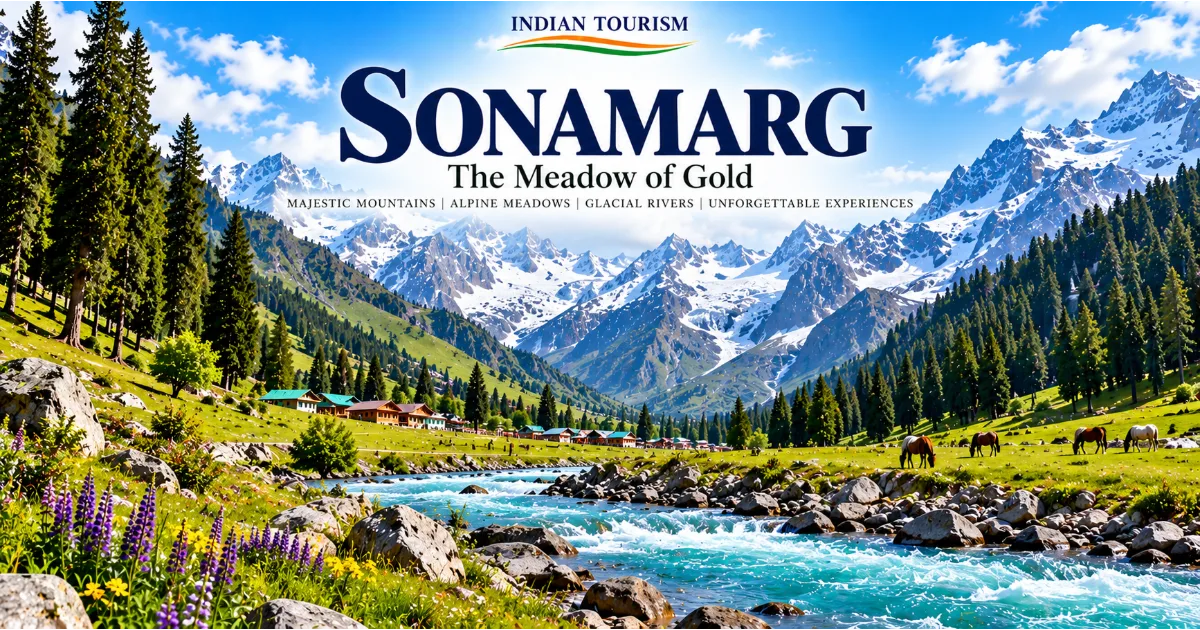
Discover the Golden Meadow of Kashmir
Sonamarg is one of the most spectacular mountain destinations in Jammu and Kashmir, known for its snow-covered Himalayan peaks, green alpine meadows, flowing rivers, pine forests, and dramatic high-altitude landscapes. Located in the Ganderbal district of the Kashmir Valley, Sonamarg attracts travellers who want to experience the grandeur of the Himalayas and discover a different side of Kashmir's natural beauty. Its name is commonly translated as the Meadow of Gold, a description often associated with the appearance of its landscape during certain seasons, when sunlight illuminates the surrounding meadows and mountain slopes.
Unlike destinations known primarily for historic monuments or urban attractions, Sonamarg is celebrated for its natural surroundings. The Sindh River flows through the wider landscape, while towering mountains and forested slopes create impressive views along the approach to the destination. During warmer months, green meadows and accessible mountain routes attract nature lovers, photographers, families, and outdoor enthusiasts. In winter, snow and severe weather can transform the region and affect access to many areas.
Sonamarg is also important because of its location along routes leading towards higher Himalayan terrain and the historic mountain corridor towards Ladakh. The surrounding region has long been significant for movement between valleys and high-altitude areas. Today, its scenery and location make it an important destination for travellers exploring the wider Kashmir Valley, although road conditions and seasonal access must always be considered.
A visit to Sonamarg can be peaceful, adventurous, or educational depending on how the journey is planned. Some visitors come for scenic drives and photography, while others are interested in mountain walks, authorised excursions, river landscapes, and opportunities to observe the natural environment. The destination can also form part of a honeymoon or family holiday, provided the itinerary suits the weather, accessibility, and needs of the travellers.
This article is the fifth post in the Indian Tourism series and follows the guides to Jammu and Kashmir, Srinagar, Gulmarg, and Pahalgam. It explores Sonamarg's geography, major attractions, best visiting seasons, mountain experiences, accommodation, food, travel budgets, family holidays, honeymoon possibilities, and responsible tourism. The aim is to help readers understand what makes Sonamarg special and how to plan a rewarding visit without overlooking the realities of mountain travel.
Understanding Sonamarg and Its Mountain Landscape
Location and Geographical Character
Sonamarg lies in the Himalayan region of Jammu and Kashmir and is surrounded by mountains, valleys, rivers, and alpine landscapes. Its geographical setting creates dramatic contrasts between the green areas around the main settlement and the higher mountain slopes, where snow may remain for longer periods. The scenery changes considerably with elevation, which means that visitors can encounter very different conditions during the same journey.
The Sindh River is an important feature of the wider landscape. Its flowing water, rocky banks, and surrounding vegetation contribute to the area's natural character. Mountain views are another major attraction, with steep slopes and snow-covered peaks creating an impressive setting for photography and sightseeing. The surrounding meadows provide open spaces where travellers can appreciate the landscape when access and weather conditions permit.
Sonamarg's geography also influences transport. Mountain roads can be affected by snowfall, rainfall, landslides, maintenance work, and traffic. Higher areas may be inaccessible during certain periods, and travel times can change depending on the conditions. Visitors should avoid planning a tightly scheduled journey and should check current road information before leaving Srinagar or another starting point.
Why Sonamarg Is Worth Visiting
Sonamarg offers a different experience from Srinagar's lakes and historic gardens or Gulmarg's established winter sports facilities. Its main appeal lies in the dramatic mountain scenery, open valleys, rivers, and opportunities to experience a high-altitude environment. Visitors can spend time enjoying viewpoints, exploring accessible areas, photographing the landscape, or arranging guided excursions where permitted.
The destination can appeal to both active travellers and those who prefer a relaxed holiday. Nature lovers may enjoy observing the mountains and rivers, while photographers can capture the changing light across the landscape. Families may appreciate scenic drives and accessible viewpoints, although the suitability of specific excursions depends on age, mobility, and local conditions.
Sonamarg is also a useful addition to a longer Kashmir Valley itinerary. Travellers may combine it with Srinagar and other destinations, but they should allocate sufficient time for the road journey. A visit should not be planned solely around the distance shown on a map because mountain travel often requires more time than expected.
The Sindh River: A Defining Feature of Sonamarg
River Scenery and Natural Beauty
The Sindh River is one of the important natural features of the Sonamarg region. Its water flows through a landscape of mountains, rocks, vegetation, and settlements, creating scenic viewpoints along parts of the surrounding area. The river's appearance changes with the season, water levels, sunlight, and weather, making it an appealing subject for photography.
During warmer months, visitors may find opportunities to appreciate the river from designated viewpoints and suitable paths. The surrounding mountains provide a striking background, and the sound of flowing water contributes to the atmosphere of the landscape. Travellers who enjoy nature photography may wish to allow time for stops rather than viewing the area only through the windows of a vehicle.
However, the river should be approached with care. Mountain rivers can have strong currents, cold water, slippery rocks, and rapidly changing water levels. Visitors should remain in permitted areas and follow local safety instructions. Entering the water or approaching unstable banks can be dangerous, even when the river appears calm.
Responsible River Tourism
The river environment supports local ecosystems and contributes to the appeal of the region. Litter, careless vehicle activity, and unmanaged tourism can damage the surrounding landscape. Visitors should carry waste back to suitable disposal points, avoid throwing anything into the water, and respect restrictions near riverbanks.
Activities involving the river should only be undertaken where they are permitted and supported by appropriate safety arrangements. Travellers should check current conditions and choose authorised providers when organised activities are available. The safest way to enjoy the river may simply be to observe it from a suitable viewpoint and appreciate the landscape.
Thajiwas Glacier: Snow and High Mountain Scenery
Understanding the Glacier Area
Thajiwas Glacier is one of the best-known attractions associated with Sonamarg. The area is famous for its mountain scenery and the possibility of encountering snow during suitable periods. It attracts visitors interested in photography, mountain landscapes, and the experience of reaching an area where snow and ice remain part of the environment.
Access to the glacier area depends on the season, weather, local arrangements, and the condition of the route. During warmer periods, some visitors arrange guided excursions from Sonamarg, while conditions may be very different during winter or periods of heavy snowfall. The presence and extent of snow vary from year to year, so travellers should not assume that a particular experience will be available on a specific date.
A visit should be planned with attention to the actual route and the level of physical effort required. Travellers should ask local authorities or authorised guides about current access, safety arrangements, and suitable clothing before setting out. A route that appears straightforward in photographs may involve uneven ground, cold conditions, or changing weather.
Safety Around Snow and Ice
Snow and ice can make walking difficult, especially for visitors who are unfamiliar with mountain terrain. Slippery surfaces, hidden rocks, unstable snow, and changes in visibility may create risks. Visitors should use suitable footwear and avoid entering restricted or unstable areas.
Families travelling with children should be particularly careful. Children may be attracted to snow and streams, but they should remain supervised and should not be allowed to wander towards steep slopes or unfamiliar terrain. Older travellers and people with mobility limitations should assess the actual walking requirements before booking an excursion.
Visitors should also remember that mountain weather can change quickly. A clear morning does not guarantee good conditions throughout the day. Local guidance should take priority over a fixed sightseeing plan, and excursions should be postponed when conditions are unsuitable.
Zoji La: The Mountain Pass Towards Ladakh
Historical and Geographical Importance
Zoji La is an important mountain pass in the western Himalayas, connecting the Kashmir Valley with routes towards the Ladakh region. Its geographical position has made it significant for transport and movement across the mountains. The surrounding landscape features steep slopes, high mountain terrain, and dramatic views that illustrate the challenges of travel in the Himalayas.
The pass is associated with the broader journey between the Kashmir Valley and Ladakh, rather than being a simple sightseeing point within Sonamarg itself. Travellers should understand that access depends on road status, weather, security arrangements, and official restrictions. It should not be assumed that the route is open throughout the year.
The pass is particularly relevant to travellers planning longer road journeys. Mountain routes can be affected by snowfall, ice, landslides, and road maintenance, and conditions may change rapidly. Visitors should check official updates and should not attempt to travel through closed or restricted sections.
Mountain Travel and Safety Considerations
The road towards high mountain passes can involve steep gradients, narrow sections, limited stopping areas, and changing weather. Travellers should use appropriate transport, follow traffic instructions, and avoid stopping in unsafe locations for photographs. Visibility may deteriorate quickly, and roadside conditions can be challenging.
Those travelling towards Ladakh should plan the journey as a separate travel segment with suitable time allowances. The requirements of a high-altitude road trip differ from those of a short excursion around Sonamarg. Fuel, food, accommodation, road conditions, and emergency arrangements should be considered carefully.
The mountain landscape is impressive, but safety must take priority over reaching a particular viewpoint. Travellers should remain flexible and be prepared to change their plans when road or weather conditions require it.
Meadow Experiences and Scenic Viewpoints
Discovering the Open Landscapes
Sonamarg is known for open meadow areas surrounded by mountains and forests. During warmer months, the landscape can become green and inviting, providing opportunities for photography, gentle walks, and enjoying the scenery. The contrast between the meadows and higher snow-covered peaks is one of the area's most distinctive visual features.
The experience depends on the season and the exact location. Some areas are relatively accessible, while others require local transport, walking, or guided arrangements. Visitors should confirm whether a particular meadow or viewpoint is open and suitable for their travel dates.
A relaxed visit can be more rewarding than trying to reach every possible viewpoint. Travellers may choose a few accessible locations and spend time observing the landscape, enjoying the river scenery, and photographing the mountains. This approach reduces unnecessary travel and leaves room for changes in weather.
Photography in Sonamarg
Sonamarg offers a wide variety of subjects for photographers, including mountain peaks, river bends, forests, meadows, clouds, and changing seasonal colours. Early morning and late afternoon may provide attractive light, although visibility and weather influence the result.
Photographers should choose safe stopping places and avoid stepping into traffic lanes or unstable terrain to obtain a better view. Drone use may be restricted in particular areas, so visitors should check current rules before operating one. Photography should never take priority over personal safety or local instructions.
Visitors should also respect the privacy of local residents. Permission should be requested before taking close photographs of people, homes, or private activities. Responsible photography allows travellers to document the region without disturbing its communities or natural environment.
Best Time to Visit Sonamarg
Spring: April to May
Spring is a transitional season in Sonamarg. As temperatures rise, some lower areas begin to turn green, while snow may remain on higher slopes. The contrast between fresh vegetation and snow-covered peaks can create beautiful scenery for visitors interested in photography and mountain landscapes.
Access conditions vary considerably according to winter snowfall and spring weather. Some higher routes or excursion areas may remain closed, while other locations gradually become accessible. Travellers should check current road and attraction information rather than relying only on calendar dates.
Temperatures can still be cold, particularly in the morning and evening. Layered clothing, suitable footwear, and preparation for rain or changing weather are useful during this period.
Summer: June to August
Summer is often a popular period for visiting Sonamarg because lower areas may offer green meadows, flowing rivers, and more accessible sightseeing opportunities. Travellers can enjoy scenic drives, mountain views, and authorised excursions where conditions permit.
The destination may become busy during peak holiday periods, and accommodation availability can vary. Visitors should arrange transport and accommodation in advance when possible and allow enough time for the journey from Srinagar.
Summer does not eliminate mountain weather risks. Rain, strong winds, and sudden changes in temperature can affect excursions. Visitors should check forecasts before setting out and should avoid continuing into higher terrain when conditions deteriorate.
Autumn: September to October
Autumn can offer cooler temperatures, clearer views on suitable days, and a quieter atmosphere compared with peak summer periods. The surrounding landscape may display seasonal changes in vegetation, while higher mountains can retain snow depending on weather conditions.
This period may appeal to travellers who prefer sightseeing and photography without the busiest summer crowds. However, some facilities or excursion arrangements may operate differently as the season progresses. Visitors should confirm availability before building an itinerary around a particular activity.
Warm clothing becomes increasingly important as temperatures fall, particularly for early morning outings and time spent at higher elevations.
Late Autumn and Winter: November to March
Late autumn and winter bring much colder conditions to Sonamarg, and snowfall may affect roads and access to surrounding areas. The destination can become difficult to reach during severe weather, and some accommodation or tourist services may operate on a limited basis or close temporarily.
Travellers should not assume that Sonamarg will be accessible in the same way throughout winter. Current road information, official advisories, and local arrangements should guide decisions. If access is restricted, visitors should not attempt to bypass closures.
Winter conditions can be severe in high mountain environments. Anyone planning a visit during this period should have suitable clothing, reliable transport arrangements, and flexible plans. In many cases, a different destination may be more appropriate if the intended activities or routes are unavailable.
Sonamarg for Honeymoon Couples
Sonamarg can be an appealing destination for couples who enjoy mountain scenery, peaceful surroundings, and photography. Its river landscapes, open meadows, and high mountain views create opportunities for a relaxed escape from busy urban life. Couples may enjoy a scenic drive, time spent at accessible viewpoints, and a stay in suitable accommodation when services are operating.
The best honeymoon experience depends on the season. Summer may suit couples who prefer green landscapes and outdoor exploration, while spring and autumn can offer changing scenery and cooler conditions. Winter travel requires much more attention to road access and service availability, and couples should not assume that snow-covered landscapes will always be accessible.
Sonamarg may be combined with Srinagar or other destinations in Kashmir Valley as part of a longer honeymoon itinerary. However, travel time and weather should be considered carefully. A relaxed schedule with enough time for transport, meals, and rest is often more enjoyable than attempting to visit several distant places in a short period.
Couples should compare accommodation facilities, heating arrangements, transport access, meal options, and cancellation policies before booking. A property that suits a summer visit may not provide the same comfort during colder months, so seasonal requirements should be checked directly.
Sonamarg for Family Holidays
Families can enjoy Sonamarg's scenic drives, mountain viewpoints, river landscapes, and accessible meadow areas when conditions permit. The destination can be educational as well as recreational, allowing children to observe rivers, forests, mountains, and changes in the natural environment.
Parents should assess the needs of children and older family members before selecting excursions. Some locations may require walking on uneven ground, while higher areas can be cold even during warmer months. Families should confirm transport arrangements, facilities, and the physical requirements of activities before setting out.
Children should be supervised carefully around rivers, slopes, roads, and snow-covered areas. Visitors should avoid letting children approach unstable riverbanks or wander into unfamiliar terrain. Suitable clothing and regular breaks can help make the experience more comfortable.
A family itinerary should allow enough time for the road journey and should avoid trying to cover too many locations in a single day. If weather or road conditions change, travellers should be willing to shorten the excursion or return earlier than planned.
Adventure and Nature Tourism
Trekking and Guided Excursions
The wider Sonamarg region offers access to mountain terrain that attracts trekking enthusiasts and nature lovers. Routes differ in distance, elevation, difficulty, and seasonal availability. Some are suitable only for experienced trekkers or require authorised guides and specific arrangements.
Visitors should choose routes according to their fitness, experience, and the current conditions. They should check whether permits or other permissions are required and should never assume that an unmarked route is safe simply because other visitors have used it.
Proper footwear, weather-appropriate clothing, drinking water, navigation arrangements, and a realistic return plan are essential. Mountain weather can change quickly, so trekkers should be prepared to cancel or modify their plans when necessary.
Wildlife and Natural Observation
The mountain and forest environments around Sonamarg support natural habitats that deserve careful protection. Visitors may enjoy observing birds, vegetation, and other aspects of the landscape, although sightings depend on location, season, and conditions.
Wildlife should never be approached, fed, or disturbed for photographs. Visitors should follow local guidance, remain on suitable routes, and avoid leaving waste behind. Nature tourism is most rewarding when it allows observation without damaging the environment.
Responsible outdoor activities also involve respecting the limits of the landscape. Fragile meadows, riverbanks, and mountain slopes can be damaged by unmanaged foot traffic or careless vehicle use. Travellers should choose activities that minimise environmental impact.
Local Culture, Food and Hospitality
Food Experiences Around Sonamarg
Food options in and around Sonamarg may include Kashmiri dishes, familiar Indian meals, breads, tea, and seasonal preparations served by local establishments. The range of options can be more limited than in Srinagar, particularly in remote areas or outside the main travel season.
Visitors interested in Kashmiri cuisine may encounter dishes such as rogan josh, yakhni, dum aloo, rice preparations, and traditional teas, depending on the establishment. Recipes and availability vary, so travellers should ask about ingredients and preparation if they have dietary restrictions.
It is sensible to choose clean establishments and use safe drinking water. Those travelling on longer mountain excursions should consider carrying suitable snacks and water because food services may not be available at every stop.
Local Communities and Regional Traditions
Sonamarg is more than a scenic landscape. Local communities, transport providers, guides, accommodation operators, and small businesses contribute to the visitor experience. Respectful interaction with residents can help travellers better understand the region and support local livelihoods.
Visitors should ask permission before photographing people, homes, or private activities. They should also follow local customs and respect restrictions around religious or culturally significant places. Buying local products and using reputable local services can help tourism income reach the communities that support the destination.
Travellers should remember that the availability of services and facilities can vary between settlements. Patience, respectful communication, and realistic expectations are important, particularly when weather or road conditions affect local operations.
Accommodation and Budget Planning
Where to Stay
Accommodation options around Sonamarg vary by location, season, facilities, and demand. Travellers may find hotels, guesthouses, and other properties suited to different budgets when services are operating. Availability can change considerably during colder months or periods when access is restricted.
Visitors should confirm that their chosen accommodation will be open for the planned dates. Heating arrangements, meal availability, transport access, cancellation terms, and essential facilities should be checked before booking. A property that operates during the summer season may have different services during colder periods.
Travellers who want to explore several attractions should also consider the location of their accommodation and the time required to reach planned excursion points. Choosing a convenient base can reduce unnecessary travel and allow more time to enjoy the landscape.
Estimating Travel Costs
The total cost of a Sonamarg trip depends on transport, accommodation, meals, local excursions, guided activities, and the season. Costs may rise during popular travel periods, while some activities may require additional equipment or authorised local transport.
A practical budget should include a reserve for unexpected delays, weather-related changes, and additional transport. Visitors should confirm current charges before booking excursions and should understand exactly what is included in a quoted price.
Travellers on a limited budget can focus on accessible scenic viewpoints and nature experiences rather than attempting every excursion. A carefully planned trip can be rewarding without requiring a large number of paid activities.
How to Plan a Sonamarg Itinerary
A short visit may focus on the main settlement, the Sindh River, accessible viewpoints, and the surrounding mountain scenery. Travellers with additional time may consider an excursion towards Thajiwas Glacier or other permitted locations, depending on current access and weather conditions.
Visitors travelling from Srinagar should allow sufficient time for the road journey and should avoid scheduling important connections immediately afterwards. Traffic, roadworks, weather, and local restrictions can all affect travel times.
Sonamarg may be combined with other destinations in the Kashmir Valley, but the order should depend on the route, season, and current conditions. Travellers should not attempt to combine too many distant attractions into a single day. A flexible itinerary with time for meals, rest, and changing weather is generally more comfortable.
Before departure, visitors should verify road status, attraction availability, accommodation arrangements, and any applicable restrictions. This is especially important when the planned visit involves high-altitude areas or travel during colder months.
Responsible Tourism and Environmental Protection
Sonamarg's appeal depends on its mountains, meadows, rivers, and forests. These environments can be vulnerable to litter, pollution, vegetation damage, and unmanaged visitor pressure. Visitors should dispose of waste responsibly, avoid single-use plastics where practical, and respect designated routes.
The river environment requires particular care. Litter and other waste can affect water quality and the surrounding ecosystem, while careless activity near the banks can create safety risks. Visitors should observe the landscape from suitable areas and follow local instructions.
Supporting local accommodation providers, guides, transport operators, and food businesses can help tourism benefit the surrounding communities. Visitors should agree on charges before booking services and choose providers who demonstrate responsible practices.
Travellers should also follow official advisories and local rules. If roads are closed or an excursion is considered unsafe, changing plans is the responsible choice. Protecting the environment and prioritising safety help ensure that Sonamarg remains a valuable destination for future generations.
Conclusion: Experience the Majesty of Sonamarg
Sonamarg is one of the most striking mountain destinations in Jammu and Kashmir, offering a combination of high Himalayan scenery, flowing rivers, open meadows, forested slopes, and opportunities for nature-based travel. The Sindh River contributes to the region's character, while the Thajiwas Glacier area and the wider mountain landscape provide memorable experiences when access and conditions permit.
The best time to visit depends on what travellers hope to experience. Spring and summer may offer greener landscapes and more opportunities for sightseeing, autumn can bring cooler weather and changing scenery, while winter may involve severe conditions and restricted access. Current road information and local guidance should always take priority over general seasonal expectations.
Sonamarg can be part of a romantic holiday, a family trip, a photography journey, or a wider exploration of Kashmir Valley. A rewarding visit depends on realistic planning, appropriate clothing, suitable accommodation, awareness of mountain conditions, and respect for local communities and the natural environment.
This is the fifth post in the Indian Tourism series. The next post will explore Jammu city, introducing its historic attractions, temples, markets, local cuisine, ideal visiting seasons, family travel possibilities, and practical planning. We will continue covering Jammu and Kashmir one destination at a time before moving to the next state or Union Territory.
#IndianTourism #SonamargTourism #Sonamarg #JammuAndKashmir #KashmirTourism #ThajiwasGlacier #SindhRiver #ZojiLa #ExploreIndia #DiscoverIndia #HimalayanTravel #MountainTourism #NatureTourism #FamilyTravel #HoneymoonDestinations #AdventureTourism #ResponsibleTourism

