
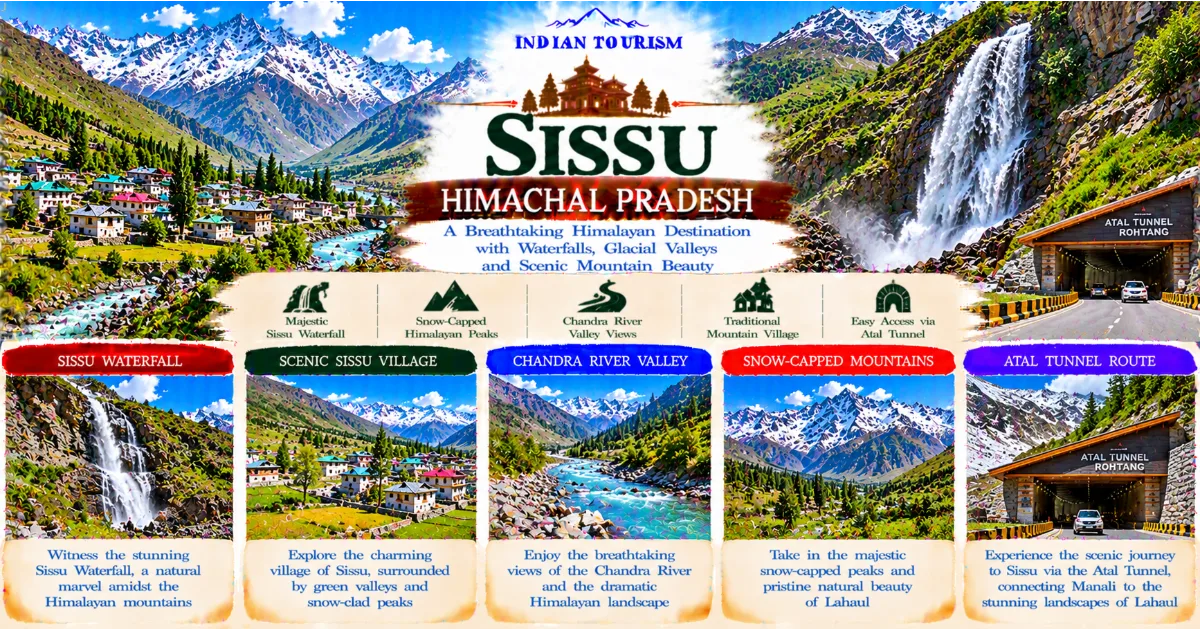
Discover Sissu, a Himalayan Village Surrounded by Extraordinary Beauty
Sissu is one of the most scenic destinations in the Lahaul region of Himachal Pradesh, a mountain village known for its dramatic landscapes, powerful waterfalls, glacial surroundings and traditional Himalayan character. Located along the Manali to Leh highway, beyond the Atal Tunnel from Manali, Sissu has become an increasingly popular destination for travellers who want to experience the beauty of the high Himalayas without immediately undertaking a long journey towards Ladakh.
The village is surrounded by steep mountains, rocky slopes, cultivated land and the broad valley of the Chandra River. Its landscape changes dramatically with the seasons. During warmer months, green fields and vegetation appear around the settlement, while distant mountain slopes may retain snow. In winter, the region can experience heavy snowfall, transforming the village into a spectacular white landscape when road access and weather conditions permit.
Sissu is particularly known for Sissu Waterfall, which descends from the mountain slopes above the village. The waterfall becomes a striking feature of the landscape during the warmer months, when snowmelt and seasonal water flow feed the surrounding streams. The village also provides access to scenic viewpoints, riverside landscapes and mountain routes that reveal the character of Lahaul.
Unlike the more heavily forested areas around Shimla and Manali, Sissu presents a landscape shaped by the transition into the high-altitude cold desert. The mountains are rugged, vegetation varies with elevation, and settlements are closely connected to the availability of water and cultivable land. The result is a destination that combines natural beauty with a strong sense of place.
Sissu can suit families, couples, photographers, road-trip travellers and visitors who want to explore the region at a relaxed pace. However, its growing popularity also means that weekends and holiday periods can become busy. Travellers who want to appreciate the quieter side of the village should consider visiting outside peak hours and exploring respectfully.
A successful trip requires attention to weather, altitude and road conditions. The region lies at a substantial elevation, and the surrounding mountains can experience sudden changes in weather. With sensible preparation, Sissu offers a rewarding introduction to the landscapes and culture of Lahaul.
Where Is Sissu Located?
Sissu is located in the Lahaul region of Himachal Pradesh, within Lahaul and Spiti district. The village lies along the Chandra River valley on the Manali to Leh road corridor, making it an accessible destination for many travellers entering Lahaul through the Atal Tunnel.
The settlement is surrounded by high mountains and steep valley slopes. Its location provides a clear example of how Himalayan villages develop around river systems, transport routes and relatively level areas suitable for agriculture.
Sissu has traditionally been a mountain settlement, but improved road connectivity has made it easier for visitors from Manali and other parts of Himachal Pradesh to reach the village. The Atal Tunnel has significantly changed travel access between Manali and Lahaul, although conditions beyond the tunnel still depend on weather, road maintenance and seasonal restrictions.
The village is often included in short trips from Manali, but travellers should not underestimate the effect of altitude. Even when the road journey is relatively straightforward, visitors arriving from much lower elevations may need time to adjust.
Sissu can also be used as a stopping point on a longer journey towards Keylong and other parts of Lahaul. Travellers planning to continue towards higher mountain passes should confirm current road access and allow enough time for delays.
The village's location makes it especially attractive to people who want to experience the high Himalayas without committing to a long expedition. Its scenery, waterfall and surrounding landscape provide enough variety for a rewarding short visit, while longer stays allow more time for cultural exploration and photography.
Sissu Waterfall: The Most Famous Natural Attraction
Sissu Waterfall is one of the defining attractions of the village. Falling from a steep mountain slope, the waterfall creates a dramatic visual feature against the rocky terrain and surrounding vegetation.
The waterfall's appearance varies according to season, temperature and water flow. During the warmer months, melting snow and seasonal runoff can contribute to a stronger flow. In colder periods, water may reduce or freeze in sections, depending on local conditions.
Visitors often approach the waterfall for photography and short walks. The surrounding landscape offers opportunities to observe the contrast between moving water, exposed rock and the high mountain environment.
The waterfall is particularly appealing because it can be appreciated without undertaking a demanding expedition. However, the route and viewing conditions may vary, and visitors should follow marked paths or local instructions rather than trying to approach the water from unsafe positions.
Wet rocks can be slippery, and the terrain around waterfalls may be unstable. Avoid climbing beyond designated areas or standing directly beneath steep slopes. Water flow can also change quickly following rainfall or snowmelt.
The best experience often comes from allowing time to observe the waterfall from a safe viewpoint. Visitors who arrive early may find it easier to enjoy the scenery before larger groups gather.
Photographers should be prepared for changing light and moisture. Protect cameras and phones from spray, and avoid stepping onto unstable rocks for a closer image.
Sissu Waterfall is more than a photographic attraction. It illustrates the relationship between snow, water and the mountain environment that sustains life in the Lahaul valley.
Sissu Lake: A Peaceful Landscape Near the Village
Sissu Lake is another feature associated with the area's visitor experience. The lake and its surroundings offer a scenic contrast to the waterfall, with water reflecting the nearby landscape when conditions are calm.
The appearance of the lake varies according to season and weather. In warmer months, it may be surrounded by vegetation and mountain scenery, while colder conditions can change the water's appearance and affect access to nearby areas.
Visitors should confirm current access arrangements because lakeside paths and recreational areas may be affected by maintenance, weather or local restrictions. Do not assume that every part of the shoreline is safe to enter.
The lake provides opportunities for photography, relaxed walks and quiet observation. Reflections of the mountains can create attractive compositions, particularly when wind is limited.
As with the waterfall, safety should remain a priority. Avoid entering the water, walking onto ice or approaching unstable banks. Cold mountain water can be dangerous even when the surface appears calm.
The lake environment should be kept clean. Carry rubbish back to appropriate disposal points and avoid disturbing vegetation or wildlife.
For travellers who prefer a slower pace, a visit to the lake can complement the waterfall and village exploration. Together, these places provide a fuller picture of Sissu's natural landscape.
The Chandra River and the Valley Around Sissu
The Chandra River is a major feature of the landscape surrounding Sissu. Its waters flow through the broad mountain valley, creating a natural corridor that connects settlements and shapes the region's geography.
The river's flow changes with snowmelt, rainfall and seasonal temperatures. In warmer months, water levels can rise as snow and ice melt at higher elevations. The river may appear calm from some viewpoints, but strong currents and unstable banks can create serious hazards.
Visitors should observe the river from safe locations and avoid entering the water. Do not attempt to cross at unmarked places or walk over slippery rocks near the edge.
The valley surrounding the river contains a mixture of rocky slopes, cultivated areas and settlements. This combination reflects the way communities have adapted to the high-altitude environment, using suitable land for agriculture while living close to essential water sources.
The river is also part of the wider ecological system of Lahaul. It supports downstream water networks and contributes to the natural character of the valley.
Photographers can capture the river against mountain backdrops, particularly when the light reveals different textures across the surrounding slopes. However, vehicles should never be stopped in dangerous road locations for photographs.
The Chandra River helps define Sissu's identity. It is both a striking natural feature and a reminder of the importance of water in the life of the Himalayan region.
Sissu Village: Traditional Life in the High Himalayas
Sissu is more than a scenic stop. It is a living village where residents maintain homes, farms, local businesses and community traditions within a demanding mountain environment.
The settlement contains traditional and newer buildings, agricultural plots and local roads. The arrangement of homes reflects the geography of the valley and the availability of relatively level land.
During the warmer months, visitors may see residents working in fields, caring for livestock or carrying out household tasks. These activities are part of everyday life and should not be treated as tourist performances.
Walking through publicly accessible areas can help visitors appreciate the village's character. Observe the architecture, the relationship between homes and fields, and the way the surrounding mountains influence settlement patterns.
Ask permission before photographing residents or entering private courtyards. Respect agricultural land and avoid walking through crops.
Tourism has created additional opportunities for some local households through accommodation, food services, transport and small businesses. Visitors can contribute by using local services and treating residents respectfully.
Sissu's growing popularity brings both benefits and challenges. Increased visitor spending can support livelihoods, but traffic, litter and pressure on local infrastructure can affect the village. Responsible travel helps preserve the qualities that make Sissu attractive.
The Atal Tunnel: The Road Connection That Changed Access to Lahaul
The Atal Tunnel is an important part of the modern travel experience in Sissu. Built beneath the Rohtang region, the tunnel provides a road connection between the Manali side and the Lahaul valley, reducing dependence on the high Rohtang Pass route for many journeys.
Before the tunnel opened, access to Lahaul from Manali was strongly influenced by the seasonal condition of Rohtang Pass. Snowfall and difficult weather could make travel challenging and restrict road access for extended periods.
The tunnel has improved connectivity for residents, businesses and travellers. It has made destinations such as Sissu more accessible for shorter visits, including day trips from Manali when road and weather conditions permit.
However, improved access does not remove every mountain travel challenge. Roads beyond the tunnel may still be affected by snowfall, landslides, repairs and other hazards. Visitors should check current conditions before departure.
The tunnel itself is a major piece of infrastructure and should be treated as an operational road rather than a place for stopping to take photographs. Follow traffic regulations, maintain safe driving behaviour and respect any restrictions.
The Atal Tunnel has helped change tourism patterns in Lahaul, bringing more visitors into areas that were once harder to reach. This makes responsible visitor behaviour increasingly important for protecting the region's environment and local quality of life.
Mountain Views and Scenic Photography Around Sissu
Sissu offers a variety of photographic subjects, from broad mountain panoramas to intimate details of village life. The surrounding slopes, river valley, waterfall and seasonal vegetation create a landscape that changes throughout the day.
Early morning can offer soft light and fewer visitors at popular viewpoints. Late afternoon may bring warmer colours to the mountains, while clouds can create dramatic patterns across the valley.
The best photographic locations depend on current access and safety conditions. Visitors should remain on established paths and avoid standing close to exposed edges or unstable slopes.
Photographing the waterfall may require protection for camera equipment because of spray and moisture. A lens cloth and waterproof cover can be useful.
Landscape photography should not come at the expense of safety. Never stop a vehicle on a narrow road or blind bend, and avoid walking onto loose rock for a more dramatic viewpoint.
Village photography requires sensitivity. Ask before taking portraits, respect private property and avoid interrupting people who are working.
Sissu's appeal lies in the combination of natural and human elements. A photograph that includes the village, cultivated fields and surrounding mountains can tell a more complete story than a landscape image alone.
Best Time to Visit Sissu
Sissu can be visited in different seasons, but the best time depends on weather, road conditions and the kind of experience you want.
Spring: March to April
Spring brings a gradual transition from winter conditions. Temperatures begin to rise, but snow and ice may remain in parts of the surrounding region.
The waterfall's flow may vary according to melting snow and seasonal conditions. Visitors should check road access and prepare for cold mornings and evenings.
Summer: May to June
Summer is often a practical time to explore Sissu. Roads are generally more favourable than in deep winter, and the landscape may become greener around cultivated areas.
Visitors can explore the village, enjoy the waterfall when access is safe and photograph the surrounding mountains. Daytime conditions may be pleasant, but temperatures can drop after sunset.
Monsoon: July to September
Lahaul lies in a relatively dry part of Himachal Pradesh compared with many lower and southern areas, but monsoon weather can still affect roads and mountain travel.
Heavy rainfall elsewhere along the route may trigger landslides or road disruptions. Travellers should monitor weather forecasts and official road advisories.
Autumn: September to October
Autumn can offer clear mountain views and cooler conditions. It is a rewarding time for photography and quiet exploration, although temperatures fall as winter approaches.
Visitors should confirm accommodation availability and road conditions before travelling.
Winter: November to February
Winter can transform Sissu into a snow-covered destination. The scenery may be spectacular, but snowfall, ice and severe cold can also affect access.
Road conditions can change quickly, and travel may be restricted during heavy snowfall. Do not travel solely on the assumption that a popular winter destination will always be accessible.
For many visitors, late spring through early autumn offers a practical balance between access and sightseeing. Winter trips should be planned only after checking current road status, weather and local advice.
How to Reach Sissu
Sissu is connected by road and is commonly approached from Manali through the Atal Tunnel when the route is open.
By Road from Manali
The road journey from Manali passes through the Atal Tunnel and continues into Lahaul towards Sissu. The journey can be relatively short compared with older routes through Rohtang Pass, but actual travel time depends on traffic, weather and road conditions.
During weekends and holidays, congestion can affect the journey. Start early where practical and avoid driving in unsuitable conditions.
By Road from Keylong
Sissu can also be included in a wider Lahaul itinerary that involves Keylong. Travellers should check current road conditions and allow enough time for stops and unexpected delays.
By Bus
Public transport options may vary by season and local operating arrangements. Confirm current services before planning your journey, particularly if you need to return to Manali on the same day.
By Train
Sissu does not have a railway station. Travellers arriving by train must continue by road from a suitable rail connection.
By Air
There is no airport in Sissu. Visitors arriving by air must arrange onward road transport from an airport suitable for their itinerary.
Local Transport
Taxis and local vehicles may be available, but availability can vary with season and demand. Agree on fares, waiting time and return arrangements before beginning a trip.
Mountain roads require patience. Keep extra time in your schedule and avoid making tight connections after visiting Sissu.
Where to Stay in Sissu
Accommodation options in Sissu and the surrounding area may include guesthouses, homestays, small hotels and seasonal lodging properties. Facilities vary, so travellers should confirm details before booking.
Ask about heating, hot water, meals, parking and the availability of transport. These details are particularly important in colder months.
Homestays can provide an opportunity to learn about local food and everyday life. Visitors should communicate their requirements clearly and respect household routines.
During popular travel periods, accommodation may fill quickly, especially when road access is favourable and snow attracts visitors. Advance reservations are sensible.
Outside the main season, confirm that your chosen property is operating and that road access is suitable.
If you are travelling with older adults or people who have difficulty walking, ask about stairs, room access and the distance to nearby services.
Supporting locally operated accommodation helps tourism contribute to the community. Use water carefully, dispose of waste responsibly and avoid unnecessary noise.
Food and Local Dining in Sissu
Food options in Sissu may include small restaurants, roadside eateries, guesthouses and homestays. Menus vary according to the season, supply availability and the type of establishment.
Visitors may find familiar North Indian dishes alongside warming foods associated with the wider Himalayan region. Soups, noodles, rice, vegetables and hot beverages can be welcome after time spent outdoors in cold weather.
Local menus may be more limited than those in Manali, particularly outside the busiest travel periods. Travellers should not assume that every restaurant will offer a large selection.
If you have dietary restrictions or allergies, communicate them clearly before ordering. Carry snacks for longer journeys, particularly if you plan to continue deeper into Lahaul.
Drink safe water and avoid assuming that untreated water from streams is suitable for consumption. The dry mountain climate can make regular hydration important.
Eating at local establishments provides a way to support small businesses and experience regional hospitality. Avoid leaving food packaging or other rubbish in the village or surrounding landscape.
A One-Day Sissu Itinerary
A one-day visit can provide a rewarding introduction to the village and its main natural attractions.
Begin the day by travelling from Manali through the Atal Tunnel, after confirming that the route is open and suitable for travel. On arrival, explore the village and enjoy the mountain scenery from safe public locations.
Visit Sissu Waterfall if the route is accessible and conditions permit. Allow time for photography and observation without approaching unsafe edges or wet rocks.
Continue to the lake or another accessible viewpoint, depending on current access and local guidance. Keep the schedule flexible because weather can change quickly.
Arrange lunch at a local establishment and spend some time exploring publicly accessible parts of the village. Observe the traditional and newer buildings, agricultural areas and surrounding mountain landscape.
Begin the return journey with sufficient daylight and time for traffic or road delays. Avoid attempting additional remote excursions if they would make the day unnecessarily rushed.
A Three-Day Sissu and Lahaul Itinerary
Three days allow visitors to explore Sissu more comfortably and include another destination in the wider Lahaul region.
On the first day, travel from Manali through the Atal Tunnel and settle into your accommodation. Keep activity light after arrival and allow time to adjust to the altitude.
On the second day, explore Sissu Waterfall, the lake where accessible and the village. Enjoy photography and learn about local life without rushing between locations.
On the third day, consider travelling towards Keylong or another accessible destination in Lahaul, depending on road conditions and your onward route. Confirm transport arrangements and allow enough time for the return journey.
This itinerary should be adapted according to weather, altitude and road access. If conditions deteriorate, prioritise safety over completing every planned stop.
A Five-Day Journey Through Lahaul
A five-day trip can provide a deeper introduction to the Lahaul region, with Sissu as one of the main stops.
Spend the first day travelling from Manali to Sissu and resting after arrival. Explore only accessible areas near your accommodation.
Use the second day to visit the waterfall, lake and village. Allow time for photography and quiet observation.
On the third day, continue towards Keylong or another suitable destination in Lahaul. Explore the town and learn about the region's cultural and geographical setting.
The fourth day can be used for a carefully planned visit to a nearby monastery or village, depending on current road conditions. Ask locally about access and avoid travelling into remote terrain without appropriate preparation.
On the fifth day, begin your return journey or continue along your wider itinerary. Allow extra time for mountain road delays.
This is a flexible framework rather than a fixed schedule. The final plan should depend on weather, transport availability and the comfort of everyone travelling.
Responsible Tourism in Sissu
Sissu's growing popularity makes responsible tourism increasingly important. Visitors can help preserve the village's natural beauty by following a few basic principles.
Carry rubbish back to appropriate disposal points. Do not leave plastic bottles, food packaging or other waste near the waterfall, lake, river or walking paths.
Respect private property and agricultural land. Ask permission before photographing residents or entering courtyards.
Avoid entering rivers or lakes, particularly during periods of strong flow or unstable weather. Keep a safe distance from waterfall edges and steep slopes.
Use water carefully and avoid unnecessary waste. Mountain communities depend on limited local resources, and visitor demand can place pressure on infrastructure.
Support local accommodation, restaurants and transport providers where possible. Tourism can create valuable income opportunities when visitors respect local customs and livelihoods.
Avoid loud music and disruptive behaviour near homes and natural areas. Follow local instructions, especially when roads or visitor areas are affected by weather.
Responsible travel helps ensure that Sissu remains an attractive destination for residents and future visitors.
High-Altitude Safety and Practical Travel Advice
Sissu lies at a substantial elevation, and visitors arriving from lower areas should pay attention to acclimatisation. Some people may experience headache, nausea, dizziness, fatigue or difficulty sleeping.
Allow time to adjust to the altitude and avoid strenuous exercise immediately after arrival. Severe or worsening symptoms, including breathlessness at rest, confusion or difficulty walking normally, require urgent medical attention and appropriate descent.
Carry essential medication and know how to seek help if needed. Medical services may be limited compared with major towns.
Mountain weather can change rapidly. Carry warm layers even during summer and protect yourself from strong sunlight.
Check road conditions before departure, particularly during winter and periods of heavy rain. Carry drinking water, snacks and essential supplies in case of delays.
Avoid unnecessary night driving on unfamiliar mountain roads. Use experienced drivers where appropriate and always wear seat belts.
Keep your itinerary flexible. Delaying travel because of unsafe conditions is preferable to taking risks in a remote region.
Conclusion: Why Sissu Deserves a Place on Your Himachal Pradesh Travel List
Sissu is one of the most rewarding destinations in the Lahaul region because it combines dramatic mountain scenery, a famous waterfall, river landscapes and a living Himalayan village. Its location beyond the Atal Tunnel has made it more accessible, but the destination still retains the distinctive character of a high-altitude mountain settlement.
The waterfall and surrounding landscape provide memorable opportunities for photography and outdoor exploration, while the village offers insight into how people live in a region shaped by cold winters, limited farmland and seasonal travel.
Sissu can be visited as a short excursion from Manali or included in a longer journey through Lahaul. A longer stay allows travellers to explore more slowly, support local businesses and appreciate the region beyond its most photographed viewpoints.
Preparation remains essential. Weather can change quickly, roads may be affected by snow or landslides, and the altitude requires care. Travellers should confirm access conditions, carry suitable clothing and respect local guidance.
For visitors seeking a beautiful yet accessible introduction to the high Himalayas, Sissu offers a memorable experience. Its combination of waterfall, mountain valley and traditional village life makes it a destination worth exploring with patience and responsibility.
#IndianTourism #Sissu #SissuWaterfall #Lahaul #HimachalPradesh #ChandraRiver #AtalTunnel #HimalayanTravel #MountainVillage #NatureTourism #ExploreHimachal #ResponsibleTourism #IncredibleIndia #HimalayanLandscapes
