
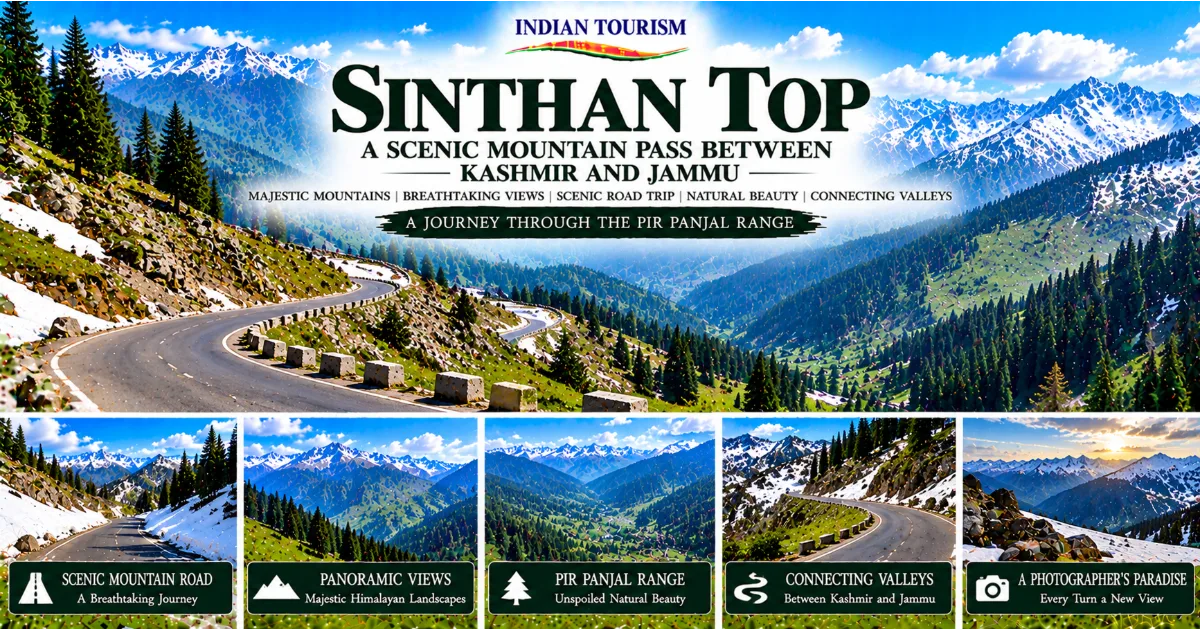
Discovering the High Mountain Beauty of Sinthan Top
Jammu and Kashmir is a region of extraordinary geographical diversity. Its landscapes range from the lakes and gardens of Srinagar to the forests of south Kashmir, the open meadows of remote valleys and the rugged mountain ranges that connect different parts of the Himalayan region. Among these remarkable landscapes, Sinthan Top stands out as a destination for travellers who want to experience dramatic mountain scenery, winding roads and the feeling of travelling high above the surrounding valleys.
Sinthan Top is a mountain pass located in the Pir Panjal range, connecting the Kashmir Valley with the Chenab Valley region. Situated on the route between the Anantnag area of Kashmir and Kishtwar in the Jammu region, the pass is known for its high elevation, sweeping mountain views and changing weather. The road climbs through forested slopes before reaching open terrain where the surrounding peaks and ridges become the main attraction.
Unlike a destination built around a lake, garden or historic monument, Sinthan Top is primarily about the journey and the landscape. The ascent itself reveals changing scenery, from cultivated areas and wooded hillsides to exposed mountain slopes and open viewpoints. On clear days, travellers can appreciate the scale of the surrounding mountains, while clouds and mist can transform the pass into a dramatic, atmospheric setting.
The pass is especially appealing to photographers, road-trip enthusiasts and visitors who enjoy mountain environments. It can also be included in a wider itinerary exploring south Kashmir, Daksum, Kokernag and the mountainous areas towards Kishtwar. However, Sinthan Top requires careful planning because its high elevation makes it sensitive to snow, rain, fog and seasonal road restrictions.
This guide explores Sinthan Top's location, geographical importance, best visiting season, travel arrangements, scenic experiences, photography opportunities and practical safety considerations. It also explains how to plan a responsible visit that respects the mountain environment and the communities connected by this important route.
1. Where Is Sinthan Top Located?
Sinthan Top lies in the Pir Panjal mountain region and forms part of a road connection between the Kashmir Valley and the Chenab Valley area. It is commonly associated with the route linking the Anantnag district in Kashmir with Kishtwar in the Jammu region.
The pass sits high above the surrounding countryside, creating a transition between the lower valleys and the exposed mountain terrain. The road approaches the pass through changing landscapes, with wooded slopes and narrow valleys giving way to more open mountain views.
Its geographical position makes Sinthan Top particularly interesting for travellers who want to understand the physical relationship between Kashmir and the Jammu region. Mountain passes have historically been important because they provide routes through otherwise difficult terrain. Even today, the road has practical significance for travel between communities on either side of the mountains, subject to seasonal accessibility.
Visitors often approach Sinthan Top from the Anantnag side, travelling through the south Kashmir countryside and towards Daksum before continuing along the mountain road. The precise route, journey time and accessibility depend on current road conditions and any local restrictions.
Sinthan Top is not a conventional hill station with a large town, shopping district and extensive visitor facilities. Its attraction is the high mountain setting itself. Travellers should therefore plan their transport, food, clothing and return journey before leaving a larger settlement.
2. Why Sinthan Top Is Famous
Sinthan Top is best known for its high mountain scenery, winding approach road and position along a route connecting two distinct geographical regions of Jammu and Kashmir.
Sweeping Mountain Views
The pass offers expansive views of surrounding mountain ridges and slopes. The landscape changes as the road climbs, gradually revealing more distant peaks and a wider view of the mountainous terrain.
On a clear day, the contrast between the open sky, rocky slopes and distant ridgelines can be particularly striking. When clouds move through the area, the mountains may appear and disappear behind shifting layers of mist.
The view depends heavily on the weather. A visit during fog or heavy cloud may offer limited visibility, while a clear period can reveal the scale of the surrounding terrain.
A High-Altitude Road Journey
The road to Sinthan Top is part of the experience. Travellers pass through forested areas and mountain bends before reaching higher ground.
The ascent offers changing perspectives of the landscape, making it attractive to road-trip enthusiasts. However, the road also demands attention. Sharp bends, variable visibility, steep sections and changing weather mean that drivers must travel cautiously.
Visitors should never stop in the middle of the road or around blind bends for photographs. Use only safe, permitted stopping areas.
A Connection Between Kashmir and Jammu
Sinthan Top is geographically important because it forms part of a mountain route between the Kashmir Valley and the Chenab Valley region. The pass illustrates how mountain terrain shapes travel and connections between settlements.
Its role as a route makes it more than a scenic viewpoint. Road access can be affected by weather and maintenance, so travellers should confirm whether the route is open and suitable for their intended journey.
A Destination for Nature Lovers
Sinthan Top appeals to visitors who appreciate mountain landscapes rather than commercial attractions. The main experiences include observing the scenery, photographing the ridges, enjoying the cooler air and understanding the changing environment as the road climbs.
It is best suited to travellers who enjoy being outdoors and are comfortable with the practical demands of a mountain excursion.
3. Understanding the Geography of Sinthan Top
Sinthan Top is part of the Pir Panjal mountain system, which plays a major role in the geography of Jammu and Kashmir. The mountains influence weather patterns, vegetation, drainage and movement between different valleys.
The Pir Panjal Range
The Pir Panjal range forms a major part of the mountainous landscape surrounding the Kashmir Valley. Its ridges and passes have influenced travel, settlement patterns and the movement of people across the region.
Sinthan Top is one of the places where visitors can observe this mountainous geography at close range. The surrounding slopes rise and fall across a rugged landscape, while the road follows a route through the terrain.
The mountains are not static scenery. Weathering, rainfall, snow and seasonal temperature changes continuously influence their surfaces and drainage systems.
Elevation and Changing Conditions
As the road climbs towards the pass, conditions can differ considerably from those in lower settlements. Temperatures may fall, wind can become stronger and visibility may change quickly.
This difference is one reason the destination feels distinct from the Kashmir Valley below. A sunny day in Anantnag does not guarantee equally clear conditions at Sinthan Top.
Travellers should carry warm layers even during the warmer months and check the forecast for the mountain area rather than relying only on conditions in Srinagar or Anantnag.
Mountain Drainage and Seasonal Water
Rainfall and snowmelt influence streams and drainage channels across the surrounding slopes. Water moves downhill through natural channels, contributing to the rivers and waterways of the wider region.
The condition of these channels changes with the season. Heavy rainfall may increase runoff, while snowmelt can influence water flow during warmer periods.
Visitors should avoid crossing flowing water where conditions are uncertain and should not assume that every natural water source is safe to drink.
Forests and Open Mountain Terrain
Lower sections of the approach may pass through forested landscapes, while higher areas become more exposed. This transition creates a varied journey and provides opportunities to observe changes in vegetation and terrain.
The forested sections contribute to soil stability and provide habitat for wildlife. Higher open areas have different environmental conditions, including stronger wind and more direct exposure to weather.
Respecting both environments is important. Visitors should avoid damaging vegetation, leaving rubbish or driving outside permitted roads.
4. Best Time to Visit Sinthan Top
The best time to visit Sinthan Top depends on road access, weather and the type of mountain experience you want. Because of its elevation, the pass is more sensitive to seasonal conditions than many lower tourist destinations.
Late Spring: The Transition from Winter
Late spring can bring a gradual transition from winter conditions towards more accessible travel. Snow may remain in higher sections, and the surrounding landscape can show a mixture of winter remnants and emerging greenery.
This period may appeal to travellers who enjoy dramatic mountain scenery, but access should never be assumed. Snow, ice or road restrictions may affect the route.
Before travelling, confirm the current road status and ask reliable local sources about conditions at the pass.
Summer: A Popular Season for Mountain Views
Summer is generally the most practical season for many visitors interested in reaching Sinthan Top by road. The weather may be more favourable, and the surrounding landscape can appear greener at lower elevations.
Clear days can provide excellent mountain views, while occasional cloud and rain may still affect visibility. Carry a warm jacket and rain protection, even if conditions are pleasant when you leave the valley.
Summer can also bring more traffic on popular mountain routes. Drive carefully and allow enough time for stops and unexpected delays.
Early Autumn: Clear Air and Changing Colours
Early autumn can offer cooler temperatures and clear mountain views, depending on the weather. The changing colours of the wider countryside may add visual interest to the journey.
This season can suit photographers and travellers who prefer cooler conditions. However, daylight hours shorten, and colder weather can arrive quickly at high elevation.
Check the forecast and begin the return journey early enough to avoid driving unfamiliar mountain roads after dark.
Winter: Snow and Serious Travel Challenges
Winter can transform Sinthan Top into a snow-covered mountain landscape. The scenery may be dramatic, but travel can become difficult or impossible depending on snowfall, ice and local road management.
Do not attempt to reach the pass during winter without current confirmation that the route is open and safe. A road that was accessible earlier may become hazardous after snowfall or a sudden weather change.
Travellers without suitable winter driving experience should avoid attempting difficult mountain routes in severe conditions.
The Best Period for Most Visitors
For a general sightseeing trip, the warmer months are usually the most practical broad planning window. The exact dates when the route is accessible can vary from year to year.
Confirm local road conditions before departure and remain flexible. If access is restricted or visibility is poor, postponing the trip is safer than attempting to reach the summit at any cost.
5. How to Reach Sinthan Top
Sinthan Top is reached by road, with the route chosen according to the starting point and current conditions. Visitors should confirm the status of the pass before beginning the journey.
By Air
Srinagar's Sheikh ul-Alam International Airport is the main air gateway for many travellers visiting the Kashmir Valley. From the airport, visitors can arrange road transport towards Anantnag and the route leading to Sinthan Top.
The journey involves mountain roads, so travel time depends on traffic, weather, road conditions and any stops along the way.
If you are arriving by air, avoid planning an immediate, tightly timed excursion. Allow time to reach your accommodation, check local conditions and arrange a suitable vehicle.
By Rail
Depending on the origin of the trip and current railway services, travellers may use rail connections serving Jammu or the Kashmir Valley. The onward journey to Sinthan Top requires road transportation.
Check current train schedules before booking and confirm the road route separately. Railway access does not guarantee that the mountain pass will be open.
By Road from Srinagar
Travellers approaching from Srinagar generally travel towards Anantnag and continue through the south Kashmir countryside. The route may pass through Daksum before climbing towards Sinthan Top.
The road journey offers changing views of villages, fields, forested slopes and higher mountain terrain. However, the condition of the road and access to the pass should determine whether the trip proceeds.
By Road from Anantnag
Anantnag can be a practical starting point for visitors exploring Sinthan Top and other destinations in south Kashmir. Travellers already staying in the area may find it easier to arrange an early departure.
Ask a local driver about the current road status, expected travel time and any restrictions. Confirm a return arrangement before setting out.
Can You Drive Yourself?
Self-driving may be suitable for experienced drivers who are comfortable with winding mountain roads and changing weather. The route requires attention to road edges, bends, visibility and the behaviour of other vehicles.
For visitors unfamiliar with the area, a local driver with experience on the route may be the better choice. Avoid overtaking carelessly, stopping in unsafe locations or continuing when weather conditions deteriorate.
6. Best Things to Do at Sinthan Top
Sinthan Top is primarily a mountain landscape destination. Its appeal lies in the views, the journey and the opportunity to experience a high pass in the Pir Panjal range.
Enjoy the Mountain Panorama
The main activity is observing the surrounding mountains from safe, permitted viewpoints. Take time to look across the ridges and notice how the landscape changes with elevation.
On clear days, the views can feel expansive and dramatic. When clouds move through the area, the scenery may become atmospheric, with ridges appearing and disappearing in the mist.
Do not approach steep edges or unstable ground for a better view. A safe viewpoint provides a more enjoyable experience than a risky attempt to get closer.
Experience the Mountain Road
The drive itself is a major part of the visit. As the road climbs, vegetation, temperature and visibility may change, creating a sense of movement through different mountain environments.
Passengers can enjoy the scenery, but drivers should remain focused on the road. Photographs should be taken only after stopping at a safe and permitted location.
Take Landscape Photographs
Sinthan Top offers opportunities for wide landscape photography. The surrounding ridges, changing cloud patterns and open terrain create a variety of compositions.
Photographers should protect their equipment from wind, rain and cold. Keep cameras and phones secure, and avoid stepping onto unstable slopes.
Observe the Weather and Light
Mountain weather can change quickly, making observation part of the experience. Watch how sunlight moves across the ridges and how clouds alter the appearance of the landscape.
If visibility declines significantly, do not continue exploring unfamiliar areas. Move towards a safe location and follow local guidance.
Enjoy a Short Walk Where Permitted
If local conditions and access rules permit, a short walk from a safe stopping area can provide a closer experience of the mountain environment.
Choose a route that is clearly understood and appropriate for your fitness level. Do not attempt long or unfamiliar walks without suitable preparation, especially in cold or changing weather.
Appreciate the Silence of the Mountains
Sinthan Top can offer a feeling of openness and quiet that differs from busy tourist centres. Visitors can pause to observe the landscape and enjoy the mountain atmosphere.
Keep noise low, avoid playing loud music and respect other travellers who may be enjoying the setting quietly.
7. The Road Through Daksum and the South Kashmir Countryside
For many visitors, the journey towards Sinthan Top begins in the lower landscapes of south Kashmir. The route through the countryside adds an important dimension to the trip.
From Settlements to Forested Slopes
The journey can pass through populated areas, cultivated land and wooded sections before the road climbs higher. These changes help visitors understand how elevation influences the landscape.
The lower areas may feel warmer and more sheltered, while higher sections become more exposed to wind and changing weather.
Daksum as a Scenic Stop
Daksum is a forested destination in south Kashmir that may be included in the journey when access and time permit. Its woodland scenery offers a contrast to the exposed terrain of Sinthan Top.
Travellers should plan stops realistically. If the mountain route is open and the weather is suitable, a brief stop may add variety to the day. If conditions are uncertain, prioritise safe travel over adding destinations.
Rural Life Along the Route
The road passes through areas where residents live and work. Fields, homes, local shops and village activity form part of the landscape.
Visitors should respect local roads, avoid obstructing access and ask permission before photographing people or private property.
A Changing Mountain Experience
The transition from countryside to high mountain terrain is one of the journey's most memorable features. Travellers can observe how vegetation, temperature and visibility change as the road climbs.
This experience is best enjoyed slowly and safely. Allow enough time for the journey rather than treating the road as a race to the viewpoint.
8. Sinthan Top and the Geography of Regional Connectivity
Mountain passes have long influenced how people move between different regions. Sinthan Top forms part of a route connecting the Kashmir Valley with the Chenab Valley area.
The Importance of Mountain Passes
Mountain ranges can make travel difficult because of steep slopes, deep valleys and changing weather. Passes provide routes through these barriers, allowing movement between regions.
Historically, such routes supported travel, trade and connections between communities. Their practical importance continues today, although modern road access remains dependent on infrastructure and seasonal conditions.
Connecting Different Landscapes
The Kashmir Valley and the Chenab Valley region have distinct geographical settings. A journey across the mountains allows visitors to observe changes in terrain and vegetation.
Sinthan Top is therefore not only a scenic viewpoint but also a place to understand the relationship between different parts of Jammu and Kashmir.
Road Access and Seasonal Limitations
A mountain route can be affected by snow, rainfall, landslides, maintenance work and other local conditions. Its usefulness depends on safe access rather than simply the existence of a road.
Travellers should confirm the route's status before departure and avoid assuming that a crossing is possible throughout the year.
Respecting Local Transport Needs
The road is used for practical travel as well as tourism. Drivers should avoid blocking traffic for photographs, park only where permitted and follow local instructions.
Responsible behaviour helps maintain safe movement for residents, transport workers and other travellers.
9. Nature and Wildlife Around Sinthan Top
The landscape around Sinthan Top includes forested slopes, open mountain terrain and seasonal water channels. These environments support different forms of plant and animal life, although wildlife sightings are never guaranteed.
Forest Habitats
The lower sections of the route include wooded landscapes that provide habitat for plants and animals. Forests also help stabilise slopes, protect soil and influence local water cycles.
Visitors should avoid cutting branches, collecting plants or leaving rubbish. Even small disturbances can accumulate when repeated by many travellers.
Open Mountain Terrain
Higher areas have different environmental conditions from the forested slopes below. Stronger winds, lower temperatures and greater exposure to weather influence the types of vegetation that can grow.
The landscape may look open and empty, but it remains an ecological environment that deserves protection.
Wildlife Observation
Visitors may notice birds or other signs of wildlife during the journey. The best approach is to observe quietly from a distance.
Do not feed animals, chase wildlife for photographs or attempt to handle unfamiliar species. Avoid loud behaviour that disturbs the surroundings.
Protecting Mountain Ecosystems
Litter, uncontrolled vehicle movement and damage to vegetation can affect the quality of the mountain environment. Waste may also be carried downhill by rain and snowmelt.
Carry all rubbish back to an appropriate disposal point and stay within permitted roads and walking areas. Protecting the landscape helps preserve its value for both wildlife and visitors.
10. Sinthan Top for Families, Couples and Solo Travellers
Sinthan Top can appeal to different kinds of travellers, but the high-altitude setting requires careful preparation.
Family Visits
Families may enjoy the mountain views and the opportunity to experience a high pass. The journey can introduce children to changing landscapes and the importance of mountain environments.
Parents should supervise children closely near roads, steep slopes and exposed viewpoints. Cold wind and changing weather can make the area uncomfortable quickly.
Carry warm clothing, food, drinking water and basic first-aid supplies. Do not allow children to wander away from safe stopping areas.
Couples
Couples seeking a scenic road trip may enjoy the changing views and quiet mountain atmosphere. Landscape photography and short walks in permitted areas can form the main activities.
Plan transport in advance and avoid taking risks for photographs. A relaxed journey is more rewarding than rushing to reach a particular viewpoint.
Solo Travellers
Solo travellers can appreciate the landscape at their own pace, but should take additional precautions on remote mountain roads.
Share your itinerary with someone, keep your phone charged and check whether network coverage is available. Avoid unfamiliar walks and do not continue if road or weather conditions become unsafe.
A local driver can provide additional confidence for visitors unfamiliar with the route.
Nature and Road-Trip Enthusiasts
Sinthan Top is particularly appealing to people who enjoy mountain scenery, changing terrain and winding roads. The journey offers opportunities to observe how the landscape changes with elevation.
However, it is not an ideal destination for travellers who expect extensive facilities at the pass itself. The natural setting is the main attraction, and visitors should plan accordingly.
11. How Long Should You Spend at Sinthan Top?
The time required depends on the starting point, road conditions and whether you intend to explore other places along the route.
A Day Trip
A day trip may be possible from a suitable base in south Kashmir when the road is open and conditions are favourable. The schedule should allow enough time for the ascent, stops at safe viewpoints and the return journey.
Visitors starting farther away should avoid assuming that the trip will be short. Mountain roads require patience and careful driving.
A Longer Road Trip
Travellers with more time may include Sinthan Top in a broader journey through south Kashmir and the Chenab Valley region. This can provide a more varied experience of the area's landscapes.
However, a longer route requires careful planning of accommodation, fuel, road access and daily driving distances. Confirm that all intended sections are open before setting out.
Combining Sinthan Top with Daksum
Daksum may be included as a stop along the approach from the Kashmir side, depending on the route and time available. The forested scenery offers a contrast to the exposed mountain pass.
Do not allow an additional stop to compromise the time needed for a safe return. If weather conditions deteriorate, shorten the visit and prioritise safety.
12. Where to Stay When Visiting Sinthan Top
Accommodation arrangements depend on whether Sinthan Top is a day excursion or part of a longer road journey.
Staying in Srinagar
Srinagar offers a broad range of accommodation, dining options and transport services. It can be a convenient base for travellers exploring different parts of the Kashmir Valley.
The journey to Sinthan Top is substantial enough that visitors should plan an early departure and avoid a tightly packed schedule.
Staying in Anantnag
Anantnag can be a practical base for exploring south Kashmir and approaching the pass. Staying closer to the route may reduce travel time and make the journey more manageable.
Confirm the location of accommodation and arrange transport before departure. Ask about the current road status and the expected time needed for the trip.
Staying in Other Nearby Settlements
Depending on the wider itinerary and available services, travellers may consider accommodation in other suitable settlements along the route. Availability can vary by season.
Confirm room availability, meals, heating, sanitation and transport arrangements in advance. Do not assume that accommodation is available directly at the pass.
Responsible Accommodation Choices
Choose accommodation that manages waste appropriately and treats staff fairly. Supporting legitimate local businesses can help distribute tourism benefits across the region.
Visitors should also conserve water and energy and follow local practices for responsible waste disposal.
13. Food and Supplies for the Journey
Food planning is important because services may be limited along remote mountain sections.
Carry Drinking Water
Bring sufficient drinking water for the planned journey. Do not depend on finding safe drinking water at the pass.
Natural water sources should not be assumed safe without appropriate treatment.
Pack Snacks and Essential Supplies
Carry food, warm clothing, rain protection, a charged phone and a basic first-aid kit. A power bank can be useful where charging facilities are unavailable.
Keep food packaging in a bag until it can be disposed of properly.
Plan Fuel and Transport
Confirm that your vehicle has sufficient fuel before entering remote sections. Do not assume that fuel stations or repair services will be available near the pass.
If travelling with a local driver, discuss the route, expected stops and return arrangements before departure.
Support Local Businesses
Where local food providers and shops are available, purchasing from them can support the regional economy. However, do not depend on services that may be seasonal or unavailable.
Preparing in advance makes the journey more comfortable and reduces unnecessary pressure on local communities.
14. Practical Safety Tips for Sinthan Top
Sinthan Top's elevation and mountain road require visitors to take safety seriously.
Check Road Conditions Before Departure
Confirm whether the route is open and suitable for travel. Snow, rain, road damage, landslides and temporary restrictions may affect access.
Do not rely solely on old travel photographs or previous visitors' experiences.
Check the Mountain Weather
Weather at the pass can differ from conditions in lower areas. Check the forecast for the mountain route and be prepared for cold wind, rain or fog.
If visibility becomes poor, follow local guidance and avoid continuing into unsafe conditions.
Wear Warm and Weather-Appropriate Clothing
Carry layers, a wind-resistant outer garment and rain protection. Even in summer, the pass may feel cold when the wind strengthens.
Comfortable footwear is useful if you plan to walk around permitted viewpoints.
Drive Carefully
Mountain roads require steady driving and attention to bends, road edges and visibility. Avoid sudden stops, unsafe overtaking and unnecessary manoeuvres.
Use safe stopping areas for photographs and never block the road.
Avoid Unfamiliar Trails
Do not wander away from the road into unmarked terrain without suitable preparation and local guidance. Fog can make navigation difficult, and steep ground may be hidden by grass or snow.
Short walks should be limited to safe, permitted areas.
Plan the Return Journey
Allow enough daylight for the return drive and keep your schedule flexible. If conditions deteriorate, turn back rather than attempting to complete the original plan.
Safety should take priority over reaching the pass or taking a particular photograph.
15. Responsible Tourism: Protecting Sinthan Top
The mountain environment around Sinthan Top is valuable because of its natural character. Responsible tourism helps protect the landscape while allowing visitors to enjoy its scenery.
Carry Out All Waste
Plastic bottles, food wrappers and disposable containers can damage the appearance of the landscape and remain in the environment for long periods.
Carry your waste back to an appropriate disposal point. Do not throw rubbish down slopes or leave it beside the road.
Stay on Permitted Roads and Paths
Driving across open terrain can damage vegetation and soil. Use established roads and park only where permitted.
Avoid creating new vehicle tracks or walking routes through sensitive vegetation.
Respect Wildlife
Observe animals from a distance and do not feed them. Keep noise low and avoid activities that disturb their habitat.
Protect Water Sources
Do not dispose of waste in streams or natural drainage channels. Pollution can travel downhill and affect the wider environment.
Support Local Communities
Use legitimate local services where possible and respect the rights of residents. Ask permission before photographing people or entering private land.
Responsible tourism should provide benefits to local communities without damaging the environment on which their livelihoods may depend.
16. Photography Guide: Capturing Sinthan Top
Sinthan Top offers opportunities for landscape photography, especially for travellers who enjoy wide mountain views and changing weather.
Photographing the Mountain Ridges
A wide composition can capture the scale of the surrounding terrain. Include a foreground feature, such as a safe section of road or a natural slope, to give the photograph depth.
Choose stable ground and avoid standing near exposed edges.
Capturing Clouds and Mist
Clouds can change the appearance of the pass within minutes. When visibility is suitable, the movement of mist across the ridges can create atmospheric photographs.
If fog becomes dense enough to affect safety, stop photographing and move to a secure location.
Road-Trip Photography
The winding road may be an interesting subject, particularly where it curves through the landscape. Photographs should be taken only from safe stopping areas.
Never ask a driver to stop on a blind bend or narrow section of road.
Protecting Camera Equipment
Wind, rain and cold can affect electronic equipment. Carry a protective bag and keep batteries warm when conditions are cold.
Do not risk equipment by placing it on unstable rocks or leaning over barriers.
Responsible Photography
Avoid disturbing wildlife or damaging vegetation to obtain a photograph. Ask permission when photographing local residents and respect refusals.
The landscape should remain undisturbed after the photograph is taken.
17. Common Mistakes to Avoid
A few common mistakes can turn a mountain excursion into an uncomfortable or unsafe experience.
Assuming the Pass Is Always Open
Road access varies with season and weather. Always confirm current conditions before travelling.
Underestimating the Cold
Conditions at high elevation can be much colder than in nearby towns. Carry warm clothing even during summer.
Ignoring Visibility
Fog and low cloud can make mountain roads hazardous. If visibility deteriorates, follow local guidance and avoid continuing into unsafe conditions.
Planning Too Many Stops
Combining several destinations in one day can create pressure to rush. Allow enough time for the mountain journey and return.
Stopping Unsafely for Photographs
Never stop around blind bends or narrow road sections. Use permitted stopping areas and remain aware of other vehicles.
Leaving Waste Behind
Litter damages the mountain environment. Carry everything you bring with you and dispose of it properly.
18. Sinthan Top and the Future of Mountain Tourism
Sinthan Top has the potential to attract travellers interested in scenic road trips, mountain landscapes and regional connectivity. Its appeal is rooted in the natural environment and the experience of travelling through the Pir Panjal range.
However, increased tourism also creates responsibilities. Safe stopping areas, road maintenance, clear visitor information and responsible waste management are important for protecting the destination.
Local Economic Opportunities
Tourism can support drivers, guides, food providers, accommodation owners and other businesses along the route. These benefits are most useful when local communities participate meaningfully in tourism development.
Visitors can contribute by using legitimate local services and respecting community needs.
Infrastructure and Safety
Road infrastructure must support both tourism and practical travel between regions. Clear information about seasonal access and weather conditions can help visitors make safer decisions.
Improvements should be planned carefully to reduce environmental damage and preserve the mountain landscape.
Protecting the Environment
The mountain environment can be vulnerable to waste, uncontrolled vehicle movement and poorly managed construction. Responsible tourism requires attention to these pressures.
Visitors should stay on established roads, carry out their waste and avoid activities that damage vegetation.
Encouraging Informed Travel
Travellers need reliable information about road access, weather and local restrictions. Local authorities and tourism providers can help communicate these details.
An informed visitor is more likely to travel safely and respect the landscape.
19. A Suggested One-Day Itinerary for Sinthan Top
A one-day visit should be planned around road conditions, daylight and the weather. The following outline is a flexible guide rather than a fixed schedule.
Morning: Depart from South Kashmir
Begin early after confirming that the road is open and suitable for travel. Carry warm clothing, water, food and essential supplies.
Enjoy the changing scenery along the route, but stop only at safe and permitted locations.
Late Morning: Travel Through Forested Slopes
As the road climbs, observe the changing vegetation and terrain. If conditions permit, a short stop at an appropriate location can provide an opportunity to appreciate the forested landscape.
Keep the schedule flexible and avoid rushing.
Midday: Reach the Pass if Conditions Allow
At Sinthan Top, follow local directions and remain within safe, permitted areas. Spend time observing the mountain ridges and taking photographs from stable ground.
If weather or access conditions are unsuitable, do not attempt to reach the pass. Turn back or choose a safer alternative.
Afternoon: Enjoy a Short Stop and Begin the Return
If conditions remain favourable, enjoy a brief walk in a permitted area and take additional photographs. Keep an eye on cloud cover, wind and temperature.
Begin the return journey with sufficient daylight remaining.
Late Afternoon: Return Safely
Allow enough time for the road journey and avoid adding distant stops at the last moment. Carry out all waste and make sure everyone in your group has their belongings.
A successful mountain trip is one that ends safely, even if the weather prevents you from completing every planned activity.
20. Who Should Visit Sinthan Top?
Sinthan Top is particularly suitable for travellers who enjoy mountain scenery, road trips, photography and the experience of travelling through high-altitude terrain. It can appeal to couples, families with suitable preparation, solo travellers and nature enthusiasts.
It may be less suitable for visitors who expect extensive facilities, easy access in every season or a large number of organised attractions. The pass is a natural landscape, and its accessibility depends on weather and road conditions.
Travellers with mobility limitations should assess the accessibility of stopping areas and any intended walking routes. Families should supervise children closely near roads and exposed viewpoints.
Visitors who are unfamiliar with mountain driving may prefer to arrange a local driver. Anyone travelling should be prepared to change plans when conditions require it.
The destination is most rewarding for people who appreciate the journey as much as the viewpoint and who understand that mountain safety must come before convenience.
21. Final Thoughts: Experience the Mountain Majesty of Sinthan Top
Sinthan Top offers a striking view of the mountain landscapes that connect different parts of Jammu and Kashmir. Its winding road, exposed ridges and wide mountain scenery provide a different experience from the lakes, gardens and meadows that feature prominently in the region's tourism.
The journey through south Kashmir adds to the attraction. Travellers move from settlements and wooded slopes towards higher terrain, experiencing the changing character of the landscape as the road climbs.
The pass also highlights the importance of mountain routes in regional connectivity. Its geography connects the Kashmir Valley with the Chenab Valley area, while its seasonal conditions remind visitors that mountain travel depends on careful planning and respect for nature.
A memorable visit does not require risky exploration or an overloaded itinerary. Confirm road access, check the weather, carry appropriate clothing and take photographs only from safe locations. If conditions deteriorate, be prepared to turn back.
Protecting Sinthan Top means keeping the mountain environment clean, respecting local transport needs and supporting responsible tourism. The destination's value lies in its natural landscape and the experience of travelling through it.
For travellers exploring the wider region, Sinthan Top offers an opportunity to discover a dramatic mountain pass and appreciate the geographical diversity of Jammu and Kashmir. Visit with preparation, enjoy the journey at a sensible pace and leave the landscape as clean and undisturbed as possible.
#IndianTourism #SinthanTop #KashmirTourism #JammuAndKashmir #SouthKashmir #Anantnag #Kishtwar #PirPanjal #MountainPass #ExploreKashmir #RoadTripIndia #MountainScenery #NatureTourism #ResponsibleTourism #IncredibleIndia
