
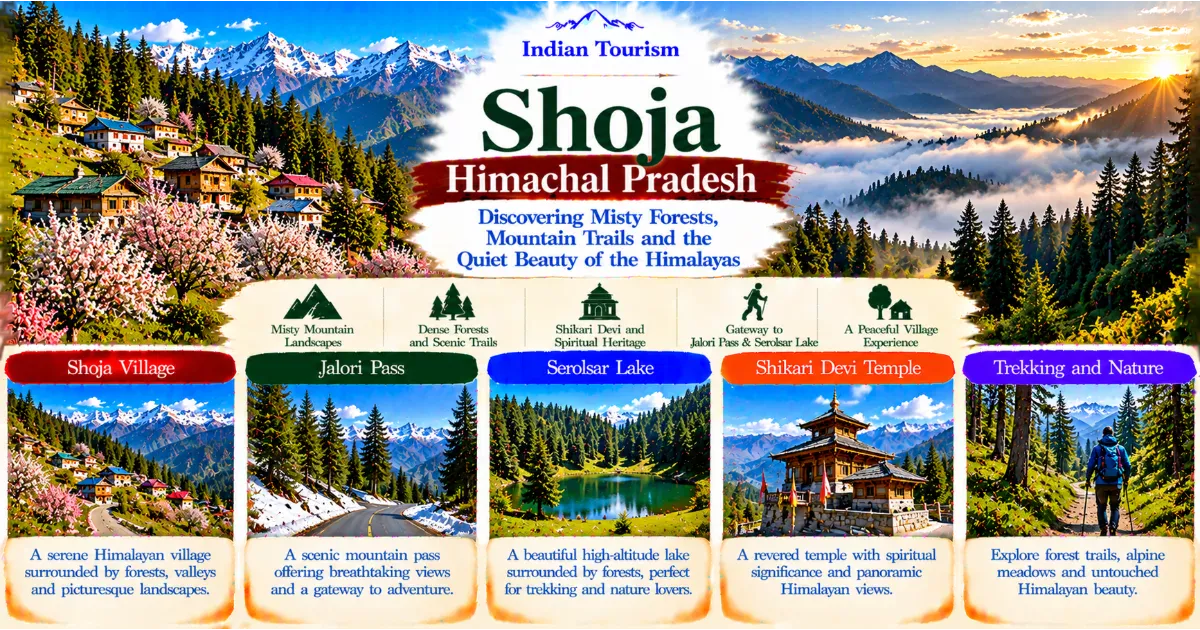
A Quiet Himalayan Escape
Himachal Pradesh is home to mountain destinations that attract travellers with snow-covered peaks, winding roads, ancient temples, alpine forests and traditional villages. While places such as Shimla and Manali have become popular holiday centres, smaller settlements continue to offer a more peaceful experience of the Himalayas. Shoja, a mountain village in the Seraj region of Kullu district, is one such destination. Surrounded by forested slopes, mountain ridges and scenic valleys, Shoja offers a slower and more intimate way to experience the natural beauty of northern India.
Shoja is particularly appealing to travellers who enjoy quiet surroundings, nature walks, photography and the atmosphere of traditional mountain settlements. The village is located along the route towards Jalori Pass, a mountain crossing that connects parts of the Kullu region with the Banjar and Ani side of the surrounding landscape. Its position makes Shoja a convenient base for exploring nearby forests, viewpoints, walking routes and cultural attractions.
The character of Shoja is different from that of a large tourist town. Instead of extensive commercial development, visitors encounter small accommodation properties, mountain roads, wooded slopes and scattered houses. The experience is shaped by the weather, the changing appearance of the forest and the everyday rhythm of village life.
During warmer months, the surrounding landscape becomes green and inviting. Clouds may drift through the hills, creating changing patterns of mist and sunlight. In colder weather, the atmosphere becomes more dramatic, with low temperatures and the possibility of snow in the higher areas. Each season offers a different perspective, although road accessibility and outdoor activities can be affected by weather.
Shoja is an excellent destination for travellers who want to spend time in nature without building an itinerary around constant sightseeing. A morning walk, a visit to a nearby viewpoint, a conversation with a local host and an evening spent enjoying the mountain atmosphere can create a rewarding holiday.
The village also provides an opportunity to understand the relationship between tourism and rural life in Himachal Pradesh. Local communities maintain homes, farms, religious traditions and small businesses within a landscape that attracts visitors seeking tranquillity. Responsible tourism can help support these communities while protecting the natural environment.
Where Is Shoja Located?
Shoja is situated in the Seraj region of Kullu district in Himachal Pradesh. It lies along the mountain route leading towards Jalori Pass and is associated with the wider Banjar Valley landscape.
The surrounding terrain consists of forested hills, steep slopes, mountain roads and settlements connected by winding routes. Elevation influences the local climate, and conditions can change considerably between the valley floor and the higher mountain areas.
Shoja's location makes it possible to explore several nearby destinations, including Jalori Pass, the forested walking routes around the pass and the route towards Serolsar Lake. The village can also be included in a broader journey through the Banjar Valley and neighbouring parts of Kullu district.
Travellers should not assume that every nearby destination is accessible in every season. Snow, rain, road maintenance and local conditions can influence travel times and the availability of outdoor routes.
The village's relatively small scale means that planning is important. Accommodation options and transport services may be more limited than in major tourist centres, especially during quieter periods.
Despite these practical considerations, Shoja offers an appealing balance between accessibility and seclusion. It provides a place to experience the Himalayas while remaining connected to several natural and cultural attractions.
The Natural Landscape of Shoja
The landscape around Shoja is one of its strongest attractions. Forested slopes rise above the village, and the surrounding ridges create a layered mountain panorama that changes with the light and weather.
The forest environment gives the area a distinctive atmosphere. Tall trees, shaded roads and winding paths create opportunities for slow exploration. On clear days, visitors may find viewpoints that reveal distant ridgelines and broad sections of the surrounding mountain landscape.
Mist is a memorable feature of the region, particularly when clouds move across the slopes. Visibility may change quickly, transforming an open view into a scene of forest silhouettes and drifting cloud. These conditions can make the landscape attractive to photographers, although they also require caution on mountain roads and walking routes.
The vegetation changes with elevation and season. Forested areas may appear darker and denser in shaded locations, while open slopes receive more sunlight. During warmer months, the landscape often becomes greener, and seasonal flowers may add colour to accessible areas.
The natural environment is not simply a backdrop for tourism. Forests contribute to soil stability, water regulation and habitat for wildlife. They are part of the ecological systems that support communities throughout the Himalayan region.
Visitors can appreciate the landscape by walking along suitable routes, observing the vegetation and taking time to notice how the terrain changes from one location to another.
The most rewarding experiences often come from slowing down. Rather than trying to cover every nearby attraction, travellers can spend time enjoying the scenery and learning about the environment.
Forest Walks and Nature Exploration
Shoja is an appealing destination for visitors who enjoy walking through forested landscapes. The surrounding area contains mountain roads, paths and routes that can provide access to scenic viewpoints and nearby attractions.
A forest walk allows travellers to experience details that are often missed from a vehicle. The sound of birds, the movement of leaves in the wind, changes in sunlight and the scent of damp earth after rain all contribute to the atmosphere.
Walking routes vary in length, elevation and difficulty. Visitors should ask local accommodation providers or experienced guides about current conditions before setting out. A route that appears straightforward on a map may involve steep sections, uneven ground or changes in weather.
Appropriate footwear is essential, particularly after rain when paths may become slippery. Carry drinking water, a charged phone and warm clothing, and allow enough time to return before dark.
Visitors should remain on suitable paths rather than creating shortcuts through vegetation. Informal trails can increase erosion and disturb sensitive areas.
Forest exploration also requires respect for wildlife. Do not feed animals, leave food waste behind or attempt to approach birds and other creatures for photographs.
For travellers who are not interested in demanding treks, shorter walks around accessible parts of the village can be just as rewarding. The goal is to experience the environment safely rather than to achieve a particular distance.
Jalori Pass: A Gateway to Mountain Views
Jalori Pass is one of the most important nearby attractions associated with Shoja. The pass lies in the mountains of Kullu district and provides access to scenic routes and walking trails.
The journey towards the pass is part of the experience. The road winds through forested terrain, with changing views as the elevation increases. On suitable days, the surrounding mountains create an impressive setting for photography and short stops at safe viewpoints.
Jalori Pass is also an important starting point for visitors planning to walk towards Serolsar Lake. The route is popular among travellers who want to combine mountain scenery with a moderate outdoor excursion.
Conditions at the pass can change significantly throughout the year. Snowfall may affect access during winter, while rain can make roads and paths more difficult during the monsoon. Visitors should check current local information before travelling.
The pass should not be treated as an ordinary roadside attraction during poor weather. Low visibility, icy surfaces and changing road conditions can create risks for drivers and pedestrians.
When conditions are suitable, Jalori Pass offers an opportunity to experience the wider Himalayan landscape around Shoja. Its combination of forest scenery, open mountain views and access to walking routes makes it an important part of a visit to the region.
Serolsar Lake: A Mountain Walk with Cultural Significance
Serolsar Lake is one of the best-known natural attractions accessible from the Jalori Pass area. Set within a forested mountain environment, the lake is reached by a walking route that is popular with visitors exploring the region.
The journey is an important part of the experience. The trail passes through woodland and offers changing views of the surrounding landscape. Depending on the season, visitors may encounter different vegetation, forest conditions and weather along the route.
The walk requires preparation. Even when the distance appears manageable, elevation, uneven ground and weather can influence how difficult it feels. Visitors should assess their fitness and allow enough time for the return journey.
Serolsar Lake is also associated with local religious traditions. The area around the lake has cultural significance, and visitors should behave respectfully when encountering shrines or religious objects.
Avoid leaving rubbish along the trail or beside the water. Natural lakes and forest habitats can be affected by plastic waste, food packaging and other materials brought by visitors.
Do not assume that swimming, camping or other activities are permitted. Follow local regulations and guidance, especially in sensitive natural areas.
For many visitors, the attraction of Serolsar Lake lies in the combination of a forest walk, a peaceful setting and the opportunity to experience the cultural landscape of the mountains.
Before starting the walk, check the trail condition, weather forecast and any seasonal restrictions. If conditions become unsafe, turning back is the sensible choice.
Mountain Villages and Traditional Life
Shoja offers a glimpse into rural mountain life in Himachal Pradesh. Its houses, local roads and small businesses form part of a settlement shaped by the demands of living in a mountainous environment.
Village life is influenced by geography, weather and access to resources. Steep slopes limit the availability of flat land, while road connections affect the movement of people and goods. Households adapt their routines to seasonal changes and the practical demands of daily life.
Agriculture, livestock and other local activities remain important across many parts of rural Himachal Pradesh, although the livelihoods of individual households vary. Tourism has also created opportunities for accommodation providers, food businesses, guides and transport operators.
Visitors can learn about these connections by observing the village respectfully and speaking with residents who are willing to share their experiences.
It is important to remember that Shoja is a living community rather than a destination created solely for visitors. Residents have responsibilities, work schedules and private spaces that should be respected.
Ask permission before taking photographs of people or entering private properties. Avoid walking through cultivated fields or residential courtyards without an invitation.
Choosing locally operated accommodation and eating at legitimate local establishments can help distribute tourism income within the community.
These interactions can make a visit more meaningful. The value of a mountain destination comes not only from its scenery but also from the people who live there and maintain its cultural traditions.
Architecture and the Character of Mountain Homes
The built environment around Shoja reflects the practical requirements of mountain living. Across Himachal Pradesh, houses and other structures have developed in response to cold weather, rainfall, sloping terrain and the materials available in different locations.
Traditional building methods vary across the state. Local architecture may reflect the use of timber, stone and other materials, while newer buildings incorporate modern construction methods and changing household needs.
In a village such as Shoja, buildings are part of the wider landscape. Their placement often reflects the shape of the hillside, access to roads and the availability of suitable building sites.
Visitors interested in architecture can observe roof forms, building materials and the relationship between houses and the surrounding terrain. These details reveal how people adapt their homes to local conditions.
The village should not be understood as a static historical display. New construction and changes in accommodation reflect the evolving needs of residents and the development of tourism.
Visitors should avoid entering private properties or photographing household interiors without permission. Older structures may also be fragile, so touching or climbing on them should be avoided.
Respectful observation allows travellers to appreciate the built environment while recognising that these buildings serve real households and businesses.
Local Food and the Experience of Mountain Hospitality
Food is an important part of a journey through Himachal Pradesh. In and around Shoja, travellers may find simple meals, familiar North Indian dishes and preparations influenced by regional cooking traditions.
The available menu depends on the accommodation or restaurant. Smaller establishments may offer fewer choices than restaurants in large towns, and food availability can vary according to the season and the number of visitors.
Visitors interested in regional cuisine can ask local hosts which dishes are commonly prepared in the surrounding area. Home-style meals may provide an opportunity to experience local ingredients and cooking practices.
Meals based on grains, lentils, vegetables and dairy products are common in many parts of the state, although the food traditions of Himachal Pradesh vary considerably between districts and communities.
The mountain climate can make warm meals especially welcome after a day spent outdoors. Visitors should confirm meal timings if they plan to return late from a walk or excursion.
Travellers with dietary restrictions should communicate their needs clearly and carry suitable alternatives when necessary.
Eating at legitimate local establishments can support small businesses and help sustain livelihoods connected with tourism.
Hospitality is often remembered as much as the scenery. A conversation with a host about the local environment, seasonal weather or village traditions can add context to the journey.
Best Time to Visit Shoja
Shoja can be visited during different parts of the year, but each season offers a different experience. The most suitable time depends on the activities planned, the traveller's comfort with cold weather and current road conditions.
Spring: Fresh Colours and Forest Renewal
Spring brings a transition from winter towards warmer weather. Vegetation begins to renew itself, and the surrounding hills can become increasingly green.
This period may suit visitors interested in photography, village walks and relaxed sightseeing. Temperatures can still be low, particularly in the morning and evening, so warm clothing remains important.
Travellers planning to visit Jalori Pass or walk towards Serolsar Lake should confirm the condition of the route before departure.
Summer: A Comfortable Season for Exploration
Summer is often a practical period for visiting Shoja. Daytime conditions may be suitable for forest walks, sightseeing and excursions towards nearby attractions.
The season can be especially appealing to visitors seeking a cooler environment than the plains.
However, weather conditions can still change quickly in the mountains. Carry suitable clothing and check local forecasts before beginning outdoor activities.
Monsoon: Lush Scenery and Travel Challenges
The monsoon brings moisture to the region and can create vivid green landscapes. Mist and clouds may add atmosphere to the surrounding hills.
At the same time, heavy rainfall can affect mountain roads and trails. Landslides, falling rocks, slippery surfaces and poor visibility are possible in mountainous areas during periods of intense rain.
Visitors should follow local advice and avoid unnecessary travel during hazardous conditions.
Autumn: Clear Skies and Mountain Photography
Autumn can provide pleasant conditions for sightseeing, depending on the weather. Clearer days may offer attractive views across the surrounding ridgelines.
Temperatures begin to fall as winter approaches, especially after sunset. Warm clothing is advisable for early morning excursions and evenings outdoors.
Travellers should confirm access to Jalori Pass and nearby trails rather than assuming that all routes will remain open.
Winter: Snow and Cold Mountain Conditions
Winter can transform the higher landscape around Shoja. Snow may occur in the surrounding mountains, and the village can experience very cold conditions.
Snow and ice may affect road access, while some outdoor routes may become difficult or unsuitable for inexperienced walkers.
Travellers should check conditions before leaving, carry appropriate winter clothing and avoid driving on unsafe roads.
For many visitors, the warmer months provide a practical balance between comfortable temperatures and access to outdoor attractions. However, the best travel period ultimately depends on current conditions and the experience a visitor wants.
How to Reach Shoja
Shoja is reached primarily by road. Travellers should plan the journey carefully because mountain roads are winding and travel times can vary according to weather and traffic.
From Aut
Aut is an important access point for travellers heading towards the Banjar Valley region. From there, onward road travel can take visitors towards Banjar, Jibhi and Shoja, depending on the chosen route and current road conditions.
Confirm the route before departure, especially if travelling in winter or during the monsoon.
From Kullu
Travellers starting in Kullu can plan a road journey towards the Banjar Valley and Shoja. The route involves mountain driving, so allow sufficient time for the journey and possible delays.
From Manali
Visitors travelling from Manali should check the available route and current road conditions before starting. Depending on the itinerary, the journey may involve travelling through the wider Kullu region before continuing towards Shoja.
From Shimla
Travellers arriving from Shimla can arrange onward road travel towards the Seraj region. Route selection and travel time depend on the road network, conditions and the transport being used.
From Chandigarh and Delhi
Visitors from Chandigarh or Delhi generally need to reach a suitable transport hub in Himachal Pradesh before continuing by road. Depending on the chosen service, the journey may involve buses, taxis or a private vehicle.
By Private Vehicle
A private vehicle offers flexibility for stopping at suitable viewpoints and exploring nearby attractions. Drivers should be comfortable with mountain roads and should check the vehicle's brakes, tyres and general condition before departure.
By Taxi
A taxi can be convenient for visitors who do not wish to drive. Confirm the fare, route, waiting time and return arrangements before beginning the journey.
By Public Transport
Public transport availability and onward connections can vary by season and day. Confirm current schedules with reliable local sources and allow time for transfers.
Before travelling, check weather forecasts, road updates and accommodation availability. Do not rely entirely on old travel schedules or assume that mountain roads will remain accessible in every season.
Accommodation and Facilities
Shoja has a range of smaller accommodation options, including guesthouses, homestays and other locally operated properties. The available facilities vary from one establishment to another.
Travellers should confirm room arrangements, heating, hot water, meal availability, parking and cancellation conditions before booking. During colder periods, heating arrangements may be particularly important.
Advance booking can be useful during holidays and periods of high visitor demand. Visitors travelling in quieter months should confirm that their chosen accommodation is open.
The location of the accommodation matters if you intend to visit Jalori Pass or walk towards Serolsar Lake. Staying in a suitable location can reduce unnecessary travel and provide greater flexibility.
Mobile connectivity and internet access may vary across the surrounding mountains. Download offline maps, keep important contact details accessible and inform someone about longer walking plans.
Carry essential medicines and personal supplies, particularly if travelling with children or older family members. Visitors with specific medical needs should plan ahead for access to appropriate services.
Local hosts can often provide useful information about current weather, nearby routes and transport options. Their advice may be especially valuable when conditions change unexpectedly.
Photography Opportunities in Shoja
Shoja is well suited to travellers who enjoy photographing forests, mountain villages and changing weather.
The surrounding hills offer opportunities for landscape photography, particularly when the morning light reveals the contours of the ridgelines. Mist can create dramatic compositions, while clear weather may provide broader views.
Forest paths, roadside viewpoints and village architecture can offer a variety of subjects. Photographers may also find interest in everyday details, including traditional buildings, cultivated land and the changing appearance of the landscape through the seasons.
Conditions can change quickly, so protect cameras and phones from rain, moisture and cold.
Avoid standing in the road to take photographs, particularly on narrow bends where drivers may have limited visibility. Choose safe stopping places and remain aware of passing traffic.
Ask permission before photographing residents, private homes or religious activities. Follow restrictions at temples and other culturally significant locations.
The strongest travel photographs often communicate the character of a destination rather than showing only its most famous viewpoint. Images that capture forest paths, village life and the relationship between settlement and landscape can provide a fuller impression of Shoja.
A Suggested Three-Day Itinerary for Shoja
Day One: Arrival and Village Exploration
Arrive in Shoja after checking the route and current road conditions. Settle into your accommodation and allow time to rest.
Spend the afternoon exploring accessible areas of the village and enjoying the surrounding scenery. Ask your host about suitable walking routes and the current condition of nearby attractions.
Keep the first day relaxed, especially if the journey has been long.
Day Two: Jalori Pass and Serolsar Lake
Begin early if conditions permit and travel towards Jalori Pass. Confirm that the road is accessible and that the planned walk is suitable for your fitness level.
If the trail to Serolsar Lake is open and safe, allow sufficient time for the walk and return journey. Carry water, suitable footwear, warm clothing and basic essentials.
Respect the cultural significance of the lake area and carry all waste back with you.
If weather conditions are poor, postpone the excursion and choose a safer activity closer to the village.
Day Three: Forest Walk and Departure
Spend the morning enjoying a short forest walk or exploring accessible viewpoints around Shoja.
If you have time, speak with local residents or your accommodation host about the area's traditions and seasonal changes.
Depart with sufficient time for the mountain journey and possible delays.
This itinerary is flexible and should be adjusted according to weather, transport and individual fitness.
Responsible Tourism in Shoja
Responsible tourism is essential for protecting Shoja's forests, trails and village environment.
Carry all waste away from natural areas and dispose of it properly. Avoid leaving plastic bottles, food packaging or other rubbish beside roads, streams and viewpoints.
Respect local customs and religious traditions. Ask permission before photographing residents or entering private property.
Stay on suitable paths and avoid damaging vegetation. Do not feed wildlife or attempt to approach animals for photographs.
Water should be used carefully, particularly in areas where local households depend on limited supplies. Avoid polluting streams and other water sources.
Support legitimate local accommodation providers, food businesses and transport operators where possible. Local spending can help tourism contribute to village livelihoods.
Avoid lighting fires in unauthorised locations and follow local instructions regarding forest safety.
Visitors should also make responsible decisions about outdoor activities. If rain, snow, poor visibility or road conditions create a hazard, postpone the journey or choose another attraction.
The long-term appeal of Shoja depends on preserving the qualities that make it special. Responsible behaviour helps ensure that the village remains a welcoming destination for both residents and future travellers.
Common Travel Mistakes to Avoid
One common mistake is underestimating the time required for mountain travel. Winding roads and changing weather can make journeys longer than expected.
Another mistake is planning a visit to Jalori Pass or Serolsar Lake without checking seasonal access. Snow, rain and trail conditions can affect whether an excursion is possible.
Visitors should also avoid assuming that every accommodation property offers the same facilities. Confirm heating, meals, transport and other requirements before booking.
Walking without suitable footwear or carrying insufficient water can make an otherwise enjoyable excursion uncomfortable.
Respect for residents is equally important. Do not enter private land, photograph people without permission or leave rubbish behind.
Finally, avoid planning every hour of the trip. Shoja is best appreciated when the itinerary leaves room for rest, weather changes and unplanned discoveries.
Is Shoja Worth Visiting?
Shoja is worth considering for travellers who prefer peaceful mountain settings, forest scenery and access to outdoor attractions.
Its location near Jalori Pass and the route towards Serolsar Lake makes it particularly appealing to visitors interested in nature walks and moderate trekking. The village also offers an opportunity to experience the quieter side of rural Himachal Pradesh.
It may not be the best destination for travellers seeking nightlife, extensive shopping or a large selection of commercial entertainment. Its appeal lies in the landscape, the atmosphere and the opportunity to spend time away from busy tourist centres.
Shoja can be included in a wider itinerary through the Banjar Valley and surrounding areas. Travellers should allow enough time for road travel and avoid trying to cover too many destinations in a single day.
Checking current weather, trail conditions and accommodation arrangements is essential. With suitable preparation, visitors can enjoy a rewarding combination of mountain scenery, forest exploration and local culture.
Conclusion: Discover the Peaceful Side of the Himalayas
Shoja offers a quieter way to experience the mountains of Himachal Pradesh. Its forested slopes, village atmosphere and proximity to Jalori Pass create a destination suited to travellers who appreciate nature and unhurried exploration.
The nearby route towards Serolsar Lake adds an opportunity for a memorable mountain walk, while the village itself provides space to observe the relationship between landscape and everyday life.
A successful visit depends on preparation and flexibility. Check road access, confirm accommodation, carry suitable clothing and adjust outdoor plans according to the weather.
Respect for the environment and local communities is equally important. Carry waste away, follow trail guidance, ask permission before taking photographs and support legitimate local businesses.
For travellers exploring the diverse destinations of Himachal Pradesh, Shoja provides an opportunity to experience the beauty of the Himalayas without relying on the crowds and commercial activity of larger resort towns. Its quiet forests, mountain trails and village setting make it a valuable destination for anyone seeking a more thoughtful mountain holiday.
#IndianTourism #HimachalPradesh #Shoja #JaloriPass #SerolsarLake #KulluDistrict #BanjarValley #HimalayanTravel #MountainVillages #NatureTravel #TrekkingInIndia #ExploreIndia #ResponsibleTourism
